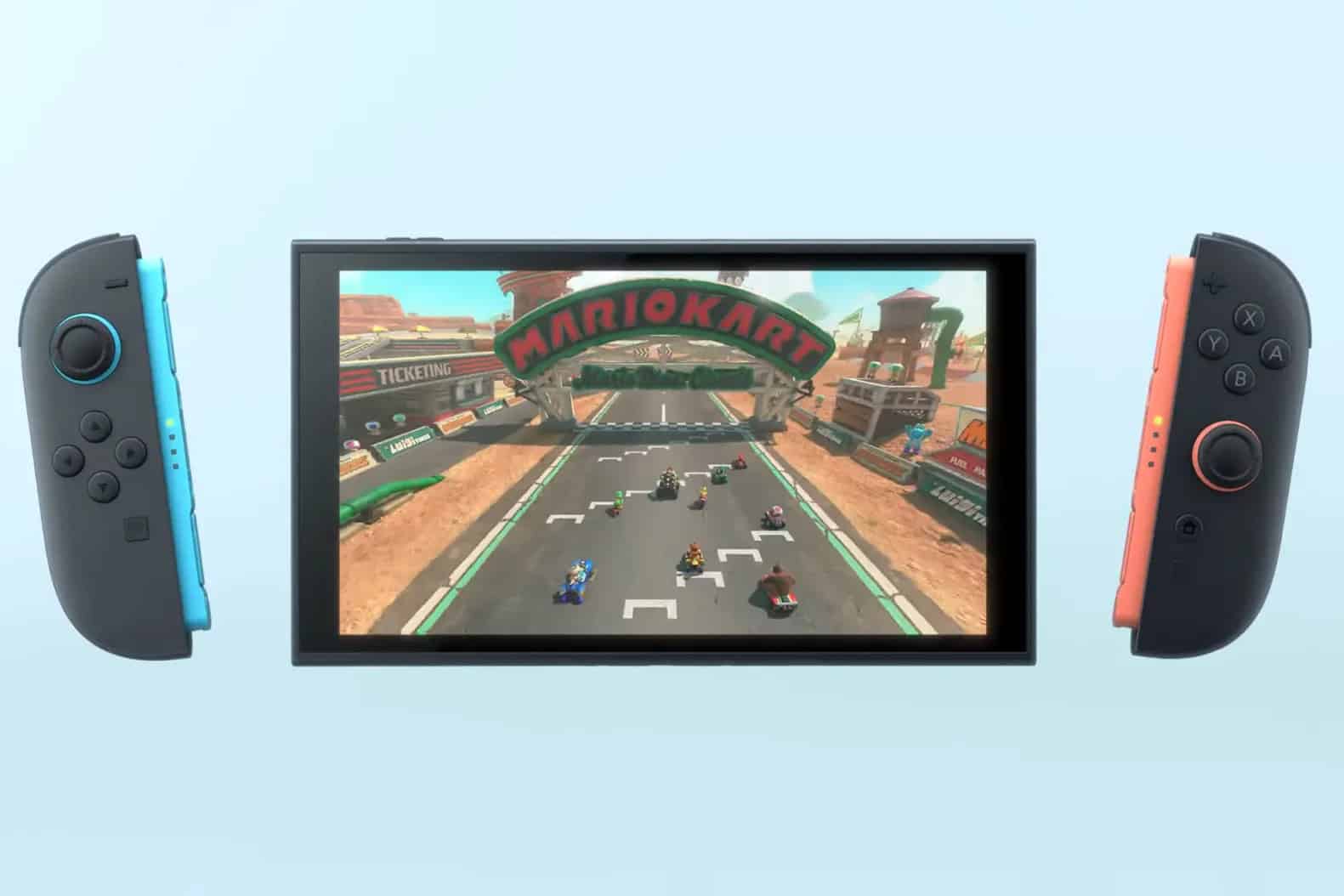
The new handheld boost mode introduced on Nintendo Switch 2 improves performance in many Nintendo Switch 1 games, but it also reduces battery life. This was already mentioned by Nintendo in its warnings, and now it has been confirmed by real tests. This feature was added with the recent system update 22.0.0 for Nintendo Switch 2. It uses the stronger hardware of the new console to improve games that have not received specific updates.
In simple terms, the system runs Switch 1 games in a mode similar to TV mode, even when playing in handheld. This allows higher resolution and better frame rates, depending on how each game was originally designed. However, these improvements come at a cost. The boost mode increases resolution, detail, and performance, but it also puts more load on the hardware and the 1080p display, which affects battery life.

Nintendo already warned that games may not always behave perfectly with this feature and that battery duration could be reduced. Tests shared online have now confirmed this. Reports from Reddit users and video tests show that battery life drops noticeably. For example, when playing DOOM (2016) with the boost mode enabled, battery life goes from about five hours and five minutes, down to three hours and 43 minutes, which is a reduction of around 27%.
Even with this drawback, many users agree that the feature is still worth using. The improvements in games that were not optimized for Switch 2 are clearly visible and can make the experience much better.
In other news, Nintendo has reached two major milestones in hardware sales: the original Nintendo Switch has officially surpassed the Nintendo DS to become the company’s best-selling console of all time, and the Nintendo Switch 2 has crossed 17 million units sold in its first nine months. Stay tuned to GameObserver for the latest Nintendo news.





 ObserverCrew Picks
 bserver
 bserver