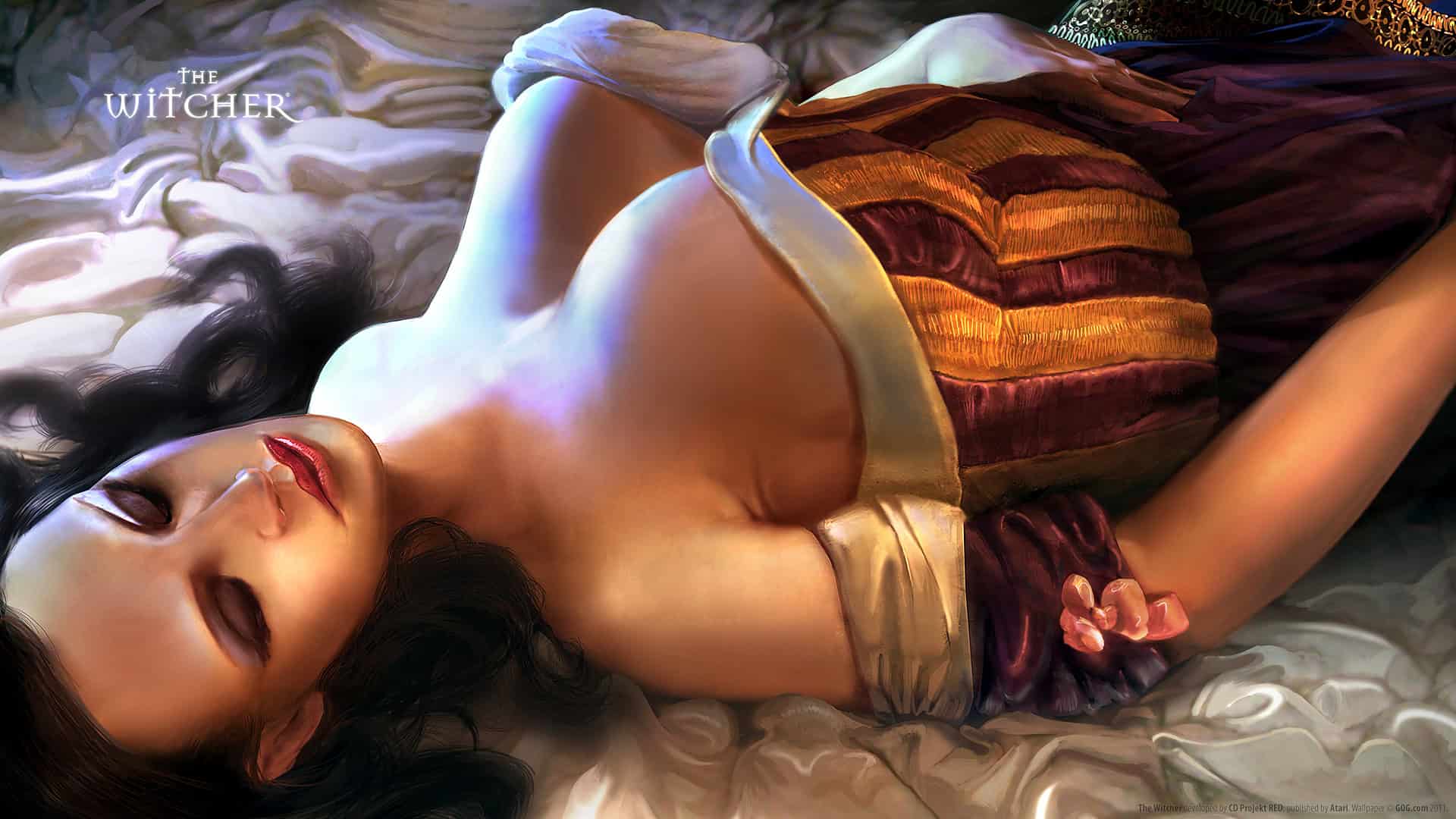
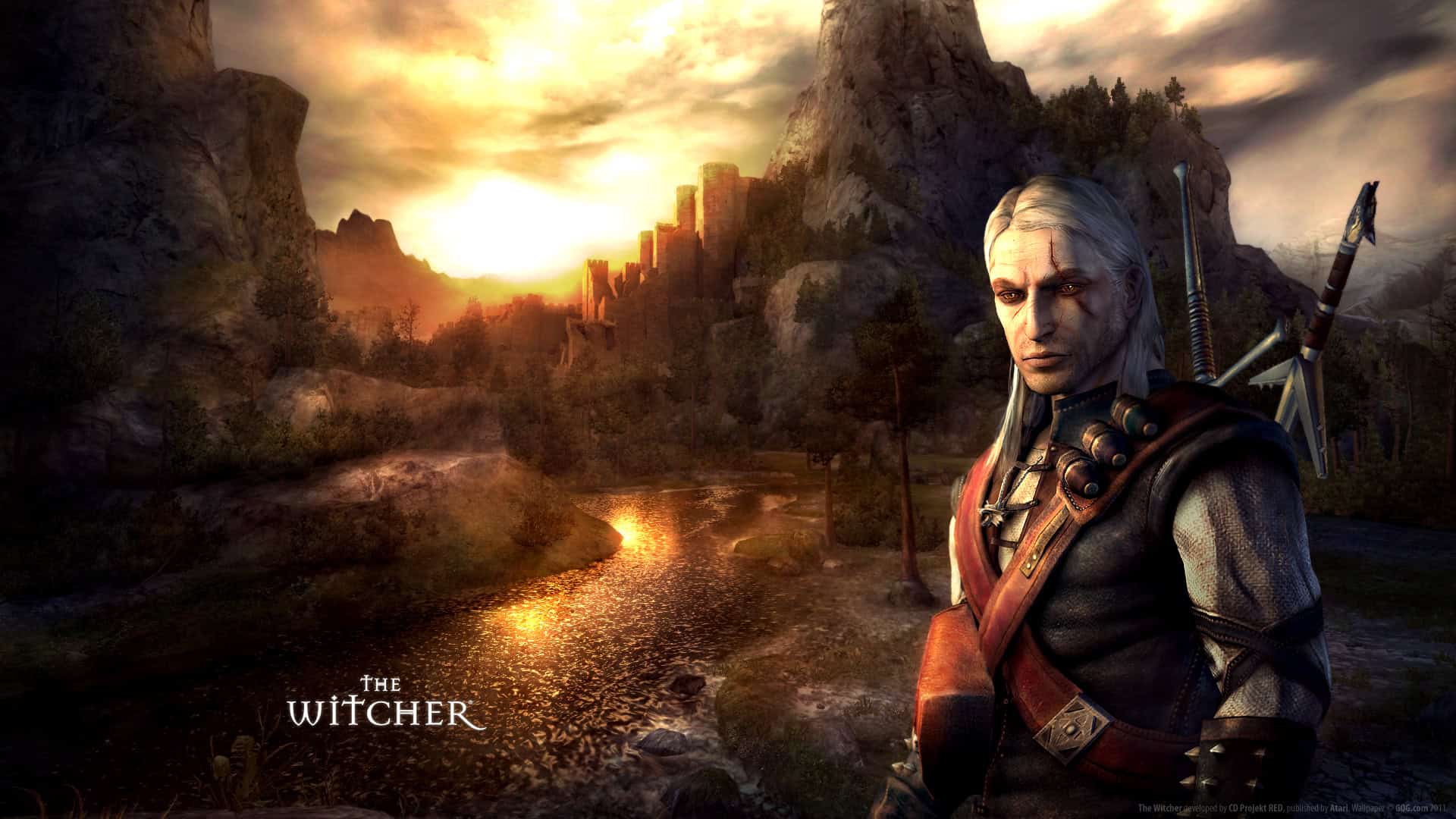
The Witcher (2007) is known for many things. It was the beginning of a saga that would lead to the development of one of, if not the most influential fantasy RPG of the 2010s: The Witcher 3. It was the debut title of a studio that would go on to also create another generation-defining title with Cyberpunk 2077. It also lives in infamy for its portrayal of romantic encounters.
Commonly known as “sex cards,” it is undoubtedly the most common point of criticism for the game. You are likely never going to see any in-depth conversation about The Witcher without a single mention of the collectible sex cards. In an interview with Mateusz Łysoń for CHIP, translated from Polish by us, the game’s lead story designer, Artur Ganszyniec, discusses not just their murky origin, but also the several awkward encounters that precede them. On their origin, Ganszyniec says:
“Sometimes a feature appears as a result of someone going: in the books there’s lots of romance, so we’ll probably need romance too. Someone creates a list of characters, someone else looks at it productively and says: there’s no way we’re making so many cutscenes. Then comes the question: if the cutscenes are a problem, what do we do? Maybe 2D drawings?”
“I don’t know if that’s the exact way it happened, but that’s how it could have happened. Everyone’s responsible for finding solutions to their own problems, and suddenly something’s in the game. When something’s already made it into a version, it’s difficult to remove it”

It would appear the idea does not have any known point of origin, and the intention was likely never to give off the impression that these cards were collectibles, but rather a cost-effective way of representing its many encounters. The Witcher had a tumultuous development history and much of the documentation regarding the game has not been preserved, making the ongoing remake effort extra difficult. You can read more on that here. It’s not difficult to believe that details like this are forgotten to time.
However, the dialogues preceding the depiction also drew the disapproval of many players. A lot of the relationships end up moving incredibly quickly, and, according to Ganszyniec, that’s the kind of shortcuts the team was able to take, hoping the game’s structure would help players understand that a dialogue is meant to represent a longer period of time. He says:
“Sometimes it worked as a shortcut. For example, the half-elf, from whom you learn the language. In a written story, this relationship could take two weeks and a few pages. In the game, we have one dialogue, but we understand that it’s meant to represent just a part of a longer story. Thanks to the fact that The Witcher was indeterminate and full of shortcuts, the player accepted it”
“You couldn’t replicate it 1-1, if other parts of the game were more realistic. You’d have to write a long quest, probably a more interesting one, but also a much more expensive one. Maybe it wouldn’t end in a card, but a more tasteful scene. However, someone would soon ask – why would this character not play a bigger part later? The shortcuts of The Witcher allowed for certain things to happen.”

Though Ganszyniec realizes that many scenes, as well as the “sex card,” ended up being ridiculed at large, mentioning a specific one that made him uncomfortable years later, he explains that the ideas came from a genuine place. He says:
“In the fifth act, we knew, production-wise, that we would need two more cards somewhere. We were left with the nurses. When I played the game years later, I looked at the scene where we talk with Shani about a child, about family, and then suddenly Geralt walks up to the nurses. I thought: Geralt, seriously? Then, another: Artur, even if you haven’t written this dialogue, you accepted it. This part’s uncomfortable.”
“It doesn’t mean I’m ashamed of them [the cards]. Some of these moments ended up being absurd. Sometimes, we tried to touch on the connection between death and sex, known from the likes of war diaries: people are dying, but they’re trying to live, they’re young. Eros and Thanatos are deeply ingrained in culture. It’s just that sometimes you fail to write something good enough. Then, you play the game, you read the dialogue, and you see: this did not work.”
The interviewer, Mateusz Łysoń, rightfully points out just how interesting this reflection is. The idea for the romances and the “sex cards” was clearly thought out, with a strong cultural background. Perhaps a 2D drawing depiction of sex could have worked better than the awkward, early attempts at romance scenes from the time. Just, clearly, not in the way The Witcher did it.

“Sex cards” will likely forever remain a talking point when it comes to The Witcher, and their treatment is sure to be of interest to the fans waiting for The Witcher Remake, which is actively being developed by Fool’s Theory (The Thaumaturge) with help from CD Projekt Red. Will they have the budget to turn all these encounters into full cutscenes, or will they remove specific ones from the game altogether? Time will tell.
For more gaming news, stay tuned to GameObserver!


 ObserverCrew Picks
 bserver
 bserver