In a year filled with truly tremendous adventures, Angeline Era comes out of nowhere to top off what should be remembered as one of gaming’s best-ever years. Or it would have come out of nowhere had you not followed one of the most decorated duos working on video games right now: Marina Kittaka and Melos Han-Tani. 13 years since their debut title Anodyne, the two have been delivering a vision of what video games can be, spreading their knowledge and years of expertise via social media, blogs, interviews, and panels.
Analgesic Productions, the two’s studio name, only popped up on my radar around 2019, with the release of Anodyne 2 and a move to at least partial 3D. To this day, it is one of the most important games of my life, one that touched on subjects I was desperately trying to figure out at the time, while also expanding my horizons in the ways of game analysis. Particularly, I was fascinated by the movement of Anodyne 2, the way it hid its secrets in a world that most games would not bother filling with a similar level of detail. I came away realizing how exactly movement can enrich spaces that I often thought of as just transitional. Fast forward a few years, Sephonie, a full-on 3D platformer, steals my heart as well.
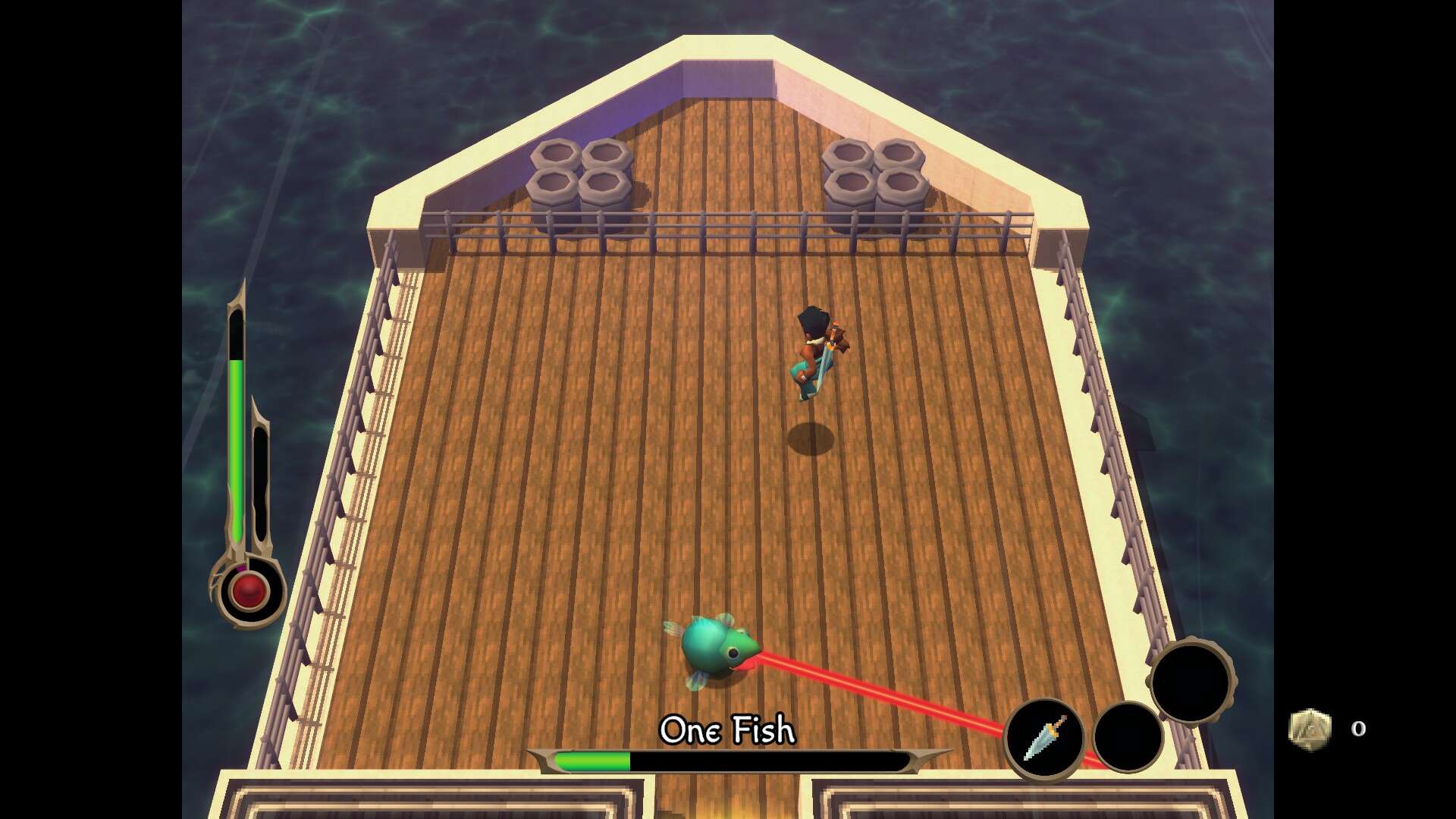
Now, we arrive at Angeline Era, a bumpslash adventure. For those uninitiated, bumpslashing is the act of attacking enemies by walking into them. A natural evolution of the platformer mindset, now focusing on applying new functions to previously explored options—a perfect harmony of combat and movement. Inspired by the early Ys, SaGa, and FromSoft games, as well as the Hydlide trilogy, Quest 64, the works of W. B. Yeats, Momoko Sakura, Mary Boole, and this thing called “walking outside.” It is as beautiful, challenging, and eclectic as their previous works.
Bumpslashing takes center stage from the first second you get to control Tetsuya Kinoshita on a ship leading to Era, a land of various Fae, humans, and Angels. Attacked by an army of laser fish, this scenario is an immediate test of whether the difficulty you picked is adequate for your familiarity, or, more likely, unfamiliarity with this style of gameplay. Later, you will find or purchase new tools: a gun that can shoot upward and reloads on a melee attack, as well as various weapons and artifacts to modify your playstyle with.
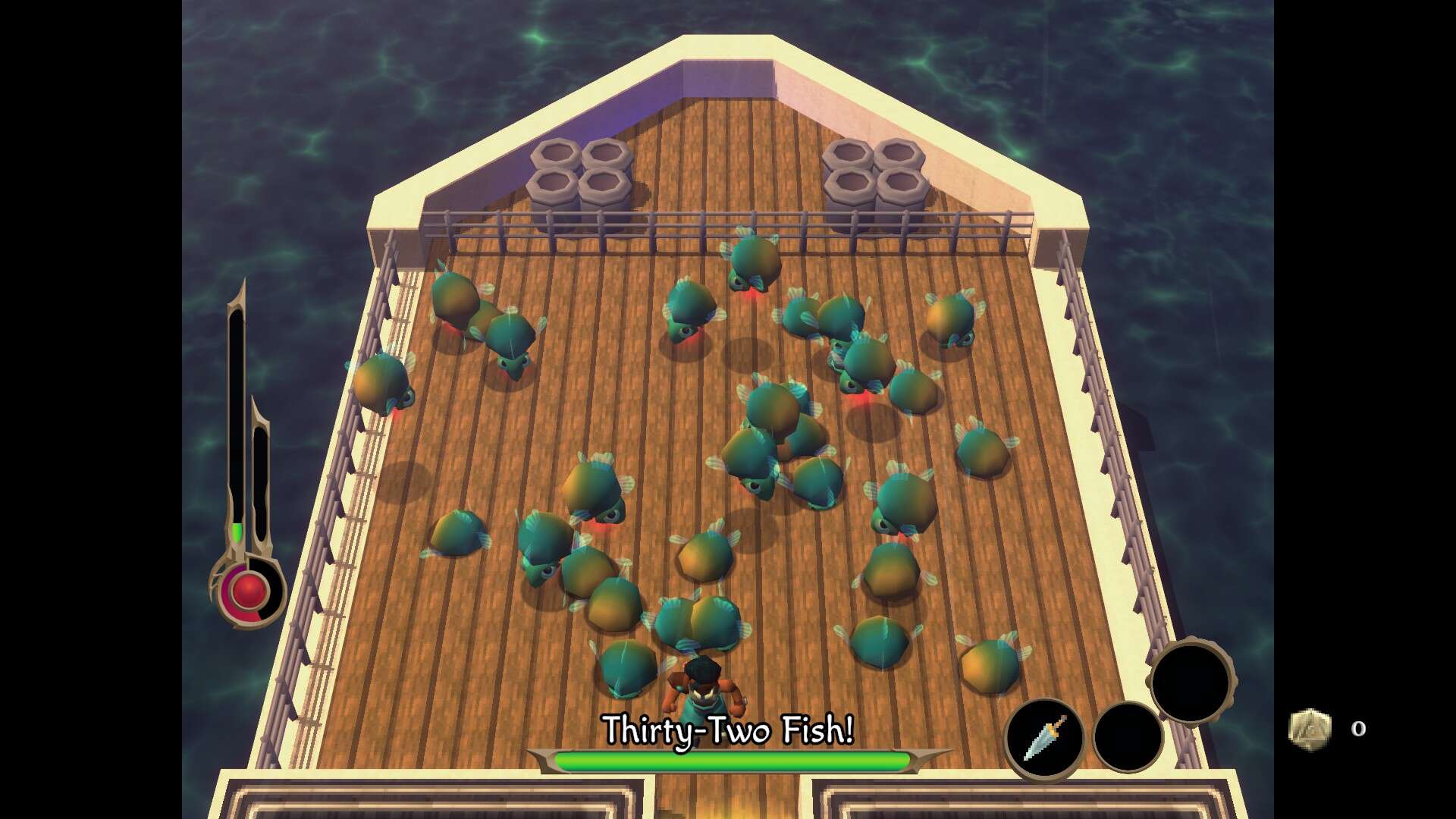
The ship hides a few secrets too, so be sure to explore; it surprisingly helped me a lot in the final stretch. It is indicative of how Angeline Era treats exploration: items can come into play in very surprising ways, some corners may hide something useful, while others may pop up something actively harmful. It is a fascinating back-and-forth, one that keeps each level fully fresh. Even if two locations feel similar, something unique is always waiting for those with the eyes to see, or simply the determination to keep digging deeper. Find a bunch of compost and plant a flower that really does nothing other than exist, or some food that can maybe boost your health enough to get past a slightly difficult section. Or nothing. Nothing at all.
Levels are just a part of it, because to even get into one, you have to first discover it in the overworld. These, like secrets hidden in the actual stages, are not marked—you have to intuit their locations by noticing patterns and then their inconsistencies before scanning them. These are usually not super difficult: a square of tiles with a missing piece, a road leading to nowhere, a different colored wall, etc. Play a little minigame to clear a path and you’re in! Once inside, things get way more complex.
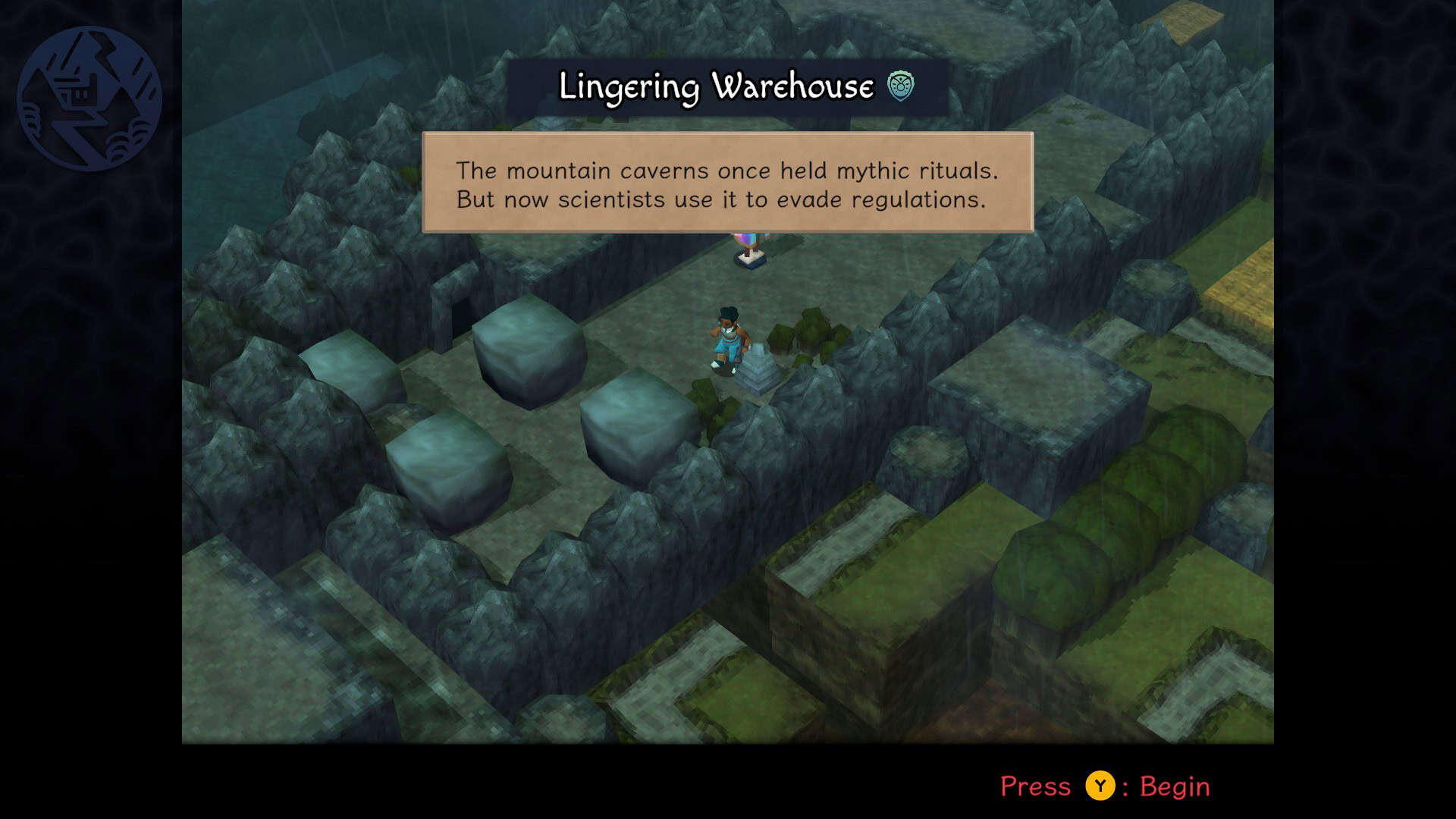
In many ways, Angeline Era is a perfect adventure game. Its combat is extremely unique relative to modern offerings, the puzzles are fantastic, and even having finished it after 30 hours (twice the size of the two previous Analgesic games on full completion) with over 40 levels under my belt, I am constantly finding new areas. It always keeps you guessing, its short levels keep the pace perfectly snappy, and it just keeps introducing new ideas. There was a section around the time I thought I was done that completely switched the entire gameplay formula on its head for hours on end, and I could not believe the fact that it just kept going.
Early on, I found a secret dungeon that led me to an incredibly hard level, which I gave up on twice, even after leveling up a few times, upping my health and damage. The third time, I was confident I could do it. After many, many deaths, I made it to the end and received my reward… only to be spit out in the middle of nowhere, blocked from all sides, on the opposite side of the world. It took me three hours and a dozen levels to get back to where I was. This is the sort of essential experience that instills in one the love for video games, and it is just one of many in Angeline Era.
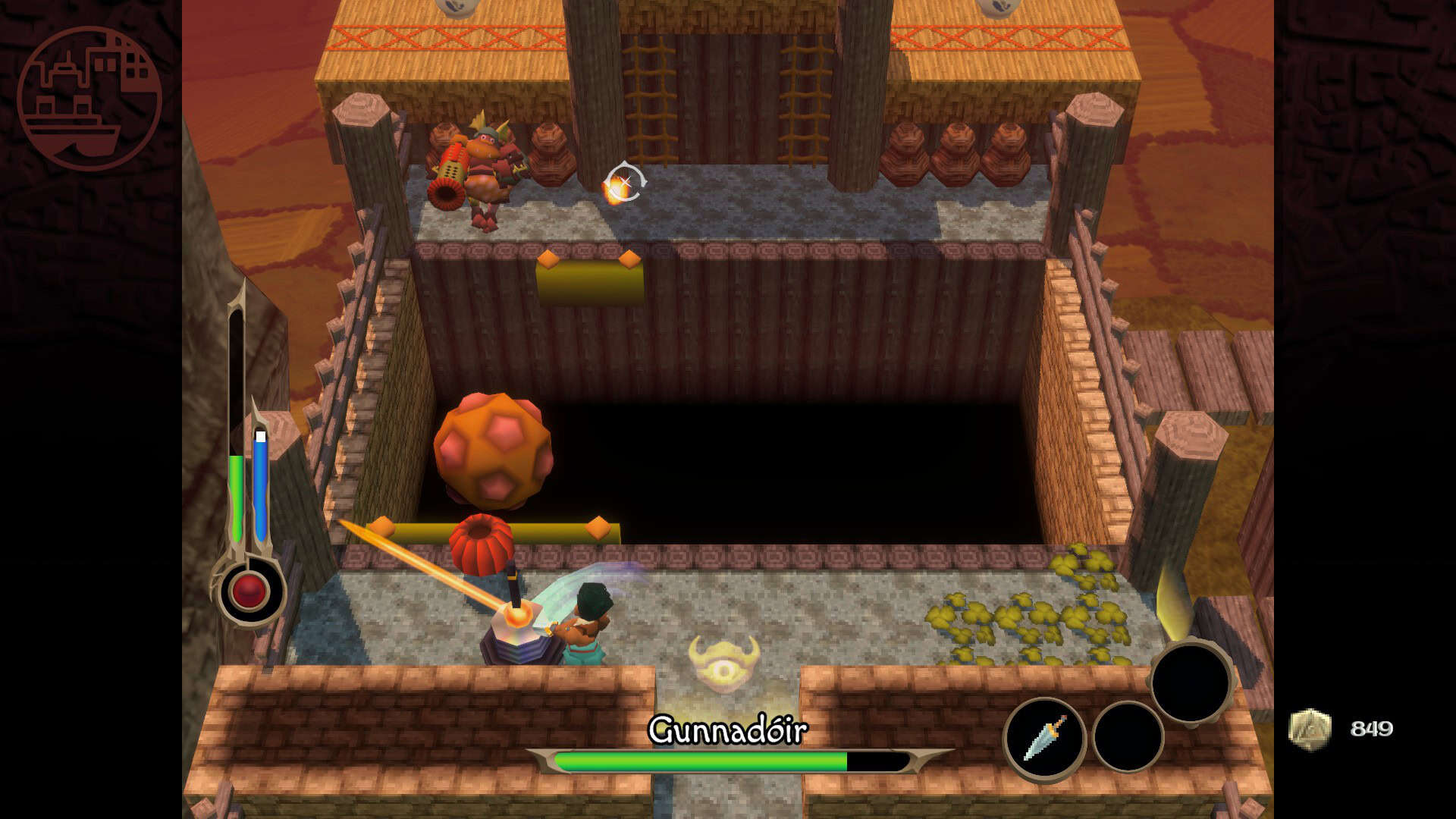
As you travel this endlessly captivating land, you are enveloped in a one-of-a-kind musical style of Melos Han-Tani, who has been one of my favorite video game composers of the past decade. No matter what mood a level evokes, in grief, terror, joy, or whimsy, the soundtracks of Analgesic’s games always feel ethereal, endless, sprawling. They reverberate, capture the heart, and fill in any gaps otherwise left out by a given stage or story moment. As if made with a different game’s sound effects, the sound of shooting, slashing, and bumping complements the backing track. It is as if both the story of a level/moment and the music intentionally leave gaps, knowing where one can fill in for the other to create something greater together.
Continuing from their past work, Marina Kittaka once more explores themes of religion, cultural identity, change. Anodyne 2 was an interesting jumping point—a game largely still obscuring itself by using fictional renditions or variations of these topics—leading into Sephonie—a title where the protagonists’ real-world countries of origin play a very important role in the story—and now to Angeline Era—an experience that openly calls on and uses whatever it needs to tell its story. Era is ultimately a fictional place, of course, and there are still plenty of fictional mechanisms inside it, but it is also faced with and changed by the knowledge Tets, other humans, and even the angels bring from our world, and the game is all the more impactful for it.
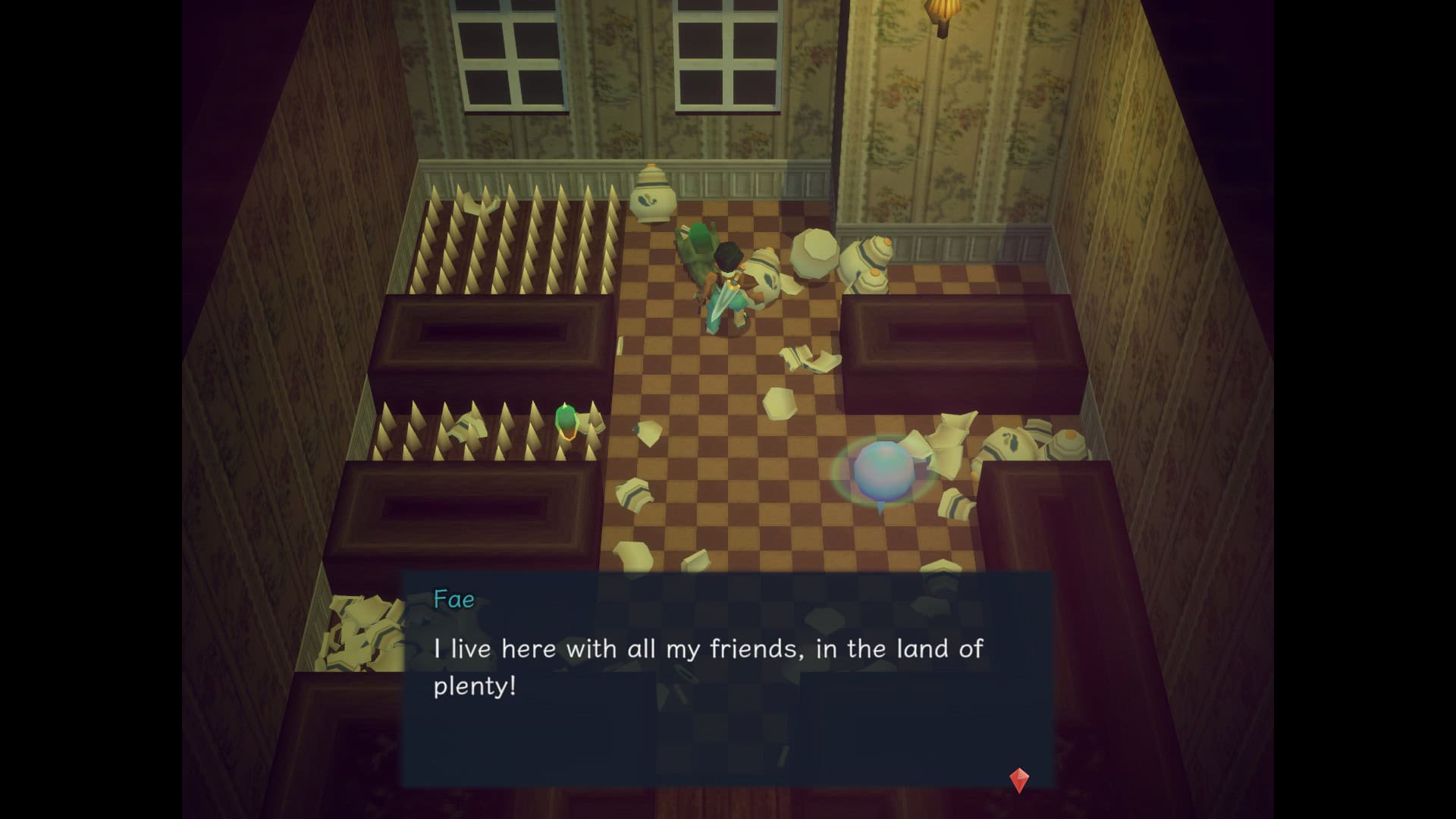
Even if you are not able to craft any coherent theory of Angeline Era’s story, I have mine but it is harder than your everyday game to put together, no doubt, I think its moments are undeniably strong thanks to that amazing mix of eccentricities it keeps showering you with and a sense of power brought forward by the sound. When a character meets their end or is faced with a revelation, they respond with a short, intense reaction that stuck with me throughout the remainder of my journey.
The bits of Angeline Era that did not fully jive with me were the length and the visuals. Both of these are strengths in their own right, but there were certainly moments where I went on autopilot, clearing a level that looked just too similar to the last one, only being woken up by a new trick the game throws at me.
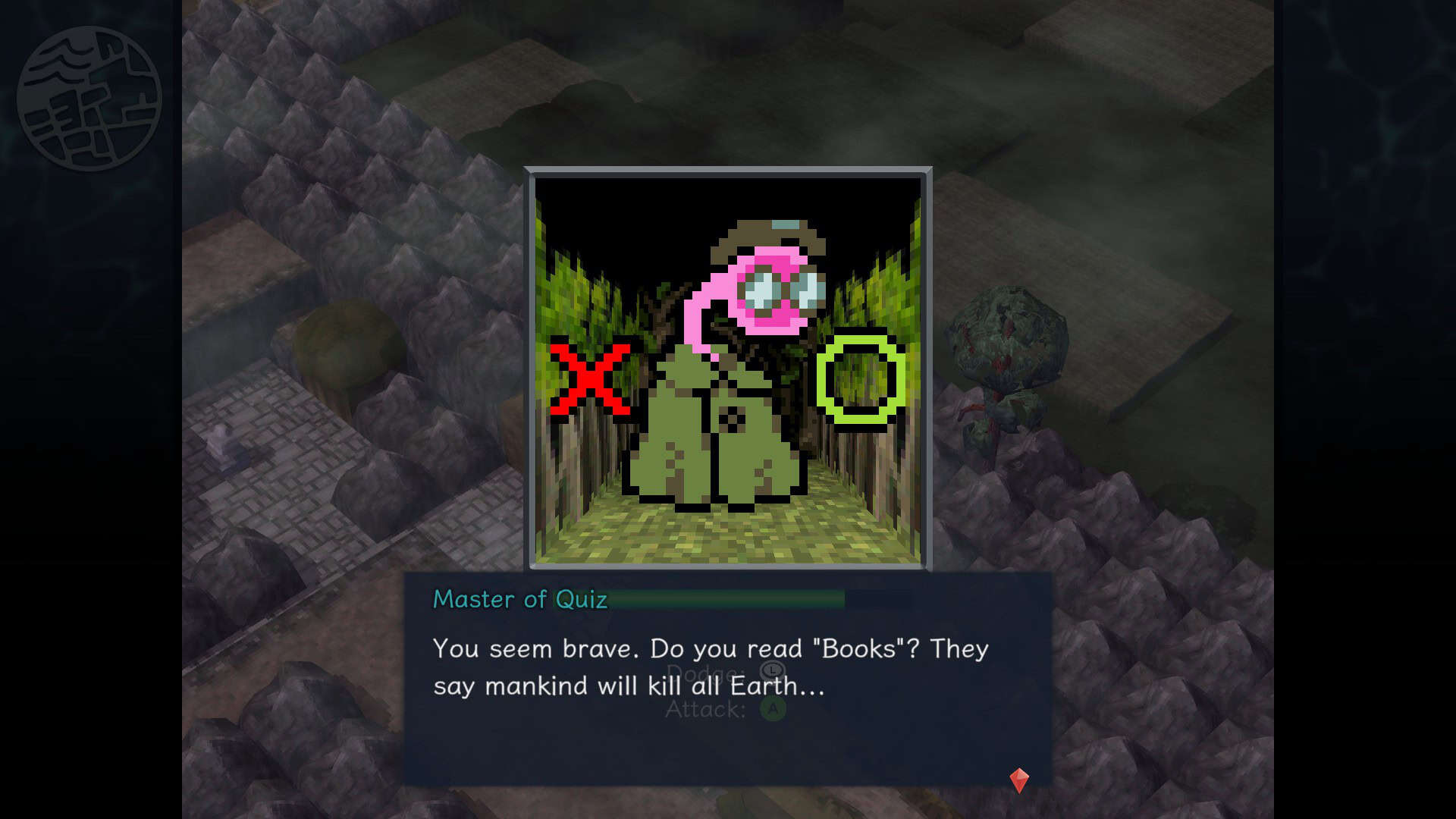
I think this can easily be remedied by not sticking around for too long before going after the main objective; it is, admittedly, a bit of a bad habit of mine to overindulge in a world early rather than leaving optional bits for the post-game, and now that more games are structured with a different kind of focus in mind, it is catching up with me. Though I think I would not have as many great memories of Angeline Era without it.
The top-down, zoomed-out perspective also always leaves me feeling a bit less personal than a more zoomed-in, behind-the-back view like the one found in Analgesic’s past two games. It is used to great effect, and I cannot imagine the game without it, but I think it also contributed to some moments of lethargy. I would argue that all of the game’s most impactful sections come as a result of switching the camera, and perhaps the benefits of this interplay are the strongest argument for keeping it the way it is.
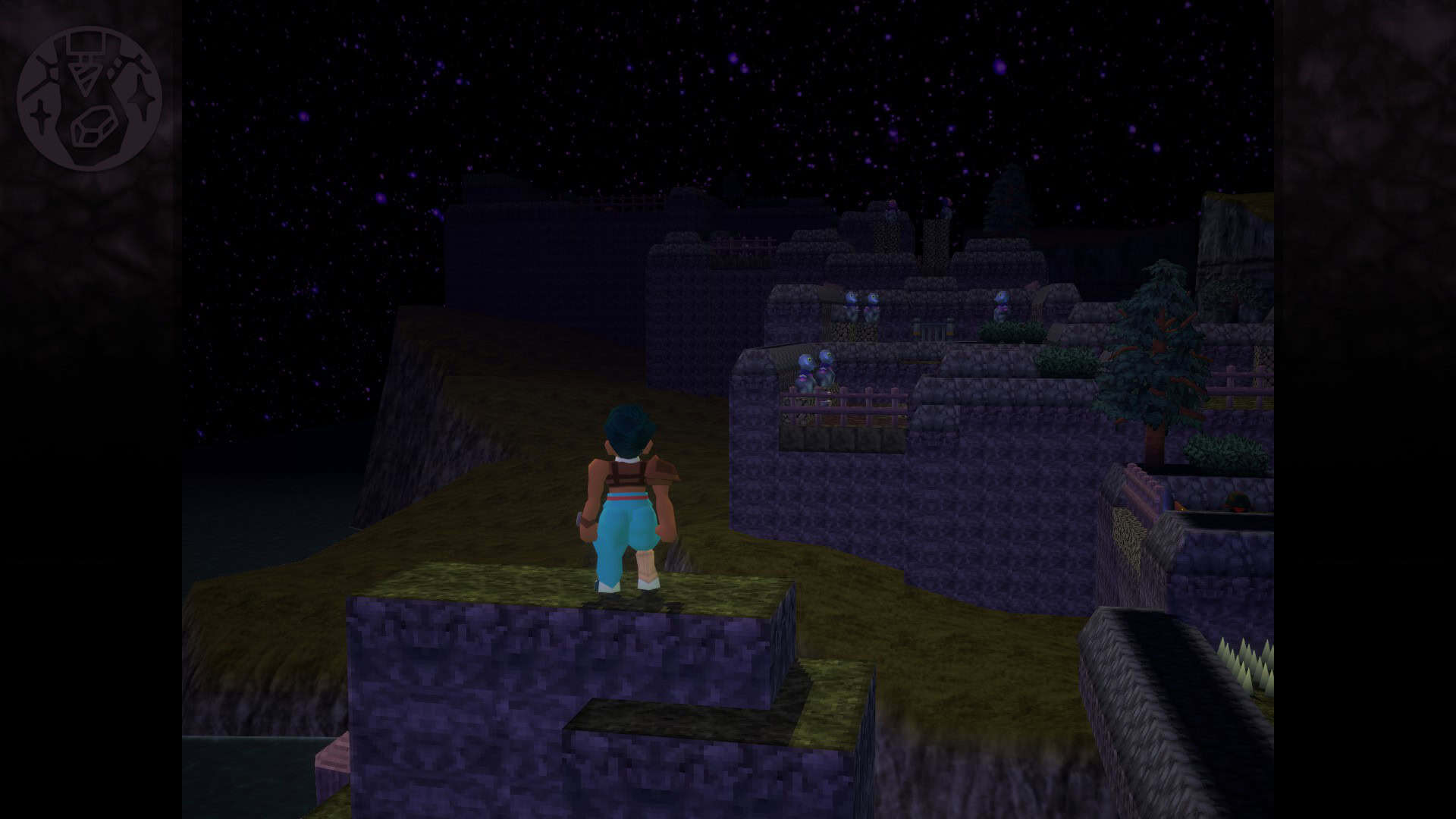
All this still leaves Angeline Era feeling mysterious, ripe for further examination. I never finished an Analgesic game feeling like I was able to quite put into words what it means to me, why each one leaves me changed, shaken. There is some element of counterculture to it, a well of inspiration so different from what is most rewarded in the industry. A chance of redefining one’s tastes in video games with each release, of opening up a new world of paths and dreams. The stories touch on things non-indies usually tapdance around at best. The creative spirit blooms and the heart expands. I take it all with me out into the world in hopes of finding myself, being able to spark something in others too, to forge connections.
Go forth, Era Explorer Tets!
Mateusz reviewed Angeline Era on PC with his own bought copy. This review is based on the version of the game available at the time of writing and our score will not be changed.
- Score
- 10/10 Masterful - Mateusz Recommends
- Summary
-
Angeline Era somehow brings an unparalleled sense of adventure to top off one of gaming's best ever years. Analgesic Productions has yet another instant classic under their belt.
- More
- GameObserver's Review Policy


 ObserverCrew Picks
 bserver
 bserver