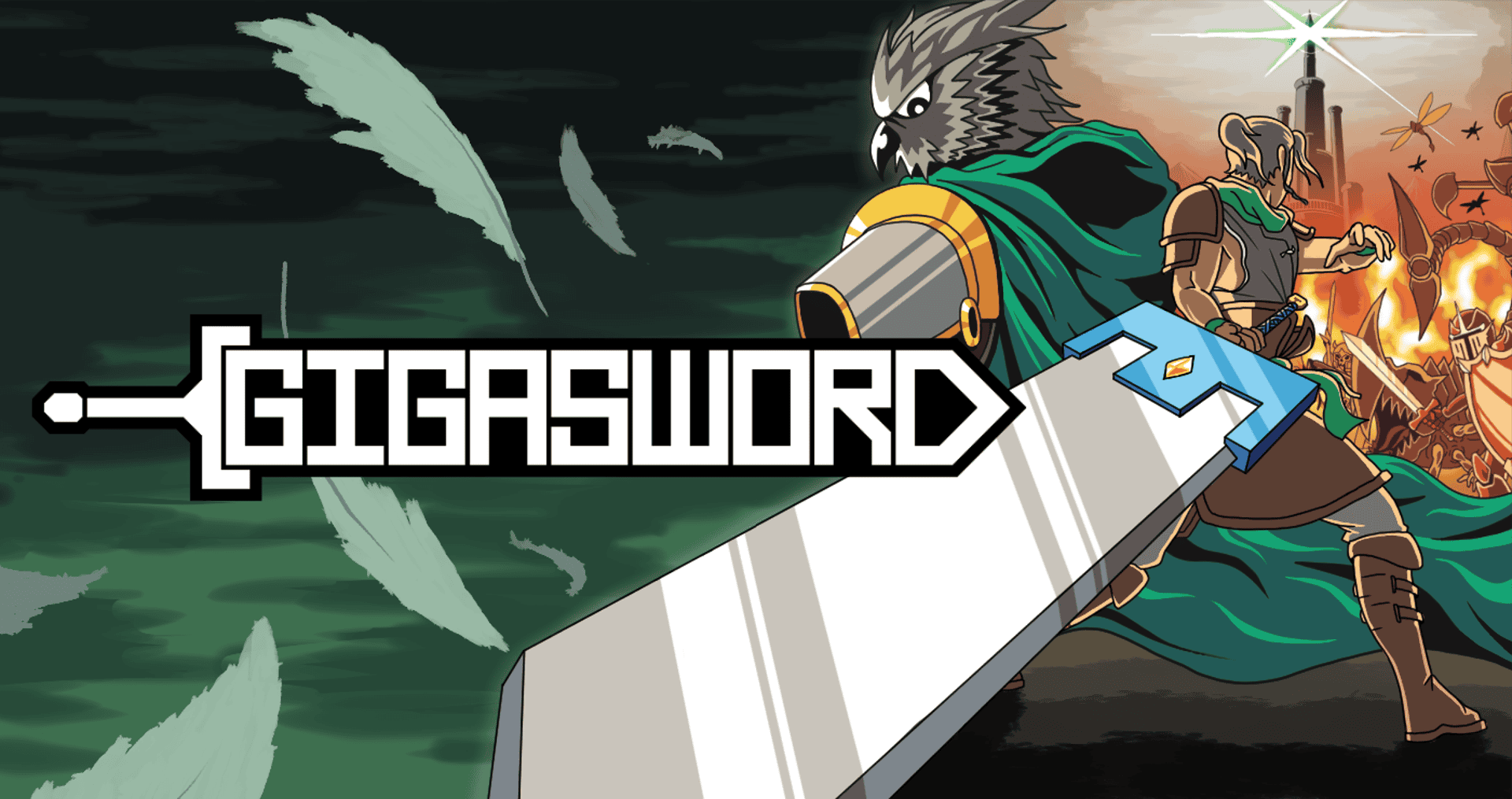
Giant swords are a common feature in popular culture: Berserk, Soul Calibur, Monster Hunter, Final Fantasy, Dark Souls, Elden Ring, Valkyrie Profile and more, all feature characters wielding swords almost as big, if not bigger, than they are. There’s a common joke about these characters and their swords being so big and heavy that they can barely move with them. Studio Hybrid’s Gigasword took that joke and made it the core mechanic of a video game.
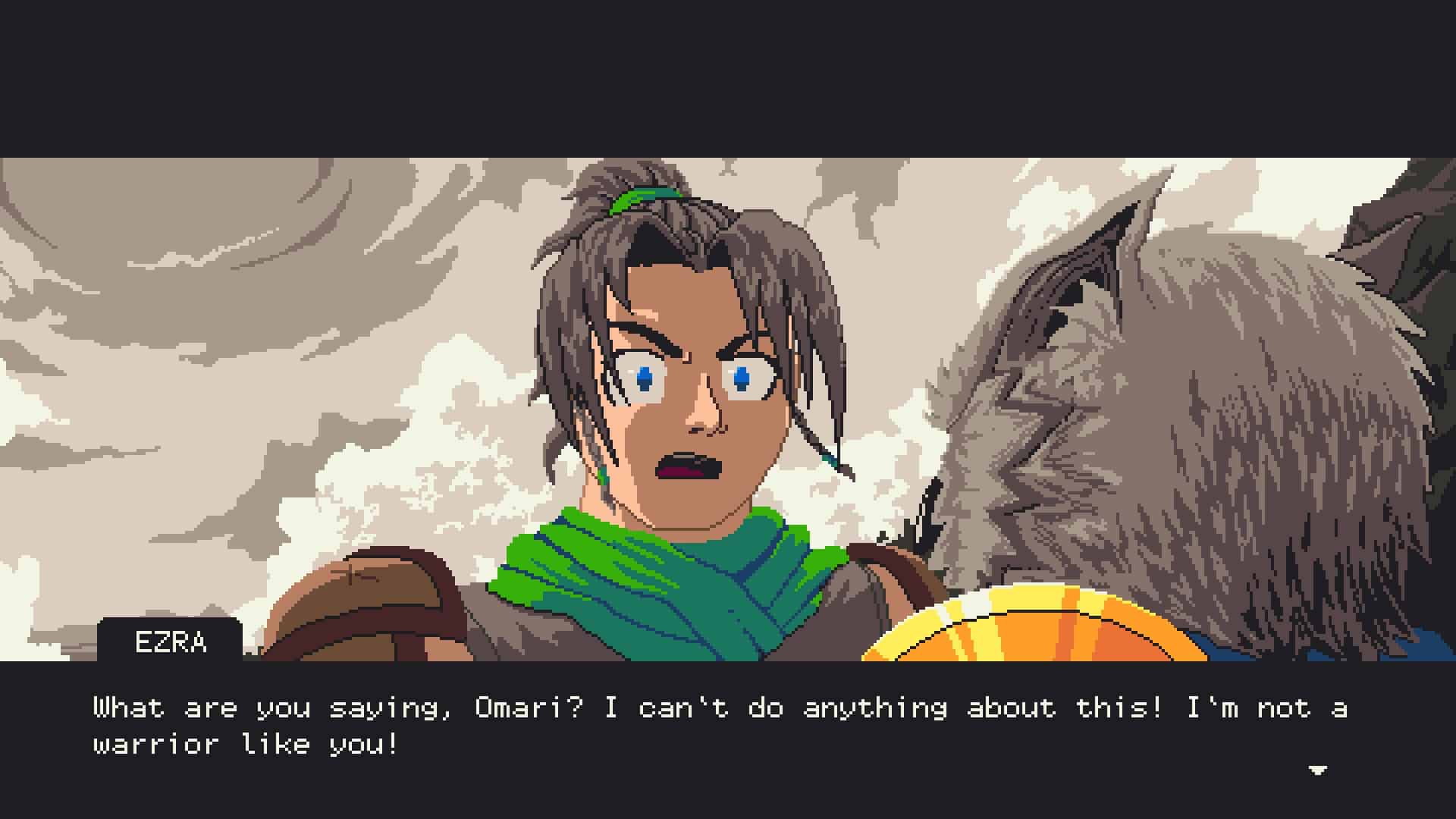
Gigasword stars an ordinary human, Ezra, who has lived on the streets of Thoenhart his entire life. His fortunes changed only when Omari, a member of the enigmatic giant owl people called Nocturne, showed him kindness. One night, Ezra learns of a plan by an ambitious general named Vaerst to invade their tower home in search of a powerful artifact of change that many humans believe the Nocturne are hoarding. Ezra tries to warn Omari, but the soldiers of Thoenhart attack before the Nocturne can prepare and they are slaughtered. Ezra finds Omari dying, learning that the Nocturne were guarding rather than hoarding the artifact called the Gnosis because it inevitably changed all humans who approached into monsters, all but one called the Constant. Omari, with his last breath, tells Ezra that as he is not changing, he must be the Constant, and that he has it within him to save everyone. Hearing this Ezra takes up Omari’s giant sword and vows to avenge his mentor as best he can, but with a heart full of doubt to how effective he could be.
Gigasword is very much an example of a Soulsvania in that your main character has a limited health pool, enemies can easily overwhelm you with damage if you’re not careful, and you lose resources on death that you can reclaim later. But it’s so much more than that, and it’s also more than a joke about heavy swords, even though that mechanic absolutely informs the entire game.
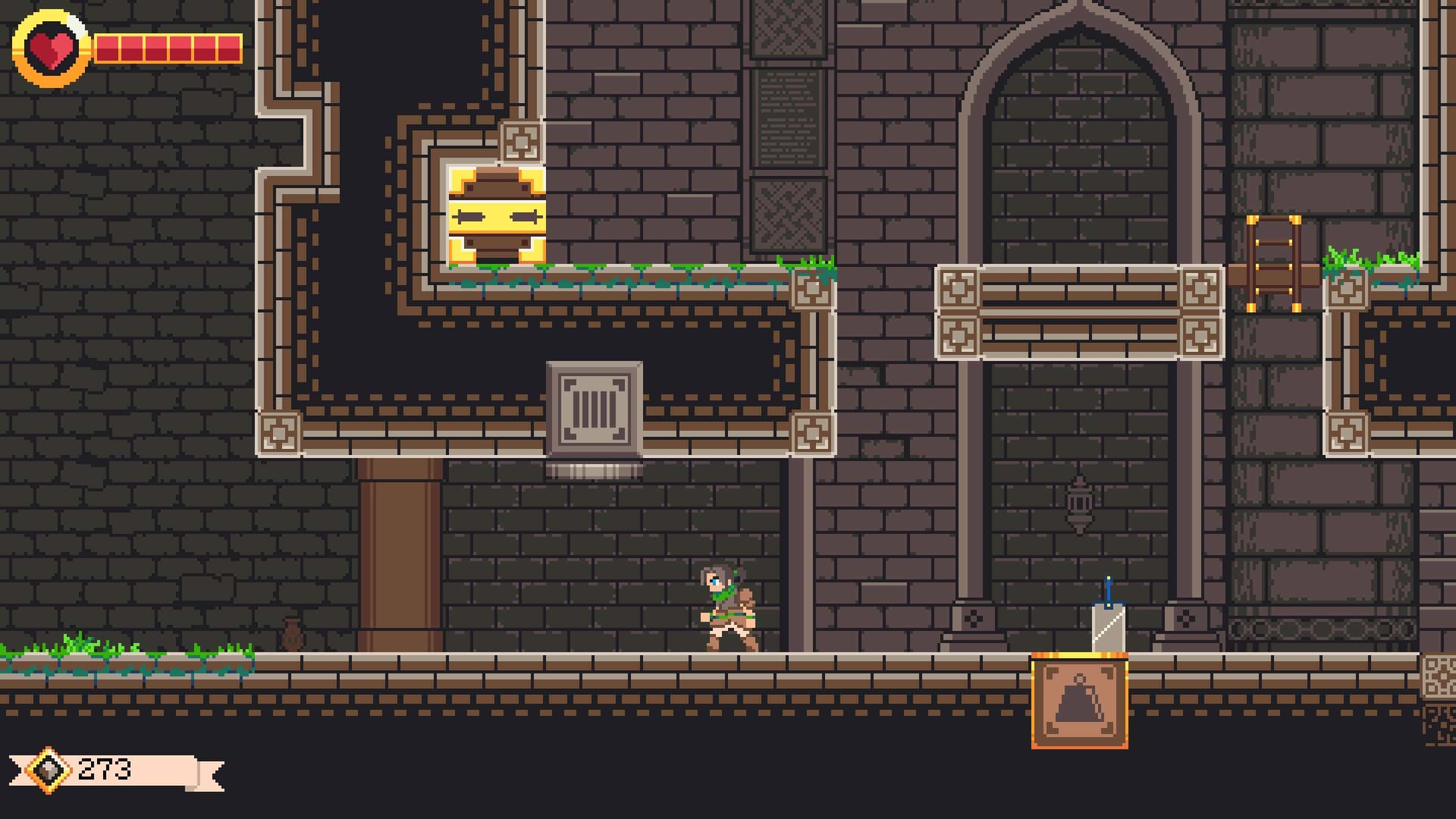
You start the game without the sword to get used to playing as Ezra and his movements, including his ability to jump several times his height. You then get Omari’s sword and the gameplay changes dramatically. Obviously Ezra can now attack, but his ability to jump is drastically reduced. In fact, it’s very difficult to make the basic jumps between platforms without using midair attacks to give Ezra a little extra push in the direction you want, and his ability to grab ledges and climb up them is also gone. He can still roll, but his mobility in general is greatly reduced. There are several places where it’s literally impossible to make it to where you need to because Ezra has a sword. But the sword isn’t glued to Ezra. You can put it down at any point so Ezra can climb tall ledges, pick up other objects, and do complicated and dangerous platforming to solve puzzles to make the tower a bit more traversable by unlocking ladders, which Ezra can climb with his sword to places that were otherwise impossible to reach. And he needs his sword for more than just attacking, of course; Ezra’s sword also acts as a key to doors, a switch for various mechanisms, and as a weight for pressure plates to keep doors open while he explores.
It wouldn’t be a Metroidvania if you didn’t get various upgrades to play with, and of course there are plenty. There are several different types, such as your movement upgrades which allow you to interact with objects in the tower to make movement easier. Some of these are available whenever, like the charge attack that lets Ezra smash walls, while some require interacting with specific objects in the tower. Sword upgrades are purchased by using gold while at save points. These are primarily combat upgrades, granting abilities like shock wave attacks (one at full health and one when doing aerial groundstabs), fireballs, and lightning attacks. These are nearly the only things that money is required for in the game, and I’d managed to amass enough of it early on to buy every upgrade, rendering money and its loss meaningless for most of the game. There’s also health and mana upgrades. Health upgrades come in two flavors: feather blessings and bunny blessings. Feather blessings come in the form of five feathers for each area. Find them in hidden alcoves and rooms, turn all five in, you get the area’s health upgrade. Bunnies work similarly, in that you need to find a bunny in a hidden room, and a carrot, also hidden away, to give to that bunny, and receive a health upgrade per rabbit. There are also mana upgrades which are hidden trials that require defeating all the enemies in a small challenge level in a given time to get more mana to cast fireball and lightning spells with. Let time expire and eyes begin shooting fireballs at you until you die. Fortunately there’s no penalty for dying in these challenges, as I am pretty sure I stumbled into the hardest of these first and died to it many times, only succeeding in an attempt several seconds after the eyeballs began firing.
From the get go, enemies are credible threats but can be taken out in one or two hits. Later enemies take more health, learn to block and dodge attacks, and fight at range as you approach. And later still enemies get very tough, are able to appear and disappear, constantly getting in your way. It’s a natural progression and while multiple enemies in a room can be overwhelming, avoiding them is often as valid a strategy as fighting them as they are – barring boss fights – often secondary to the actual trial of the game: the many puzzles.
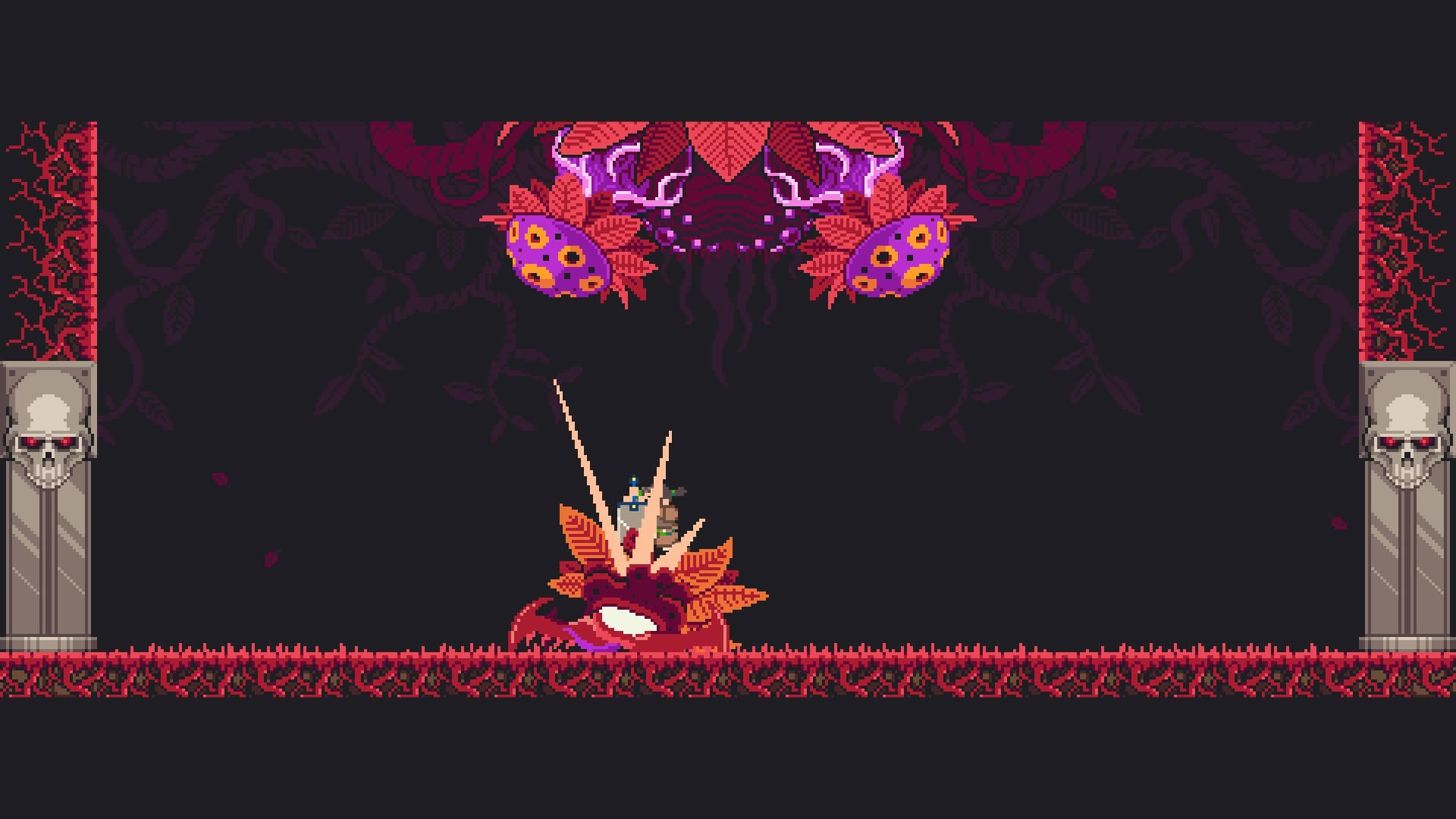
Nearly every room in Gigasword can be thought of as a puzzle, often just consisting of efficiently moving despite your limitations with the sword. I found these intuitive, and there was only a single occasion where the game could be softlocked, which was solved on a game reset and has now been patched. In fact every single bug I encountered during my playthrough has now been fixed.
My one major complaint about Gigasword is that it could use a fast travel system, even if it’s not always available for plot reasons. With money feeling quite useless after maxing out sword upgrades and a few money locks, adding the option to move between save rooms for a cost would help with revisiting areas for completion and give money a use late game. Besides this, the story is well done, with Ezra and Omari being both excellent characters. I would gladly play a sequel if one were to happen.
Tim reviewed Gigasword on PC with a provided review code. This review is based on the version of the game available at the time of writing and our score will not be changed.
- Score
- 9/10 Outstanding - Tim Recommends
- Summary
-
An incredible outing for a first-time and primarily a single developer. Gigasword delivers a masterful experience with a unique identity narratively as well as mechanically.
- More
- GameObserver's Review Policy

 ObserverCrew Picks
 bserver
 bserver