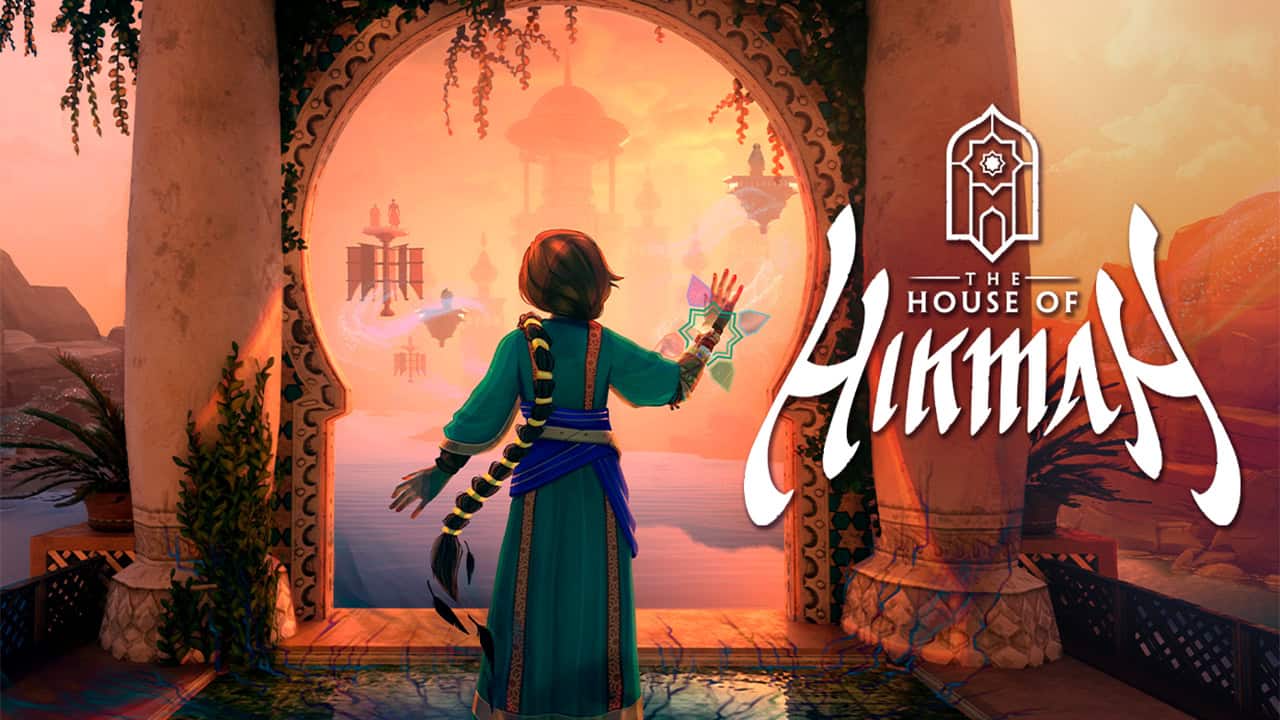
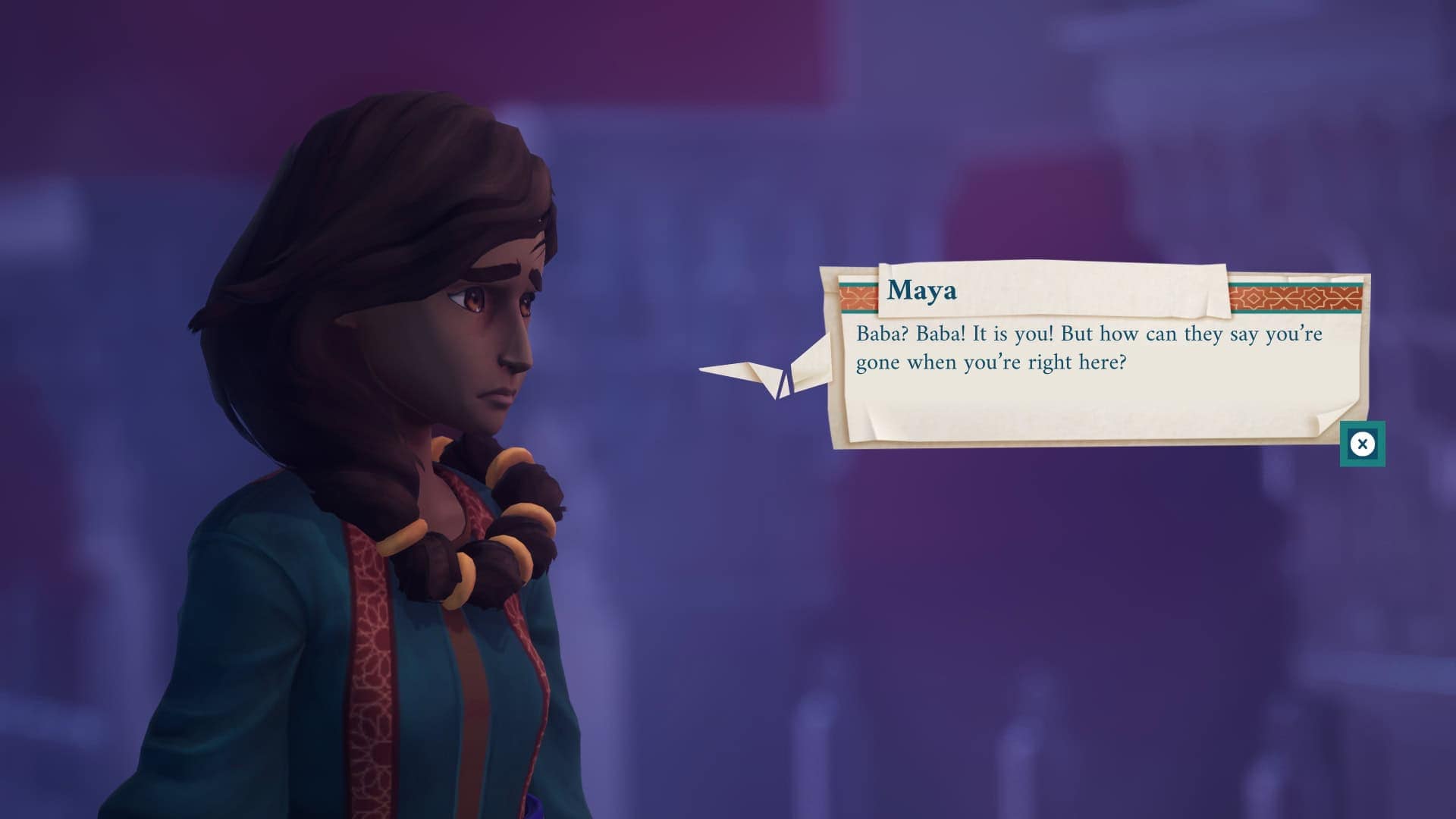
In The House of Hikmah by Lunacy studios, you are Maya. You live during the late Islamic Golden Age. You have always wanted to be a scholar like your father Abdullah, and work like he does with the scholars at the House of Wisdom. Or worked. After his sudden passing on a trip for the House, you inherit the Key, a device he invented, and are invited to visit the House to learn of its purpose and use, and perhaps take his place. Upon your arrival, you are put to work delivering letters to the scholars as a way of introducing you to them, their fields, and the Mystic Realm, the place halfway between the known and the unknown, the real and the imagined, and where they all work. Naturally, this quickly grows into a much larger task, and Maya finds herself involved in fixing the problems – practical and metaphysical – of the scholars, the House, and herself.
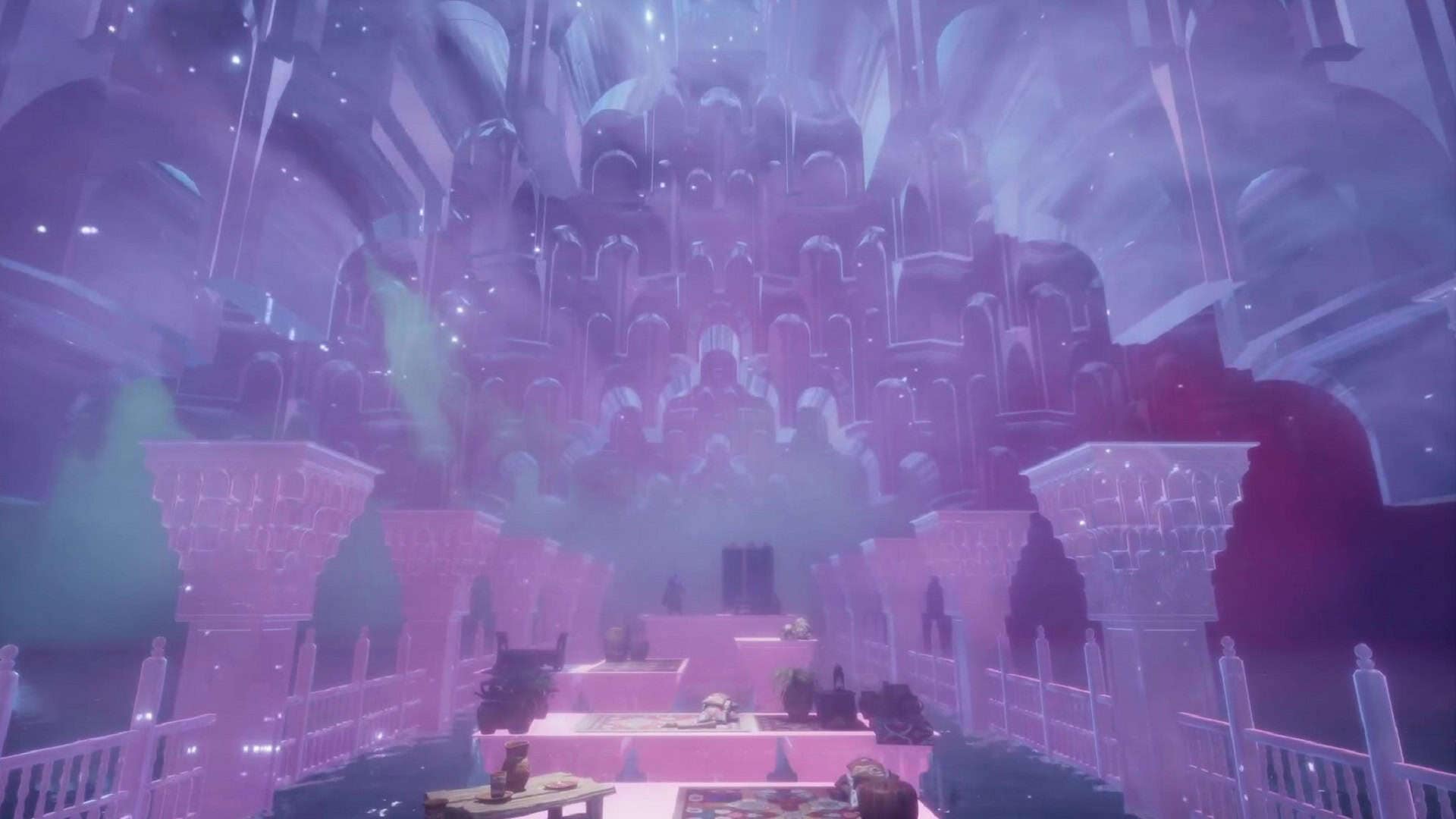
As Maya meets the scholars, all of whom are real world scholars of the era, for example, Miriam al-Asturlabi was an astronomer and maker of astrolabes from the 10th century while another, Jabi ibn Hayyan was a 9th Century chemist and alchemist. She is likewise introduced to the functions of her father’s invention, the Key. The Key allows its user to change the nature of mystic materials in the mystic realm, which is both a metaphor for the process of scientific discovery and, for the game’s purposes, a real place just outside of reality that can be shaped by a scholar’s mind. In lore terms, it is an alchemical tool of discovery. What that means in terms of gameplay is that it lets you change the properties of various objects throughout the level. The Key is also relevant to the issues plaguing the House of Wisdom – the strange shadows that grow larger and louder in each scholar’s mystic realm, echoing their doubts, fears, and regrets, and amplifying those feelings. All the while, Maya sees her father in her dreams, egging her on to use the Key and find him.
The House of Hikmah is a puzzle platformer. Naturally that means there’s a lot of pits you can fall into, though there are no lives and no combat, you just respawn at a safe spot any time Maya would be put into danger from a pit or the like. At all times Maya has the ability to run, jump, and pick up solid objects that don’t weigh too much for her to lift. When inside the Mystic Realm she also gains the ability to glide for short distances, and to use the Key. The Key is the central puzzle gimmick of The House of Hikmah, and it allows you to change the composition of certain objects between a neutral clay-like material, aether, metal, glass, and light. You start the first level gaining the ability to transmute objects to and from aether, and gain the others as the game goes on, usually in a level with a scholar with an association to the material. Each material has its own properties than must be used to interact with the level in order to progress. Aether is intangible and all but invisible, and can be carried by the wind; metal is heavy, magnetic, and reflective; glass is often light enough to be picked up and affects the angle of light that passes through it; light is weightless, follows Maya around, and banishes the shadows that otherwise cause you to reset to the last safe spot.
You have to use the elements at your command to alter the objects and environment to plunge deeper into each Mystic Realm to aid the scholars. An excellent example comes in the Optician’s level, which starts with Maya creating a beam of light, and requires guiding that beam of light to the end of the level. To do that she must change the properties of several slabs to bounce the light onto different receptors to open up the path forward through the level. This starts off with simple fixed surfaces that you must use the powers of aether, metal, and gass to pass, reflect, and deflect the beam off of, but it quickly gets more complicated as the surfaces can be moved and rotated, or their position can change because their weight changes when switched between the different compositions. The challenge escalation is exceptional, and continues even in levels where Maya loses access to the Key, and must rely on the environment itself to change the objects she needs how she requires.

My only real complaints with The House of Hikmah’s mechanics is with the game’s floating. You activate the float by pressing and holding jump again in air. This is absolutely fine, but the problem is that you can only activate it once, and if you release the button, you drop like a stone, meaning it’s impossible to feather the float. This can be irritating in levels with wind currents, which Maya enters and exits also by pressing the jump button. My other gripe, and this is the sort of gripe I have a lot with puzzle platformers, is that the endgame where Maya has access to all the elements to solve puzzles isn’t longer. I don’t mean it’s short – though the game is a fairly quick play through – I mean I want more levels with that type of complexity.
I only encountered one recurring glitch; levels tended to lag for a split second on loading, as everything populated in, but once everything finished loading even the biggest levels with the most moving parts never lagged on me. I did manage to get myself soft locked on a couple occasions, but I had to go out of my way to make it happen and each one has been fixed already.

I don’t want to spoil the story, but I will say that each character was wonderfully written and excellently acted in the short time we have to meet them all, at least in the English dub. I haven’t yet played the Arabic one, but I might try that one as I replay the game to find the collectibles I missed the first time around.
The House of Hikmah was a delight to play from start to finish, I only wish there was more of it. If you like puzzle platformers, historical fiction, or wholesome stories about persevering through loss, this is the game for you.
Tim reviewed House of Hikmah on PC with a provided review code. This review is based on the version of the game available at the time of writing and our score will not be changed.
- Score
- 7/10 Solid- Tim Recommends
- Summary
-
Beautifully crafted, with a strong narrative and some very clever puzzles, The House of Hikmah mostly suffers from a somewhat short total play time.
- More
- GameObserver's Review Policy