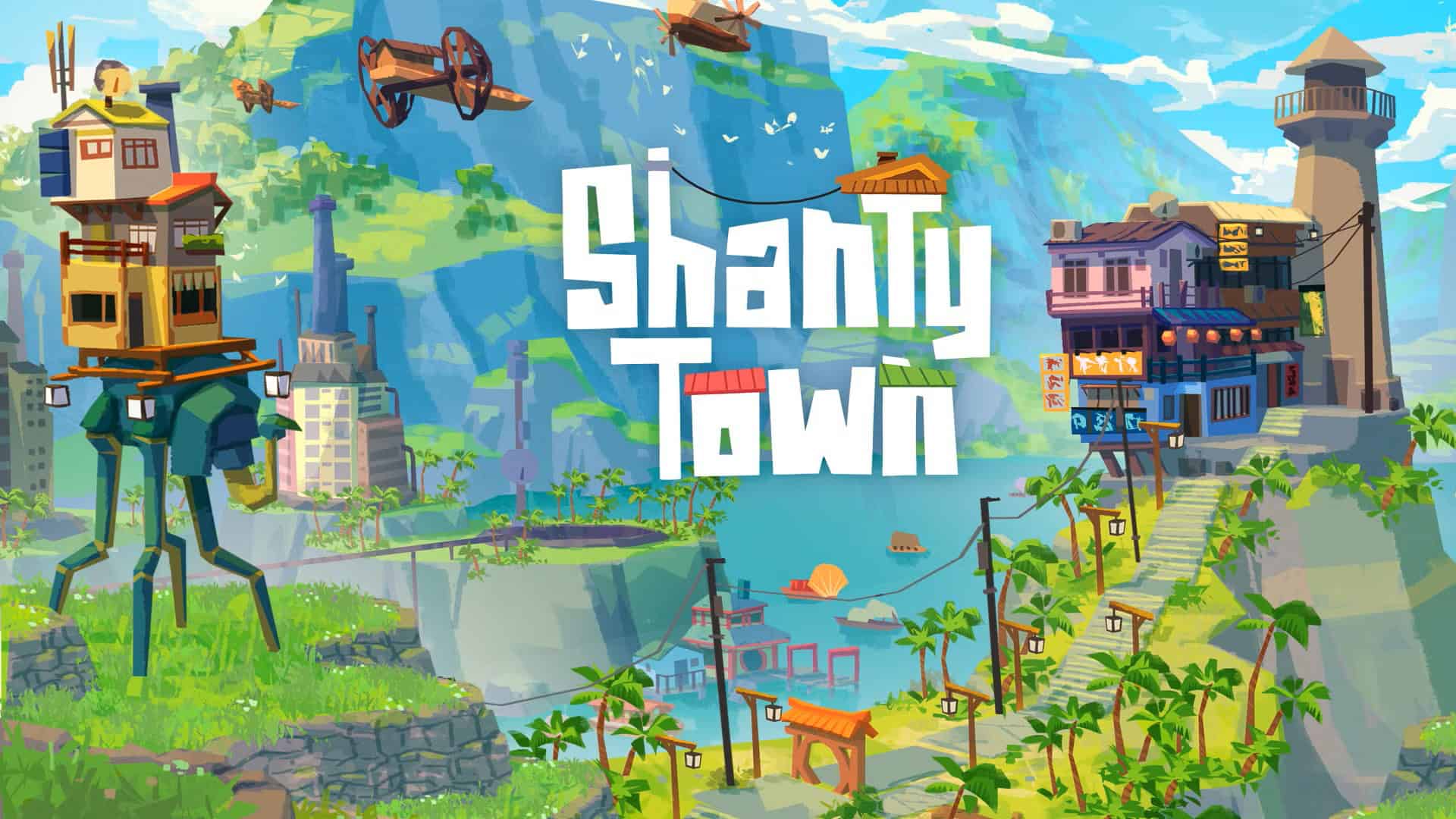
I have long been enamored with miniature worlds, from dioramas to model trains; it is no surprise that as an adult I am a massive fan of city-builders and building simulation games. ShantyTown, the debut title from solo developer Erik Rempen, is a cozy diorama simulator with an actual mission structure. I always prefer for there to be a purpose to how I build, and this game delivers purpose in spades. Overall, ShantyTown has a lot going for it, but it is unfortunately far too easy and much too short for my taste.
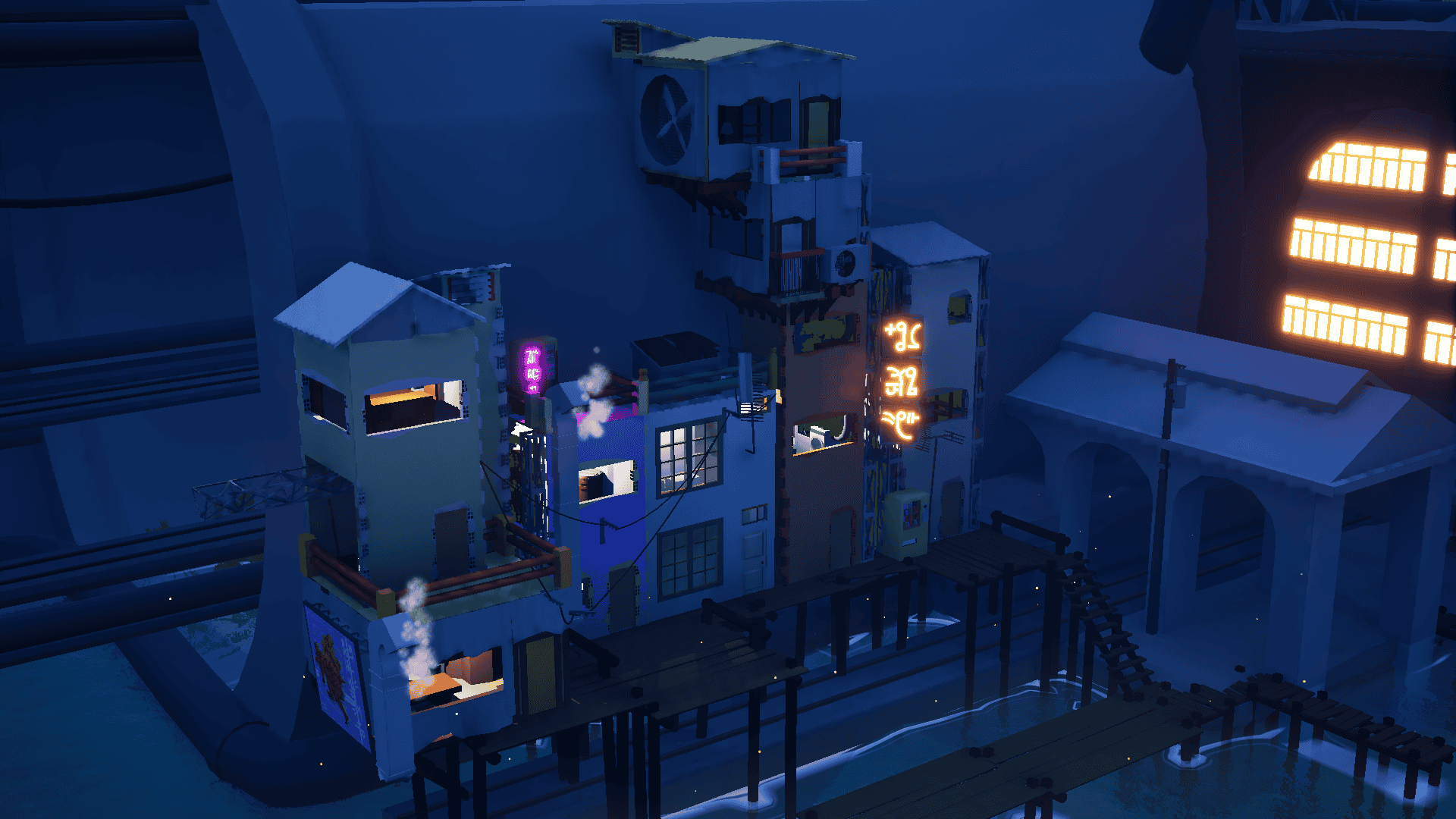
This building simulator is very simple, although it does have a thin layer of strategy tying the concept together. ShantyTown‘s campaign is made up of eight worlds, each with two or three levels. There’s the lighthouse, the port, the marsh, the train tracks, etc, covering a wide variety of different biomes. Each level confines the building area to a very tight space, with the main challenge being that the player must intelligently use this small area to complete the two to four listed objectives and advance. Most of the locations were kind of boring, although a few, like the giant broken pipe that serves as an active train station or the back of a giant bug dinosaur, were brilliant.
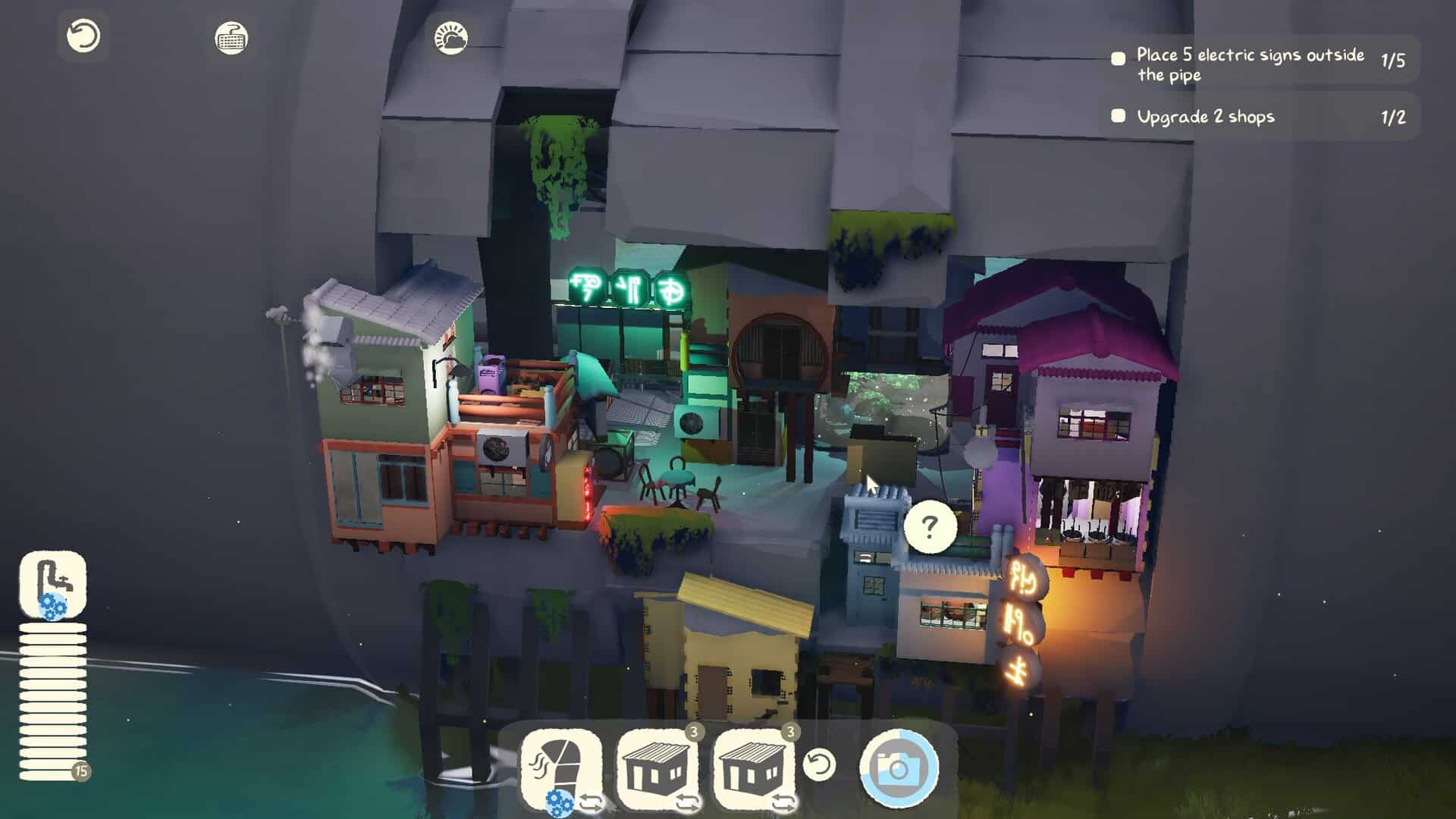
At the bottom of the screen is a hand, which by default has three cards representing building parts at a time. You begin each level with three building sets. Each building set contains a main body of the building, a door, and a window, with commercial buildings including other items like chairs and tables as well. Every time you place an item or set, a new one pops up in its place randomly from your “deck”. The deck is not accessible anywhere and always has a random assortment of all items you’ve unlocked in it, so ‘deck’ probably isn’t the right word – in any case, ShantyTown is absolutely not a card game or deckbuilder.
You’ll select from the three options in your hand of what to place. Very simply, items are categorized into either building sets, light sources, decorations, utilities, or miscellaneous. Each building set, when placed, shows a list of how many of each kind of item it needs to level up. So for instance, holding down Left Alt shows an overlay indicating that the house you just placed would like three decorations, two light sources, and three utilities. You can rotate all items as you like before placing as well as shift between a multitude of variants by hitting V. ShantyTown is pretty intuitive from there, and I loved how little tutorial and instruction was required to play.
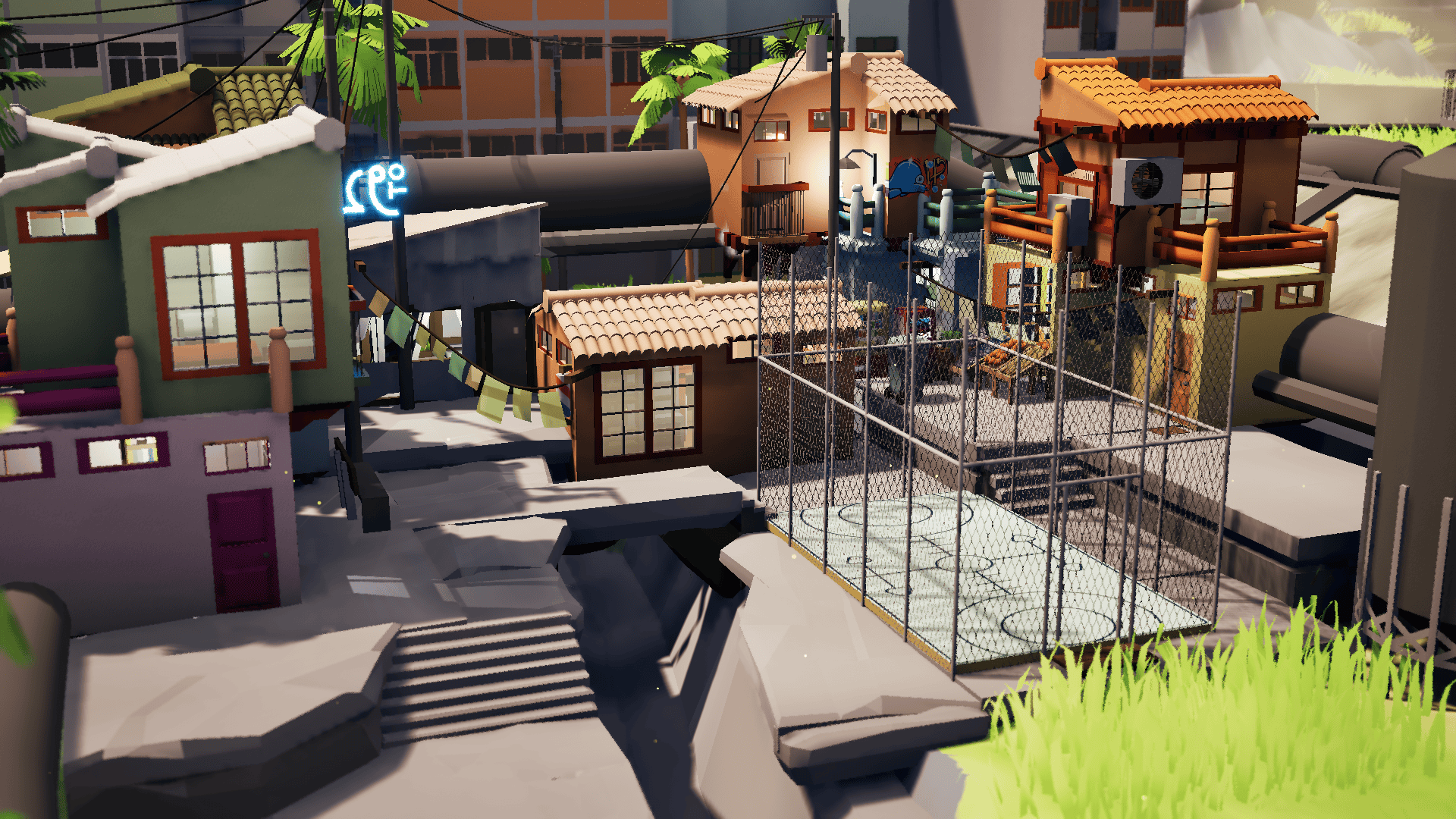
Each item you place has a radius of effect, with some items like floodlights providing a light source to the entire area and others like a garbage can providing a utility to a single building. The radius is made very clear before placing the item, so no second guessing. Once a building levels up, it’ll give you a wild card in your hand that, when activated, gives you a choice between three random cards. These choices typically include one brand new item that will then be introduced into your deck going forward, highlighted in yellow. The aptly named shanties are grubby and dreary, while the plethora of neon signs, plants, electronics, and furniture bring life to a semi-cyberpunk streetscape.
There are between two and four objectives in each level with requirements like “build a house three stories tall” or “level up two restaurants”. Some of these do require you to think and intelligently use space, so you’ll quickly learn to stack buildings as much as possible. Probably the most impressive thing about ShantyTown is how the items change shape and form in real time as you move them around before placing them, even actively restructuring entire buildings this way. Once you meet at least one requirement and have reached a minimum threshold of items placed, you’ll be allowed to take a photo mode free-cam picture of your diorama and move to the next level. You can also continue building until you have met all the challenges, run out of space, or run out of cards.
ShantyTown’s great strength is also its main weakness; it is very simple. I finished the campaign in less than three hours, finishing all challenges on almost every level without really even trying. There was no point in which I had to restart a level to beat a challenge. You do have the option to rerun levels at any time, which is great, but there was simply no need. I would love some kind of a hard mode for ShantyTown, although I can’t really imagine what that would look like. More challenges?
ShantyTown does feature a creative mode, although it’s a very strange one. Creative Mode allows players to visit any level they’ve beaten and essentially mess around with it with free access to all cards they’ve unlocked. Meaning that if you try out Creative Mode before finishing the campaign, your options are going to be very limited. It also allows you to either reset each level to start from scratch or else build on top of your previous build. Despite being a great lover of sandbox modes, I found no use for this in ShantyTown and quickly put the game down.
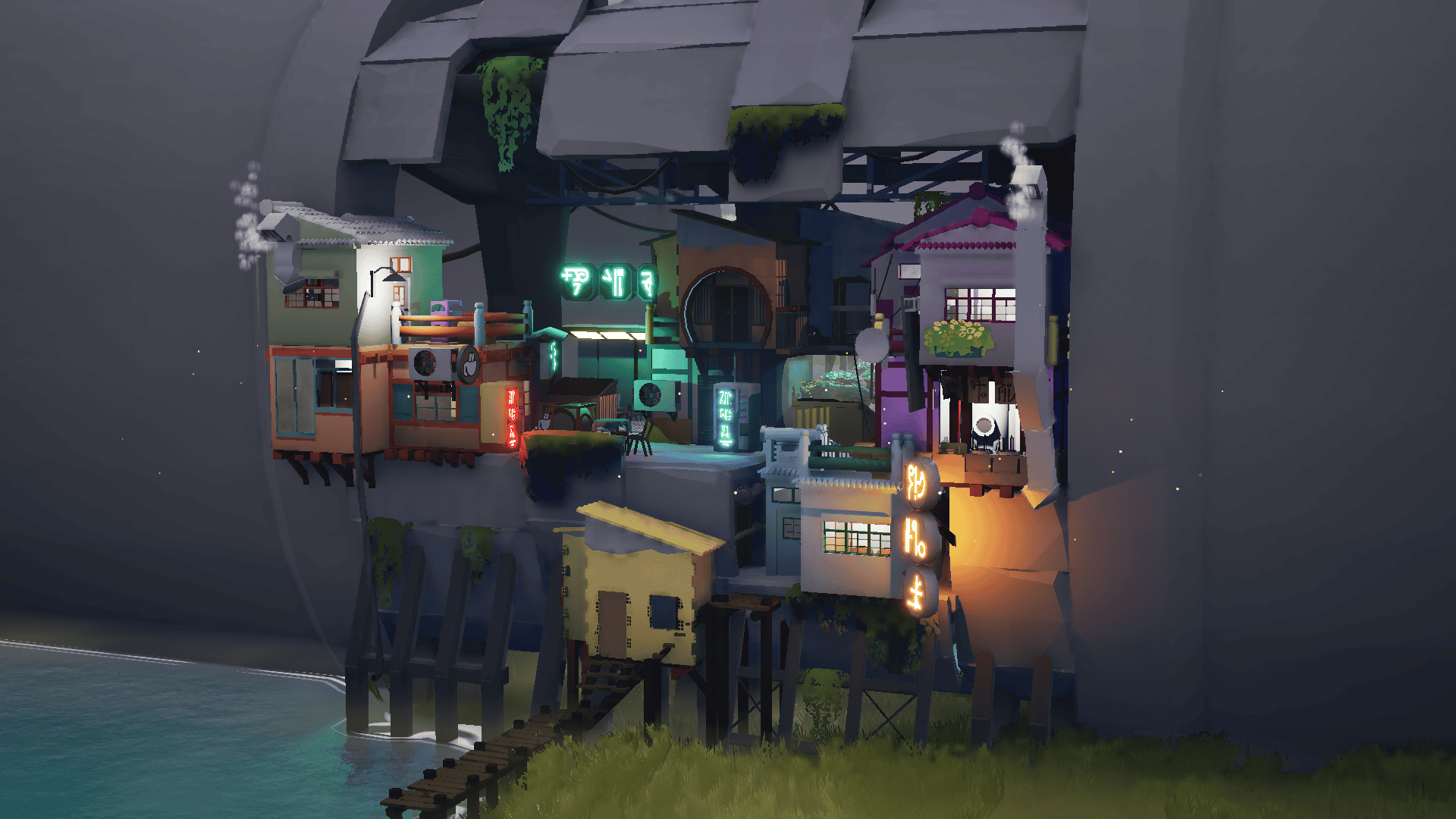
This should go without saying for a game like this, but ShantyTown ran excellently on my rig (12th Gen i9-12900K, GeForce RTX 4070) with no glitches or bugs and at a consistent 144 FPS. My one complaint with the controls is that there is no option to rotate the screen with middle click, as I prefer to do in city-builders, and it must be done by holding right click instead.
I had a lot of fun playing ShantyTown, but the experience was just a bit too underwhelming to call it great or impressive. Strangely, the demo was much more difficult than even the later levels in the launch build, so perhaps the developer got feedback and over-corrected? In any case, if a hard mode is added, I can see myself returning to play around a bit more, but as it stands this is a pleasant strategy-light diorama builder that can be breezed through in an afternoon. If that strikes your fancy, then grab yourself a shanty!
Nirav reviewed ShantyTown on PC with a provided code. This review is based on the version of the game available at the time of writing and our score will not be changed.
- Score
- 7/10 Solid - Nirav Recommends
- Summary
-
While ShantyTown is extremely fun, it's far too easy and stops short of taking the concept anywhere truly innovative.
- More
- GameObserver's Review Policy




 ObserverCrew Picks
 bserver
 bserver