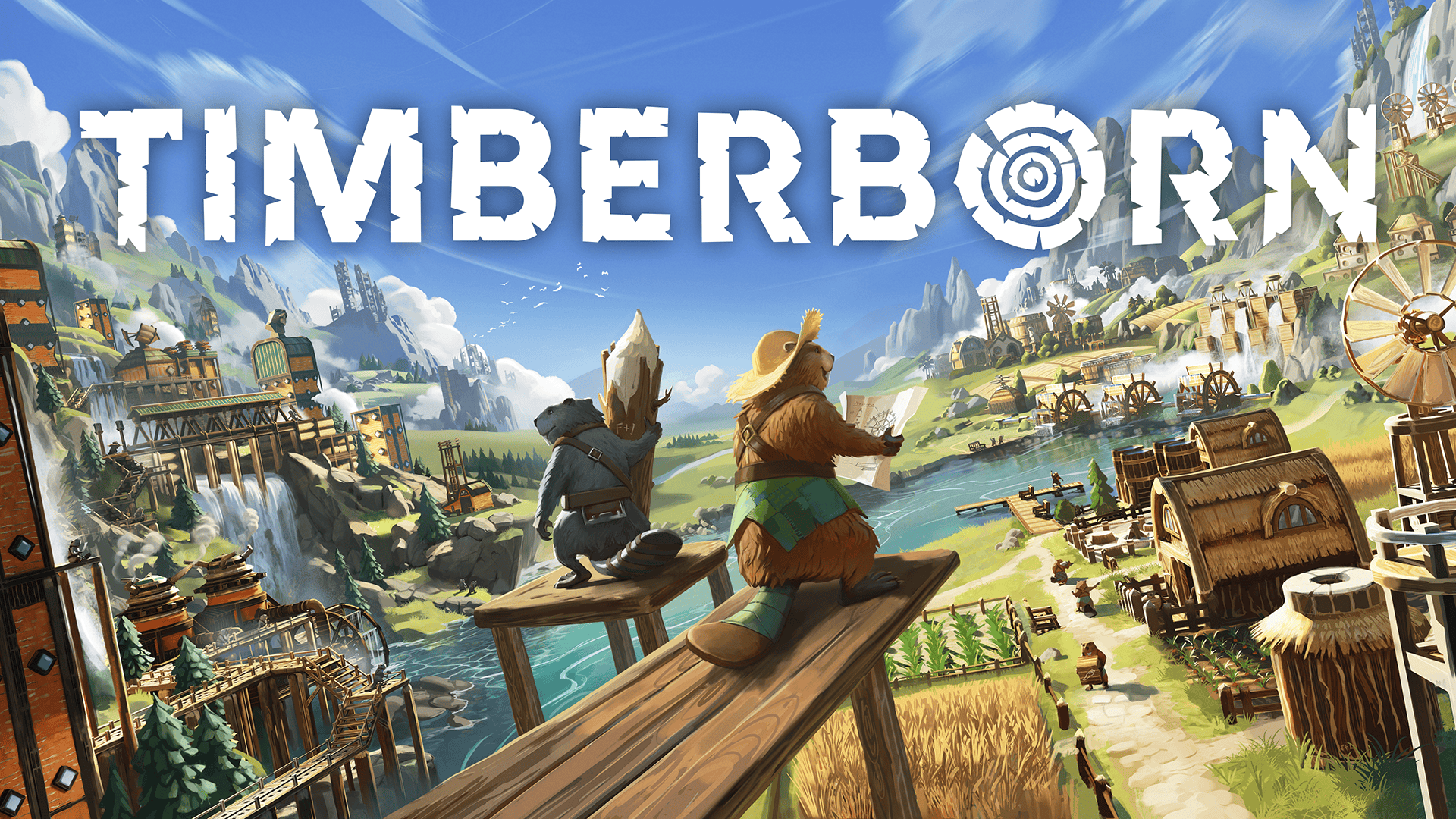
The earth is devastated, humanity is extinct, their cities crumbling, the environment in shambles. In its place, intelligent beavers determined to survive, expand, and thrive. That’s the story behind the very cozy and honestly addicting civilization management sim Timberborn by Mechanistry. It’s up to you to lead your ragtag band of Beavers as they attempt to found a new civilization and bring nature and/or society back as they deal with droughts, chemical spills, human ruins, human weapons, and even their own industries to keep their beaver colony alive. Or at least functional.
Timberborn has been in early access for a few years now, and during that time I’ve built a number of thriving colonies, but I decided to start anew and have some fun on a map with everything on offer, so I loaded a map into the game’s built in map editor, added a few nice and nasty surprises for myself, and got to work. I chose to forgo the more nature-loving Folktails faction and picked the unlockable, more industry-focused Iron Teeth, and got to work foraging, cutting, and building.
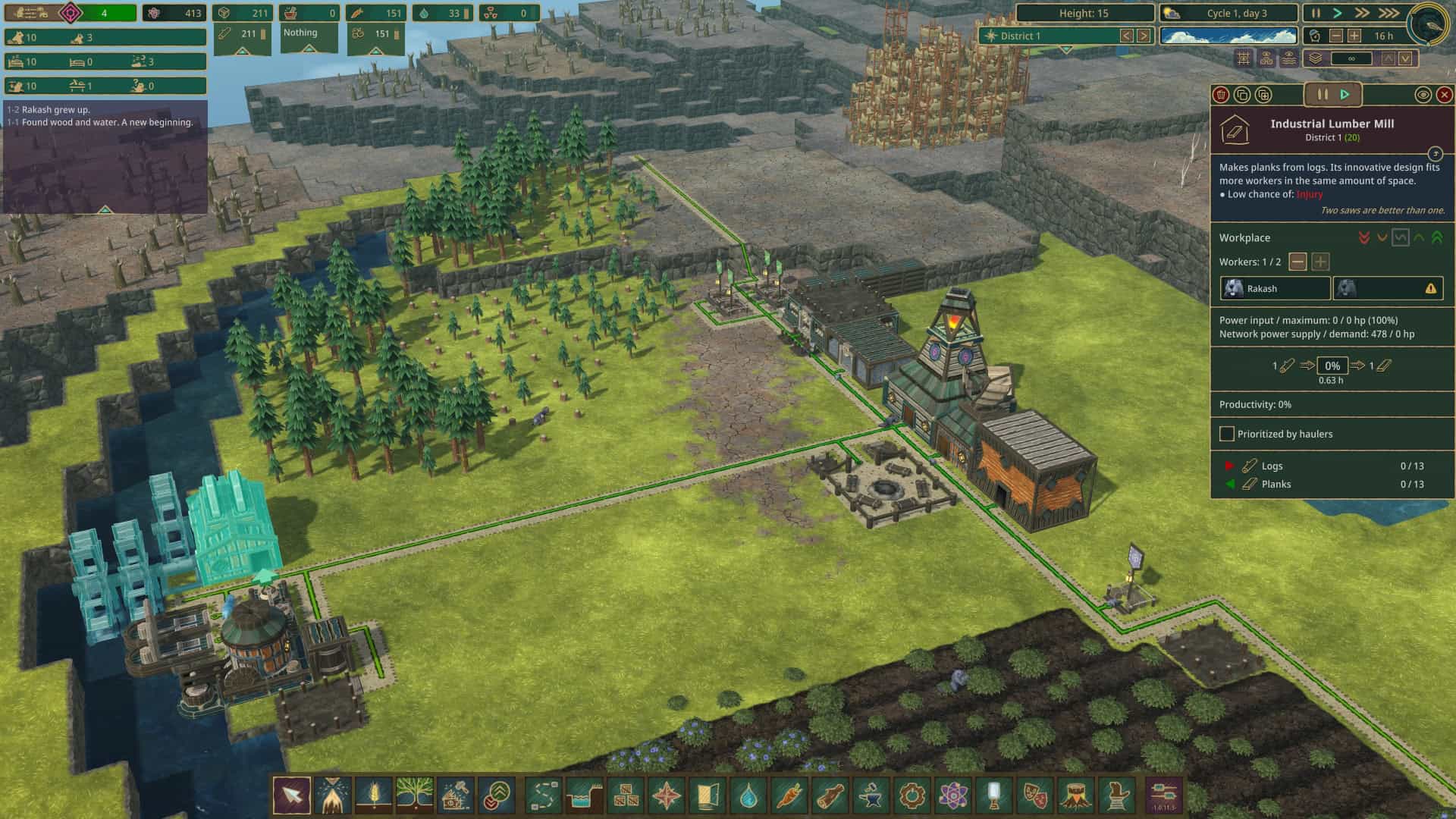
Resources are the name of the game in Timberborn, and while there are many to keep track of, food, water, wood, and science are the biggest. Food must be foraged, wood must be cut, water must be pumped, and science must be researched. But pumping drinkable water and researching science requires logs to build. Storing logs, food, and water also requires logs, but it can also require planks, which requires industry, which requires power, which means harvesting the power of flowing water or just plain beaver power. Power can also be stored as well, though you shouldn’t worry about that until well after your basic needs are met.
Why do you need to store all the food, water, and power, you might ask? Well, because droughts happen regularly on every map and your handy water source dries up for multiple in-game days, leaving your beaver colony without water, and water power, reliant on whatever they’ve managed to store in buckets or dam up in a reservoir and batteries to keep their crops from dying out. Another possibility that could befall your colony is a bad tide, in which all water sources turn temporarily toxic, sending out ‘badwater’ which is toxic to beavers, but which has its own uses. Multiple maps also have badwater sources, which flow into otherwise clean water sources and contaminate the supply, requiring capping or clever damming to control. Capped badwater sources can be forced to flow even during droughts, which allows for clever power solutions.
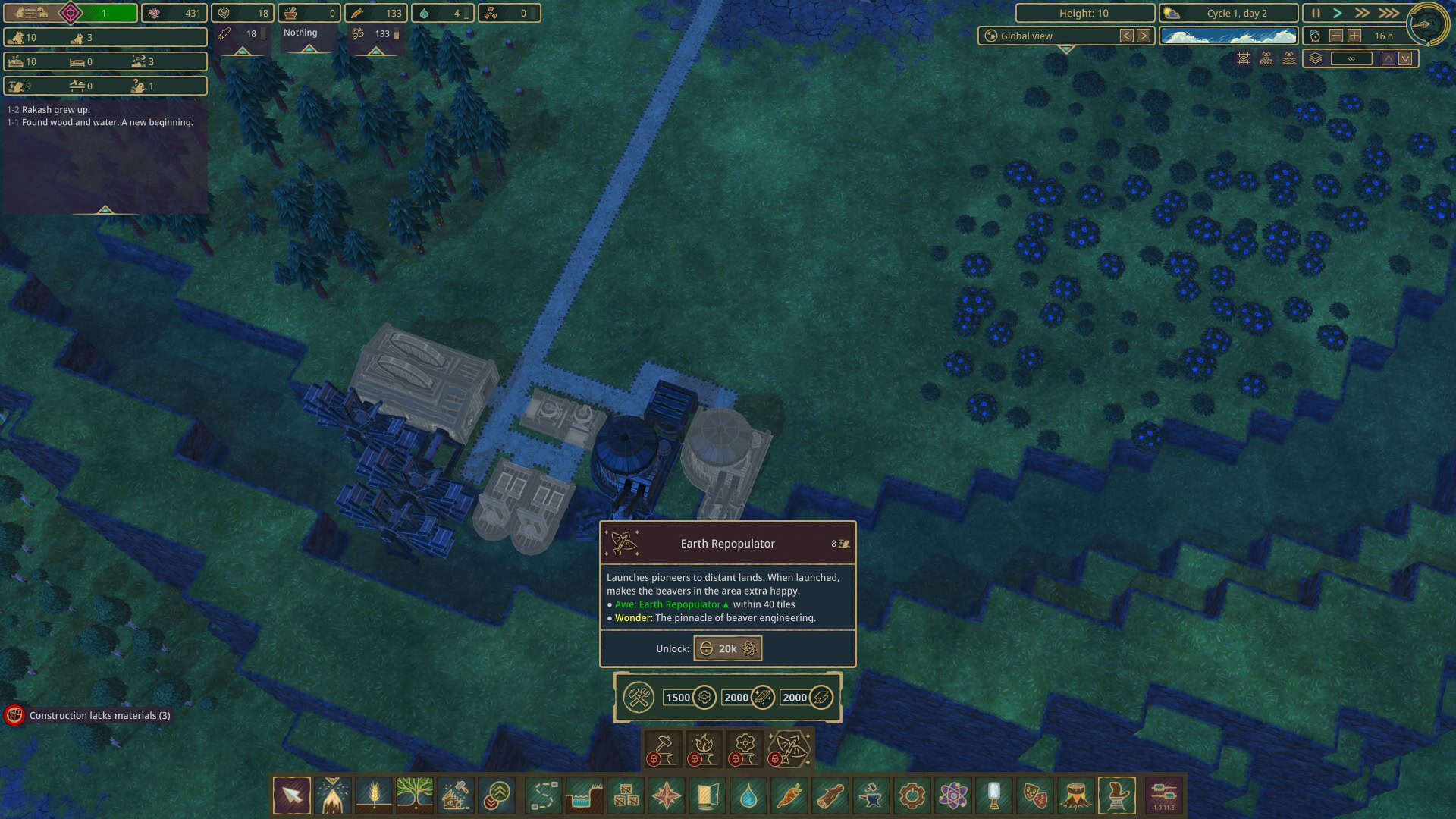
Besides basic survival, there are essentially two goals in Timberborn. One is to improve the quality of life of your beaver colony as high as you can manage by providing for your beaver’s overall needs. Not just food and shelter, but health, wet fur, food variety, socialization, fitness, aesthetics, morale, you name it. The other goal, and a semi-win condition, is to be able to build and launch your faction’s wonder, a complex build project that expresses the goals of each faction- The Folktails spread seeds far and wide, the Iron Teeth send beavers far afield to start new colonies. Each of these is a complicated project requiring many beavers and lots of resources harvested from across the map and multiple beaver districts.
The way towards both of these goals is through unlocking new build items, like better houses, water wheels, power shafts, engines, and mines to generate a steady supply of metal, beaver robots, and even automation tools, which are new for 1.0, so I’ve only had a little bit of time to play with them. They can be incredibly useful. For example, some sensors can measure the weather, the water depth, the flow rate, etc. You can link these sensors directly to almost any building. For example, using a weather sensor and a depth sensor with a relay, it’s possible to link up a flow rate gate to automatically close during a drought, and only open up when the water depth drops below a certain threshold. With enough sensors and relays, it’s possible to fully automate a colony. In fact, it’s entirely possible to create a self-sustaining beaver colony without any beavers in it. There are even achievements for it, but you can’t get there without unlocking these things, and you unlock these things through science, and you unlock science through research. From the very beginning of the game, you need to have at least one but probably several beavers working as inventors to build up science points to unlock new buildable items to improve your beaver colony and the quality of life for all the beavers in it. Beyond a certain point, the big bottleneck for unlocking items and improving your various beaver districts is science, even after unlocking each faction’s improved science buildings. As an example, building beaver bots requires building beaver parts, which require factories, which need metal parts and blocks, which require a metalsmith and foundry, which need to be harvested from limited aboveground ruins or unlimited underground ruins. Each step along the way needs to be unlocked, and it all takes science points. Fortunately, some maps come with demolishable human ruins that grant an incredible amount of science points, or you can edit a map and scatter a few more around as you like.
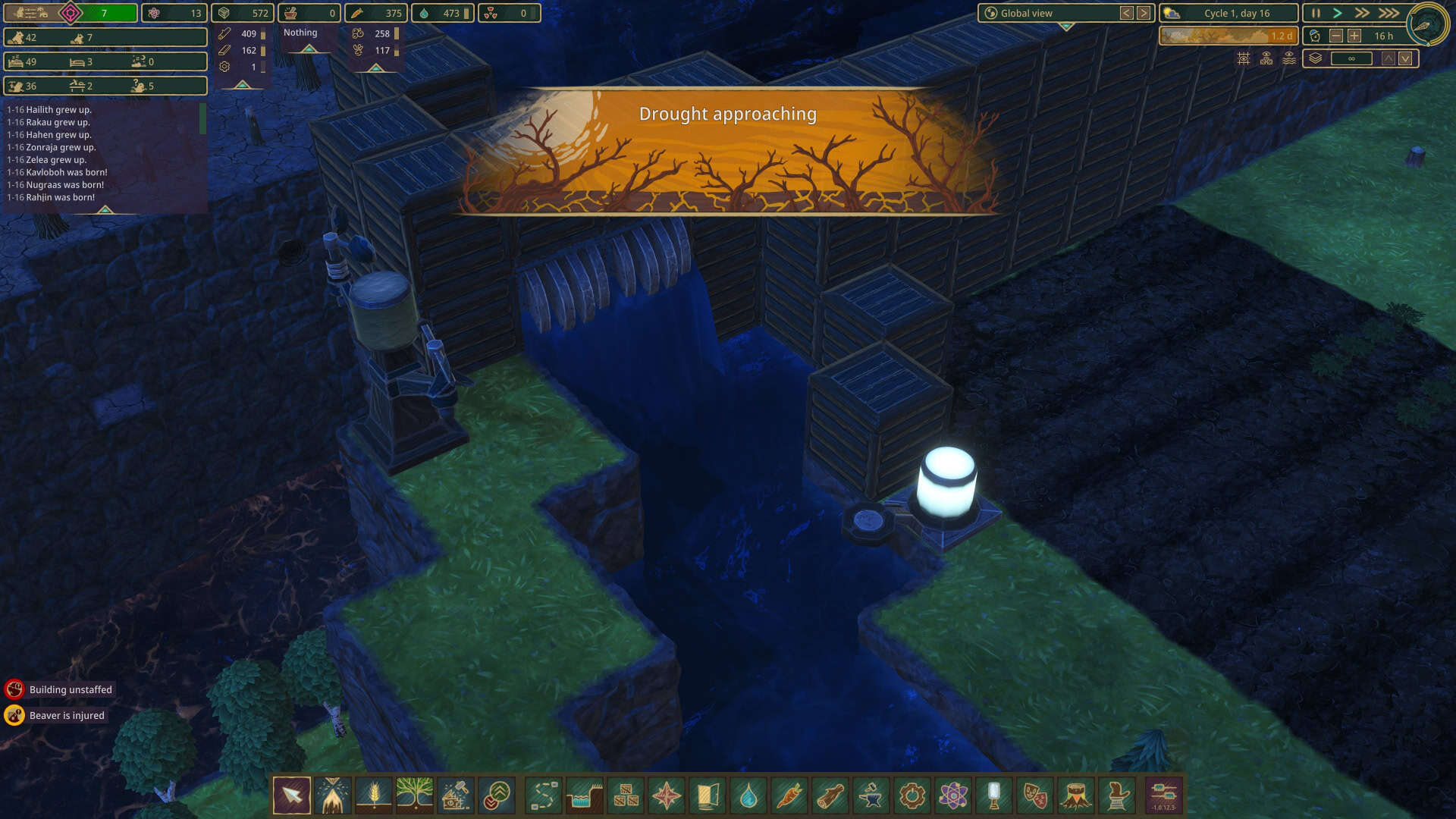
What really sets Timberborn apart, more so than the post-apocalyptic beaver theme, more so than the resource management and the goal of thriving, more so than simply surviving, is the verticality of the game. It’s more than the maps having multiple levels, it’s about being able to build directly on top of existing structures and fitting more and more facilities in extremely tight places. You can dam up rivers, build giant reservoirs, carve out new paths for water, or just dig trenches with dynamite. A late-game unlock even allows you to drill into the earth for dirt resources that can be used to build up with earth rather than wood or metal. You can build a structure that goes from the very bottom of the map to the very top, and then hang a gravity battery off it to power your industry during droughts.
Lastly, let’s talk mods and how amazingly receptive the developers have been towards them, and the amazing breadth of options available already from early access. Things from new buildings to entirely new factions already exist to be added to the game, and adding them can be done immediately in-game, no fuss or mess. The game even has a compatibility checker to make sure the mods work with the most recent version of the game. One mod, ladder, has been my go-to ever since it first appeared. I look forward to seeing what amazing new features the dev team and the enthusiast modders bring to the table. Timberborn is amazing. If you like city builders and resource management, it will provide an, as far as I can tell, unique experience among the genre.
Tim reviewed Timberborn on PC with a provided review code. This review is based on the version of the game available at the time of writing and our score will not be changed.
- Score
- 9/10 Outstanding - Tim Recommends
- Summary
-
A giant sandbox you can customize however you like, Timberborn offers a unique experience you can get lost in for hours and hours at a time.
- More
- GameObserver's Review Policy





 ObserverCrew Picks
 bserver
 bserver