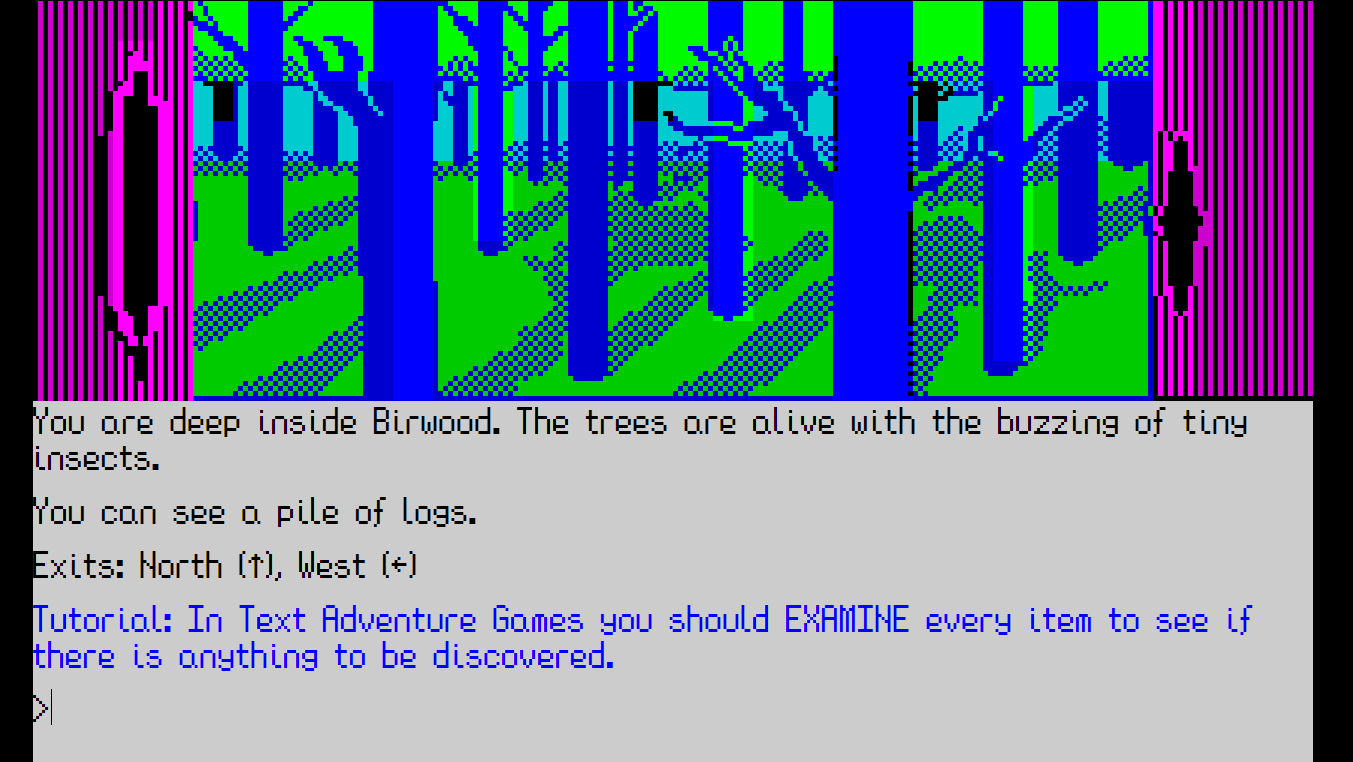
The sixth annual Text Adventure Literacy Jam closed to submissions on April 30. The 9 entries are being judged throughout the month of May, with the winners of the competition announced on June 1. This competition is, at its core, an endeavor to breathe new life into a classic genre, one that is integral to the history of video games as a whole.
Text Adventure games, also called parser-based interactive fiction, are defined, in an article by Chris Ainsley, as “a genre…in which the player interacts with a simulation of a game world via submitting textual commands.” These games are focused on creating an interactive narrative, their mechanics mimicking established human language. Dr. Justin Bortnick of the Interactive Fiction Technology Foundation describes these games, also known as parser fiction, as a way to create truly open-ended experiences for players:
“The experience of being presented with a prompt box where anything you imagine can be typed and in theory the game will understand and have a coherent response for you creates a massive possibility space, and your only limits are your own imagination and the sophistication of the parser’s natural language processing capabilities. Of course, this is a double-edged sword, because we can see the reality of parsers is that this possibility space can be very overwhelming for players, and NLP systems can also be very fiddly (“I wanted to pick up the stick, why doesn’t “pick up stick” work? Oh, I needed to type “get stick” how intuitive….)”
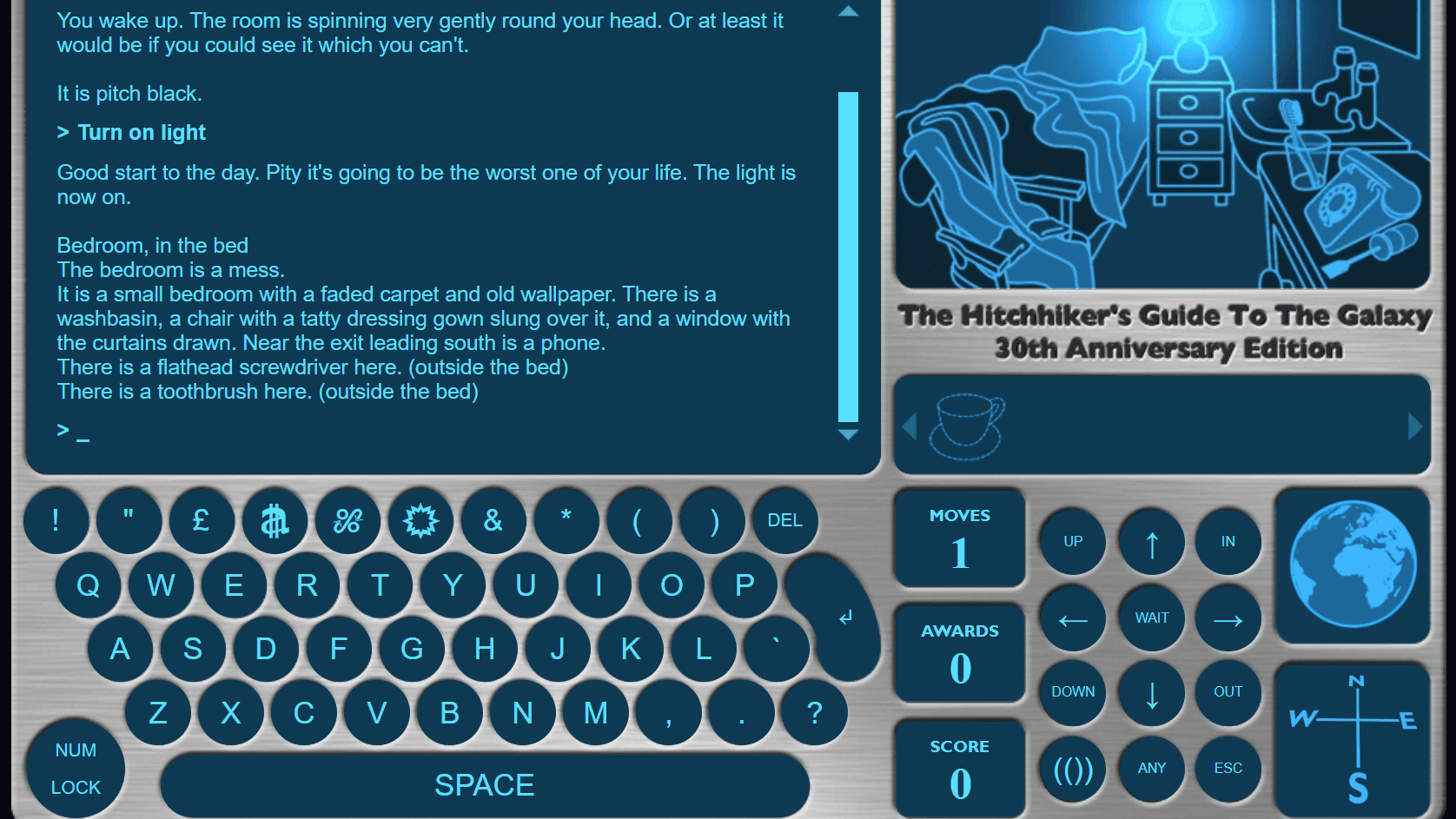
While the oldest of these games date back to the 1970s, the genre’s height of popularity was in the 1980s, with well-known games like Zork and King’s Quest making cultural impacts that last to the present day, as well as adaptations of works like The Hitchhiker’s Guide to the Galaxy and The Hobbit.
However, in the intervening years, the genre has “gone underground”, as competition organizer Garry Francis says. Although larger companies no longer find Text Adventures commercially viable, “With the advent of dozens of text adventure authoring tools, Joe and Jill Public were able to write their own games.” The availability of these tools under public domain or as shareware meant that passionate fans of text-adventures could continue to make and share their games, despite being out of the mainstream.
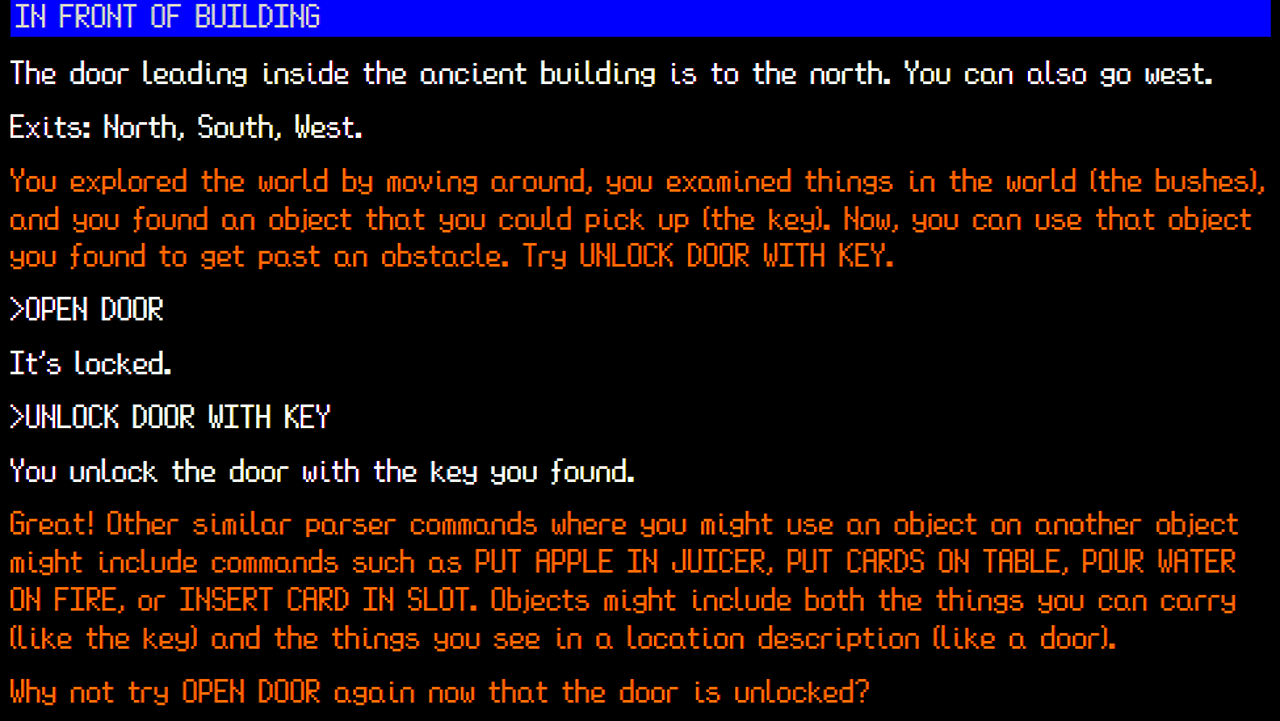
The Text Adventure Literacy Project was originally a movement by Chris Ainsley to encourage the creation of beginner-friendly games. Learning the mechanics of a text-adventure game presents its own challenge, but some classics of the genre are known to be particularly difficult. Presenting requirements that games have a tutorial as well as a low rating on the “cruelty scale”, meaning that there should be no unwinnable states, meant games with a lower threshold for a new player to succeed.
The competition started in 2020 to help incentivize participation in the project and attract new developers. For this year’s competition, according to Francis, there were over one hundred registrations, which resulted in 9 submissions, most using the optional theme of “archaeology”. The organizer also stated that he was pleased with the quality of this year’s submissions, as well as with the donations for the cash prizes. One anonymous donor not only gave two hundred dollars for the first-place winner, but a text-adventure-related e-book to every entrant, so that everyone who participated will receive a prize.
Although there are those that regularly enter the competition, Francis noted that there are always one or two first-time adventure authors as well. He began a mentorship program through the competition Discord, which saw great success this year pairing experienced developers with new ones. Though even those paired with mentors were not guaranteed to complete their entries within the competition’s timeframe, guidance from their mentors will certainly help them avoid the pitfalls new authors often face when creating a text-adventure game. Francis said:
“I think the biggest challenge for first-time developers is to resist the urge to jump in too early… You need to learn the conventions, then work out what works and what doesn’t for you as a player. You also need to know what’s been done before, as players are always on the lookout for a theme or topic that is fresh and original.”
For those wanting to try their hand at creating a text-adventure, you don’t have to wait until next year to get started. There are learning resources available year-round for many different text-adventure engines, including forums and tutorials. Dr. Justin Bortnick recommends Inform7, which he uses in his university classes, saying “students go from completely overwhelmed at the start to producing their own games within a single class session.”
If you do want to join next year’s Text Adventure Literacy Jam or any other interactive fiction competition, be prepared! “Come up with a good story, good characters and a nice range of puzzles,” advises Francis, as well as making recommendations regarding recruiting an appropriate number of playtesters. Francis also advises new developers to play as many text adventures as possible. If you have an itch.io account, you can play and rate this year’s submissions until May 31.
Garry Francis, Chris Ainsely, and the others involved in organizing the competition are seeing a successful yield of their efforts to preserve and promote the text-adventure genre. They laud not only its historical significance and position as potentially the longest-running genre of computer games, but its unique qualities as an immersive, interactive storytelling method, and continue to endeavor to share these experiences with new generations of players. You yourself can find beginner-friendly text-adventure games anytime by searching up “TALP” on itch.io.
The best and simplest advice Francis offers is “Don’t hesitate. Just do it. It’s a lot of fun.”


 ObserverCrew Picks
 bserver
 bserver