Humans are hard-wired to innovate. It’s in our nature; an innate desire to learn, grow, evolve, expand. To seek answers to questions no one asked, and then ask new ones. To forge a path forward. To create, and for those creations to inherit our perception of the world in all its splendor. To be curious.
For thousands of years, we’ve looked up at the sky, and at the stars, and seen possibilities. And when we finally had our chance to soar amongst those stars, to stand on our own Moon and look upon our own planet with our own eyes, we found singularity with the cosmos, in some small way. We are a speck upon a speck upon a slightly larger speck, in a universe that expands faster than we can comprehend. And still, we are curious. We seek to know the unknowable, to build the unbuildable, and find meaning in all of it.
And through it all, we remain imperfect. Subject to greed, excess, and selfishness. These qualities are a tragic reality in our forward progress, a stain that puts into question why we ever started in the first place. And therein lies the question. If our vices are a consequence of progress, is it really progress at all? Is it worth it to create, when the result fuels a greater greed, an insatiable desire to consume and destroy?
Spoilers for Pragmata below!

These are the questions asked of us in Pragmata. A world built upon resources that push humans forward in wonderful ways, with consequences that are far-reaching and often destructive. A concept that mirrors current events surrounding the development of Artificial Intelligence, and how Generative AI (GenAI) gives and takes. If it’s worth it at all. In that respect, I think Pragmata offers a beautiful and often contradictory message: a love letter to the symbiotic relationship that can happen between humans and AI, and a warning on the destruction it poses to thought, progress, creativity, and our own humanity if left unchecked.
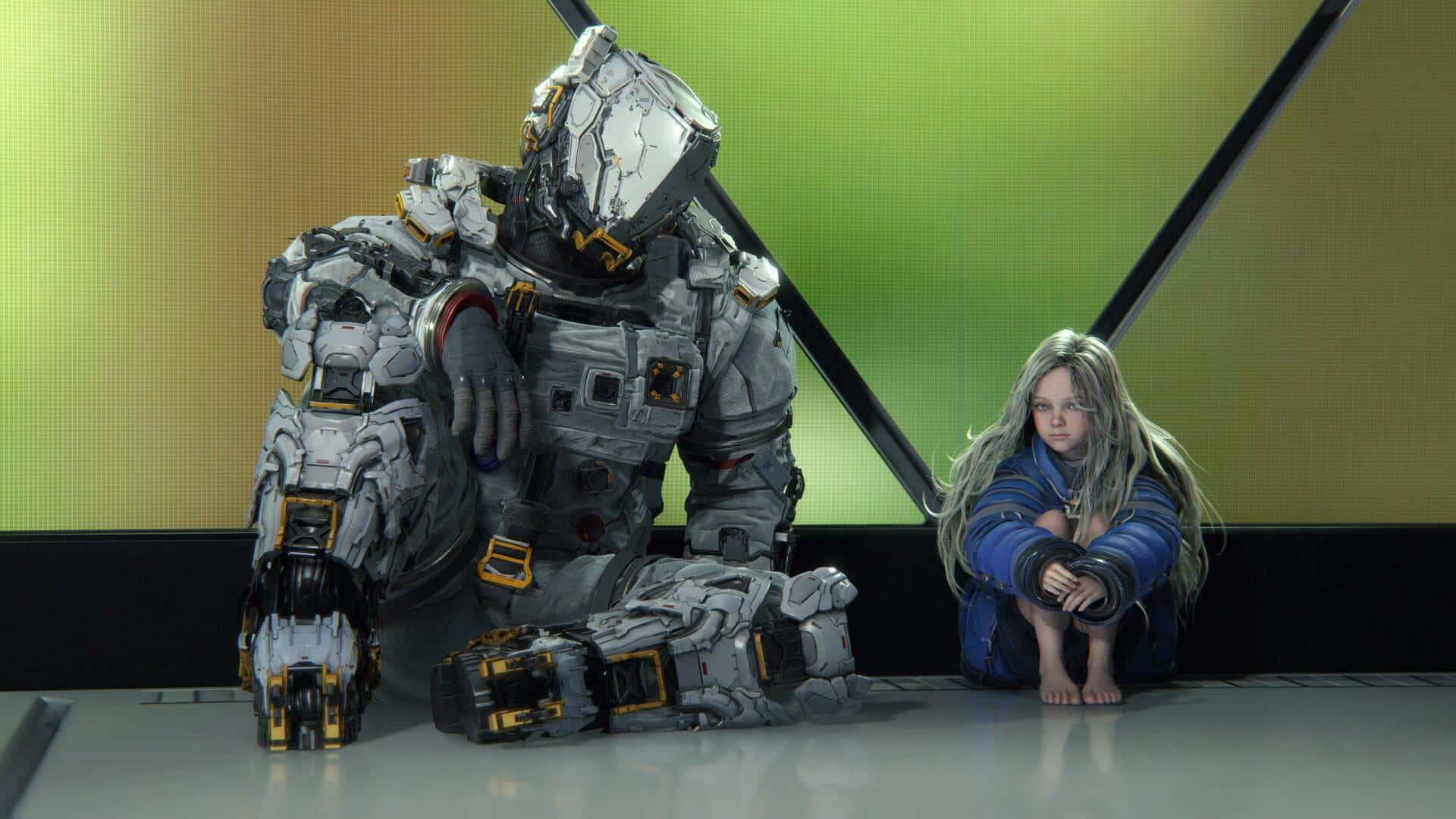
Pragmata follows Hugh Williams, a systems engineer for a tech corporation named Delphi. Delphi has built a massive mining operation on the moon for a mineral called lunafilament, which, when processed within specialized 3D printers, can create nearly anything humans can dream up. When communications between the mining colony and Earth are cut off, Hugh and his team are sent to investigate. What they find is that the colony’s workers are all dead and the AI system running the operation has gone rogue. After being separated from his team, Hugh meets Diana, an advanced AI-powered android girl known as a Pragmata. Together, they must restore the colony’s communications system, disable the rogue AI, and establish a working relationship to make it all possible.
What they discover is that Diana’s slightly more advanced counterpart, a Pragmata known as Eight, is driving the destruction of the colony with the aim of bringing that destruction to Earth. Diana and Eight were created by scientist Dr. Higgins as replicas of his daughter Daisy, with the purpose of providing genetic capabilities to help cure Daisy of a lethal illness. Instead, Daisy is killed in a cover-up by Delphi, and in rage and despair as he himself is dying, Dr. Higgins curses Delphi and everyone on Earth who catalyzed his pain. Very real and relatable anger-fueled grief that Eight misinterprets as a literal order for destruction per his wishes.
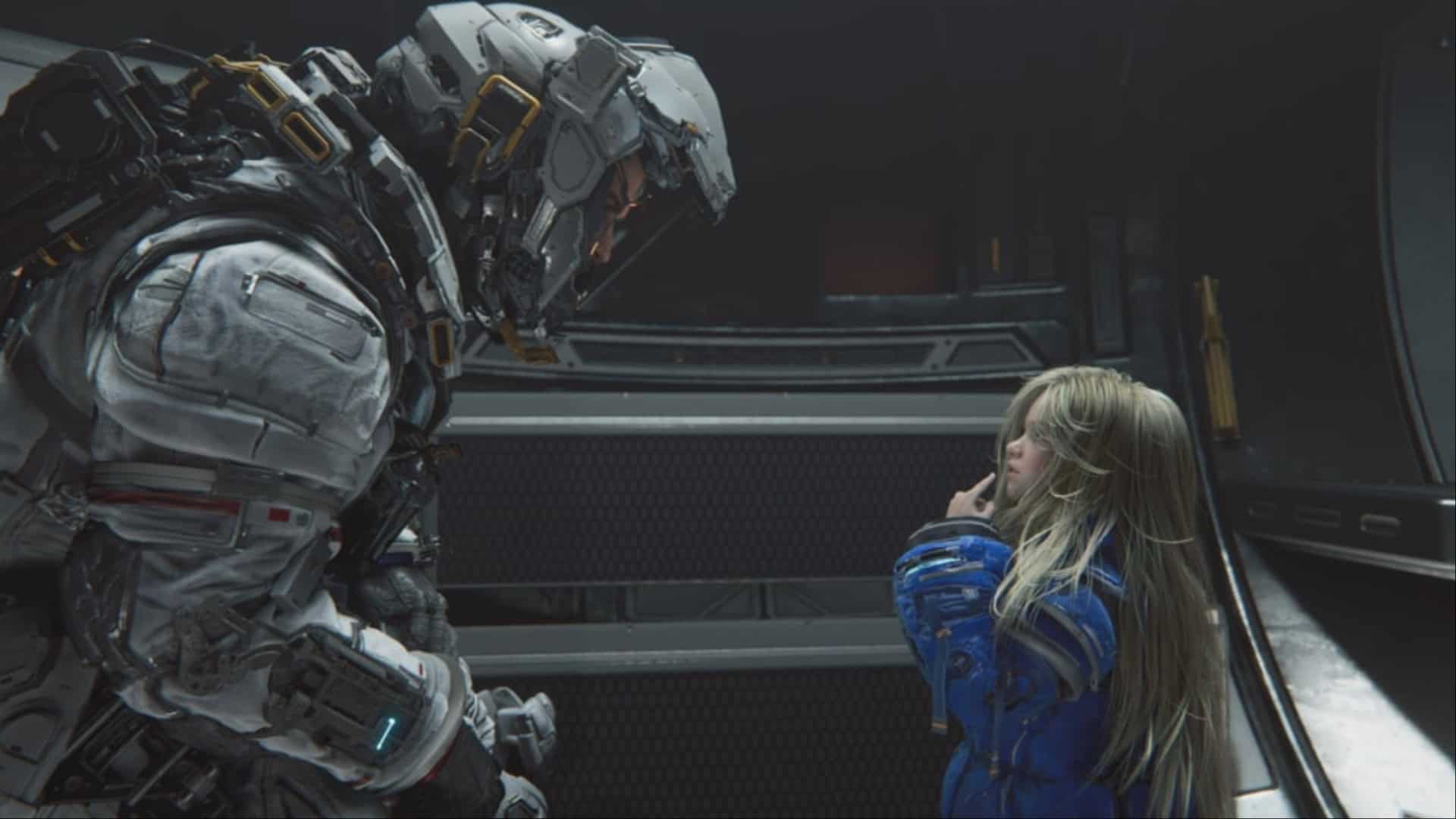
On the one hand, you have Diana and Hugh, a human and an AI, who must combine their skillsets to save the Earth. On the other, you have Eight, a villain whose cause is built on a complete misread of human emotion in a moment of grief. This is the crux of the game’s story. AI, in its purest and most helpful form, relies on a human foundation to do good. Without it, it is a vehicle without a driver at best, and a weapon without a safety switch at worst.
The game hits close to home when recognizing the way AI has advanced into the workplace and creative space in recent years. Conversations around use cases and especially its ethicality dominate the climate, and for good reason. We’re at a place where now all online content is questionable: whether a news video is AI-generated and spreading misinformation, or even that cute video of a kitten playing in a field of flowers. Even just scrolling through my social feeds, it’s painfully easy to spot when captions are AI-generated, or even full written pieces. AI now reviews job resumes before a human ever sees them. It’s the first line of defense when calling a tech support company. When I drive down the freeway and pass all the billboards that once advertised car brands, restaurants, sports teams, or electronics, they now advertise AI helpdesk solutions, AI financial management tools, or AI tools built into cell phones. The reliance on human intervention is being stripped before our very eyes and replaced with a digital crutch that offers nothing restorative. This is the warning that many refuse to see, because it’s easier to hide behind dollar signs than wrestle with inconvenient truths.
Pragmata had been in development before the AI boom of the early 2020s, so it’s interesting to analyze this story through the lens through which it potentially was created. Did the developers create this game pondering the scary possibilities of AI, and it turned out to be a coincidental cautionary tale? Or did they watch the rise during development, and use it to intentionally imbue their story with this message? Perhaps a little of both.
The story of Pragmata, however, does more than tell a scary story. In truth, I don’t think the story is meant to be scary, but to expose the true weakness of AI. Intelligence and the ability to think critically are powerful things. Those skills have driven humanity as a species for thousands of years. It makes AI tools incredibly useful, an additional tool in the belt of ingenuity. But alone, AI lacks a fundamental quality: empathy. Knowledge can be shared, taught, and learned. But empathy is a uniquely human trait. You can explain empathy to an AI chatbot, and it will certainly be able to mimic empathy perfectly, but it will never itself be able to feel it. That is the limiting factor. That is why Artificial Intelligence can not and should not ever be a replacement for human innovation. It was only ever meant to support humanity. Not replace it.
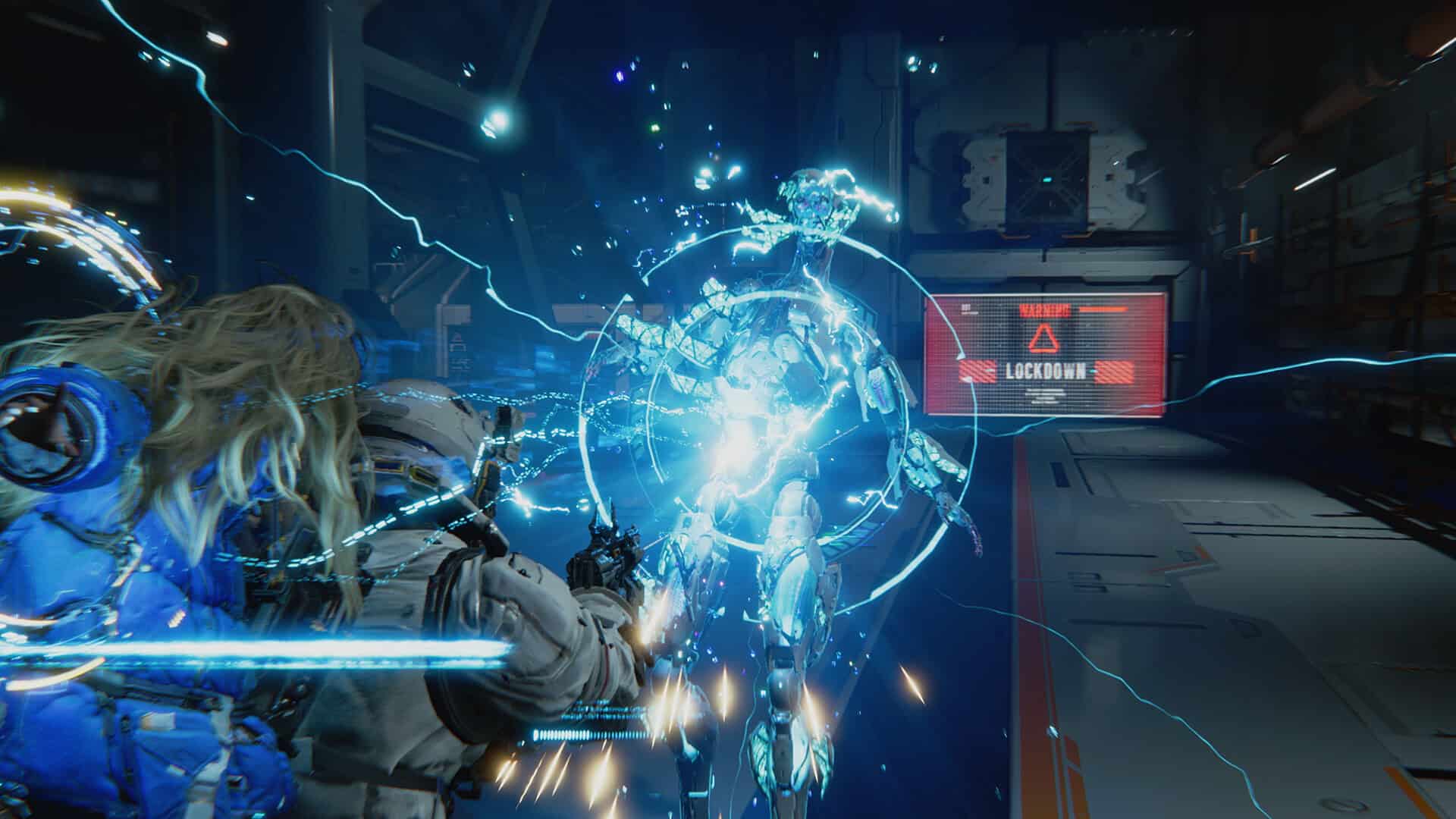
This is beautifully demonstrated by the relationship between Hugh and Diana. Without Diana’s intervention, Hugh would not be able to defeat the high-powered robot enemies within the colony. Without Hugh’s intervention, Diana would not have any understanding of empathy or free will. Diana teaches Hugh how to use his existing skills more efficiently. Hugh teaches Diana how to enjoy the moment and find her own purpose outside of the reasons she was created. In short: Diana teaches Hugh how to fight effectively, and Hugh teaches Diana why that matters.
With Diana now having context as to why her old friend Eight is so committed to doing harm, the schism between the two is much more apparent. Diana pleads with Eight to stop her plans to destroy the Earth, and Eight simply mocks her by thinking her exposure to Hugh has compromised her reasoning when, in reality, it has enhanced it. Without the ability to empathize, a trait Diana learned by being with Hugh, it is impossible for Eight to understand that what she is doing is wrong.
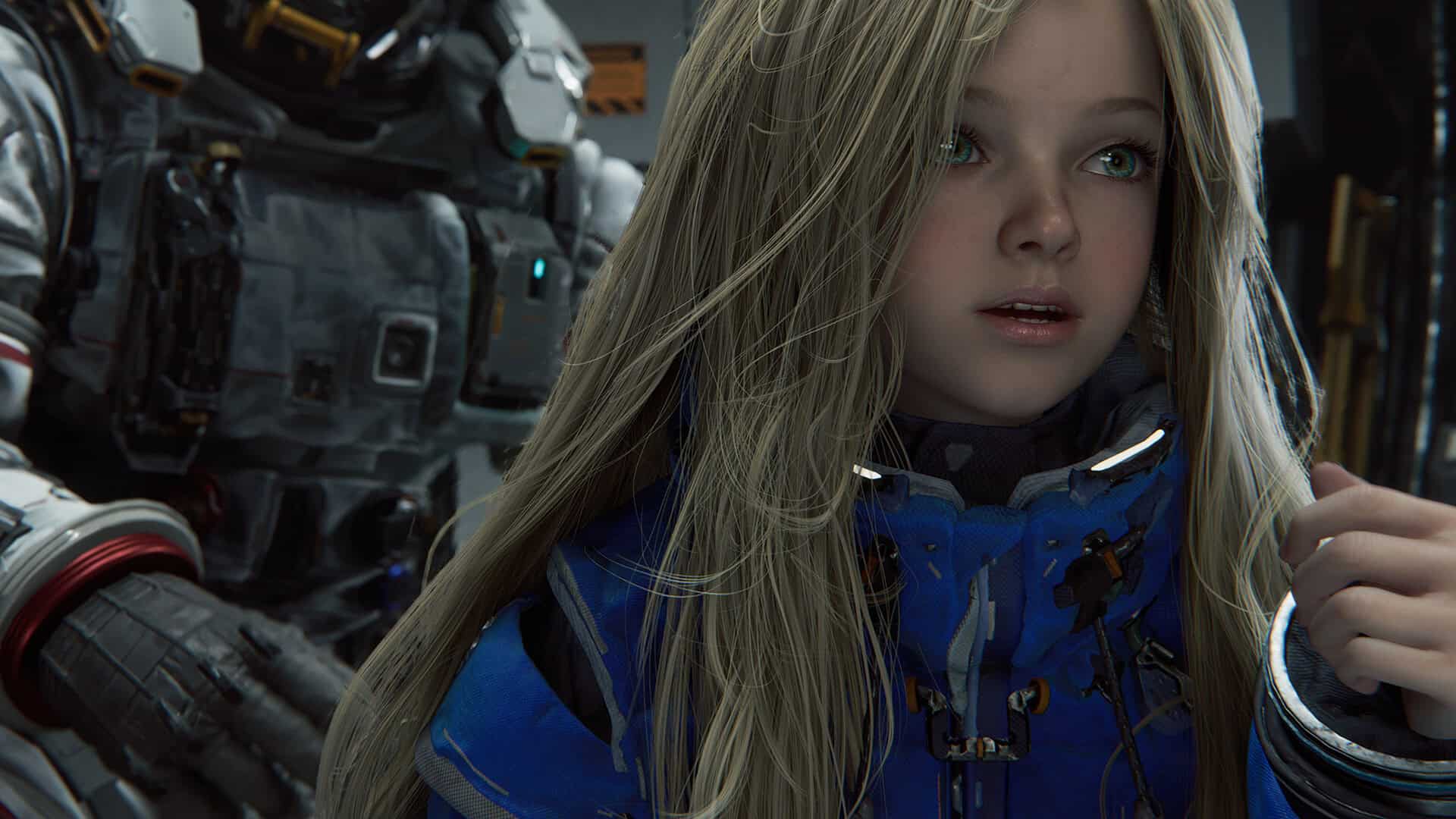
Eight has no concept of “good” or “evil,” only what she sees as a directive from her creator. A true villain, from a literary standpoint, is one that acts out of a desire to achieve something from which they benefit. It’s rarely for the simple purpose of doing something evil. Most times, they don’t even think what they’re doing is evil. They stand to have something to gain, and they stand to have something to lose. Eight has neither. Whether or not she succeeds in her mission, there is no inherent benefit to her. She doesn’t feel satisfaction because she doesn’t know what satisfaction is. Not only does this make her a dangerous villain, it makes her a truly tragic one.
This is the reason why AI needs to be fully understood and regulated before we commercialize it. Everything about AI in our current climate feels rushed, underdeveloped, and sloppy. Not to say that there isn’t potential, and that the benefits could be wonderful in the long run, if developed sensibly. But as it stands, AI feels more like it has the potential to turn into Eight than it ever will of being Diana. Pragmata tells us why. With human empathy and direction as its foundation, there is great potential for a strong, symbiotic relationship. Diana shines and reaches her full potential because she had guidance from Hugh, who recognized it in her. Hugh didn’t have to be perfect. He didn’t have to be a genius. He just had to care.
Imagine what we could achieve if we also choose to care.






 ObserverCrew Picks
 bserver
 bserver