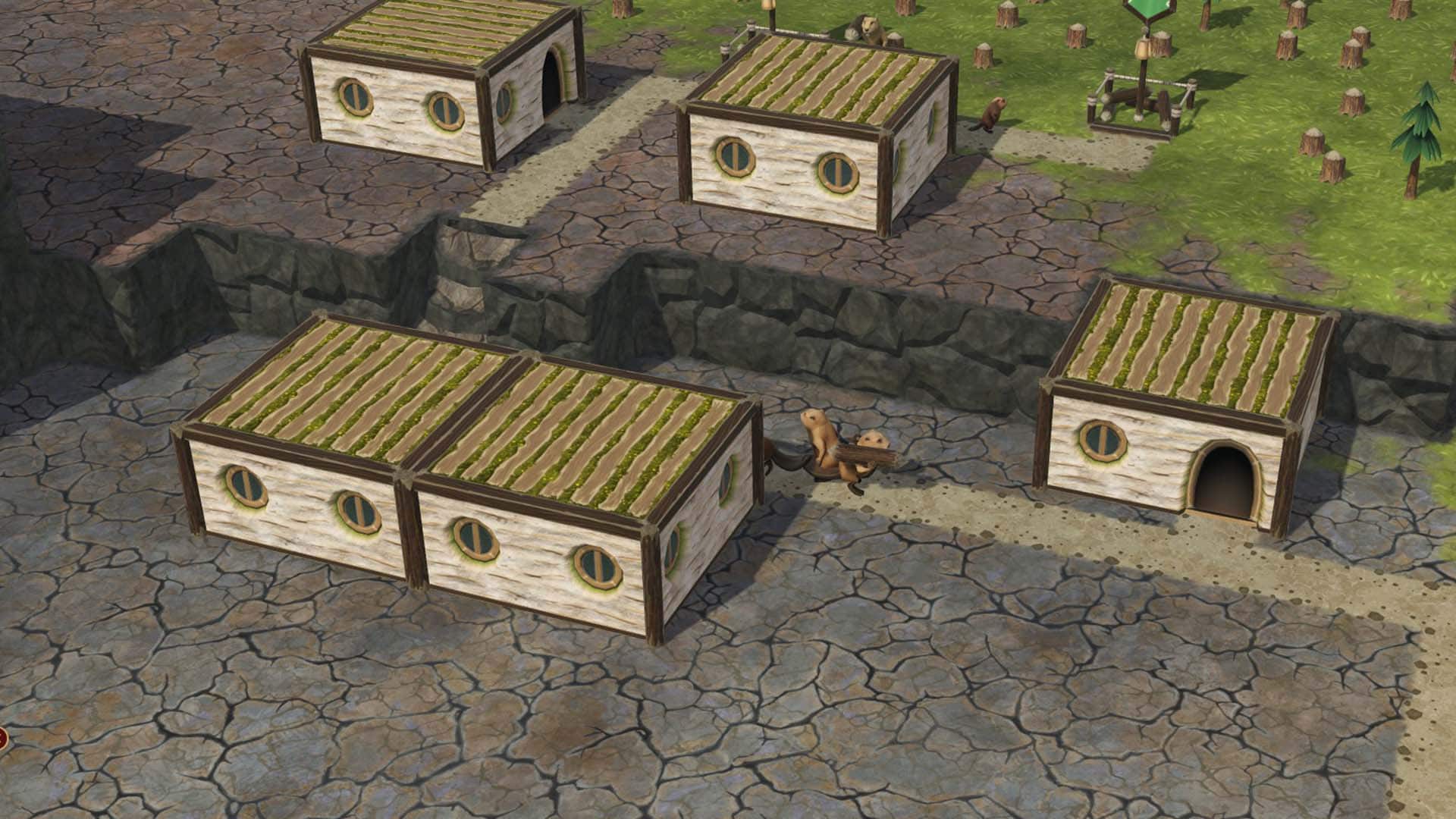
Timberborn makes you build a resilient colony of beavers that can survive droughts and other calamities. Even though the tutorial takes you through some basics, it’s easy to get overwhelmed. The game soon lets go of your hand and lets you build your city, but leaves out some vital information. Without it, it’s easy to make mistakes, even when the game is giving you instructions.
Making your beaver cities thrive shouldn’t be difficult. While experience is a good teacher, you should be aware of some advice if you are struggling. Even if it’s something you think you know, Timberborn has a knack for hitting you hard when you forget the basics. Here are some tips learned through struggling and failing a few times.
Rotate Lumberjack Flags to make them accessible
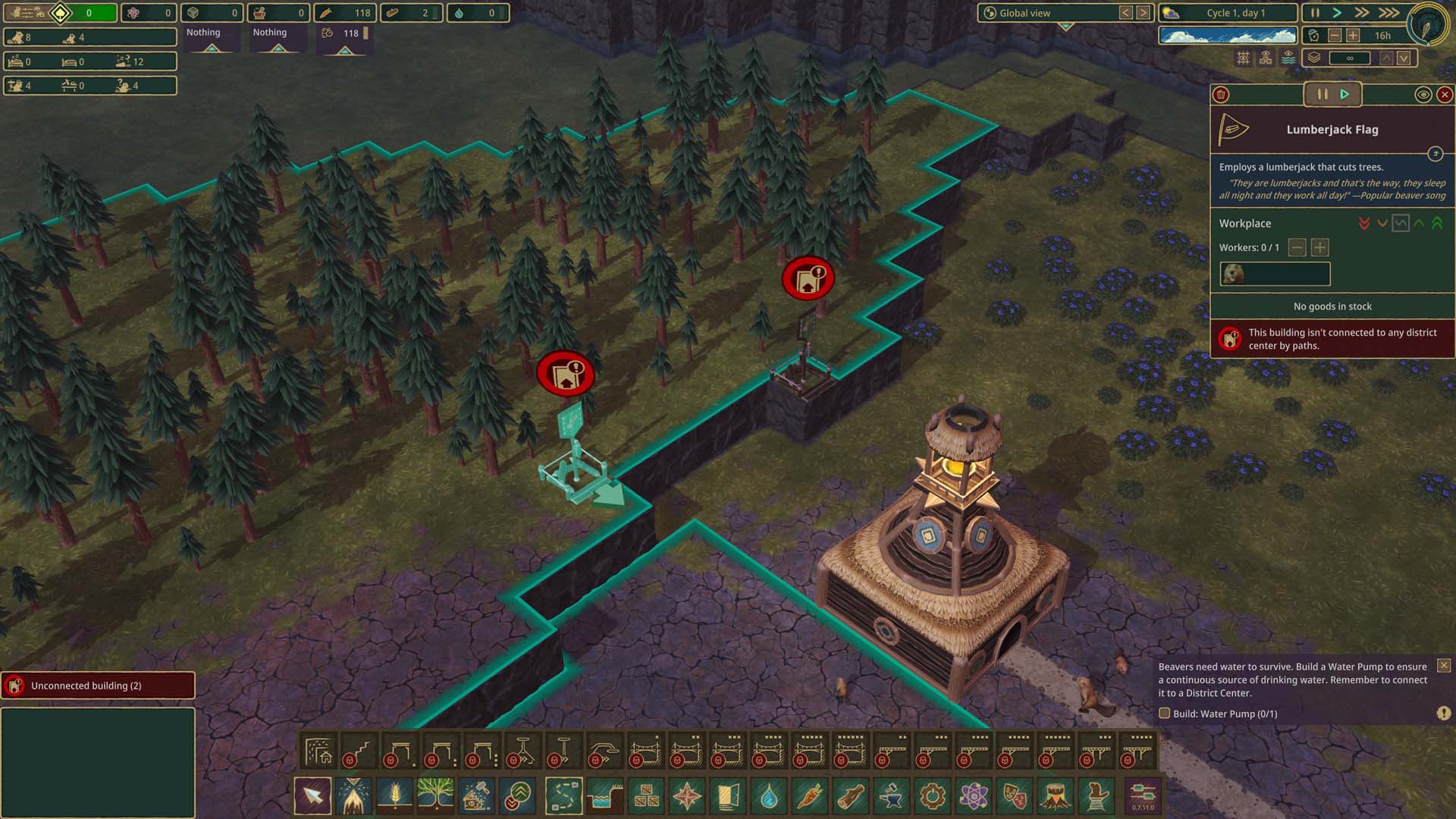
Lumberjack Flags are crucial in the early game for cutting down trees and harvesting wood. However, they cannot be accessed without creating paths, and if they aren’t properly aligned, the wood you harvested won’t reach the structures proper. A good way to check is to see if your Lumberjack Flag’s arrow, during construction, faces away from the trees. Your path should easily link with a green line, indicating that the Lumberjack Flag is ready for harvesting. This is also true with every other building, except power sources.
You cannot move or rotate buildings once they have been placed, making getting your positioning correct before construction essential. Once the structure has resources invested in it, it’s harder to take back your mistakes. If your beavers aren’t harvesting any wood or are just sitting down, always check if the Lumberjack Flag is positioned correctly. There are few scenarios where your workers aren’t harvesting if there are mature trees to harvest, meaning it’s something you’ve done.
Trees must be marked inside a Cut Zone to be harvested
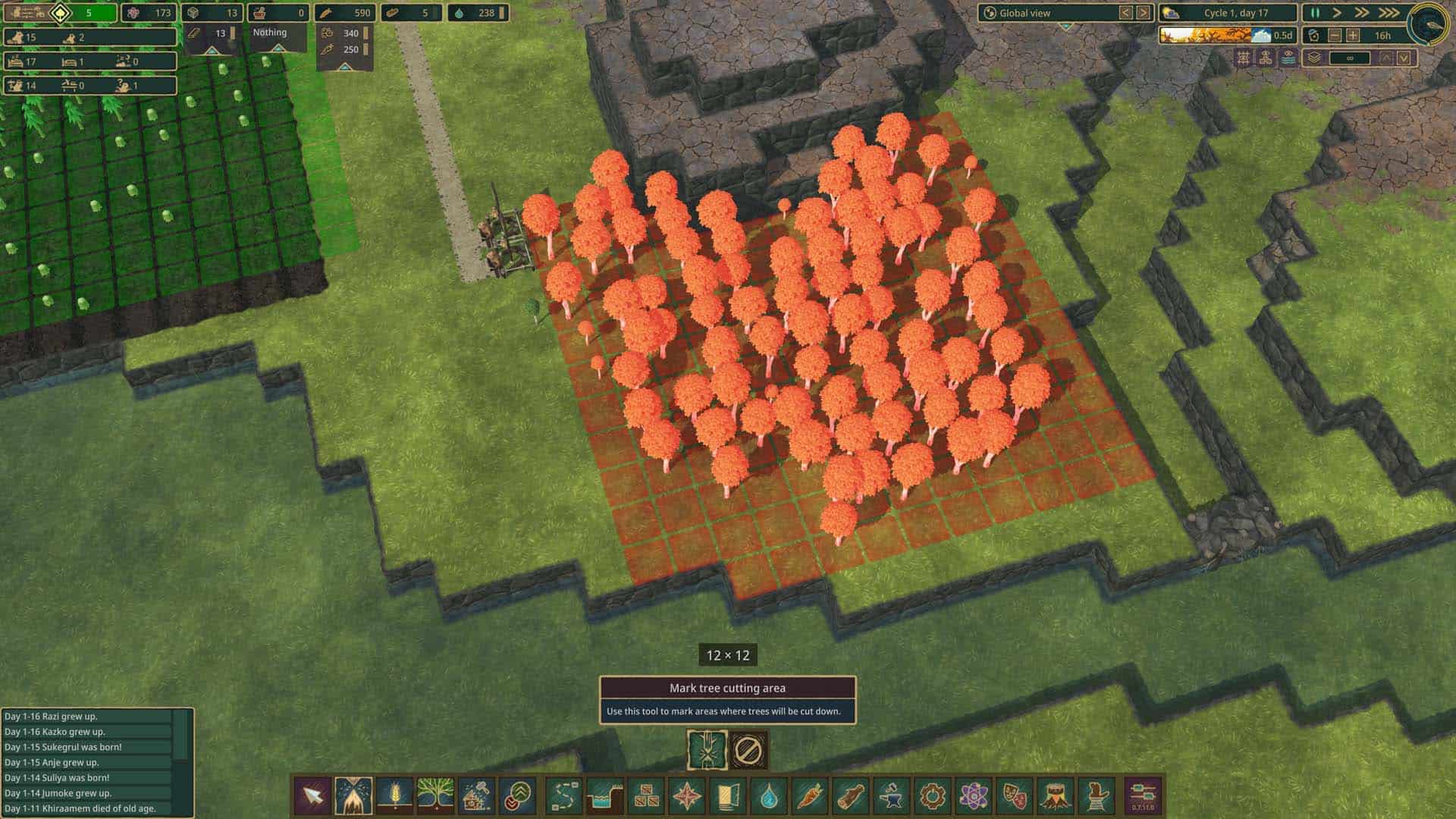
Beavers won’t cut down any tree they see, as you must mark trees that can be harvested first. You might be tempted to select a smaller area when starting out, but you should make them large. Ideally, they should cover every tree nearby to harvest all potential wood sources. This may seem like overkill, but you need that wood starting out. Trees regrow on their own, and if you aren’t capturing them inside a Cut Zone, you are leaving valuable resources behind.
Later in the game you may want to keep certain trees to harvest their sap. You can always modify the Cut Zone to remove specific areas, or even the entire selection. But don’t skimp on the selections early on, as you need everything you can get. It’s only when you get to the point where you need planks treated with resin or maple syrup that you should start reconsidering what trees you cut.
Storage solutions should not be neglected
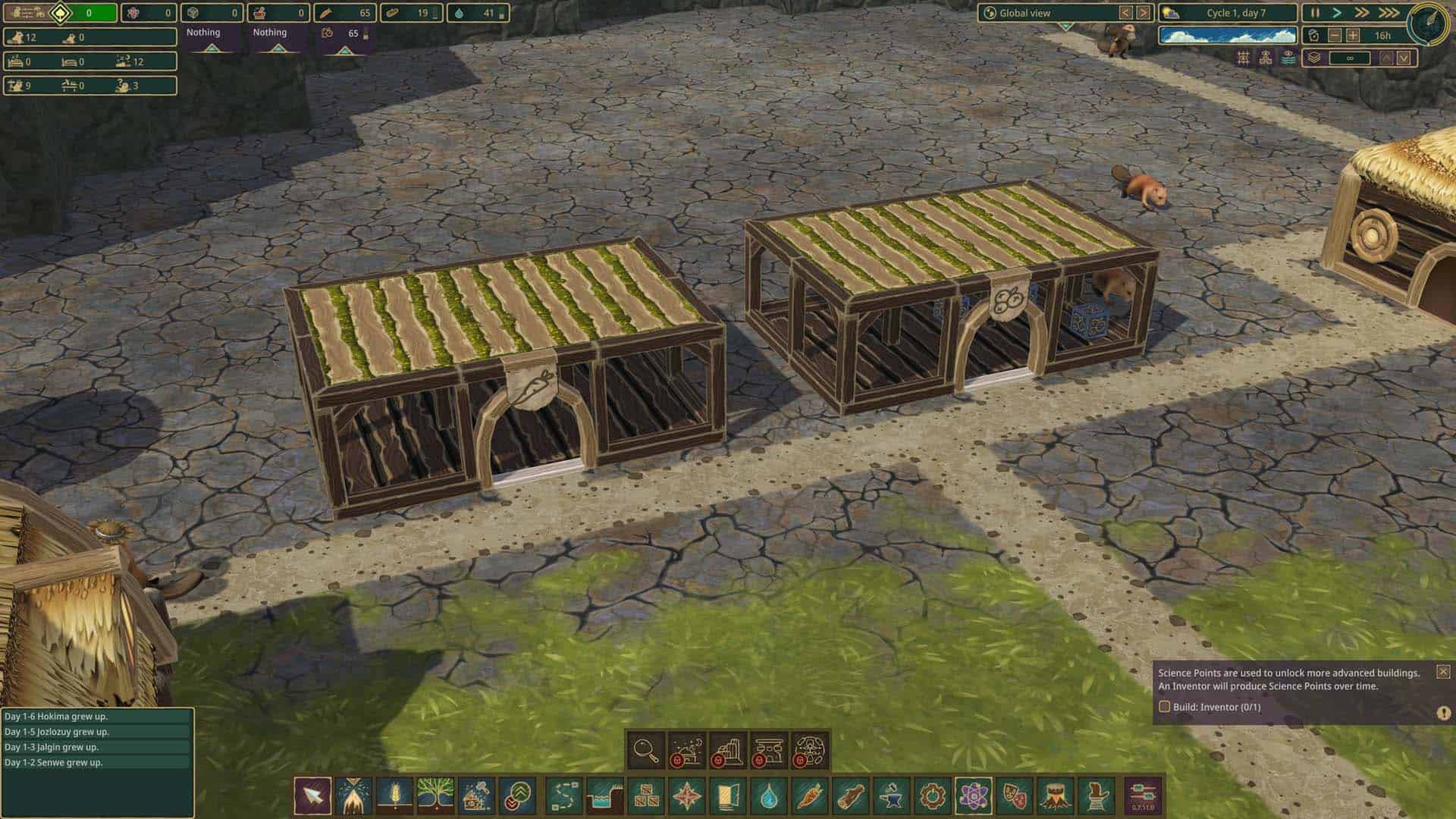
Timberborn has you deal with conditions like drought that prevent you from harvesting food and water. Later in the game you can also encounter badwater, which turns soil and other water sources into radioactive nightmares. Your beavers will starve or die of thirst if you haven’t prepared for these conditions. Harder difficulties also make these events worse, such as with longer droughts. Ensure you have sufficient food and backup water supplies to feed your growing colony. You won’t need much in the beginning but as you grow, you must get additional storage.
Additional storage also has the benefit of letting your buildings continue to manufacture resources. The actual amount a resource producing building can hold is quite low (ie. Lumber Mill can hold around 10 Planks). Several buildings require more than just 10 of a resource to build and you don’t want to halt manufacturing. Storage gives you a place to put resources you aren’t using yet to allow your buildings to keep producing resources.
Inventor buildings are your best friend
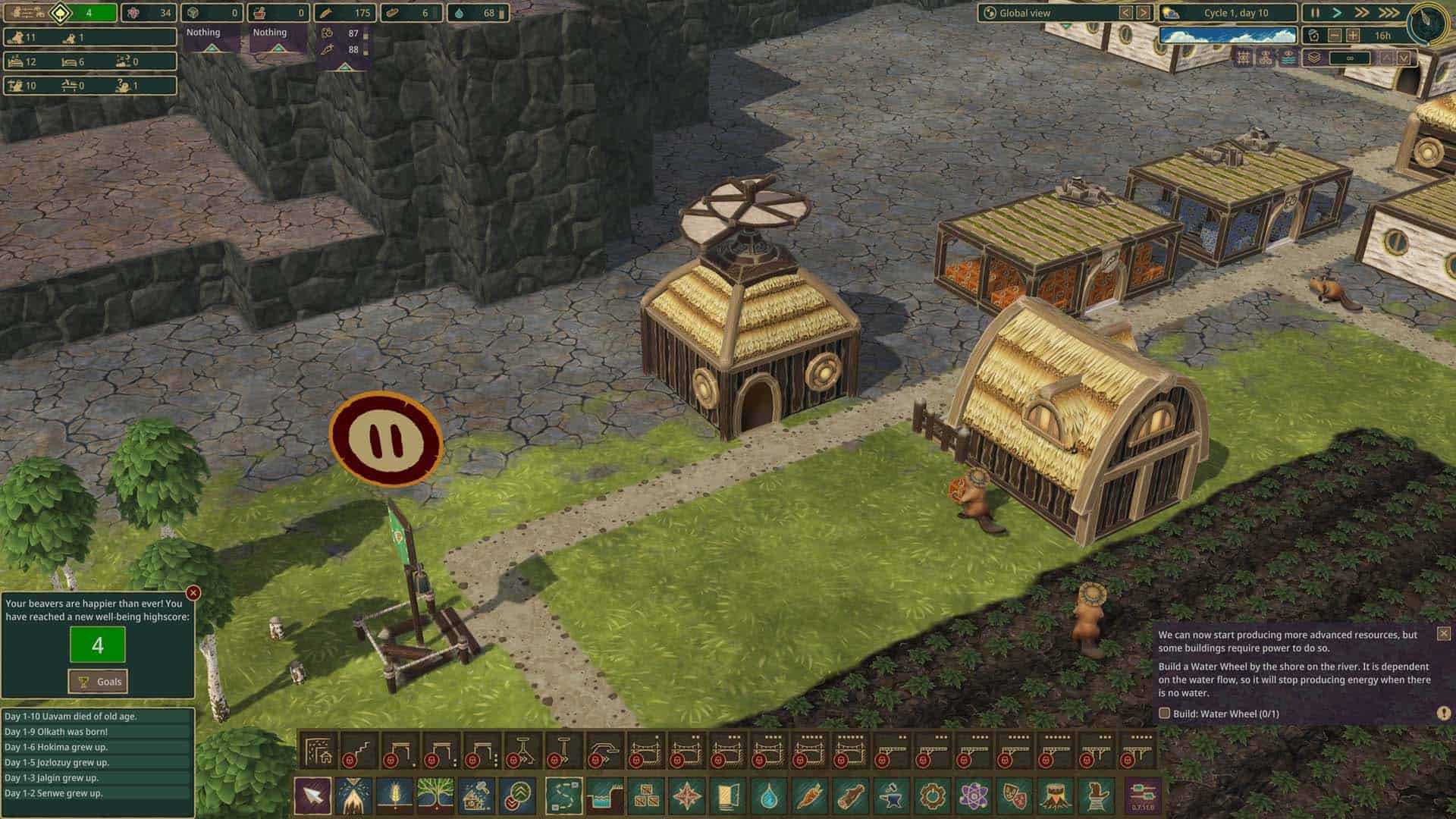
While you can get by with the basic buildings with a small colony, you must think about getting different structures. Science points are the only way to grow, and you start with simple Inventor buildings to generate them. The generation rate might be small, but Inventors don’t have many downsides or requirements compared to other buildings. Early on, you should aim to create stairs and platforms, along with other buildings like Foresters.
Building multiple Inventors is often more useful than waiting for a large Observatory. Not only does an Observatory require lots of power, it’s also not as efficient early on. It’s better to build multiple Inventors and generate Science points than power an Observatory with multiple power sources. Inventors are also a great way to give beavers a job if you have lots of unemployed workers sitting around.
Gather & grow a few food sources first
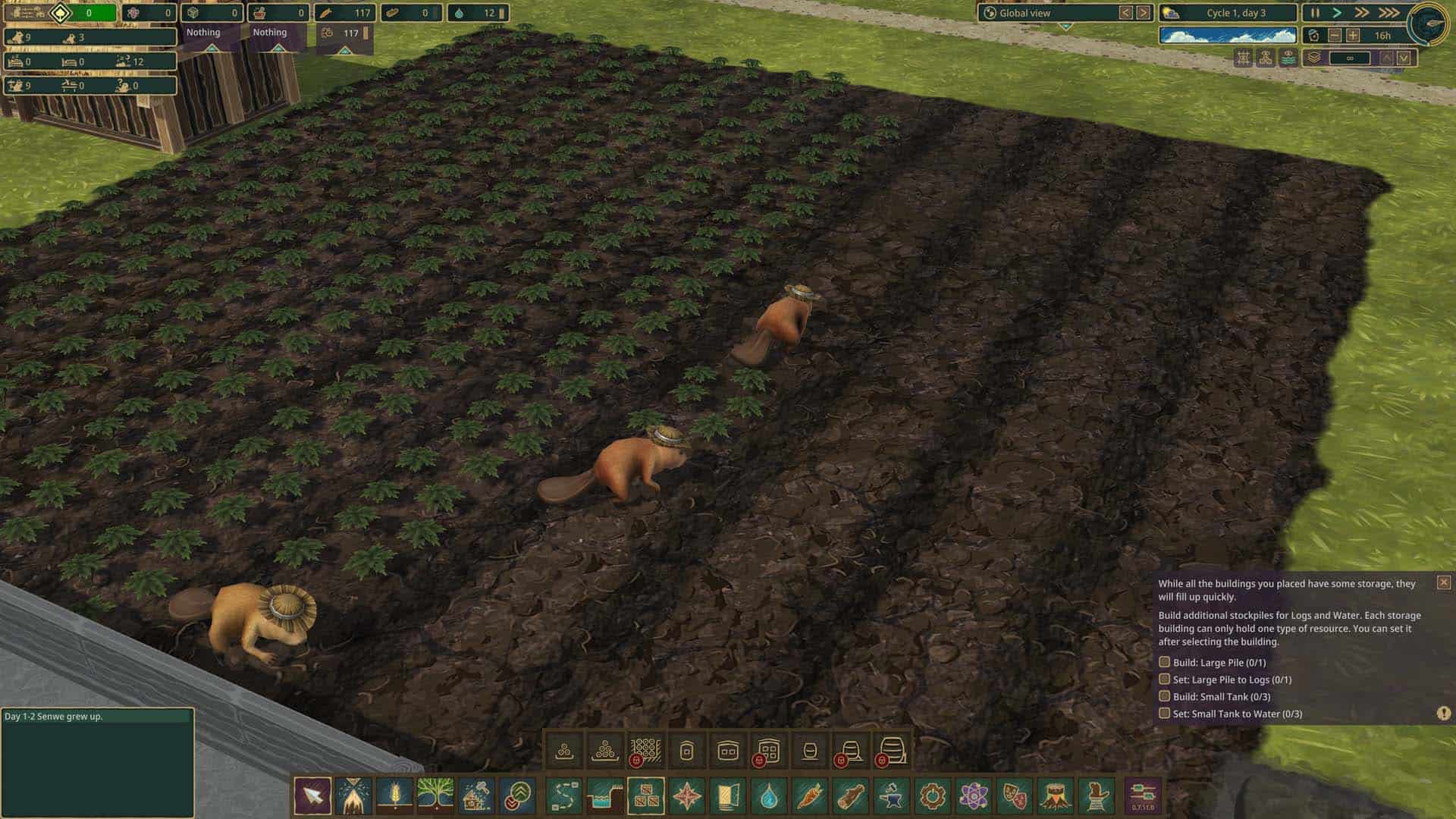
It might be tempting to grow several varieties of crops at once to boost your colony’s happiness. However, crops don’t have equal growing times and you may accidentally starve your colony with unequal harvests. Timberborn’s tutorial starts you off with berries and carrots, a good combination that can last you the entire game. Once your food supply begins to stabilize, you can diversify into other crops (ie. potato, wheat) to boost happiness.
Many maps have berry sources, making it a reliable form of food no matter where you go. Crops like carrots are mostly grown on fertile land that can be hard to come by. Stick with getting some food in your storage, then think about obtaining something else. There’s no point trying to make something like Bread when you can’t even harvest carrots properly. Once your food stocks aren’t dropping too low every drought, then you can grow something else.
Your workers want to relax
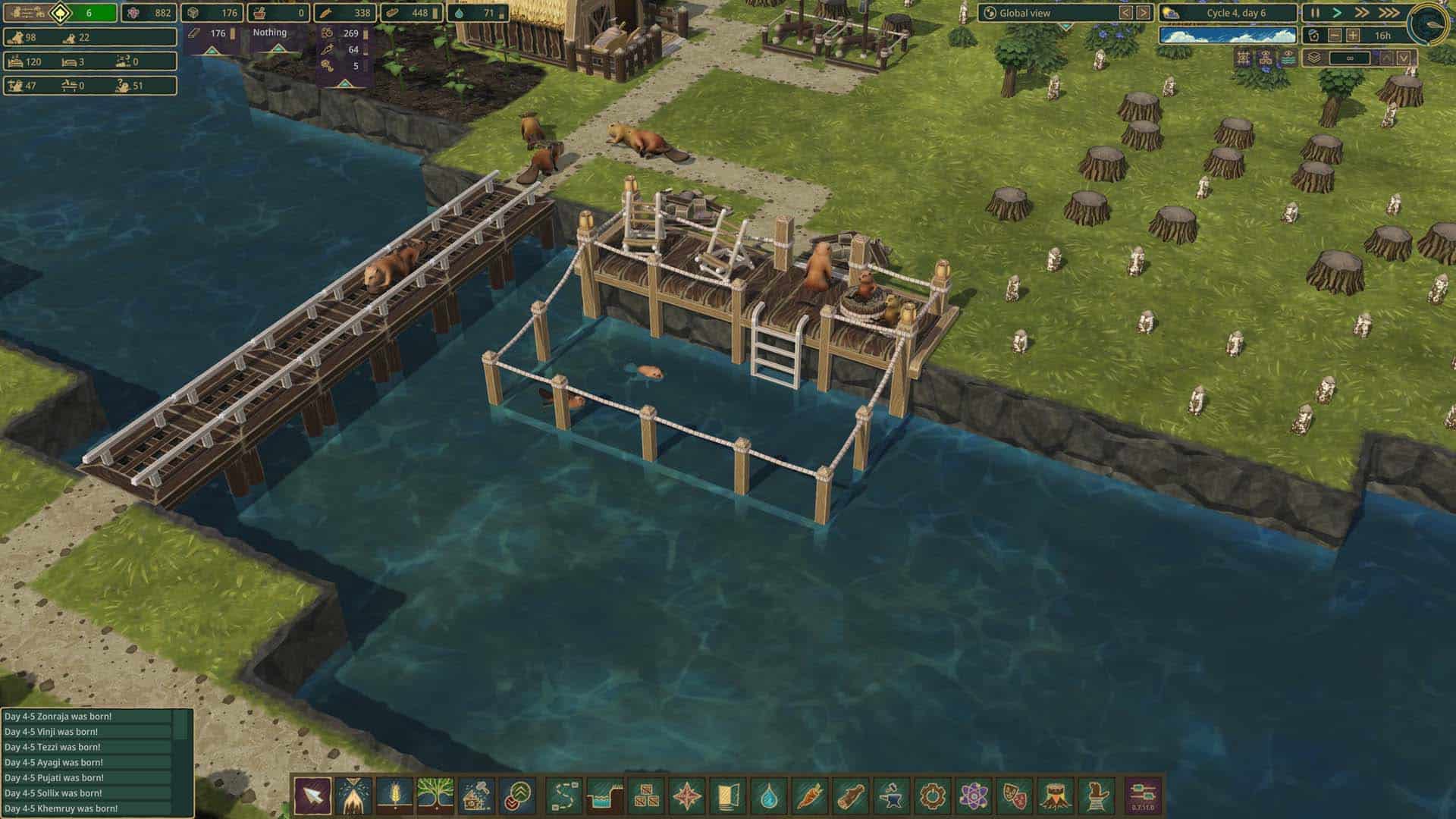
Your colony has workers who never stop for breaks if the option isn’t present. But you risk losing your happiness or workers getting injured because they don’t stop working. Creating buildings like the Campfire give your workers a way to relax and socialize with each other. You can also construct monuments to motivate your workers or even decorations to personalize your city. Even creating buildings like Showers or tooth-sharpening wheels keeps your workers in prime condition.
Always check to ensure that entertainment buildings can operate without special requirements early on. Some require water, electricity, or even Extracts (a rare resource) to provide benefits. Avoid using those not because they are bad, but because you might not have the space or conditions to use them properly. Focus on what you can build to ensure that you have enough entertainment for your colony to grow.
Don’t underestimate the dangers of droughts
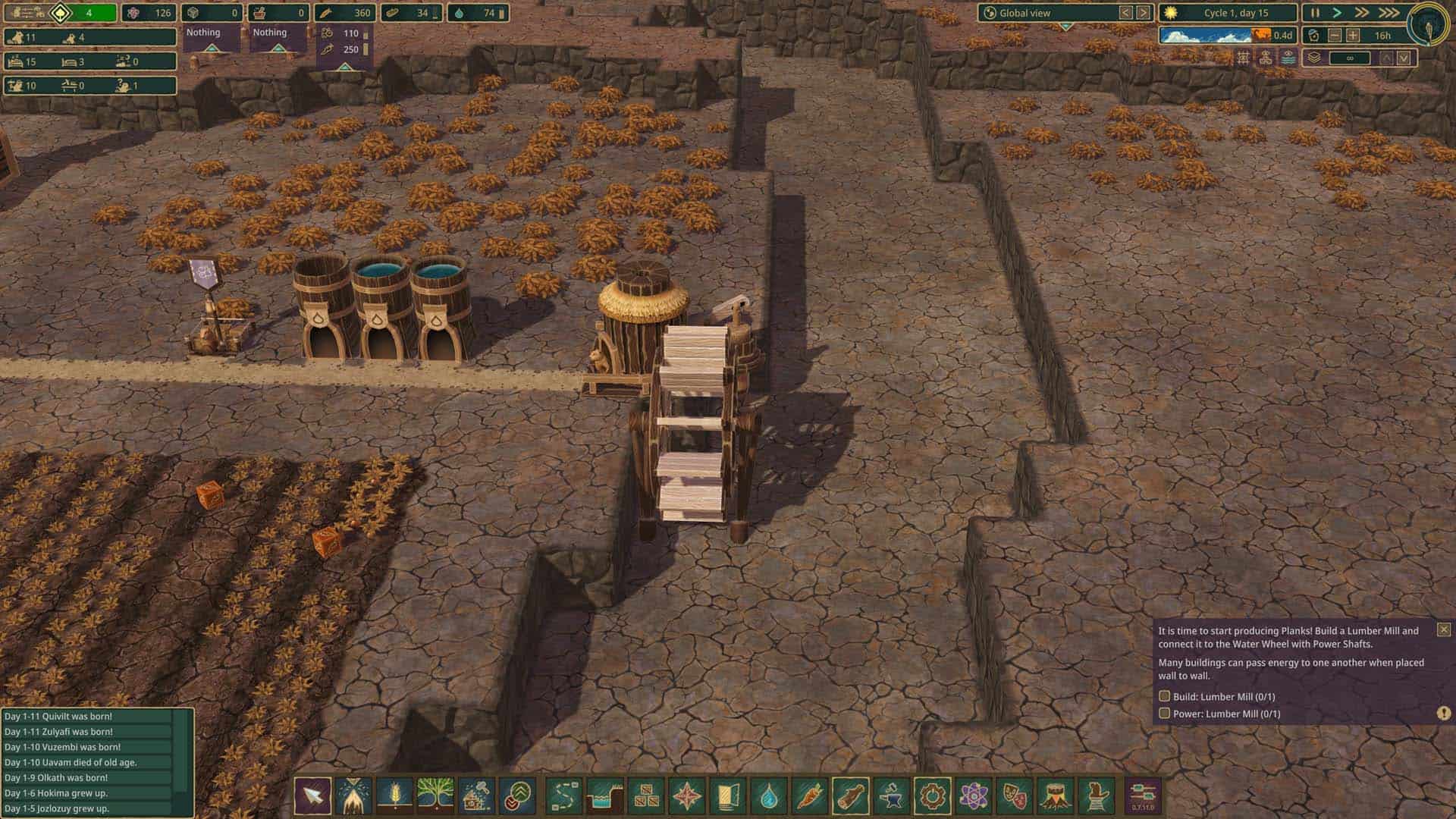
When a drought hits, all water on the map temporarily disappears (except those in storage). Plants don’t grow and have a chance to die if they do not have high drought resistance. This means you can’t harvest food and you can’t pump water. Any water wheels generating power also stop, costing you an energy source. Everything you have stored is going to be consumed by your colony until the drought returns. Be careful, as even when a drought ends, the effects don’t disappear immediately.
Early on, droughts don’t last long and your colony is small enough that a few food stashes with some water tanks is enough. Once the length of a drought begins extending, that’s when you need to prepare your resources. Your colony has likely grown considerably as well, meaning you consume more of everything. Never underestimate how a drought can take everything from you or your city could fall.
Build Foresters quickly to get renewable wood sources
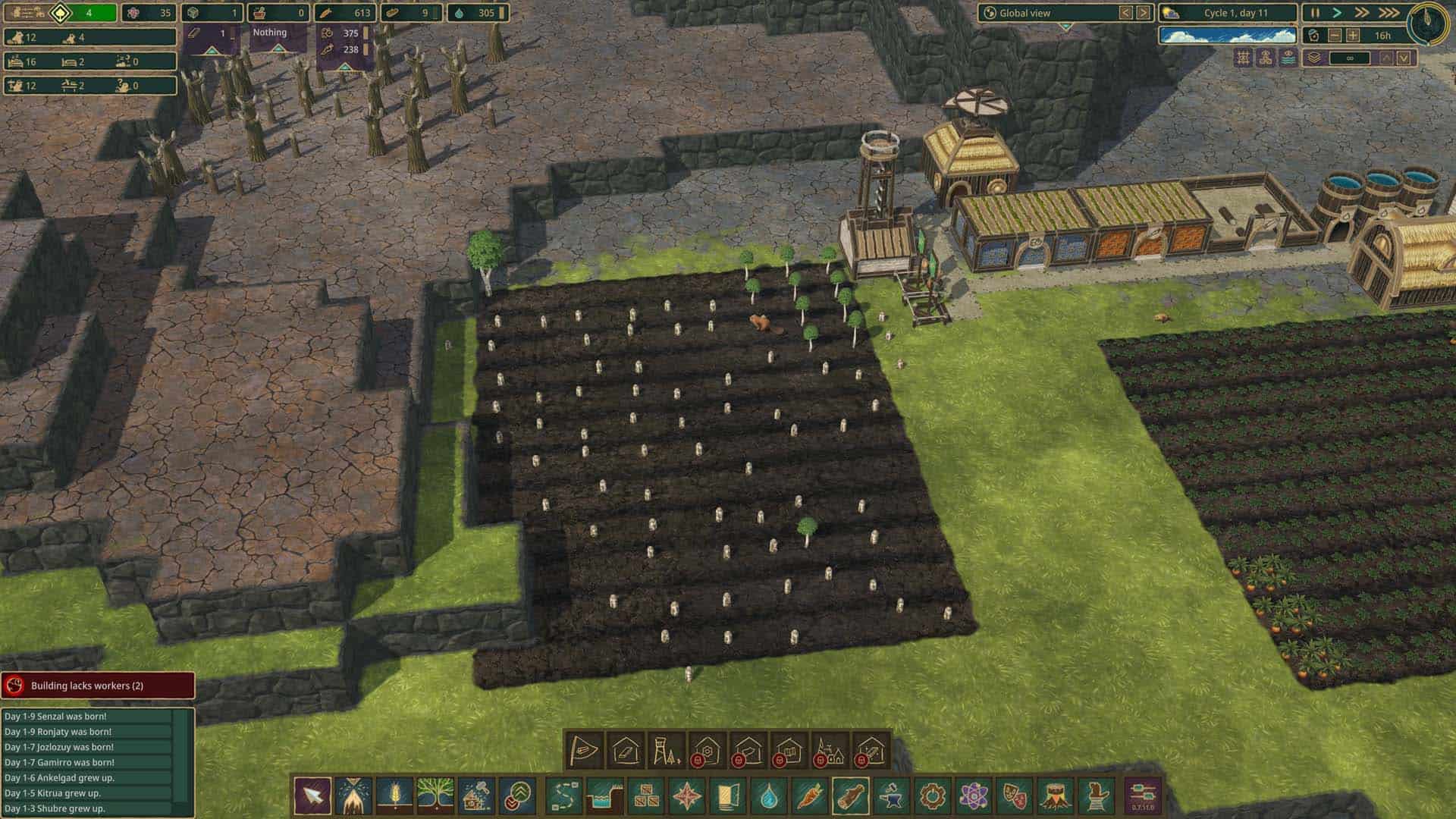
Wood continues to be the most valuable resource you can harvest, and there are limited trees on the map. After some time the trees grow back, but you need wood quickly and natural growth rates aren’t enough. Building a Forester allows you to grow different kinds of trees where you can control the amount and plot size. This lets you create a forest larger than any natural formation, giving you a renewable source of wood.
Tree-growing isn’t instantaneous and you must wait for them to grow. With the correct plot size and tree type, you can continually harvest wood without running out. Growing Birch trees is a good early-game strategy since they grow quickly. Later on you’ll want to grow Pine trees since they can also provide Pine Resin for treated planks. The faster you get a Forester, the faster your colony can truly thrive.
Your colony grows slowly on purpose
Your beavers grow up, become adults, grow old, and pass away. This cycle repeats even when you are starting the game. Progress is going to be slow and that leaves you open to making mistakes or forgetting the basics. It’s easy to underestimate the difficulty when the game isn’t putting you in great danger. But once your colony starts growing and expanding, you risk losing everything to a drought.
This means you shouldn’t underestimate the importance of practicing the basics. Ensuring your buildings are aligned properly, getting storage set up, and sticking to a few food sources keep your colony thriving. Preparing for long droughts in advance is the game’s biggest challenge and it’s a big reason why large cities tend to fail. Practice the basics with these tips and you should be able to create a small, yet thriving colony ready to expand. Check GameObserver in the future for more Timberborn and other game guides.




 ObserverCrew Picks
 bserver
 bserver