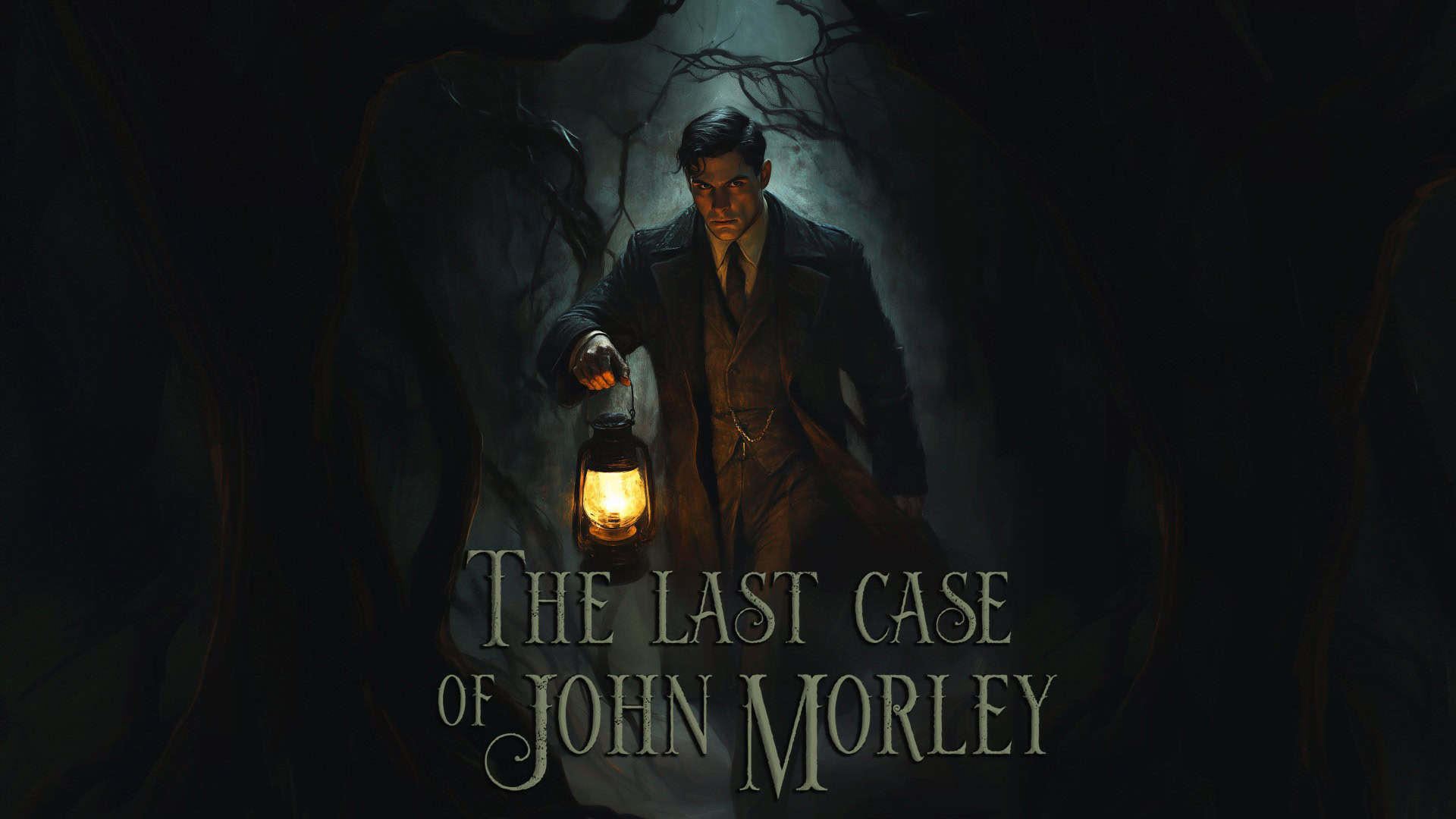
Of all the movies I’ve enjoyed over the years, film noir and neo-noir are right up there in my all-time favorites list. Humphrey Bogart remains an icon of the genre. It’s not just the aesthetic of the period, it’s the twists and turns, the ambiguity of who your friends are, and who your enemies may yet become. And yet, for some reason, video games don’t have a great track record of getting it right. L.A. Noire remains the nadir of games trying to undertake noir-type stories, at least for me. But I gotta say, The Last Case of John Morley has certainly earned a solid second on my blacklist.

The Last Case of John Morley puts you in the role of the titular character, a private investigator in London circa 1942. After recovering in the hospital from a bad stumble while on a case, you’re hired by a noblewoman to investigate a cold case from twenty years earlier, the murder of her daughter. As you follow the trail, the story about the victim’s death takes on some strange turns, and there’s a lot more questions than answers. Or it would, if things had even been a bit better written.
I’m starting to have a bit of an aversion to any title that proclaims it’s using the Unreal Engine, which The Last Case of John Morley is required to point out before the actual title screen comes up. When it’s well implemented, it’s phenomenal. When it’s less well implemented, the enjoyment factor suffers tremendously. And Indigo Studios has not implemented it nearly as well as they might think. Probably the single biggest failure is the lighting. I get that noir relies on darkness and shadows to heighten narrative tension (along with being a stand-in for moral corruption), but this was like one of those episodes of The X-Files where the protagonists wander around the woods with flashlights, only without the flashlights. Combine that with some convenient blocking tree trunks or debris that didn’t get any actual textures on them, and the visuals have a decidedly amateurish feel to them. It’s rather a stretch to claim that the environments are “richly detailed” when they’re missing textures.
Adding to the apparent hamfistedness is the degree of geometry “pop-in” which occurs as you’re moving around, usually from small objects. I expect that sort of level-of-detail issue with stretches of terrain, not buckets and fire extinguishers. The UI basically is “invisible” in the main. Get close to a hotspot, hit a button (which button is never explicitly shown), and interact with the item in question. It doesn’t intrude, though it might not have hurt to intrude a little bit just for the sake of clarity. Character models are reasonably well done, though the lip sync for when somebody speaks is oddly mushy, with the lip flaps feeling not quite consistent or correct for the syllables involved. I will say, however, that the option to turn off subtitles seemed oddly inconsistent when actually playing, with subtitles appearing even if you set them to “Off” initially before starting the game.
Sound in The Last Case Of John Morley is probably the best aspect of production, and even then, it stumbles here and there. The musical score is definitely good and moody, but it’s hard to claim that it’s period-accurate. Sound effects are pretty good, though it almost feels like the sound designer went overboard and tried to cram as many sounds as they could into the environments, which ended up killing a lot of tension. As far as the voice acting, it feels deeply inconsistent in a number of ways. The early portions seem more authentic in at least suggesting you’re in London, but by the end, the accents have slipped quite a bit. Worse, the quality of the voice direction has a decidedly “phoned in” feel, with some actors doing a middling workmanlike job and others far less so. There was, I believe, one piece of “placeholder” audio when picking up a key near the end. All I know is that it sounded nothing like the voice actor I’d had to suffer through up to that point.

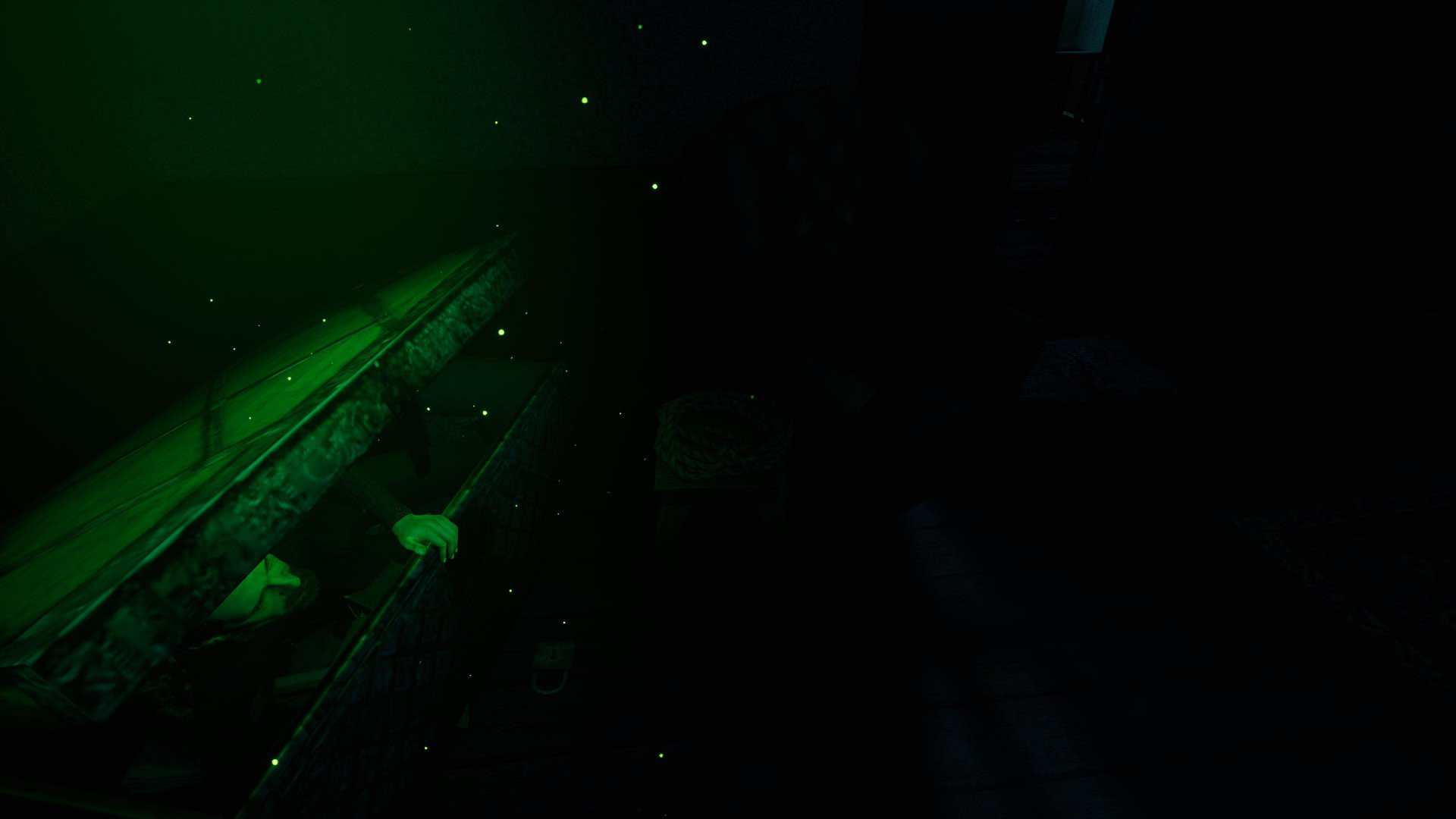
When it comes to gameplay, The Last Case of John Morley offers less to do than the original Myst. Let that sink in for a moment. There were more options, better puzzles, and more engaging gameplay out of a 30-year-old HyperCard game hack than this. Even the real-time movement isn’t really an improvement, given the existence of realMyst. You walk around, you press buttons, you fiddle with a few combination locks, you pick up a bunch of notes which occasionally have important combination numbers on them, and watch a bunch of static character meshes bathed in green light pose while iffy voiceovers play. Since our copy was obtained from the devs, they were keen to hype up things like the “interactive dialogue system” (which consisted of exactly two characters within the first twenty minutes or so) and the “scene reconstruction” mechanic (which you have absolutely no hand in outside of tapping the button on the little green glowing hotspots). There comes a point where the effort to hype up a game becomes false advertising, and if The Last Case of John Morley hasn’t crossed that point, it’s damnably close to it.
By the same token, the narrative components of The Last Case of John Morley feel overhyped almost to the point of dishonesty. Maybe I’m just too jaded and supersaturated in the genre to feel it, but there wasn’t any suspense. Hell, there was barely any mystery. I’d correctly surmised the twist ending a good half-hour before reaching the finale, and somehow I still feel cheated. In much the same way that people incorrectly identify something as “steampunk,” I feel this was incorrectly identified as “noir.” If anything, it shares a (very distant) kinship with a far better “weird tales” sort of title, The Vanishing Of Ethan Carter. Thing is that Ethan Carter genuinely did do interesting things when it came out over a decade back. It had characters we could get behind. It didn’t telegraph its ending so badly that we wasted time slogging through to the inevitable end. It drew us into the world, it had ambiguities and weirdness, which we as players were compelled to go along with because it was such an engaging ride. John Morley, on the other hand, completely fails to apply those decade-old lessons to its narrative. And the result is predictable. As I think about it, despite its shorter length, it even managed to tell a story less effectively than The Suicide of Rachel Foster. And that one was a complete shambles, narratively speaking.
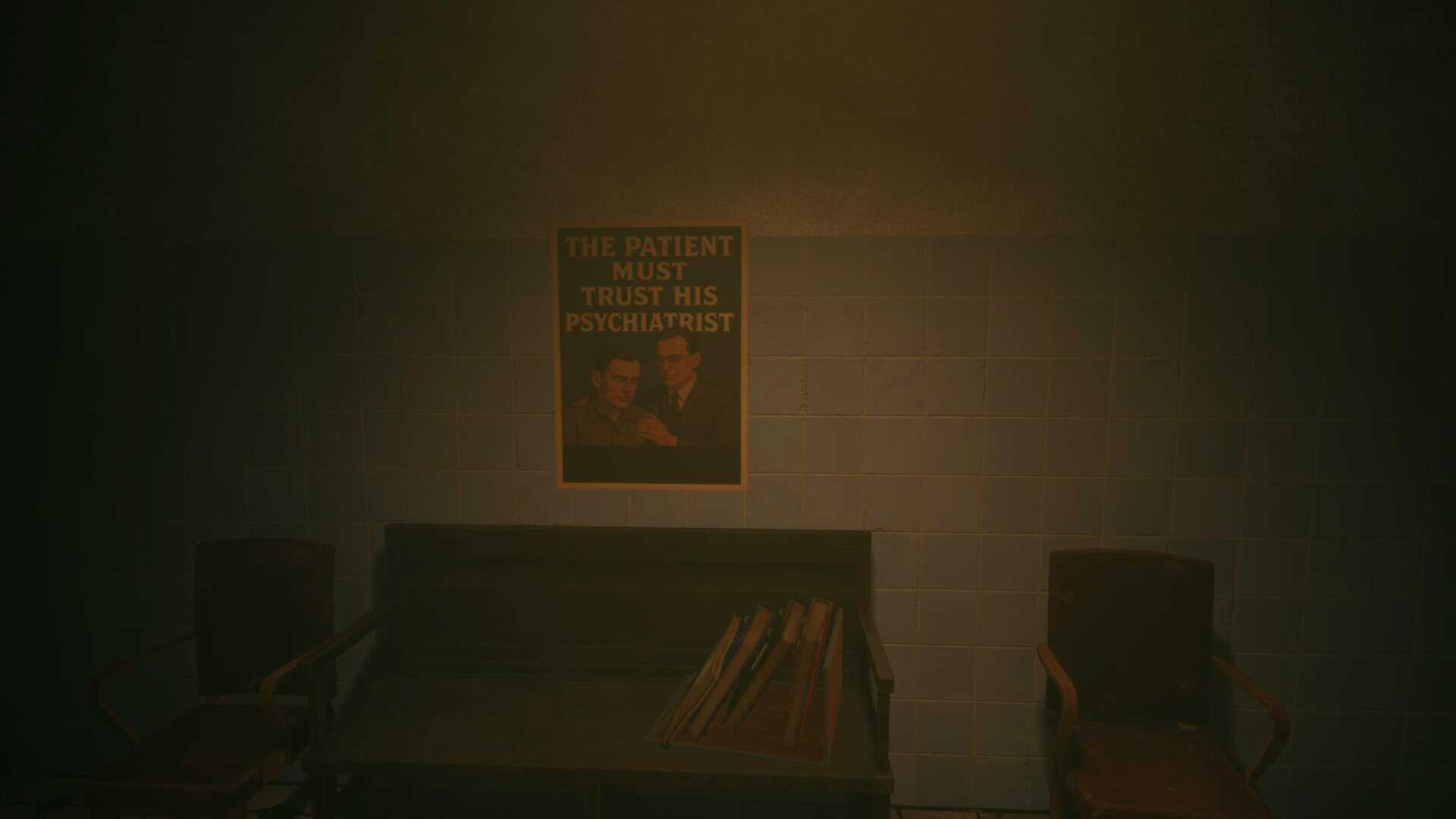
About the only really positive points in favor of The Last Case of John Morley are the music and the fact that it doesn’t crash. Everything else fails to clear the threshold of what any reasonable player would classify as a game. It barely qualifies as a tech demo, and not even a particularly effective one at that. Forget you saw this one on the store pages. You’ll be happier for it.
Axel reviewed The Last Case of John Morley on PlayStation 5 with a code provided by the developer. This review is based on the version of the game available at the time of writing and our score will not be changed.
- Score
- 2/10 Dire - Axel Does Not Recommend
- Summary
-
The Last Case Of John Morley continues the trend of short, uninspired, and insipid "walking simulators" which fundamentally misunderstands the narrative genre they're trying to fill. Badly lit, narratively bankrupt, and unsatisfying at every level, not even the short "run time" is enough to compensate for its manifold failings.
- More
- GameObserver's Review Policy

 ObserverCrew Picks
 bserver
 bserver