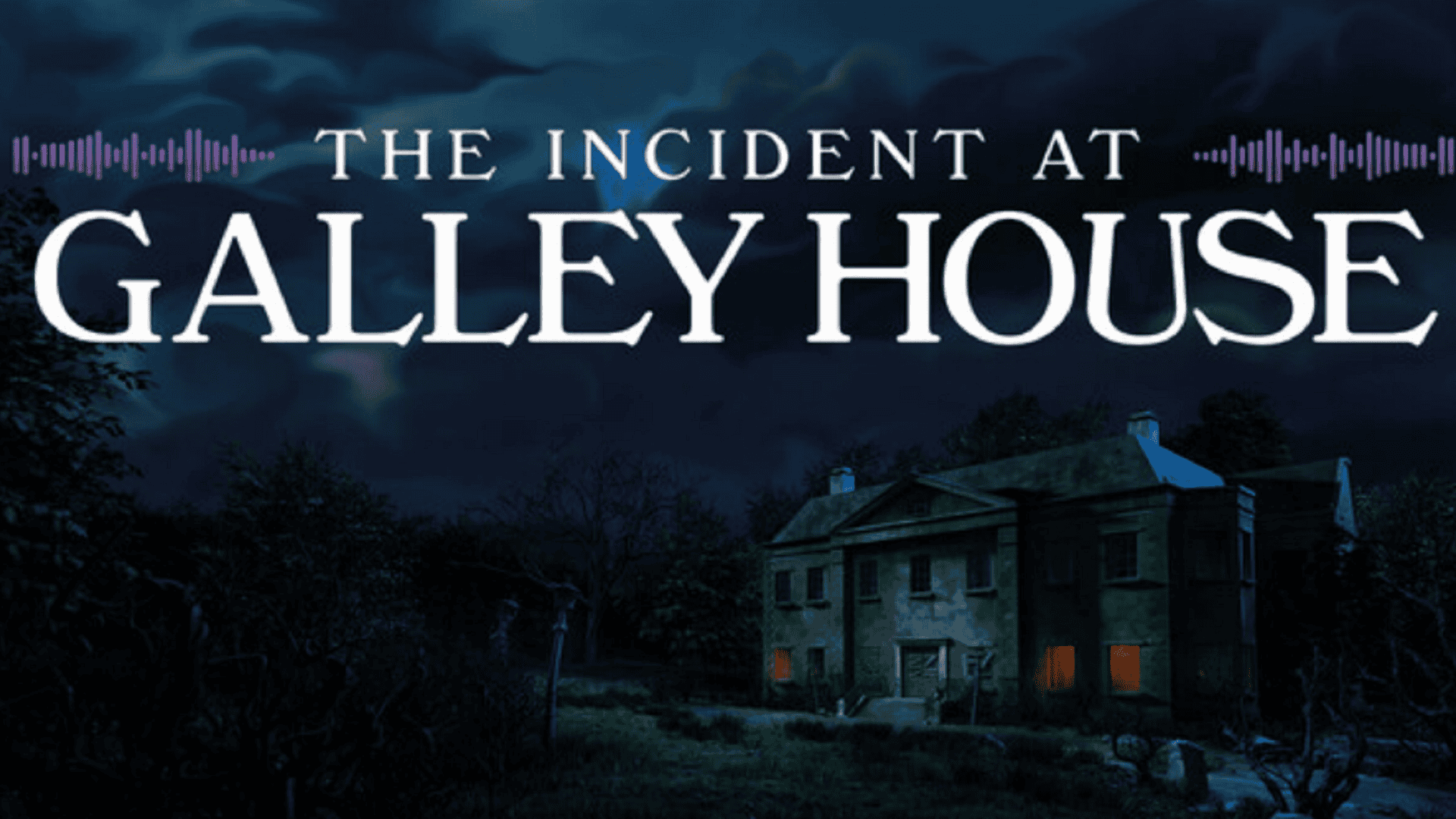
Bodies were found at Galley House. Who were they? Why were they there? What truly happened on that long, horrific night? Only one thing remains that could possibly reveal the truth: a mysterious contraption called the Seance Machine, capable of reconstructing conversations that happened in and around Galley House. As investigator Reya Beckon, it is your job to identify and listen to these conversations, and perhaps learn what truly happened across one single strange, dark night.
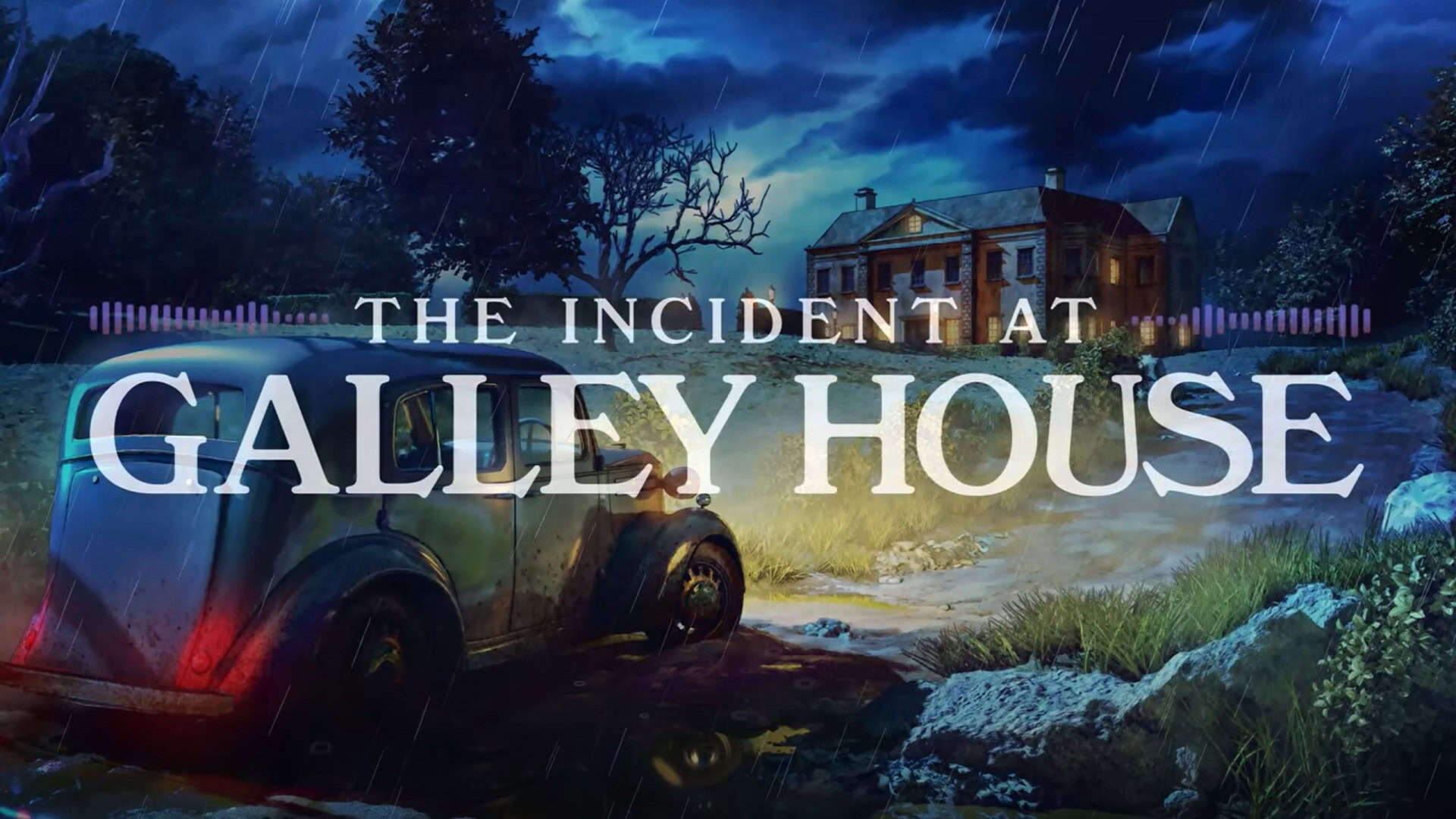
The Incident at Galley House is a mystery game with horror elements developed by William Rous and published by Evil Trout, Inc. (of The Roottrees are Dead fame). The game began its life on itch.io as Type Help; while the Steam version retains a similar story and gameplay structure, it features all-new art, full voice acting, an updated version of the Seance Machine with additional mechanics, and even some new plot sections going into greater detail about investigations into Galley House following the titular Incident.
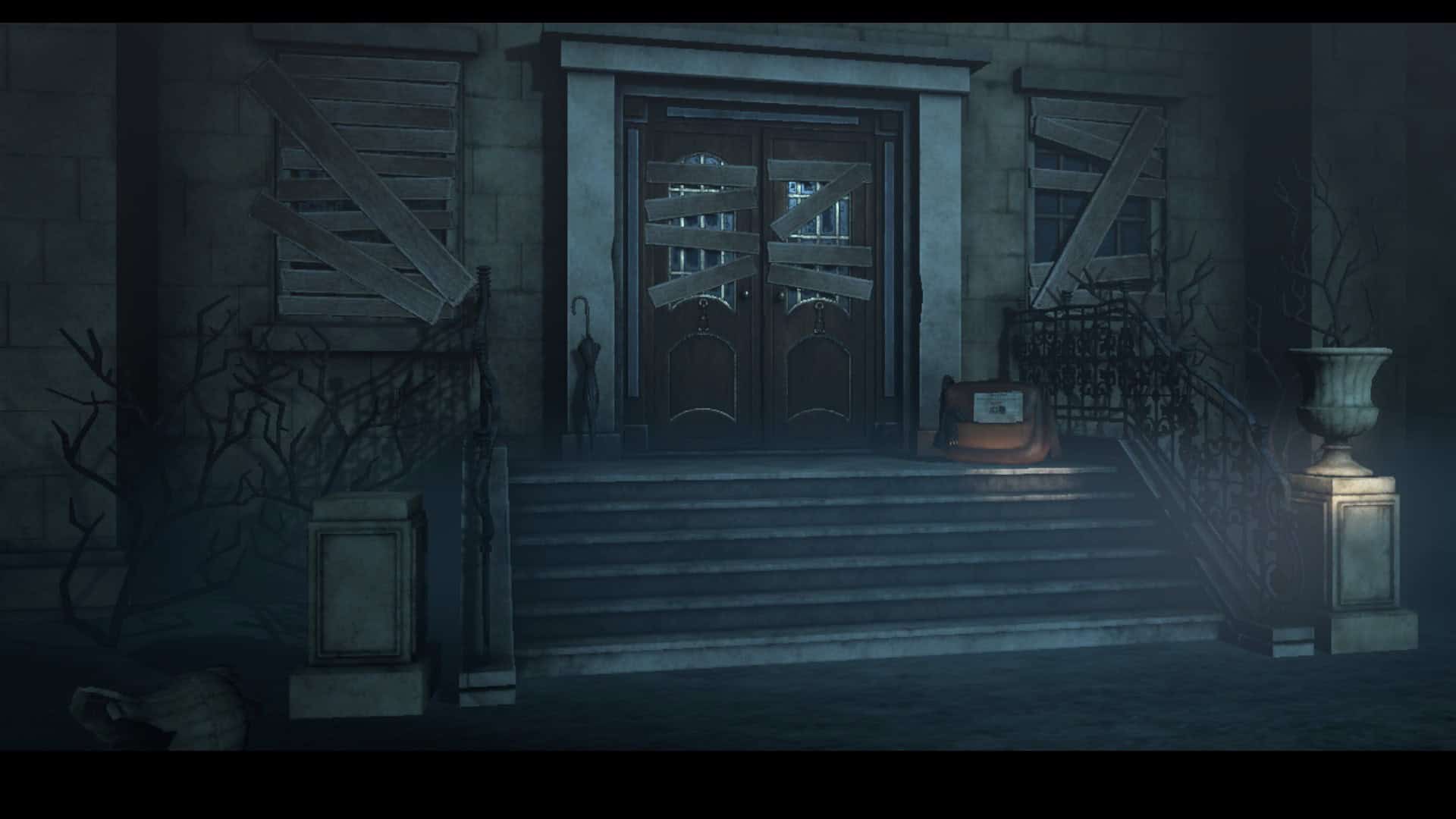
I have had an eye on this game for a while, especially after conducting an extremely fascinating interview with the developers earlier this year, and I can say with full confidence that The Incident at Galley House did not disappoint. This is one of the strongest, best-written mystery games I have ever played. It will surely find a place in the mystery gaming Hall of Fame alongside such titles as Return of the Obra Dinn, the Golden Idol games, and the aforementioned The Roottrees are Dead. Mystery game lovers, this is one you can NOT miss out on.
The story is at turns terrifying and heartbreaking while always remaining fascinating and drawing the player in. I played for hours without stopping, constantly repeating to myself “just one more conversation.” There’s heartbreak, paranoia, fear, family bonding, suspicion, tension, unexpected moments of humor, and, of course, some absolutely devastating death scenes that will stick with you long after you’ve finished the story. I am still thinking about The Incident at Galley House many days after finishing it, and I believe that will continue to be the case months and even years in the future.
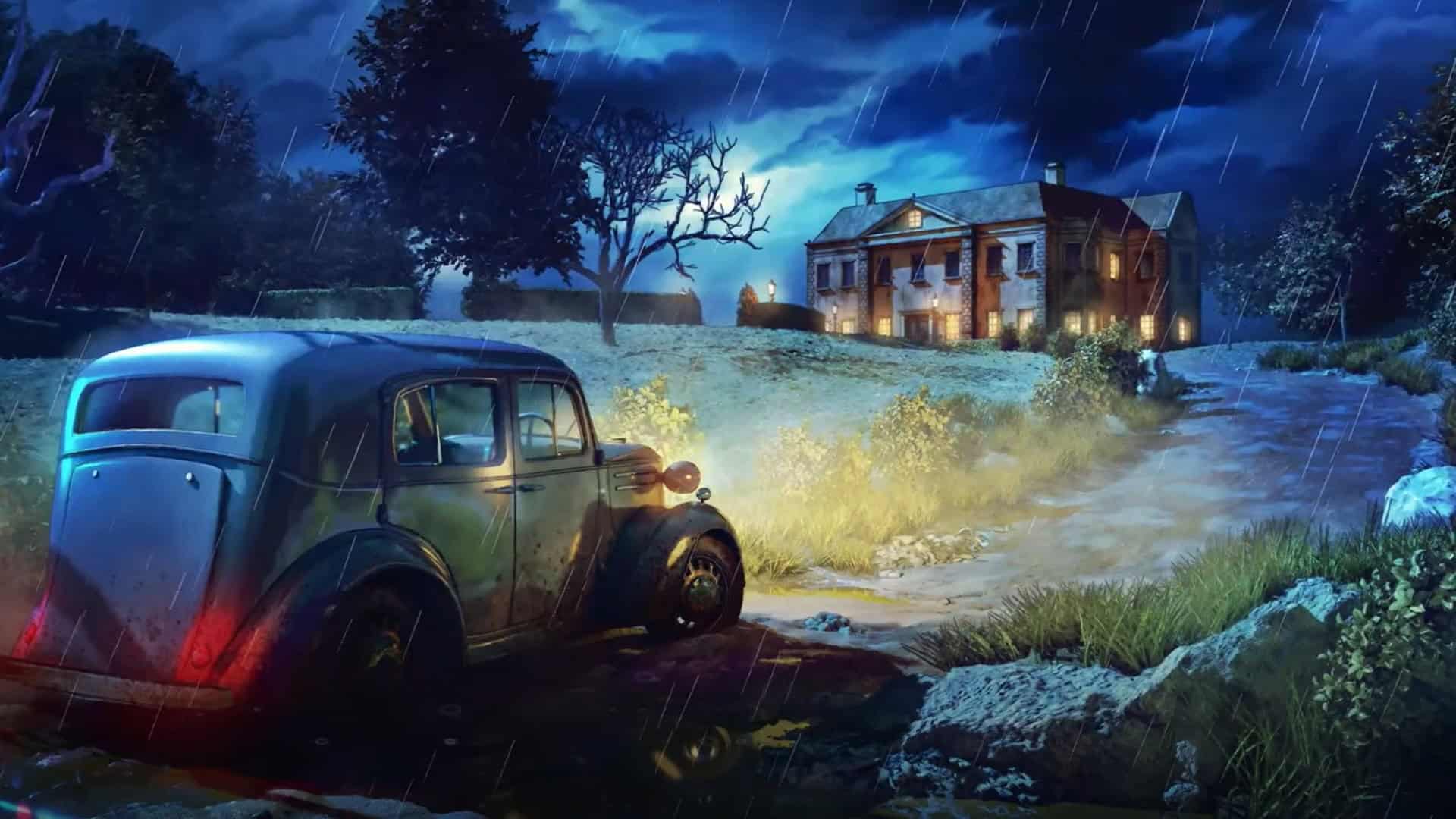
The additions made for the game’s Steam release only enhanced it. The art style fits the game perfectly, and I love the contrast between the sumptuous but shabby luxury of Galley House in its prime and the empty, cobweb-ridden rooms you find yourself inhabiting in the ‘present day’ sections. It’s an effective juxtaposition that really emphasizes the horror of the situation both you and the long-ago guests find themselves in.
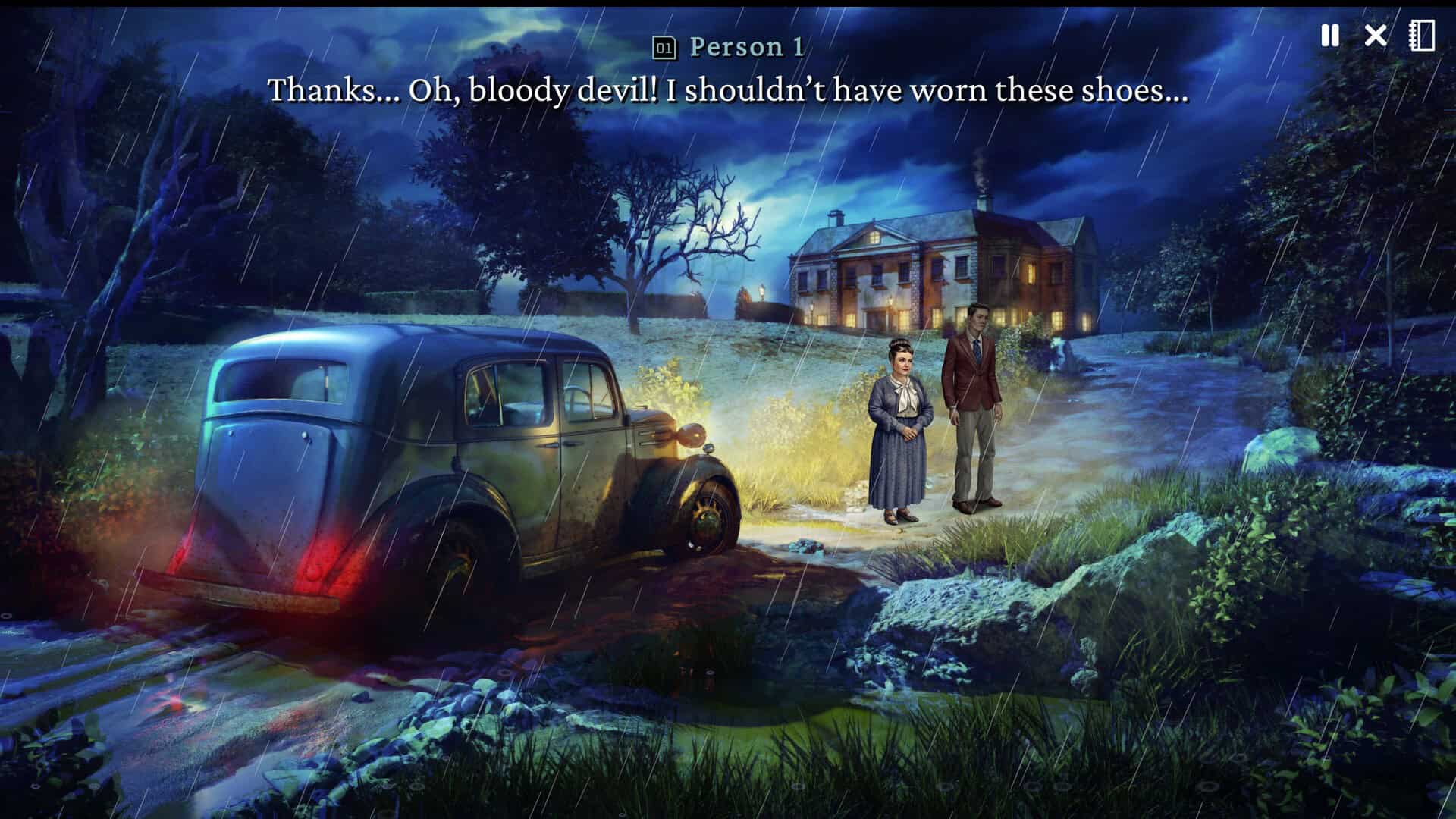
Given how much of The Incident at Galley House centers around conversations, the addition of voice acting truly elevated the game to a new level. Everyone is perfectly cast, and I found myself connecting to these tragic, doomed characters no matter how much or little time I got to spend with each of them. I particularly liked the lonely, tragic Person 3 (even character names are a spoiler in The Incident at Galley House!) whose arc reflects how a person can become more and more isolated as a situation devolves, and the steel-spined Person 5, who is determined to be a good host even as the bodies keep piling up.
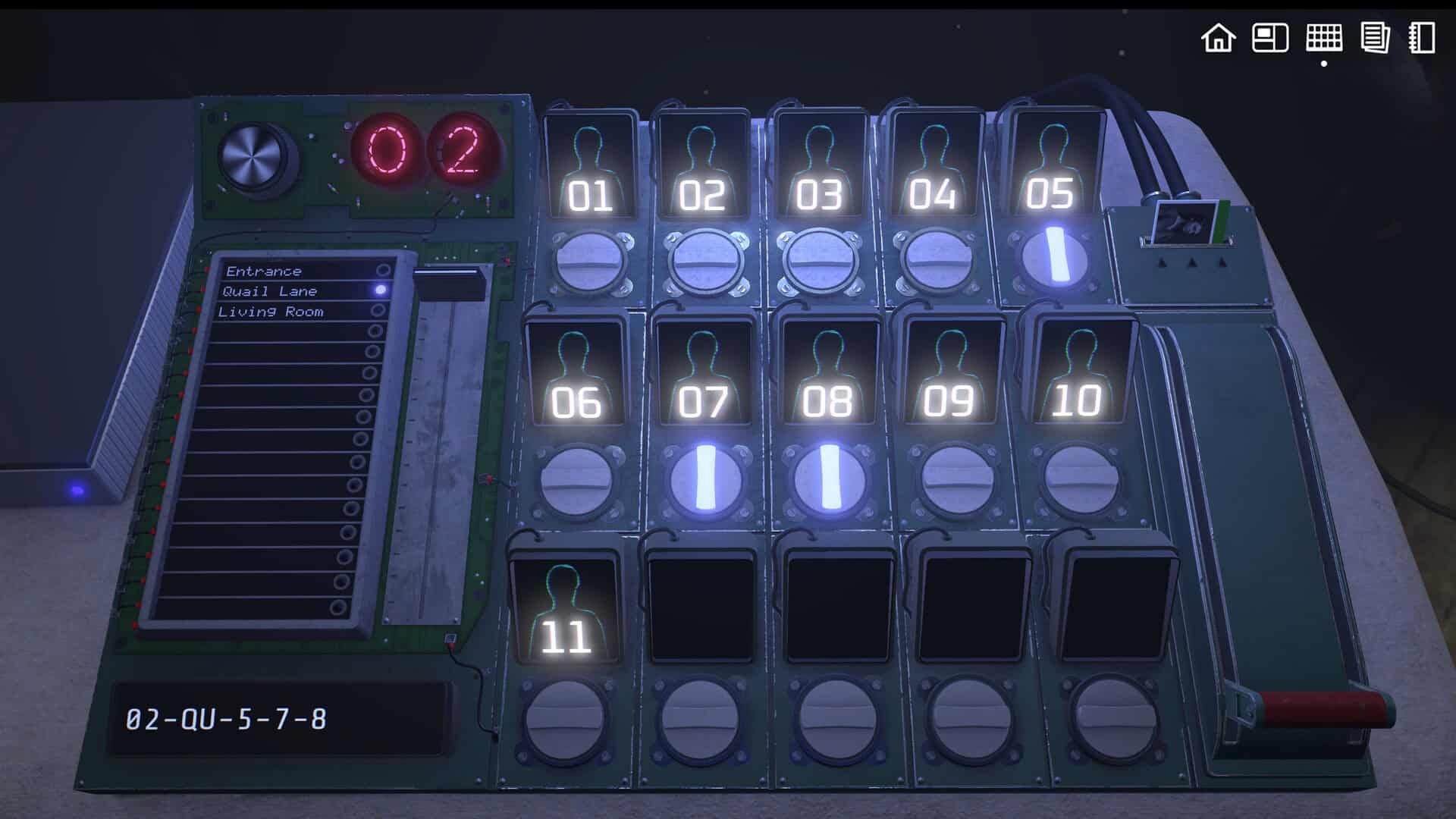
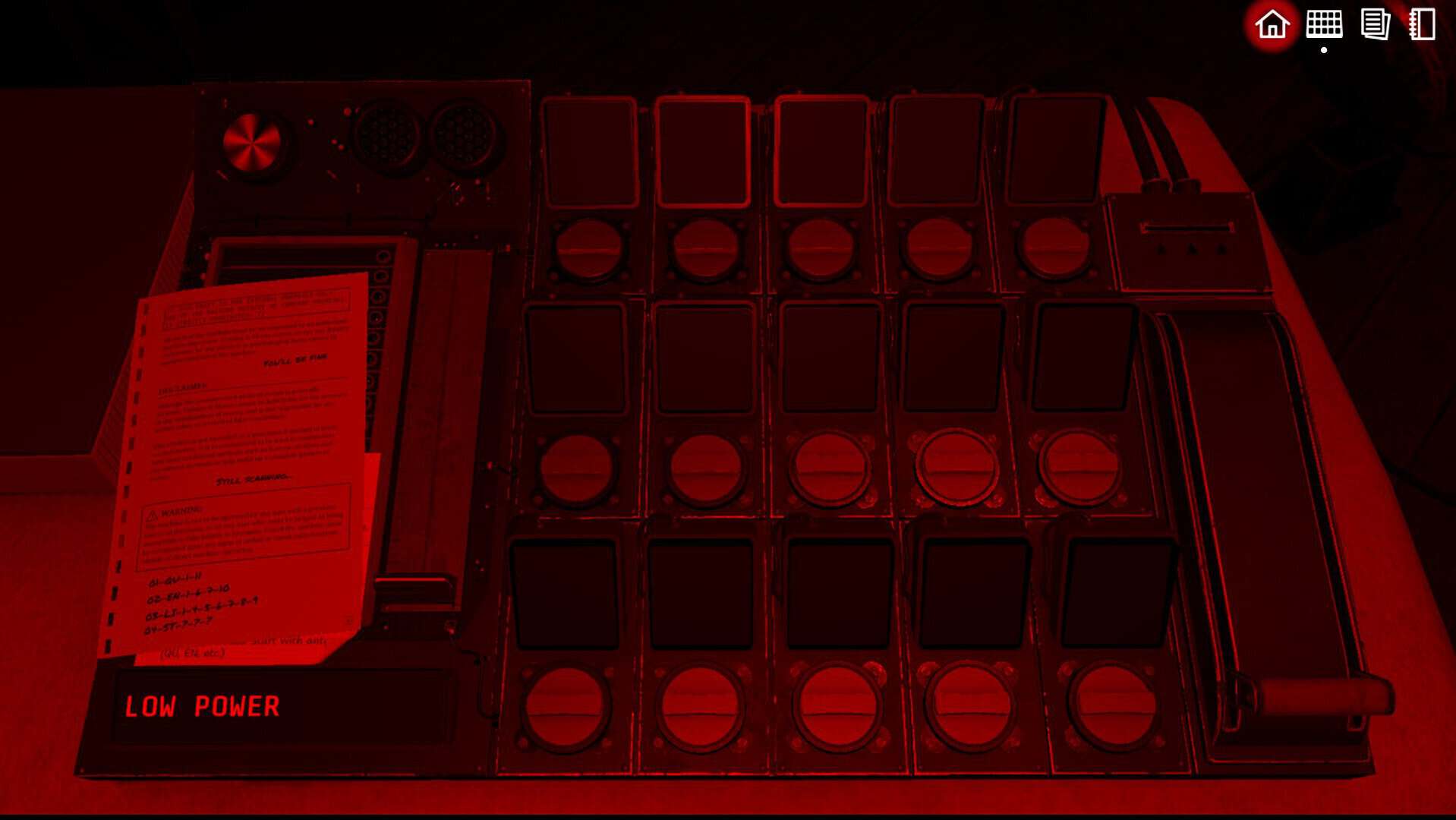
Gameplay is fairly straightforward while also being pretty open-ended. You need to use the Seance Machine to find conversations by identifying who was present, what room they were in, and what time it was (using timestamps determined by the Seance Machine). You are also encouraged (but not required) to assign names and avatars to participants. Once you’ve seen a conversation, you can reread it as many times as you need to find context clues about where the participants came from or went next. Your ultimate goal is to fully complete the timeline for each character present in Galley House – and then a little bit extra, but no spoilers here!
I really like how open-ended the gameplay is. You are not required to unlock conversations in any particular order (aside from the few the game gives you at the start). Every person who plays the game will experience its events a little differently, and no two people will have exactly the same journey through Galley House. You can choose to fill out everyone’s whereabouts during one timestamp, or follow one character’s path throughout the day and then go back for another, or rush to the end to figure out exactly what happened – there is no wrong way to play The Incident at Galley House, and I love that!
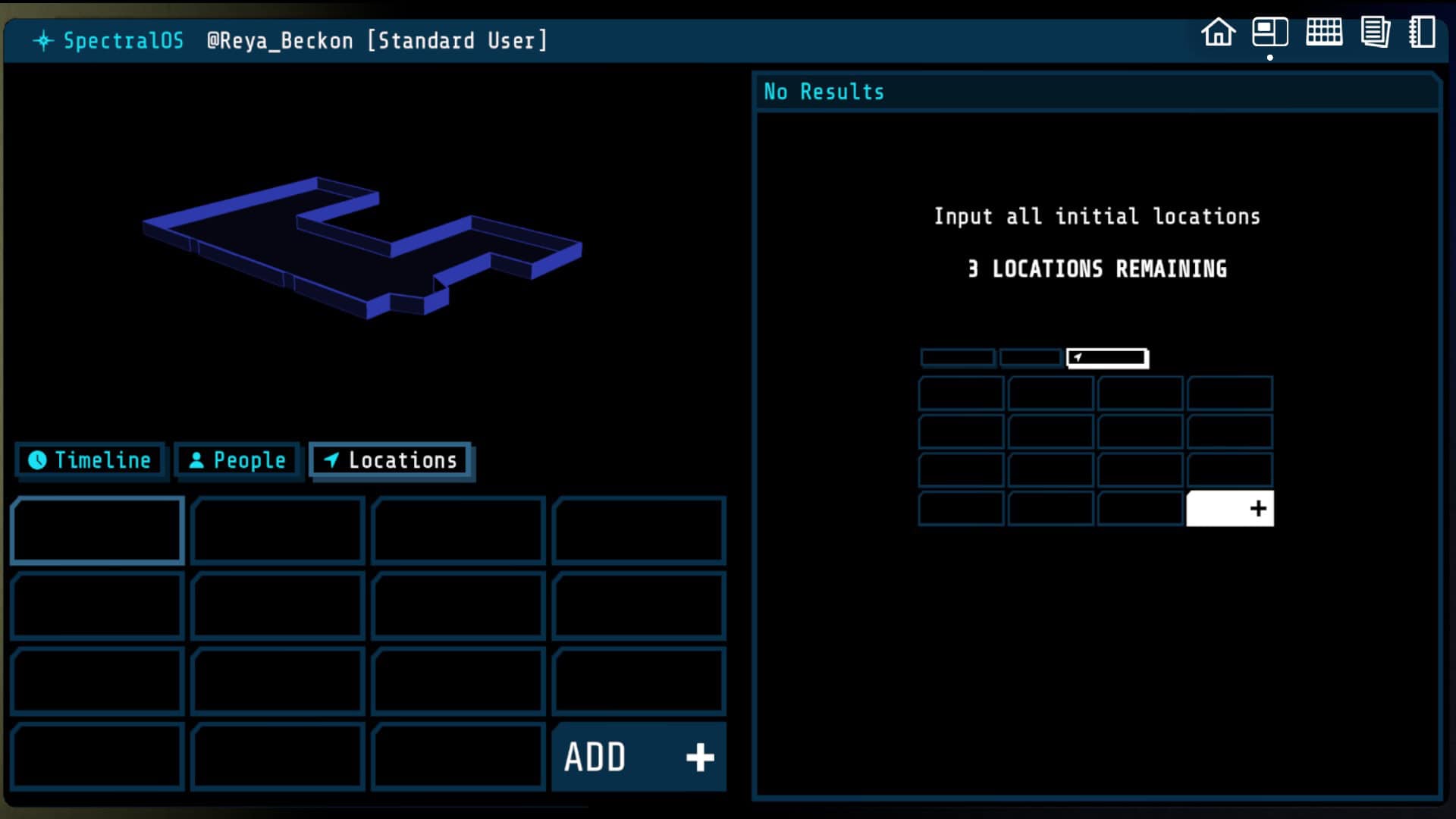
There are some really great quality of life changes made between the game’s original incarnation as Type Help and its finalized form as The Incident at Galley House, and I really appreciate all of them. The reimagined Seance Machine allows you to view events by timestamp, room, or character, which easily accommodates different gameplay styles. There’s even a 3D render of Galley House itself in the machine, which is really helpful for visualizing characters’ movements. My favorite feature is that the machine reminds you whose whereabouts are unaccounted for each timestamp, which is absolutely vital when you get down to the last few conversations at the end.
I also want to shout out The Incident at Galley House‘ really robust hint system. There is absolutely no way to get stuck in the game – the game will always provide a hint, and they will start out vague but gradually get more specific as you request more hints, eventually outright giving you a conversation you could go to next. I like that, because the game’s timeline can be complex and there are some conversations that are easily missed (and I am a total completionist who wanted to see every scene). I do wish that there was a way to request a hint for a specific room/character/timestamp instead of getting whichever hint the game decides for you, but that’s more a matter of personal preference than anything.
Truly, I have almost no complaints about The Incident at Galley House – I can really think of only one and it is very minor. The game never definitively clarifies if you have assigned the right avatars to each character (there are more avatars than characters, and it’s definitely possible to mess up). While that could be a bit of deliberate ambiguity, my mystery-solving brain craved the satisfaction of a “yes, you’ve properly matched each character to their avatar”. Perhaps an achievement for doing this could work, or a little note in the Machine? Although I do like that nothing stops you from deliberately assigning the wrong avatar to a character, letting you do things like watching a scene where the deep, melodious voice of Person 8 comes out of a tiny old lady.
The last thing I want to say is – if you are reading this having already played Type Help on itch.io, you should ABSOLUTELY replay the game as The Incident at Galley House. There is new dialogue, including new content that significantly expands on the mystery, and the addition of voice acting and art really elevates the whole experience. And if you’re new to The Incident at Galley House, well, buckle up, because this is one of the most amazing stories I have ever experienced, and it will stay with me forever. This is one of those games I truly feel honored to have gotten the opportunity to play, and would recommend to absolutely anyone and everyone. Just remember….There are no ghosts in Galley House.
Kate played The Incident at Galley House on PC via Steam using a provided review code. This review is based on the version of the game available at the time of writing and our score will not be changed.
- Score
- 10/10 MASTERFUL - GAMEOBSERVER RECOMMENDS
- Summary
-
Kate says: The Incident at Galley House is a beautiful and chilling mystery game. Unique gameplay based around identifying conversations leads to gradually identifying a story packed full with devastating twists.
- More
- GameObserver's Review Policy



 ObserverCrew Picks
 bserver
 bserver