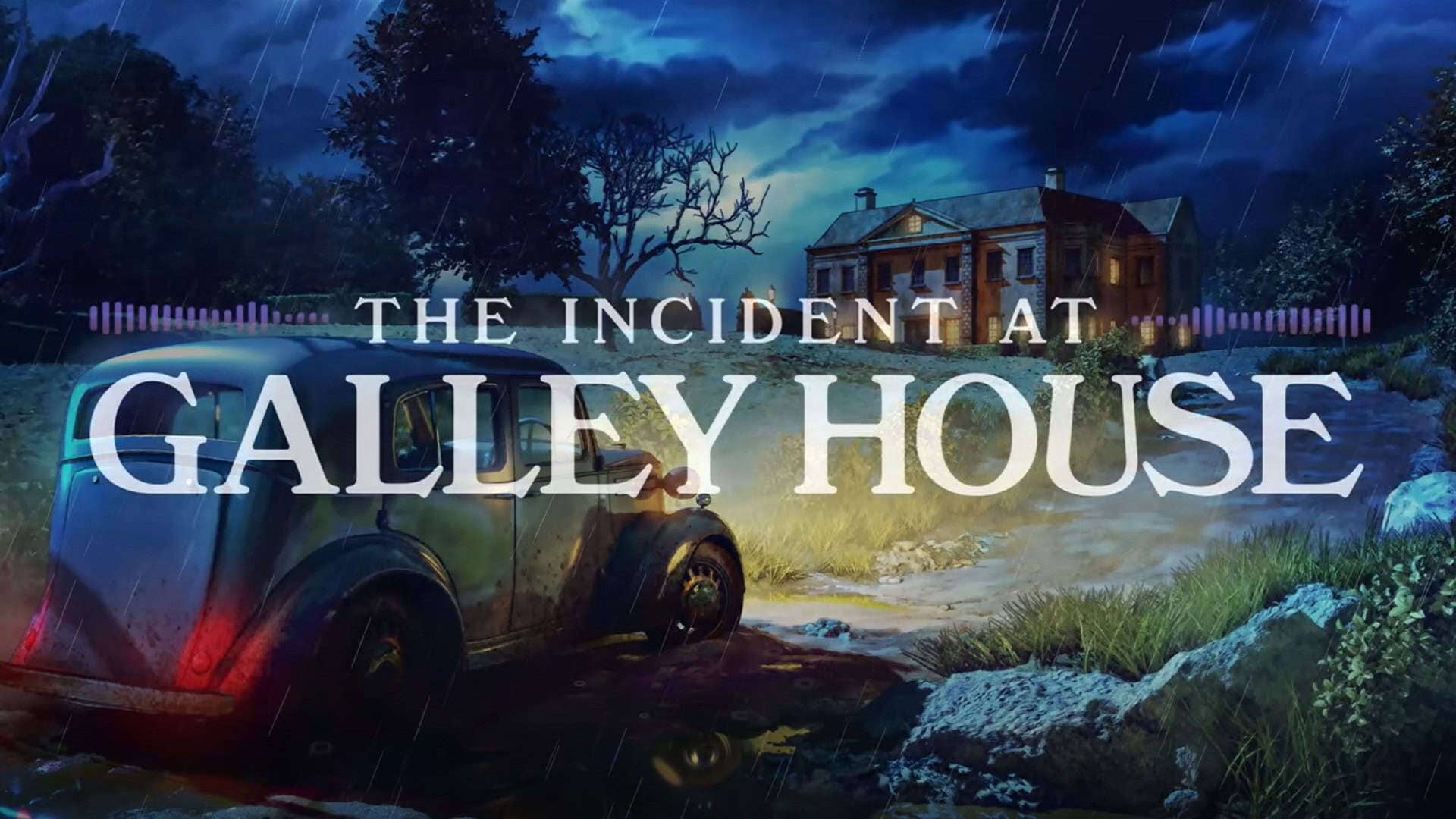
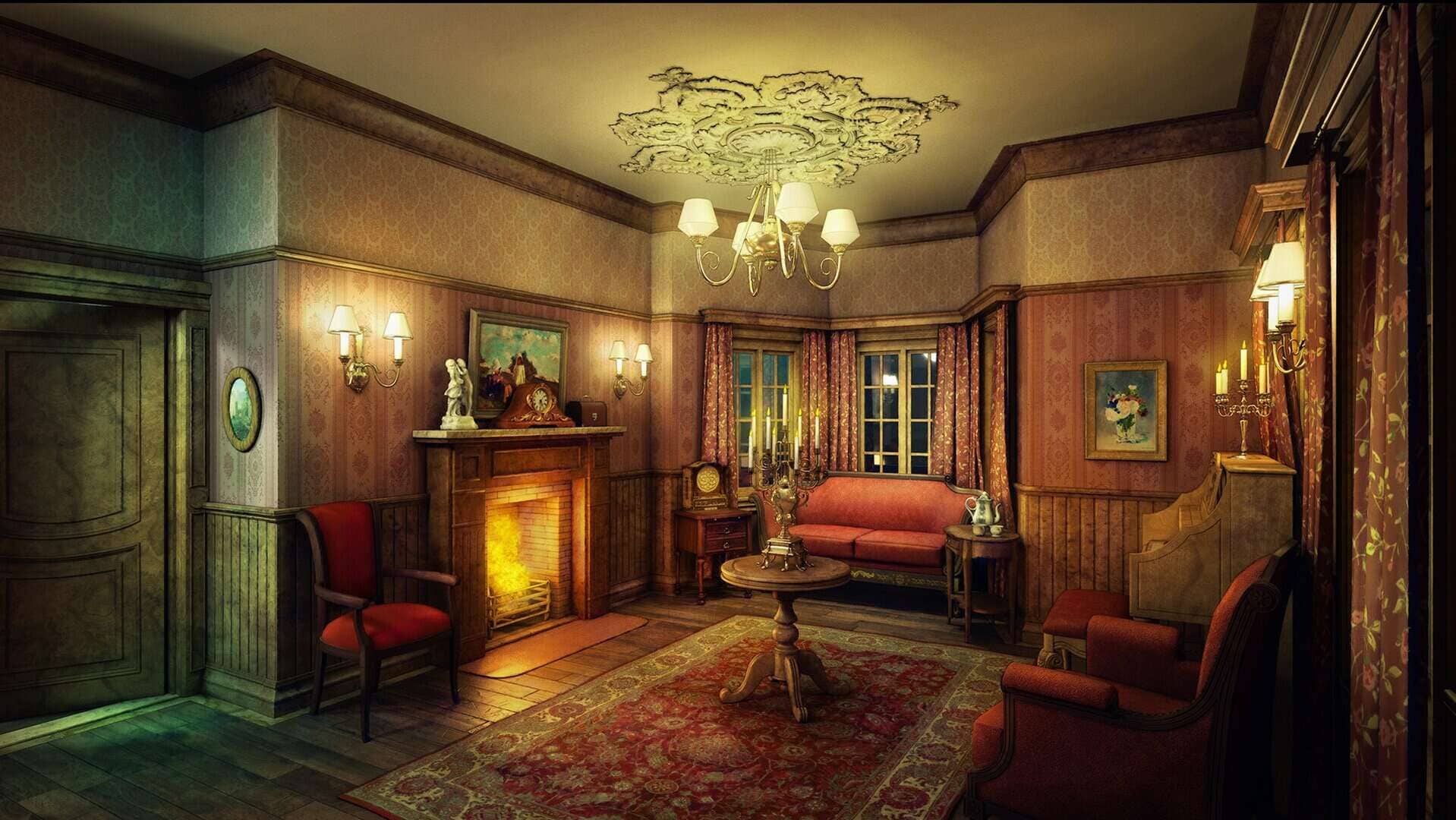
In early 2025, developer William Rous released Type Help, a “thinky puzzle mystery” in which players are challenged to find the truth behind a series of bizarre deaths at Galley House. Rous has worked with Evil Trout Inc’s Robin Ward and Jeremy Johnston (creator of The Roottrees are Dead) to remaster Type Help for a wider Steam release as The Incident at Galley House, featuring all-new art, voice acting, and more.
GameObserver had the chance to interview Rous, Ward, and Johnston about The Incident at Galley House prior to its 2026 release. They discussed the initial inspirations behind Type Help, the process of expanding and re-creating a primarily text-based game for a wide release, and their thoughts on the current ongoing mystery game renaissance kicked off by Return of the Obra Dinn.
The following transcript does NOT contain spoilers for The Incident at Galley House. It does, however, include spoilers for Return of the Obra Dinn.
Type Help’s Inspiration and Development
GAMEOBSERVER: Without going into any spoilers – because the game is quite full of twists! – can you tell us anything about where the initial idea for The Incident at Galley House’s story came from?
WILLIAM ROUS: I suppose I’d thought for a long time about making my own detective game set in an old house with a sinister past, and I’ve always loved a good murder mystery. But it wasn’t until I was away from home one day and feeling quite isolated that I was struck by the perfect idea. I had started to think that there was something missing in my life, and I began to imagine what, or who, might take that place…
The initial story idea has hardly changed since then, and I soon became desperate to find a way to tell it effectively. But I’m afraid that’s all I can say without going into spoilers!
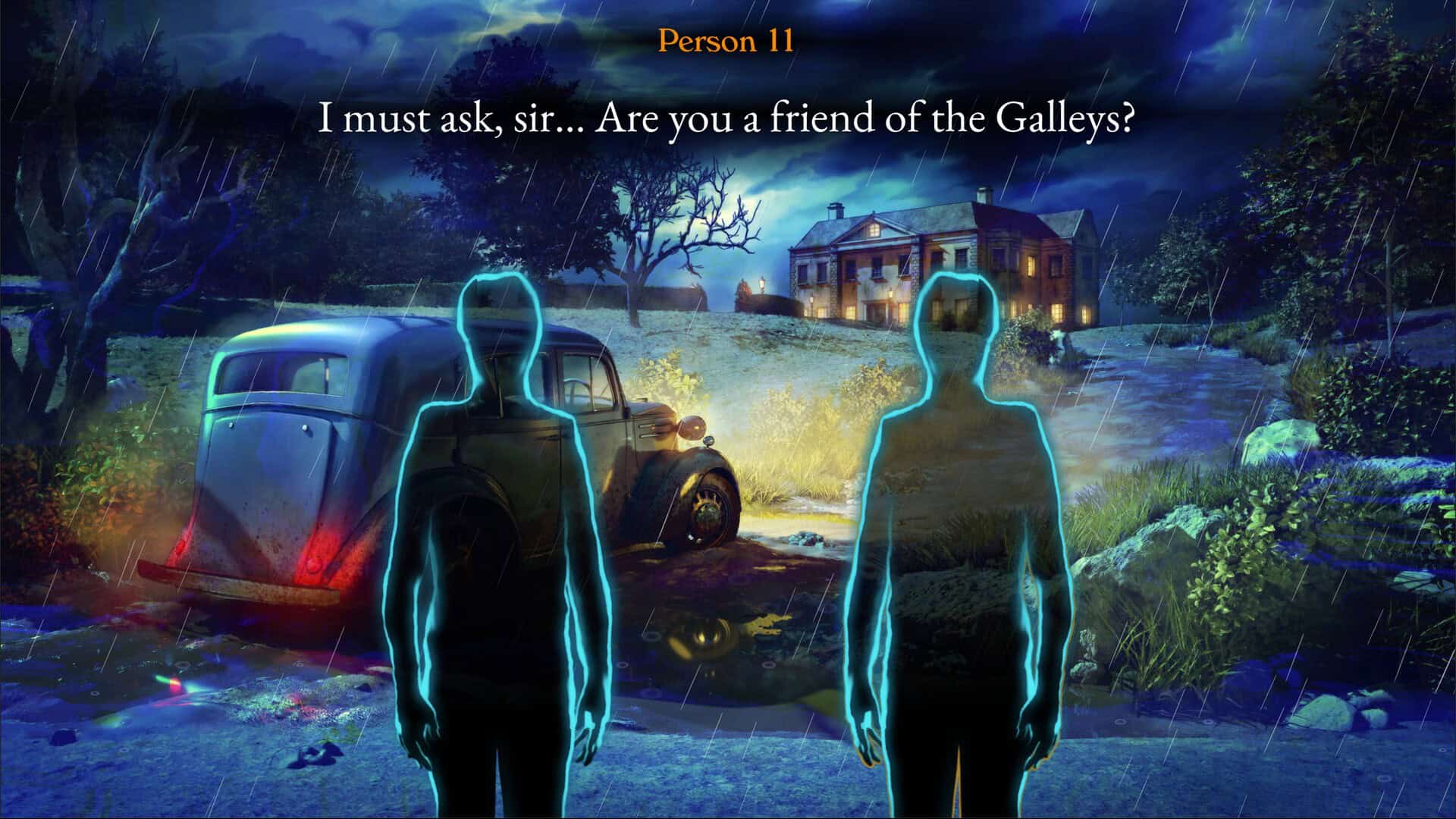
GAMEOBSERVER: How did you decide on the unique format of The Incident at Galley House, where you are collecting audio / transcripts and searching out more by finding the right times and places where conversations happened?
ROUS: It took me a while to decide how I wanted to tell the story. For a short period, I entertained the idea of setting it up as a real-time digital play, where I’d get someone different to play each of the characters and record it from four different perspectives. They’d each be in charge of moving around the virtual house and making sure they stayed in character throughout.
I never got as far as working out the logistics of this, and I don’t think I ever really expected to go ahead with it! But I did enjoy splitting up the story into scenes and working out which events must be happening simultaneously. The scene codes for the audio transcripts spawned from this experiment, and I realised I could quite easily build a puzzle game around them.
I certainly also drew inspiration from Her Story, which similarly makes use of searching for case files on a computer, and I also felt a particular desire to capture the magic of JerryTerry’s beautifully iconic music video Kiss Me (Kill Me) in the form of a puzzle game. I love the idea of transcript text being accompanied by the jottings of another unknown detective. (And I’m sure there’s a lot more that can be done with this!)
GAMEOBSERVER: Since the game’s initial release as Type Help, several other games have drawn inspiration from its format and gameplay, such as TR-49, What Happened to the Crew, and more. What is the feeling like of knowing that this game has really become the foundation of a genre, and that “Type Help-like” / “Galley House-like” has so quickly become part of the gaming lexicon?
ROUS: Of course, it’s amazing! And it’s an honour to be referenced in these contexts.
Equally, Type Help is only really one possible direction to take the ‘database detective’ genre. I’m glad it has inspired people to explore their own ideas with a similar puzzle setup, and it’s fantastic to see a lot of games attempting to do novel things within the genre as well.
I’m very interested to see where this genre goes next. I still think there’s a lot of innovation to be made in this space.
GAMEOBSERVER: As many games have used Galley House/Type Help for inspiration, were there any games that you would say particularly inspired it?
ROUS: Definitely. I could talk for a long time about the small details in Return of the Obra Dinn that have inspired me, but I particularly love how you can track the spread of misinformation and miscommunication. There’s Hok Seng Lau’s execution, of course, but also so much more: how Nichols’s failure to learn about the nature of the shell and the purpose of its chest from the Formosans leads to his downfall; how the orders barked by the captain as he arrives late to the scene in chapter 6 are in fact quite useless, since Peters and Smith have already been sneaking down through the back of the ship and collecting guns to enact their ambush attack without him; how rumours of a curse spread from Dahl’s well-intentioned warning in chapter 5 to the misplaced paranoia and confusion in chapters 9 and 10. I very much wanted to build on these themes in Type Help.
I’ve also always loved how Evans’s actions onboard the ship in chapter 8 are informed by his knowledge of how the player’s own investigation works. It’s fun to tie the puzzle mechanics to the narrative and the mystery like this.
In addition to Her Story, I also built on ideas from Unheard to try and achieve fluidity and connectivity between the simultaneous story scenes, and took ideas from The Roottrees are Dead about how to set up the clues for the mystery at the beginning and end (as well as using a similar intuition system!).
And perhaps another thing to mention is how the ‘tutorial’ is hidden until later in the game, which was inspired by the superb 12 Word Searches. I love the idea that the game world has been built for a purpose that’s different from how you find yourself using it.
The Process Of Remaking Galley House For Steam
GAMEOBSERVER: When reworking an itch.io game for a wider Steam release, as with Roottrees and Galley House, what are some challenges you encounter? Is there anything about the process that surprised you at all, or did it go as you expected?
ROBIN WARD: It’s much easier to adapt an existing game than to create one from scratch. You have a finished product to look at, and you know exactly what its constraints and limitations are, and can plan accordingly. The Steam version of The Roottrees are Dead took one year, and that was in a totally new engine, with all new graphics and a whole second scenario of puzzles to solve. A year is a very short development period, and it went surprisingly well.
Galley House has also gone smoothly. In my head, initially, I saw it as a smaller and simpler remaster than it ended up being. We just kept having cool ideas, and it’s hard to not want to build a better version of a thing once those great suggestions pop up. Roottrees was very successful compared to its small budget, so that’s allowed us to creep the scope up a bit and make a bigger and (hopefully!) more interesting game. The danger there, of course, is you can keep creeping indefinitely and not ship, so we’re trying very hard now to focus on the goal.
If you want a more concrete example, adding controller support has been surprisingly challenging. Roottrees has a lot of typing and clicking, so supporting platforms like the Steam Deck was off the table. With this game controller support sounded much more straightforward, so we committed to that from day one, and it’s been tough. I’m used to coding interfaces where the user clicks on a thing and something happens. With a controller you have to be much more aware of your current context, and it feels like every interface has to be coded twice, once for an ideal mouse interface and once for a controller. But I’m glad we did it.

GAMEOBSERVER: What makes a game a good candidate for a Steam remake/re-release? What was it about Type Help (and Roottrees) that made them ideal for this process?
WARD: In both cases, they were games that I loved, and both gave me the feeling of “this game should have a WAY bigger audience than it does right now.”
With The Roottrees are Dead, I felt the artwork and user interface were holding it back. Jeremy did an amazing job considering it was done in his evenings and weekends as a solo dev, but I could see a bunch of areas where smoothing down rough edges would make it more accessible to a wider audience. When I reached out to him he agreed and we spent hours talking about what would be involved in making the ideal version of the game, and fortunately we were on the same page.
Type Help is a text based game. It’s an amazing one, but the sad truth is that a lot of players will never play it because of that. Text demands a level of attention that a lot of people aren’t willing to give, and it’s hard to show off in screenshots or trailers. I see this as an adaptation rather than a remaster. Roottrees was fundamentally the same game and interface, just tidied up and polished. The Incident at Galley House takes a lot of things that were abstract and makes them concrete. All the characters have voice acting and illustrations, all the backgrounds are rendered, etc.
It’s much more like taking a book and adapting it into a movie. There’s going to be people who prefer the text version, and that’s totally fine, but it’s also going to introduce the game and story to many more people who wouldn’t have given it a second look, and I think that’s awesome.

GAMEOBSERVER: What has the process been like of adding voice acting to the game and hearing these conversations come to life?
JEREMY JOHNSTON: Because Type Help was already presented as transcripts of dialogue, you might think that converting that to voice acting would be simple and straightforward. In reality, however, it involved a lot of decisions both before and during the voice acting sessions. The most obvious decision we had to make was casting. We worked with a fantastic voice and casting director, Kirsty Gillmore. We had between five and ten candidates for each character and we had to judge not only how well we felt they fit the characters, but also how the actors playing characters with relationships would sound when playing off of one another.
There were also decisions surrounding individual line delivery. When dialogue is presented as text, there are multiple ways to read or interpret how words can be emphasized, and these different approaches can have wildly different meanings. One of the first things I did on the project was record every piece of dialogue myself. (It was a lot!) I’m not an actor, but I could at least read the lines with the tone and emphasis that I had heard in my head when I played Type Help. This allowed us to listen to one interpretation of the conversations aloud, and more importantly, for William to know which lines might have a different meaning than he intended. He was then able to add performance notes and clarifications into the script for the real voice actors which helped a great deal.
Even with all of the voices recorded, we’re still doing a lot of work each day to make the conversations sound right. We want it to feel like the player is listening to something that could have happened. When excited or angry people talk aloud in real life they don’t always wait for one another to finish speaking. In quiet conversations, sometimes people take longer pauses or even speak as they’re performing actions that make noise (such as pouring a drink or lighting a cigarette). Conversations can be messy and trying to make them flow naturally is much more involved than simply playing the lines one after another. Now that we have all the voices, my days are spent listening to scenes dozens of times and adjusting the timing and volume of the dialogue, music, and audio effects to make things feel just right.

GAMEOBSERVER: Without spoiling anything, is there anything new or surprising that people who played Type Help might encounter in Galley House?
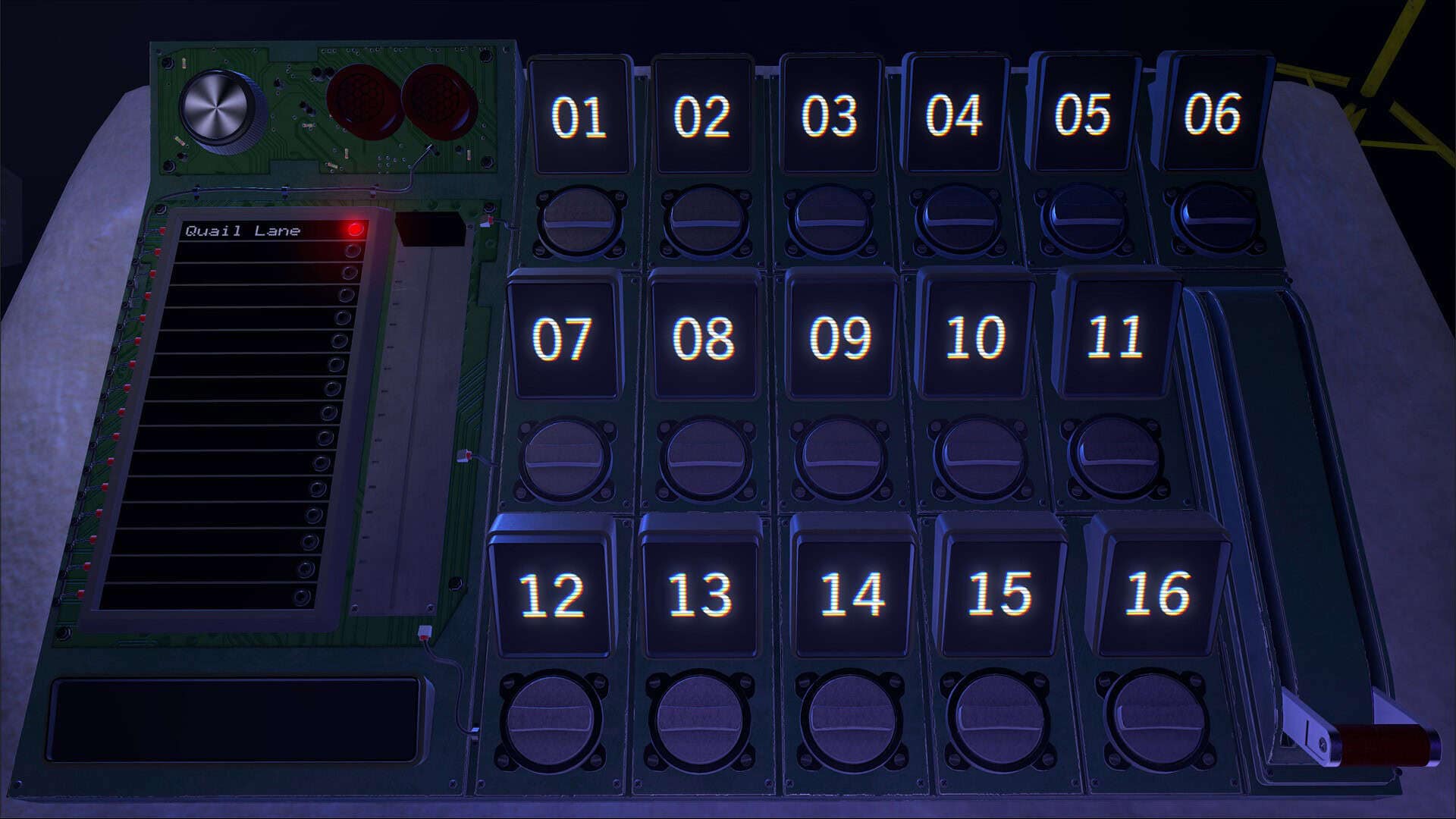
JOHNSTON: In Type Help, you search through the files of another detective who investigated what happened at Galley House. He listened to what happened and transcribed what he heard, and even added interjections and comments into his files which help to finish the game. The Incident at Galley House is more about you doing the listening yourself. We (very briefly) discussed having you play as the detective from Type Help, connecting the two games and adding some new lore to the story. But instead, we decided upon a completely new meta-narrative surrounding how and why the player is listening to the past. We knew they would be the “primary investigator” and that they’d be using a machine to recover memories. This meant that all of the necessary comments from the detective had to be folded into the story in different ways.
When the three of us first discussed the remake, Robin and I both pitched various story ideas including plot beats, the origins and setting of the machine, and how we could add to the story without reducing the effectiveness of Type Help. William took a few bits and pieces here and there that he liked from our various conversations and began working on some new storytelling that goes hand in hand with both the original story and the new setting in a way that only he could. The more he sent us his writing and ideas, the more we found ways to ensure that the game’s new presentation and the new story all gel together well. It’s very exciting.
Without spoilers, I can say that the story that takes place in the House’s past has not changed, and that is still the majority of the game. But other questions, such as where did the new machine come from, who’s operating it, and what are they trying to accomplish? Those are new and will be answered one way or another.
Where Is The Mystery Genre Heading Next?

GAMEOBSERVER: What has it been like to be such a major part of the renaissance that mystery games have really been undergoing in the past few years? Do you think mystery games will continue to be “having their moment” in 2026 and beyond?
JOHNSTON: I’m extraordinarily grateful. When I first began making The Roottrees are Dead I had no reason to think it would become as well known as it did. I have worked on a lot of small games over the years, especially during the Global Game Jam, and as far as I was concerned this was just another one. But during playtesting people were enjoying it enough that it felt more like a “real game” than any other game jam game I had made. That really caught me off guard, but I think the primary reason for that enthusiasm was, in all honesty, that I tapped into a collective love for Return of the Obra Dinn and logic games. I consider Obra Dinn the game that jump started the renaissance because so many other recent games in the genre have cited it as inspiration or borrowed its mechanics to make something new.
As for the community and popularity of the genre as a whole, I don’t see it dying down any time soon. Something unique amongst puzzle games, and especially mysteries, is that so much of the fun happens in your head as you work out a problem. Once that problem is solved you can’t revisit that specific part of the fun. There will always be people looking for new mysteries, because they love that feeling but have played all the “big ones”, and replaying them is rarely as enjoyable as the first time. As proof, Roottrees (in its current Steam release form) and The Incident at Galley House both exist because fans are so invested in the genre and always want more.
The original version of Roottrees was released for free on itch.io and I “marketed” it simply by posting to Reddit and other websites for fans of Obra Dinn. I never would have spent the time or money to make it worth paying for. I was just happy to have people play something I made. Robin was one of those people. He’s a self-proclaimed mystery fan craving more games that scratch the itch. He found it through one of those sites, enjoyed it despite the flaws, then offered to spend his time and resources to commission art and fix everything so that it could reach the heights it has since then.
The fact that he and others were even able to discover and play the original from word of mouth is evidence people want as much as they can get. Fans tend to finish a mystery and immediately ask where the next one is. And the community is eager to share anything and everything that they themselves have enjoyed, partly because it’s a limited resource at the moment. Unless we get to a point where so many incredible mysteries come out that people can’t possibly keep up, any engaging games that offer that feeling will probably achieve some level of success. Because of that craving, Robin and I can afford to work on another mystery game that we love, which has been fantastic. The community of people who bought and shared Roottrees to get us here have been very supportive, and have led directly to the creation of Incident at Galley House. So thanks, everyone!
GAMEOBSERVER: Anything else you’d like to tell GameObserver’s readers about Galley House?
ROUS: There are no ghosts in Galley House.
Wishlist The Incident at Galley House on Steam here!