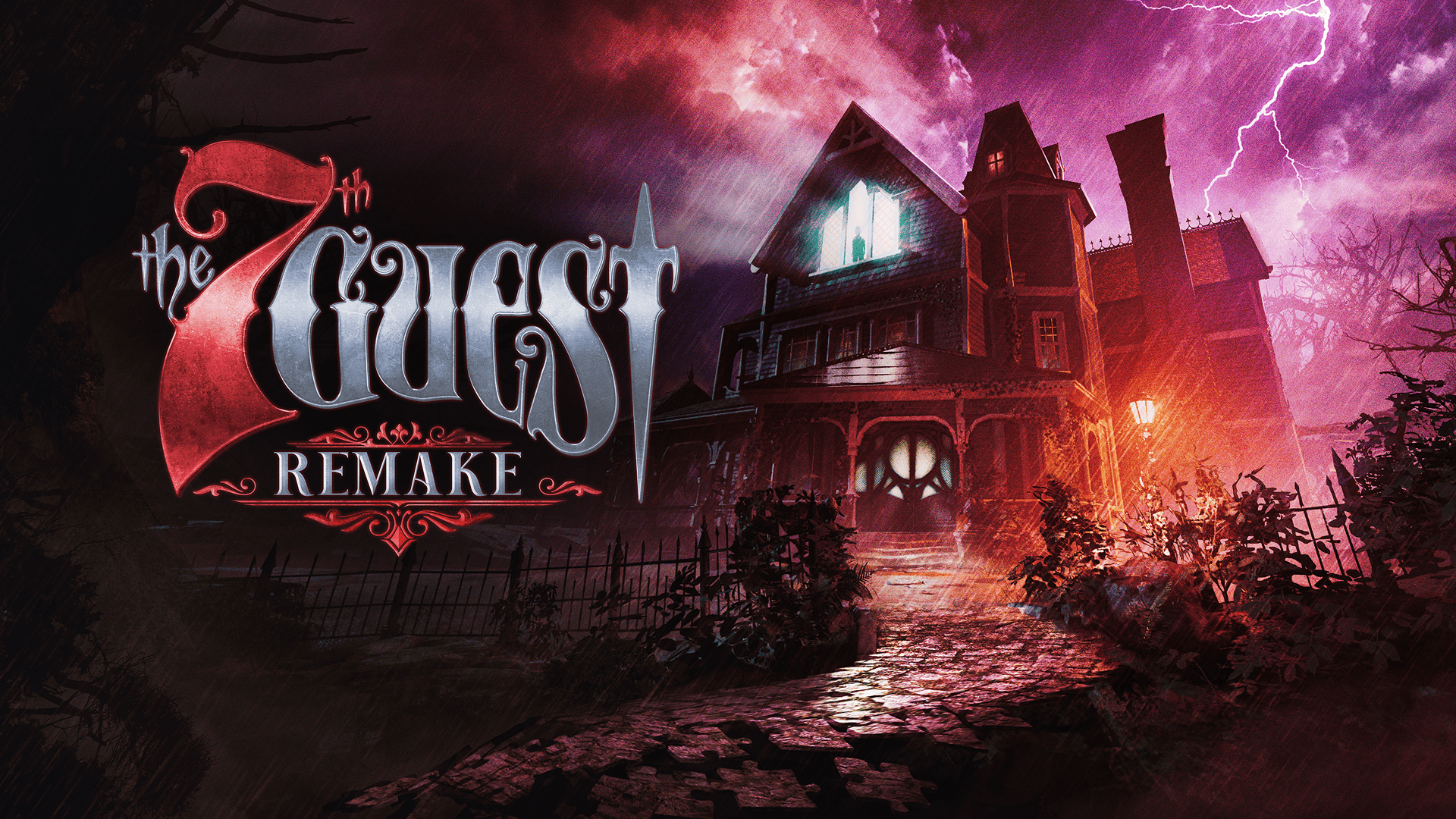
It was midnight in the summer of 1996, and my best friend and I were not supposed to be awake, much less loading up a game on her mom’s computer. The CRT monitor buzzed softly, dimly lighting the darkened room, as a crash of thunder and the haunting notes of a violin heralded my first steps into horror gaming.
The 7th Guest, apart from being a core memory for me, is considered to be a “killer app”, a piece of software that so many people were interested in that it significantly boosted interest in/sales of its associated technology as well; in this case, the CD-ROM. The 7th Guest was notable for selling upwards of two million copies for the PC between its release in 1993 and 1999, according to this archived Gamespot article.
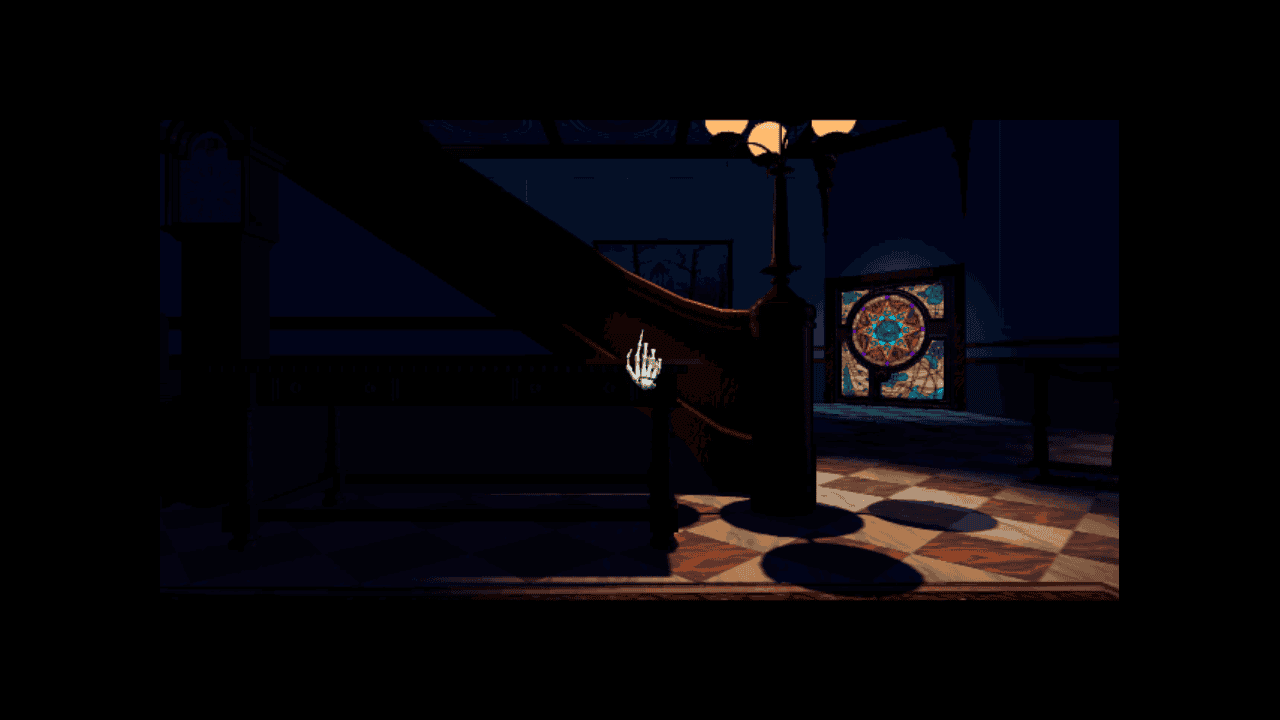
Much of the attention it received was due to its use of pre-rendered 3D graphics combined with FMV cutscenes. Although many of the effects used to create the horror scenes in the original game don’t hold up well enough to scare my gen-alpha 9-year-old, the story, primarily involving murder and ritual sacrifice, was intended for an adult audience, another rarity for the time. When Vertigo Games announced the remake in March, I couldn’t wait to see what they’d do with the story, and how much the gameplay would change. Not to mention whether I, thirty years later, would still be frightened by the story of Henry Stauf and his seven guests.
The 7th Guest Remake sees you, the player, arriving at the grounds of the long-abandoned Stauf mansion and abruptly finding yourself trapped inside, witnessing the events of a particular night replay hour by hour, the only hope of escape solving the same puzzles once posed to Stauf’s guests.
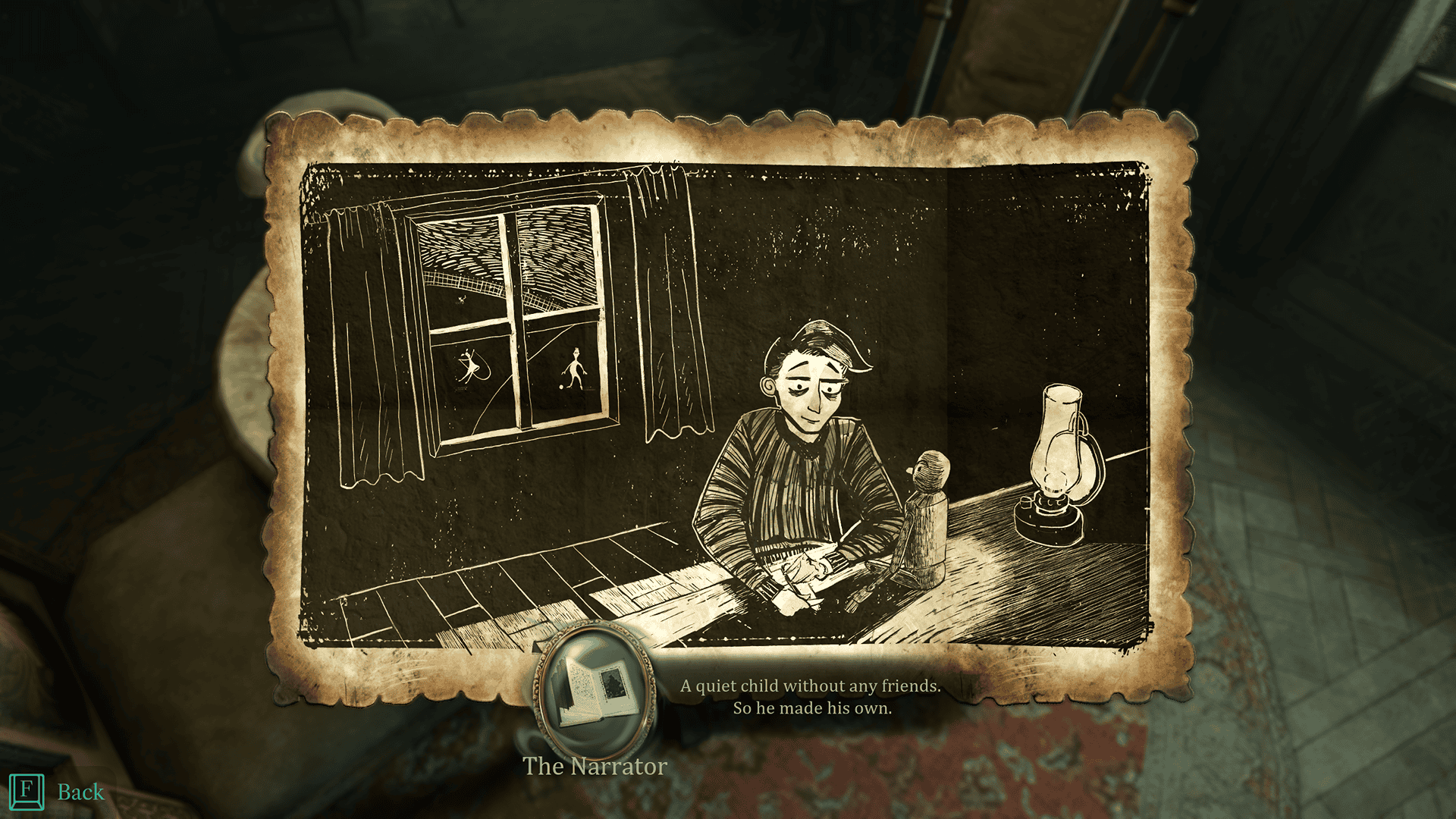
Something that fans of the original will notice immediately is that the seven-minute long intro sequence introducing the antagonist, reclusive toymaker Henry Stauf, is missing. In the remake, this ominous history is expanded and split into a dozen smaller Chronicles scattered through the rooms of the manor. Rather than keeping the FMV style of the original and the cutscenes, these are animatics in a woodcut style, and cover Stauf’s childhood as well as the ground covered by the original introduction.
You’re also accompanied throughout the game by a child’s spirit that takes the form of a glowing butterfly. While it doesn’t provide constant narration or hints, it is another noticeable contrast from the original, where the player character “Ego” would occasionally make comments to themselves, but otherwise spend the entire adventure alone.
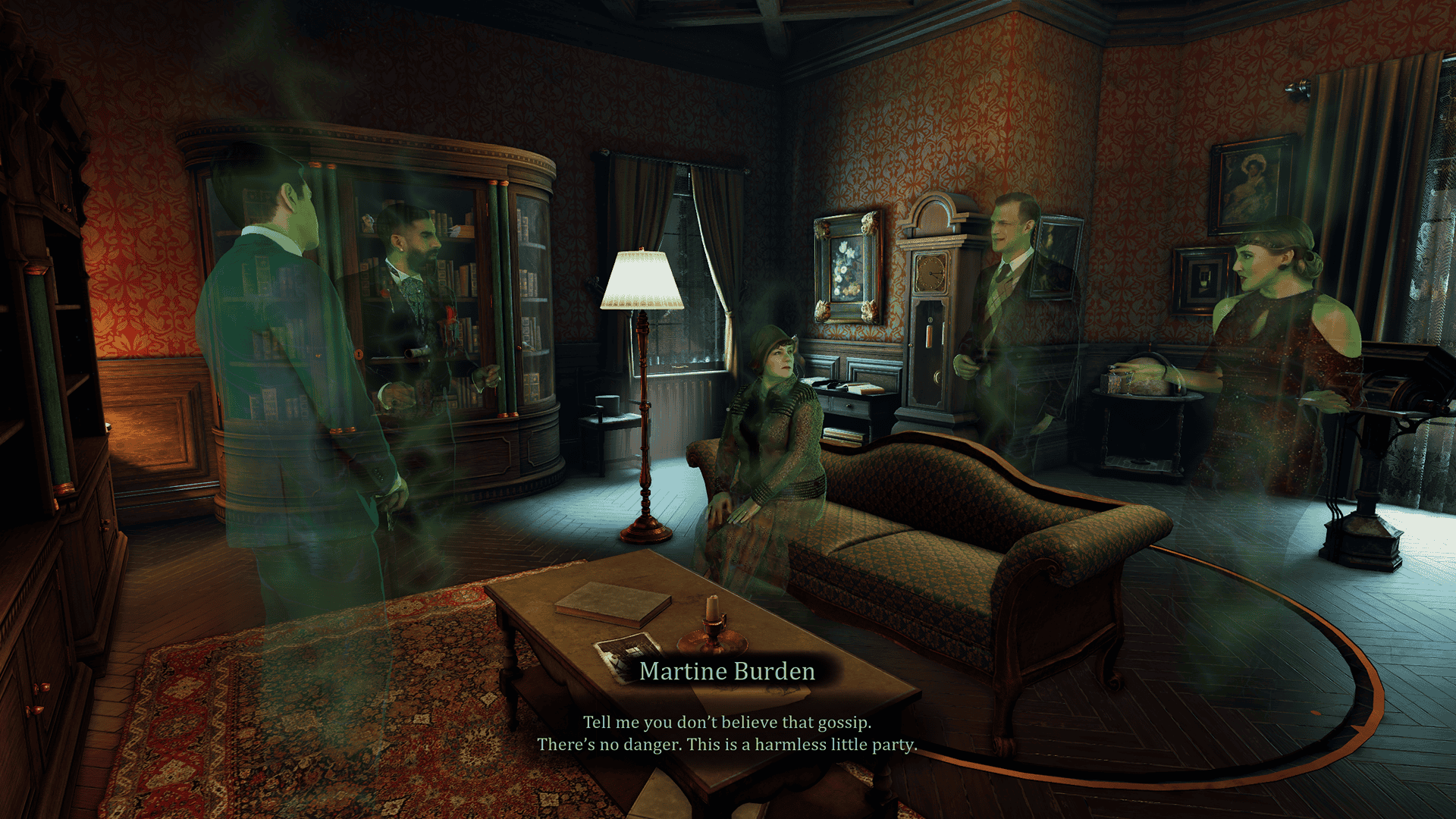
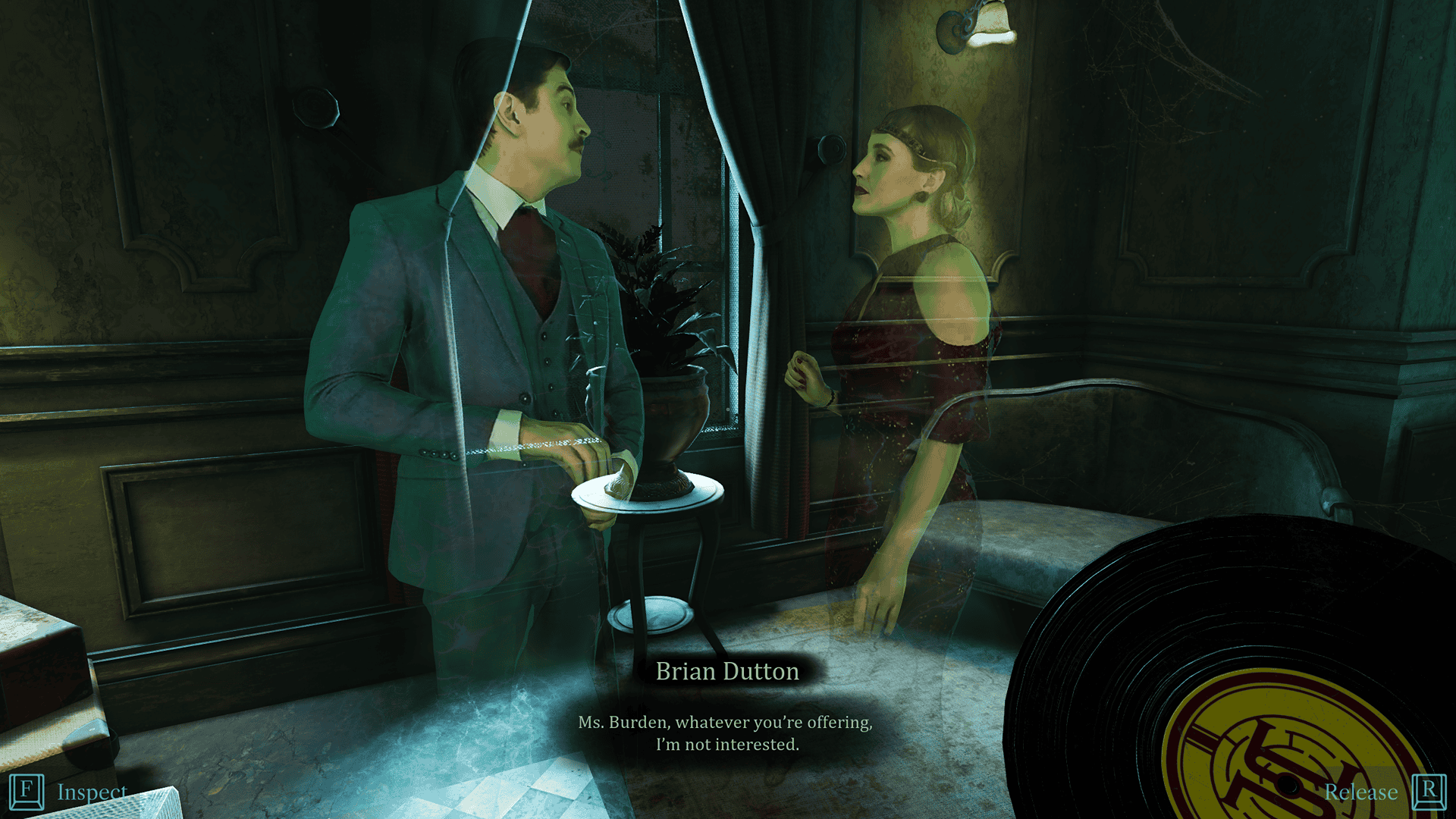
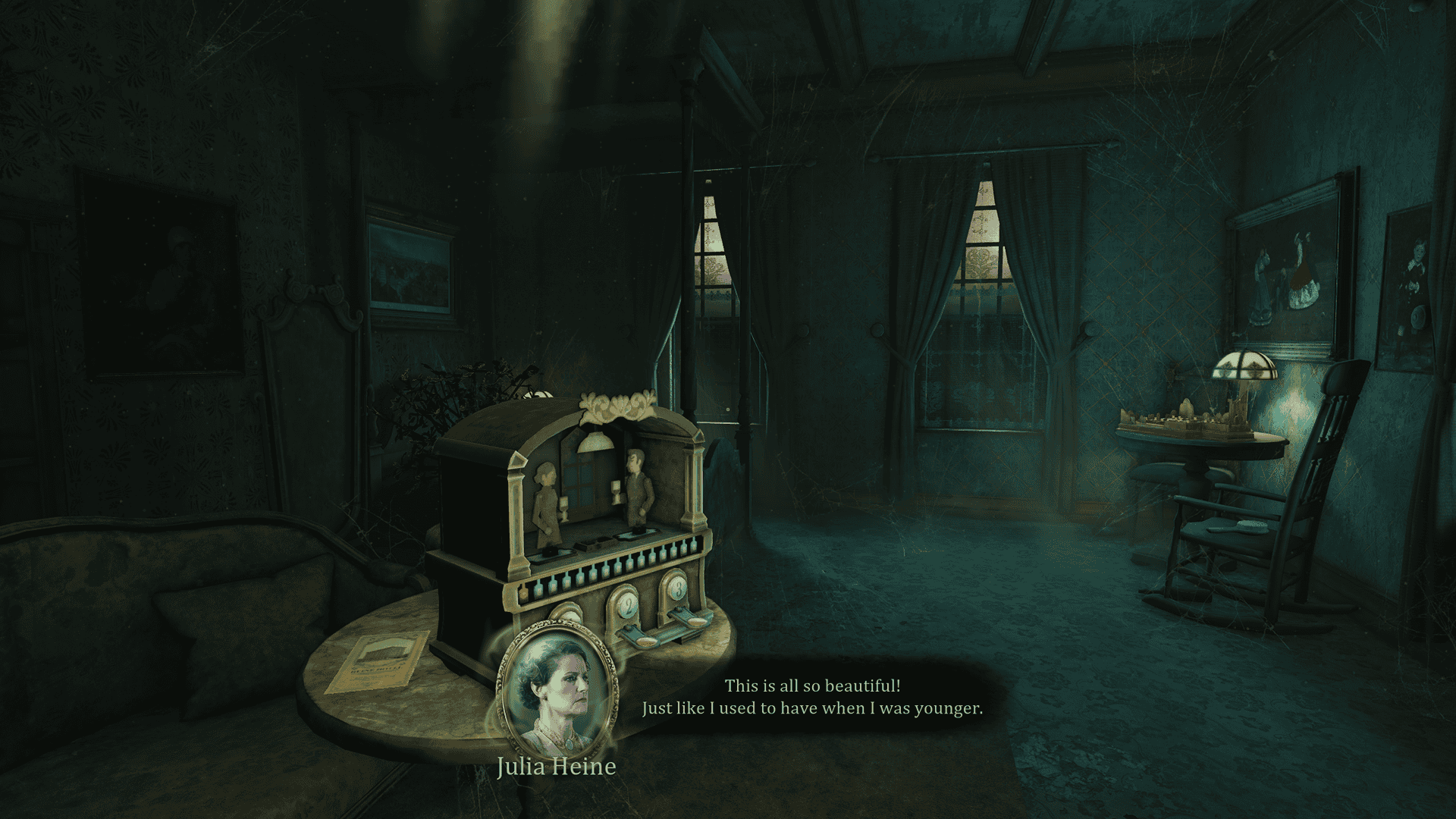
Additionally, the original gave the guests’ stories and motivations purely through the FMV cutscenes, and while solving specific puzzles unlocked new rooms, the order in which a player might see those cutscenes might leave the timeline of the story slightly disjointed. The remake takes two steps forward and perhaps one step back in its approach. While many of the storytelling elements it includes are optional and the gist of the story can be garnered by cutscenes alone, the communiques from Stauf to the guests in the form of records, addressed to the group, and personalized music boxes found in each of their rooms give a more complete picture to the backstories of each character as well as the night’s events.
While much of the criticism the original game receives centers around the individual puzzles, it also suffered somewhat from a lack of clear indication of the status of each room and where the next puzzle might be found. The 7th Guest: 25th Anniversary Edition attempted to ameliorate this by adding a map that updated based on whether a room was locked, accessible, or solved, as well as hotspot highlighting. Remake keeps the map, but cues from the butterfly spirit guide, and clues from the records and other voice lines also steer the player towards their next target. For someone stepping into the story for the first time, the level of guidance may be perfectly acceptable. For me, it felt like a potential overcorrection, more strictly directing the player’s experience than necessary.
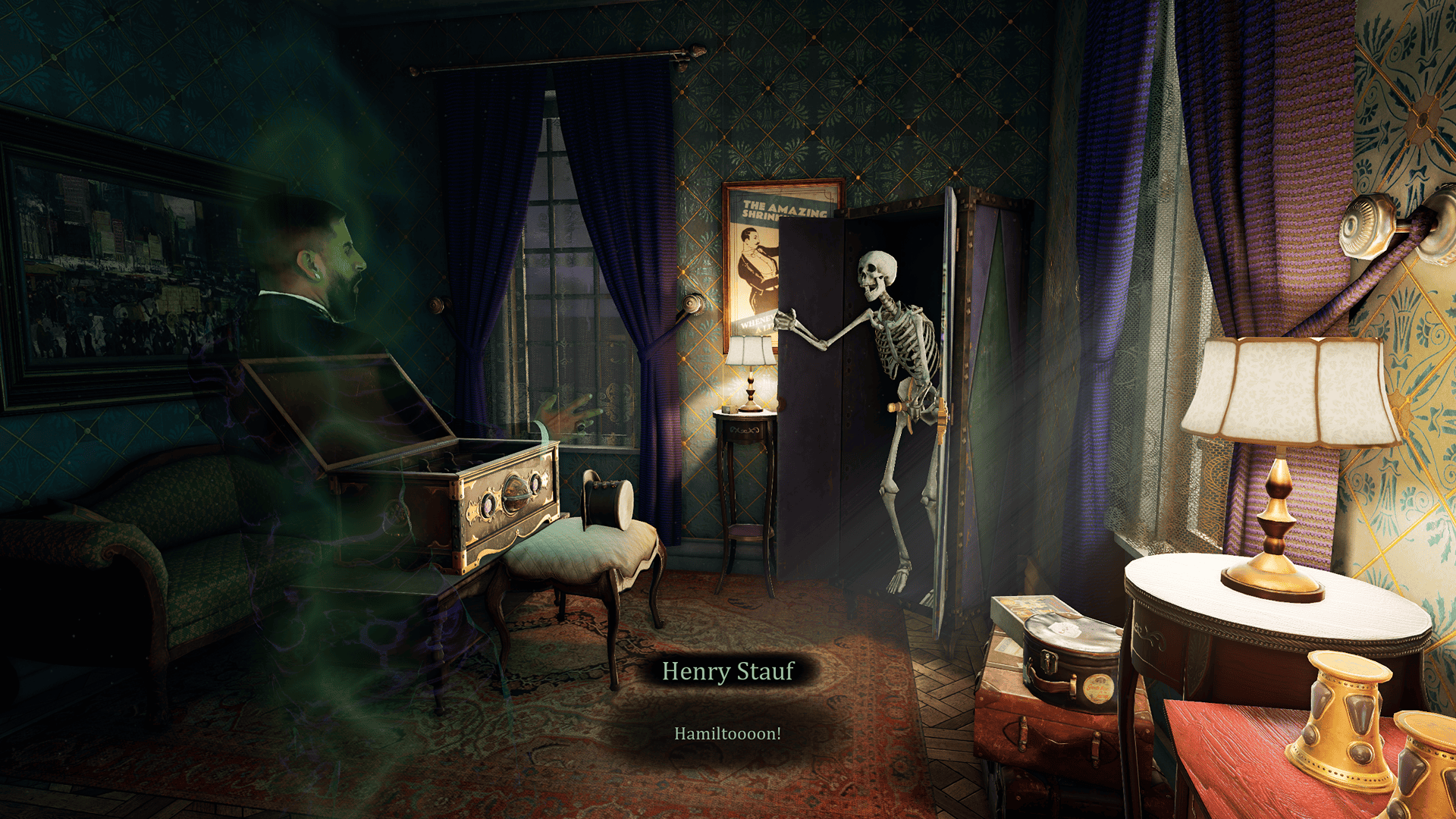
Unlike the automated movement through the 3D environments in the original, the remake allows completely autonomous movement, maintaining the first-person perspective, with separate movement and camera controls. In contrast to the limited amount of exploration available in the original, this version of Stauf’s mansion has every corner eventually accessible to the player, almost every drawer, wardrobe, and cabinet openable, with a number of items that can be picked up and examined apart from those needed for puzzle-solving.
The environmental design of each guest’s room gives additional information regarding their backstories and their “deepest wish”, which Stauf has pledged to grant the winner of his game. There are hints toward his contempt for each of them as well, though these are less obvious. All of the puzzles are also thematically linked to the correlated character: jewels and romance for the failed Broadway starlet, top hats and a sword box for the stage magician, and so forth.
There are a larger number of puzzles in Remake and while they still avoid giving blatant instructions, it’s clear that some consideration went into keeping players from getting stuck for too long. In the original, a book on the coffee table in the library could be consulted for hints three times, and then a final time to automatically solve the puzzle. However, if the player never chose to go check the book while a puzzle was in progress, they would only see a message saying “The puzzle has been solved!”
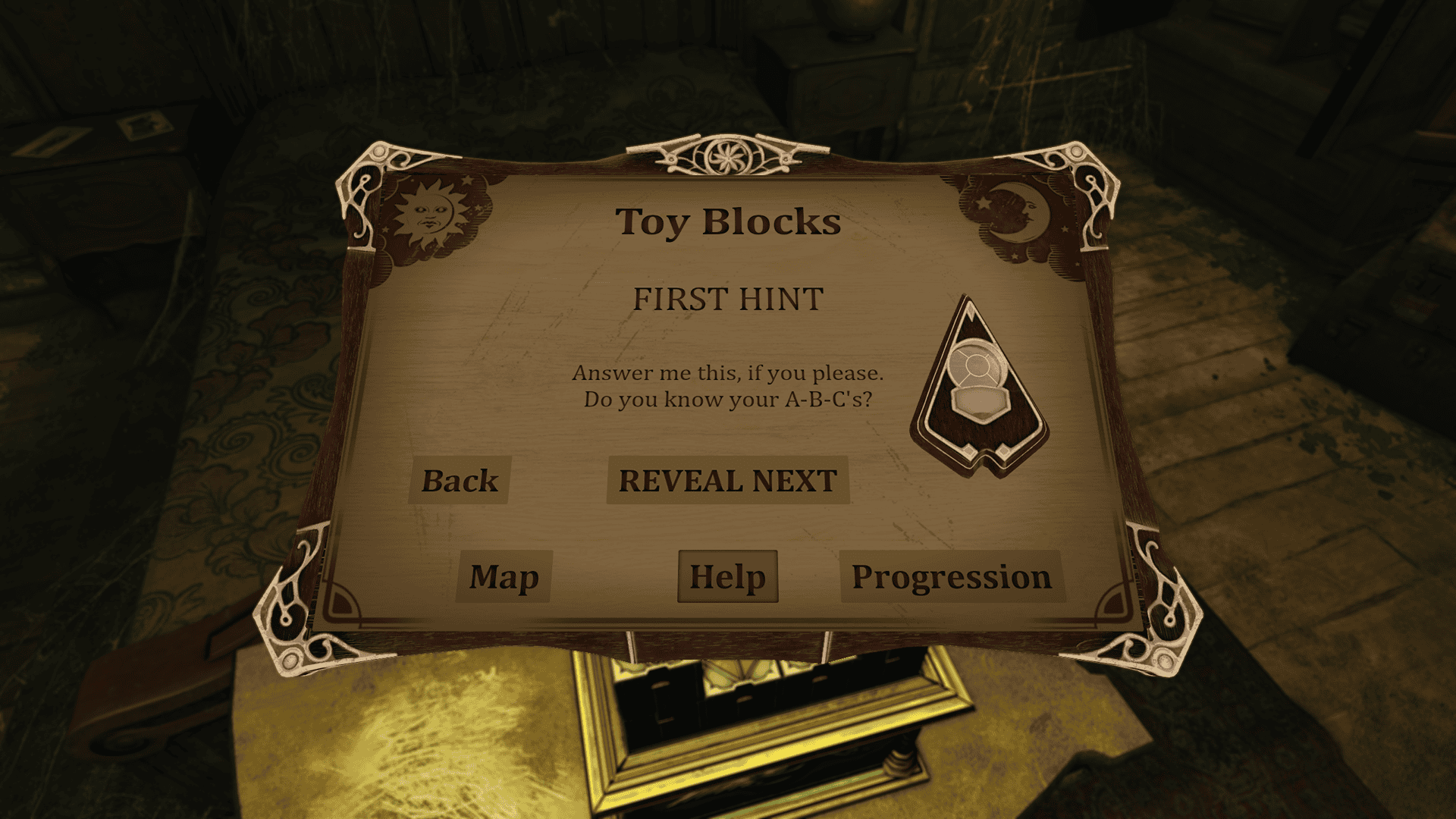
Remake, using the same Ouija-style menu as the original, shows hints without requiring the player to travel to a specific location in the house. However, to automatically solve a puzzle, the player must collect and trade “Stauf coins”, which are hidden throughout the mansion. The final puzzle in the original game could not be automatically solved, but Remake will allow it, with a slightly larger price tag compared to the other puzzles. The final puzzle in Remake also has a bit more substance to it than that of the original, making the finale feel more earned.
Some of the puzzles, like the eight queens puzzle, are duplicated in Remake while others merely lend their mechanics to their new counterparts. For example, while the opening puzzle in the Dining Room of the original required the player to divide a cake into six equal pieces, each with the same decorations, Remake has you finding similar groupings of tiles on a cloche, ironically revealing a similar-looking cake. There are also interesting concepts unique to Remake, particularly a music box puzzle that correlates to the movement of a knight around a game board, similar to some formats of coding lessons I’ve seen for grade-school kids, and a puzzle that turns the abstract strategy game Nim into a drinking contest with the devil.
While there is an achievement for finishing the game without using any Stauf coins for automatic solves, some of the puzzles, even with hints, upgraded graphics, and all, had frustrating controls. While the new game supports use of a controller, I found the keyboard to be much easier, except for puzzles that required the placement of multiple elements and provided new keyboard controls for the separate selection and manipulation of each element. However, the few that I ended up spending my coins for were more regarding lack of clarity on how to achieve the goal than the displeasing controls themselves.
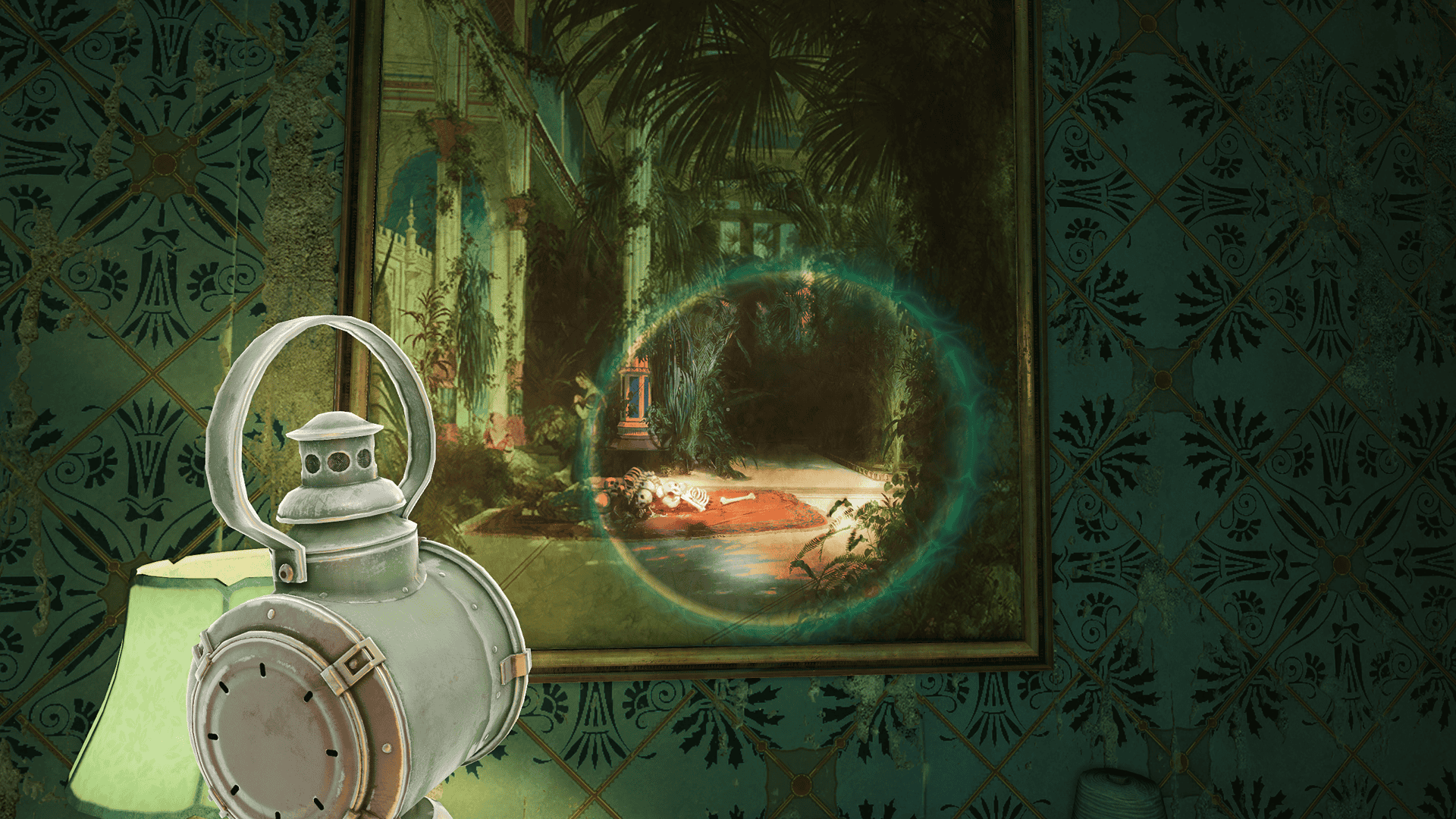
Remake does take full advantage of its new gameplay by requiring the player to explore and find some elements of puzzles before they can be solved, as well as a brand new mechanic, “the Spirit Lantern”. The Spirit Lantern reveals secret messages from your spirit guide and his ghostly friends, as well as restoring certain items needed to advance the story or activate a puzzle.
The mansion begins in a ruined state and as each room is solved completely, another spirit is freed and the room is restored to its former glory. The Spirit Lantern, before the room is restored, not only shows the room as it once was, but each painting is also changed, revealed to be more sinister in nature. As many of the paintings in the original contained short animations with the same intent to alarm and add to the unsettling atmosphere, this seems like a fun way for Remake to pay tribute to the original.
While the cast of characters and general narrative are unchanged, some of the scenes are rearranged, extended, and thanks to a few additional scenes, what became of each guest is much clearer at the end. I think that especially the actors for Hamilton Temple and Elinor Knox do exceptionally well at making the player root for their characters, despite knowing they are far from meeting a happy end (since they are already ghosts).
Now for the big question: is it still scary? I would have to say yes and no. First, the cutscenes, including the one that replicates Stauf communicating through a cauldron of soup, aren’t any more frightening than they were in the original, and the demonic effect of Stauf’s voice in many of the recordings doesn’t do much to raise the hair on the back of my neck either. My arms remained thoroughly un-goosebumped.
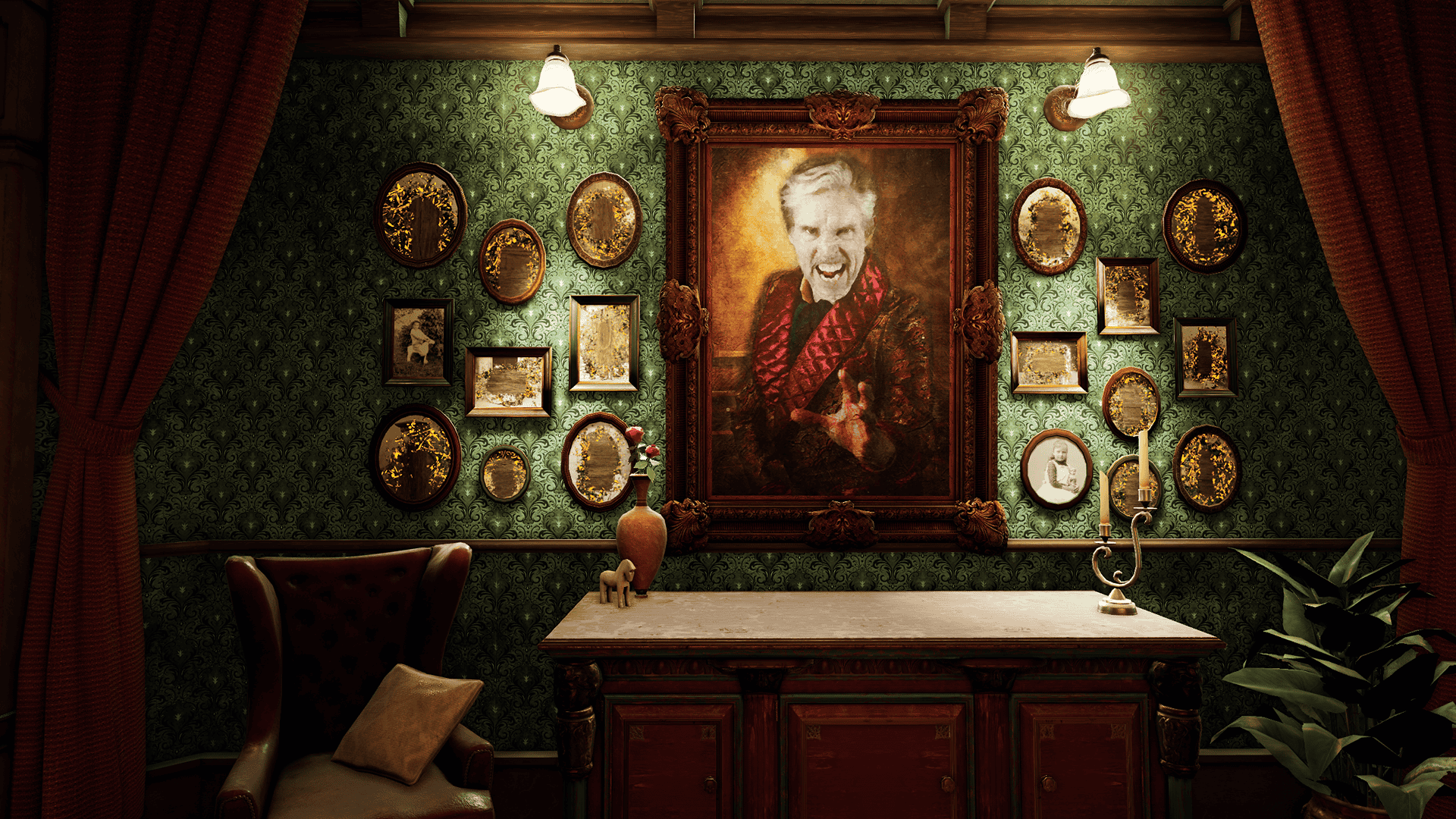
However, the ambience. The soundtrack, which utilizes the themes from George “The Fat Man” Sanger’s work in the original. As you move through the decaying mansion, a floorboard creak in the dark hallway will have you turning to check behind you. The doors that you must open by clicking, holding, and moving all the way, close behind you on their own and make you jump just a bit. In the Nursery, you may have to mute as you solve the puzzles, as the faint screams that occasionally echo through the halls suddenly become so frequent and prominent that even when I removed my headphones, I could still hear them.
A lot of remakes (game, movie, and otherwise) make the mistake of over-explaining themselves, filling in supposed plotholes only to bore their new audience or cause new issues with their faithful fans. I think The 7th Guest Remake largely avoids this, simply attempting to be more straightforward both in their storytelling and their offered gameplay. Are they one-hundred percent successful? Maybe not, but I do believe that this is a successful revival of a classic, and a beautiful homage to a game that made an impact on so many.
Alyssa reviewed The 7th Guest Remake on PC with her own bought copy. This review is based on the version of the game available at the time of writing and our score will not be changed.
- Score
- 7/10 SOLID - GAMEOBSERVER RECOMMENDS
- Summary
-
Alyssa says: The 7th Guest Remake attempts to be more straightforward both in their storytelling and their offered gameplay. The narrative is easier to follow and has a more satisfying conclusion, and while some of the puzzles are still rough around the edges, particularly in terms of controls, they have ensured that players will never be stuck doing something they don't enjoy. Overall, they've created a beautiful homage to the original and an opportunity to create new fans.
- More
- GameObserver's Review Policy

 ObserverCrew Picks
 bserver
 bserver