Have you ever wondered who else lived in your home before you and what their stories were? Sometimes they’ll have left traces behind of their life in that home; children’s wall scribbles covered up by wallpaper, a loose floorboard that they once stashed valuables under, a few boxes forgotten about and left in the attic.
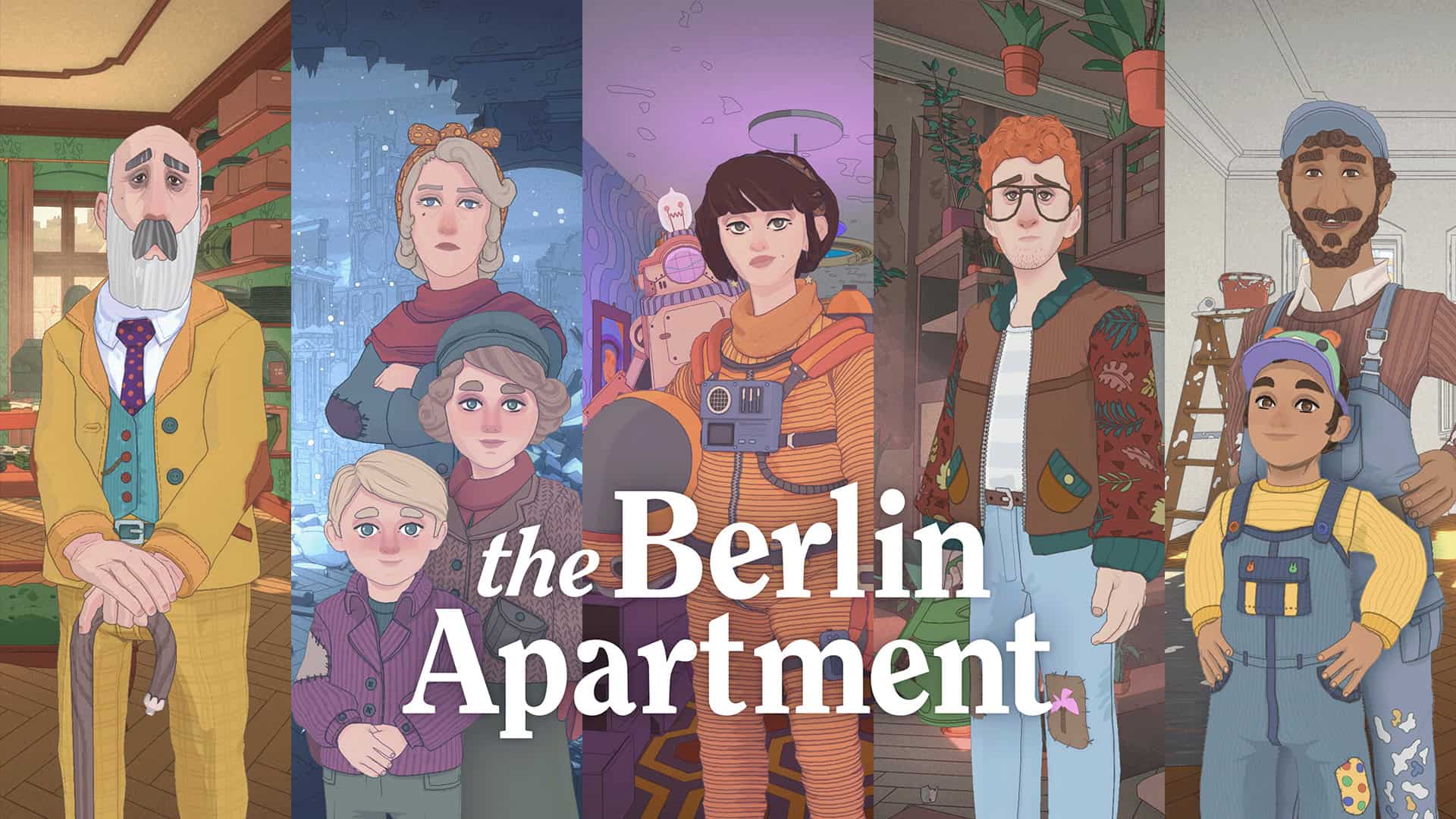
Btf’s The Berlin Apartment is a narrative game revolving around a single apartment and the stories of its occupants, spanning over 100 years. Dilara is a young girl accompanying her father as he refurbishes the titular apartment in Berlin, ready for its next occupants. As they tear down the wallpaper, smash away tiles, and pull apart the walls, they begin to uncover remnants of those who once lived there.

There are four stories that Dilara’s father will tell her about the apartment’s previous occupants. Starting with Kolja, a recluse who lived on the East side of the Berlin Wall in 1989. One day, a paper airplane flies through his window. It’s a friendly message sent from an apartment on the other side of the wall. As his flatmate has recently left and his only companion is his now ex flatmate’s goldfish, Kolja is excited at the prospect of making a new friend and begins to craft a paper airplane to send his reply.
Kolja’s story is a touching one about human connections, and how people will always find a way to connect with one another, even under the most dire circumstances. While being set 30 years before the COVID pandemic, I feel like the player can relate to this story a lot because of that experience, with many seeking connections over the internet when they couldn’t step outside to do so.

Unfortunately, this story also introduces The Berlin Apartment’s incredibly clunky movement and gameplay mechanics. Movement feels awkwardly slow, as does interacting with objects. Sometimes, when the character is sitting down, and an object is just barely outside their peripheral vision, it can be a drag (literally) to turn the camera to the object and reach for it. Kolja’s story involves a lot of paper airplane crafting, which the game will do most of the work for, but the player is requested to click and pull their mouse in various directions to perform each action.
The Berlin Apartment also suffers from a habit that I’ve seen from walking sim-style games before, and that’s the protagonist character feeling the need to make a comment on every single minute item or event, even if their comment reveals nothing new that the player doesn’t know already. It’s one thing to reflect on a certain item that maybe holds some history, or say out loud a thought about an event that someone might realistically say in that situation, such as “I wonder where this paper airplane came from”. It’s another to make needless comments that just simply don’t add anything of value – “wow, my kitchen drawer is messy” – yes, we can see that. The Berlin Apartment struggles with this a lot, and it got to the point where I was very reluctant to explore the apartment and find out more about the occupant’s belongings in case it started them off with a pointless speech that we could have worked out on our own using our own eyes. While a lot of the player character’s comments are skippable, some of them aren’t for some reason.
This is heightened in Kolja’s story, where his fish, Erich, joins in on the painfully obvious comments with that quirky, ‘sidekick’ effect. On top of the fact that it was completely unnecessary to have this talking fish included, I believe, for comic relief, into what is otherwise a touching story, this character also came off as annoying and offered no value to this segment of the game.
In 1933, an old man called Josef occupied the apartment. This was by far my favourite story, and also the most heartbreaking. Josef gets a call from a relative who is due to pick him up from his apartment. He needs to finish packing and has a small list of personal items that he needs to find around the apartment and pack. As we explore the now lavishly furnished apartment, we suddenly realise that Josef is Jewish, and I felt my stomach drop when I realised what year it is. As Josef packs his bag, we see various signs of the hostility from his neighbours, and also learn about his life in Berlin and the moments the city started to turn against him.

But the over-the-top commentary was also heavily prevalent here, especially because we’re required to interact with Josef’s cupboards and other storage to locate the items he needs to pack – and he has something to say about every single one of them. You can skip most of this dialogue, but it’s just that process of opening drawer after drawer and having to keep skipping his comments about what he has in there. Throughout this segment, we also need to arrange the belongings we’ve found into Josef’s suitcase. Realising I still had some large objects to find and fit in there, I took all the items out and decided to arrange them once I had everything. Josef then started listing off every item I had removed from the suitcase, giving a reason as to why he actually wanted to bring each one with him – I know!
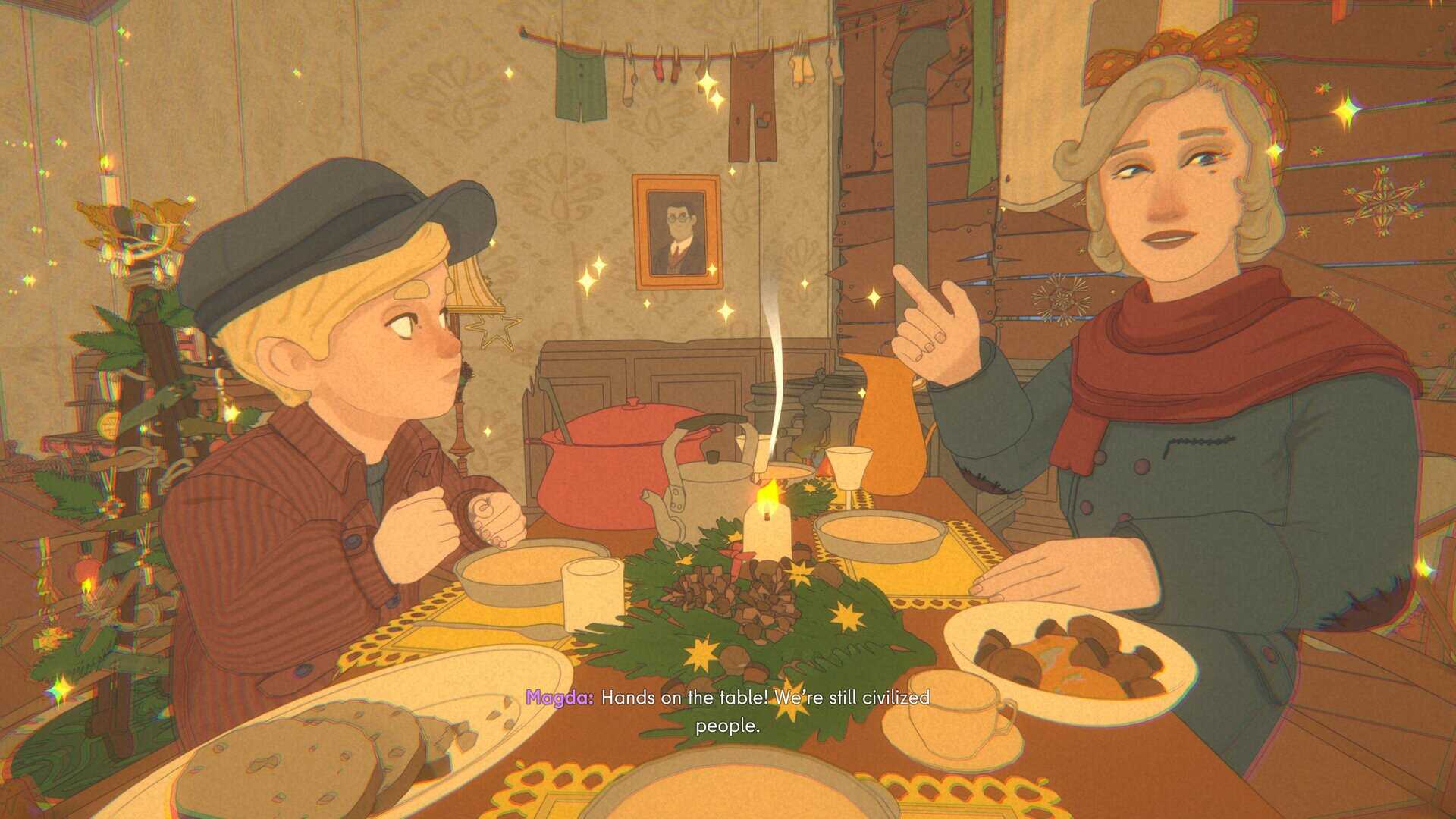
After the war, a young girl called Mathilda and her family occupied the apartment in 1945, though it’s now a ruin, having taken damage from the fighting. It’s Christmas day, and Mathilda and her family are trying to make it as special as possible in their bomb-torn apartment, discussing the absence of their father and the food shortages they face.
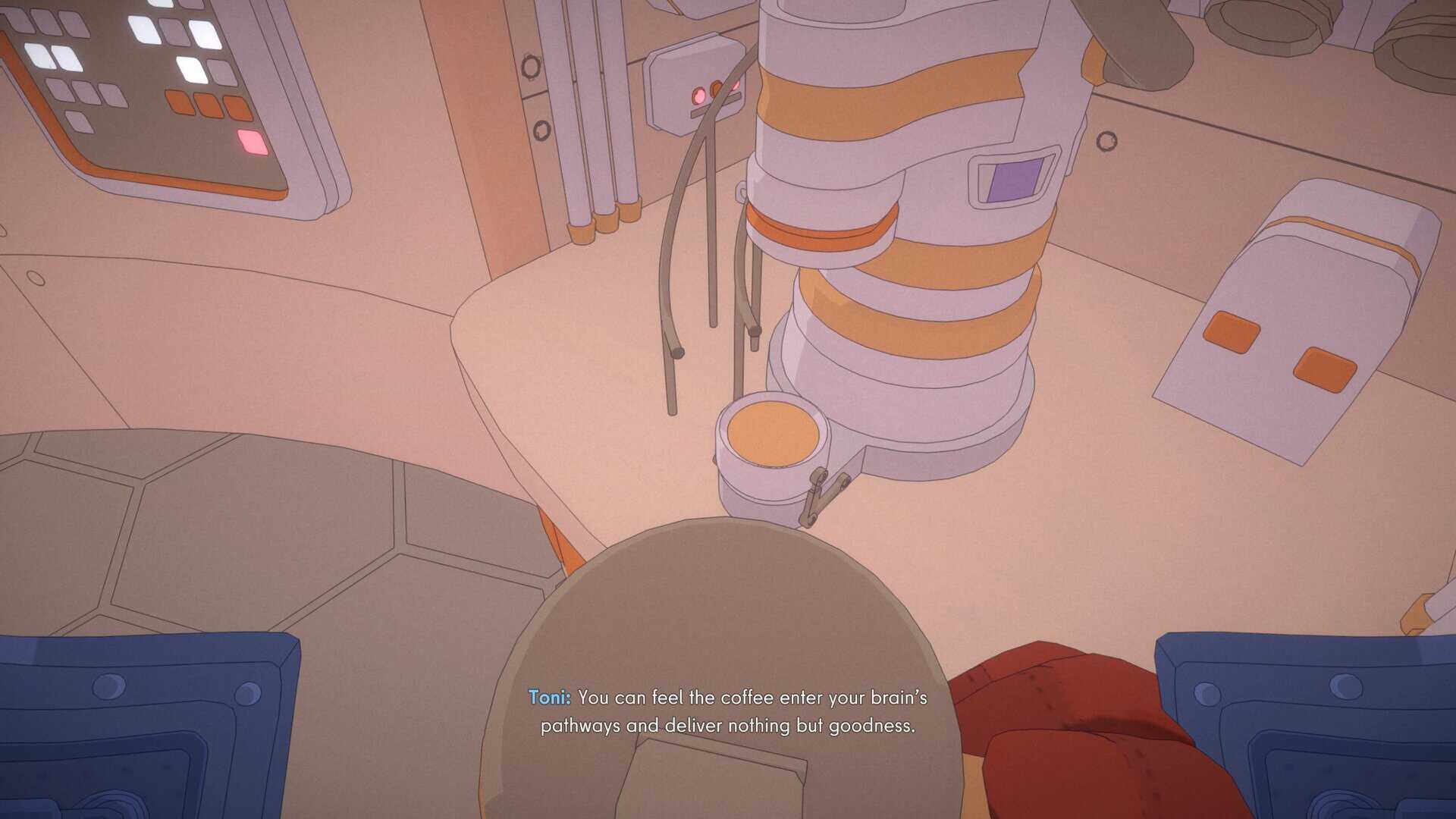
Unfortunately, the game finished with my least favourite story. While at its heart, this was an interesting one to tell about misogyny in the book publishing industry, its presentation somehow made it incredibly boring to get through. Toni is an author in 1967 and is working on a sci-fi novel featuring a female protagonist. In this story, we find out about Toni’s struggles to become an established author, especially when trying not to live in the shadow of her father, who is a famous author. Here, she faces constant tweaks by her publisher, who wants to change her book into something it’s not, and her lack of standing in the industry and gender give her a difficult choice to make between writing the story she wants to tell and keeping her publisher happy just to get it out into the world.
The worst part about this segment is that Toni is supposed to be a promising young writer. As she slowly writes her novel, we have to literally type on our keyboard at random for it to progress, which overstays its welcome very quickly. But considering this part of the game relies heavily on the premise and writing of this book, it’s a big shame that the book itself really isn’t very good. Toni’s protagonist is on a journey through space, and the player can pick what happens in each story beat. The writing itself is incredibly basic and very uninteresting, not really displaying the writing prowess that every character that speaks to Toni tells the player she has. Unfortunately, when this much focus is put into the actual pages of the novel, Toni is only as good as an author as the development team is. While The Berlin Apartment‘s stories are great ideas, I think the prose in the case of Toni’s novel is very uninspiringly written.

The Berlin Apartment’s artstyle uses a gorgeous, vibrant comic book-style aesthetic. While this does look lovely, for me the real meat of the visuals was the various ways this single apartment is designed with every new occupant. From Kolja’s messy, boho style with his many plants, Josef’s more upper-class decor and furniture, Mathilda’s rundown home that’s slowly brought to life with Christmas decorations, and Toni’s groovy, 1960s home. It was exciting to unveil all the ways that this apartment would be used by its occupants, and how the layout would change over time.
But each story suffered the same problem of being built on an interesting premise with some great reveals, but just not being delivered in a particularly captivating way. The dialogue could be incredibly overbearing and dull at times, which is very unfortunate for a narrative-focused game. I also think it would have made for a more satisfying game had these stories all been linked in some way besides taking place in the same apartment. It felt like there was no climactic conclusion to really hit that message of our legacies being boiled down to things found within an apartment. The Berlin Apartment had a lovely message to tell, but just missed that emotional impact when sharing it.
Jess reviewed The Berlin Apartment on PC with a provided review copy. This review is based on the version of the game available at the time of writing and our score will not be changed.
- Score
- 6/10 Decent - Jess Cautiously Recommends
- Summary
-
While The Berlin Apartment and its four stories are built on an interesting and moving premise, the execution is not particuarly captivating. Its conclusion is somewhat unsatisfying and lacks an emotional impact, and its other faults cause it to fall short as a narrative game.
- More
- GameObserver's Review Policy