Valve has updated its system for regional pricing recommendations on Steam. The company has introduced changes that give developers more options when setting game prices in different countries. Previously, Steam offered a single average method to convert prices from US dollars into other currencies. After the update, developers can now choose from three methods: pricing based on current exchange rates, pricing based on purchasing power in a specific country, or a mixed method that is similar to the old system but uses more up-to-date economic data.
Valve said these changes are only suggestions. Developers and publishers still decide the final price of their games. However, in practice, many small studios, mid-sized and some big publishers tend to follow Steam’s suggested pricing. This means that the prices will not change automatically, and any adjustment depends entirely on developers updating their pricing manually.
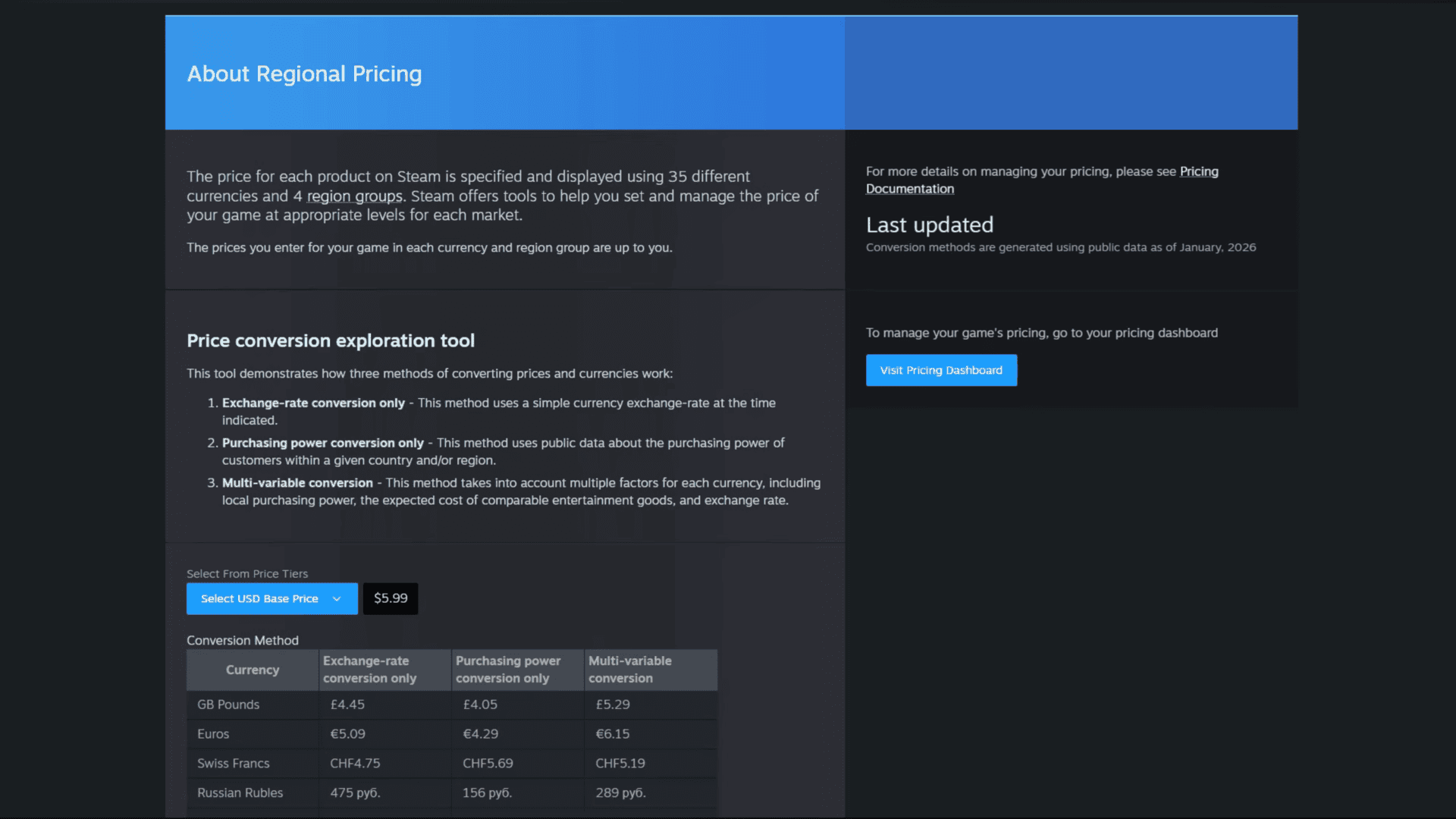
The company also reminded developers about pricing rules. If the price of a game is increased in at least one currency, the game will automatically be restricted from taking part in seasonal sales for 30 days. According to Valve, the new system takes into account the economic conditions of different regions and local market data. The goal is to help developers set fairer prices for players around the world.
In the future, these changes could also affect game prices in countries with lower purchasing power. For example, under the new system, a new game with a base price of $70 could cost much less in some regions. At the same time, if developers choose simple exchange rate pricing, the cost in certain countries could nearly double compared to previous recommendations. Valve also confirmed that it plans to review regional pricing for its own games as well.
In other news, last month Valve confirmed that memory and storage shortages, driven by AI demand, have delayed the final pricing and release dates for the new Steam Machine. For future news on Steam and Valve, keep checking GameObserver.




 ObserverCrew Picks
 bserver
 bserver