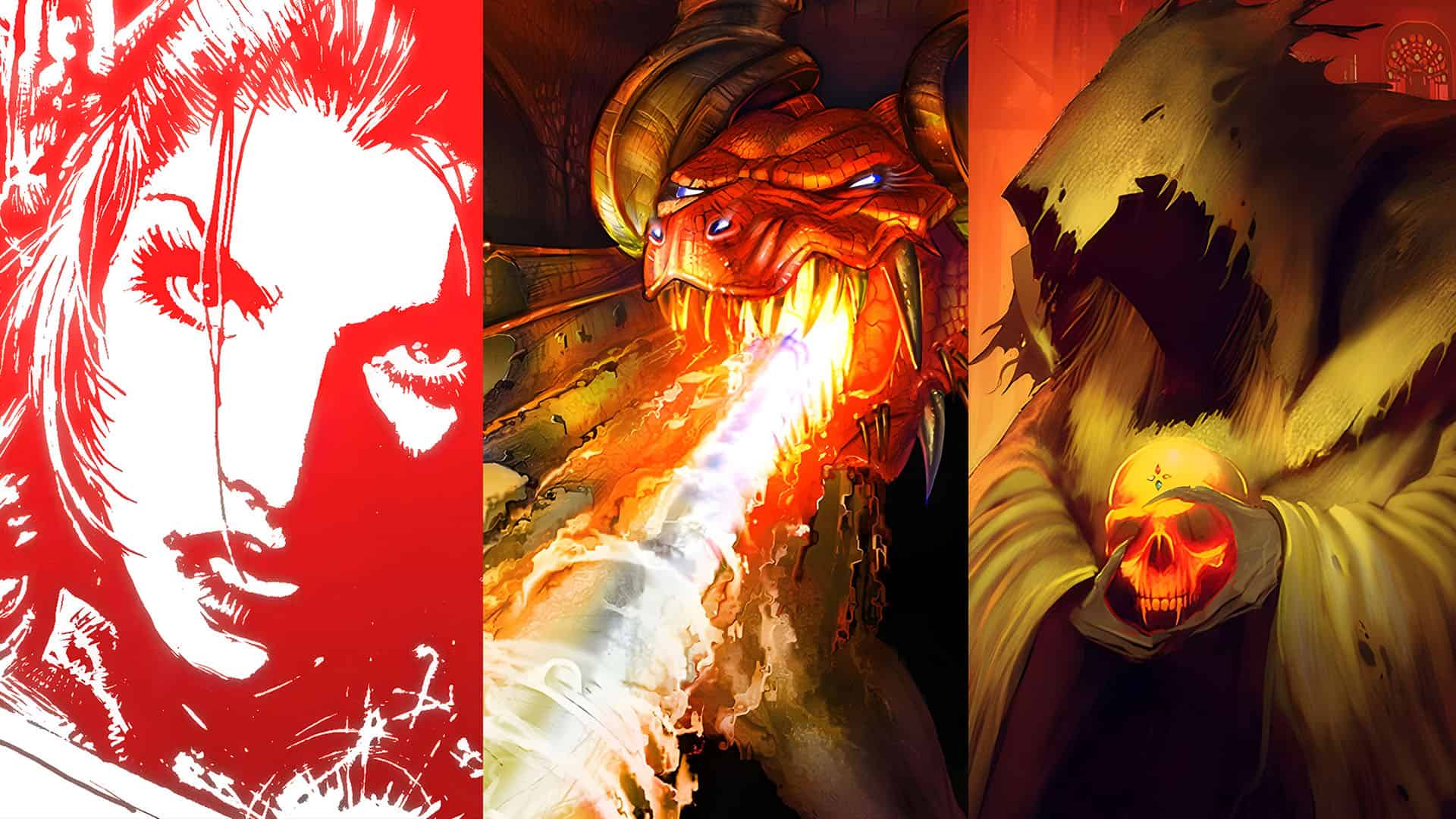
For all those who’ve enjoyed, nay slobbered, over Baldur’s Gate III since its release, it’s perhaps worth reminding folks that it’s not the first video game ever to use Dungeons & Dragons as the basis for its setting and storyline. And arguably, it had been a while since gamers had any game making use of D&D prior to the release of Baldur’s Gate III. Not counting expansions to the Dungeons & Dragons Online or Neverwinter MMOs, remasters/remakes like Beamdog’s efforts with the first two Baldur’s Gate games, or mobile titles like Idle Champions of The Forgotten Realms and Warriors of Waterdeep, the last full fledged game released in association with the D&D ruleset or one of its settings prior to Baldur’s Gate III was Dungeons & Dragons: Dark Alliance back in 2021. Looking back at the history, it seems that after the Milliennium, there was a booming business for the license from about 2000 to 2006. And then, a long pause.
Three of those games from that frenetic period have been re-released. Not remastered, not remade, simply made compatible for contemporary systems. Let’s take a trip back through the dusty pages of D&D video game history, and see what you might have missed.
The Good – Dungeons & Dragons: Dragonshard
When Wizards of The Coast held a contest to come up with a new setting for D&D, Keith Baker managed to beat out over 11,000 other entries, creating what would eventually be named Eberron. It was a decidedly different setting compared to earlier worlds such as the Forgotten Realms or Greyhawk. Magic was definitely reworked, with high-end world changing spells being decidedly less common and lower level magic tied up with specially gifted individuals bearing “dragonmarks.” Deities were diminshed, but faith was capable of moving mountains (even against the tenets of the cleric’s own church!). And you could play as living machines, the Warforged, trying to make their way through the world alongside humans, elves, and dwarves (all of whom had their own distinctive twists). Eberron felt less like another tired spin on Tolkien and closer to something which might have been worked on if Raymond Chandler and Robert E. Howard had decided to collaborate, a mixture of pulp action and noir sensibilities which played around with and subverted a lot of the usual heroic fantasy tropes. It came out with great fanfare in 2004, survived the disastrous 4th Edition years, and has continued on even into 5th Edition.
Yet for all that, there’s only been one complete video game based on it, a real-time strategy title from Liquid Entertainment, the creators of Battle Realms. Dungeons & Dragons: Dragonshard came out a little over a year after Wizards of The Coast released the Eberron Campaign Setting book. And perversely, it seems to hew an awful lot closer to the Tolkien aesthetic than the campaign setting.
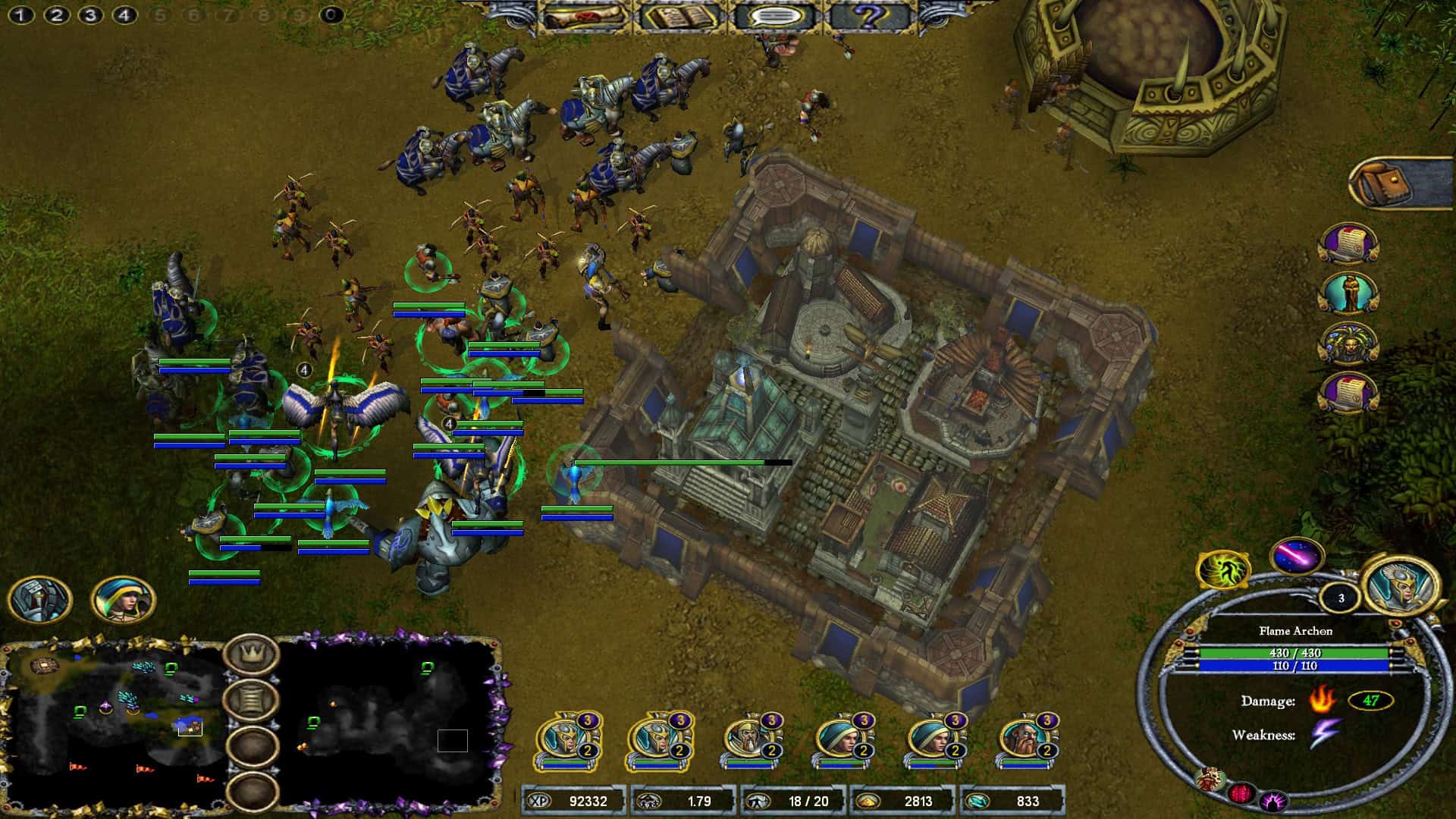
The single-player campaign has you taking up arms either for the Order of The Flame, the “faith militant” of the Church of The Silver Flame whose stated goal is battling evil wherever they find it, or the Lizardfolk, natives of the continent of Xen’drik and self-appointed guardians of the Heart of Siberys (the game’s MacGuffin). Either way, you’re not only going up against the other faction, but a third one, the Umbragen. Descendants of the lost city of Qalatesh, the Umbragen are after the Heart of Siberys to try and unlock the secrets of the ruins now buried deep in Khyber (the subterranean portion of Eberron). Across fourteen missions (seven for each side), you’ll undertake a campaign to claim the Heart of Siberys, building up bases at key points, gathering armies and beating the snot out of your opponents (along with any wandering monsters that might happen to get in the way).
As I was going through the Order’s campaign, I was struck by the way that Dragonshard touched on elements of D&D which a lot of people don’t normally get to experience. The notion of units being framed as heroes, and with the ability to “recruit” grunt soldiers to help keep them alive, hints at the sort of sprawling parties of hirelings which were once part of D&D up through the 3rd Edition. Faction champions felt like high-level characters, the ones who would reasonably be leading the sort of expedition which Dragonshard centers around. The lack of a “Zerg rush” felt refreshing, as did the way that you can spend experience to help improve your units. As far as the campaigns go, it’s never just a case of “build, deploy, fight, repeat.” Liquid really did seem to try to make it feel more like a tabletop adventure than the typical RTS titles of the time.
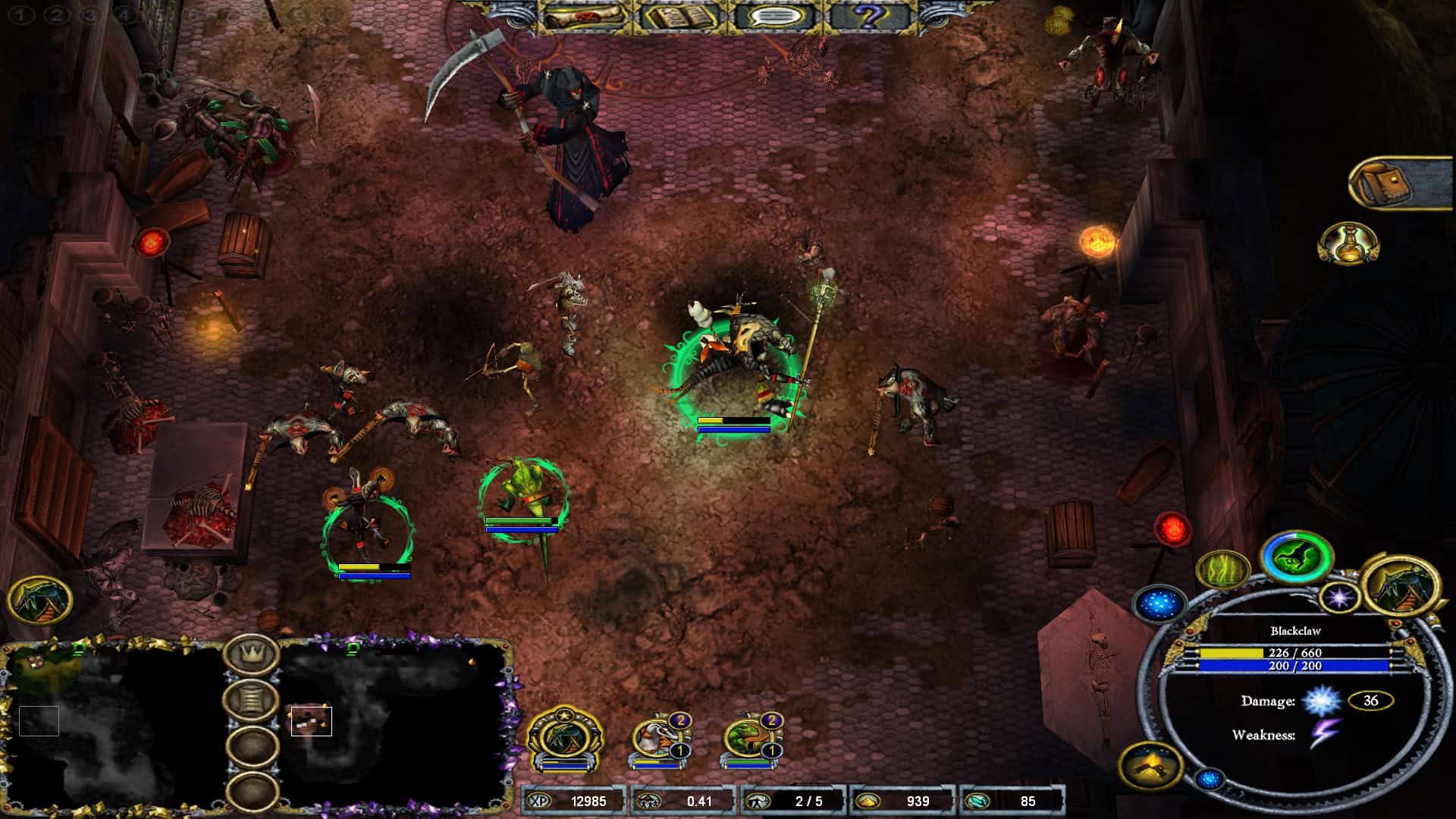
At the same time, there’s also a feeling of ludonarrative dissonance. The aesthetic and the storyline are much less pulpy or noir-like than the setting would have indicated. The actual combat mechanics feel messy in all the wrong ways, and in this Dragonshard feels much more like a mod of their earlier Battle Realms instead of embracing some of the more grim aspects of the setting. More puzzling, the fact there was not a campaign set up for the Umbragen feels like a missed opportunity, a chance for players to take a turn as the bad guys in much the same way they did in the Undead campaign from WarCraft III.
I’m sure there are fans of the setting who would like to have Eberron get the sort of love we regularly see lathered over the Forgotten Realms. For now, they’re just going to have to live with Dungeons & Dragons: Dragonshard and dream.
The Bad – Forgotten Realms: Demon Stone
Let’s face it, Greyhawk might have been the notionally “official” setting for Dungeons & Dragons for a good part of the tabletop game’s history, but the Forgotten Realms is arguably better known among video gamers by dint of volume. The number of actual video games (not counting expansions and remasters/remakes) set in the Realms stands at thirty-two. The next nearest competitor in terms of familiarity is the Dragonlance setting with nine. Greyhawk only rated two: one of which barely qualified (Dungeons & Dragons: Heroes), the other we’ll be covering later.
I’ve occasionally caught some flak from gamer friends of mine (admittedly years ago) for being such a big fan of the Forgotten Realms setting. For me, it’s all the little details. The breadth of a giant world that feels alive, the presence of little nooks and crannies you as a player can get lost in, the weight of history pressing down on every action and activity. It’s so damned big, there’s room to tell all manner of stories, and all of them feel like they have an impact on the world. And of all the authors who’ve set works in the Realms, few are as prolific or as recognizable as R.A. Salvatore. The character of Drizzt Do’Urden, along with all of his friends and enemies, has not only shaped the Forgotten Realms setting itself, but established a place in fantasy fiction which is rivaled only by Tolkien’s cast of characters from Middle-Earth, at least in the popular consciousness. With such a notable position, one would think that getting Salvatore to handle the writing chores for a video game set in the Realms would be nothing short of a slam dunk. And they would be wrong.

“Indeed I do, and I will strip the corpses down to their loincloths for the loot.”
Forgotten Realms: Demon Stone takes place far to the east of the more familiar Sword Coast, past the equally familiar Dalelands, in the chilly land of Damara. Years earlier, two equally vicious yet wildly different beings were trapped by the wizard Khelben Blackstaff inside the titular Demon Stone. And then, as so often happens, three idiot adventurers come in and inadvertently release the contained evil. Which of course means that the same fools who broke the seals are the ones who are expected to permanently defeat the same beings that one of Faerun’s most powerful wizards couldn’t do more than bottle up for a while.
Demon Stone has a very distant kinship with classic titles like Gauntlet and more recent beat-em-ups like the original God of War trilogy. You’re given control of three characters (one active, the other two “supporting” you), each fulfilling the classic TTRPG archetypes of mage, thief, and fighter. Linear “corridors” filled with enemies who drop coin and XP, occasionally some puzzle mechanics centered on a specific character’s abilities, pretty “meh” in terms of grand adventure. Each character has unique abilities which may be called upon depending on where you’re at and what the current stretch of corridor calls for. And there’s boss fights which rely on specific mechanics in order for you to succeed. Sometimes right at the start of the level, as evidenced by the first fight against the githyanki general Cireka. This one was intensely frustrating because you’re having to spam ranged attacks against her (while she’s in an elevated position you can’t reach otherwise) to “knock back” her progress on opening a portal which will help her overrun a village of wood elves. At the same time, you have to avoid getting mobbed by the githyanki warriors she’s already summoned. In a couch co-op sort of game, this wouldn’t be a problem. In a single-player game, it’s beyond obnoxious.
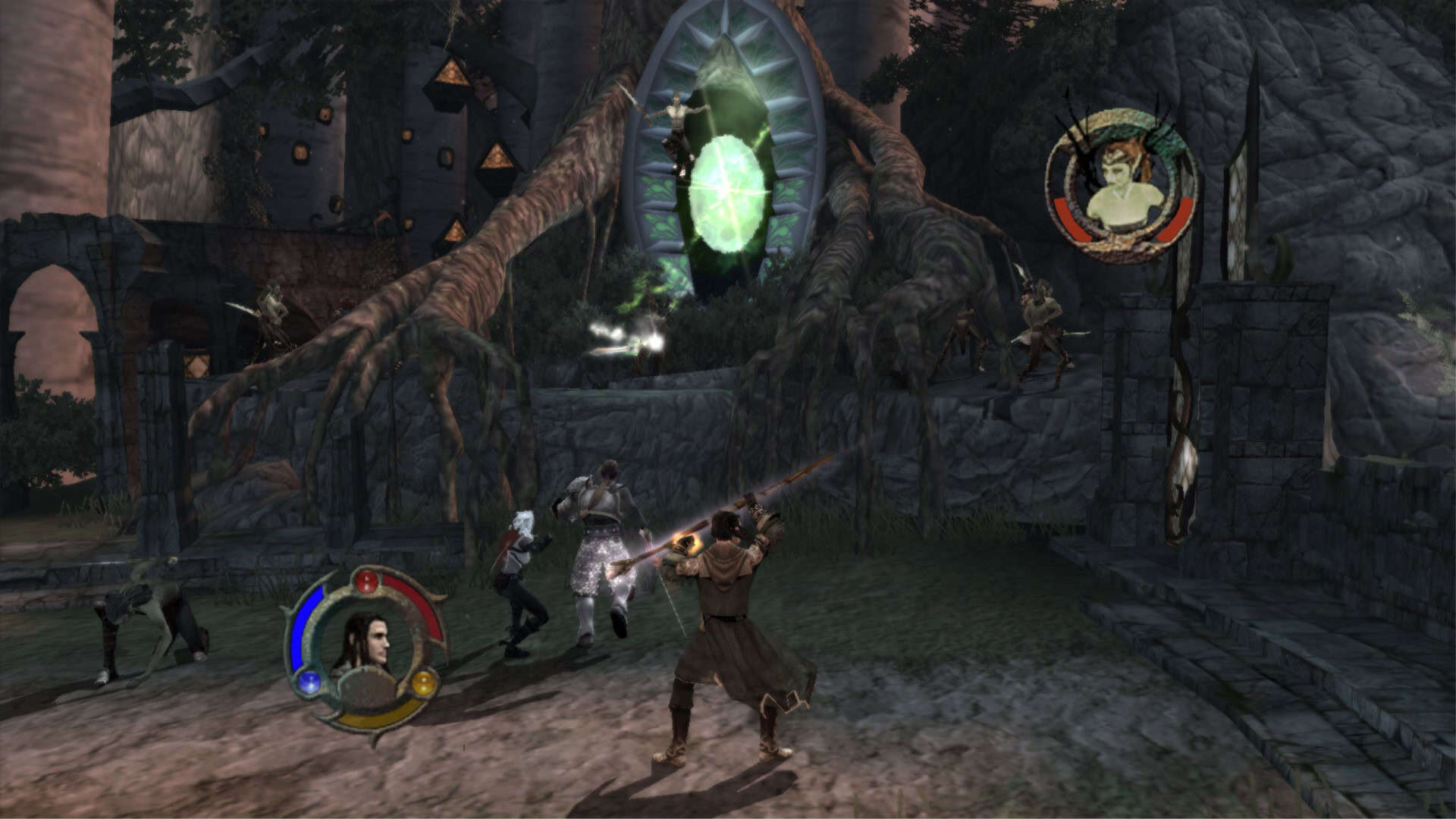
On paper, this should have been a slam dunk. Patrick Stewart (before his turn as Uriel Septim in The Elder Scrolls IV: Oblivion) and Michael Clarke Duncan (The Green Mile, The Scorpion King) headlined the cast alongside veteran voice actors like B. J. Ward (G.I. Joe, Gargoyles) and Robin Atkin Downes (Star Wars: The Clone Wars, Vampire: The Masquerade – Bloodlines). The script was written in part by Salvatore himself. And yet, it came out to positive but not outstanding reviews. People dug the voice acting, and they liked the general ambiance of the game, but the gameplay was called out for being incredibly repetitive. Going through it myself, it strangely didn’t feel like a story set in the Realms. It had all the parts (including a shameless cameo appearance by Drizzt Do’urden), but it felt off somehow. Combine that with that repetitive gameplay, and the real question becomes how it managed to score as high as it did back then. When you put it up against games in the same genre without the D&D license factored in, there’s a strong sense of “Who thought this was a good idea?” If anybody else had done the writing chores, I’d have decried it as a bad piece of fan fiction.
As it is, Demon Stone probably stands out as a signal example of a bad licensed game, one where the license is supposed to do all the heavy lifting instead of the actual gameplay. And the “star-studded cast” is supposed to distract you from all the failings of the narrative. There’s probably a few people who might have enjoyed on release, but damned if I can figure out why.
The Ugly – The Temple of Elemental Evil
Once upon a time, there was a developer studio named Troika Games. Founded by three members of the original Fallout team, they released exactly three games in a roughly three year span before they closed up shop in early 2005. Each of them were commercial failures, but well received by the critics. As the years have passed, all three games have gathered a sort of cult following in gaming circles. Riddled with bugs, terrible performance issues on PC, yet undeniably well crafted in terms of worldbuilding and story. It’s the second of these three games, The Temple Of Elemental Evil, which we’re most interested in.
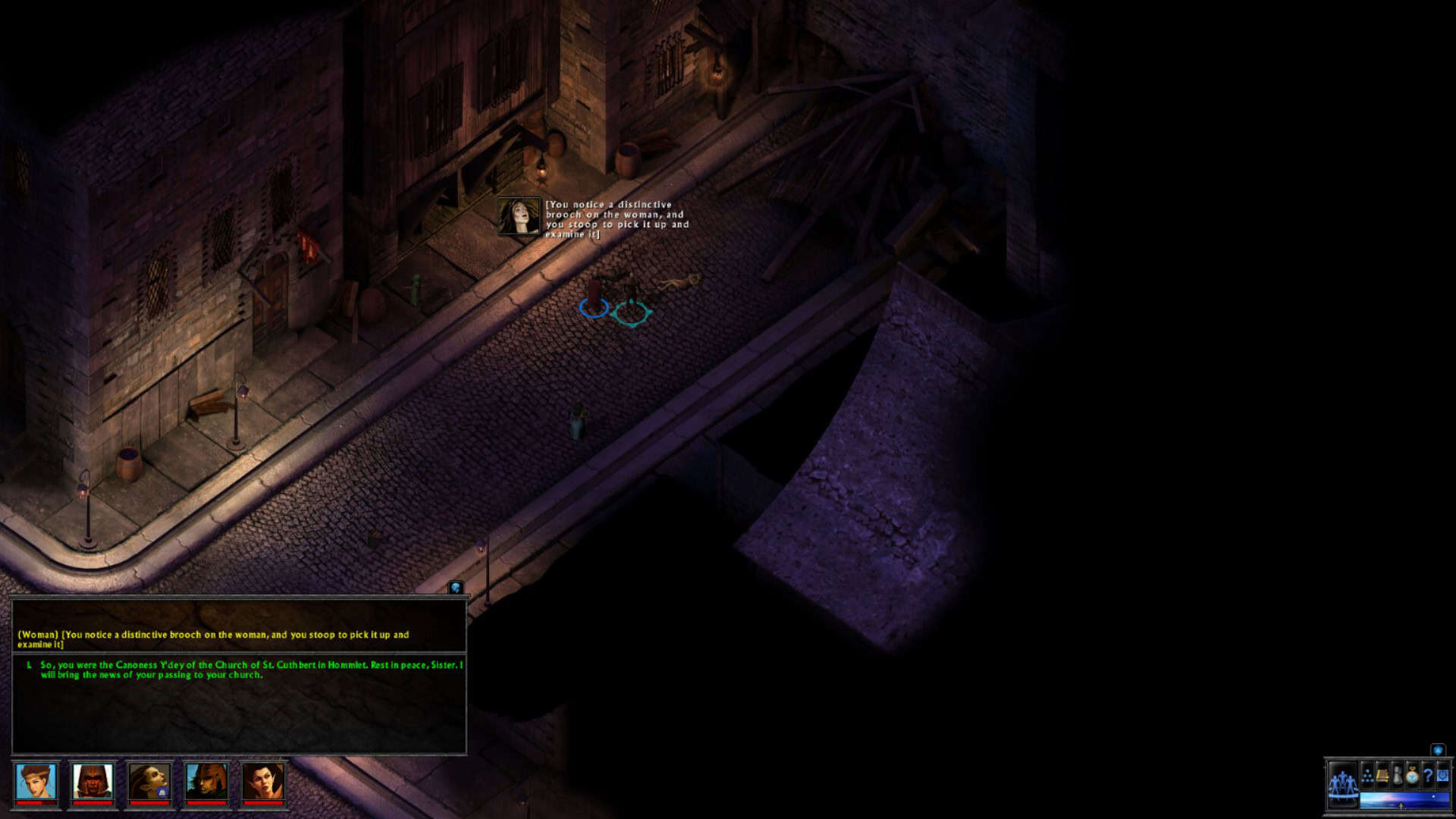
Based off the classic Dungeons & Dragons adventure module of the same title, you must guide a group of adventurers to the village of Hommlet, and from there to the titular Temple. Years earlier, a group of evil beings erected a vile church in the neighboring village of Nulb and caused havoc in the region, culminating in the Battle of Emridy Meadows which saw the cultists broken and the Temple ultimately sealed off. Not wishing to have a repeat of the battle anytime soon, the local lord ordered a keep to be established near Hommlet to serve as both bulwark and tripwire outpost. As the story opens, your party has found themselves in Hommlet for one reason or another (the circumstances change depending on the alignment of your party), and you’re needing both cash and a way to build your reputations as heroes. You’ll travel through forests and swamps, infiltrate a town full of unrepentantly evil beings, and possibly face off against an ancient demon which an army of far better skilled and geared heroes failed to destroy.
Narrator: “You have been waylaid by onion ninjas and must defend yourself.”
Looking over the history of the game’s development, you can see clearly where the mistakes were made, even for the best of reasons. Troika reused the same engine for TOEE which they’d implemented for their first title, Arcanum: Of Steamworks And Magick Obscura. And why not? The core CRPG experience, reminiscent of Fallout and Baldur’s Gate, seemed like a good fit. Unfortunately for Troika, they didn’t seem to have squashed all the bugs in the engine, which was one of the reasons why Arcanum didn’t do so well commercially. A similar lack of stability and error-free functionality led to TOEE actually doing worse than Arcanum in terms of sales. Of course, Troika didn’t cause the catastrophe entirely on their own. When Wizards of The Coast released the “3.5” rules update for D&D, Troika wanted to use the update for TOEE. However, the update came out deep in the development cycle. Atari gave Troika two more months for implementing the new rules, and Troika couldn’t quite pull it off, finishing at the end of August 2003. Had Wizards of The Coast given Troika a heads-up earlier, or at least clued them in on beta testing and given them a working draft of the rules (covered by appropriate NDAs and such), it’s possible they might have been able to convince Atari for more time or been able to implement the updated ruleset within the timeframe given.
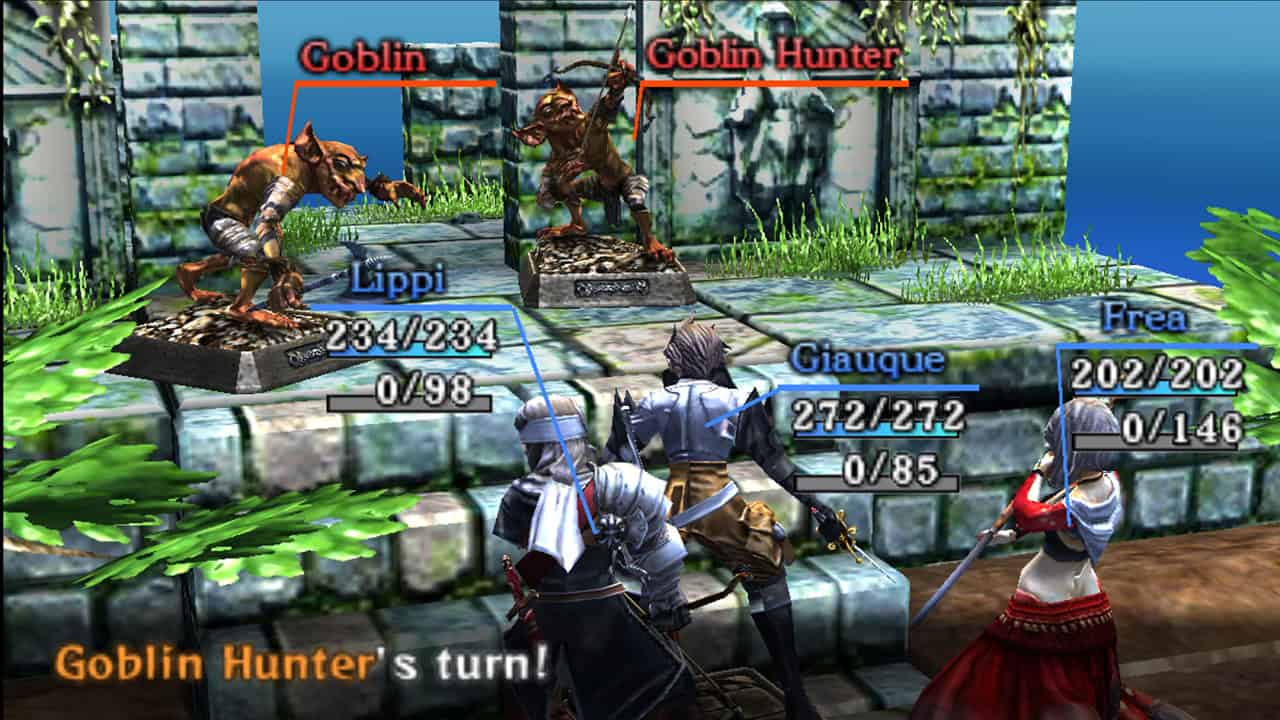
Coming back to it now, over twenty years later, TOEE feels strange in a way that’s hard to put into words. It’s a game which plays better at a lower resolution, allowing you to better read text and observe your characters. The D&D ruleset seems like it’s implemented in a strict “rules as written” fashion which does not enhance the experience. You as a player do not get handy little updates about where you’ve been and where you might need to go back to. If you want to remember where the Church of St. Cuthbert in Hommlet is, you’re gonna have to mark the map yourself. The passage of time as you’re wandering around is indistinct, and seems only to click forward when you either discover a quest, advance a quest, or complete a quest. And chances are you’re going to get your ass kicked a lot in combat, echoing the common complaint of TTRPG players everywhere that starting at level 1 sucks. If Baldur’s Gate III is an example of how to do a CRPG which mimics the sometimes chaotic nature of players at a table, The Temple Of Elemental Evil seems to reproduce the experience of a table run by a Dungeon Master whose style of game can be considered “antagonistic.” The rules are there, therefore they must be followed without exception. And given how it’s presented, you’re unlikely to pull off a lot of cool stunts like you could in BG3.
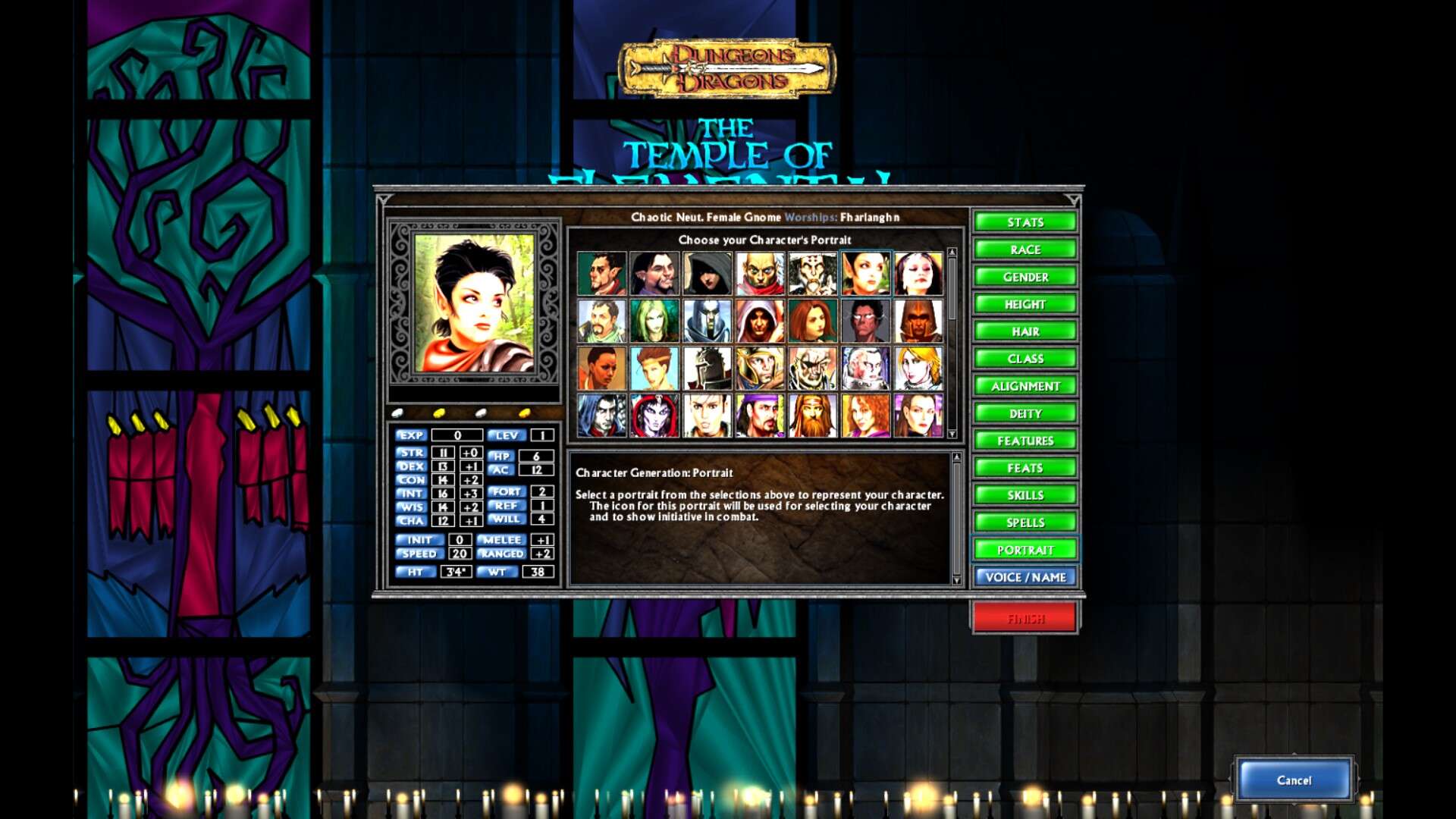
On further reflection, there’s a sort of spiritual kinship between The Temple Of Elemental Evil and the Soulsborne genre. Uncompromising difficulty, lots of nooks and crannies to explore, it’s a game which appeals to a certain segment of “purists” who demand a challenge. And the “Ironman” option (which means if a character dies, they’re dead for good) only reinforces this mindset. I suspect it was always like this, even on its initial release. I just didn’t grasp it at the time owing to all the technical shenanigans which have since been fixed.
Legends Of The Lost & Found
So what to make of these re-releases? In and of themselves, I’m happy that these titles did get the technical updates they needed to play nice with modern systems. Three examples of how good game preservation efforts should be conducted, even if the game itself might be sub-par (as in the case of Demon Stone). They’ll probably never discover the mainstream popularity they missed on their initial release, but they provide a window into a different time in the games industry and gaming culture. It’s the sort of “living history” effort in gaming which has been sorely lacking over the last quarter century.
Will this inspire game developers going forward? I certainly hope so. I’d like to see more titles in D&D settings players aren’t as familiar with. And with these three titles, they’ll have a good point of reference for what works and what doesn’t (assuming they don’t pull a BioWare-style blunder like with Anthem). We can’t learn from the triumphs and mistakes of the past without a record of those triumphs or those mistakes.

 ObserverCrew Picks
 bserver
 bserver