
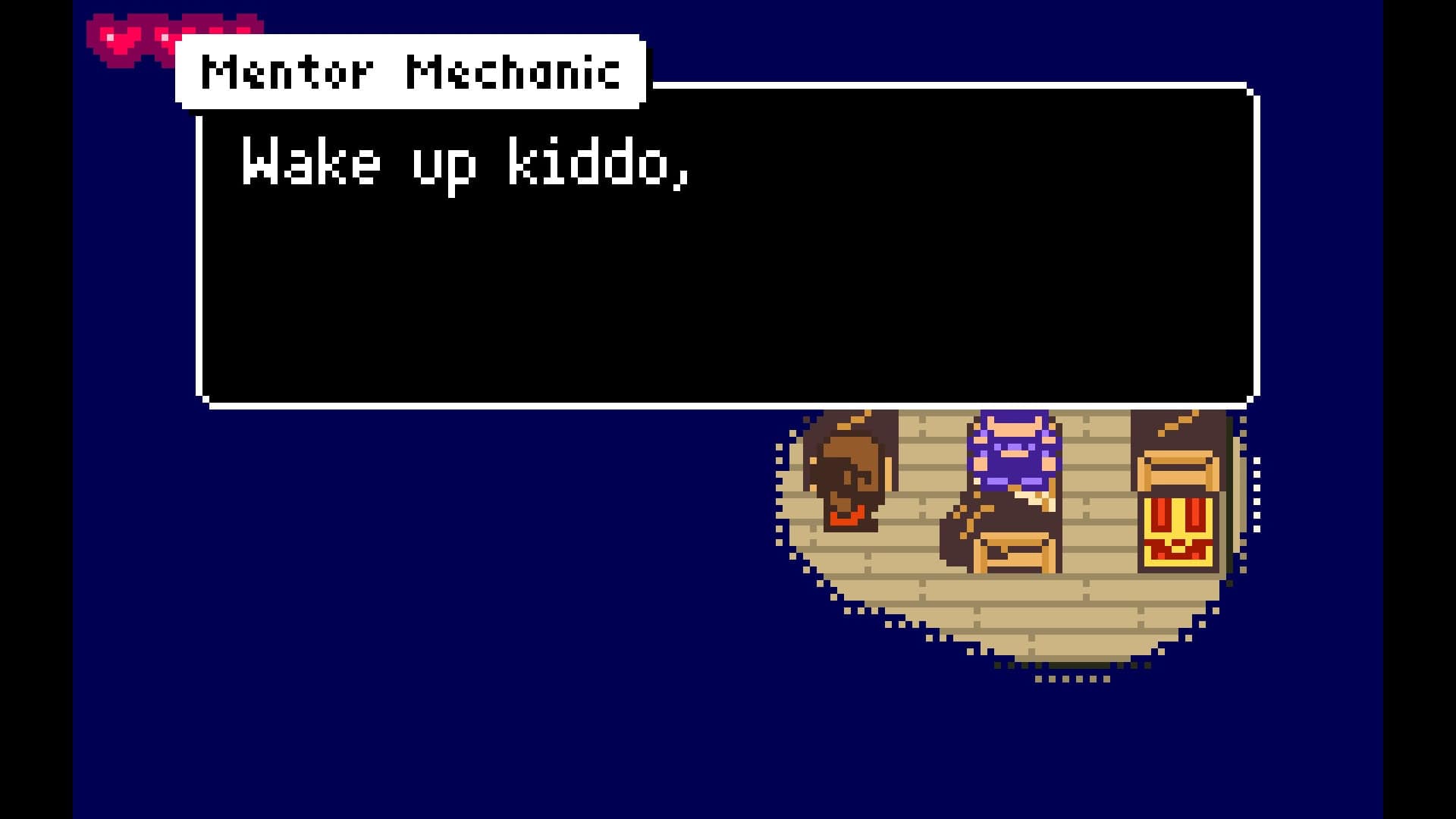
Hundreds of years ago, a meteorite impacted Earth, causing an impact winter. Mankind decided to ride out the ensuing eon of cold in cryosleep, with only a few people waking up every few decades to make sure everything is in working order. You are one of those people, an apprentice mechanic, and your mentor has just woken you up to let you know that the power’s out. Initially he tells you to grab his wrench and hoof it to the power plant to get the lights back on, but what begins as a simple repair task is complicated by the kidnapping of your mentor, and the quest to get him back is complicated by the need to repair other vital facilities like the water treatment plant and cryopods and eventually leads to the bitterly cold surface to rescue the very earth itself. Ratcheteer DX, by developer Shaun Inman and produced by Panic, was originally released as Ratcheteer for the unique Playdate handheld system, in crisp black and white graphics. Ratcheteer DX, meanwhile, is releasing for a number of systems – Steam, Itch, Mac App Store, and the Nintendo Switch – and it’s in full color this time. The game also boasts an improved CD-quality soundtrack, and a host of graphic options to fine-tune your nostalgia, but more on that later.
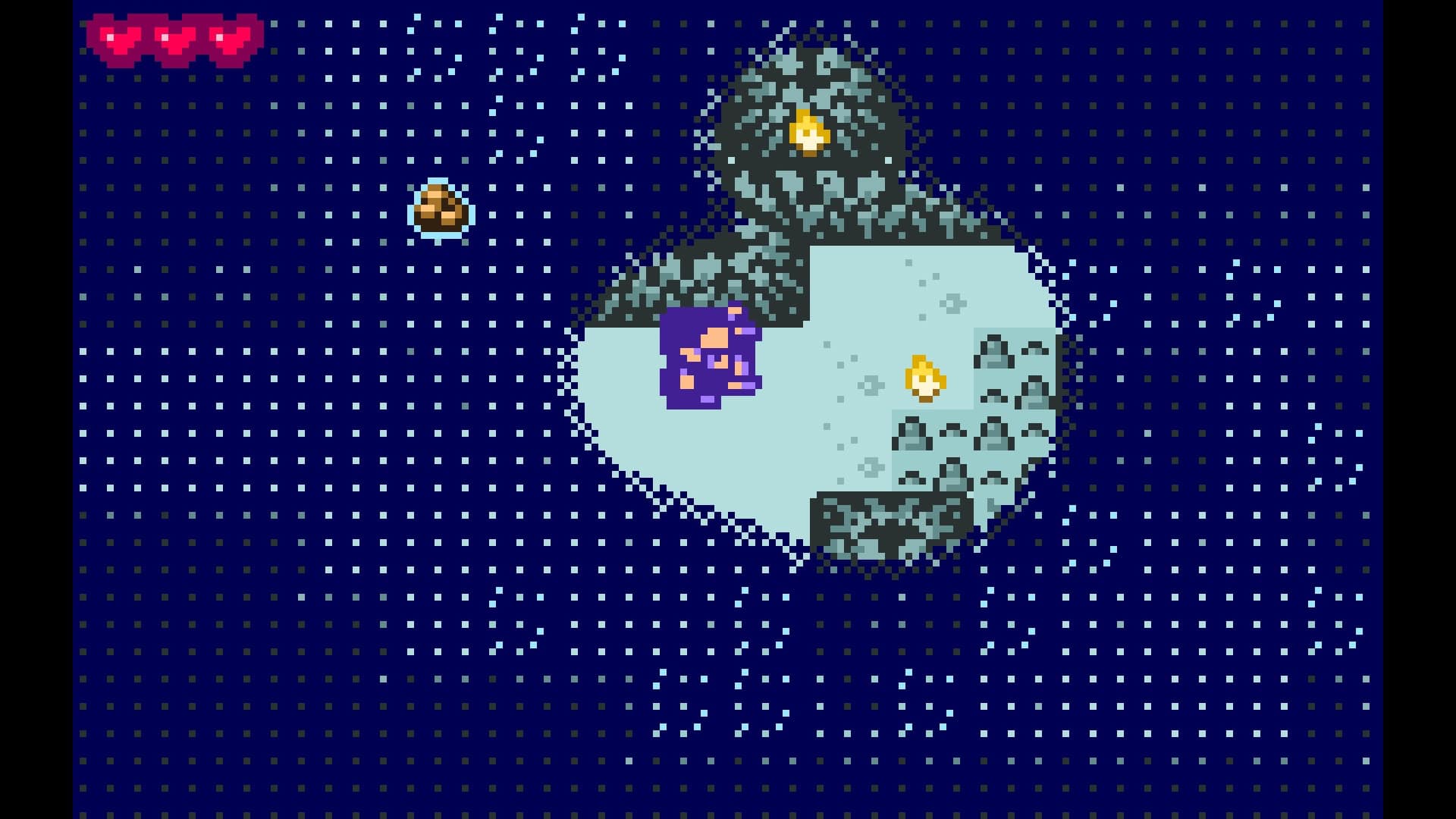
As should be apparent from a single look at the gameplay, Ratcheteer is a love letter to 8-bit top-down adventure games of yore, most specifically the Legend of Zelda Oracle duology for the Game Boy Color. Ratcheteer is trying its best to fit the vibe, if not the exact look of those games, and I think it succeeds in that respect admirably. It’s not just in the visuals either. The sound design evokes the spirit of that era, as does the way various weapons, items, and even enemies work and interact with each other. This is not to say the game doesn’t have an identity of its own, it absolutely does, and that’s evident from the very first item you get access to, your lantern. Now, the lantern is useful for traversing in darkness, helpful because the power is out when the game starts, and even after fixing the power plant, there are plenty of places to explore without light, but the special power of the lantern is to turn off. This might seem an unusual “power” for a tool, but it makes sense when you realize that certain enemies are aggravated by its light and will attack you when the light is on. Others, meanwhile, are invulnerable until you shine light on them. Including the Crank Lantern and Wrench Sword, you will find several other helpful tools, like the jump boots, drill shield, and sail cloth, each of which has a use in traversing the world of Ratcheteer and defeating the enemies within.
Speaking of enemies, there’s a pretty good variety, both in terms of level and enemy design and gimmick. Some of the earliest environmental gimmicks are that the ground is covered in stalagmites, which slow the engineer’s movement considerably. These can be broken with the wrench sword, and often drop hearts and Ore, the in-game currency. Another early environmental puzzle is the light sensor, which must receive light for several uninterrupted seconds to activate a nearby device. One of the most unique tools is the drill shield, which can be used to drill through certain walls and to block streams of water that otherwise push the engineer. Several times, you need to use the shield to block the streams long enough to get in place for the streams to then push the engineer to add extra distance to a jump to cross extra-long gaps.
In terms of enemy design, to start there are moles and bats, these are the enemies I mentioned who were weak to and enraged by light respectively, and both have a gimmick that they cannot be hurt in their resting state, the moles because they’re underground, and the bats because they’re resting high up, though they can be lured to the ground with light, or attacked via the jump boots found in a later dungeon. Naturally, the game forces you to activate light sensors in rooms with bats. Later enemies include aggressive crabs that charge on site, ghosts that only move when you’re walking on the ground and appear in rooms with long stretches of floor and/or tricky platforming, and mites that do nothing except slow your movement to a crawl, requiring you to jump and slam into the ground to squish them. These almost always appear on the same screen as ghosts The boss enemies also have very unique feels and gimmicks, like a robot walker that jumps and sends damaging shockwaves across the floor and who you must jump attack to deal damage to, or another boss who splits into smaller copies with each hit, and turns the boss arena into a bed of spikes at the same time, forcing you to retreat to a safe spot after each hit.
In addition to the main quest, the game has two sub-quests that are required or greatly help in completing the main quest. The first is helping the town’s Metalsmith repair a suit of power armor in your hometown, the other is finding all 26 letters of the Astral Alphabet, most of which are required to understand the deeper lore of the game and navigate to the game’s final dungeons. You don’t have to get all 26 to defeat the game, but they are out there. There’s also a secret boss rush and an easter egg hidden in the game, and finding the clues to find each of these is an adventure all on its own.
While I don’t want to spoil the full story, I will say it’s simple and straightforward, but appropriate for the feel the game is going for in complexity and its wholesome vibe, but it could have stood to have been fleshed out a little more. Actually, that’s true of the game as a whole, in that it could have benefited greatly from just a little bit more. Slightly larger dungeons, a slightly larger overworld, and an ending that wasn’t quite so abrupt, both in the trek to the final boss and the ending once it’s defeated. An escape sequence would have been a nice frenetic set piece to have ended things off with, basically.

I had a few other minor complaints- aside from one item, rations, which act as a full revive, but I don’t think that’s communicated through dialogue anywhere – and the quest to repair the power armor, there’s not much use for all the ore you find around the game. The map is useful, but it doesn’t show how rooms connect to each other at all, and ledges beside pits have almost no mercy hang time, meaning it’s very easy to fall into a pit and lose health, and pits are abundant. My last complaint applies specifically to the Steam PC version, and that’s that while the game supports controller, you cannot exit the game with it. You still have to hit escape to bring up the close game menu, then confirm with the controller.
Oh yes, the display options. The game is in full color, but you can also choose to play in Black and White, Playdate Grayscale, or “Pea Soup” like the original Game Boy. There are also options for line, square, and dot filters to emulate dot matrix and CRT displays, and an aspect ratio selector. There wasn’t a resolution or windowed mode display, so for the best effects, you might want to play on the Steam Deck or Switch. All in all, I did enjoy my time playing Ratcheteer DX, even if it was a bit short. I managed to 100% the game in a little over 4 hours, but I enjoyed every minute of it.
Tim reviewed Ratcheteer DX on PC with a provided review code. This review is based on the version of the game available at the time of writing and our score will not be changed.
- Score
- 7/10 Solid - Tim Recommends
- Summary
-
Ratcheteer carves its niche as a love letter to a bygone era of the adventure genre, though it could stand to lean into its unique gimmicks more, and for longer as a whole.
- More
- GameObserver's Review Policy




 ObserverCrew Picks
 bserver
 bserver