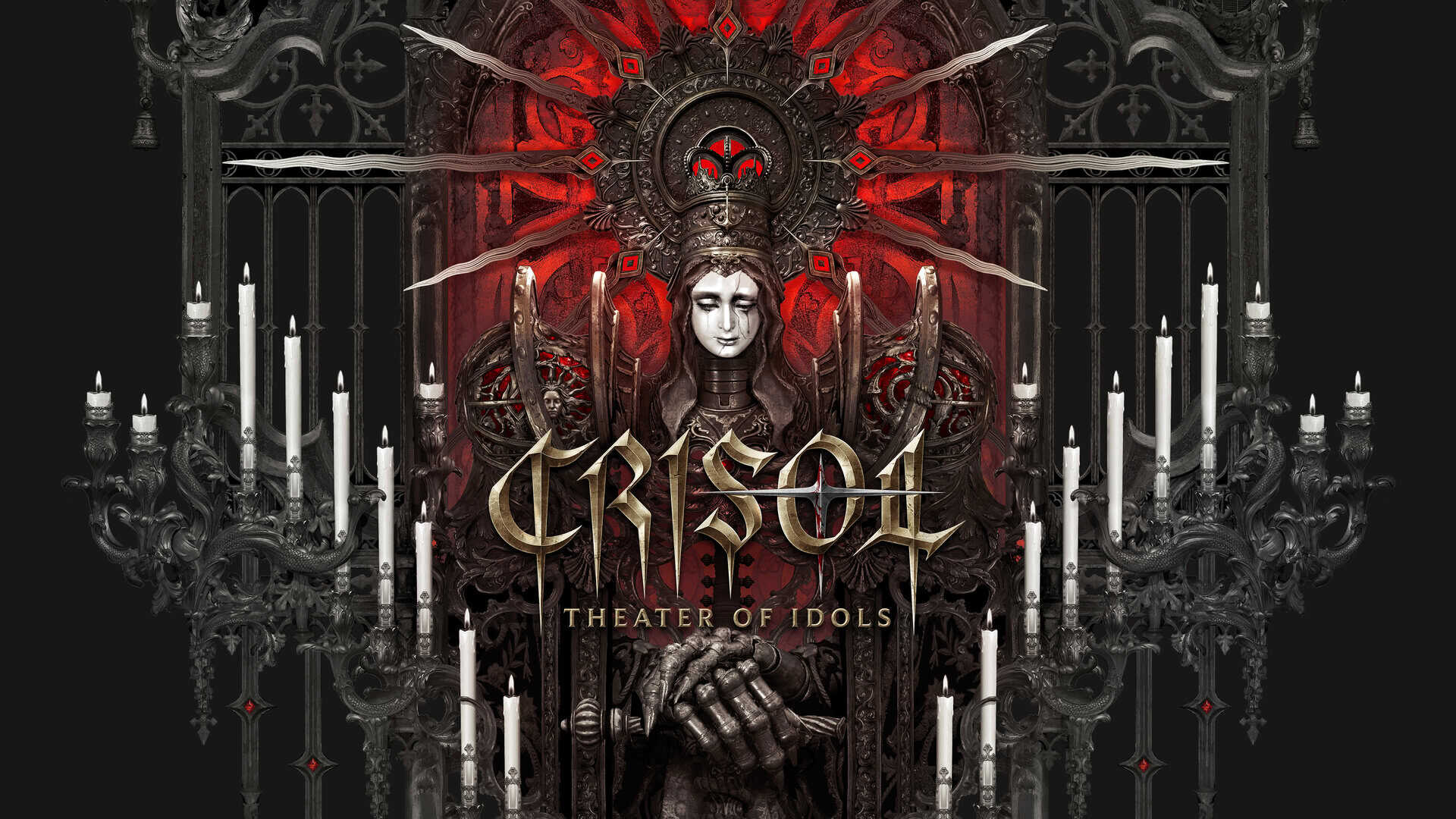
Since its release, Vermila Studios’ Crisol: Theater of Idols has been coined as ‘Spanish Bioshock’ due to its FPS combat and its mechanical, gothic visual style. It opens in a similar way too, with protagonist Captain Gabriel, landing on the shores of a stormy island called Tormentosa with a vague recollection of being there to fulfill the wishes of the Sun God, who once lived in the world amongst men before suddenly vanishing, leaving behind strange, marionette-like creatures which prowl the streets. Visions fuel his holy mission, urging him to reseal the God of the Sea that was imprisoned on the island using the blood of the Sun God’s most devoted followers and now threatens to break free thanks to the rise of his own worshippers, who have pushed back the Solari agents guarding the prison. Upon arriving at the island, Gabriel discovers that the prison’s seal is damaged, and more unfortunately meets Mediodia, the incredibly annoying leader of the Solari agents who informs Gabriel that the ritual to reseal the Sea God requires the blood of four followers’ descendants to repair it, starting with the corpse already lying in the cathedral where the Sea God was sealed. The other three are holed up around the island, and neither is particularly keen to sacrifice themselves for the Sun God.
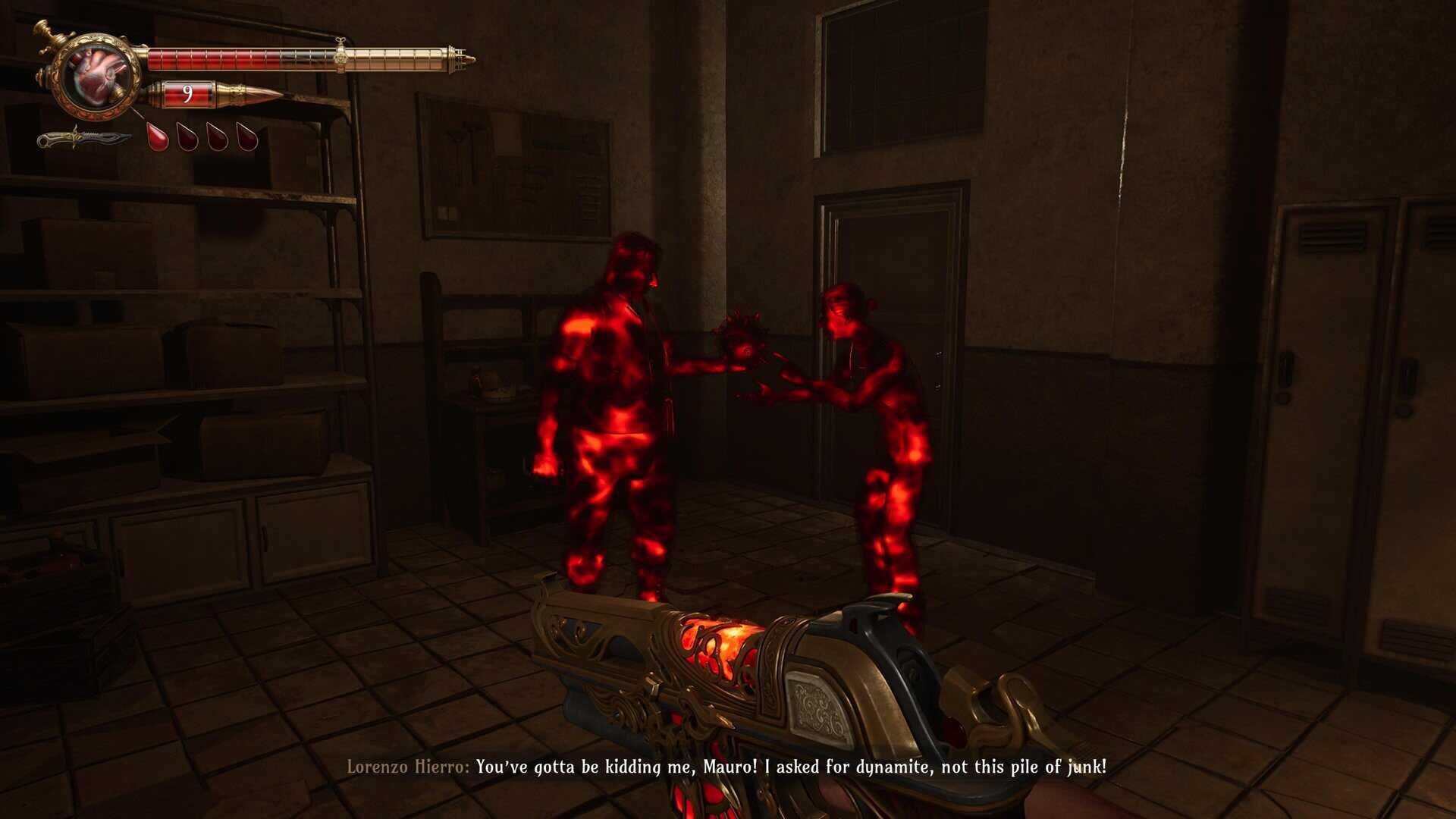
To aid him in his divine quest, The Sun God grants Gabriel the power to weaponize his own blood, which he can replenish by draining the blood of animal and human corpses, giving him an insight into their memories. This introduces Crisol’s unique gameplay mechanic, which balances Gabriel’s health with his ammo supply, as he must draw from his own health pool to reload each bullet… for some reason, this is considered a better situation than using regular bullets. Gameplay-wise, though, this creates a tricky balance for the player, removing the usual struggle in survival horror of finding bullets in exchange for the actual use of bullets damaging the player character and therefore making combat far riskier, putting greater emphasis on that fight or flight decision.
Gabriel also comes equipped with a dagger that can be used for close-quarters attacking and can parry enemy attacks when perfectly timed with their swing, temporarily stunning them. However, it has limited durability, and the blunter it gets, the less effective your attacks are. You can sharpen it at various sharpening stations scattered across the map, but this requires gasoline, which you collect as a resource.
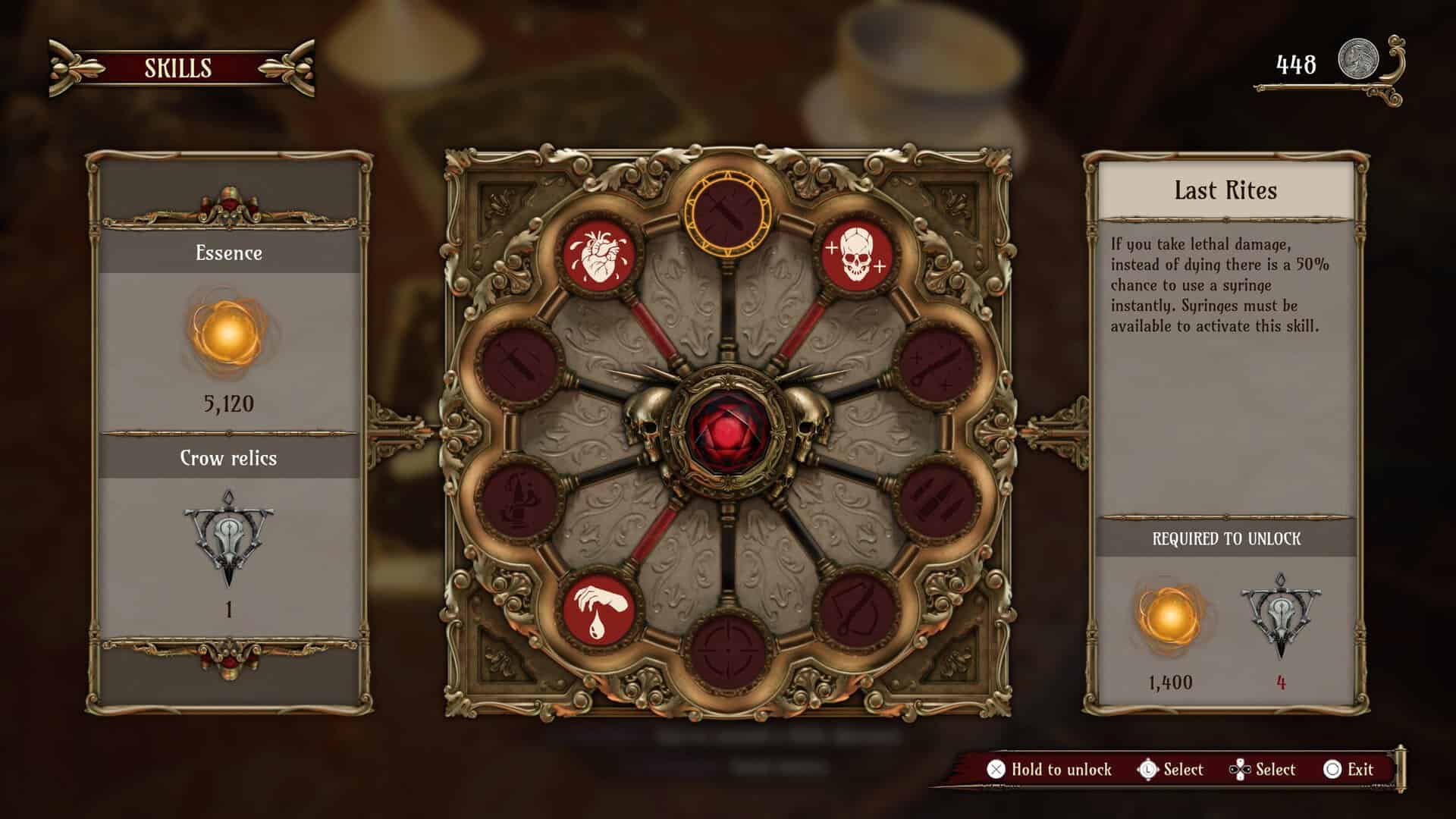
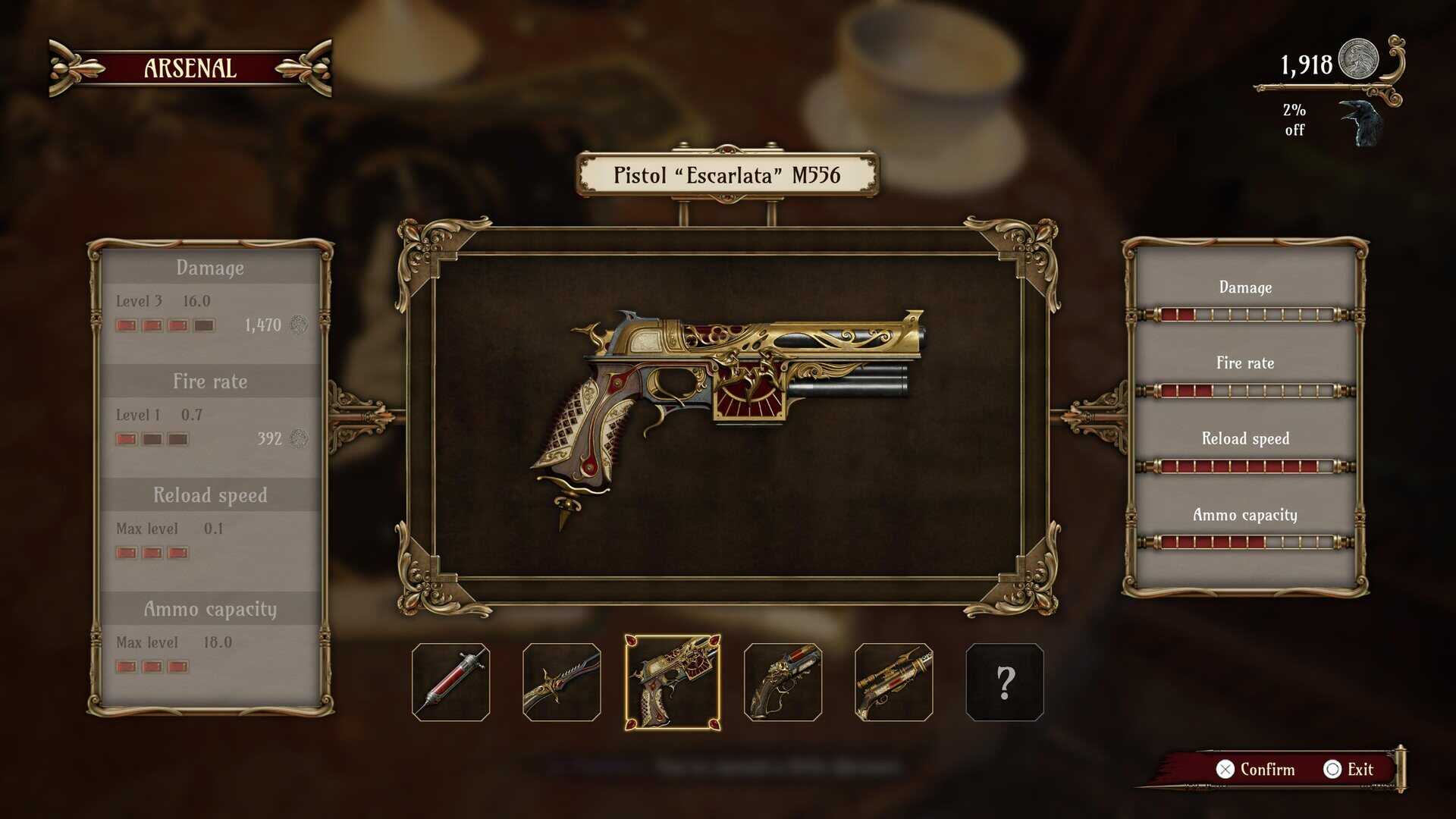
The main currency in Crisol is coins called ‘Silver Bullets’, which can be used to purchase weapon upgrades. There’s also Essence, which you collect by killing enemies, and crow relics, a rarer currency found by taking the time to explore for hidden loot, both of which you use to purchase skills that provide gameplay bonuses, such as using 15% less blood when reloading during combat.
There are several collectibles to please completionists, the most significant being the merchant’s 15 caged crows, which you can release for a discount at his store, and the Solari Brooches, which are found on dead Solari agents and can be used to unlock the 15 treasure chests in the hub area.
Unfortunately, for a game reminiscent of Xbox 360 era FPS games, Crisol just doesn’t feel great to play. The controls feel sluggish, awkward, and unresponsive. For those not keen on parrying, there’s no option to dodge as an alternative, even though, especially considering the way the enemies behave with their unpredictable, quick movements, a dodge would feel so natural during combat.
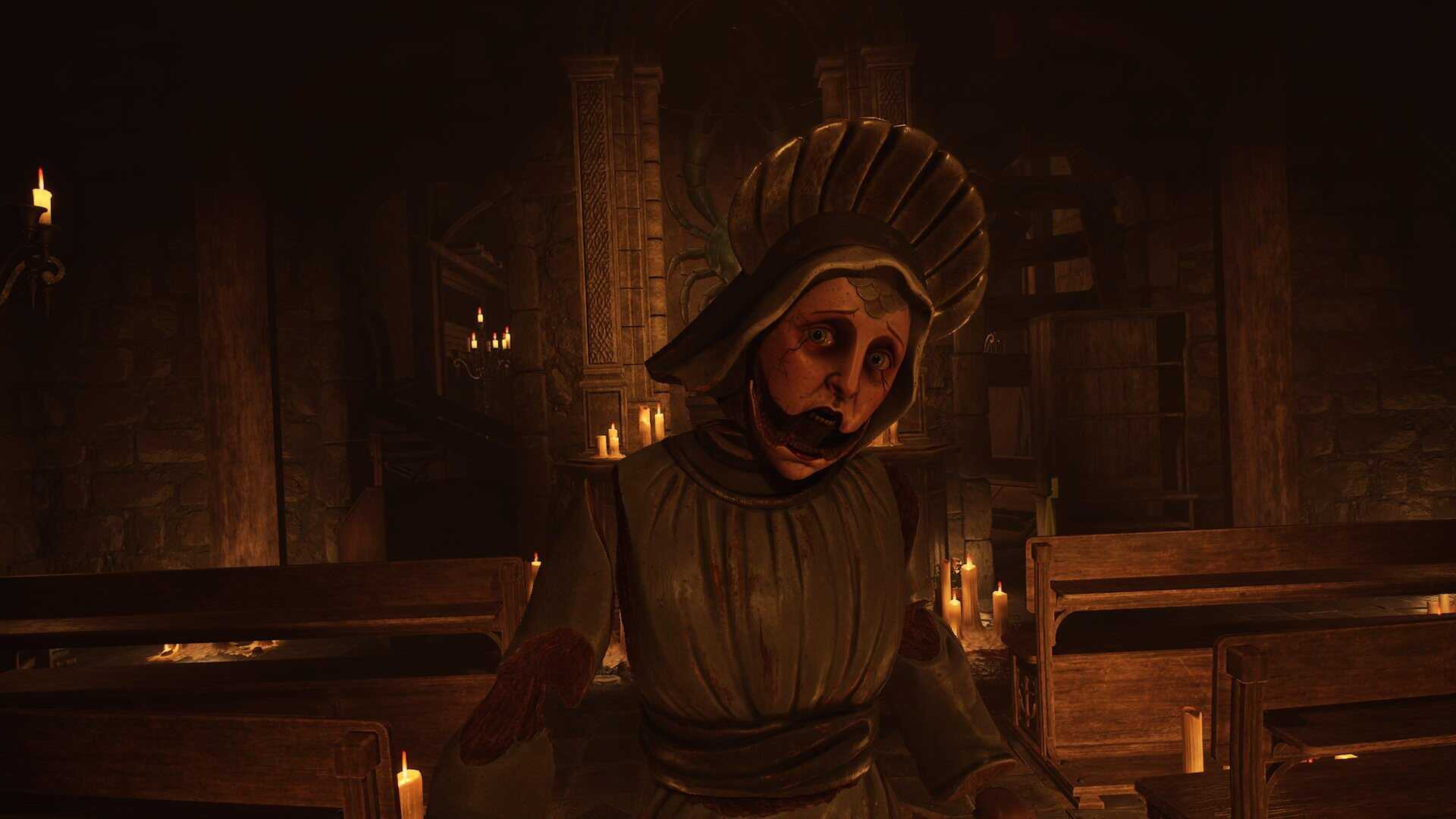
But the most significant part of Crisol’s combat, which really lets it down, is the enemy variations. During its prologue, Crisol introduces two intimidating enemies to set the game’s tone. When we first step onto the island, a statue suddenly comes to life and stumbles towards us, giving us a first impression of Crisol’s core enemy type. You can hear the joints of these marionette-like statues creak as they stumble around corners, and their movements are clumsy as they sway from side to side as though attached to invisible strings, making their attacks quick and unpredictable. Their most troublesome attribute is the fact that they will still pursue you even if their limbs, or even their head, get blown off. If they have no legs, they will crawl, and if they have no upper body left, then they will kick you – making them truly menacing opponents in both taking them out and also their unnatural drive to kill you, no matter what. But this enemy is then repeatedly used for the majority of the game. While other variants are introduced, they don’t have as significant a presence as these statues, leaving little in terms of variation with combat. After a while, it gets boring. Because the statues can often survive without their head, this also makes headshots feel redundant. And getting hit by one of these things, along with needing to consume your own health bar for bullets, makes parrying far too risky with little payoff to feel worth accomplishing.
This could have been rectified with some interesting boss battles, but alas, Crisol does not do this either. While one section did have recurring golem-like minibosses, each of the three area sections where you would expect an epic boss fight simply… end, with Gabriel having found the descendant, absorbed their blood, and moved onto the next hoard of statue enemies. The only true boss in Crisol is Dolores, the other enemy introduced as the game begins. She’s a towering creature, seemingly a corpse fitted inside a giant, mechanical suit of armour, and she’s hellbent on killing Gabriel before he can succeed in his mission. Dolores’ inclusion in Crisol is what reminded me a lot of Resident Evil Village, along with the map layouts with its three different sections to work through. But while Dolores feels inspired by Lady Dimitrescu, she’s a far cry from the impact Lady Dimitrescu had on Resident Evil Village. While Lady Dimitrescu was a short but sweet inclusion in her game, Dolores hangs around for the whole thing. She bursts into every one of the three levels, and her sections usually involve the player having to work around her to unlock doors, take two minutes cranking open gates, or shutting off electricity to pass over puddles of water and progress. These would be nerve-wracking if it weren’t for the fact that Dolores’ AI is really poorly done. As long as you’re not running, she can’t hear you, so you can stroll right behind her and she won’t notice. She also has a habit of standing still in a single spot, repeating one of her four favourite catchphrases about how she’ll definitely catch you, until the player does something to grab her attention. Sometimes, while hiding from her, she’ll do this right in front of where you’re hiding, so you need to snap her out of her daydream by running around for a bit in order to move. Lady Dimitrescu was iconic and genuinely daunting to maneuver around as she stalked the castle halls, Dolores is just annoying.
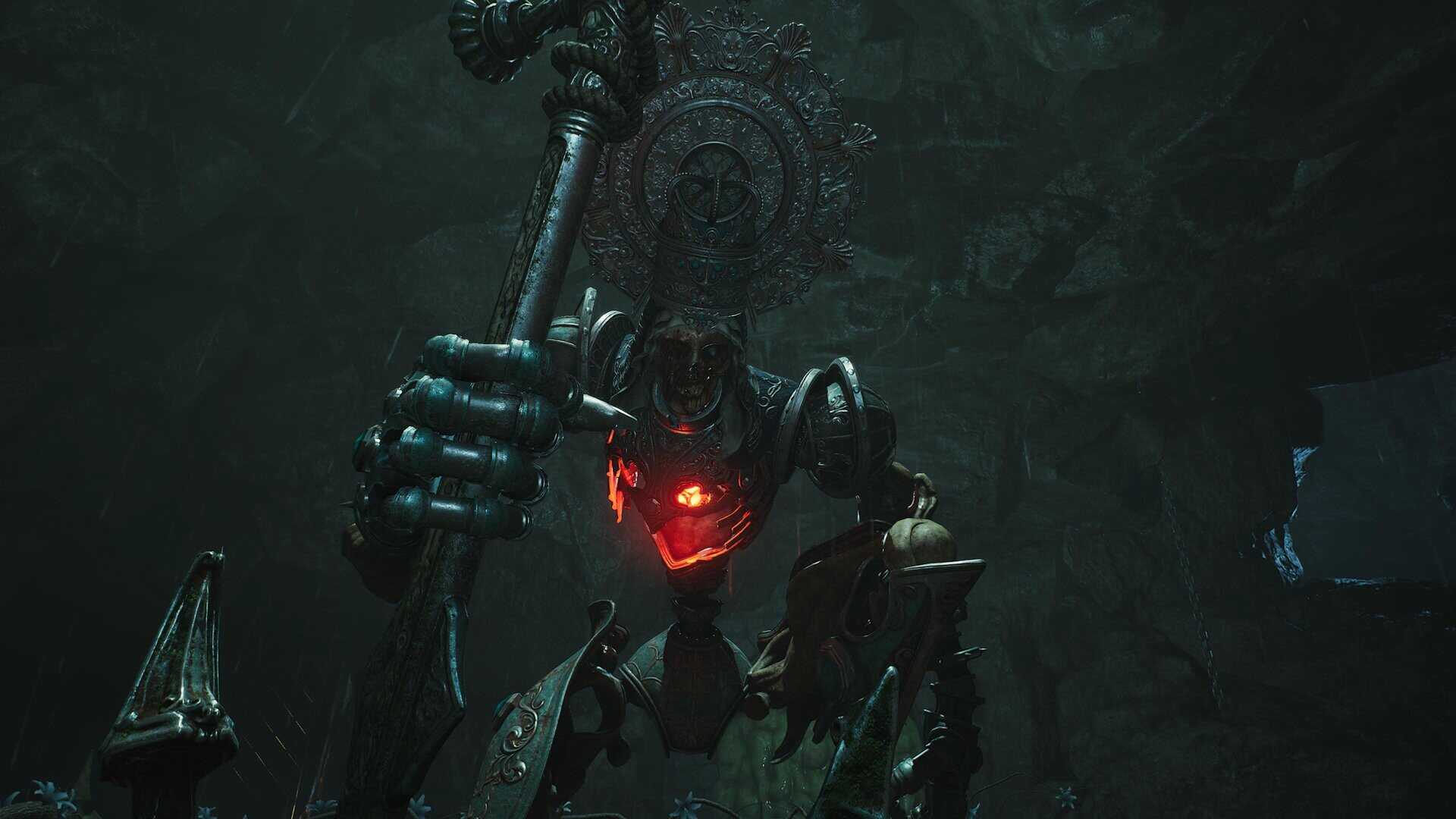
Dolores’ boss fight doesn’t take place until right at the very end. So there’s really nothing breaking up those repetitive fights with the statues. And even here, the boss fight is so poorly done and dragged out that it’s just boring. The arena is laughably filled with healing items on top of the many that you’ll collect on the walk up to it – I didn’t need to pick up a single one. The fight consists of her chasing you around in a circle without being able to catch up, and she’ll occasionally take a break to perform a very slow and predictable attack, at which point you can make some distance and take a shot at her weak point. And rinse and repeat. It’s embarrassingly poorly designed.
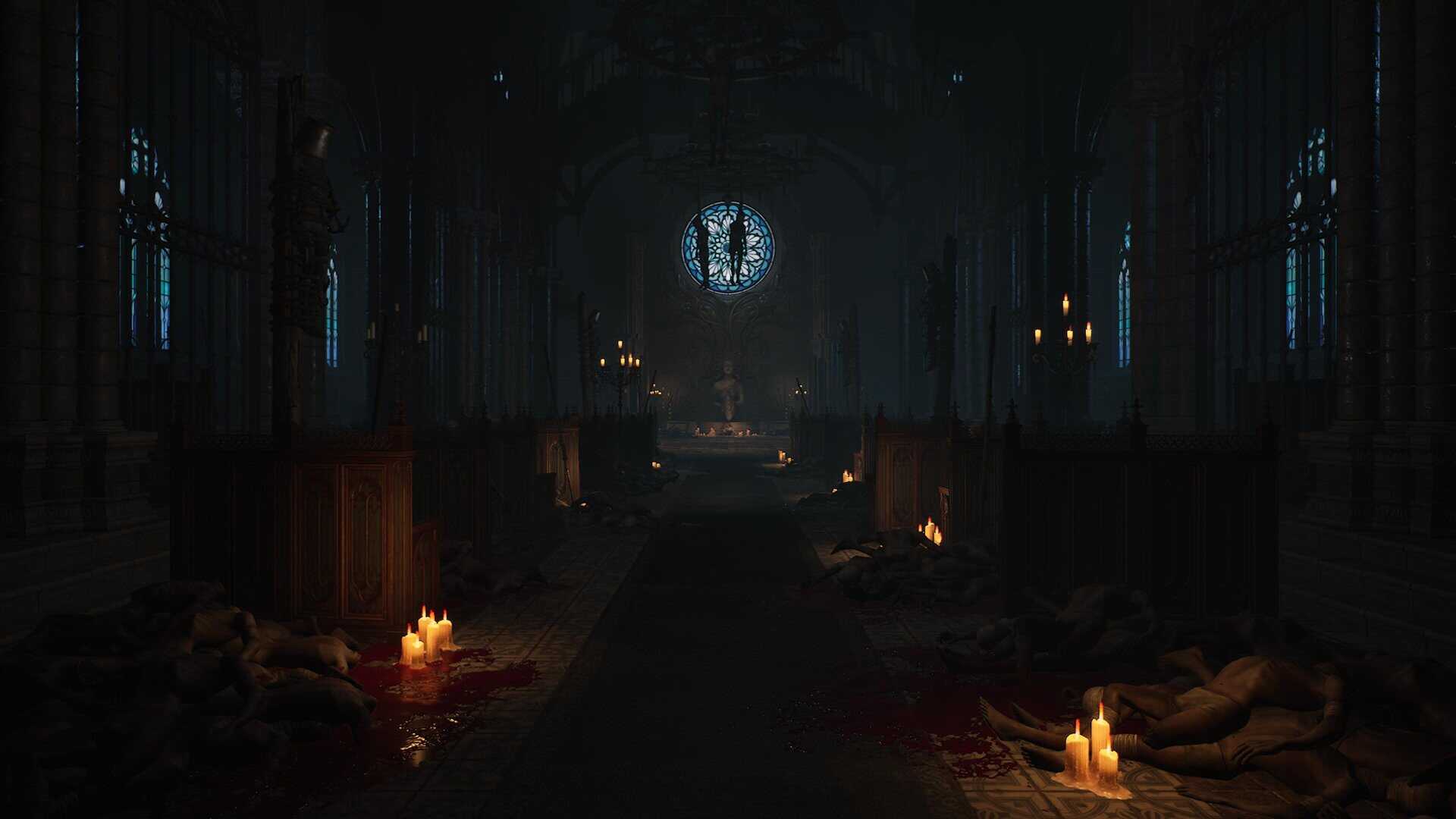
While the level layouts are reminiscent of the Bioshock games, in that there are several locked routes in each area that you gradually pick up the tools to unlock and progress further as you work your way to each descendant, this element of Crisol reminded me a lot more of Resident Evil Village. Unfortunately, despite the gorgeous visual design and Spanish, Gothic architecture throughout the island, the environments are incredibly uninteresting for a game that had all the creative potential at its fingertips. There are no intriguing nooks or crannies to check out, no stories to uncover that aren’t literally spelled out via ghost discussions to show the lives of the rivaling cults inhabiting the island. Every level is built simply to move the player from one location to the next, with them having to complete very menial tasks to unlock each area, from flicking switches to finding various key items to unlock the next door. The biggest offenders of these are the doors and gates, which need cranking open, which is pretty standard in survival horror, but Crisol takes this one leap further, with cranking taking TWO MINUTES to fully open a gate or door, and they need to be up all the way. In some sections, they won’t even stay up after the player has laboriously been circling their joystick around for two minutes, and you’re on a timer to get through it before it snaps shut and you have to do it again. In other sections, you have to crank open several doors or gates in a row, making it SIX MINUTES of cranking. If your game has moments where the player is scrolling on their phone with one hand and completing the in-game task with another out of boredom, there’s definitely a design flaw present.
That being said, Crisol seems to struggle with that balance of a semi-open world with linear gameplay. While it gives the impression of three open areas which you can freely explore, it’s simply not the case. You can usually circle back to pick up any collectables you’ve missed, but progress is strictly one specific route, which makes this freedom redundant and also confusing, considering there are no objective markers of where to go next. Those picking up the game again after a week or so break could end up easily confused about what they were doing and where they were supposed to go next, like if they’ve loaded up in one of these open areas as I did at one point. I ended up having to retrace my steps to rejig my memory. Inside buildings, there’s always a singular route to take to each destination, and you rely on the connecting corridors to guide you to where you need to be, which is why Crisol’s overuse of the yellow paint visual guidance is so patronising. While I’m actually on the side that yellow paint, or preferably another way to guide the player with visual hints that certain ledges or ladders are usable, is very much needed in most games — this is from wandering around lost for ages playing far more open games that do not know how to do this. Crisol, on the other hand, slathers the stuff on every single interactable surface despite how linear the level is. You’ll walk into a completely empty room with nothing but a ladder and no other possible route behind you, yet the ladder will still be practically glowing yellow just in case it wasn’t obvious that you’re supposed to climb up it. It’s this level of handholding that comes off as quite disrespectful to the people playing the game, which also bleeds into Crisol’s storytelling and dialogue.
Gabriel is what I like to call a ‘default protagonist’, in that he has no personality besides wanting to do his God’s will. Almost all of his lines of dialogue actually don’t need to be said out loud; they mostly just reflect what the player has already been shown in gameplay or through cutscenes. When you’re out of bullets, Gabriel feels the need to say “I’m out of bullets,” when a door is locked, Gabriel has to tell the player that too. There was even a room I walked into that had a locked safe, and Gabriel blurted out what the clue to its combination was, which happened with a few environmental puzzles too, as the game seems incapable of just letting the player work it out for themselves. After a cutscene has shown a significant lore reveal, Gabriel will repeat what’s been said in a shocked voice and immediately question Mediodia about why she didn’t tell him. Rinse and repeat. There’s no nuance in any of the dialogue, it’s just face value, simple telling players what’s going on.

Mediodia is a worse case of this, because not only is none of her cringe-inducing dialogue, besides her initial introduction where she explains who she is and what her group is there for, actually needed to push the story or the characters forward, but her voice is also like nails on a chalkboard. She’s a chirpy, bubbly, and incredibly irritating character who doesn’t fit in with the grim setting or storyline at all and would be better placed as a Tiny Tina-style character from Borderlands. She opens up by giving Gabriel some unwanted nicknames and casualises the game’s lore with a modern speech rephrasing, which is completely unneeded. The moments where she and Gabriel attempt to bond over the radio feel incredibly forced, and while the issue of cliche dialogue is prominent throughout the game, with Mediodia, it’s at its worst.
While the concept of warring Gods creating a rift between opposing worshippers is an interesting one, unfortunately, much like the statue enemies, the idea isn’t utilised well. The stories of the worshippers are unveiled through ghost conversations, which you can stick around and listen to or promptly move on if you don’t care. But there is barely any depth to the conflict, and the story behind the Gods’ dispute is so shallow that there’s not enough information for us to care about Gabriel’s mission or understand his devotion to the Sun God.
With its setting and Spanish influence, Crisol had the opportunity to present a really gorgeous soundtrack, but music was utterly absent. There’s barely so much of a score throughout the majority of the game, with the only significant piece of music being during the final boss, and then an absolutely beautiful track during the end credits, which should have been reflected throughout the whole game. It’s so strange to have this unique setting with a huge potential for worldbuilding and not offer a music piece to reflect the tone and culture of this world.
Crisol: Theater of Idols had a fantastic idea, with its premise of an alternative Spain haunted by living statues and a protagonist set on a holy mission to kill a God that opposes his own. Its statue enemies, which caught the eyes of many in its reveal trailer, are a superb design, creating genuine tension with their unnatural, clumsy movements and resilience to being literally dismembered. But Crisol struggles to move on from this initial good idea and build an enjoyable FPS action horror from those foundations. Its combat is repetitive and sluggish, and its storyline is shallow and leaves very little for the player to care about. Its side characters are annoying, and its protagonist lacks a personality to the point where he may as well have just stayed silent. Its environmental puzzles were fun and were personally the parts of the game that I most looked forward to, but Crisol isn’t a puzzle game, it’s an action horror game, and it just doesn’t do enough to keep things interesting after ten hours of playtime.
Jess played Crisol: Theater of Idols on PlayStation 5 with a provided review copy. This review is based on the version of the game available at the time of writing and our score will not be changed.
- Score
- 5/10 It's Fine - Jess does not recommend
- Summary
-
Crisol: Theater of Idols had a fantastic premise, but struggles to move on from this initial good idea and build an enjoyable FPS action horror from those foundations.
- More
- GameObserver's Review Policy




 ObserverCrew Picks
 bserver
 bserver