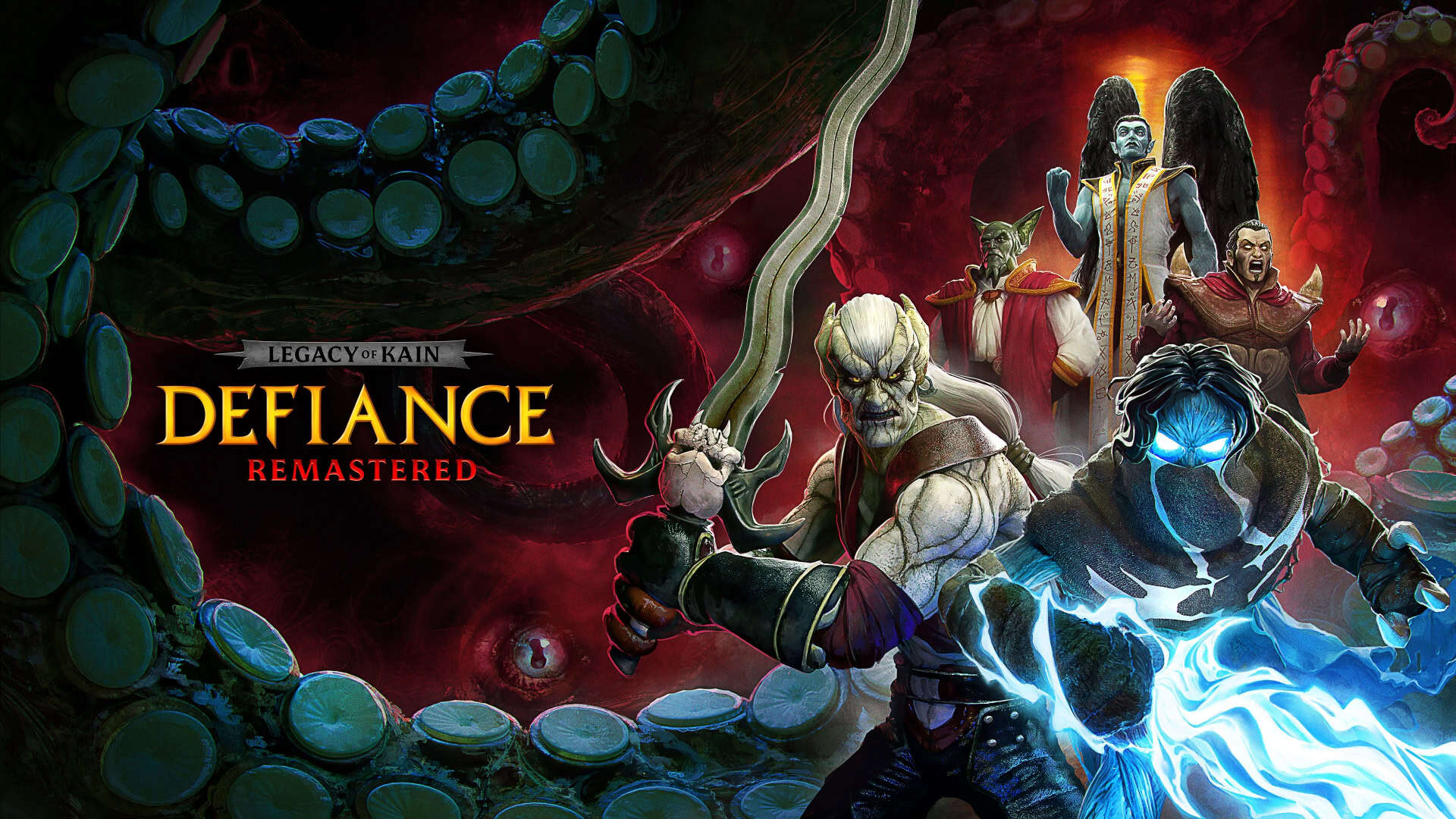
A proud vampire conqueror, his former first and greatest lieutenant, now a spectral wraith, a devious human time traveler and The Elder God trying to pull all their strings. These are the forces, heroic and antagonistic, at the heart of action-adventure series Legacy of Kain: Defiance Remastered by producer and developer Crystal Dynamics and co-developer PlayEveryWare. One side representing a defiance of destiny, the other trying to enforce it. Their battle, and their destiny as a whole, is the heart of the Legacy of Kain series.
As Defiance is the fifth game in the Legacy of Kain series, allow me to provide a bit of backstory about the world of the games and its heroic characters, Kain and Raziel. Nosgoth is a dark fantasy realm. At its heart are the Pillars of Balance, and each pillar is supposed to have a guardian. In the first game, the vampire known as Kain kills these guardians to repair the land of Nosgoth as they have grown corrupt, but at the end he learns this has broken eight of the Pillars and as he is the guardian of Balance it would require his sacrifice and the end of the vampire race to restore them and Nosgoth. In the sequels, Raziel offends Kain, is killed, rises again thanks to the Elder God, and Kain strikes him with the Soul Reaver, which shatters and its spectral form attaches itself to Raziel. After quite a lot of time travel and paradoxes, Kain and Raziel learn that Kain, with his physical Soul Reaver and Raziel who has and also is the spectral Soul Reaver, must fight and Raziel will be absorbed into the sword, according to the predestination enforced by The Elder God. Both Kain and Raziel thus spend the plot of Defiance attempting to find their own different answer to avoiding or at least further postponing their fates, exploring Nosgoth’s past in ways both metaphorical and literal to find a way to outmaneuver The Elder God and avoid their predestined fate.
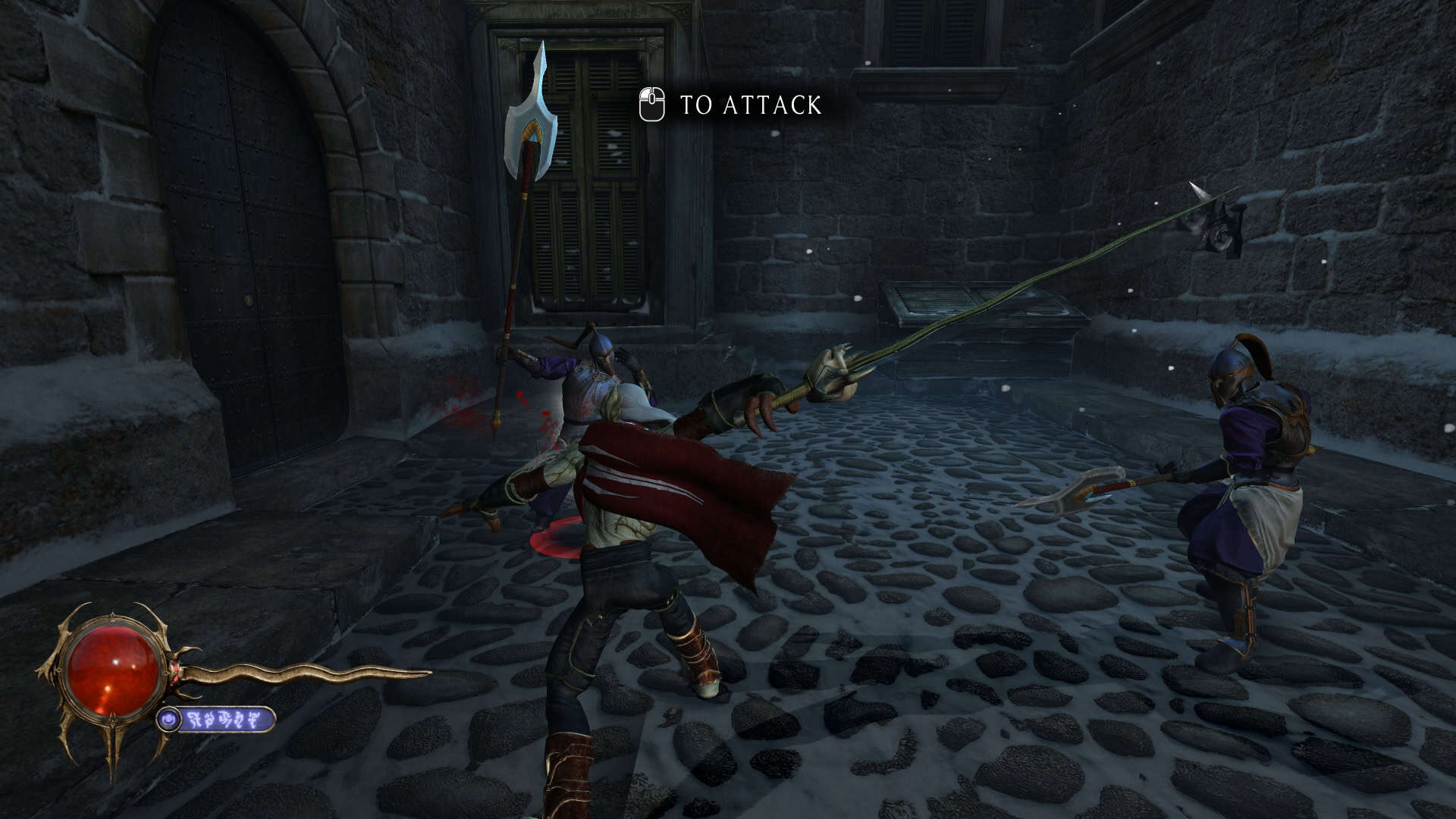
You alternate between playing as Kain the Vampire and Raziel the Wraith as they both navigate the world of Nosgoth. They play similarly, but not identically to each other. Both wield the Soul Reaver – a large sword that can build magic power and feed on their opponents. Both can jump, climb, mantle, glide, and their basic combos are the same. They both restore health by absorbing fallen foes – Kain drinks their blood, Raziel absorbs their souls. And both slowly lose health over time, though Raziel can avoid that by shedding his corporeal form at any time and returning to the spirit realm.
Often times this is done for puzzle solving – the world is not always the same in the spirit realm and certain barriers only exist in the physical realm, for example – but it can also be done to find health restoring spirits floating about. While Raziel can turn into a spirit at any time, he needs to find a nearby buried corpse to possess to return to the physical world. Managing the back and forth is thus a core element of Raziel’s gameplay, both in and out of combat. Kain’s defining characteristic, meanwhile, is that he can’t go into water. It definitely feels like he got the short end of the stick on that deal.
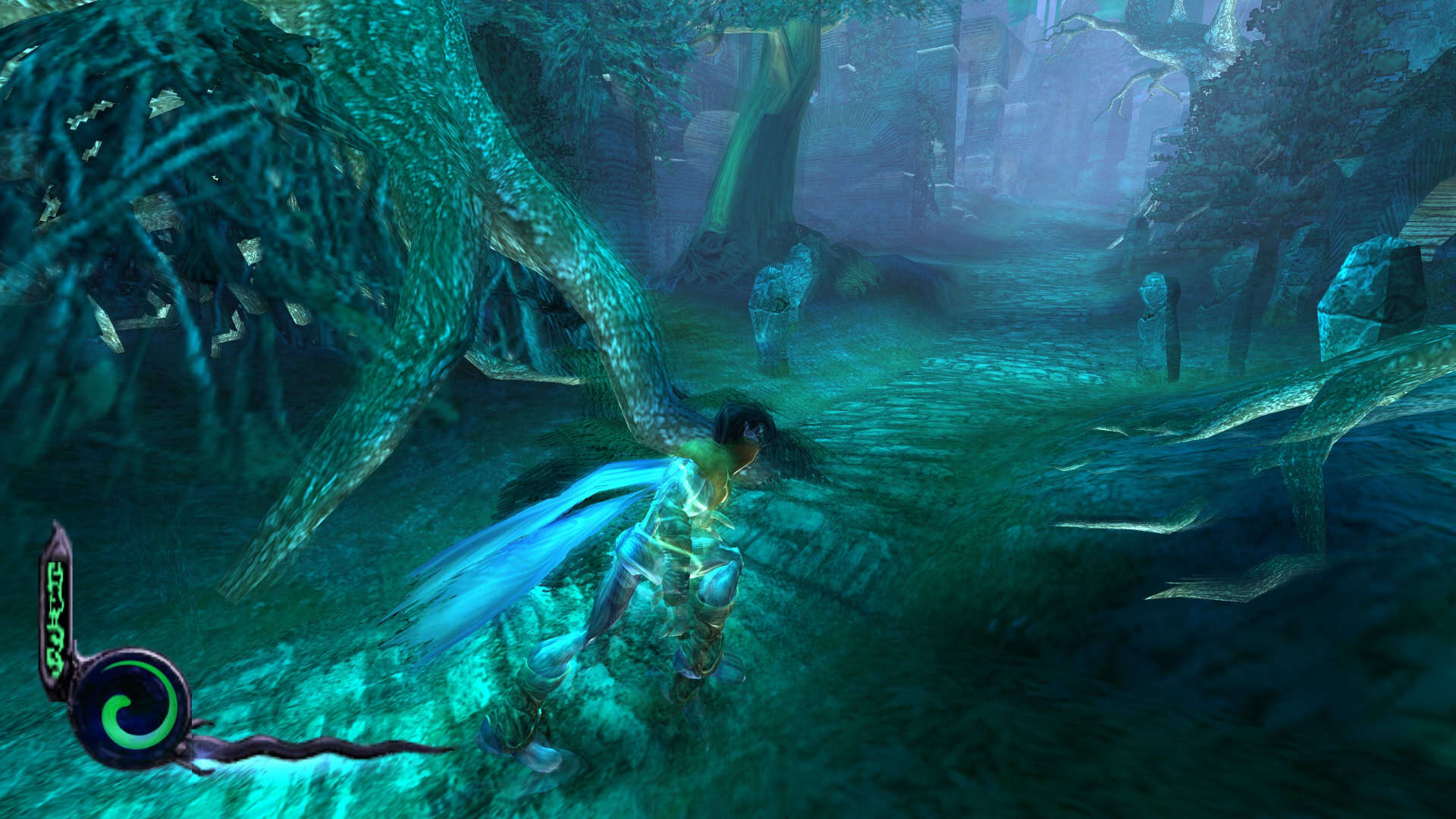
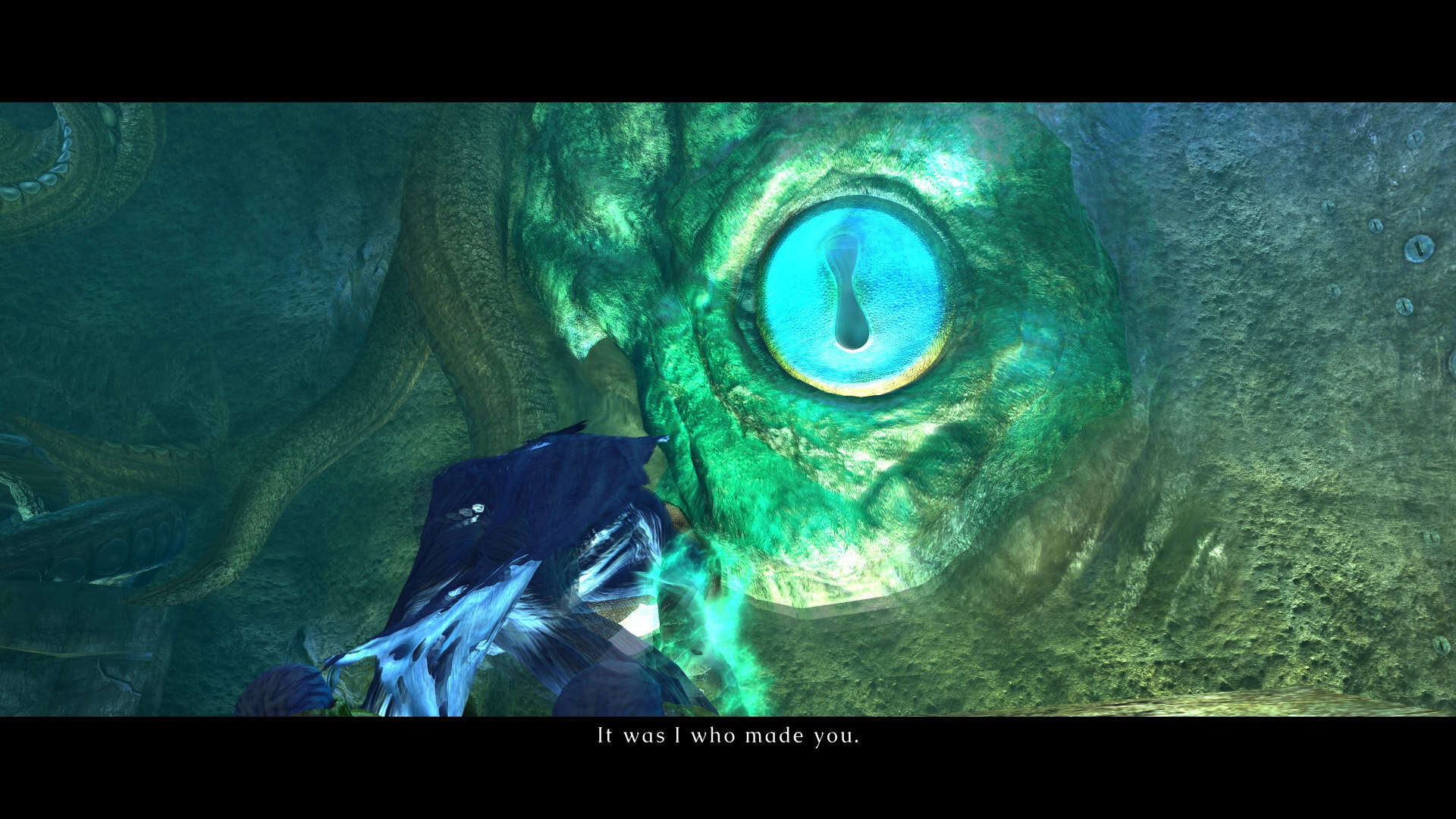
As the game continues, Kain and Raziel essentially alternate levels as the player character, discovering ancient secrets of Nosgoth, finding new forms for their respective Soul Reavers, and inching closer to their final confrontation with The Elder God, his human servant Moebius the Time Streamer, and with each other. Kain’s levels are more combat-focused, while Raziel’s are a bit more focused towards exploring and solving puzzles, but each gets their fair share of both puzzles and combat.
In this remaster, every single model and texture has been given at least some small aesthetic upgrade, the lighting has been greatly improved, a freely controlled camera option has been added to replace the original’s fixed camera, and there’s even a simple hint system that points in the general direction of the next objective in case you get turned around in a level. These enhancements can all be turned off via the menu in case you want the authentic original experience, or at the push of a button. Clicking the right stick, for example, switches between the original PlayStation 2 era models and the remastered graphics at any time. The game does still have the original’s automatic lock on mechanic, which selects a target based on proximity rather than letting the player select, but it seems to be much better at prioritizing targets than in the PlayStation 2 release.
In addition to the in-game improvements, the remaster also offers some interesting bonuses. Every version of the game contains the History of Nosgoth, a primer to the events leading up the events of Defiance, and an archive of several incomplete levels that were cut from the PlayStation 2. These include details about when they were created and when and why they were cut, and are accessible at any time outside the game’s story progression from the bonus menu. The remaster has also added collectibles in the form of arcane lore, each of which unlocks additional concept art in the bonus menu. The Deluxe and Heart of Darkness versions of Defiance also include a playble demo of Dark Prophecy, the canceled sequel to Defiance, and three prequel comic books to help introduce Kain and Raziel. The Heart of Darkness version also includes additional skins for Kain and Raziel, as well as Legacy of Kain: Ascendance, an action-platformer prequel set before Kain’s rise to power and Raziel’s ressurection as a vampire.
As a remaster, Legacy of Kain: Defiance Remastered is done excellently. Everything about the original game is still available, and the additional polish has done wonders for the game’s overall feel mechanically and visually. Do I recommend it as a jumping on point for the Legacy of Kain series? Absolutely not, but fortunately Legacy of Kain: Soul Reaver 1 & 2 were also remastered for modern systems a couple of years ago in case you want to get the complete Soul Reaver experience.
Tim reviewed Legacy of Kain: Defiance Remastered on PC with a provided review code. This review is based on the version of the game available at the time of writing and our score will not be changed.


 ObserverCrew Picks
 bserver
 bserver