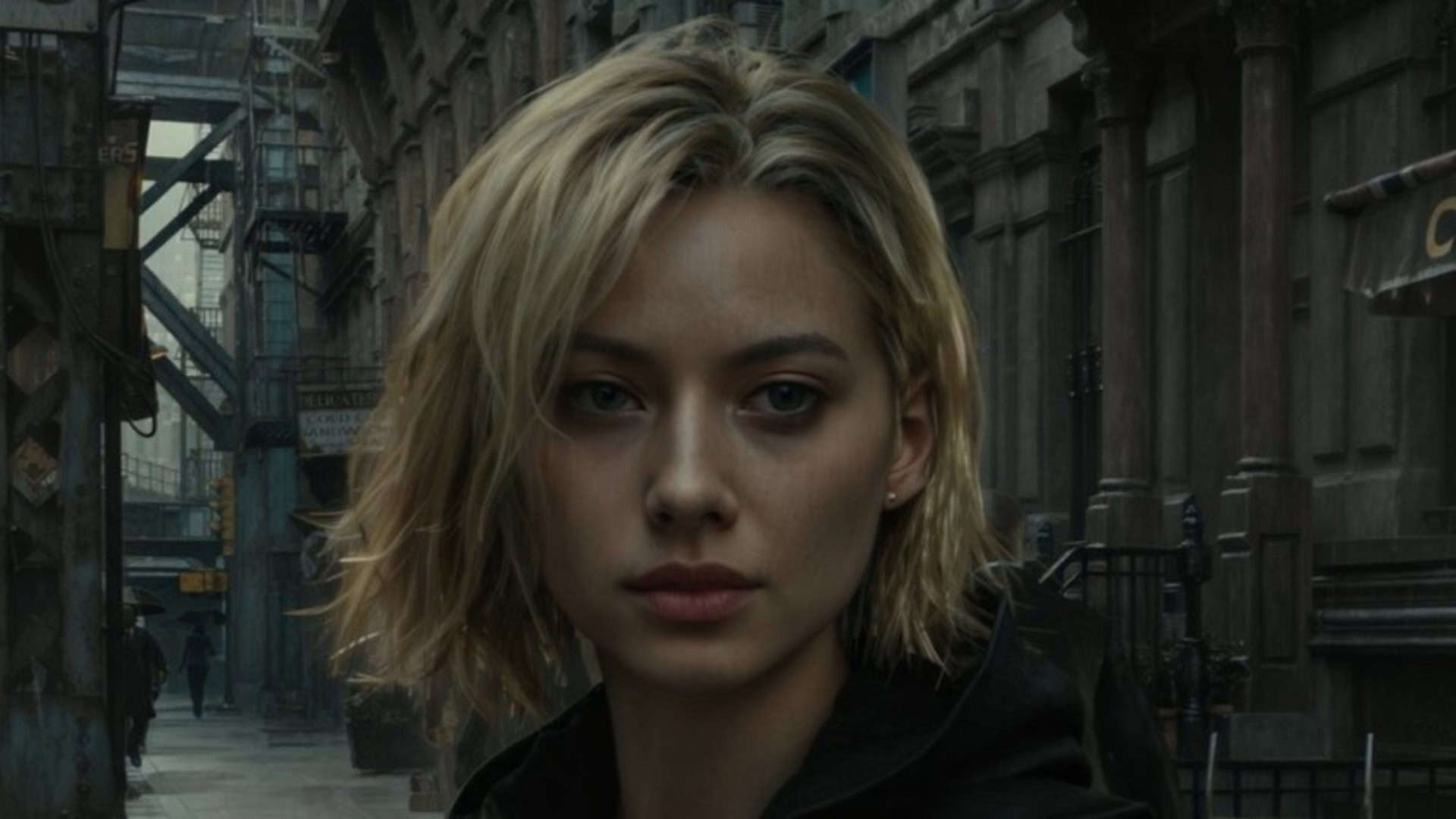
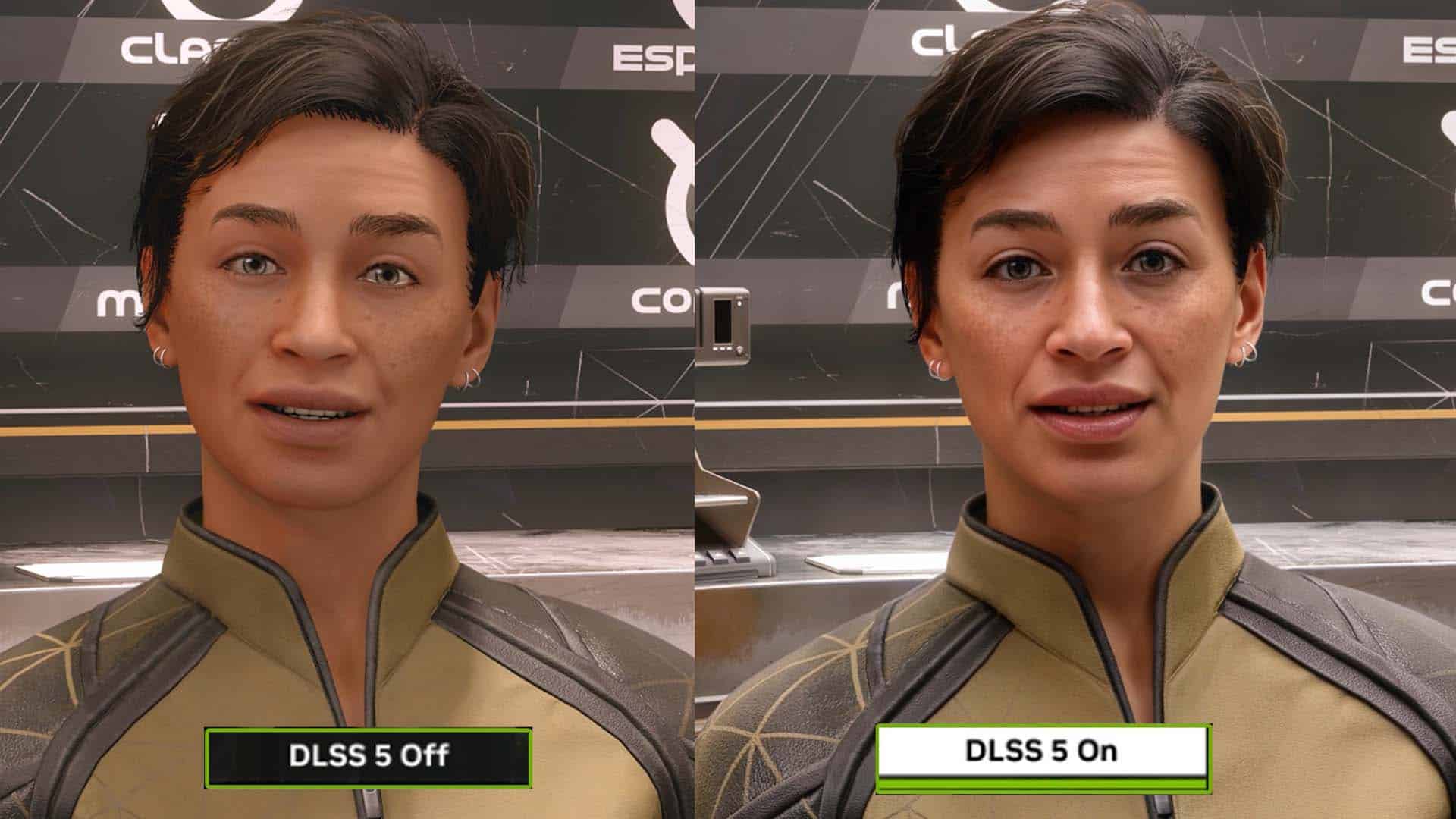
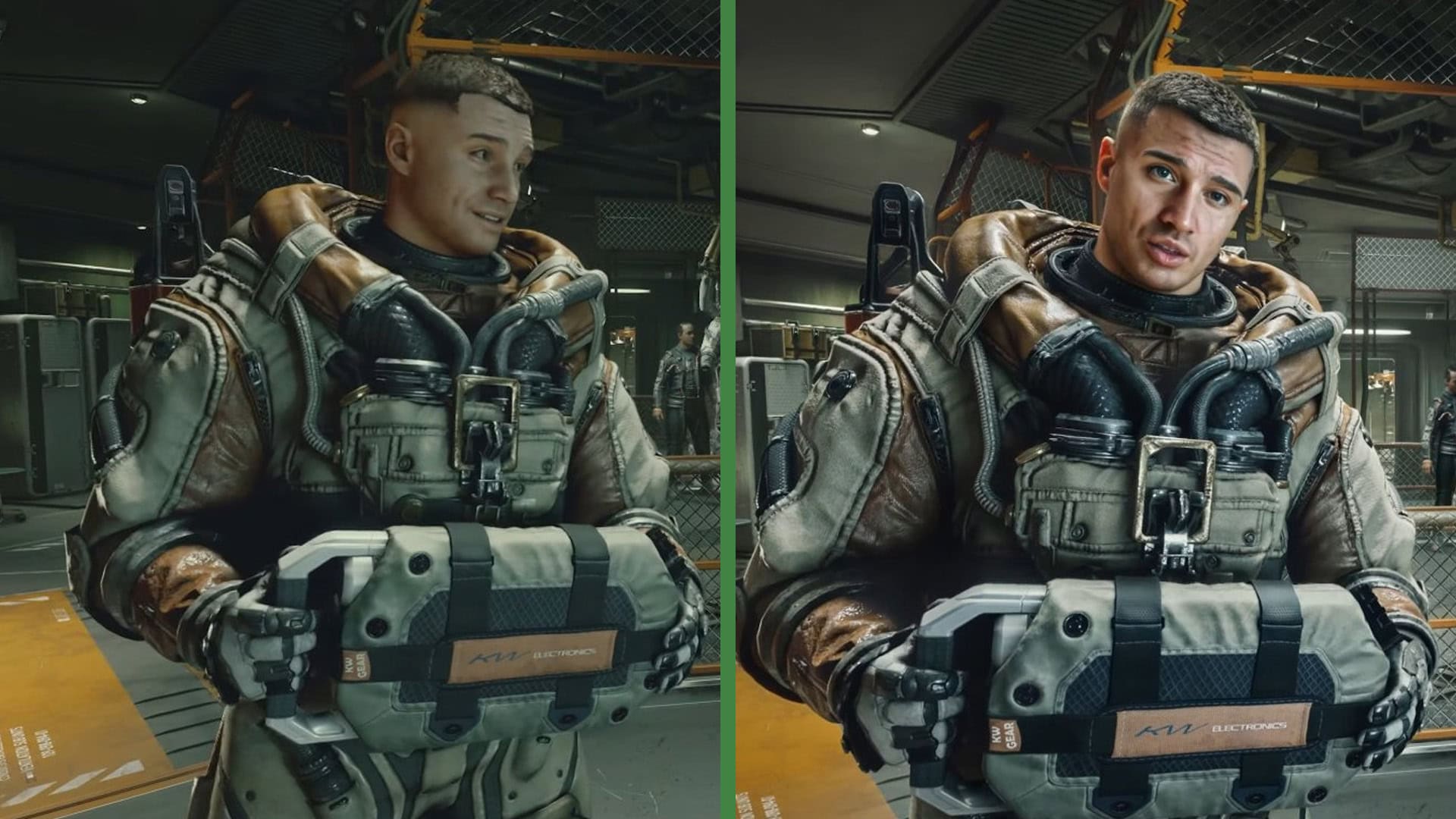
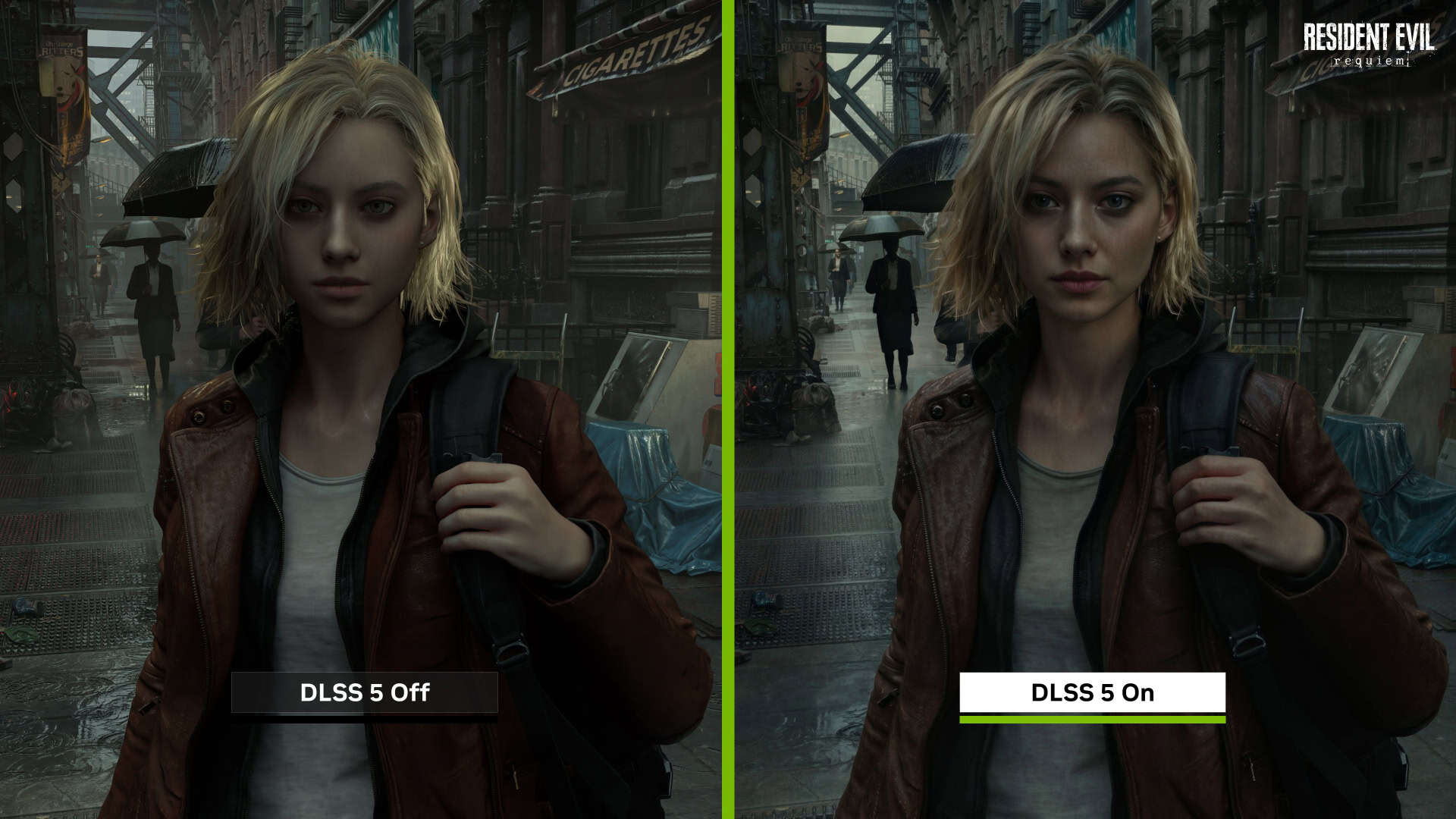
Scrolling through social media the day of NVIDIA’s DLSS 5 announcement was a treat. You couldn’t go more than a few seconds without encountering one of the many “yassification” memes people were rapidly creating to mock the new feature. After several memes in a row, I decided to check NVIDIA’s announcement to test it out myself. As I was going through all of the examples, from Resident Evil: Requiem to Starfield, I noticed something that made me keep going back and forth between them. For the male characters, the DLSS 5 filter gave them a more photorealistic effect, enhancing the features that already existed within their character design. For the female characters, however, the differences were more significant. Lips were a little fuller, eyes were bigger, and makeup was a bit stronger. But the most noticeable difference was Grace from Resident Evil: Requiem. DLSS 5 seemed to give her lip and cheek filler, a whole new and slimmer jaw, and well-defined eye makeup. She looked like a completely different person.
This reminded me of something I’d seen before. During one of my Mass Effect playthroughs, I was looking for mods when I came across an overhaul of female Shepard’s face. It had several options to choose from—some with more or less makeup—but all of them softened her features, making her look younger than her original design. The modification and erasure of specific features in female characters is not new in the gaming community—a quick scroll on Nexus Mods on any game will reflect the disparity between female and male appearance mods. Once DLSS 5 releases, though, modders may no longer need to be the ones enforcing these misogynistic norms.
NVIDIA’s press release describes DLSS 5 as a real-time neural rendering model designed to produce photorealistic lighting and materials. The backlash from both players and developers was immediate, and Jensen Huang’s response was simply that we are all “completely wrong,” as reported by Tom’s Hardware. In a conversation with YouTuber Daniel Owen, reported by IGN, NVIDIA GeForce Evangelist Jacob Freeman specified that “DLSS 5 is trained end to end to understand complex scene semantics such as characters, hair, fabric, and translucent skin.” What Freeman’s explanation doesn’t specify, though, is what the model is trained to consider realistic. This matters because with DLSS 5, we don’t know what standard of realism is being used, and DLSS 5 is being applied universally. NVIDIA has specified that developers will be able to control the feature, yet developers and artists at Capcom and Ubisoft were completely unaware of the demo, as reported by The Gamer. Whatever standard of femininity is being ingrained in DLSS 5 will be reflected in every female character. As a result, we have a Grace that resembles the many AI-generated women that have now populated social media.
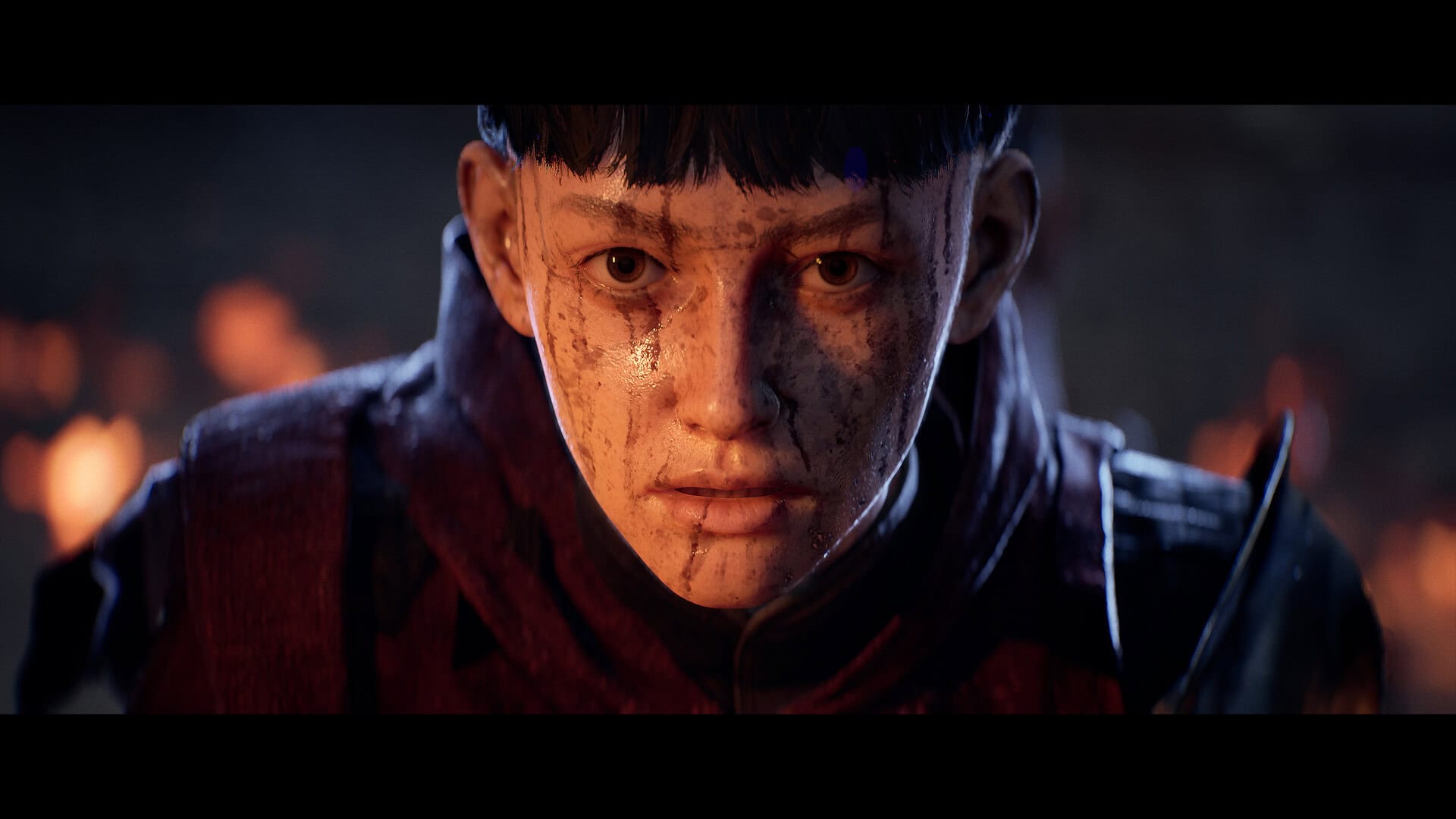
As a female player who usually plays female characters, I’ve become used to the misogyny that comes from being part of a male-dominated community. Female characters are only allowed to exist in games under specific conditions, all of which are shaped by the misogynistic expectations that women experience in the real world. All of them come down to one single characteristic: desirability. Female characters are allowed to take up space only when they are desirable, and if that’s not what they are considered, the backlash is loud. A most recent example of this is the newly released game 1348 Ex Voto, which experienced a massive wave of online hate from users on social media. The main complaints focused on the appearance of Aeta, a young female knight and the main protagonist of the story. Her androgynous look gathered a wave of misogynistic hate, with users pointing out that her hair wasn’t feminine enough and that she wasn’t wearing any makeup.
DLSS 5 is concerning for a number of reasons, but I am particularly concerned about the potential that it has to perpetuate the same misogynistic standards that women, both real and virtual, are subjected to. When AI technology––trained on data shaped by the same cultural biases––decides what a woman should look like, it reinforces the idea that anything outside this standard is unacceptable. As much as I dislike the FemShep mod, this was still created by an external party that is not involved with Mass Effect or BioWare in any capacity. DLSS 5 is bringing this bias into the infrastructure of games themselves.
As a female player, it is chilling to watch technology that has the power to reshape what female characters look like in a community that is already alienating to women. With DLSS 5 set to release later this year, I’m nervous about how this could impact the representation of female characters moving forward. There have always been misogynistic standards for women; that is no secret. I do wonder how comfortable we are with having this technology define what women look like and whether that becomes something we can’t challenge and only accept.
For more opinions and news on Nvidia’s DLSS technology, keep checking GameObserver


 ObserverCrew Picks
 bserver
 bserver