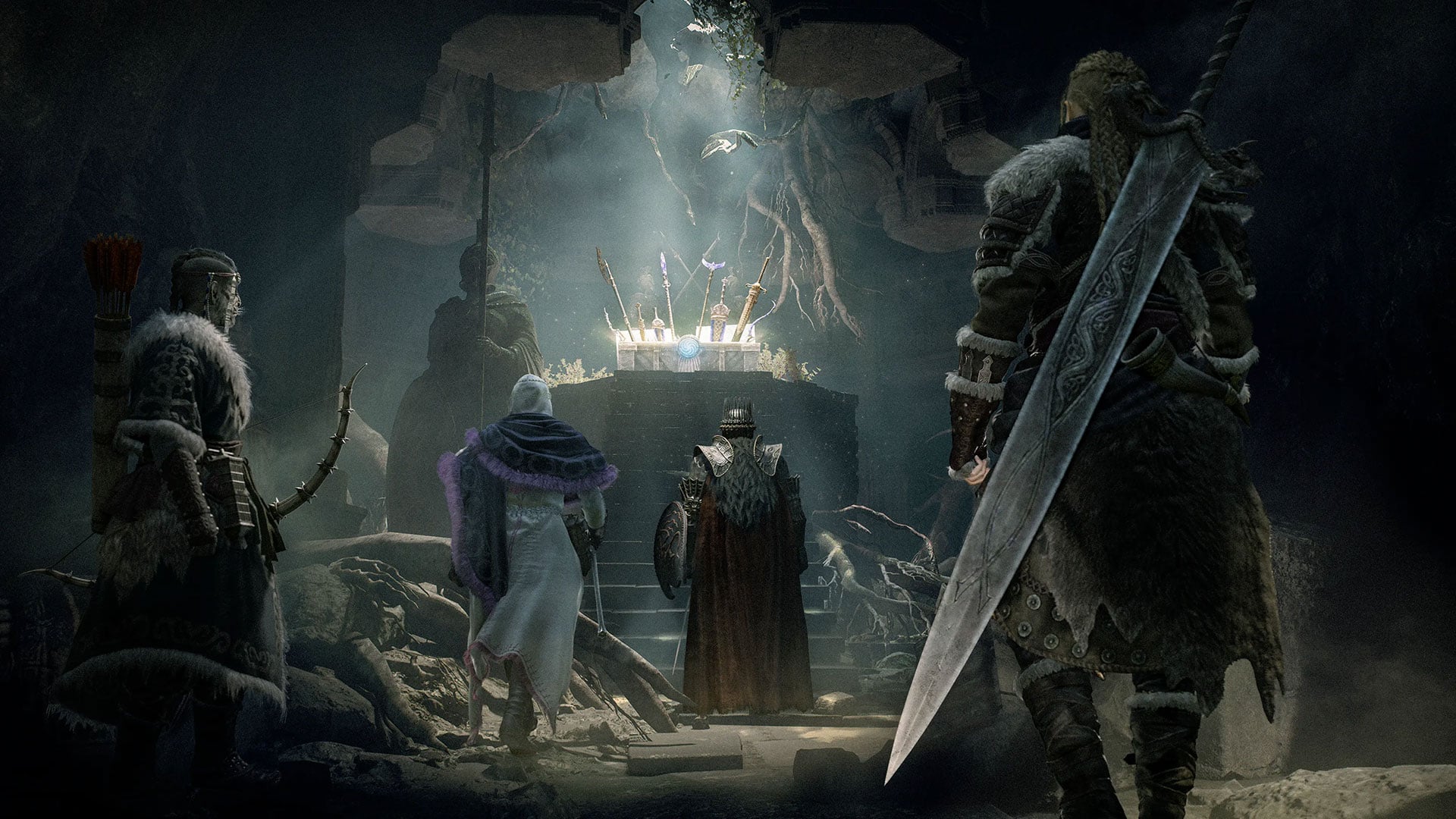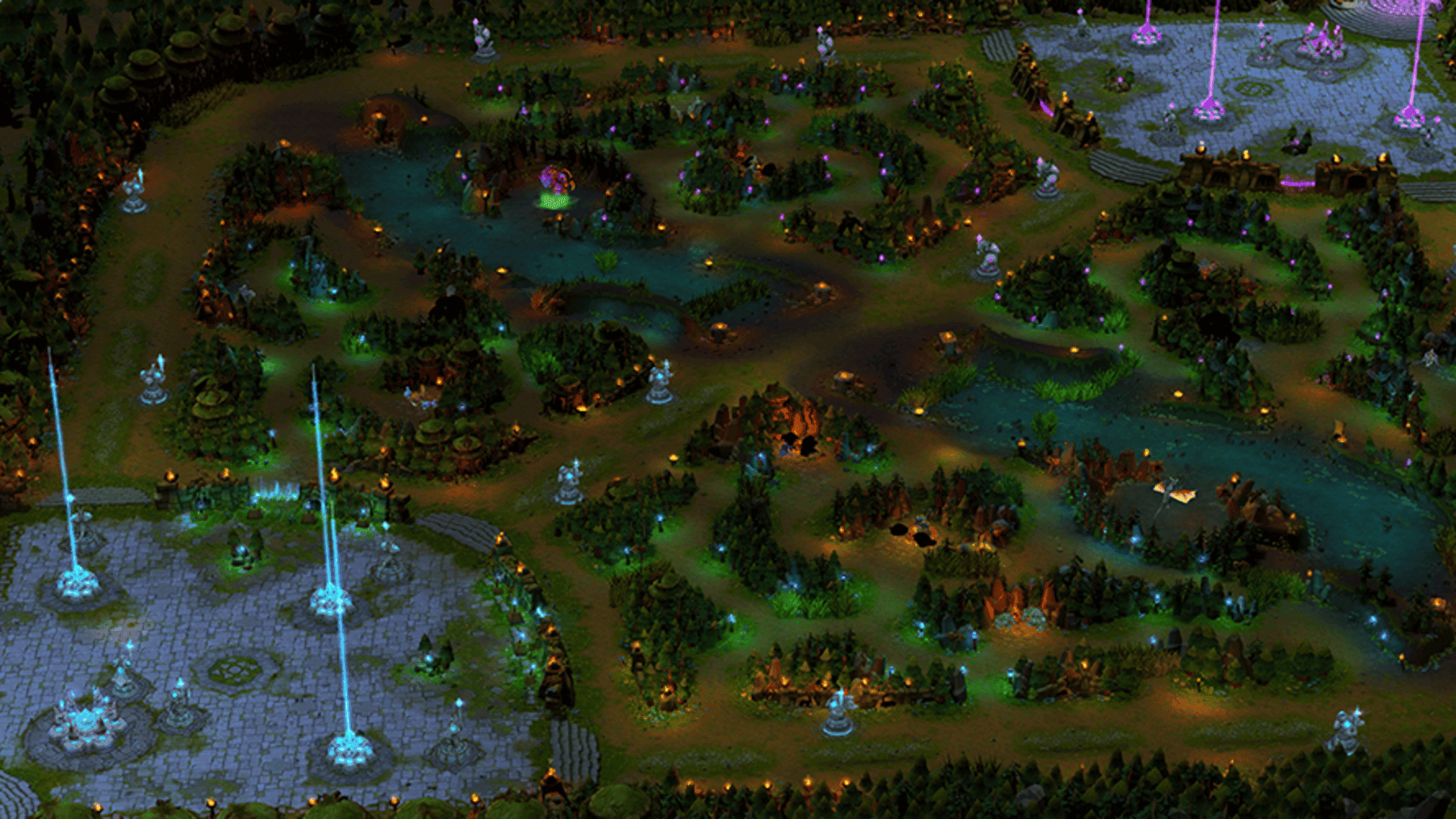
Roguelike deckbuilders often challenge you on making sure every card deserves its spot. Whether it contributes to your strategy or gets you out of a tough situation, it must do something. Moonsigil Atlas adds another dimension to plan for: the space it takes up on the battlefield. Developed by Snake Tower Games and published by Twin Sails Interactive, your main restriction on playing cards is physical space.
The story is simple, you are one of three characters assigned to stop powerful titans from destroying your world. You must use your spells to not only push back the threats but ensure they never come again. Along the way, you strengthen yourself with various enhancements in the form of cards. Should you fail, you can always try again because the fight is endless. It’s a typical story you likely won’t focus on since the real appeal is in the cards.
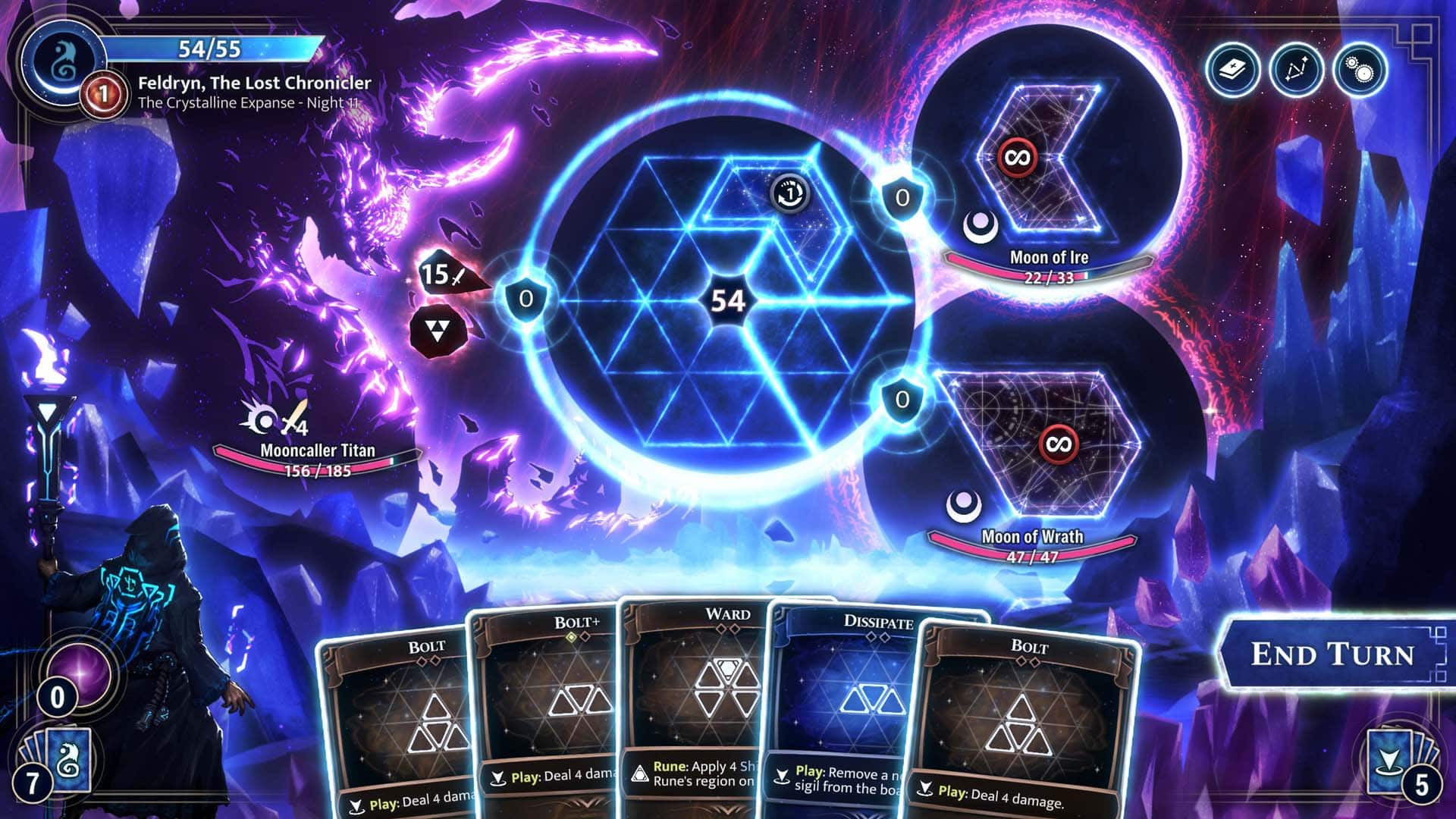
You do not pay a mana cost when casting your cards, allowing you to play as much as you want. However, each card has a shape and your battlefields have a limited space (usually a hexagon). Every card you play must have their shape fit in the hexagon while factoring in enemy placements or your existing cards. Recklessly playing cards without care for their positioning results in the early end of a run.
I liked the concept of paying a card’s cost in the form of shape positioning. Adding that extra dimension of planning made the game more challenging; I couldn’t just play cards in a combination that looked appealing in theory, said combination had to fit on the board as well. Enemies would also try to sabotage me in several ways and I would need to adapt as some enemies make you fight for board space or consider which threat to deal with first.
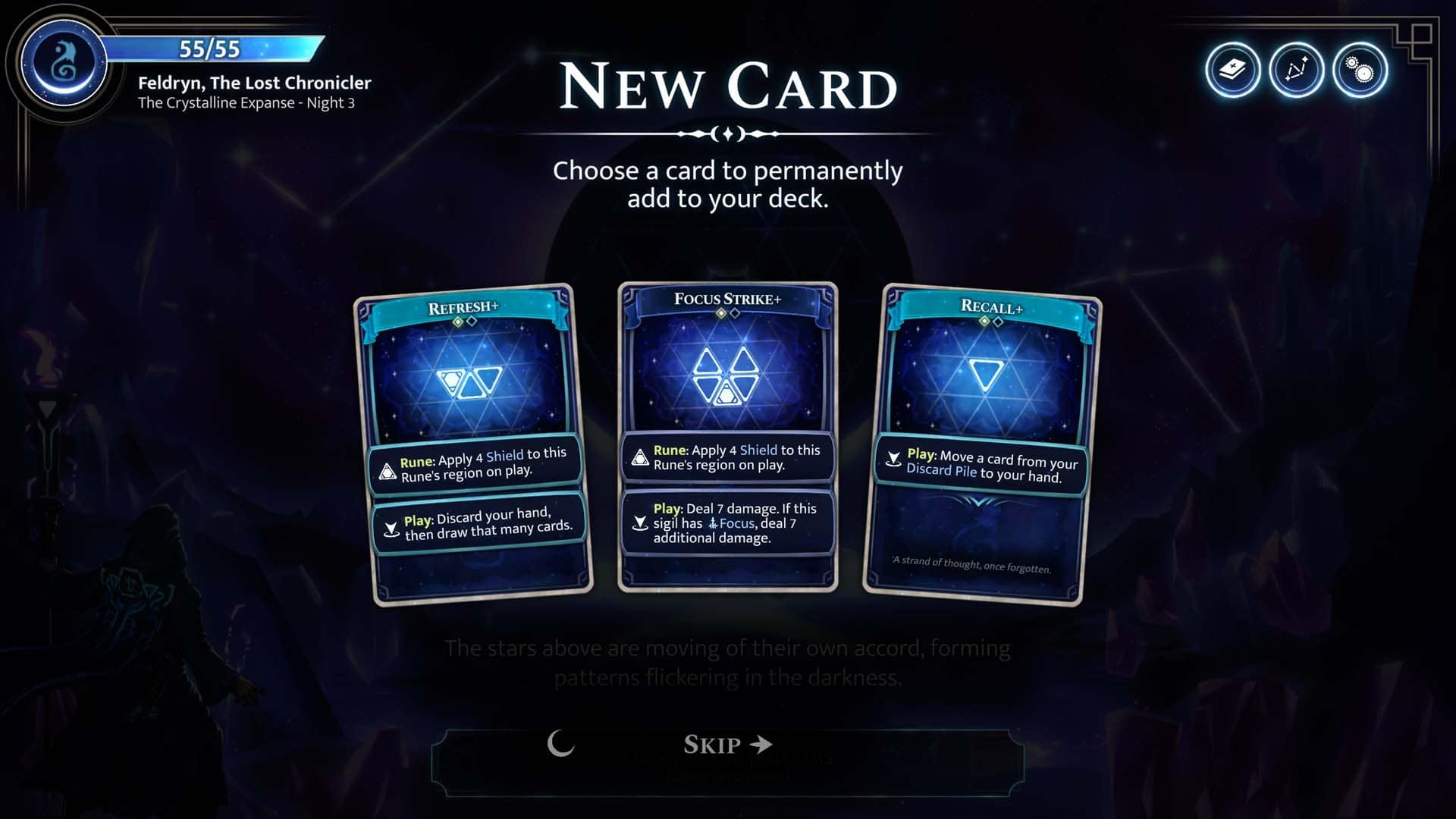
As you get closer to a titan, there are opportunities to obtain new cards or upgrade their effects. Some upgrades allow you to “shrink” a card’s shape, allowing you to fit them in more complex shape structures. While it may not seem like much, I started to see strategies form after a few runs. Concerns about shapes became a key part of my strategy rather than just paying mana for damage like in other games within this genre.
The disadvantage is that there’s a learning curve to using shapes effectively; putting shapes on the board isn’t hard, but there’s also a lot that isn’t explained well. One such example would be cards that become stronger when the board is filled. What that means is that every open spot on the board should be filled instead of using all of your shapes. Since it’s never defined what “board is filled” means, it’s easy to lose some runs because you didn’t know what it meant. It’s part of the learning process, but I did find it frustrating as bosses typically require cards earned from high mastery levels to overcome. Sometimes the tooltips don’t appear when you scan over a card and you must take a chance. Building a deck properly takes practice and I had several failures just to figure out the intricacies. It’s not that I hated the idea of failing as every failure contributes to better mastery. It just felt like learning shouldn’t be as painful as it ended up being.
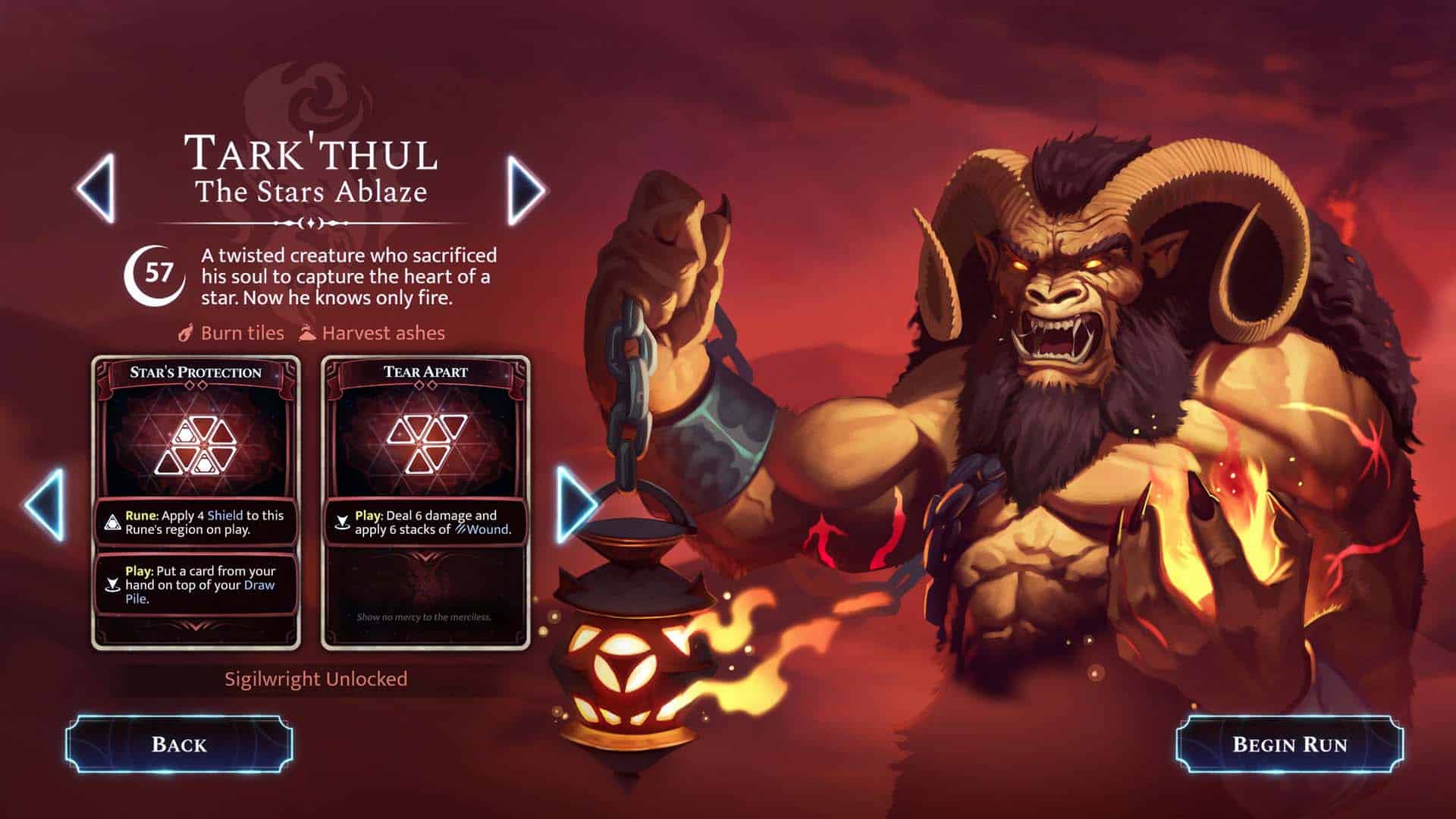
Moonsigil Atlas is a challenging roguelike deckbuilder to learn, but the dimension of physical space is fun to work with. You consider how your cards interact with the enemies while competing for board dominance. This can be tough to master, especially with card effects and enemy tricks working against you. It’s a game that makes you put on your thinking cap and makes you consider every move.
Victor reviewed Moonsigil Atlas on PC with a provided review code. This review is based on the version of the game available at the time of writing and our score will not be changed.
- Score
- 7/10 SOLID - GAMEOBSERVER RECOMMENDS
- Summary
-
Victor says: Moonsigil Atlas adds a new dimension of strategy with its shape dynamic. You must consider how your placement affects your ability to respond to enemy assaults. It's not the easiest deckbuilder to learn and there will be frustration, but stay the course and you can spend hours finding the strategies that work for you.
- More
- GameObserver's Review Policy



 ObserverCrew Picks
 bserver