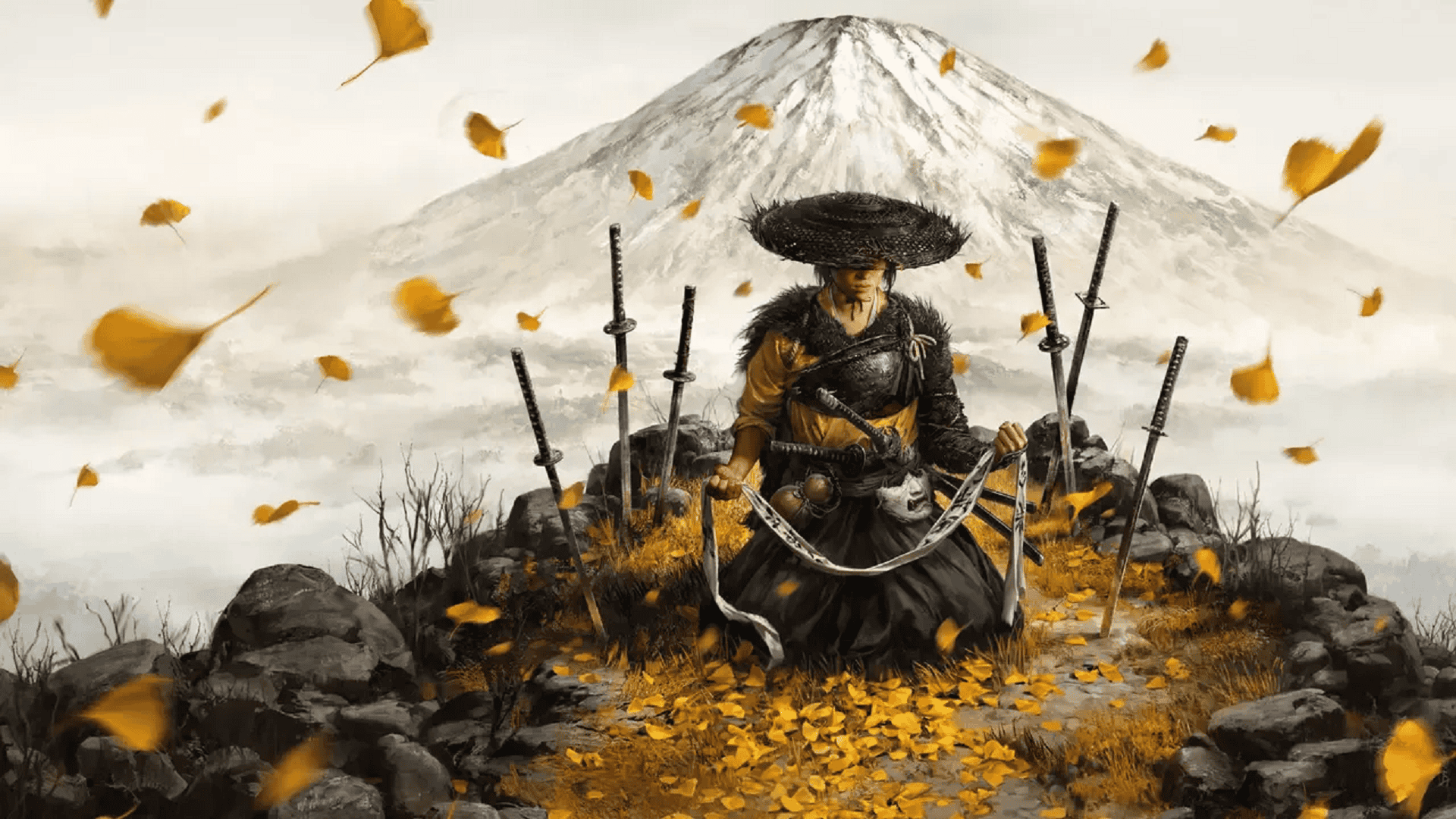
“In the words of the ancients, one should make his decisions within the space of seven breaths… It is a matter of being determined and having the spirit to break right through to the other side.” – Yamamoto Tsunetomo, Hagakure
Few games of the last decade have moved me as deeply as Ghost Of Tsushima. It brought together the right level of visual pageantry, narrative sweep, tense stealth situations, and blood-soaked samurai action that felt right out of a Kurosawa film. It legitimately was not merely a game, but an experience. So how could Sucker Punch top that? It seemed like such a ridiculously high bar they had to clear, and they’re the ones who set it! And yet, Sucker Punch has come back with Ghost of Yōtei, they have unquestionably cleared that bar, and they’ve made it look easy.
Ghost of Yōtei takes players to the northern reaches of Ezo (known today as Hokkaido), centering on Atsu, a swordsmith’s daughter pinned to a burning ginko tree with her father’s sword and left for dead by the maruading “Yōtei Six,” a band of brigands led by the renegade samurai Saito, after they murdered her parents. Surviving the attack and her injuries, Atsu goes south for a time, becoming a mercenary who fought in the Battle of Sekigahara before coming back home on a mission of vengeance. With a sash containing the names of the Yotei Six around her waist, Atsu journeys across Ezo, learning new weapon techniques, befriending the locals who suffer under Saito’s brutal regime, and becoming a legendary warrior with an ever shortening list.
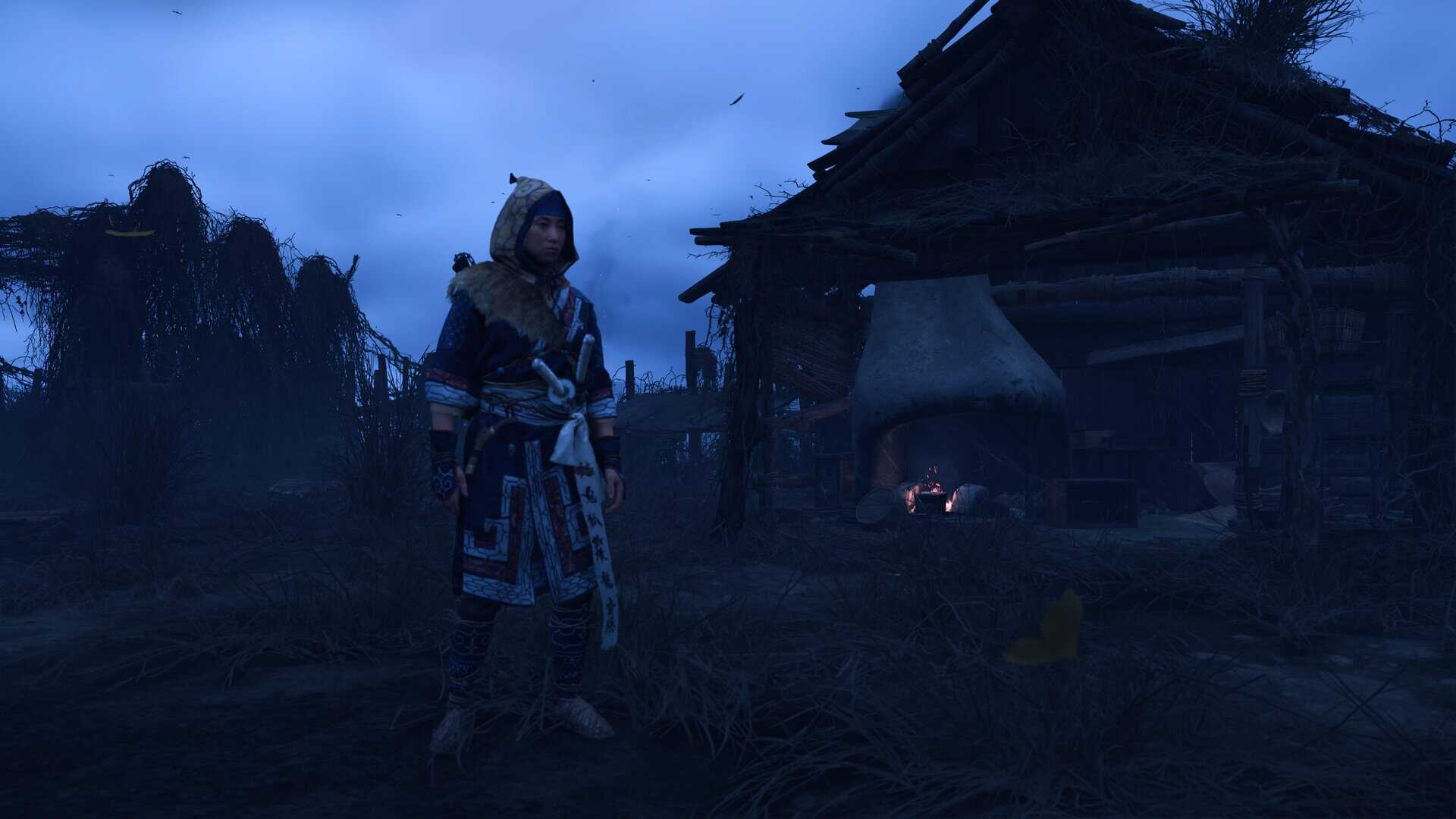
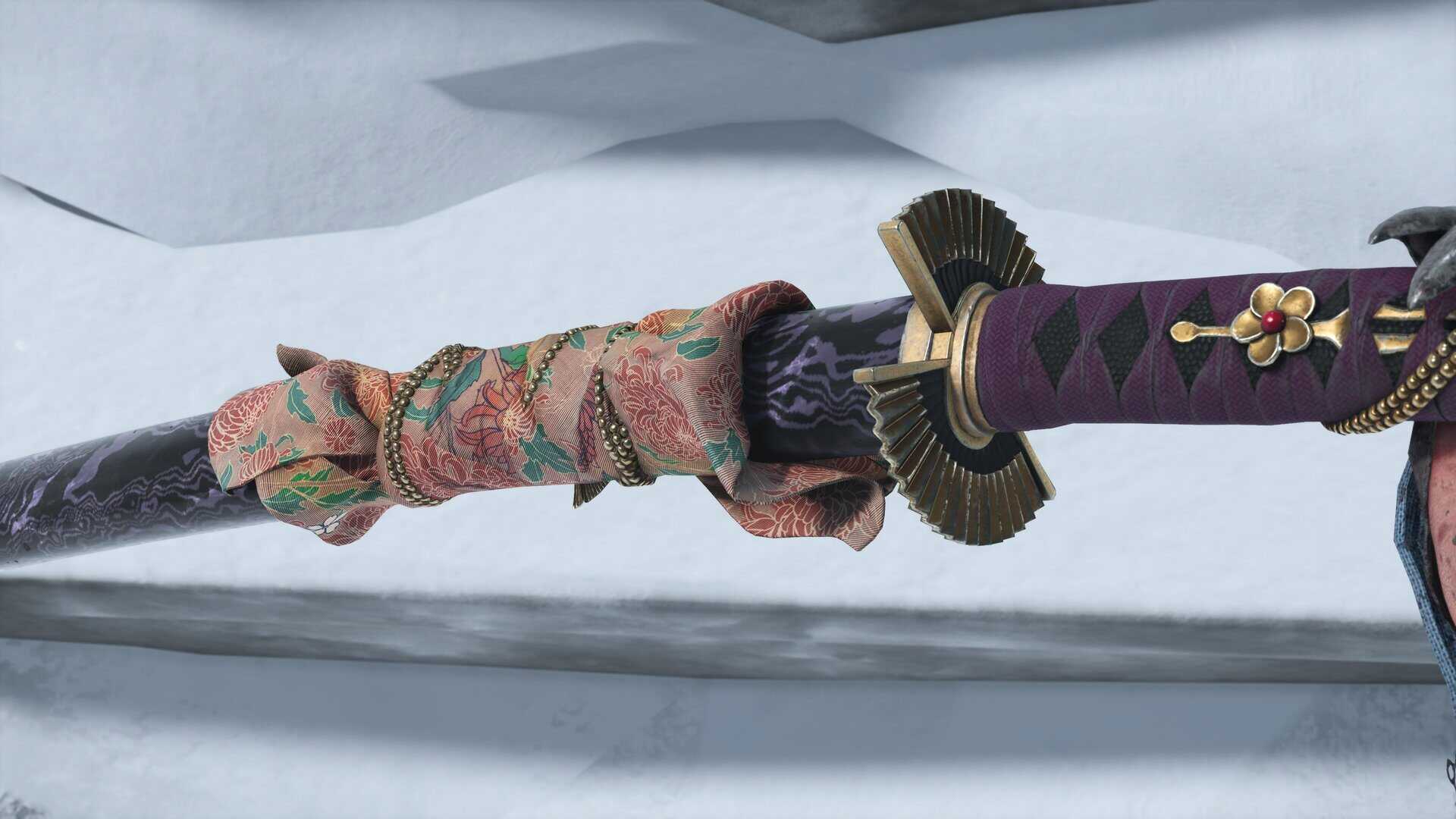
Even on a base Playstation 5, Ghost of Yōtei looks absolutely amazing. The variety of environments on display in Ezo matches or exceeds the work Sucker Punch put in to make Tsushima come to life. Dominating the landscape is the snow-capped volcanic cone of Mt. Yōtei, a signpost that one can almost always see and recognize, making it difficult to truly get “lost” in the sprawling map. Rolling grasslands, thick pine forests, frigid alpine areas, and otherworldly sites where legendary weapons and armor can be found have an almost handcrafted attention to detail. Combine that with equally intricate details on artifacts, weapons, and armor, whether yours or your enemies’, and you have such a feast for the eyes, you start to wonder if it’s possible to have visual surfeit. As with the first game, Ghost of Yōtei brings back the black-and-white “Kurosawa Mode,” adjusting frame rate and changing the visuals to mimic classic samurai films like Yojimbo and The Seven Samurai. But if you don’t want to lose all the very pretty colors, and if you have a fondness for red, a second cinematic modification called “Miike Mode” will bring you an equally different experience, calling to mind the works of Takashi Miike. Expect lots of blood and tight focus on Atsu as you play.
While you do come across a lot of faceless goons, and a number of NPCs who seemingly share the same face at times, the overall quality of human characters is quite good. The various members of Atsu’s “Wolf Pack” and the big bads of the Yotei Six have distinctive features, the better to easily recognize them and connect with them as characters. The only quibble I have is one which also bedeviled Ghost Of Tsushima: the general quality of animals. Aside from horses and deer, the wildlife in Ghost of Yōtei generally has a slightly “ratty” appearance, the fur not quite as well rendered as one might see in other titles (Elden Ring comes strongly to mind here), the joints just a little too pronounced. It’s a small complaint, and it doesn’t detract from the “hell, yeah!” moments when a wolf springs out of nowhere to save your skin from one of Saito’s bully boys.
The soundscapes of Ghost of Yōtei continue Sucker Punch’s tradition of high-quality music, effects, voice acting, and environmental audio. Musically, we’re treated to another round of period-appropriate pieces, but this time we’re a little more involved, as one of Atsu’s basic abilities is playing on the samishen. Learning new tunes is part of the work of exploring Ezo, perhaps a little more simplified than we might have wanted, but it still hooks you in. Of course, if you maybe want something a little different, Sucker Punch decided to add an audio modification, giving us “Watanabe Mode” with a collection of lo-fi beats from acclaimed anime director Shinichiro Watanabe (Samurai Champloo, Cowboy Bebop). It really does change the whole vibe of exploring, though not so much the actual combat sequences. Beyond the music, the voice acting delivers the same intensity and richness that Ghost Of Tsushima did, only with different characters. We get a good sense of Atsu’s character through her conversations at least as much as through her actions. Each of the Yotei Six feel perfect for their particular roles, giving the right amount of general menace and specific characterization for their individual identities. And the various personalities which comprise the “Wolf Pack” are just tremendously fun to deal with, though some of them quickly lose focus once you’ve upgraded certain pieces of equipment to their maximum. Environmental audio, as with the first game, is executed almost flawlessly. Wind, animal sounds, the crunch-shuffle of footsteps through heavy snow, the rumbling of thunder and the stacatto percussion of sliding down hillsides, all of it adds to the richness of the world. If there was a badly spoken line or a ill-recorded sound effect, I have yet to find it.
Sucker Punch had a pretty well dialed in model for gameplay before, and Ghost of Yōtei has only made the smallest of changes. Yet those changes lead to some incredible differences. Instead of the “stance” system in Ghost Of Tsushima, we get a broad array of different weapons to work with, each one with their strengths and weaknesses. Obviously, your katana is your general purpose sort of weapon, but each weapon feels appropriately lethal. Each weapon is designed to counter a different sort of weapon, but once you’ve defeated a “preferred” enemy, there’s nothing to say you can’t go after other enemies with that weapon. The fight might take a little longer, but each one just feels good to use.
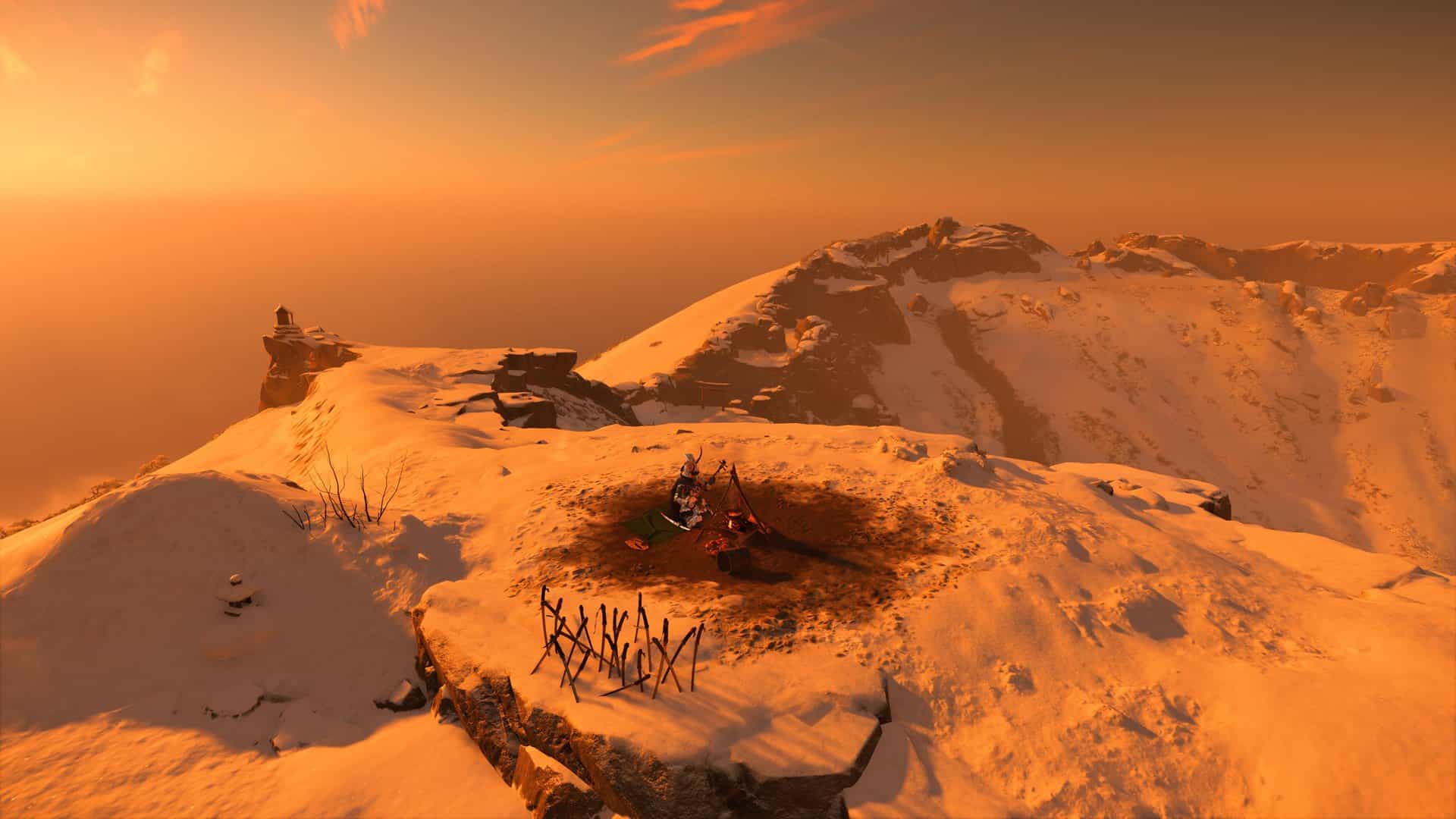
Roaming around Ezo, either on foot or on horseback, is just as effortless as it was roaming Tsushima. That said, there are a few new wrinkles. Previously, running around on horseback was certainly a blast. Now, there’s a new wrinkle, as ronin who are looking to cash in on your ever-increasing bounty can string ropes across the road or between trees in the woods to trip you up. At the same time, there’s something of a boost you can get by running through strips of pampas grass or flowers, or by picking up natural resources as you fly by. There are still hot springs around and shrines to visit and art to make (in the form of sumi-e inkbrush paintings instead of haiku), but they’re distinctly different from that first iteration. Ezo is not Tsushima, and it shows. Unlike the first go-round, you don’t have to quest to get your grappling hook or unlock its ability to pull apart blockages. There’s a great deal that Ghost of Yōtei does to get you right into the action. Tutorials are generally handled pretty well, and they’re all woven into the environment seamlessly. No weird “smash cuts” to completely unconnected training areas, though a few of the early tutorials do operate in flashbacks.
Oddly enough, the narrative pacing in Ghost of Yōtei is a little different. Not “off” as such, just different, and it perversely seems to discourage stealth to some extent. Compared to Jin Sakai, Atsu has a distinct “come at me, bro!” sort of energy. The stealth mechanics are there, unquestionably, and just as well done as the first game. But you get the feeling they’re almost secondary, even optional to some extent. You almost want to get into standoffs and straight assaults than pick people off one by one. If Atsu walked into a camp full of Saito troops and casually name-dropped fighting alongside Tokugawa Ieyasu before dismissing her foes as not worth killing, it would feel completely believable.
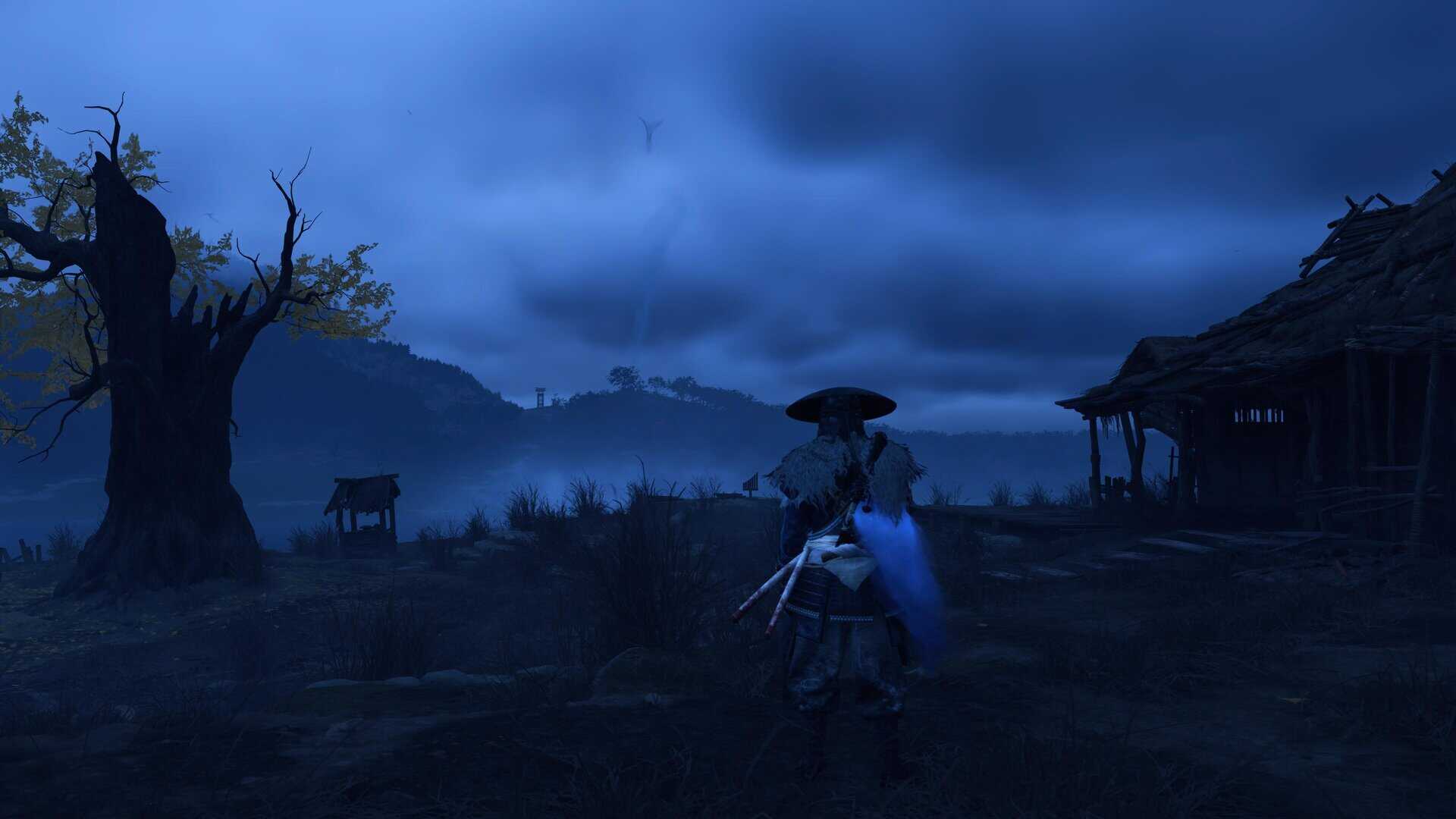
This is probably the biggest different between the two titles, and it’s what makes both of them so damned good. Jin’s agony is being forced to abandon everything he knew to effectively fight against an enemy who knows the rulebook. Atsu’s agony is that another day has passed and the people who murdered her family are still breathing. Seeing Atsu navigating her personal pain and growing past it is just as satisfying as it was to see Jin make peace with the fact that he’s fighting the good fight even if he’s not doing it the “right” way. The various side quests and enemy camps to clear out definitely have a more hardboiled tone to them, highlighting Atsu’s mercenary background compared to Jin’s “mysterious stranger” routine. It feels less like a guerrilla campaign and more vengeful, the sense that you’re punishing your enemies and ratcheting the noose just a little tighter with each victory, almost literally a death of a thousand cuts. There are, of course, setbacks. There are surprises and twists and turns aplenty (which I don’t want to spoil in the slightest). And every one of them just makes the story that much better.
Sucker Punch could have phoned it in with Ghost of Yōtei. They could have just genderbent the main character, slapped some different signposts in spots, and called it good. But they didn’t, and thank God they didn’t, because this is one of those rare sequels which is genuinely better than the first game. And that’s a hard thing to pull off even without the first entry being Ghost Of Tsushima. If you haven’t grabbed it yet, do it now. It should barely take one breath, let alone seven, to make that decision.
Axel reviewed Ghost of Yōtei on PlayStation 5 with his own bought copy. This review is based on the version of the game available at the time of writing and our score will not be changed.
- Score
- 10/10 Masterful - Axel Recommends
- Summary
-
Sucker Punch takes you back to ancient Japan, telling an elaborate tale of bloody vengeance, and has you loving every single moment of it. Ghost of Yōtei isn't just an excellent game, it's quite possibly the perfect sequel.
- More
- GameObserver's Review Policy

 ObserverCrew Picks
 bserver
 bserver