My first contact with the world of alpine-style mountain climbing came in the form of The Summit of the Gods by Jiro Taniguchi, a masterful manga adaptation of the book by the same name by the author Baku Yumemakura. One thing I gathered is that stories of alpine climbing, fact or fiction, are magical, unexplainable. They feature characters whose motivations are wholly unique to the lifestyle. The mountain claims souls, morphs them to reflect its own nature. As the reporter Fukumachi stares at the de facto protagonist of The Summit of the Gods, Habu Joji, he knows that the only way to understand the mind that captured him is to follow. To let the mountain tell its story through the two of them.
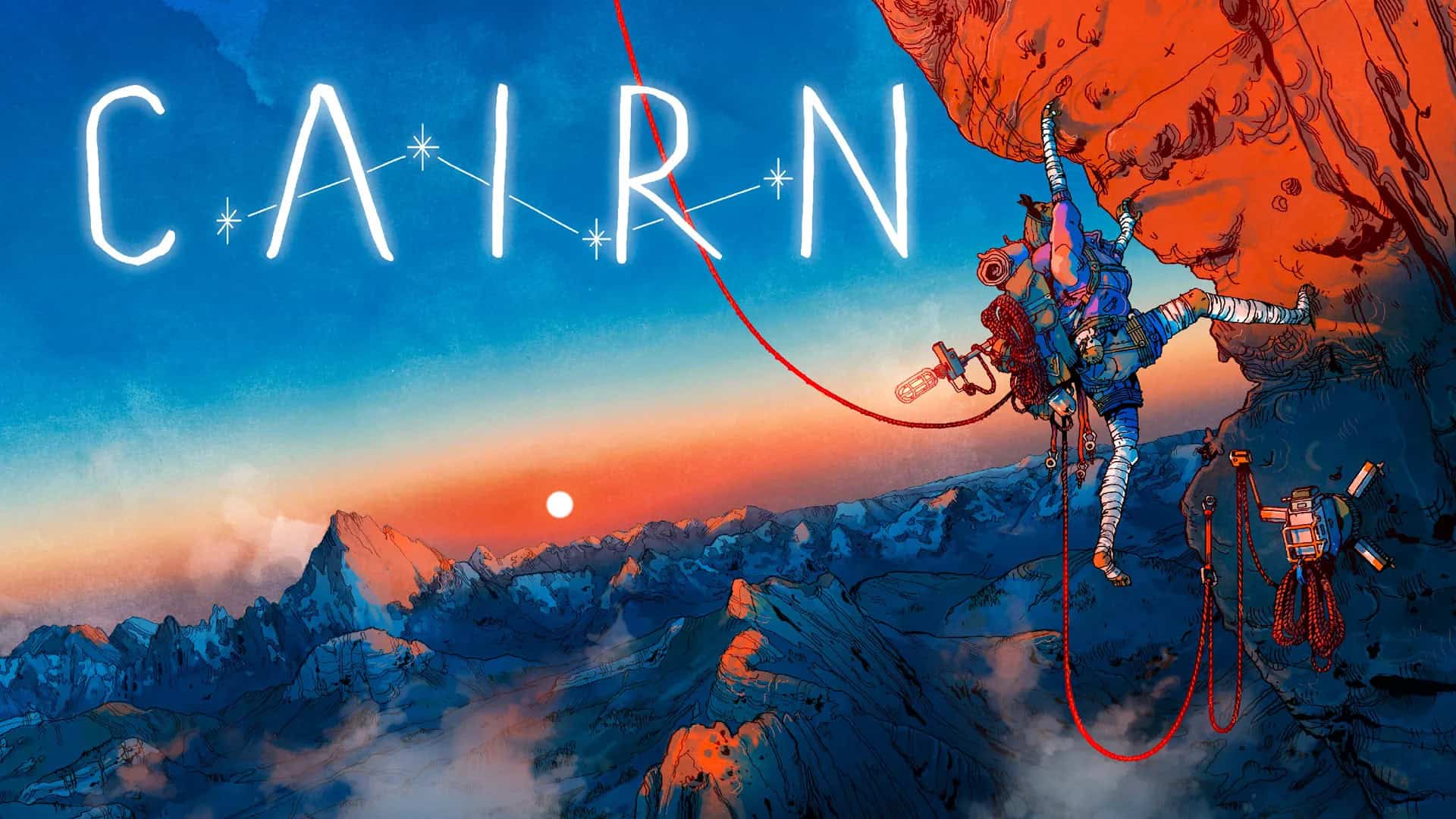
To facilitate that magic, The Game Bakers’ Cairn employs thick comic-like outlines in its art and a sparse use of ethereal, yet energetic music. It’s clear it wants to elevate itself above the confines of purely realistic climbing, but not far enough to disrespect the world it draws from—one already bordering on fantasy. I cannot stress enough just how ripe for stories the minds of alpine-style climbers are. Everyone has a different reason for chasing the peaks with fewer and fewer resources, on harder and harder routes. Sometimes alone.
Cairn is, admittedly, more conversational. Aava sets out to do this climb with the help of only her trusty Climbot, but meets several inhabitants of the mountain Kami as she does. Each stop offers a glimpse into a world close to, but not quite like ours. It was the first piece of friction I felt following my return to the game. Hilariously, Aava seemed to share my feelings as she responded to the first person we met coarsely, and so that particular friction faded quickly.
I had the basics down, thanks to a demo I played months ago—moving each limb individually is not the most common control scheme, but I am known to play some Octodad from time to time—but I expected a grueling, lonely fight against the mountain. Yet, like Fukumachi, I realized the spirit of a climber is just too strong to resist. If it captured me on more than one occasion, no wonder it captured the few that Aava crossed paths with.
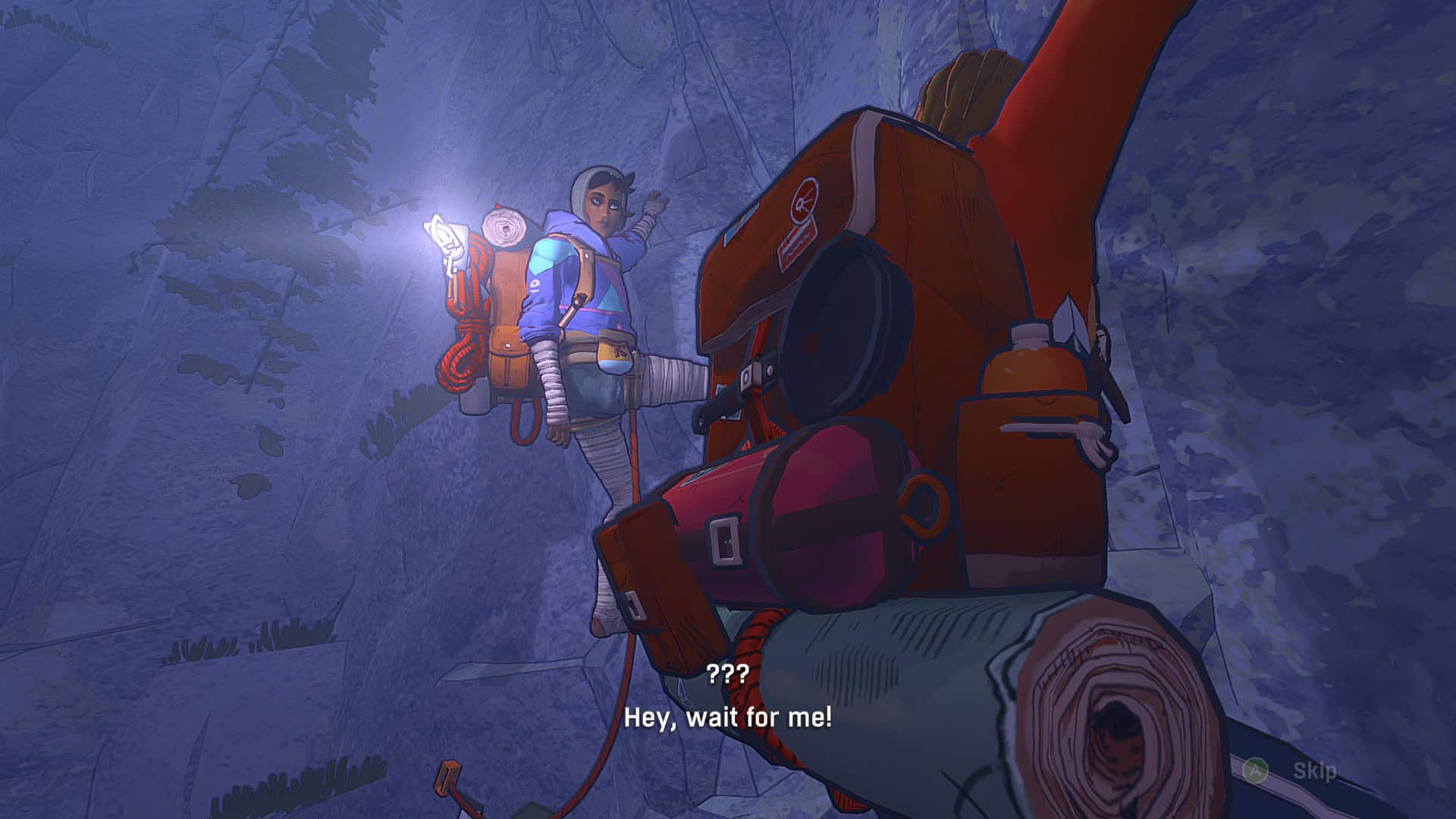
Surprisingly, despite my initial resistance, it works. Cairn does a bunch of interesting things with its story, fully letting what some would doubtlessly wave off as insanity permeate Aava’s character. She speaks of the challenge ahead with an intense reverence and of the world below with anger and near disgust. And so, we tell the story together. The player and Aava.
You get to choose paths, react to sudden rainfall or blasts of wind, and change trajectory as you realize the path you mapped out in the dark is less than ideal. Aava tries to regain a bit of stamina so she can quickly screw in a piton before her body falls limp. Eventually, you both make that mistake, fall, and perish like many before you. Wake up, review your path, and get back up there.
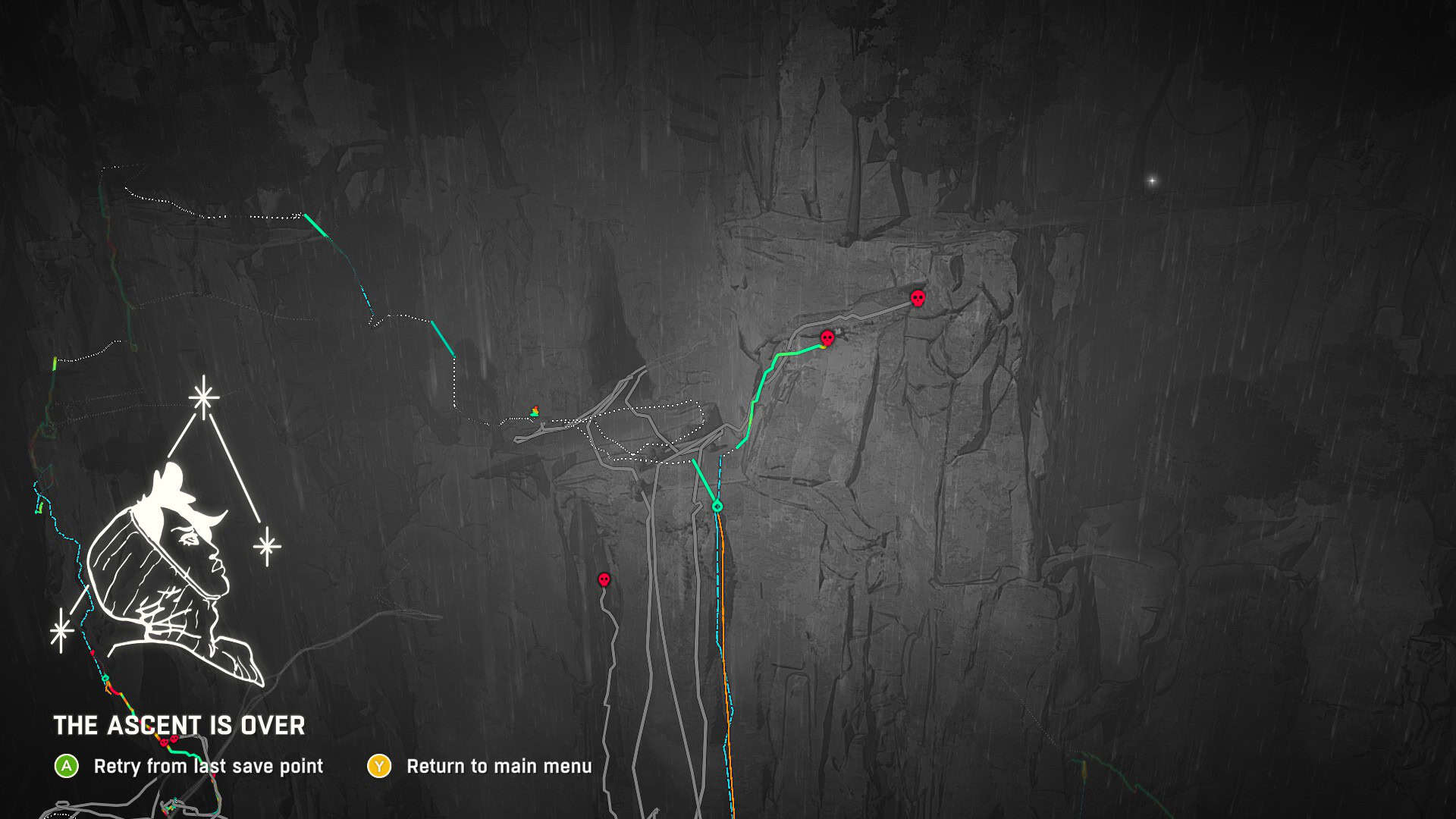
You can find the corpses of others—an unfortunate but crucial part of the climb. On some paths, they serve as markers for other climbers. Nobody is going to bring them down from these heights, after all. Their backpacks may have letters for those they left below, but also the unfinished rations that can carry others just that tad bit higher. Aava never thinks twice about the act. Every climber knows that’s just how it is.
Aava herself clearly comes drastically underprepared. It makes you wonder just how much she knows of the mountain, whether she expected to find food on her journey, or if she truly even expects to reach the top, let alone come back. So, you have to truly scour your environments in search of anything edible. Sources of water are more common, and using the two, you are able to craft recipes in bivouac spots that boost your grip or give you a boost of energy for a while. You can also reheat liquids to counter the ever-increasing cold.
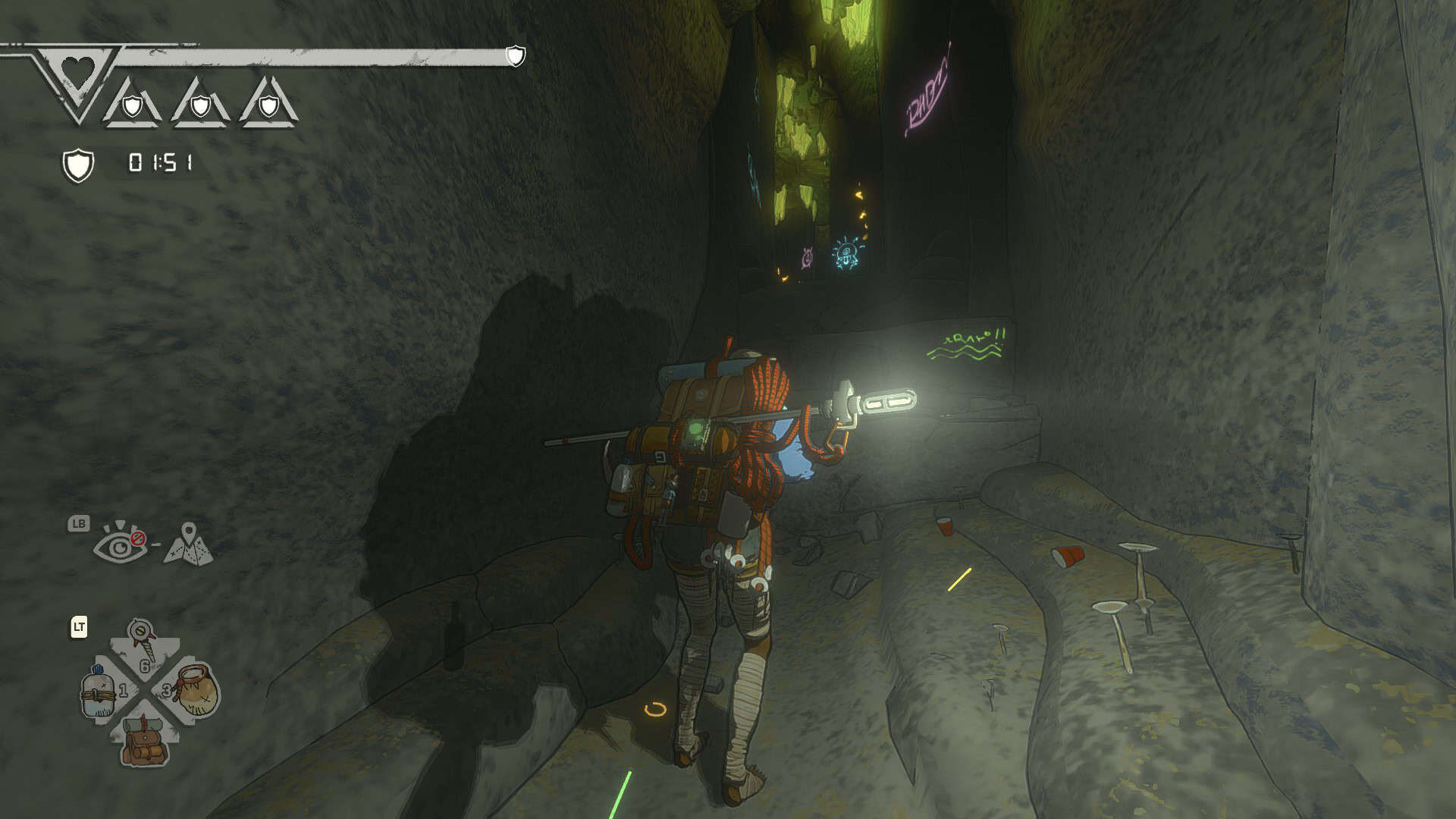
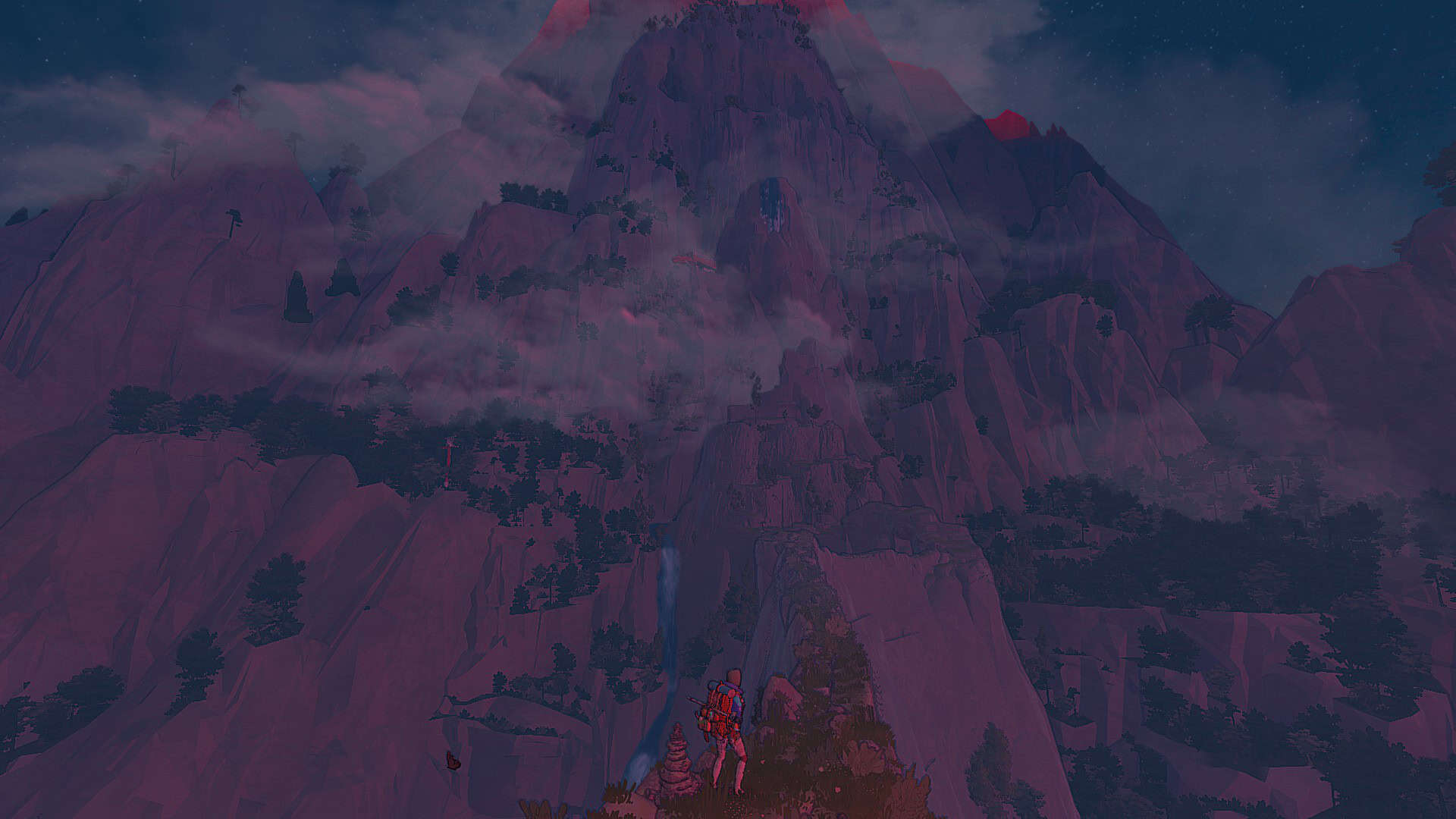
Cairn is best described as a survival/simulation hybrid, with the core being its unique movement system that coexists perfectly with the different meters and the physicality of the survival side. The act of picking a route is challenging enough. Sometimes you can find a map left by previous climbers that details the difficulty of specific routes, but most of the time you are making that decision blindly.
You may, after gaining a few meters, realize that the path ahead is just not viable. Do you pivot to the side, knowing full well you will waste energy, or continue and hope for the best? What if you just lost a bunch of your food for nothing? What if that cave you spotted has an edible plant or, better yet, a dead body with a backpack, and one snack bar that can carry you to the next resting spot? The game is plenty intense as is, but in these moments— growing more common with each passing in-game hour—you may get at least a crumb of the real, mind-bending intensity of a real alpine climb. You may just “get” Aava.
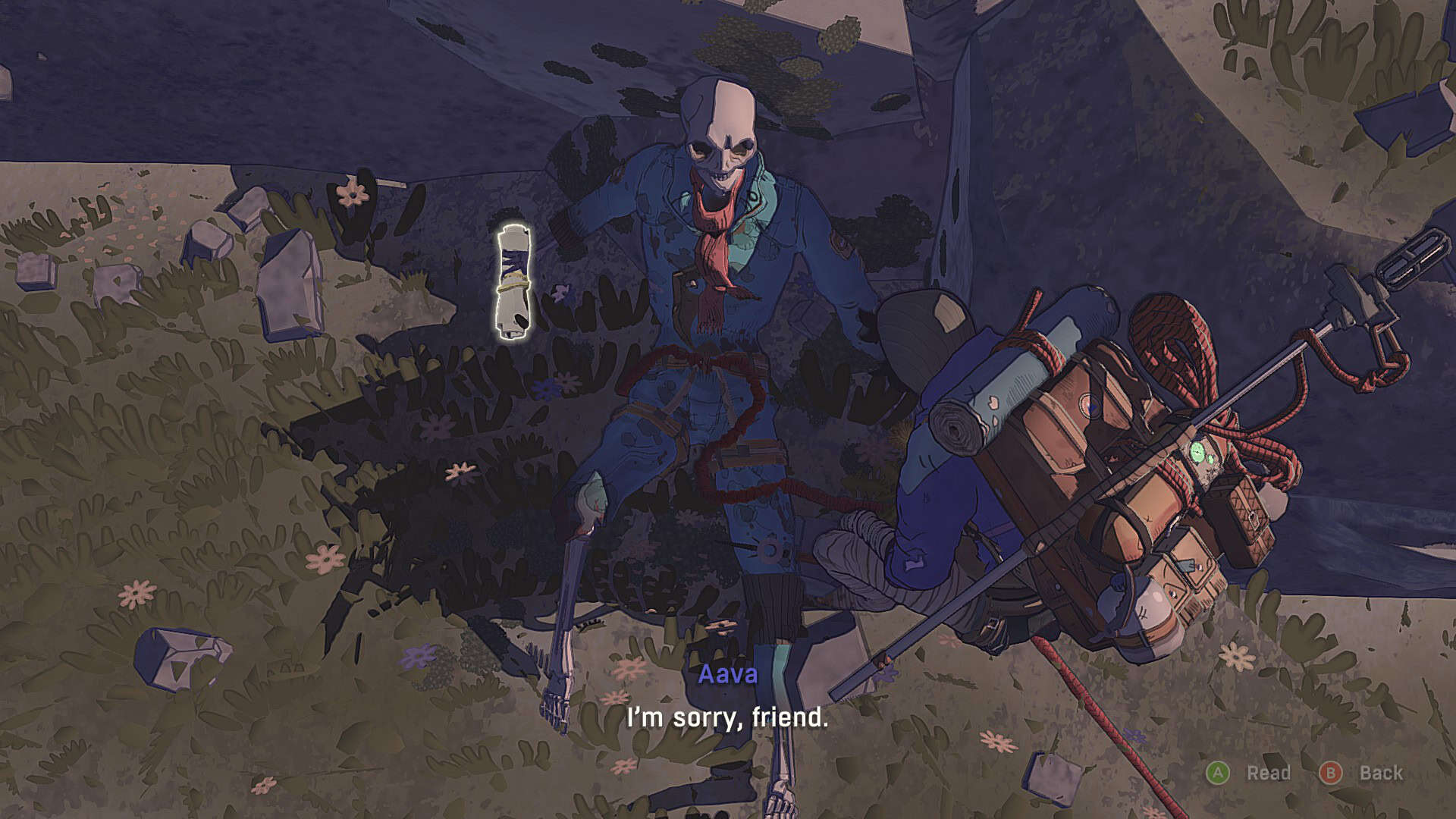
Truthfully, while a great concept, I barely ever struggled with my resources. The mountain did its best to take from me, but even though I would not load my save unless I absolutely had to, a death provides so much information that I ended up rarely having to use a bunch of its interesting mechanics, like recycling to get more grip-strengthening chalk, or non-bivouac rests that would regenerate my health at least a little on a ledge I’d barely reach.
I have to assume the real experience comes from the game’s hardest difficulty: a permadeath mode called Free Solo. It took me fourteen hours to complete my first ascent, under 20 deaths, and it does feel like I learned the path a good deal. The mountain still calls. I have already started that challenge, and with a few close calls under my belt, I worry I might not make it. That’s what it’s all about.
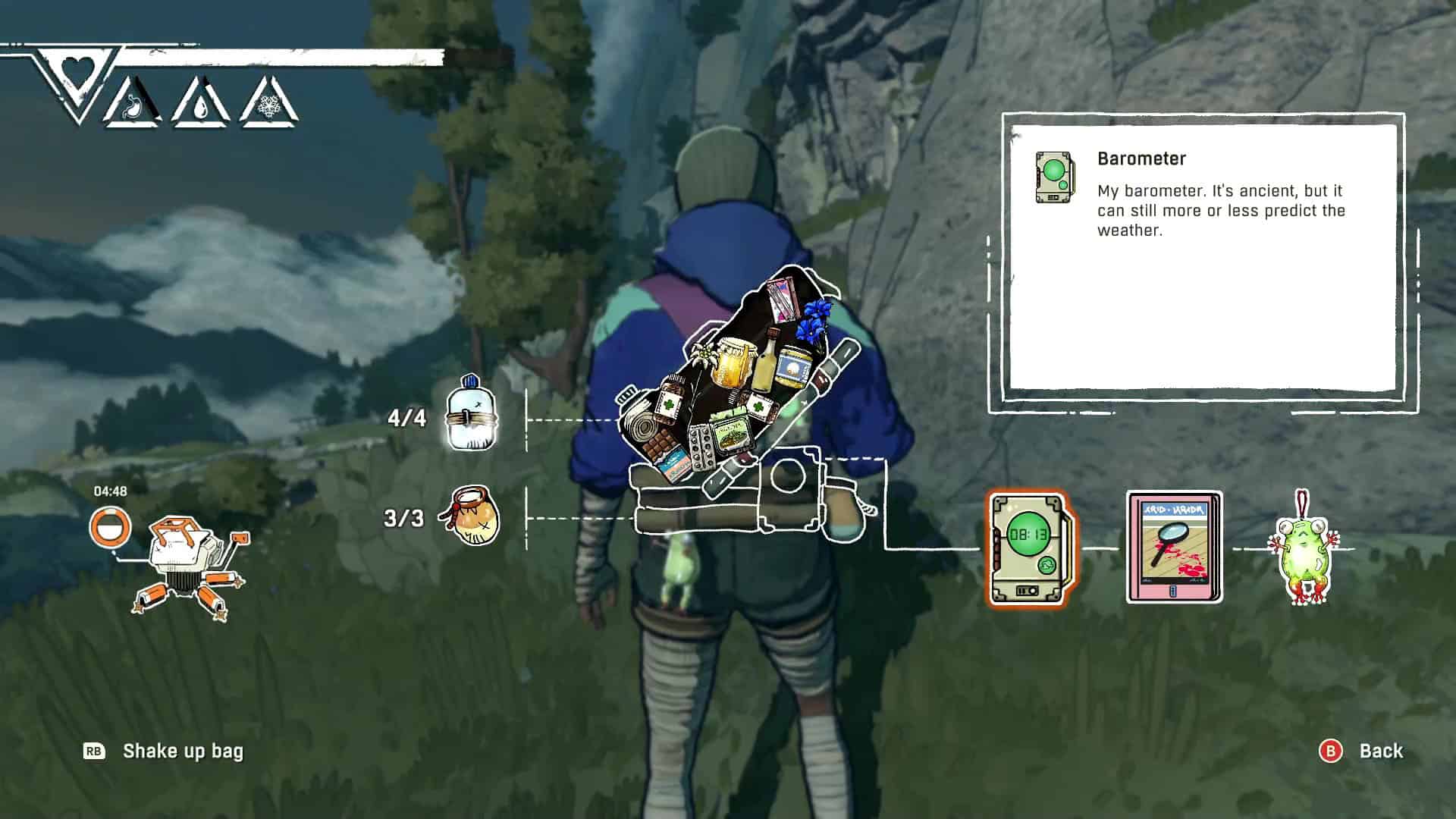
The core movement is satisfying enough that I want to keep trying. I once again pick the path, find cracks in the wall Aava can grab onto or hoist herself up from, rinse, repeat. It’s a rhythm disrupted only by nature and the limits of Aava’s body, which are quite high, mind you. She can’t quite stay in an uncomfortable position for too long, so you have to find ways to get her upright fast enough before she loses her grip and plummets. She can pull off some impressive feats at heights I can’t even begin to comprehend, only to sit down in her tent and smile as she warms up some chocolate milk.
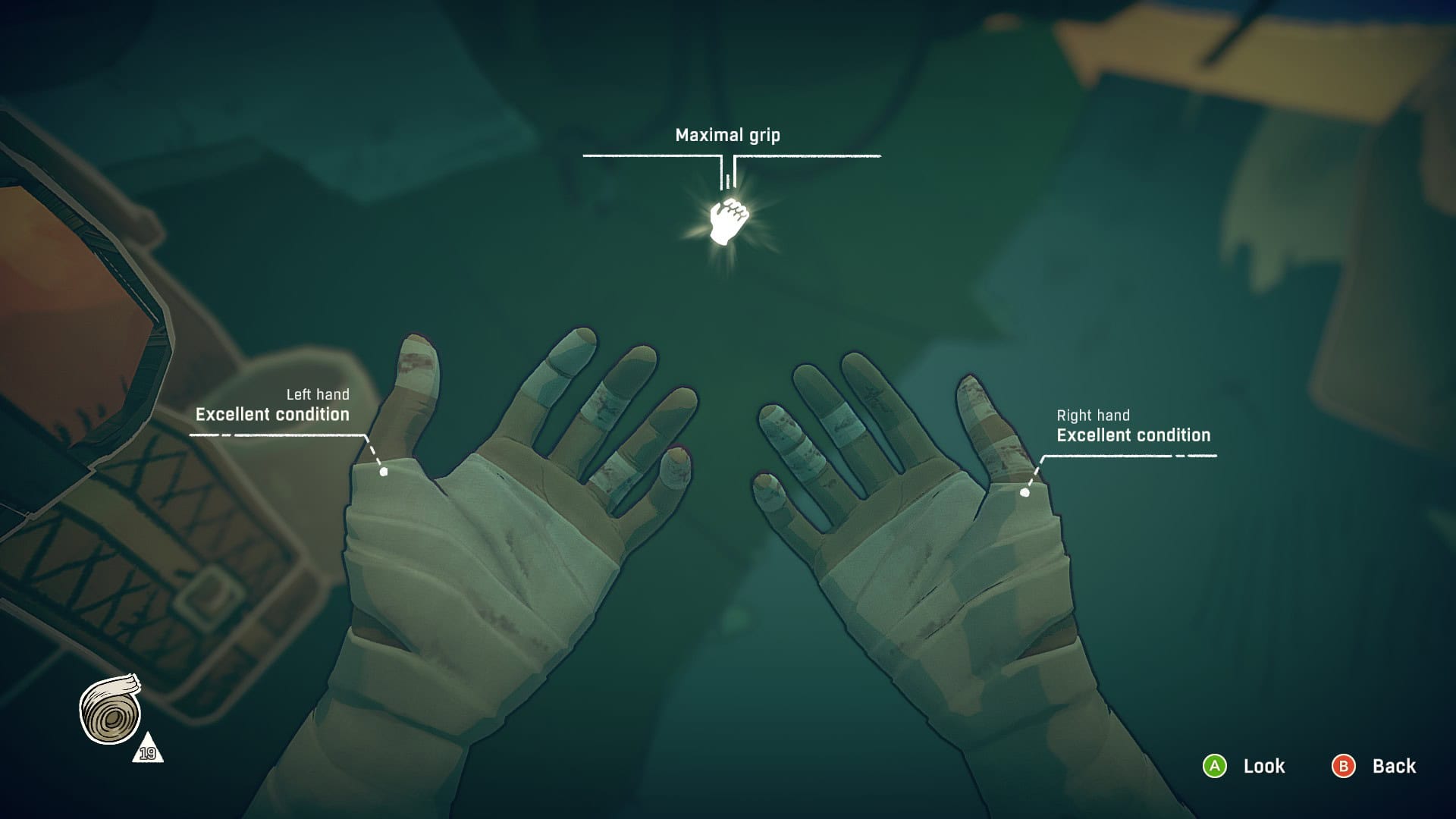
The tent is her home, and it has a bunch of functions. As mentioned before, only there can you warm up your water or food. There is also a piton-fixing machine, should you screw one incorrectly during a timed minigame. You can also rest, of course. The function I found most interesting, though, is finger-taping. Each finger has its own durability of sorts, and without tape, you will start losing grip eventually. Aava climbs barefoot and without gloves, ruining her body each day. After an especially difficult spot, I sat down to check out my hands and observed the wounds opening up on each finger. A gruesome image, and a reminder that each day was leaving its toll.
Each message from the world below did as well. As much as she is a climber, Aava has a life down below. Friends, sponsors. A cat by the name of Capsule. Aava is your eyes into the universe of Cairn, a protagonist set in her ways, but there are a few moments of player involvement. Exactly how long can Aava listen to someone she did not even expect to see yapping about who knows what when she has a mountain to climb? Does she care about anything below? What does the climb mean to her exactly? What does it mean to you?
Judging by the fact that I have it open on my other monitor right now, it meant a lot. There are some incredible discoveries to be found in Cairn. I think I am still somewhat unsatisfied by the fact that it’s not a pure “Me vs Mountain” type of game, as its absolute best moments come as a result of that relationship, yet I think it does more than enough to prove that it knows what it’s doing. It certainly blew me away on its own terms on more than one occasion. There are still lulls, sure, but you get control of Aava back fast enough.
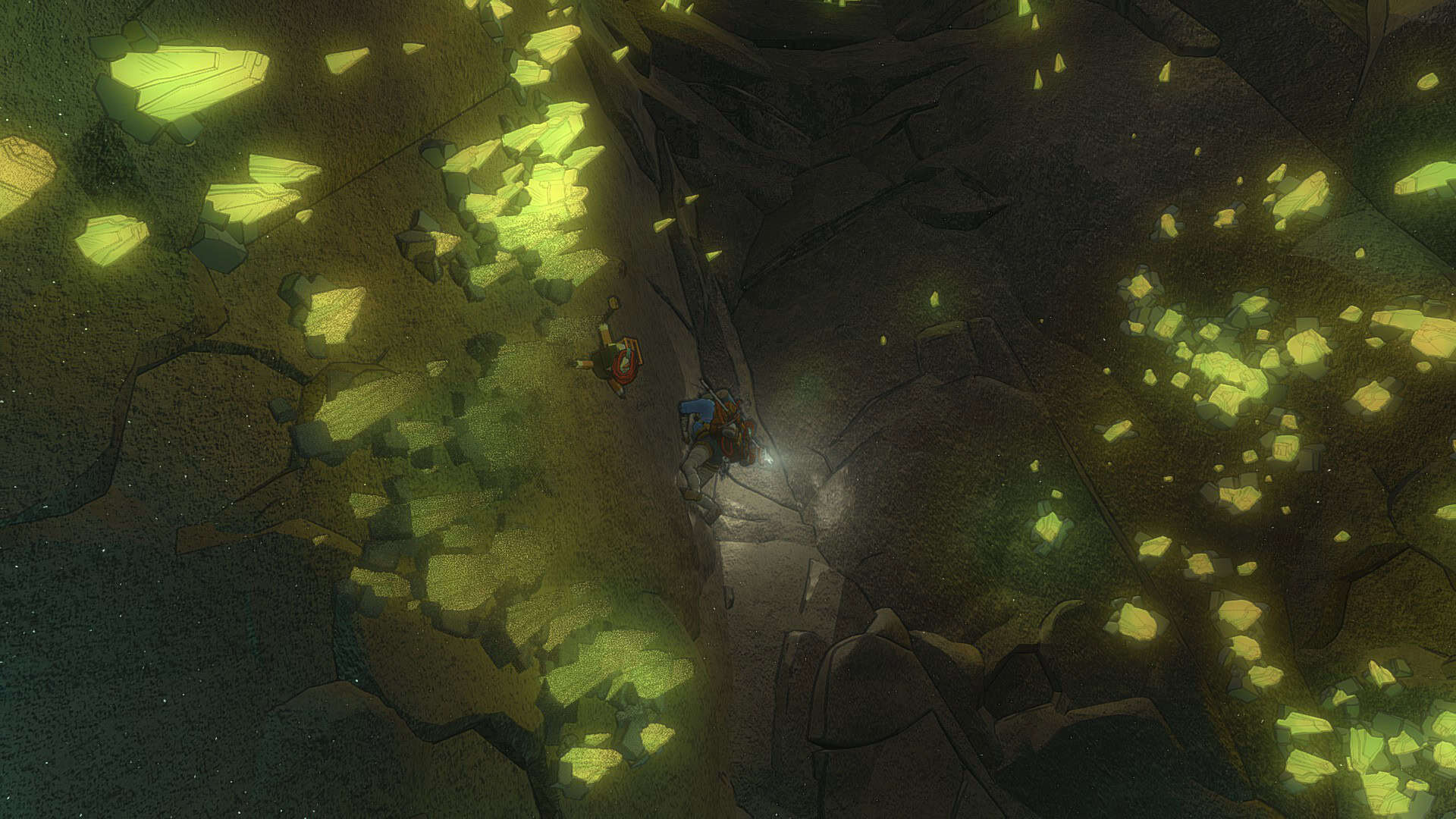
On the other hand, I think I might also be a bit too enamored with the indie spirit of Cairn to feel anything negative when I see a bunch of collision issues on some edges, the ropes flinging around the width of the mountain, or Aava’s joints twisting unnaturally when trying to move around the more uneven rocks. The automatic limb selection system prioritizes legs too little, but you can choose which limb to control manually, and me fumbling with the controls added a lot to the experience. There’s also the ragdoll when freefalling which can be viewed as silly. If you think that kind of stuff might ruin your immersion, then you will be sorry to hear it’s not exactly uncommon. I was far too engrossed for it to bother me, and I’d like to believe I won’t be the only one.
What I liked most about Cairn is how effortlessly it captured my attention. Whenever I started getting comfortable, Aava would start to lose her grip, her vision would tighten, and I realized all it took was a few seconds to lose 10 or 20 real-life minutes of progress. It starts creeping up on you, and the game is not shy about flashing that warning when you go on for too long without finding a safe spot. It is definitely my favorite climbing game out there, yet I feel there’s still plenty of potential for what could be shown and said using these systems.
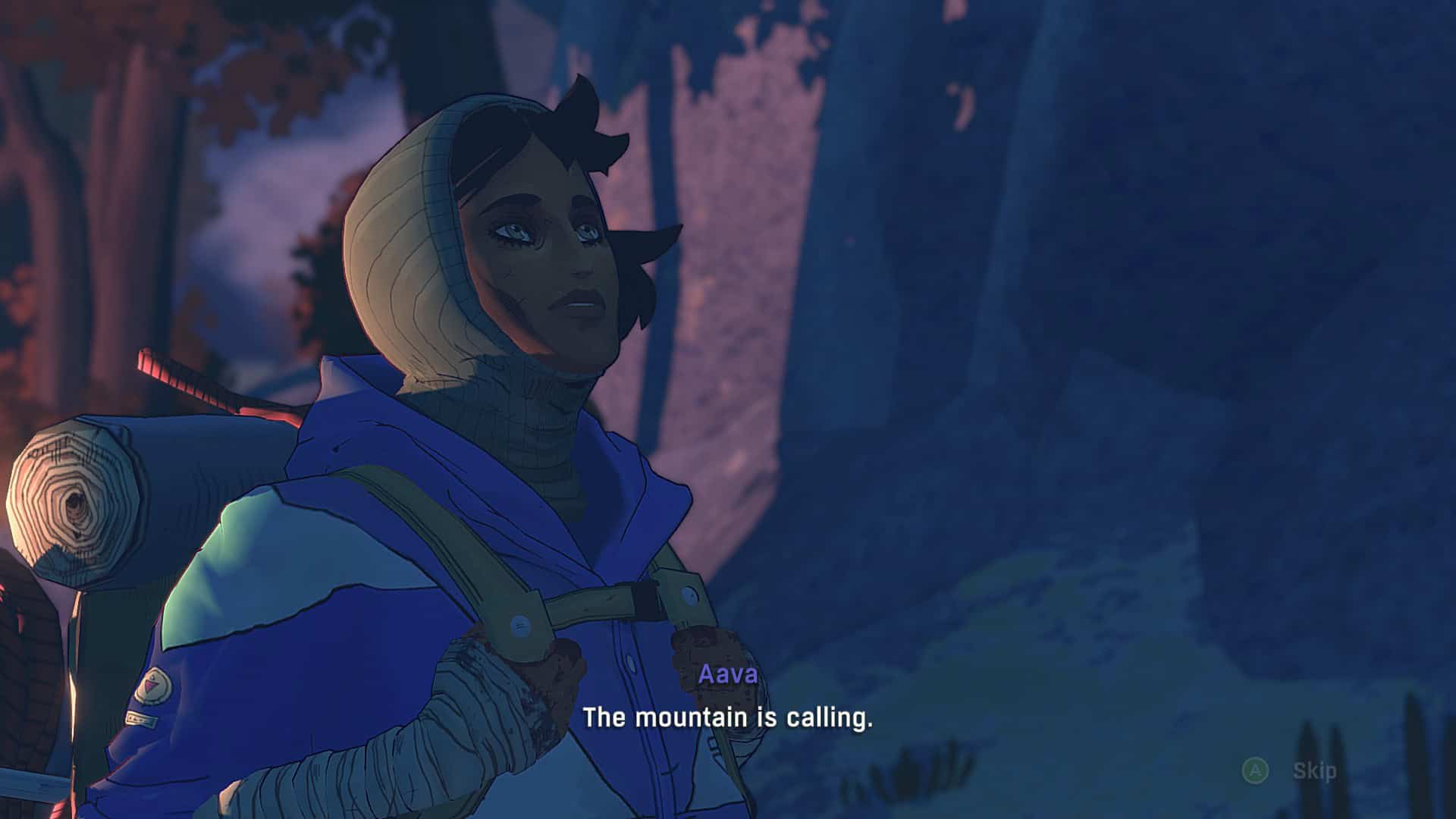
I definitely panicked a bunch while playing Cairn, got frustrated too, but I really love it when a game can catch me off-guard with my emotions, especially one elevated by such unconventional controls that connect you this much more with the character. You can see in Aava’s hands the reflection of your struggles. You watched her fall down that mountain a dozen times. It never gets any easier.
And so you ask again. What does this climb mean to her? What does it mean to you?
Mateusz reviewed Cairn on PC with a provided review code. This review is based on the version of the game available at the time of writing and our score will not be changed.
- Score
- 8/10 Excellent - Mateusz Recommends
- Summary
-
Cairn is the best climbing game out there, with room to grow. An incredible window into the world of alpine climbing with a few fictional elements that enrich the journey.
- More
- GameObserver's Review Policy


 ObserverCrew Picks
 bserver
 bserver