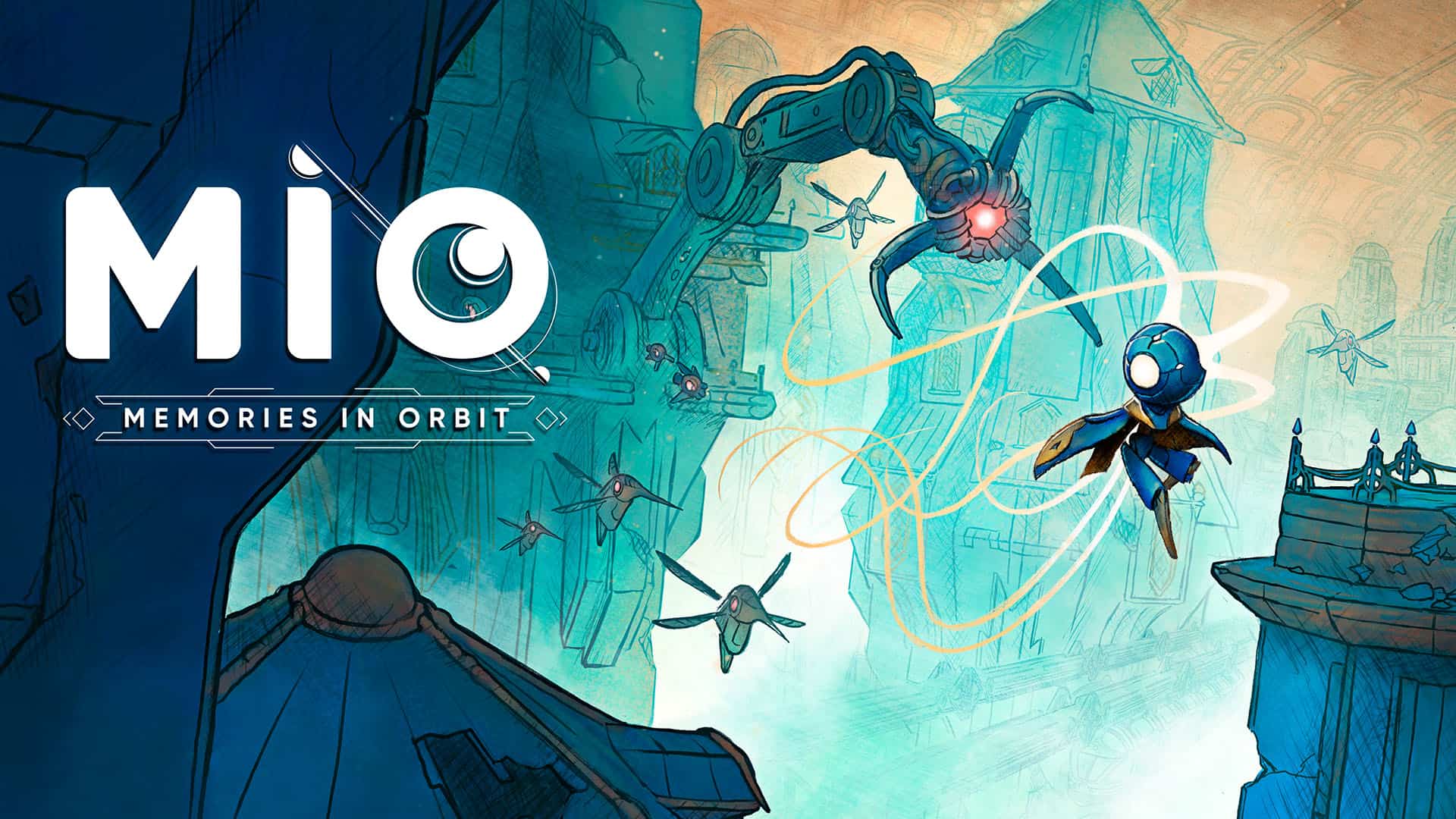
Douze Dixièmes’ MIO: Memories in Orbit starts with Mio, the playable character, wandering in a simplified world of lines and symbols as a voice talks to her about an important mission, before she suddenly wakes up in an abandoned workshop full of random half-assembled robots. As she makes her way out the entire world goes white and she is struck by apparently massive pain, leading to what appears to be her health bar permanently losing a slot, even before you’ve seen any combat or had a chance to deal or take damage. This in many ways sets the tone for Memories in Orbit. You are in a broken spaceship, searching for answers and a way to save everyone on board before what’s wrong with the ship eventually kills every robot on board, yourself included.
Shortly, you reach the nexus, home of the Spine, and learn that you are an agent of the Eye and must seek assistance from several other bodily named administrators of the ship in order to discover a way to heal the heart and keep the ship functioning, or maybe find a way to finish the ship’s original mission, provided you can discover what that was.
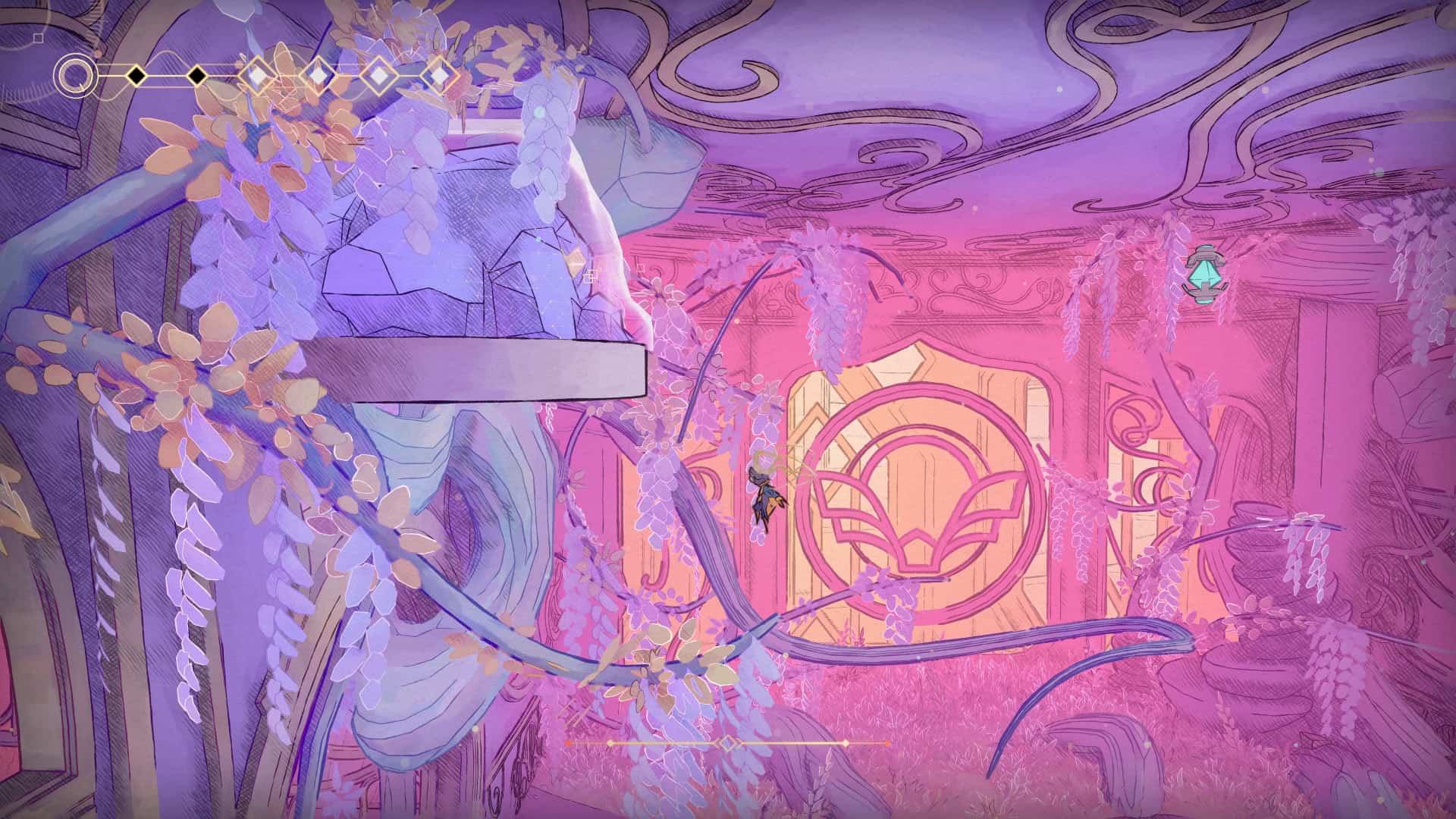
Memories in Orbit is a Souls-inspired Metroidvania, much like Ender Magnolia: Bloom in the Mist or Gigasword, except focused more on movement and platforming. For example, the first upgrade you get is the ability to view the map, and that is at first limited to when you are in the game’s hub area until you donate enough of the game’s currency to your mission control character to be able to access it elsewhere. Mio also starts with a double jump and attacking an enemy or breakable obstacle will restore her second jump, but she doesn’t get the genre-standard dodge ability until after the grappling hook ability and several boss fights – and even then the dodge ability is used for exploration as much as it is for combat.
As mentioned, you start with a double jump and a three-hit combo. The air combo is a vital part of aerial movement as it stalls your drop and moves you left or right. Hitting an enemy with it restores your second jump and later restores some of your energy to use on movement techniques like the hairpin (the grappling hook ability mentioned earlier), the slow fall Sail ability, and the wall and ceiling crawling Strider legs. While many of these also have a use in combat (Hairpin and dodge can be used to evade enemy attacks, for example), the primary use of all these is to explore the ship.
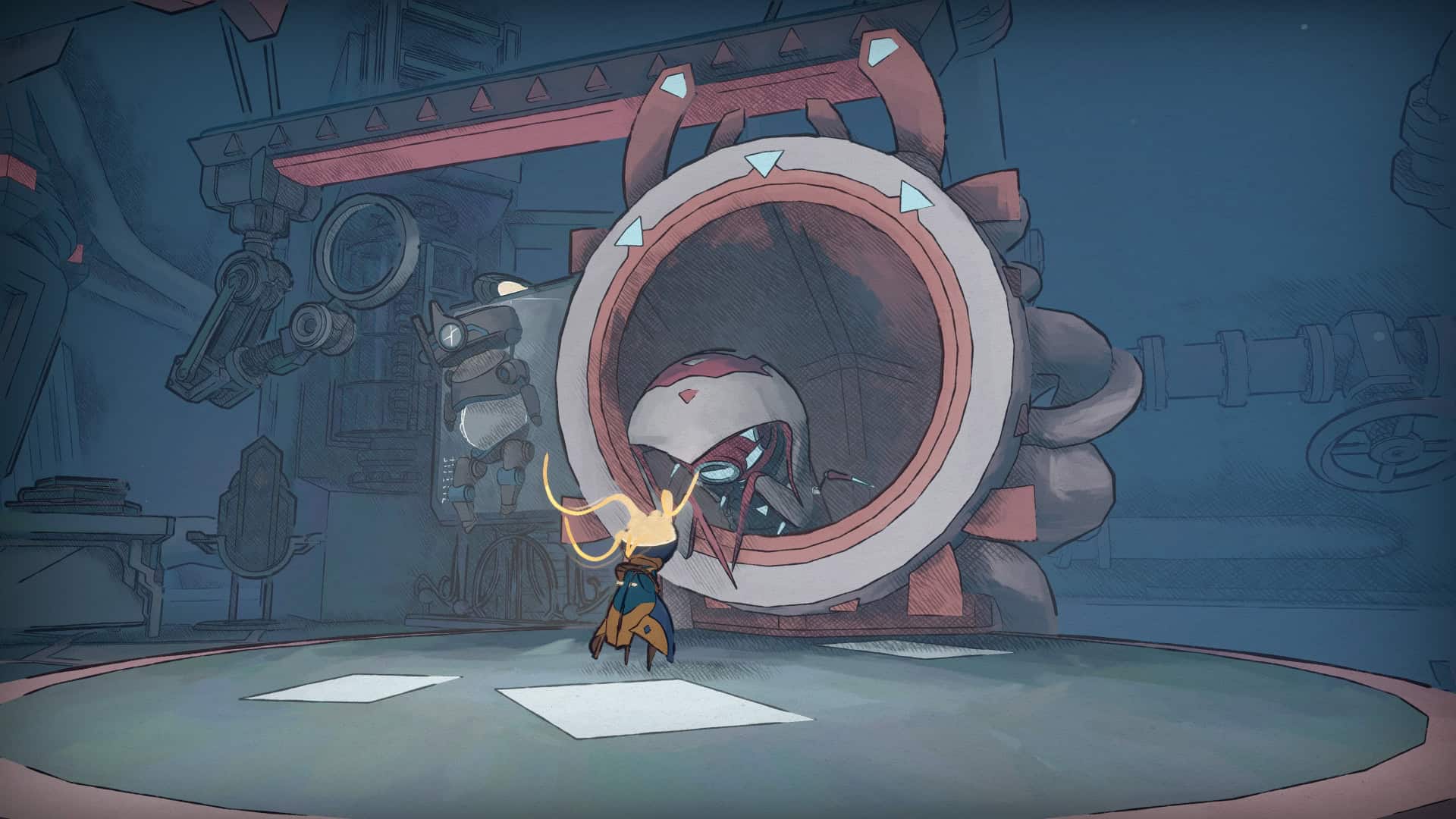
We can then re-explore the ship in search of previously inaccessible corners and pathways, new routes, shortcuts, and secret areas with the purpose of finding a way to reach the various administrators of the ship, all of which have sequestered themselves from visitors for one reason or another. Nothing in Memories in Orbit is pre-marked, and this is both a blessing and a curse. It encourages a very natural progression, allowing for organic exploration and genuine surprises when you discover a new upgrade that opens a new area, a new route between areas, or a hidden lore that re-contextualizes the story you thought you understood and everything radically shifts. On the other hand, it can be frustrating as you explore the entire ship thrice over for an item to unlock a new area only to realize you need to leap into a pit you previously crossed in a cutscene when you temporarily lost control. It’s frustrating, but also absolutely amazing when you finally do figure out where you need to go.
While exploration is clearly encouraged, Memories in Orbit also wants you to be careful. You have very limited health even at the best of times, and there’s no way to restore health aside from the free heals at the save stations and paid heals at specific locations. If you die, you lose all the in-game money you’ve collected but haven’t banked. In the beginning, this amount at least goes to unlocking the full capabilities of the map, but later, if it’s gone, it’s gone, and you need that money to heal while exploring and to buy modifiers (the game’s version of equipment), slots to equip modifiers, and the heart piece equivalent to get more health pips. You also need a type of collectible called old Cores that can be found from NPCs and also scattered around the map. There are NPCs that can exchange your currency into a form that persists between deaths, but you have to reach them first.

There’s a lot that can damage you beside enemies and bosses, including acid pits, strangling vines, crushing pistons, spinning blades, and several other hazards that make for very difficult platforming, especially in the hidden platforming challenges. Fortunately, two of the game’s modifiers do provide generic protection against hazards and enemies, one keeps any non boss enemy from attacking you if you don’t attack it first, and the other grants an extra pip of health provided Mio stays on the ground for five seconds. This second modifier was incredibly useful when exploring, especially during the many platforming challenges, which have few to no enemies but require extremely tight maneuvering to accomplish and failing at any point deals a point of damage and returns Mio to the last solid ground she touched. These two modifiers are also available as two of the game’s accessibility settings, should you need them before finding the items in-game.
But no matter what, you will have to fight the many minor and major boss fights. Some of these are other worker robots that have gone mad in the long years the vessel has been drifting, some are living creatures with forms twisted by the strange liquid permeating the ship, some are both, and some of them are dutiful guardians doing their appointed duty. All of them are a challenge, with complex patterns and at least two phases if not more. Fortunately, there are options to make combating them a bit more surmountable. There are various modifiers you can equip, such as one that increases the damage on the last hit of your combo, or one that leaves a damaging trail of energy for a moment whenever you use the Hairpin to move about. Another fun feature are anti-modifiers that give a debuff such as making enemies drop less money on death, but which give you extra modifier slots to use if you don’t have enough to fit every modifier you need normally. In the game’s settings you can also set damage dealt to bosses to accrue between battles, making bosses easier to defeat the more times they’ve been challenged. I only turned this on for one particularly irritating late game boss whose final phase had no solid ground at all, but it’s good to know the option even exists.

In terms of scope and scale, Memories in Orbit is quite extensive. I have seen the true ending and I know I’ve still got numerous collectibles to find, a whole new area to unlock, and at least one boss yet to face. In short, the game is going to absolutely give you the bang for your buck. Exploration is fun. I’ve stayed up far too late on several nights just looking to push a bit further and find the one new area. Several optional areas require clever combinations of movement upgrades and equipped modifiers just to open up, never mind to traverse. My one suggestion to the developers might be that, like in a lot of these games, money becomes meaningless after a certain point, and the search for the collectibles becomes very difficult around the same point, so perhaps adding an NPC to trade the funds for clues to find new areas might be a good idea.
Memories in Orbit‘s story is one that is best experienced rather than relayed. It is told through a mix of interactions with NPCs, cut scenes, recollections, remnants of correspondence, and so much environmental storytelling. If you love the thrill of exploration and very little hand holding, MIO: Memories in Orbit is definitely for you.
Tim reviewed MIO: Memories in Orbit on PC with a provided review code. This review is based on the version of the game available at the time of writing and our score will not be changed.
- Score
- 8/10 Brilliant - Tim Recommends
- Summary
-
An exploration focused Metroidvania with an extremely hands off approach to player guidance, Memories in Orbit naturally rewards curious players, but the same approach leads to a very difficult search for the final secrets hidden in the game.
- More
- GameObserver's Review Policy



 ObserverCrew Picks
 bserver
 bserver