Bloodgrounds is a turn-based tactics roguelite developed by Exordium Games and published by Daedalic Entertainment, currently in Early Access. You are a former slave in the Roman colosseums who has just won their freedom after 19 years of slavery. The emperor forced you and your father to fight for your freedom after being accused of false crimes. It’s time to bring down his empire by creating your own gladiator team and take the glory for yourself.
You likely won’t pay much attention to the story outside of progressing to different regions as it’s your typical revenge story against an emperor who let power go to their head and most of your focus will be spent on developing your gladiator team and keeping them alive as much as possible. Fortunately, you have more control over your team than other roguelites that gives you an edge.
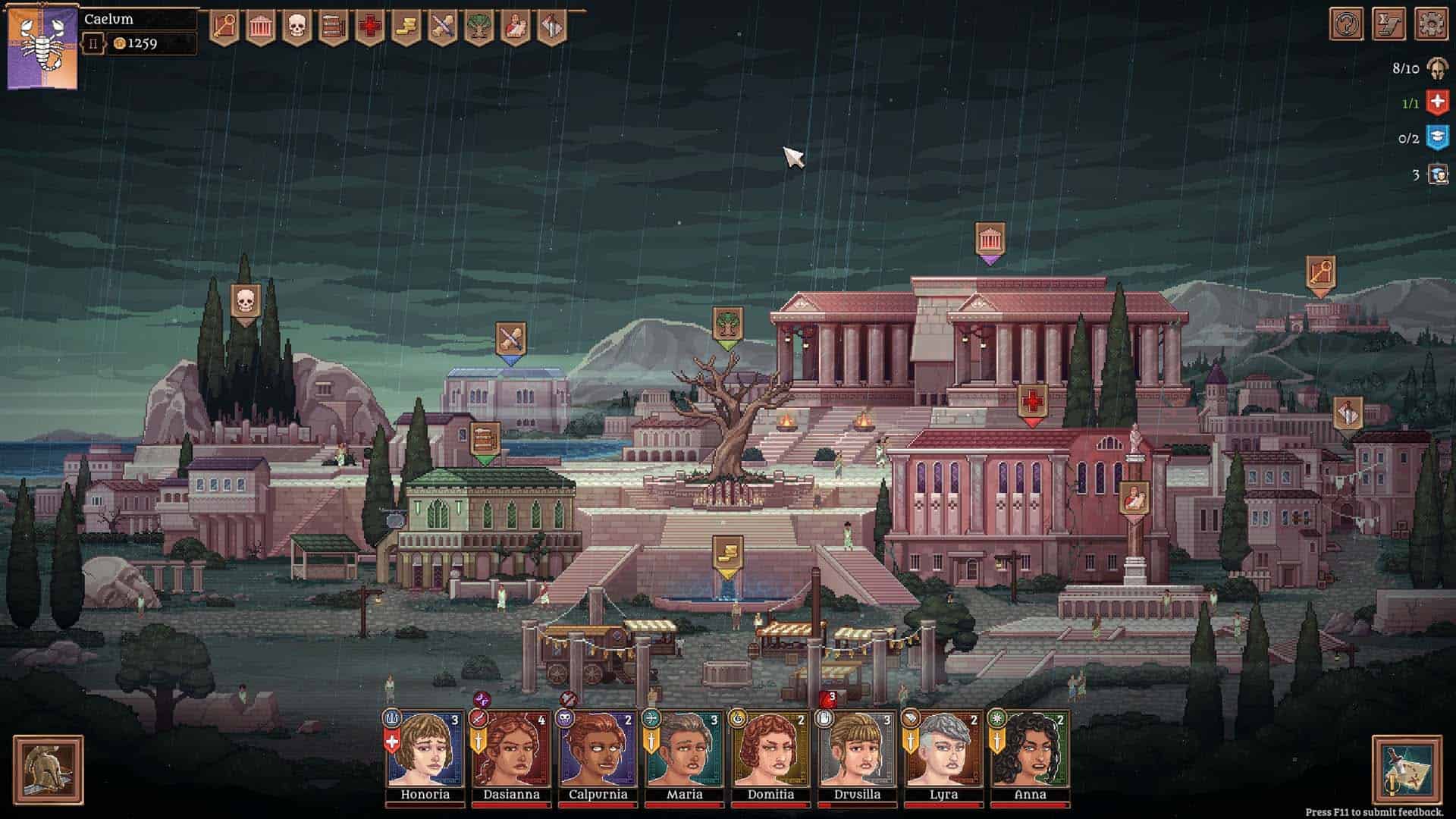
Bloodgrounds takes places on two fronts: estate management and combat. Estate management is where you hire fighters and decide which fights you will take. Combat takes place in colosseum settings where you control your fighters on a grid. The enemies you face are dependent on the region and the difficulty you choose. Each difficulty has a certain number of battles, with more powerful enemies waiting at higher difficulties. The end of each region has a boss battle where victory lets you move to the next region.
As you progress to a new region or enter a new “Age”, you can hire more fighters and get better equipment. This also gives you access to more structures and story background. Enemies also begin changing, forcing you to train your team. Should things go pear-shaped, you can rebuild your team from the ground up and try again. It’s grueling gameplay that sometimes comes down to luck but Bloodgrounds has a few advantages over other roguelites.
One such advantage is its equipment. You have eight classes of gladiators to choose from but also a variety of equipment they can use. Depending on how you want to build your gladiator, you can use different equipment to help reach your goals. For example, you can have a dual-wielding nimble fighter or give them a large hammer to hit multiple enemies. That freedom gives you various options for approaching battles and immerses you in character creation.
As you progress through the game, you get different structures that provide benefits in and out of fights. One building gives you side quests you can achieve during battles while another helps “rig” battles to weaken enemies. They give you more control over the outcome though many of these additions likely won’t give you a huge advantage. Customizing your gladiators further and influencing fights immerses you in the gameplay more than regular turn-based combat.
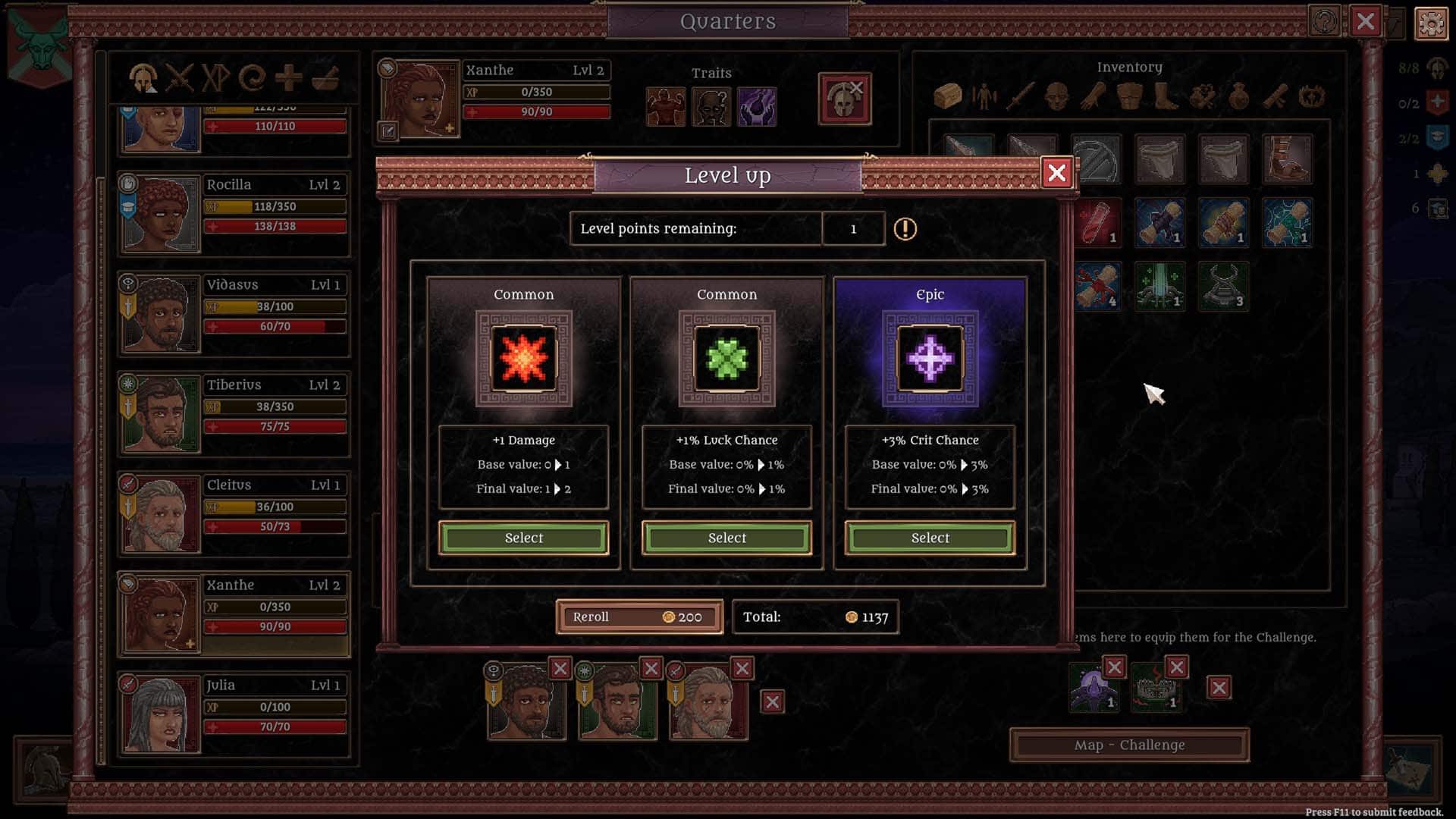
Unfortunately, the game never deviates from the formula of estate management and combat. You are mostly earning money, rerolling characters and equipment, and fighting. Sometimes your gladiators fall in combat and you must replace them. It’s a repetitive cycle that quickly becomes monotonous, especially if you get stuck in a region. More gameplay variation would help break up the cycle and let you enjoy other aspects instead of just combat.
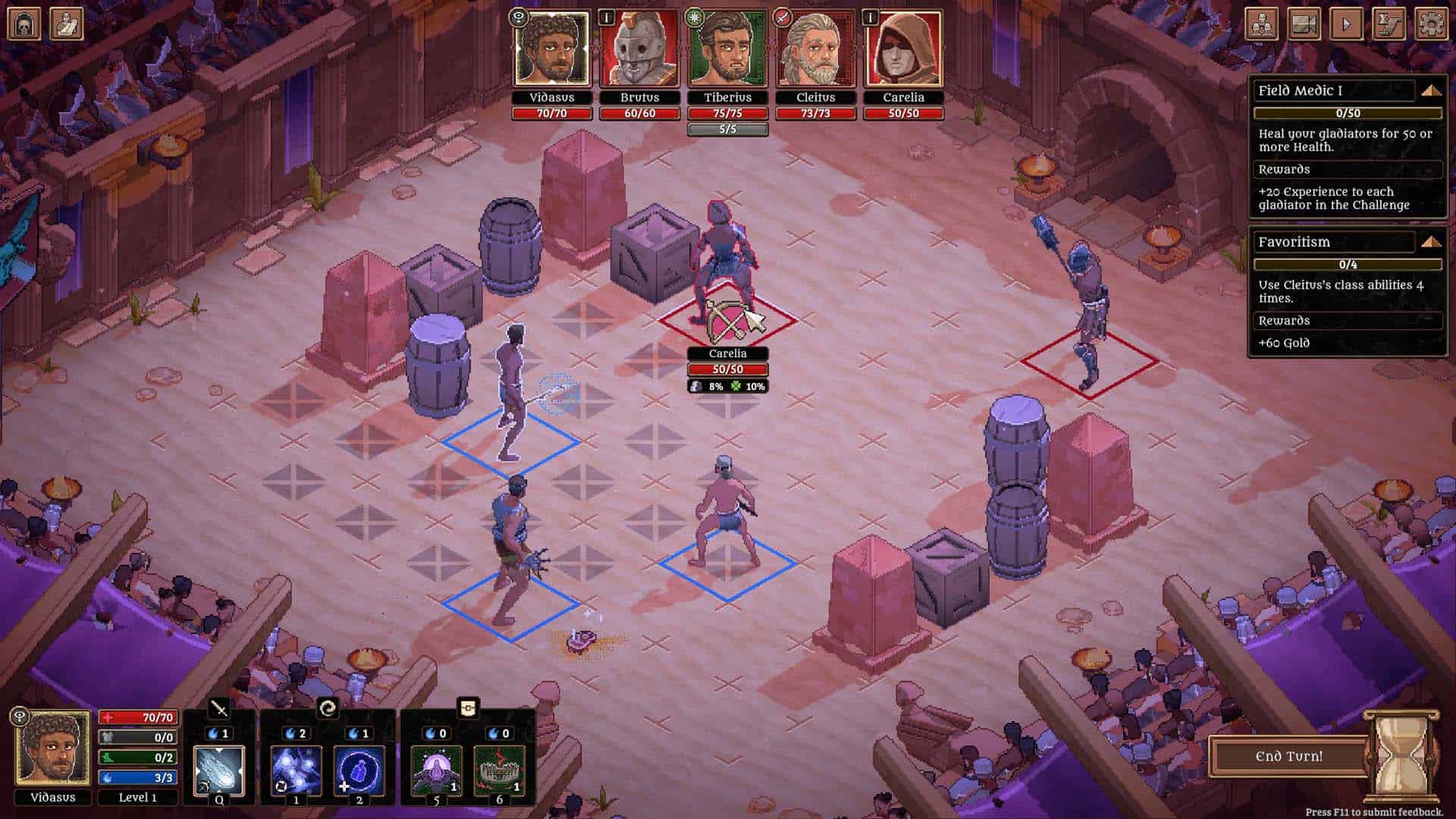
Fighting takes place on a square grid with several obstacles. Your gladiators and your enemies move towards each other while avoiding damage sources like machinery and explosive pots. Every character gets three action points and a certain amount of movement. Turn order is based on the order of the portraits above, giving you time to strategize depending on who’s turn is coming up.
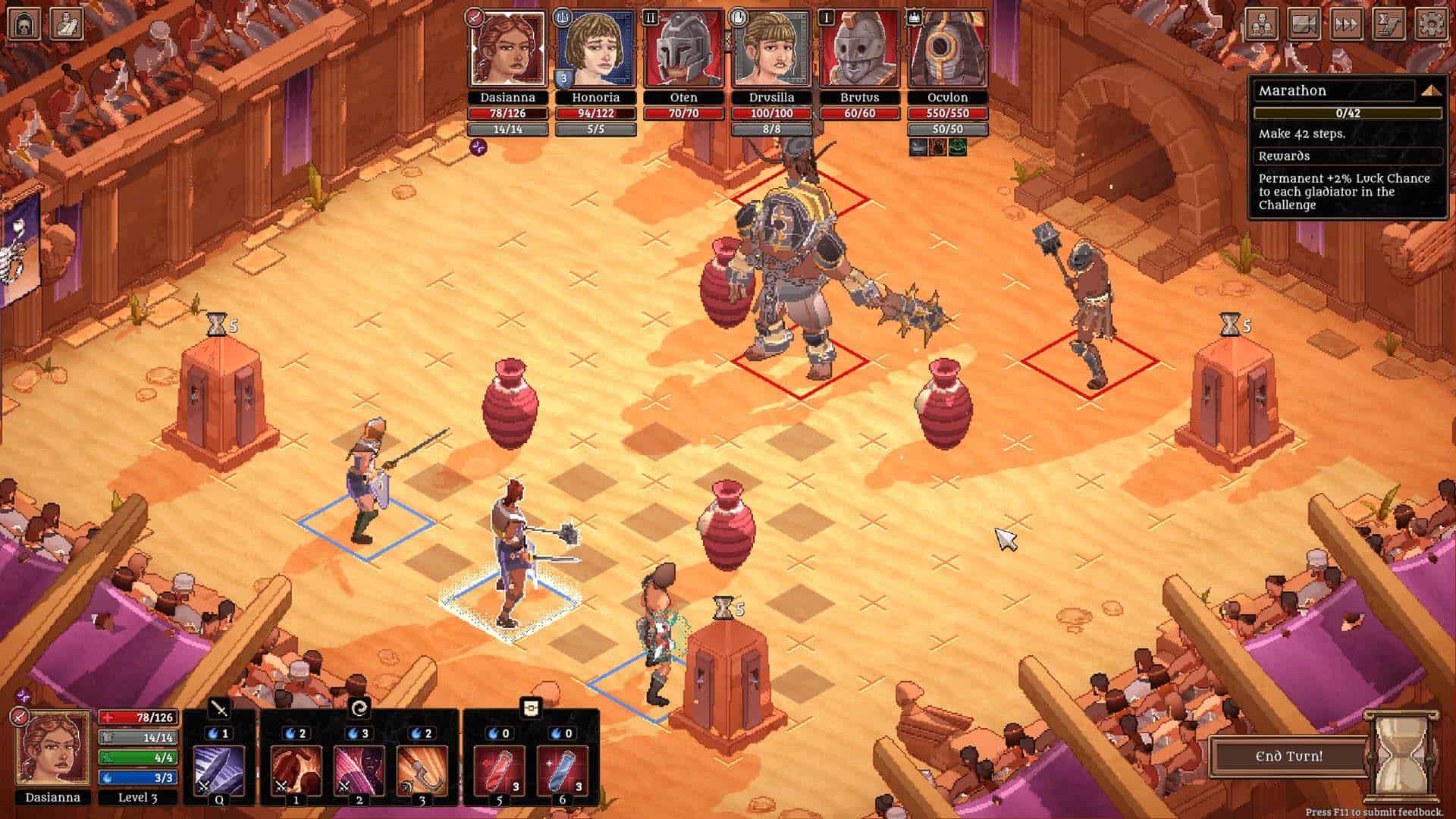
The roguelite aspects involve enemy makeup, damage sources, and various battlefield effects. Sometimes tiles can gain properties like frost or stun which inconvenience whoever steps on them. Battlefield effects are almost always benefiting the enemy, sometimes draining your health every turn or giving every enemy a major evasion boost. You never know what you might encounter on the battlefield but you must do your best to keep your team alive regardless.
Bloodgrounds tries to reward you for certain behaviors such as using multiple skills from a certain class. It’s a nice way of adding some challenge to battles that won’t heavily inconvenience you. The rewards aren’t game-breaking either, allowing you to forgo them if you feel they are detrimental. As you progress through the ages, you get more gladiators on the field, letting you exert your strategic muscle.
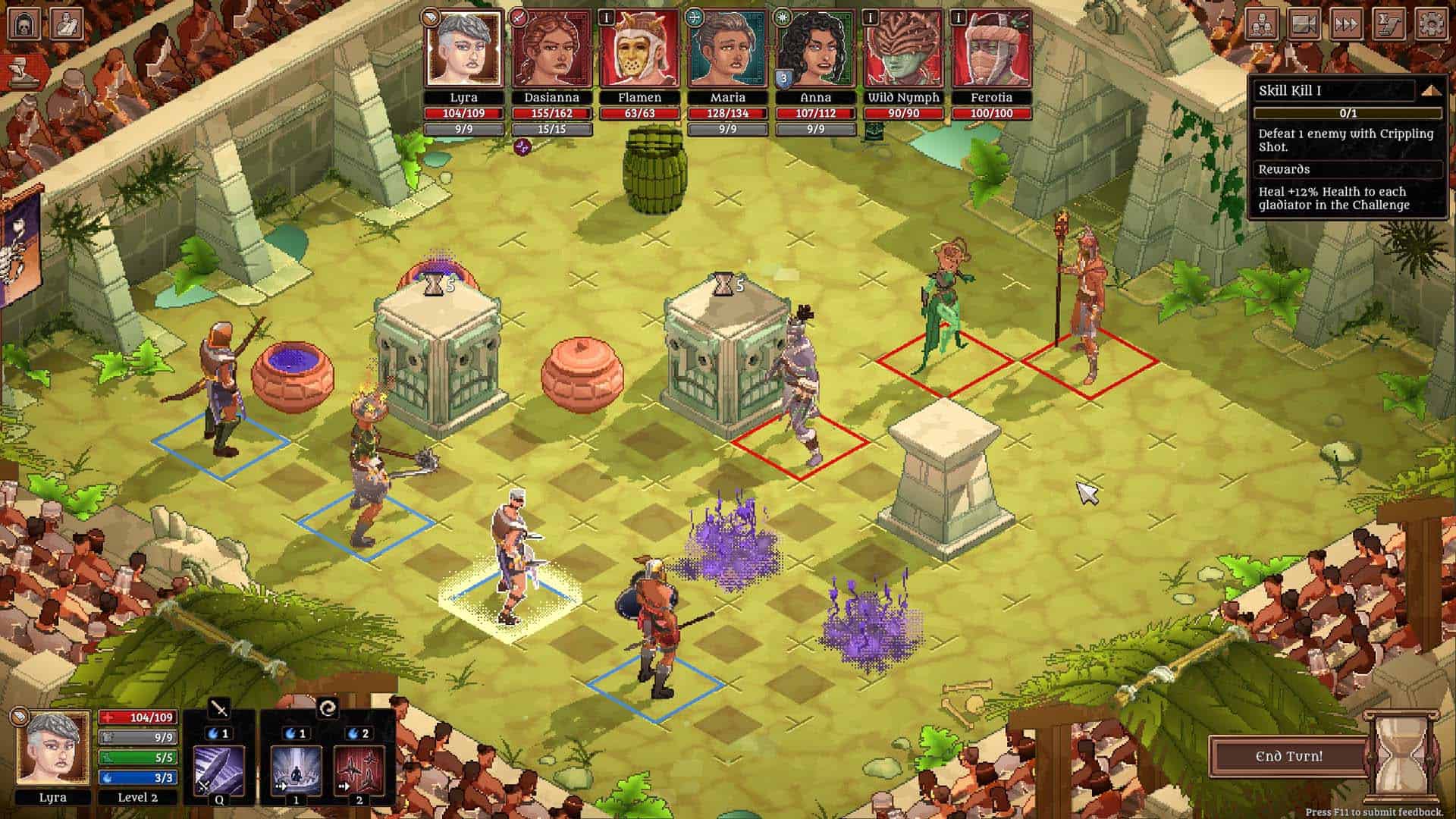
On the other hand, having the odds constantly stacked against you is exhausting. Unless you are heavily investing in enemy sabotage, they almost always have the advantage. Even sabotage doesn’t fully even the odds and you are often entering battles with detrimental effects. You never get boosts that help you turn the tide or make a battle easier. While it provides a good challenge, it also becomes exhausting when you know that battles are always stacked against you.
The tactical nature gives you some control over the roguelite elements, cutting down on unpredictability. Equipping your gladiators and using structures to modify the outcome of fights immerses you in your team’s welfare. There isn’t much variation to gameplay in its current state and the repetitive nature quickly sets in. Battles also feel weighted against you, forcing a grind to give you an advantage. Bloodgrounds has a good roguelite foundation but it could do more in future updates to keep the player engaged.
Victor reviewed Bloodgrounds in Early Access on PC. This review is based on the version of the game available at the time of writing and will not be changed.
- Verdict
- Victor Recommends Bloodgrounds in Early Access
- Summary
-
In its current state, Bloodgrounds provides lots of fun at the beginning, but can get repetitive once you hit the midway point.
- More
- GameObserver's Review Policy


 ObserverCrew Picks
 bserver
 bserver