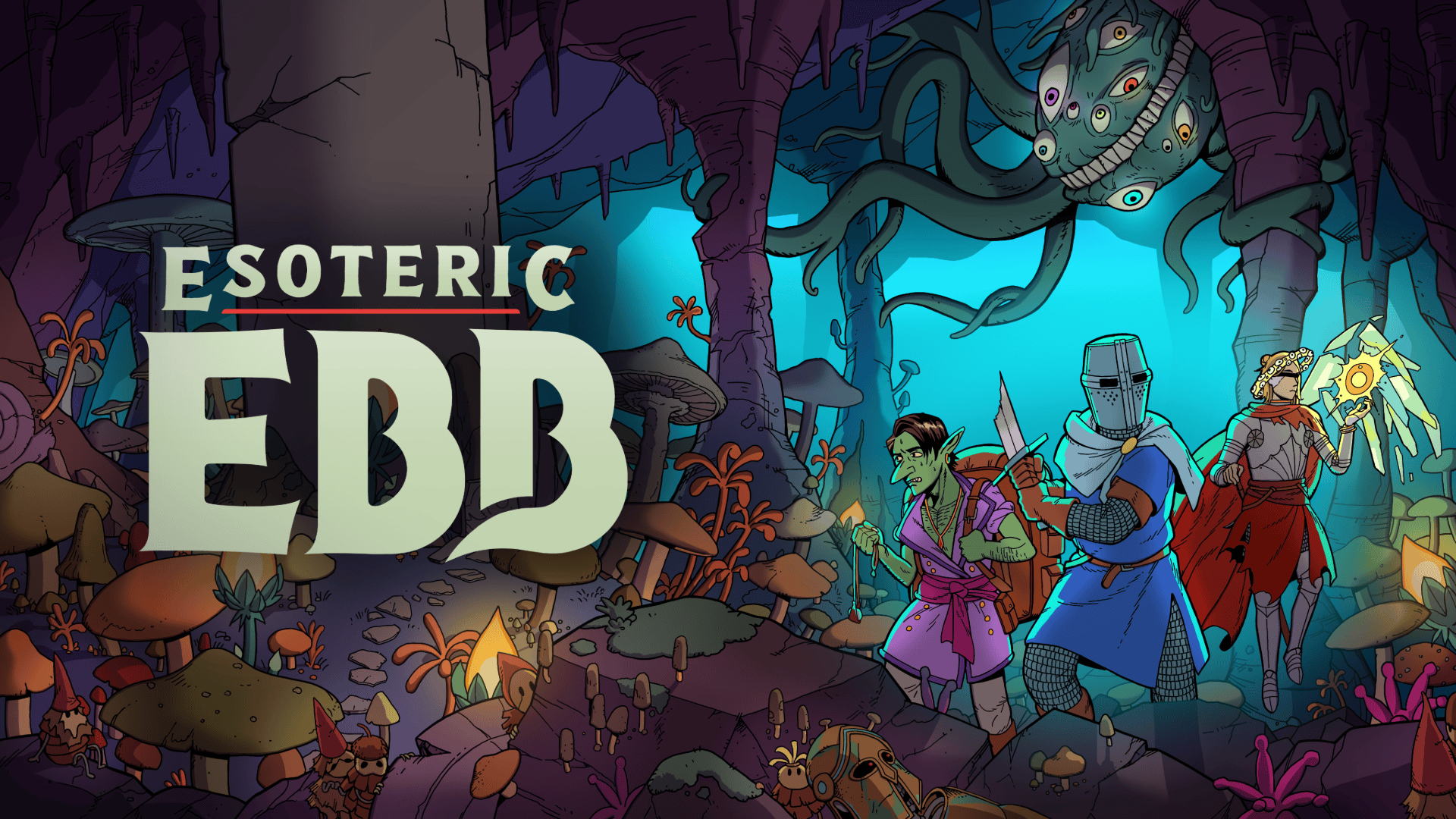
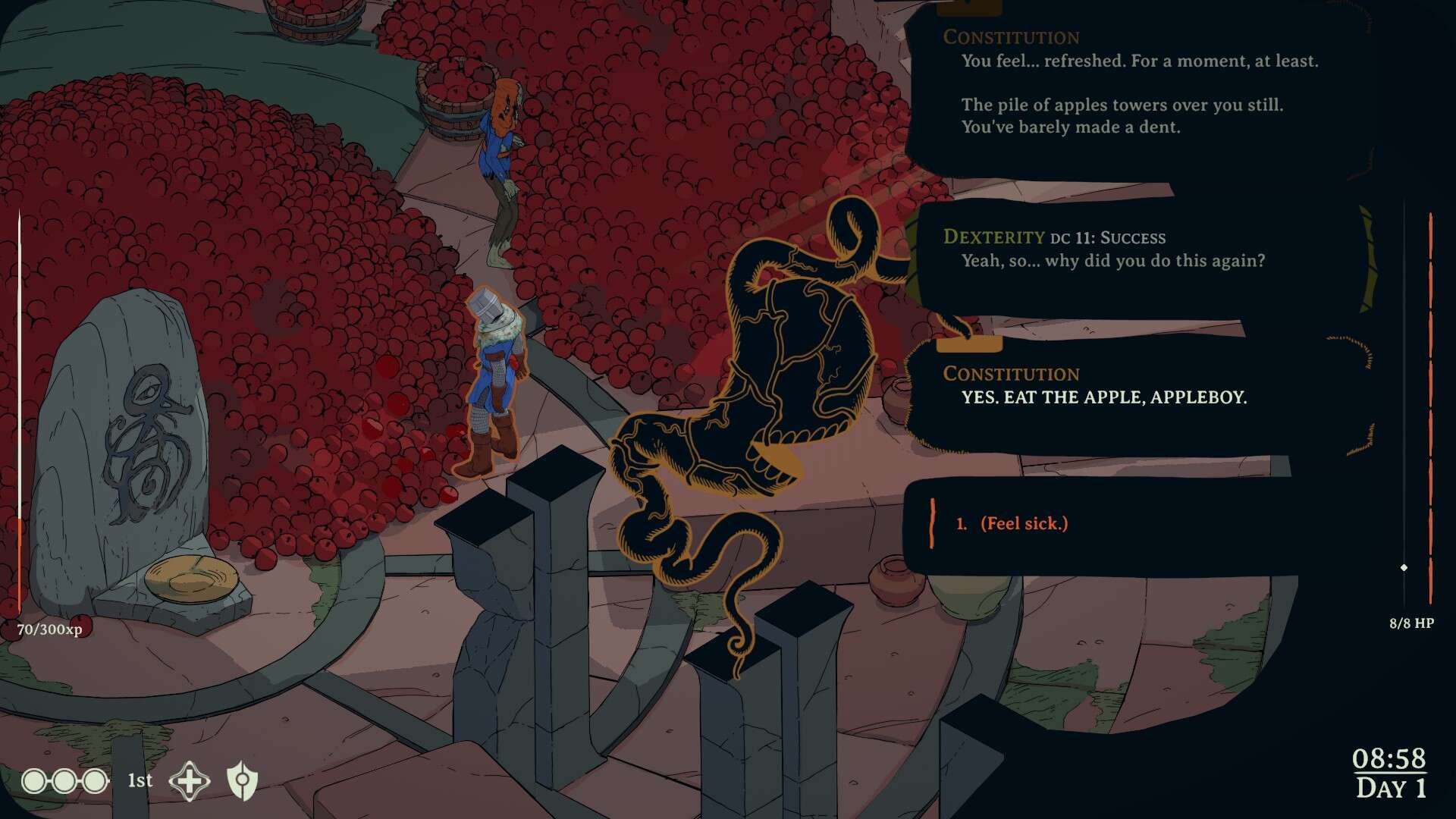
A week before the release of Christoffer Bodegård’s CRPG, Esoteric Ebb, I jumped into its demo and woke up as my cleric with missing memories and no belongings to my name. Each of the classic D&D stats personified spoke to me of my past. Gave me a name and a job. I then immediately attempted to eat through a wall of apples to satisfy my Constitution’s impulses. I died in the process. Failed my saving throws. Game over. That was all I needed to know I had a Game Of The Year contender on my hands.
Which is a bit crazy, considering just how hot I’ve already been on this year’s releases. Can you blame me, though? Waking up in a mortuary with amnesia, dying in the first area to an unwise decision—I love me some Planescape: Torment and some Disco Elysium. Yet, recently, I caught myself complacent. It felt like, despite so many games proving me wrong, I began to place expectations on these works based too much on their inspirations.
Part of it was ego. My ability to recognize and point out repeating patterns in works made me think I can predict all else about them within a few minutes of playing. Part of it was comfort. The feeling that maybe I’ve already finished all my formative experiences that pops up every time I’m lukewarm (or worse) on something tons of people love. I didn’t even realize it when I restarted my playthrough, but subconsciously, I knew that Esoteric Ebb had to stir something within me to meet my high expectations. It had to stand out from the games it paid homage to.
This quest was completed. Passed with flying colors! Before we get there, for those uninitiated, I think it’s worth explaining what it and its inspirations bring to the table. These games are conversation-forward RPGs, which allow the player to tell stories via unique relationships with classic genre systems. They use dialogue puzzles that often interact heavily with the player’s stats, which, in turn, push the player in certain directions. In the case of Disco Elysium and Esoteric Ebb, quite literally. The stats have voices; they are real characters.
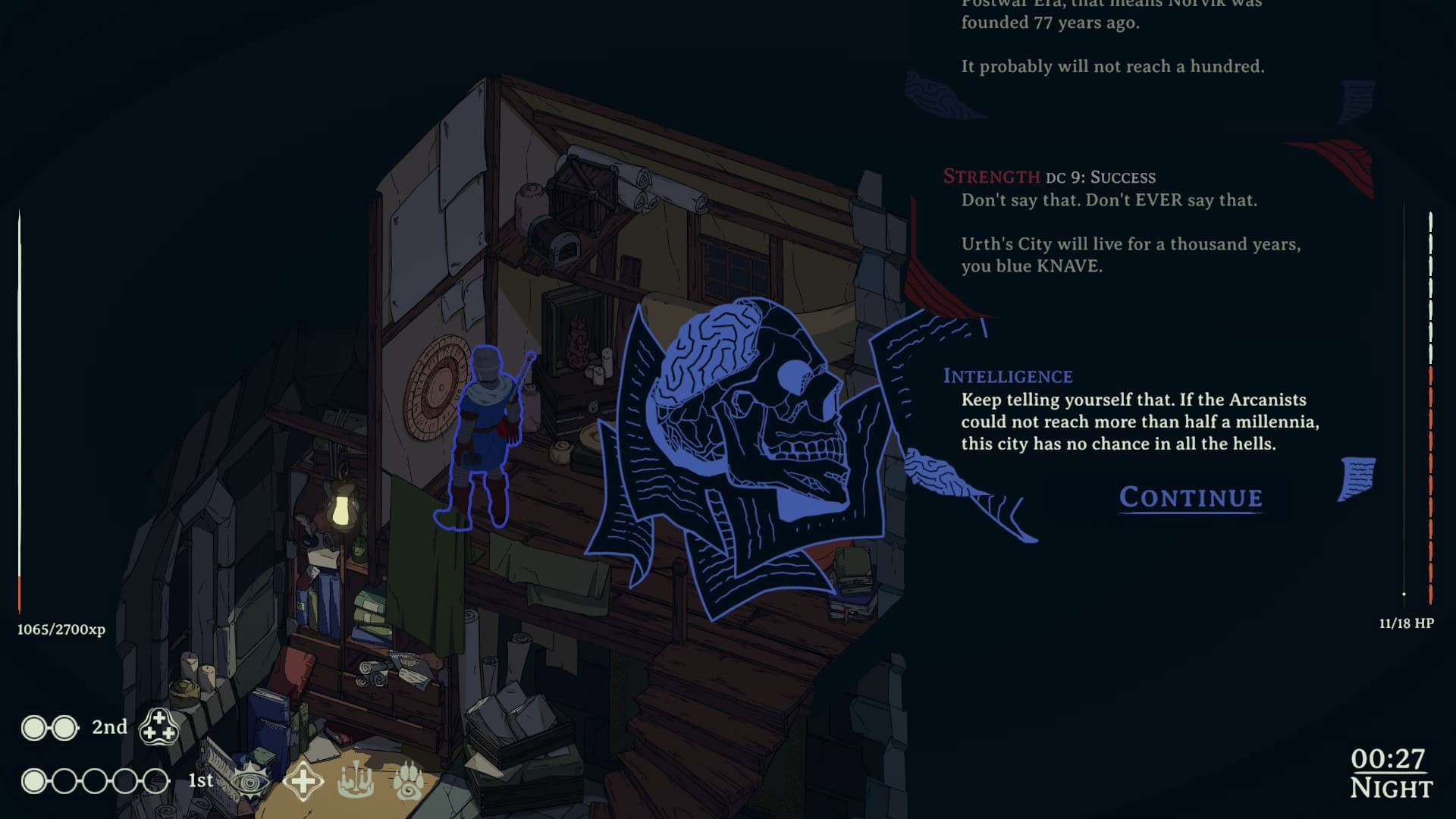
They are also inherently about the mystery of the player character’s past, and the perspective this new personality you’re co-creating has on them and the world they inhabit. Amnesia becomes an obvious tool for exposition, comedy, but also a rich, unique examination of a character. So much is in your hands, so much isn’t. There are so many regrets, thoughts that return to mess with your perception, here at a faster pace due to what overall feels like a more contained game, and better for it!
A line of generational inspirations that began with Dungeons and Dragons now returns to these roots. It’s an obviously direct marriage of the two: a detective game with the humor, dialogue, and equipment systems that remind of Disco Elysium and the stats, world, and player tools more closely resembling Planescape: Torment. Through gameplay, you are way more likely to feel the former than the latter, which is what makes the D&D tools such a boon.
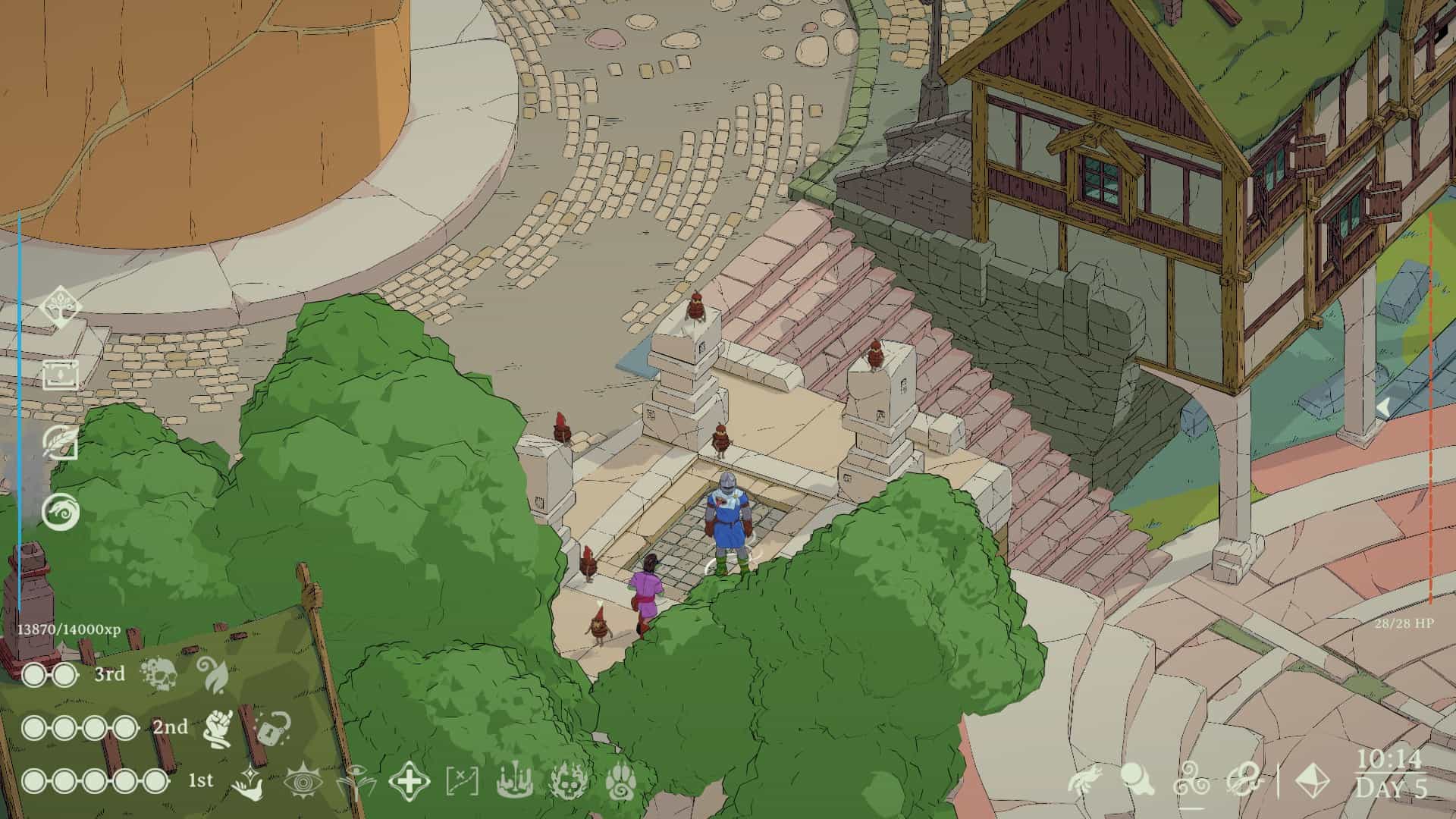
I absolutely adore both games. Would not change a thing about them. Yet, it is fascinating to watch Esoteric Ebb fill in all sorts of blanks to create what I would say is easily the most approachable version of this game yet. Not lacking in friction, mind you, but adding spells you can use in the overworld as well as conversations, while also introducing more combat scenarios that all use the dialogue system, means that it really does not have any glaring faults.
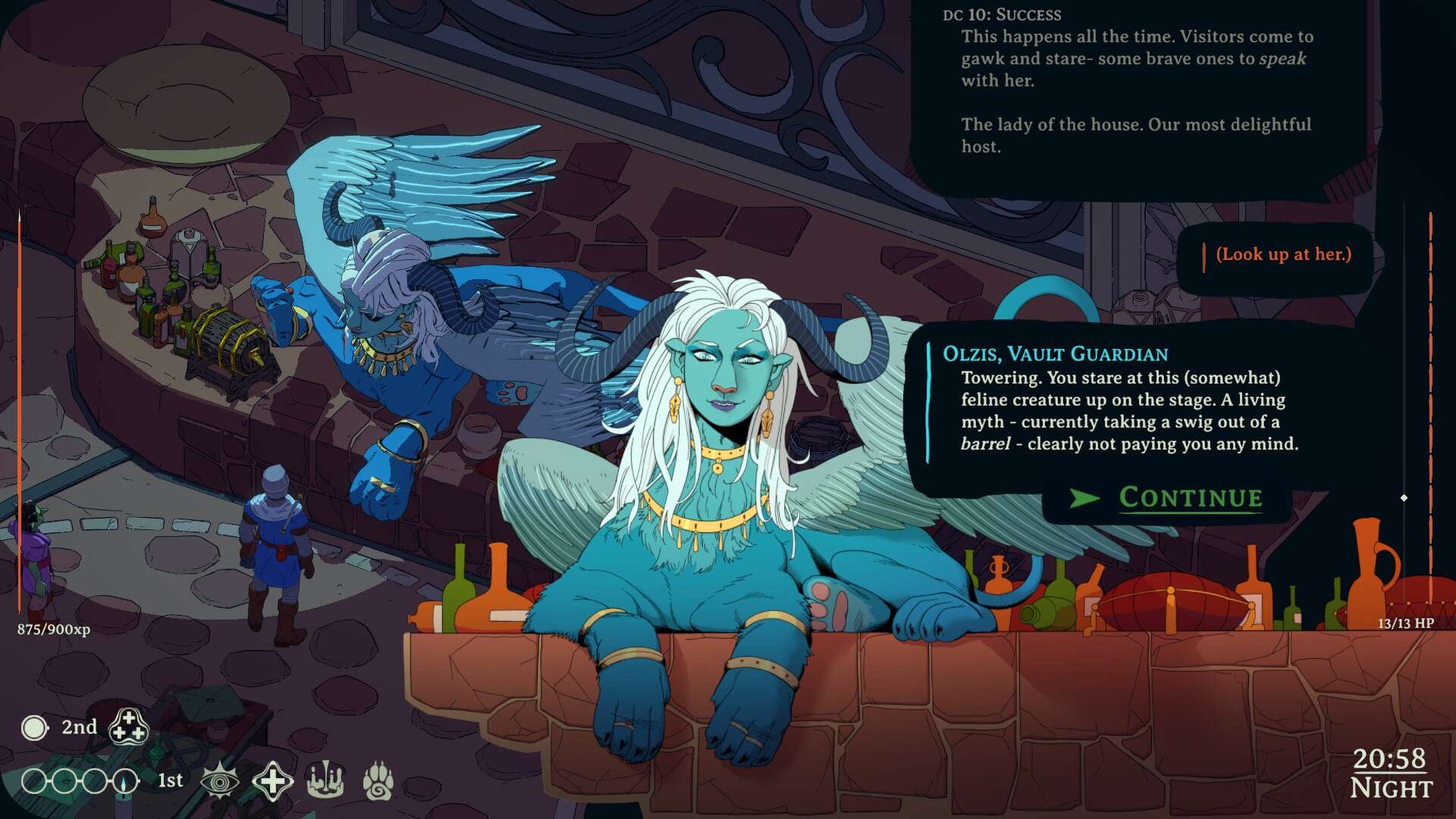
It’s what kept me absolutely glued to the screen. An increase in player agency, deeper exploration. I simply could not put it down. Esoteric Ebb has a few faults, but no lengthy lows. Highs though? Hiding around every corner. Its standard fantasy setting brings out all sorts of possibilities for the systems to shine, for shockingly real moments in the most well-trodden or weirdest of places. The most emotional ones are as effective as they are surprising. One second, you’re in someone’s silly TTRPG campaign, interacting with a funny mystical creature. Few clicks later, you’re listening to the most beautiful, vulnerable confession of your life. A feature of these games that Esoteric Ebb truly excels at. Truly esoteric.
The story centers around an election happening five days after The Cleric wakes up, so it’s no wonder how politically charged the game is. It’s not a pervasive dread in the back of your mind or a piece of the lore. No, you walk up to a character, and the first thing you may ask is who they’re voting for. It’s an opener, an ice-breaker, a closer, a completely forced question. You can ask the local seagull who they’d vote for. You can tell people to vote for you. You can get fully ingrained in the Azgalian revolution of the workers, support the youths to speak their mind about the older generation’s complacency in supporting the increasingly loud voices of oppressed minorities due to their fear of losing the centrist vote. Or proclaim to everyone how smart you are because you’re apolitical.
The Cleric had a given class, but that doesn’t have to stop you. If you find the right people, the right opportunity, you can be a bard, a berserker, a druid. Each provides unique opportunities for banter or even abilities! Ultimately, my playthrough led me through so many hoops that I ended up as a workers’ rights activist, feminist bard/druid. But you may be a rogue monarch, a berserker capitalist, or a wizard agriculturalist.
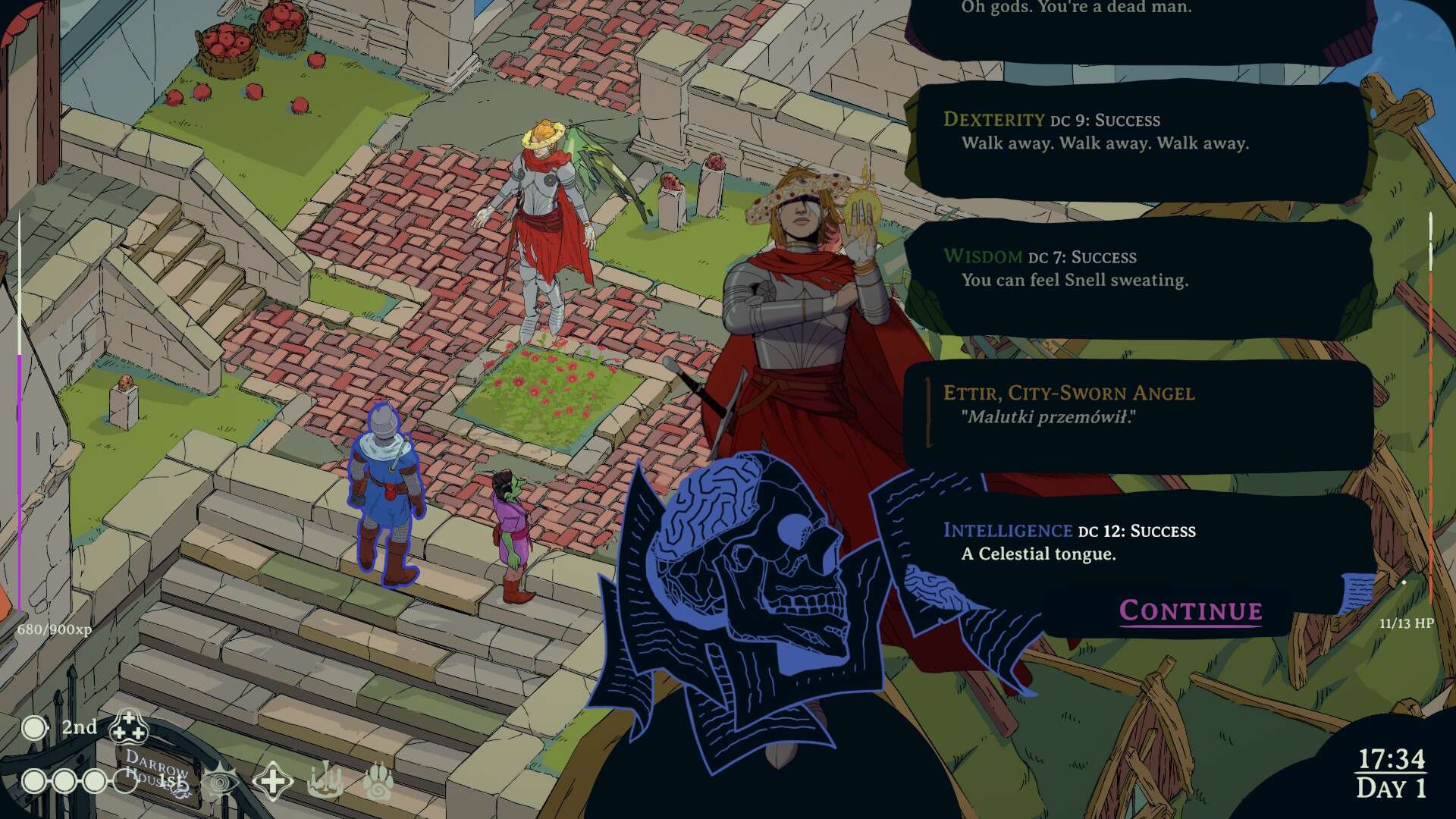
It’s, ultimately, one man’s self-described very lonely writing, spread throughout dozens of characters and what feels like millions of possible paths and dialogues. Every single dialogue with your stats is a skill check; I played a bit of a jack of all trades, but I have to assume that, with low enough stats, you can fail any of them. I certainly failed a bunch later in the game. Yet, just like its inspirations, throughout an endless sea of text, it is the choices you get to pick that bring out a vision. If I did not get to confront certain biases, the game would be worse for it. But I do, every time. Well, almost.
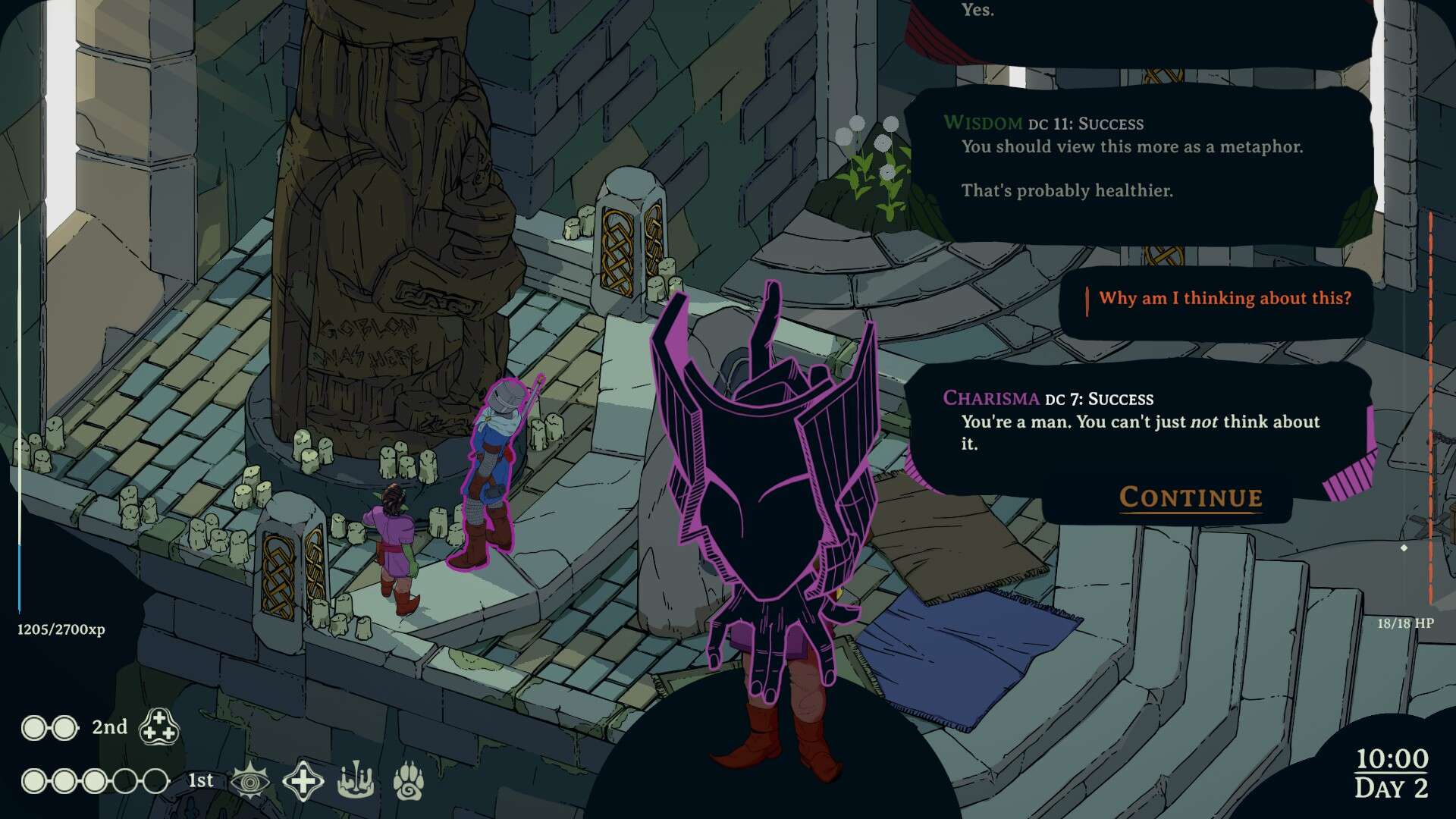
Not everything is tackled through The Cleric. With a diverse, very present political spectrum, it keeps that character from exploring things which, ultimately, I think it should. Though the knight can reject the sort of manosphere their strength stat is pushing for, one of the few pervasive things about him is his attraction to large, strong women. It sort of naturally disqualifies him from connecting with certain aspects of femininity mentioned in the Wisdom stat. The topic was pushed entirely on the Azgalian youth representative, and the lack of any way to connect with her on that level was palpable. I have to assume this is the case for a few other characters as well.
Your goblin companion by the name of Snell doesn’t quite live up to the standard these games have set. He’s no Kim, and no Morte. Like every character in this game, he has moments of unforgettable, utter brilliance, but maybe that’s just it. He does not necessarily feel like a companion, a closer friend that brings more to the story than any other, but more like one of the many rich, fleshed-out characters.
On the other hand, both my issues make the game feel undoubtedly more equal and communal. A central theme here. The future for people whose controversial, dictatorial god passed away a mere three decades ago. A new, democratic era, where everyone may yet find purpose. You are skilled in some regards, you have a purpose to fulfill, a quest! The same goes for Snell. And everyone else. It’s a fascinating balance, maybe not one I can appreciate fully, but I respect it nonetheless. It passed my subconscious, esoteric test with flying colors.
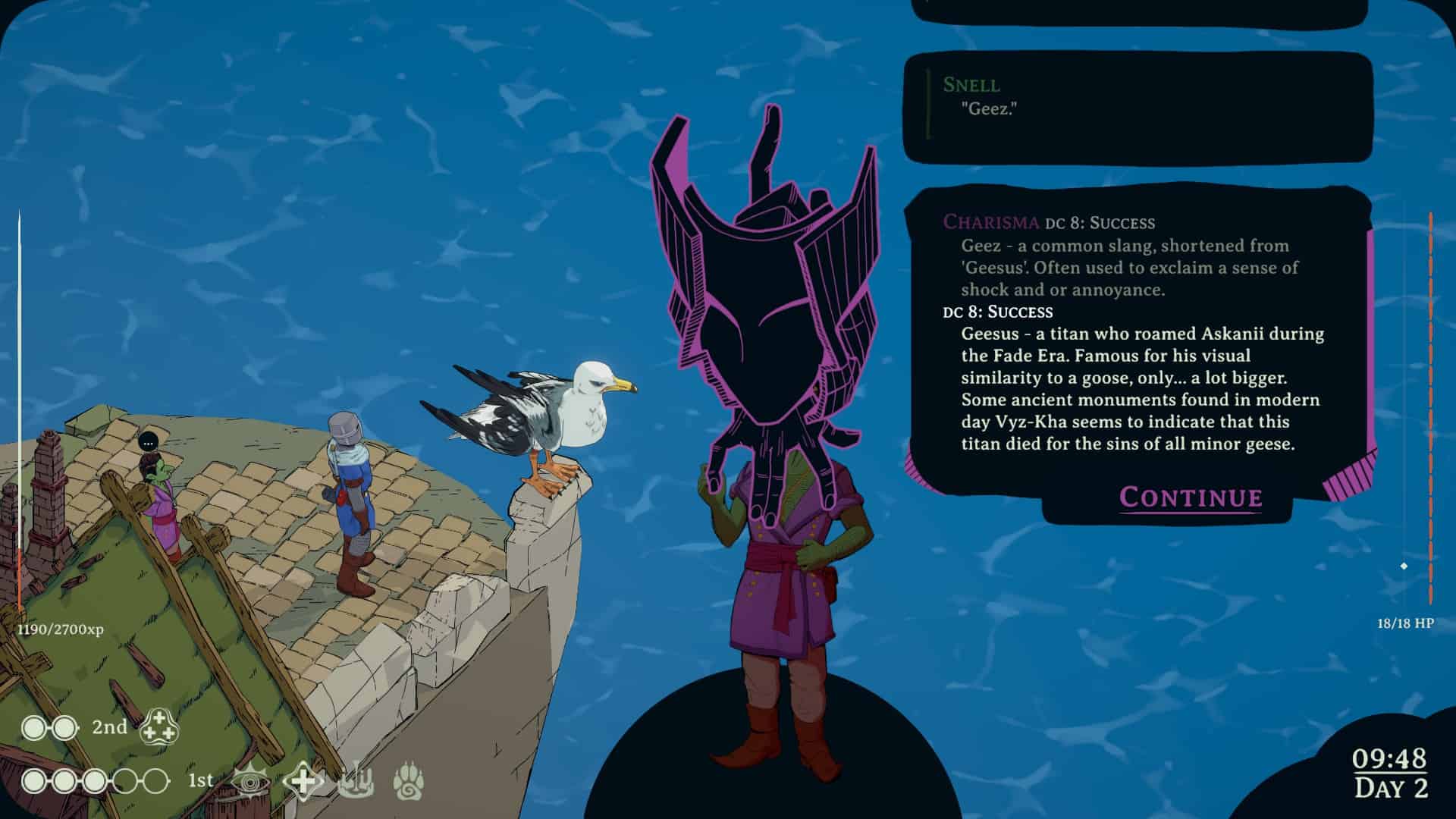
For the many stories I could discuss, the satisfying puzzles, wondrous discoveries, and the few bits that left me sniveling, I truly want them to be yours too. Every one of them. In the hundreds of possibilities and even with more character agency than in other games of its ilk, this story is still undoubtedly yours. Dare I say, maybe more than ever? Find your own solutions in this bright, colorful world full of even more colorful people. Sway to the gentle soundtrack, facilitating the exploration, with just a tinge of something else… can you feel it? It’s esoteric bullshit. Hell yeah.
There’s a bit on the collaborators site for Esoteric Ebb that I think ties a lot of the game together. Christoffer Bodegård, the lead on this project, writes about how he used to be a solo developer, saying, “now I collaborate with a ton of amazing artists who are much better at visuals and audio than I am, as well as all the other types of support pillars a small indie production can need at times.” Collaboration, pillars, times spent alone. It makes sense. The heart of Esoteric Ebb converges at one spot from hundreds of lines. Where was it before, where does it go after? Come share some stories after you’re done. We’ll share ours.
Mateusz reviewed Esoteric Ebb on PC with a provided review code. This review is based on the version of the game available at the time of writing and our score will not be changed.
- Score
- 9/10 Outstanding - Mateusz Recommends
- Summary
-
Esoteric Ebb had to stand out from its inspirations, and it passed that test with flying colors. It's a stellar dialogue-based RPG with a bigger focus on player agency and a masterful control of its mood.
- More
- GameObserver's Review Policy


 ObserverCrew Picks
 bserver
 bserver