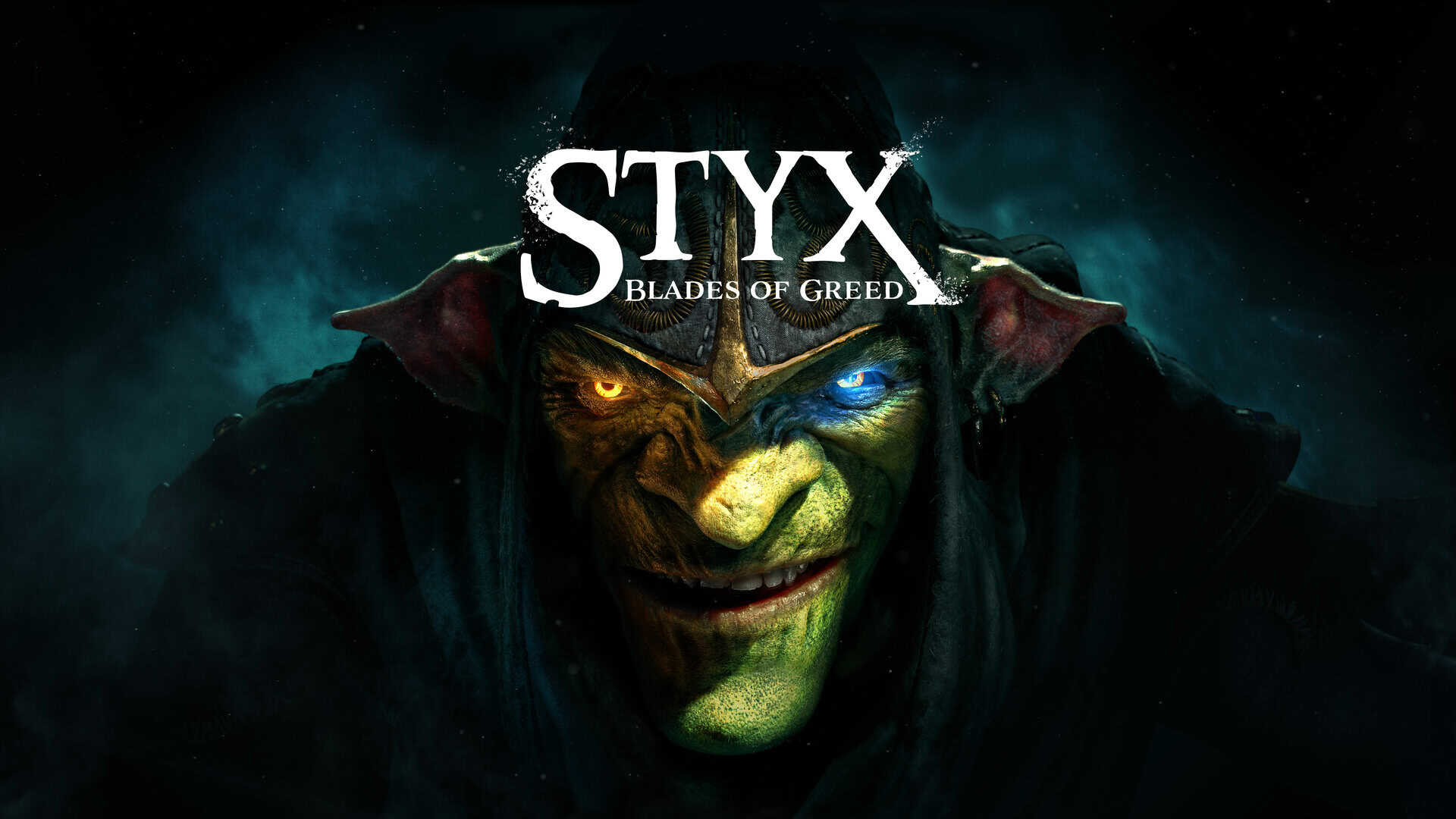
Styx was always years behind the competition, and that is largely a good thing. To catch everyone up to speed, what started as a AA RPG about a brute orc and a shadowy goblin fighting the combined armies of various fantasy races ended up as what is now a prequel trilogy of stealth games featuring the latter inside the same fantasy setting. Having played the two other Styx games a month ago, I quickly became a fan. Released years after generation-defining stealth titles, the series always opted for a more classical approach with its physics and a focus on the tension of uncertainty.
In the times of instant wallhacks, cutscene takedowns, and dodge-rolling between covers, even darkness did not always provide safety for Styx. For the few glaring faults it had, its design was never one of them, garnering the respect of the few stealth enthusiasts willing to put up with some modern clunk. Fittingly, now that the giants are largely out of the picture, Styx: Blades of Greed joined their ranks, becoming exactly the type of stealth game you’d see back then, featuring all the aforementioned mechanics.
Despite my tone, I am far from a hater. True, they never quite hit the same spot as my favorites, but they hit different ones. And if anyone deserves a crack at this, it’s the criminally underappreciated little bugger that is the Styx series. With its stellar level design chops and a truly unique setting for the genre, a grander adventure can go a long way in solidifying a place among the stealth greats. Yet, as is tradition, they didn’t quite nail it here. And that’s okay. It’s still leagues ahead of the dormant competition, if even by virtue of simply existing.
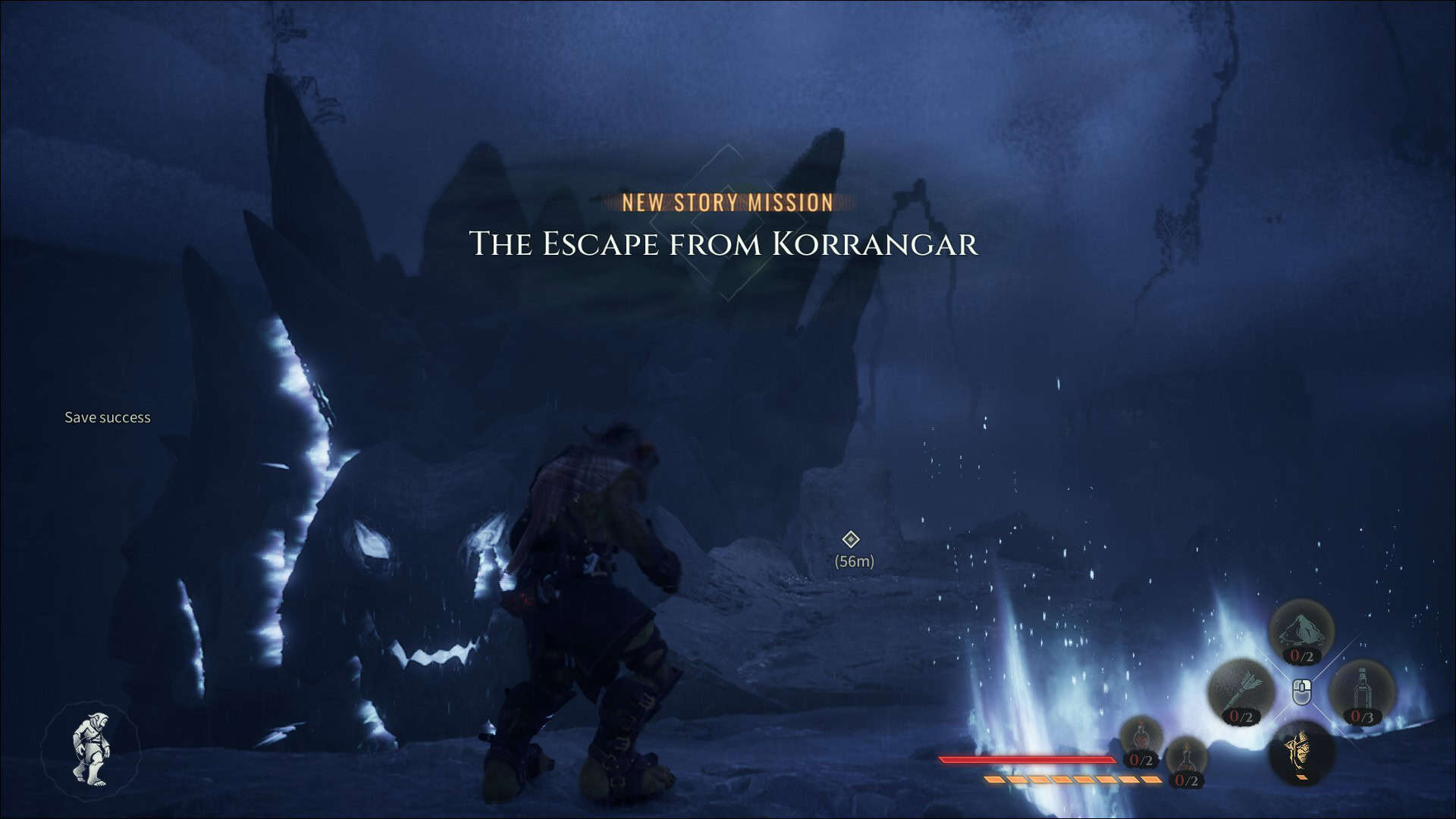
Most importantly, there’s plenty to like here. The level design remains excellent, even if the solutions are often simpler. The areas are once again massive, as Blades of Greed opts for a metroidvania-style open zones that expand with each new tool obtained at the end of each act. The strongest aspect of the series was always the size of its play areas, and it is no different here, even if not everything feels as interconnected. The design philosophy has changed, as the answers to problems became more noticeable and straightforward, yet the awe with which I took in the depths of each location was greater than ever.
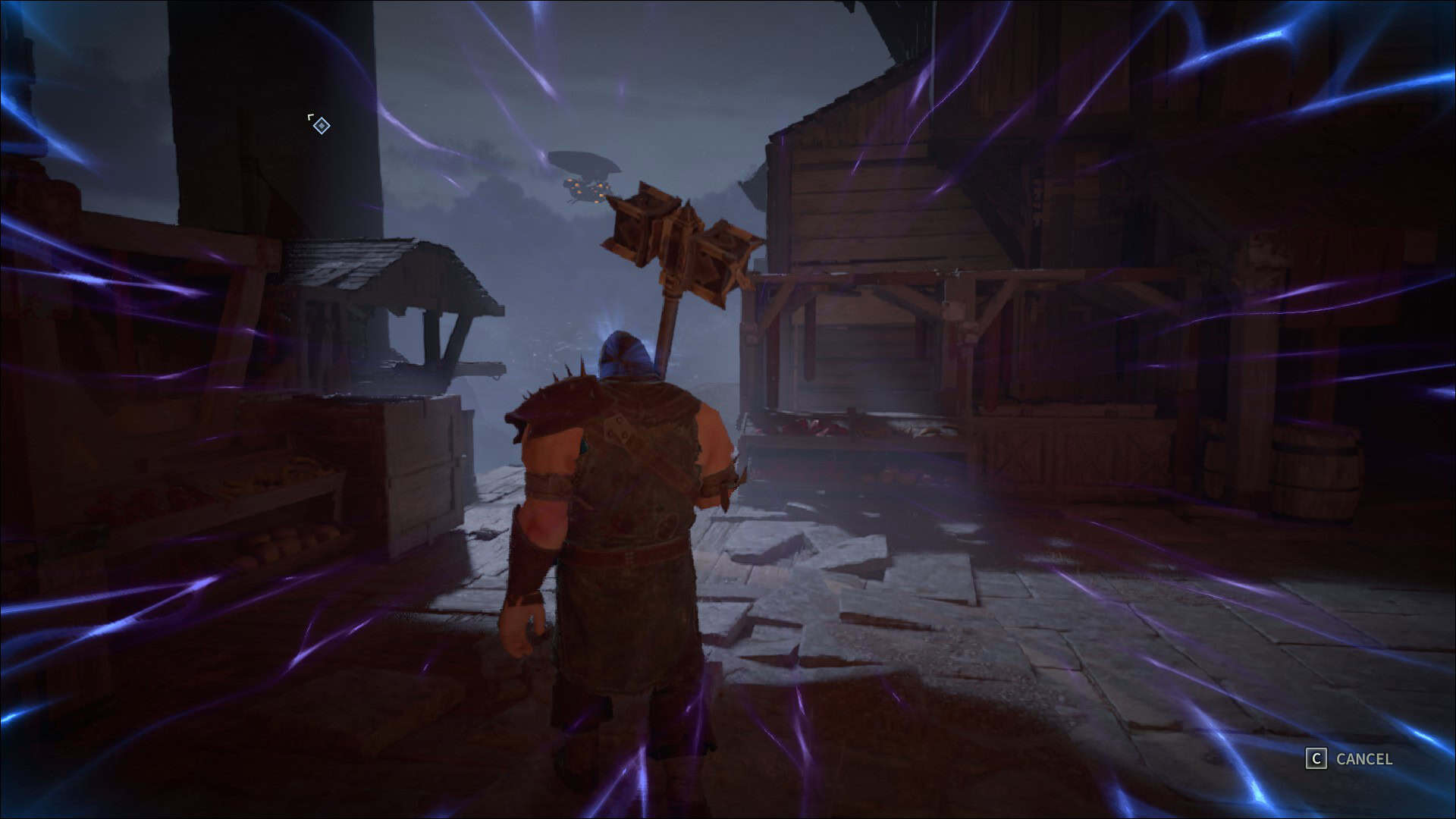
To facilitate its new approach, Blades of Greed gets rid of scoring systems seen in the past games. No medals for avoiding detection or no-kill runs. Though I grew to enjoy these playstyles plenty, Blades of Greed moves to provide the all-time goblin experience by pushing you to use your tools if only for the hell of it. Styx himself may have grown older, thankfully ditching the pop-culture references and fourth wall breaks from Shards of Darkness, but he still clearly enjoys being the nastiest of creatures. This self-acceptance means he doesn’t mind a bit of mind control to send a patrolling guard off a cliff.
With a new installment comes a slew of new toys. Quartz powers, such as the aforementioned mind control, or a time-slow, but also movement gadgets like a grapple hook. Many end-game unlocks from the past games are built into Styx’s default moveset here, or can be unlocked at a low experience point price, most notably the silencing of air and corner kills and the ability to see through walls. Experience is much easier to come by, with all collectibles providing some, including newly added coin pouches. The crafting system is back, and a few abilities, like cloning, got reworked. With all this also come some of the problems I have with Blades of Greed.
The biggest issue with the first game, subtitled Master of Shadows, were the visuals—its muddled and boring environments undermined the stellar levels. The second, Shards of Darkness, was way too short—it was great from the start, but did not pit you against obstacles worthy of your arsenal for too long. Blades of Greed’s problems are twofold: its sidequests are trite and boring, and the power is skewed too much in Styx’s favor.
Though I don’t mind the switch to a power fantasy straight from mid 2010s stealth games, it is undeniably jarring. There are a few too many conveniently placed traps, and Styx is out there fighting orc warriors one-on-one and succeeding with minimal issue. One could argue that the years made him more experienced, but the ability to destroy the strongest enemy type in combat further undermines the already streamlined stealth. The same goes for revisiting largely empty, gigantic areas from past missions in search of tiny trinkets, otherwise known as Blades of Greed’s sidequests.
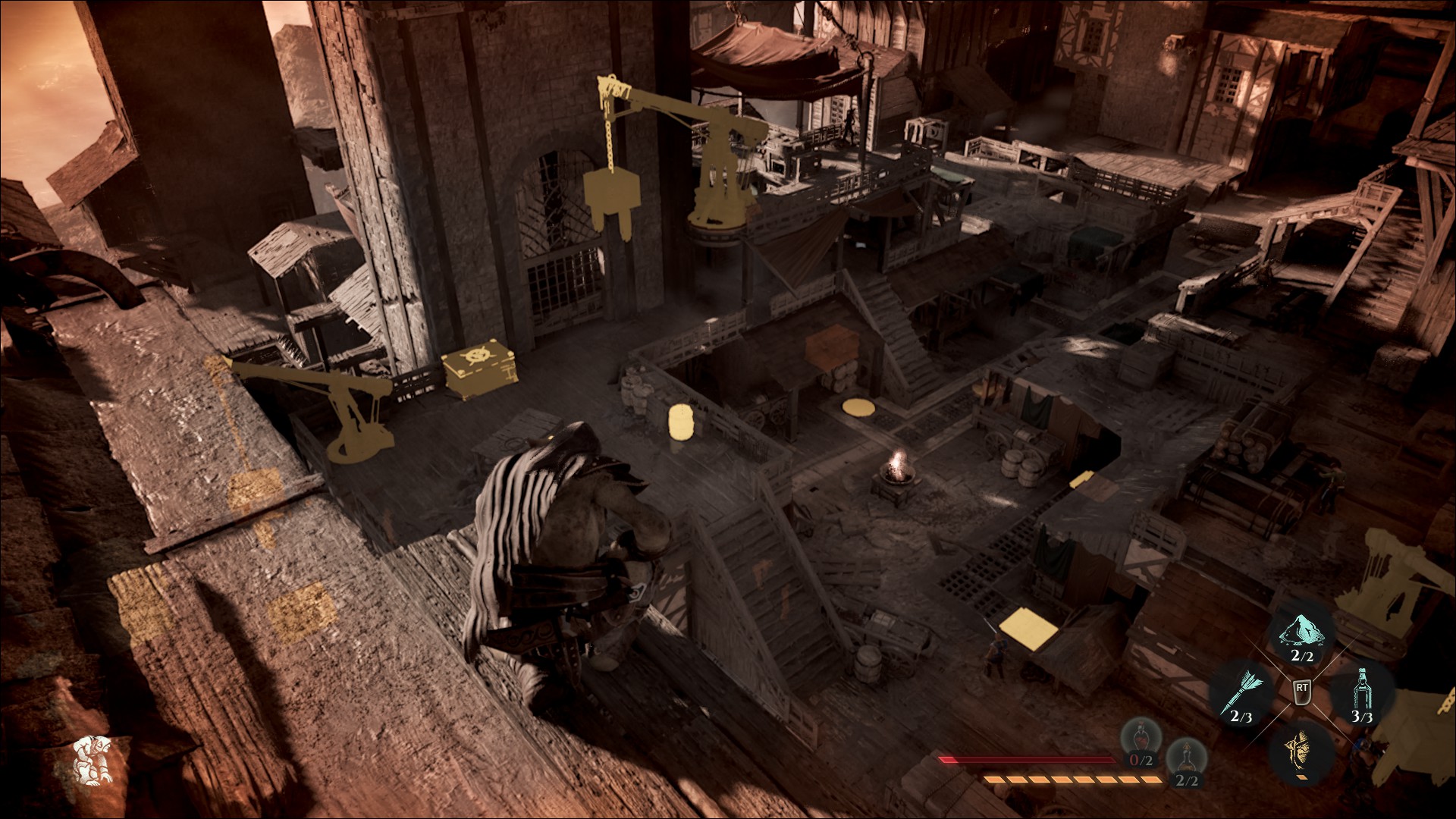
As much as it tries, there really is no way to marry the new level design with the series’ love of collectibles. Sometimes, the only clue is that an item lies somewhere in a location spanning two now largely empty areas, each with endless walls that prevent the loot from being highlighted on Styx’s amber vision. It becomes a grueling task of checking each hut and maybe knocking out two guards or using invisibility for a second. The worst part is that you want to complete them to gain access to experience rewards, as they allow for more cool unlocks.
Why most of these quests are not given out before you first visit any area is beyond me. Styx never shied from its identity as a series of shorter, replayable experiences, and these kinds of optional objectives used to be one of its greatest features. To know there are entire sub-areas dedicated solely to these is exactly what’s needed to make these kinds of titles compelling. Going bigger should have been substantiated by new designs, as these relics of the past prove more of a crutch. I guess it does feel like running around an already completed level in Thief to find the last few pieces of loot for that gold objective, but you really shouldn’t mimic the worst part of those games. A change to the side-quests alone would greatly improve the whole game.
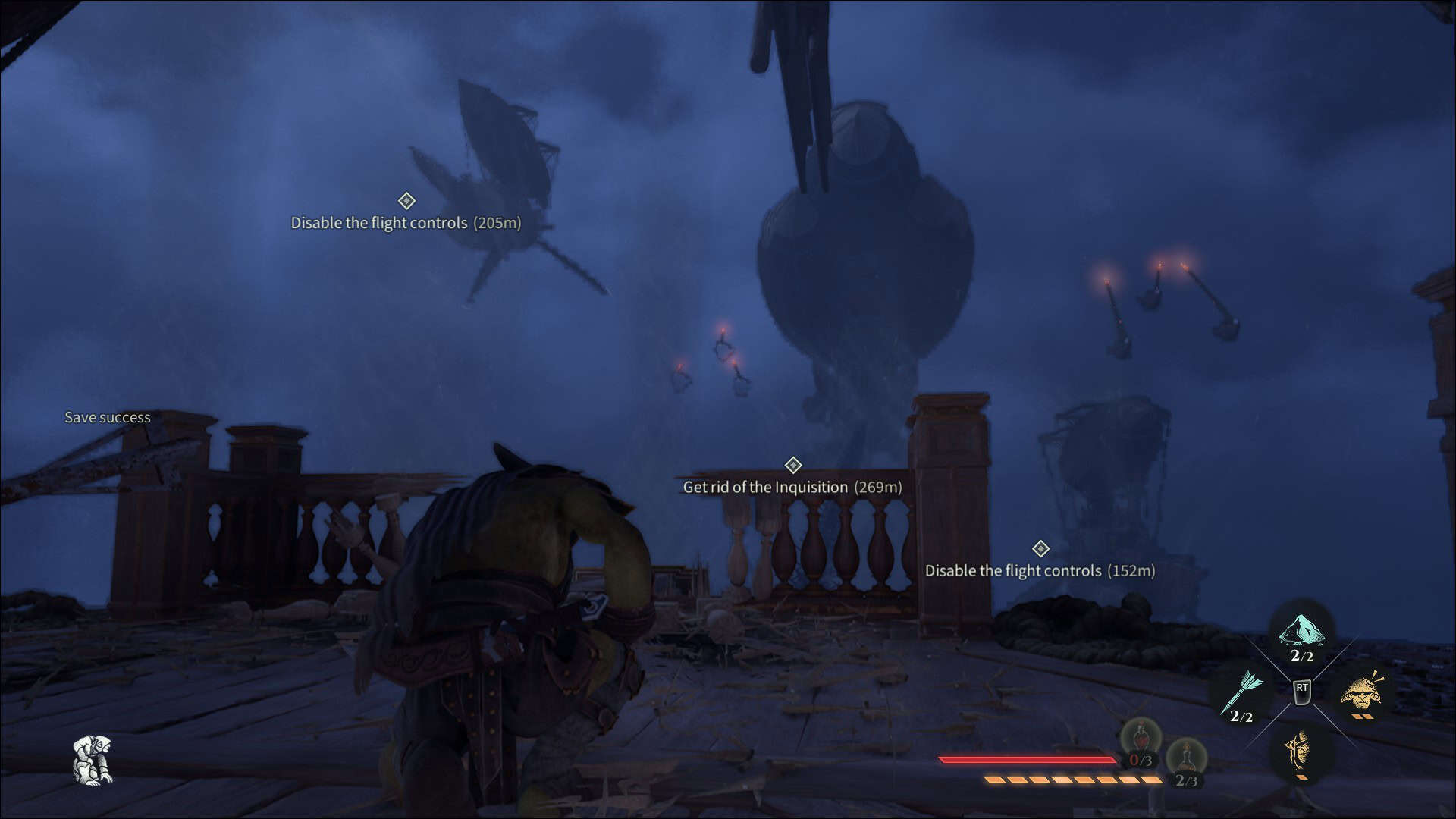
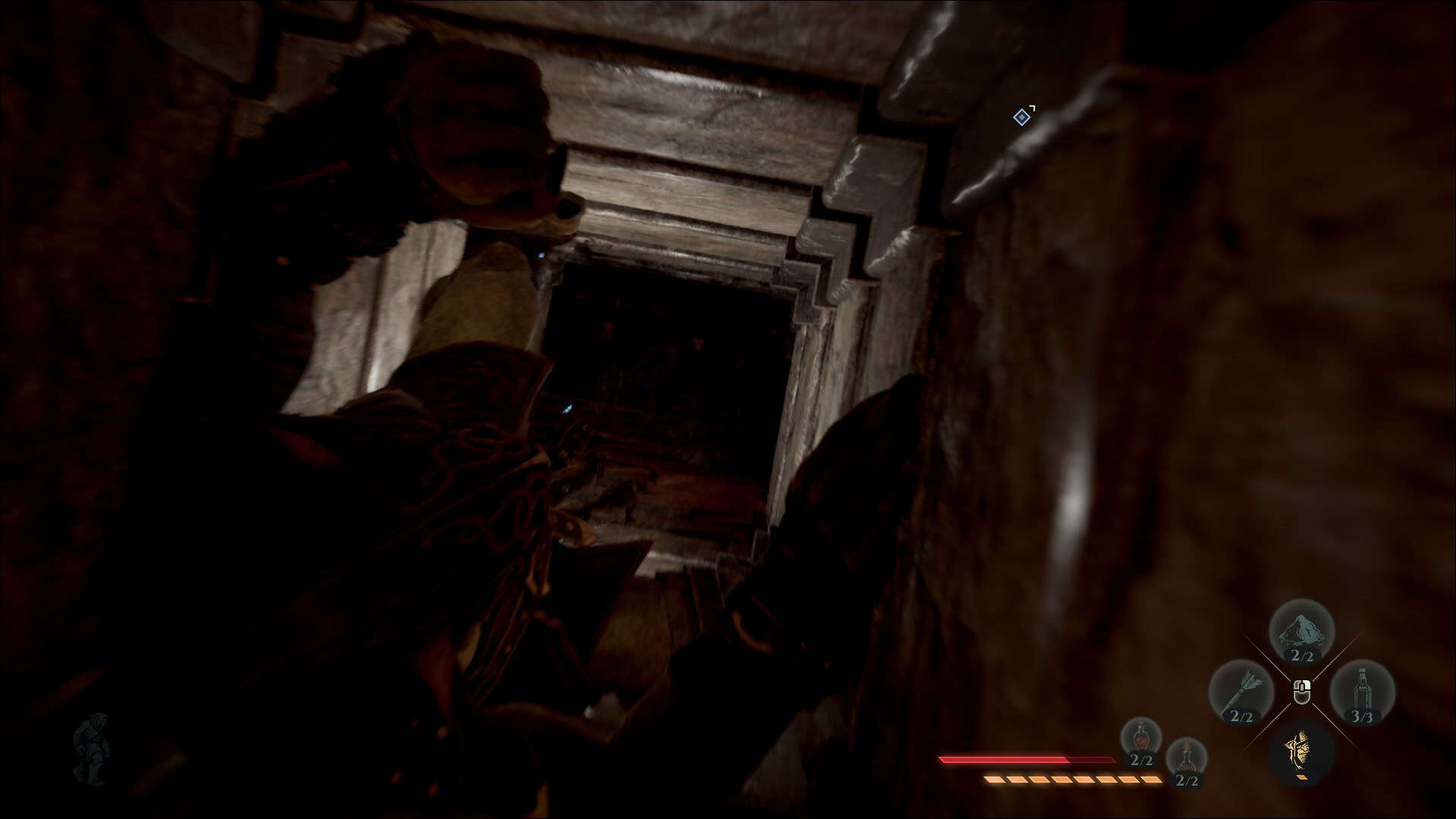
This doesn’t mean Styx is a bad fit for this newer type of stealth game or its new open-zone design; it just means the identity of the series should have been altered further. Despite this, Blades of Greed is undoubtedly my favorite of its ilk. They’re a comfort food, and this one just has more of that AA flavor. I know that there’s always a tunnel to lead me to my destination, and that if I want to, I can pretty easily dispose of all enemies. Previously, it was the scoring system that pushed back against engaging with the combat or other tools that could alert guards.
Now, it’s purely self-discipline. I know I can make Styx take down the entire garrison, and there’s no consequence for doing so, but if the game constantly dangles keys in front of me, in the form of a guard looking into the distance near a deadly fall, a plate of food to be poisoned or a conveniently placed chandelier to be dropped on armored soldiers, why bother? There’s always a little treat around each corner of its massive zones, and it is only their absence during revisits that shows cracks in the new design. Plus, whenever I see the opportunity to do so, it still feels fantastic to weave between patrols.
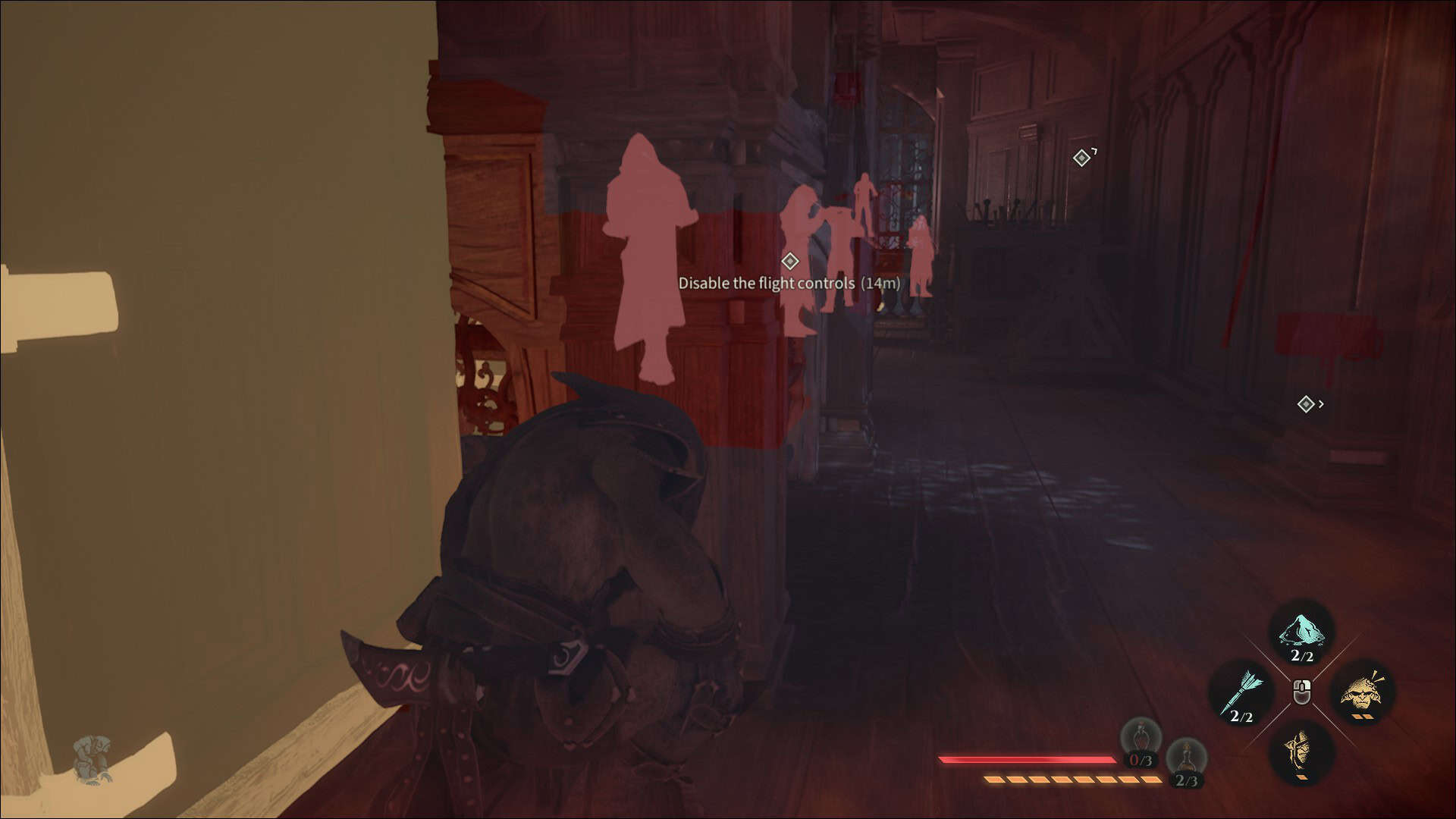
Though it’s the longest, most expensive-looking Styx game, Blades of Shadows still suffers from some rough edges. Most notable are a couple of softlocks I encountered in the first act of the game. I had to restart my playthrough once, nearly twice, after obtaining pieces of quartz in an unintended manner. Once, via entering a hideout from a chimney, whose fireplace I put out through a crack in a window downstairs when I was supposed to trigger a cutscene on a nearby door instead, and second, when grabbing a piece of quartz from a mid-flight bird. Neither counted towards the completion of the main quest, and with limited save slots, if you don’t realize these aren’t viable solutions or some optional objective after a while, there is no way to go back far enough, requiring a full restart.
A result of the pains the developers took to keep everything in-engine, no doubt, but also a sign of their new design philosophy Blades of Greed puts forward. “Don’t get too cute with it.” In previous games, if the goal is to get an item, it doesn’t matter if you used the clearly set-up path or got it on your own terms. Here, if you don’t follow the rules, you may just get locked out.
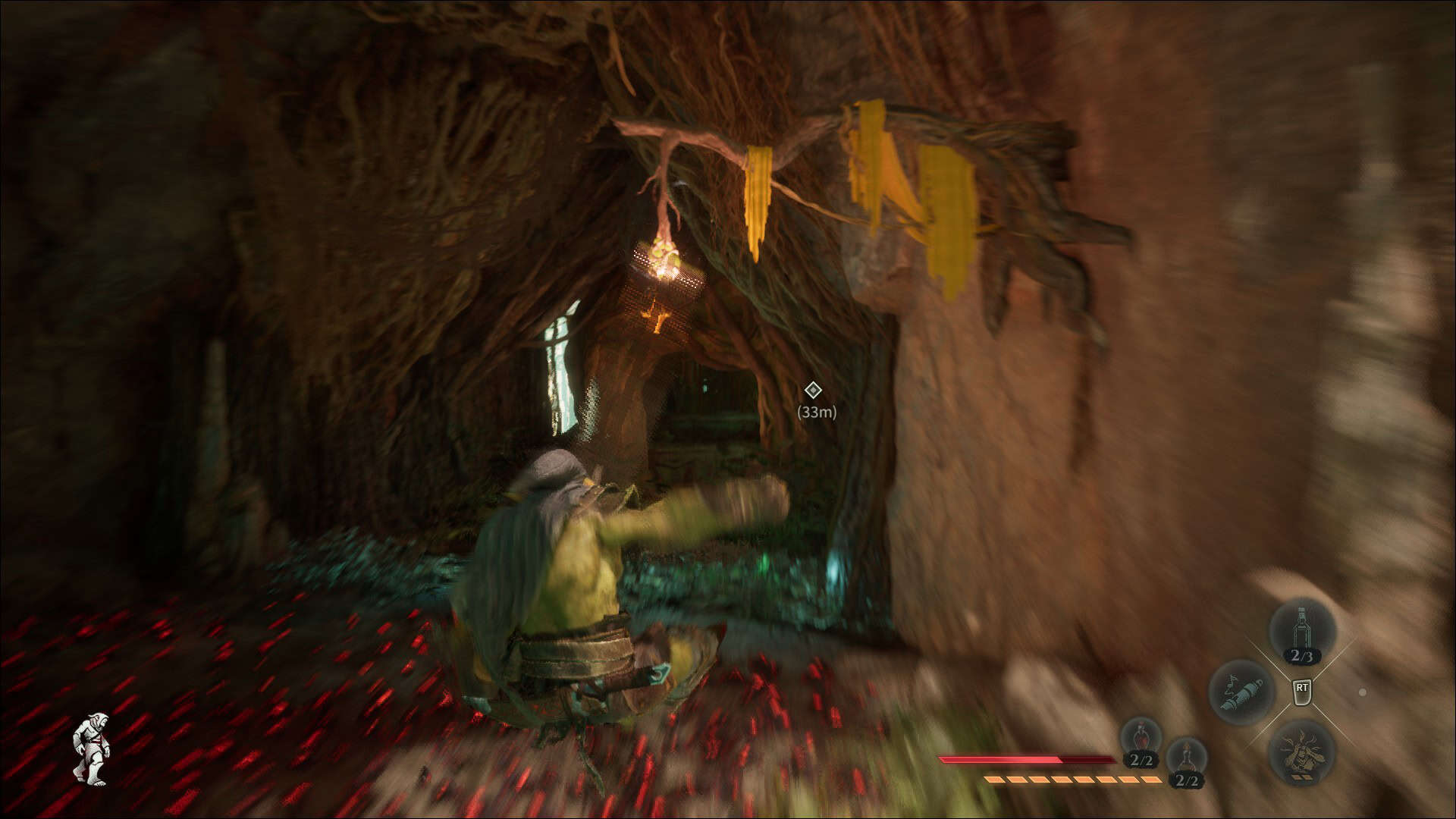
Some minimalism remains, like its excellent soundtrack. Though instrumentally or tonally it’s far from a standout, it knows that all it needs to get you excited is a sudden change of tempo, and to quickly reset the mood back to the mischievous goblin antics, it only has to hit you with the few stringy notes of its main theme. The latter pervades all atmospheric tracks, something I would typically tire of, but here, with minimal usage, I grew to cherish and hum its notes each time they came up. The pause at the start makes it so catchy, begging you to join in. It’s not winning any awards, but I remember each game’s soundtrack fondly, and Blades of Greed is no different.
For most else, I am largely ambivalent. The story and characters are compelling enough, but without much in terms of growth or satisfying resolutions. The Styx series started out with clever twists on classic fantasy lore and a unique protagonist, while the subsequent titles mostly ride the coattails of that success, trying to keep a certain status quo given its prequel status. It’s interesting to see more of the orc shaman culture or witness the beautiful ruins of The Tower of Akenash, the setting of the first game, just don’t expect any surprises. Meanwhile, the acting ranges from charmingly awkward to comically lost in the role. Plenty of characters talking out loud about secrets in an exaggerated henchman voice. Is there any way to not make these sound ridiculous at this point?
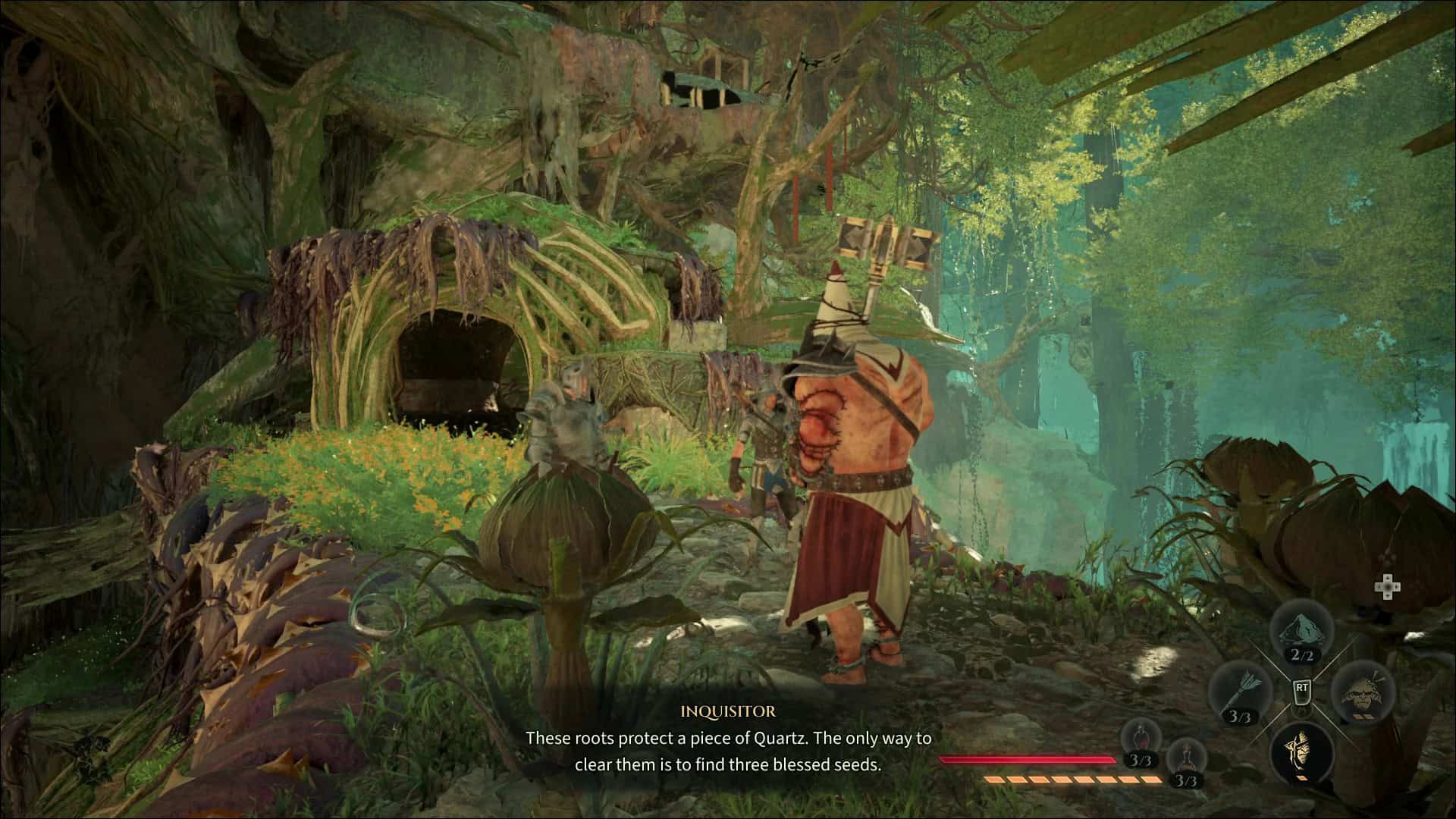
Styx himself suffers most. A character who was once charismatic enough to warrant a spinoff that became the de facto main series of the universe, largely thanks to the efforts of his voice actor Saul Jephcott, now relegated to repeating quest objectives to himself and an occasional dry complaint. He brings back the abrasiveness during a few story cutscenes, but it feels like a sort of “old man Styx” persona with how much he mellowed out. I may not have been a fan of the overly silly approach of Shards of Darkness, but the lack of bite and sass from his Blades of Greed counterpart is similarly disappointing. I still enjoy his banter with the comically dry elf Djarak and his new ride-or-die, ex-goblin hunter Helledryn though.
All this to say that perhaps Styx is destined to never have one definitive game, but each is characterized by its strengths as much as its weaknesses. While not my favorite, Blades of Greed is the most approachable title in a series I wholeheartedly believe deserves a reevaluation. Though once an integral part of the medium’s history, the humble stealth game is now in the hands of enthusiasts. Each one of us probably has a vision of what it is they want Styx to be exactly, yet the slippery goblin that he is, he continues to defy these confines and is born again each time we see him. So, whether you never played one, played all of them, or vowed to never play another, give Styx: Blades of Greed a shot. I’ll always be excited to see a new entry.
Mateusz reviewed Styx: Blades of Greed on PC with a provided review code. This review is based on the version of the game available at the time of writing, and our score will not be changed.
- Score
- 7/10 Solid - Mateusz Recommends
- Summary
-
A return of an underrated stealth icon, Blades of Greed is another new take on Styx and the most accessible game in the series, though not the definitive entry many would hope for.
- More
- GameObserver's Review Policy


 ObserverCrew Picks
 bserver
 bserver