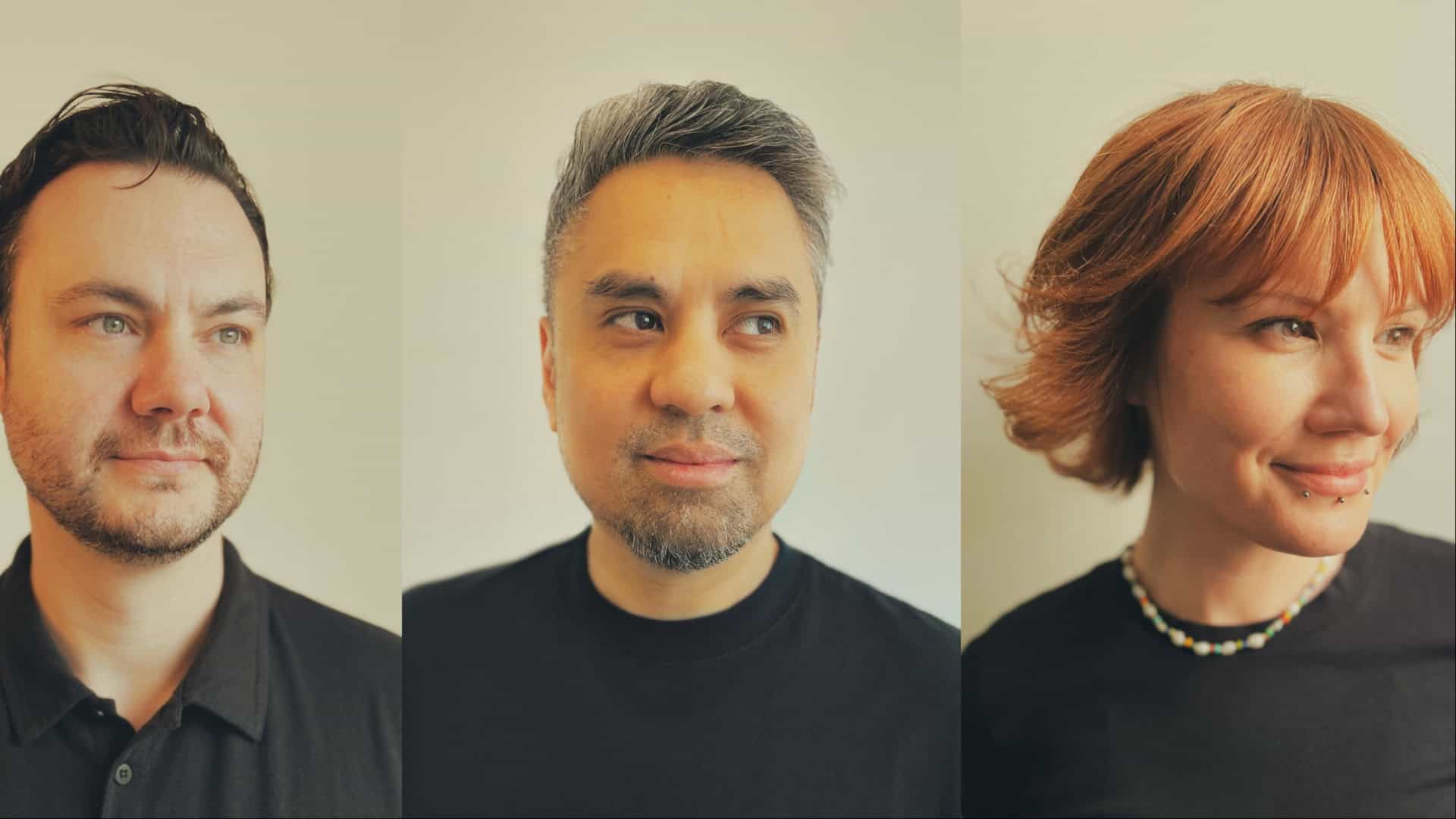
Within the past few years, the game industry has seen a major shift in the way studios operate and develop games. Thousands of professionals have been laid off; news about studio closures is no longer surprising, and budgets have expanded to the point where games require unreasonable commercial success in order to survive. In an industry that has come to treat success and scale as interchangeable, Studio Reset is embracing a smaller scale. Founded by former BioWare, Inflexion Games, and Timbre Games developers Kaelin Lavallée, Kris Schoneberg, and Francis Lacuna—whose credits include Mass Effect, Dragon Age, and The Long Dark—the Edmonton-based independent studio places sustainable success at its center. GameObserver sat down with the three founders to discuss the launch of Studio Reset, their upcoming neon-noir supernatural mystery project, what they’re leaving behind, and what comes next.
Studio Reset Founders Want to Get Their Hands Dirty Again

Lavallée, Schoneberg, and Lacuna grew up together at BioWare, where they spent around a decade overlapping on major franchises such as Dragon Age and Mass Effect, defining games within the RPG space. While their careers eventually took them to different studios, that shared history shaped their working relationship and how they approached development itself at Studio Reset. “There’s just a certain shared set of values, goals, and ambitions that we want to achieve,” says Lavallée. “When you work in the industry and you have people that share those values, it brings you closer together.” Schoneberg echoes this as well: “We’ve learned to trust one another; when someone says something should be done, we’re just ready to move with confidence.”
That shared foundation carried through as their careers progressed into large studios and more senior roles, where the nature of the work began to change. “When you’re in the industry for long enough, you start moving up, and you get to a certain level where you become more and more hands-off with everything,” says Lavallée. In larger studios, teams can stretch to hundreds of staff; the managerial nature of senior positions takes away the hands-on aspect of the job. “We grew up building the content and we all missed that. Having an opportunity to get our hands dirty again is really compelling for us.”
The timing of the studio’s formation also mirrors the broader shift in the industry, where independent studios are finding audiences and success that rival those of major releases. Most recently, Sandfall Interactive’s Clair Obscur: Expedition 33 won Game of the Year at the The Game Awards 2025, where three out of the six nominees were from independent studios. “There’s a shift now towards smaller studios—games and ideas that are unique, evocative, personal, or specific to certain players,” says Lacuna. “Those are things we’ve always wanted to do, and I think this is the perfect opportunity.”
What They’re Leaving Behind And Carrying Forward
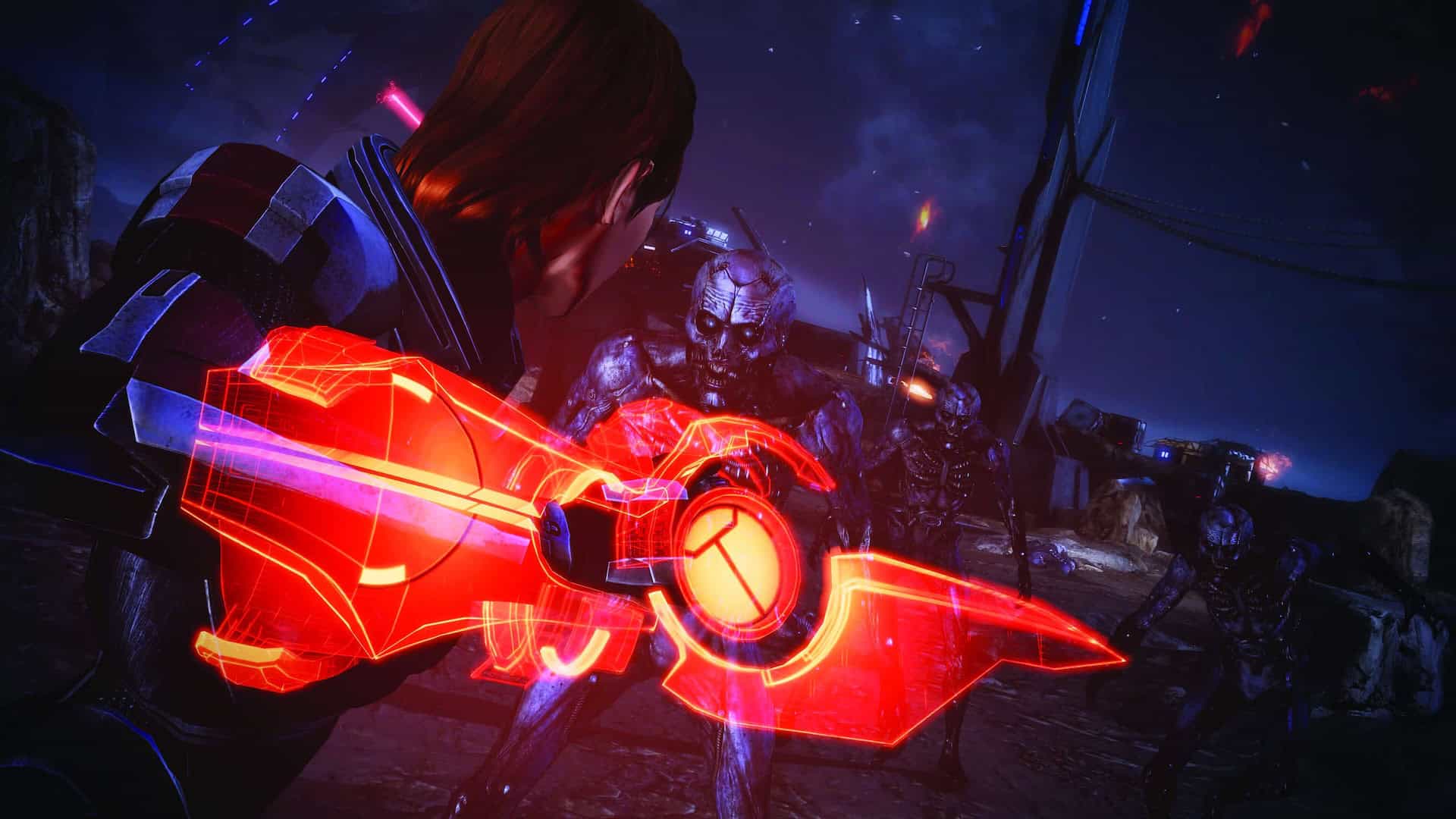
Each brings almost two decades of professional experience across major studios, which is deeply shaping their approach to this new chapter. While they have clear ideas about what they are bringing to Studio Reset as it finds its footing, they are equally clear on what they’re stepping away from. “The first studio we were all at taught us what’s really hard about game development,” says Schoneberg. “But it also helps us understand what’s really fun about it.”
Scale is a defining aspect of how they’re thinking about the studio and its first project. Working with titles such as the Mass Effect trilogy, the Dragon Age franchise, and Anthem, they have firsthand experience with how large-scale games are built both creatively and structurally, where contributions from more senior developers increasingly shift towards orchestrating the process rather than directly working on its content. “Our experience has allowed us to make smart decisions when it comes to scope,” says Schoneberg. “Large projects are super fun, great to work on as a tiny cog in a big machine. But now there’s a space in the market for something smaller—something you can start and finish.”
In turning away from larger-scale projects, they are defining on their own terms what success looks like for a single project. For Studio Reset, this means focusing on getting ideas into a playable form quickly instead of gradually increasing scope over time. “It’s not enough to just have an idea,” Lavallée highlights as a lesson learned from his own experience. “You have to follow it through with execution, from concept to ship. The quicker you can get from that idea to something playable and into the hands of testers, you’re going to end up with a much better experience.”
As a project grows in scope, it is natural that teams expand to meet its demands. With more people involved in increasingly complex production pipelines, it becomes harder for developers to grasp how many of their contributions will make it to the final product. As things pass through multiple teams and layers of production, the distance between the developer and the finished game becomes larger and larger. “You get your work done and it kind of goes into a vacuum,” says Lavallée. “You don’t know what happens to it. You’re like, I guess it’s going in the game, maybe?” Studio Reset is embracing a smaller scale, which allows that distance to disappear and give room for transparency in every step of the process. “You know what everybody’s doing. You know how everything fits together,” says Lavallée. “It just allows you to iterate that much quicker.” For the three founders, this transparency is necessary to build something with intention.
Scale Does Not Equal Success
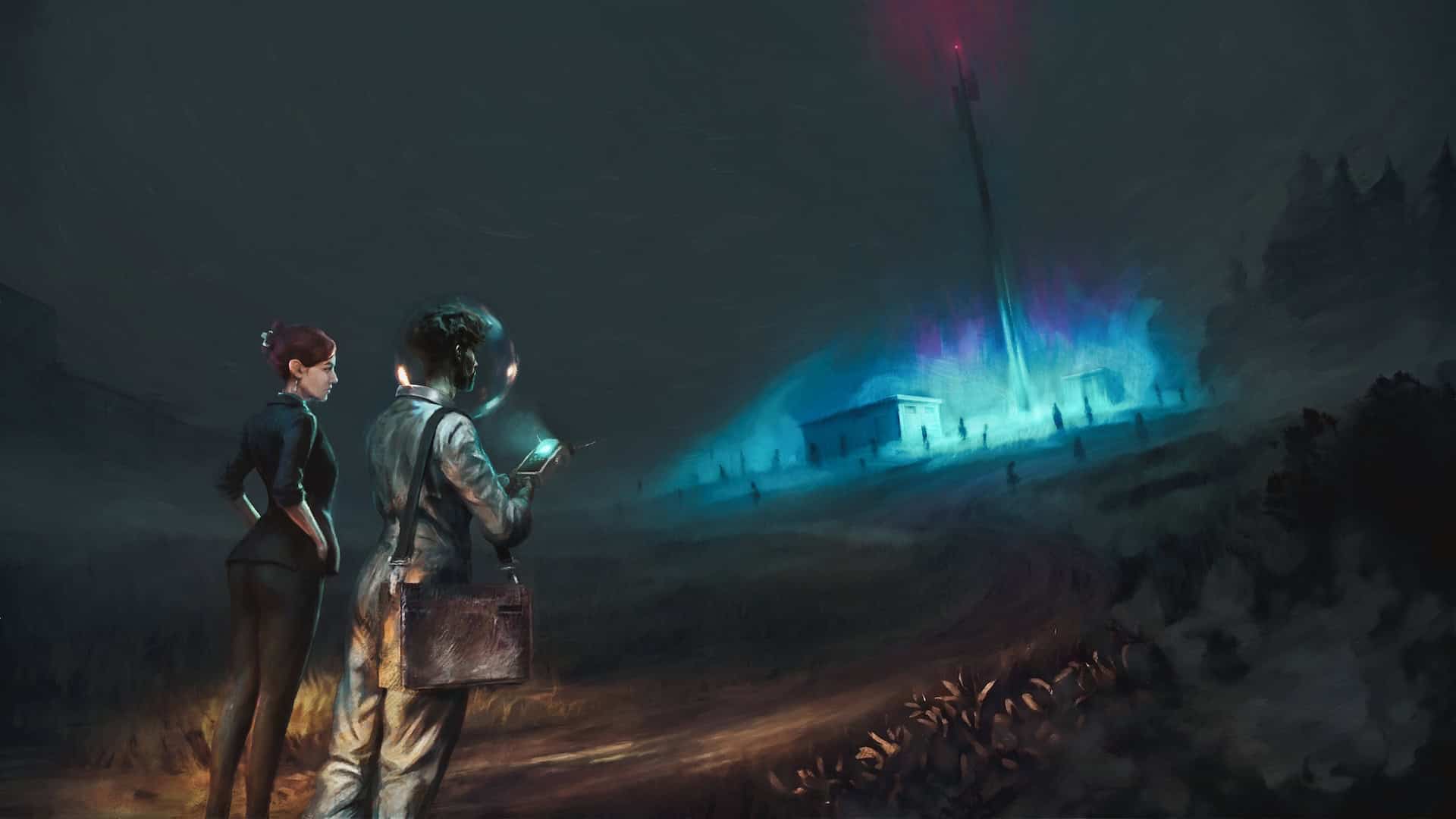
Success is very subjective, but in recent years, it seems as if the game industry has decided on scale as a defining factor. Massive budgets, larger audiences, and longer playtimes have become benchmarks with which to measure a game’s achievements. For Studio Reset, success looks like something simpler: sustainability—the ability to keep making games and building experiences for their players. “A lot of the bigger companies have shareholders they’re beholden to,” says Lavallée. “They’ve got their fiduciary duty to keep expanding and growing at any cost. It loses a lot of the human element that goes into making games.” Studio Reset has no stakeholders to report to. “We’re just trying to do the exact opposite,” says Lavallée. “Smaller budget, smaller scope, smaller team.” The studio was selected as one of 31 studios for the Canada Media Fund’s Interactive Digital Media Prototyping program, receiving $250,000 to develop a prototype––funding that would allow them to bring the project to life.
Getting there required persistence. This success came after a first failed application, where the team admits to having lacked the visuals to back up the concept. “You can’t just say what it’s going to look like,” says Schoneberg. “You have to show it.” That’s when Schoneberg and Lavallée brought Lacuna into the project, who, with over 14 years of experience at BioWare as an artist, built the art direction that the project had been missing.
With the funding, the studio has been able to move forward with the initial stages of the project, and the founders have made the deliberate decision to stay small and focused and build for a specific audience. They are building towards what they believe players are looking for, and they have already seen interest in their socials. When they opened their Discord following the announcement, they just expected friends and family to join. Now the server has over 100 members. “We were expecting no one,” says Schoneberg. “Having people already join us is really, really great.” For Lacuna, this community is already a measure of what success looks like. “If the players are happy and enjoy the compelling game experience we have delivered, interesting characters, deep mystery, and thoughtful puzzles, I would consider that a success.”
A Mystery Built Around Trust
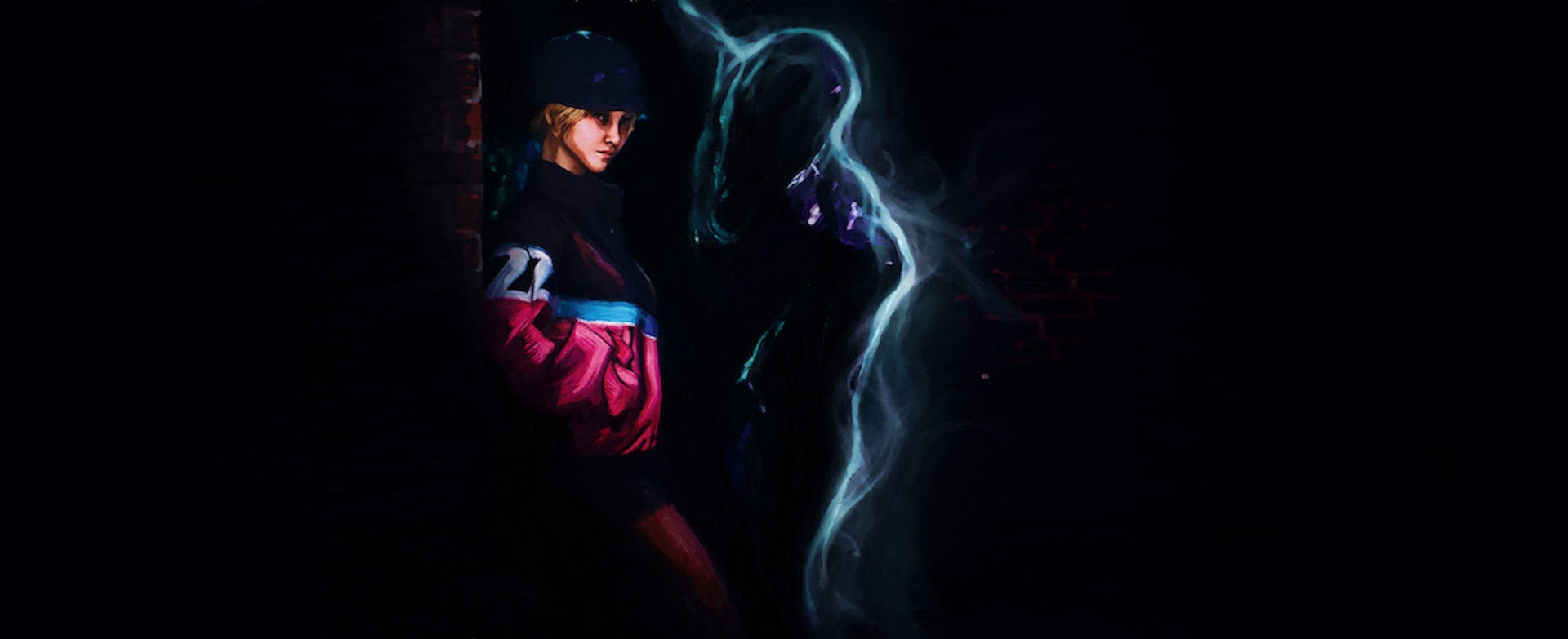
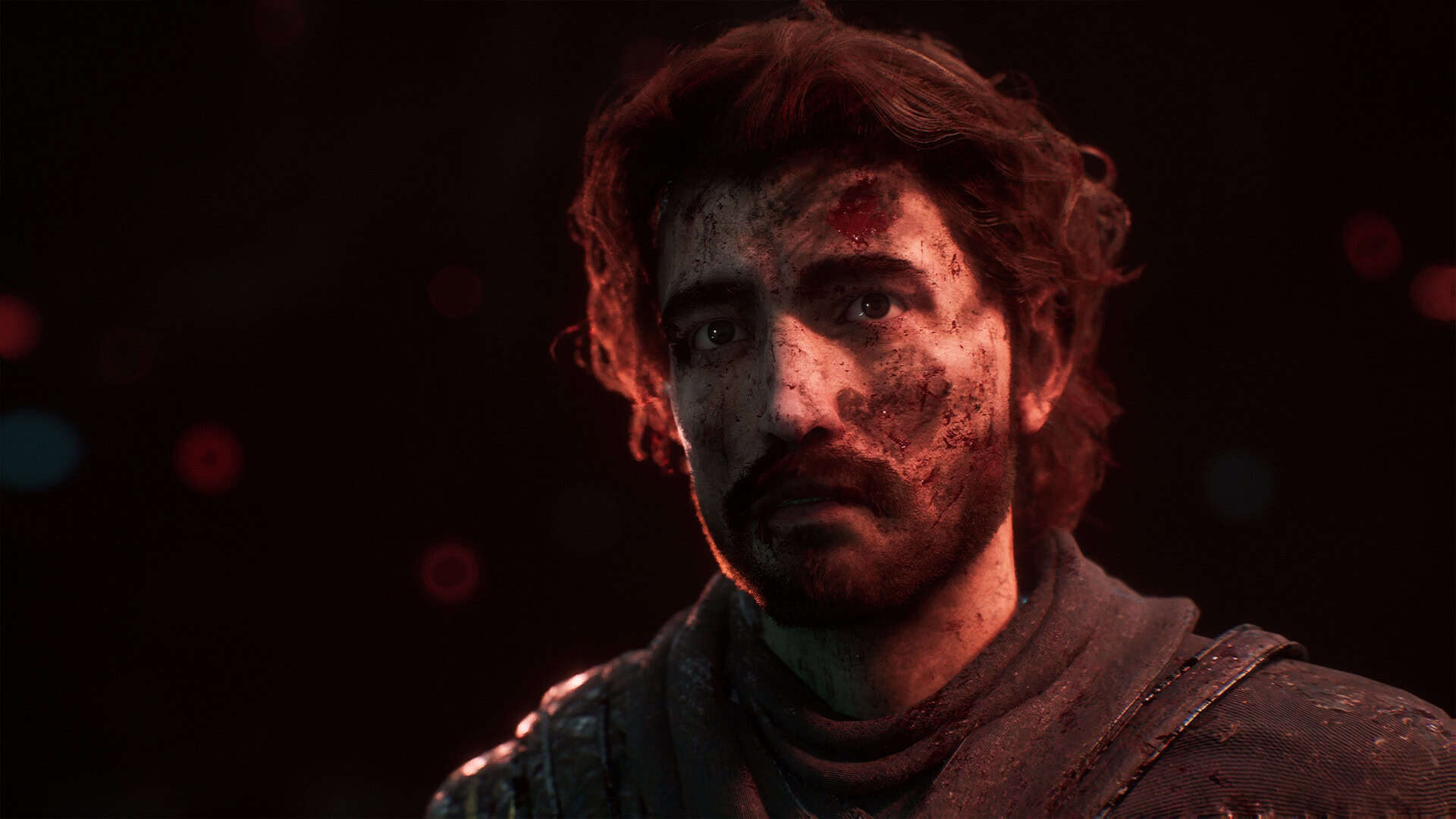
Their debut game, which we don’t have a title for yet, is a neon-noir supernatural mystery set in a stylized Canadian city. It’s built around a design approach called “Parallax Deduction”—a perspective-led investigation system where each character brings a different lens to the same case. While the studio isn’t ready to share more specifics, the game is designed to be experienced incrementally. ”It’s like lighting a single candle in a room,” says Lavallée. “You’re not going to see everything at first. But the more candles you light, the more time you take to do it, you’ll eventually be able to see everything.” Progress is meant to emerge through observation and will feel earned by the player, with the mystery unfolding through narrative deduction rather than arbitrary puzzle logic.
This approach ultimately comes back to how they are tackling structure. For Lavallée, the distinction is between breadth and depth. “Scale has often become synonymous with breadth. We can have a shorter experience that has more replayability through depth. “The goal isn’t to keep players engaged through sheer volume of content but to build something that stays with them. At its core, the game is meant to feel earned, with the developers placing a big emphasis on respect for the player. “Respect the players’ time, respect their intelligence, and let them discover this mystery for themselves,” says Lavallée. “We don’t want to just show them right from the beginning.”
Even though they are not allowed to share more details at the moment, Lacuna offers a glimpse and says that players can expect a “horrifyingly beautiful” experience.
What Comes Next
Studio Reset is at the beginning of its story, one worth watching as someone whose introduction to RPGs was through BioWare’s iconic titles. At a time when many consider the gaming industry to be in crisis, it’s refreshing to see these veteran developers come together to build something on their own terms, where sustainability takes priority. The popularity of indie games created by smaller teams reflects the players’ appetite for focused projects that prioritize meaningful storytelling and distinct creative vision. As Schoneberg says, the goal has always been simple: “Make something and get it out there and get people to play it, that’s what I got into this gig for.”
You can follow Studio Reset’s journey on Discord, Instagram, TikTok, Bluesky, and YouTube, or sign up for their newsletter, all of which you can find on their site at studioreset.io.



 ObserverCrew Picks
 bserver
 bserver