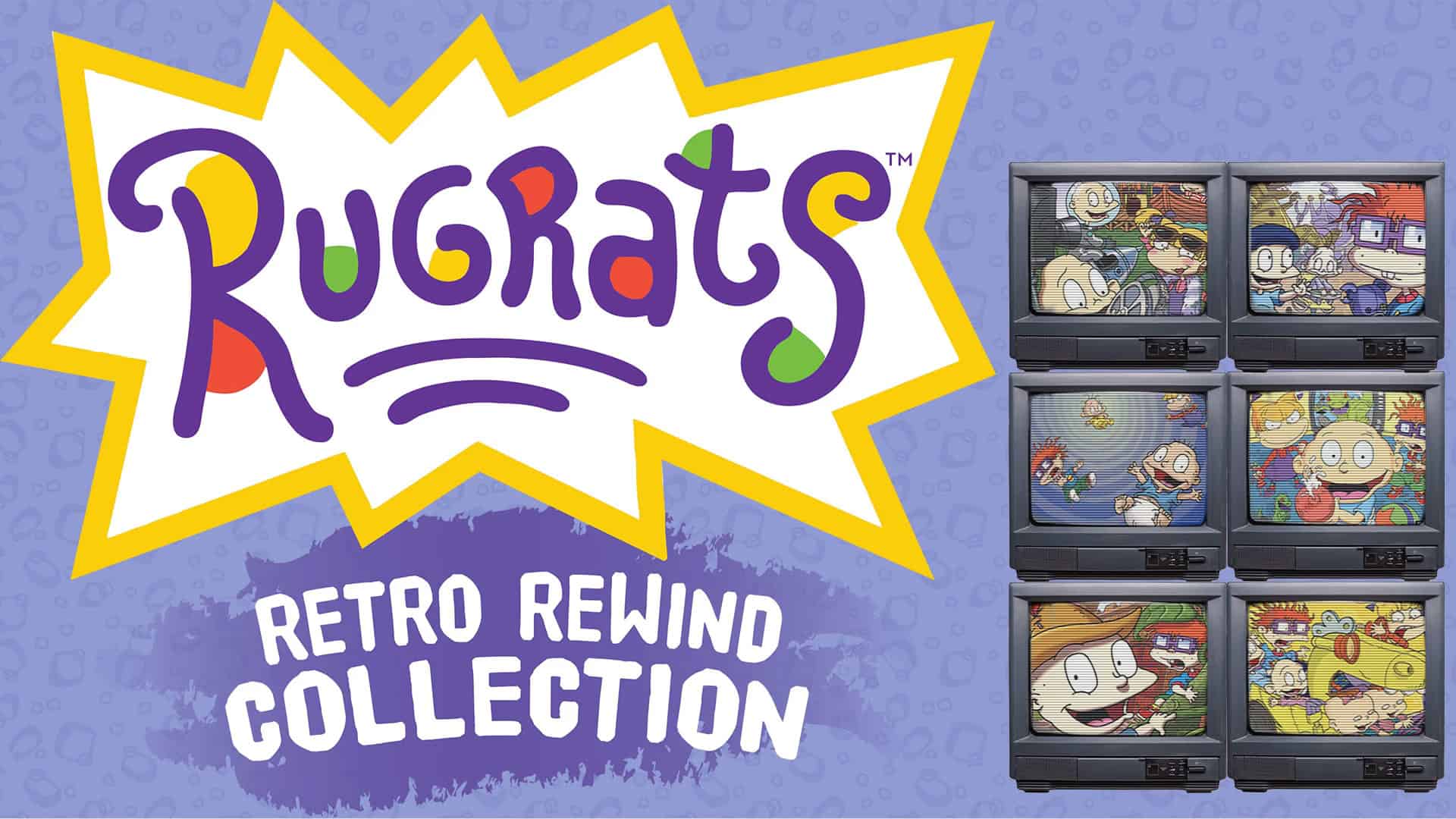
This is it. This is what my life has been building up towards. You think I’m joking? You think I don’t spend at least a tenth of my waking hours thinking about Rugrats: Search for Reptar? Who do you think I am? Fine. I’ll prove it. I’ll prove to you all just how deep the Rugrats video game rabbit hole goes! All thanks to the brand new collection from Mighty Rabbit Studios Limited Run Games, containing seven of Rugrats’ wildest digital adventures, with modern improvements like rewind functionality, screen filters, and instant saves!
I’m going to hit you with my Rugrats game theory right off the bat. The Rugrats video game adaptations are split into two types: platformers and activity center/minigame collections. The two often mix to varying degrees, but one is usually the identifiable core of a game. The defining gameplay element of a Rugrats platformer is a spring-like jump, whereas the minigame collections, while usually quite random, tend to have at least one vehicle section, memory game, minigolf course, and quick-reflex aim-and-shoot game. Difficulty is often less focused on testing your mechanics, and more so on introducing creepier, tense scenarios. The soundtrack must be unreasonably good for no reason. You really thought I was joking, huh?
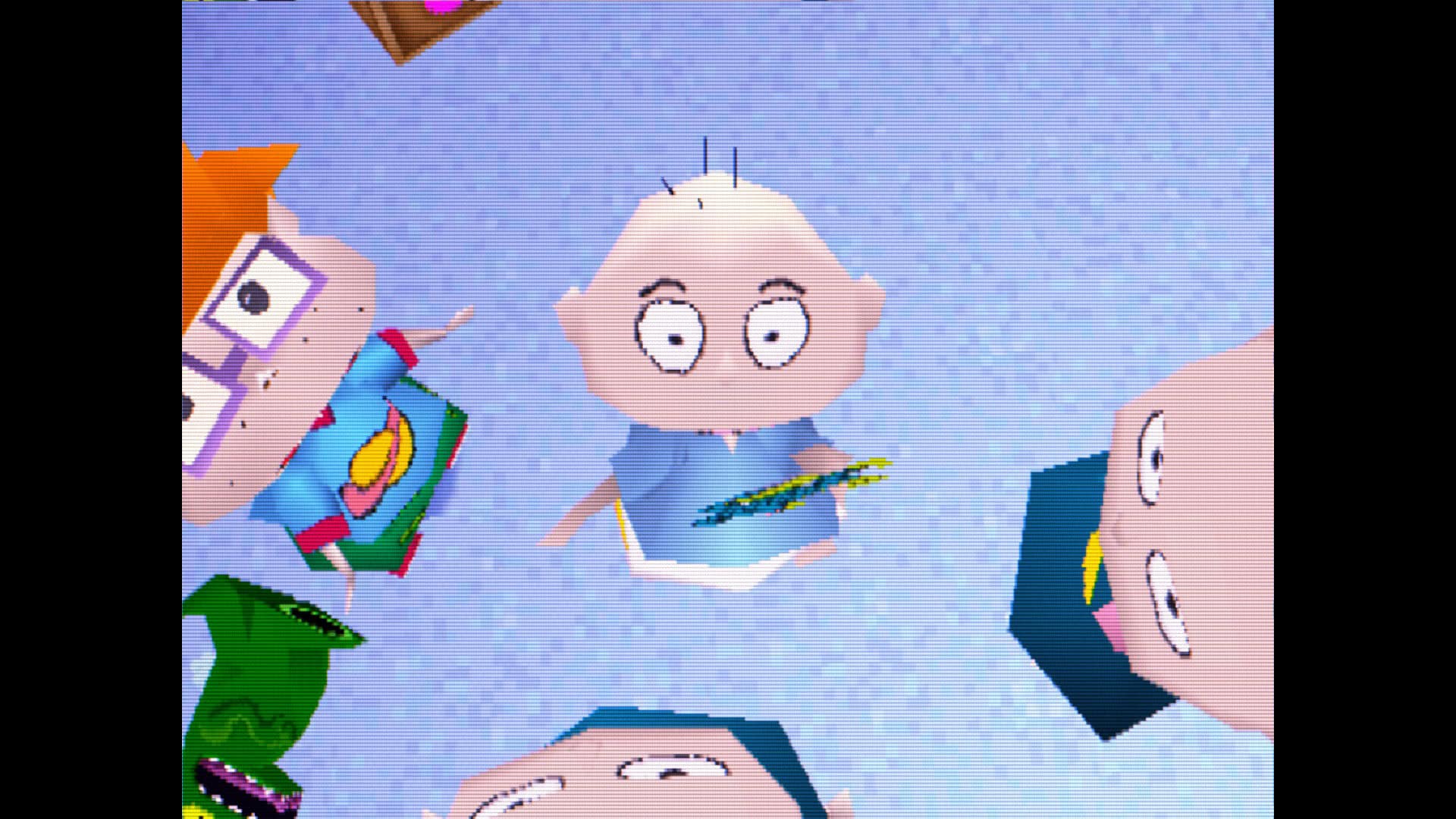
Okay, but, seriously, how did I end up with all that love for such a niche thing? Well, I owned the PlayStation titles at a very, very young age. They’re one of the first video games I remember playing, and only having replayed them as an adult a couple of years back did I realize their impact. They’re silly, extremely varied and thus unpredictable, bright and playful. They let a young player do inconsequential things like grab and throw random objects, play around with a dog outside, or swing on a bench, going as far as having special animations that must have taken a good bit of time to get right. They control incredibly weirdly, from the jump to the camera.
It’s everything that I appreciate to this day, and, as someone who will go to bat for more licensed games than most, Search for Reptar somehow became one of my favorite video games. More on that later. When I heard that a port to modern platforms was happening, I was on cloud nine. I was one of the few people who thought the out-of-nowhere 2024 return that was Rugrats: Adventures in Gameland was great, plus it gave me a reason to dig deeper into the catalogue with the Game Boy titles. Having finished them all, I can confidently say that this collection is as fascinating and validating as I had hoped. But it obviously won’t be for everyone.
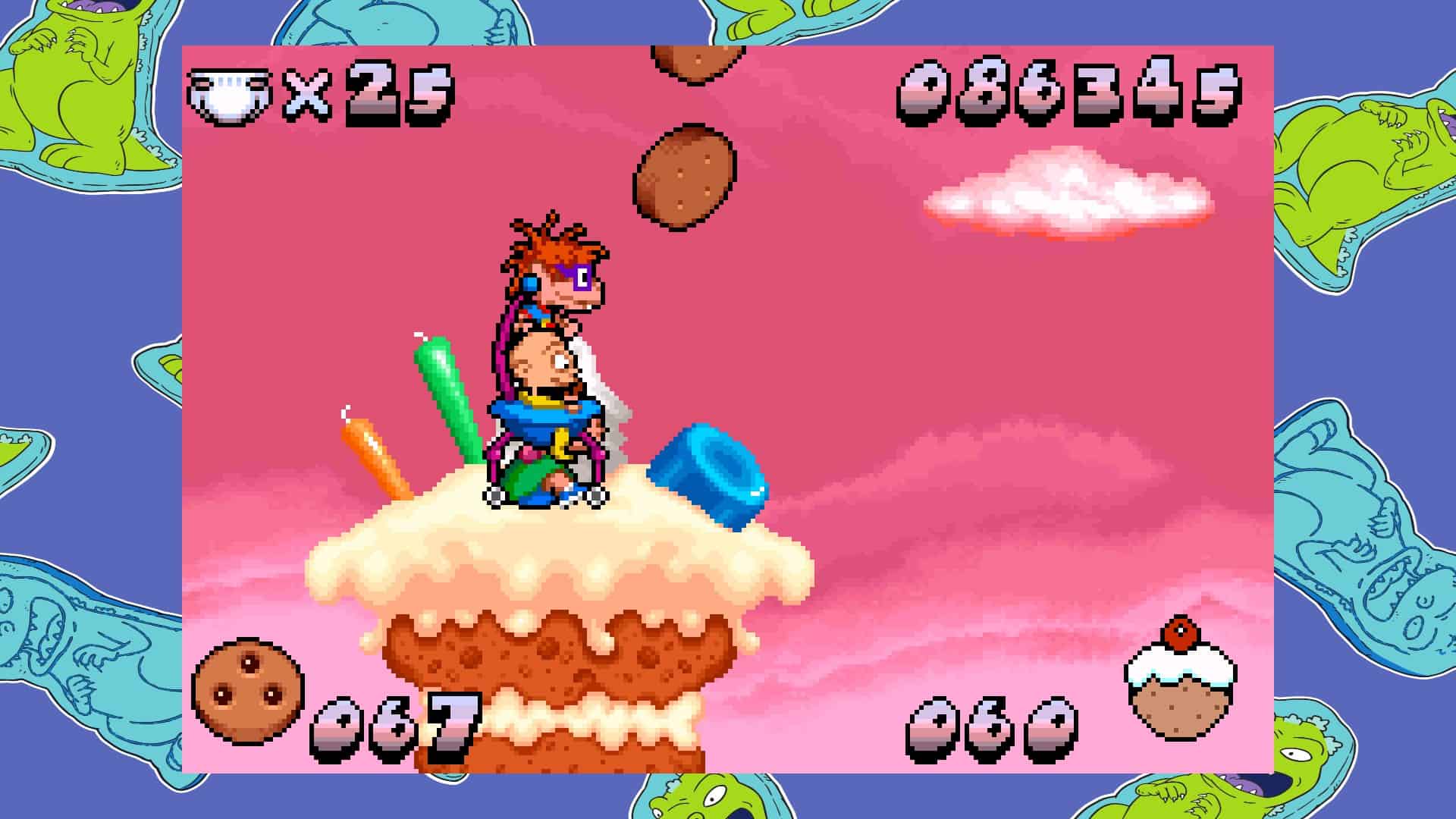
I started off with the Game Boy games, all developed by Software Creations, and, right away, with an absolute banger. Rugrats: Castle Capers is one of the hundreds of random games you can pull from the Game Boy Advance library to prove its status as the console with the greatest depth. Seriously, it’s a 2D platformer that plays super well, looks great, and is perfectly varied for its short runtime. It has unique mechanics like the baby-stack superjump or the leap frog that has you bouncing on enemies for extra points. A one-sitting hidden gem.
The other three did not quite do it for me, but they certainly had their upsides! The Rugrats Movie, Rugrats Time Travelers, and Rugrats in Paris: The Movie are all similar to Castle Capers, but they’re much slower, have fewer things going on, and are far more punishing, forcing you to collect items while removing them from your inventory whenever you get hit. Yes, I used rewind liberally while playing these.
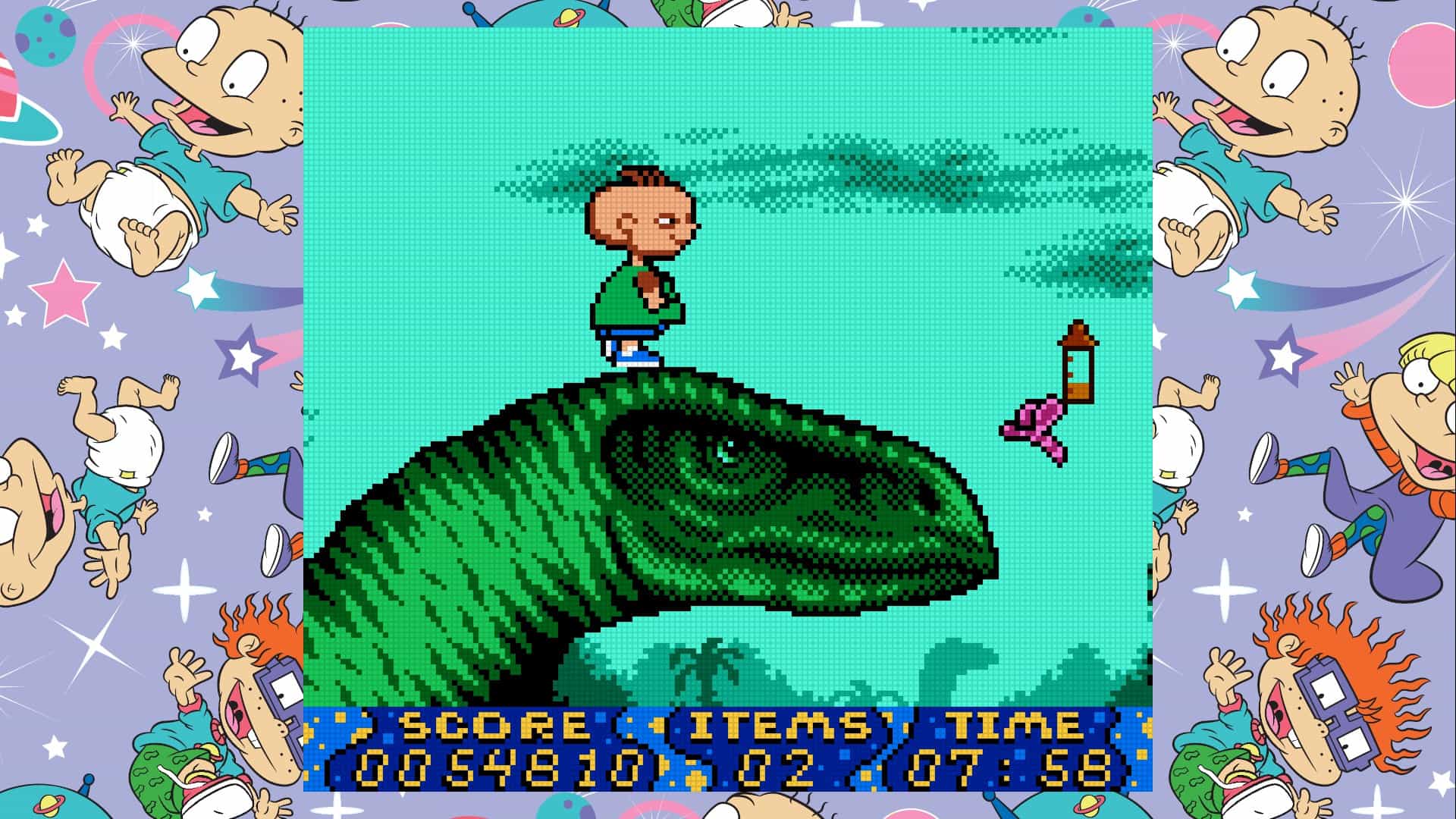
The first two are some of the best-looking games on the Game Boy Color with great soundtracks (other than the few times they blast your ears off), while the third has shorter levels and minigames which provide tickets to unlock them, making for an overall tighter structure. They all have issues with the camera and some really annoying flying enemies or jumps you’ll miss by an inch due to that springiness they all have (it was so satisfying to see this is a consistent feature across the games), but for a portable title at a time where you would likely keep playing no matter what, they have their moments.
Now, the PlayStation trio. Rugrats: Search for Reptar and its sequel Rugrats: Studio Tour, developed by n-space, form a duology, while Rugrats in Paris: The Movie by Avalanche Software is a fully unique minigame collection. Search for Reptar is absolutely the star of the show here, with its intro serving as the opening for the whole collection. It’s also likely the best-selling Rugrats game of all time, with a reported 1.46 million copies sold.
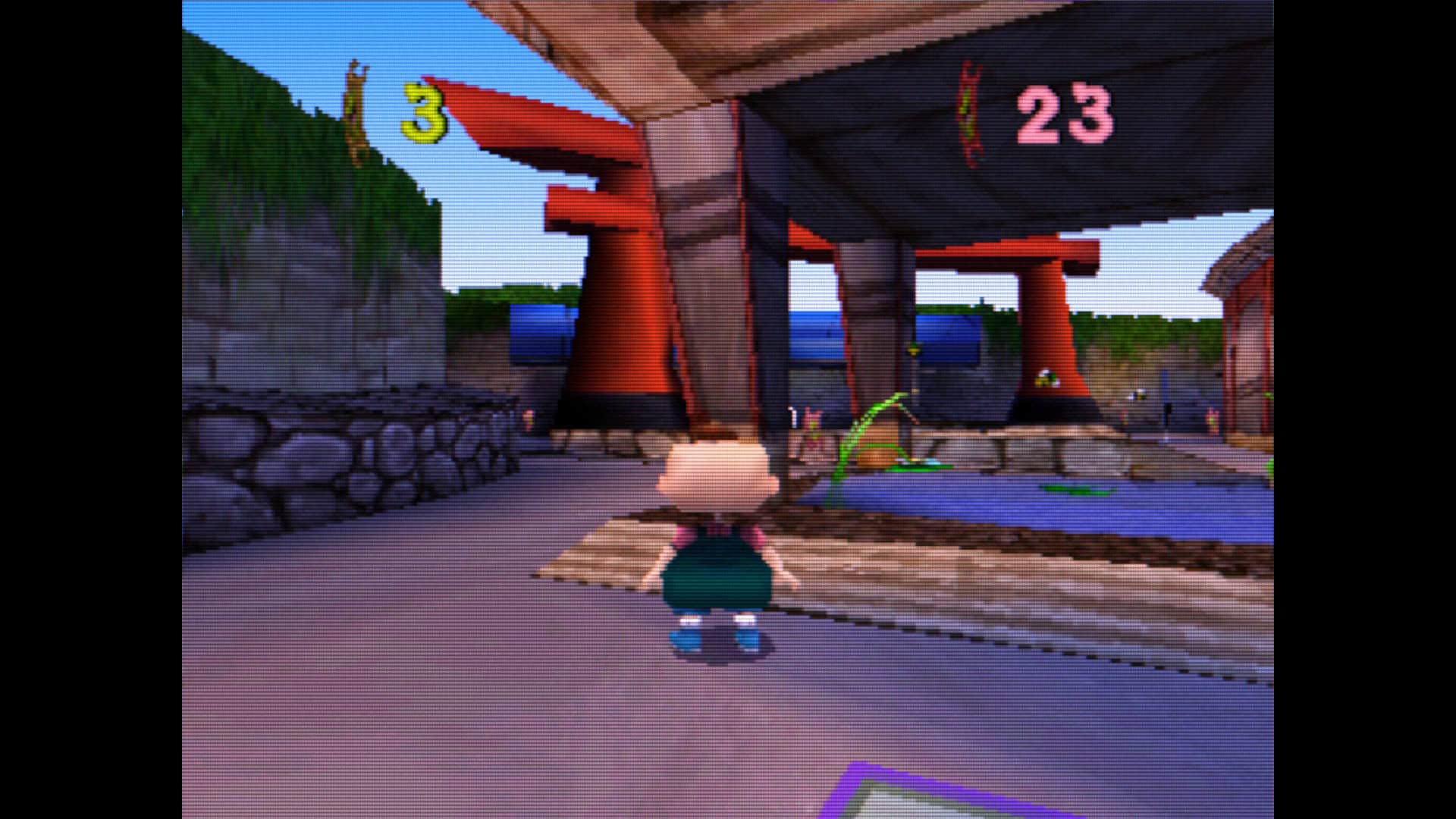
I left that one for last as a little treat, and started with my least favorite: Rugrats in Paris: The Movie. Have to say, this one went up in the rankings on a replay. The minigames still control pretty abysmally, and the art style is nowhere near as appealing, but it has a captivating quality to its empty Euroreptarland liminal spaces, and it is all much more bearable when you know which of the activities are not worth your time. Also, despite what’s an overall quiet and exceptionally empty game, it has a manic quality to it, with your baby of choice screaming every couple of seconds for no reason whatsoever.
Rugrats: Studio Tour came out after Search For Reptar, but is far more reminiscent of the dozens of other titles on the platform. A collection of random scenarios with no real core to speak of aside from the basic movement of its predecessor that is used in less than half of the content. The scenarios here are compelling at least, and feel a bit like the show at least, even if they’re a bit of a nonsensical stretch, with Dil getting lost and the kids having to go on adventures around the movie studio to find keys.
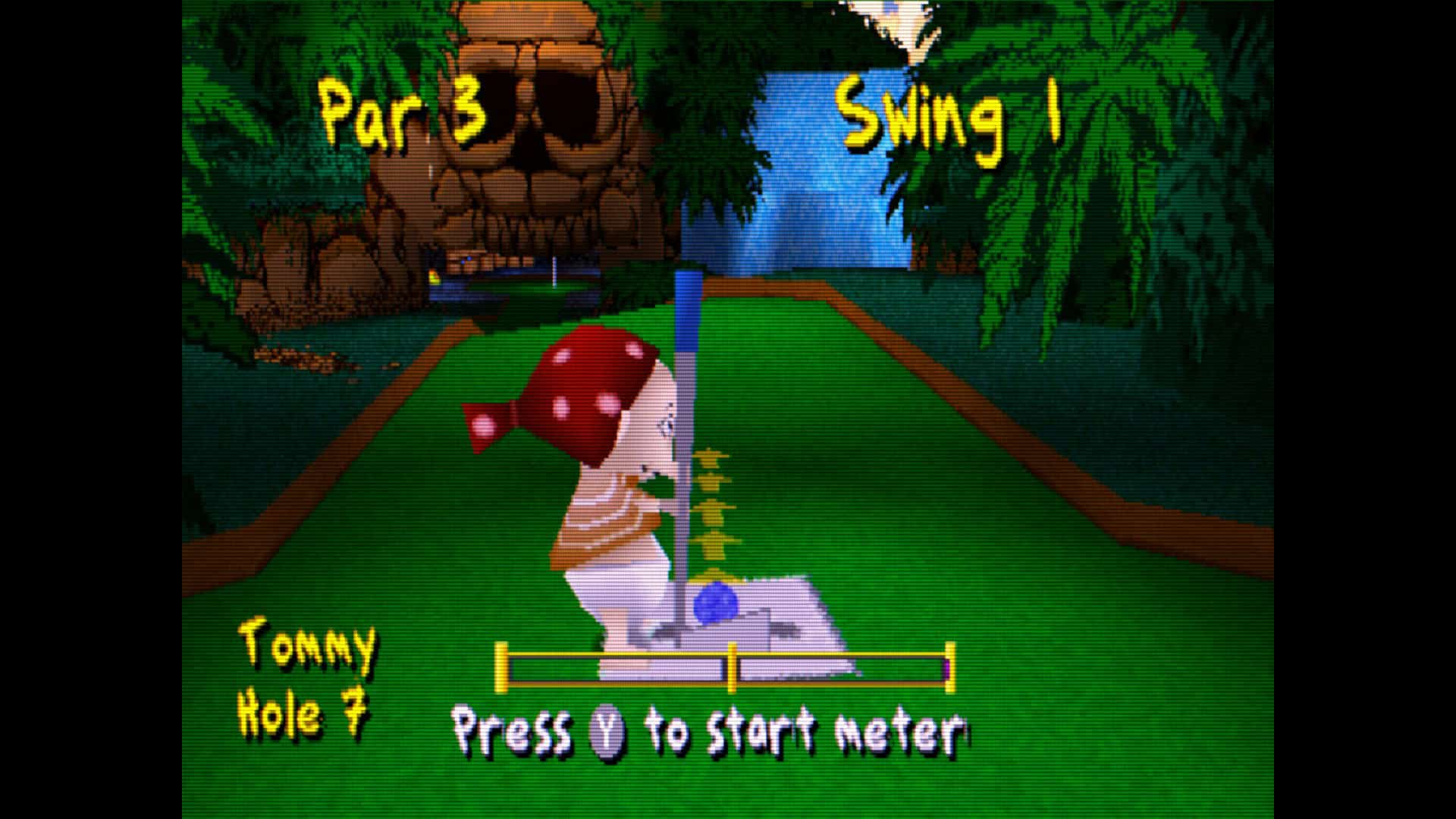
There’s a racing world with some of the worst kart racing of all time; a pirate world with running around and some minigolf; a cowboy world with some shooting, minecart riding, animal herding, and even more minigolf; and a space world with some platforming, shooting, and spacecar riding. It’s a dreadfully boring, simple, and monotonous slog that has so little special about it despite its variety—I’m a bit annoyed at myself that it took me two paragraphs to describe it.
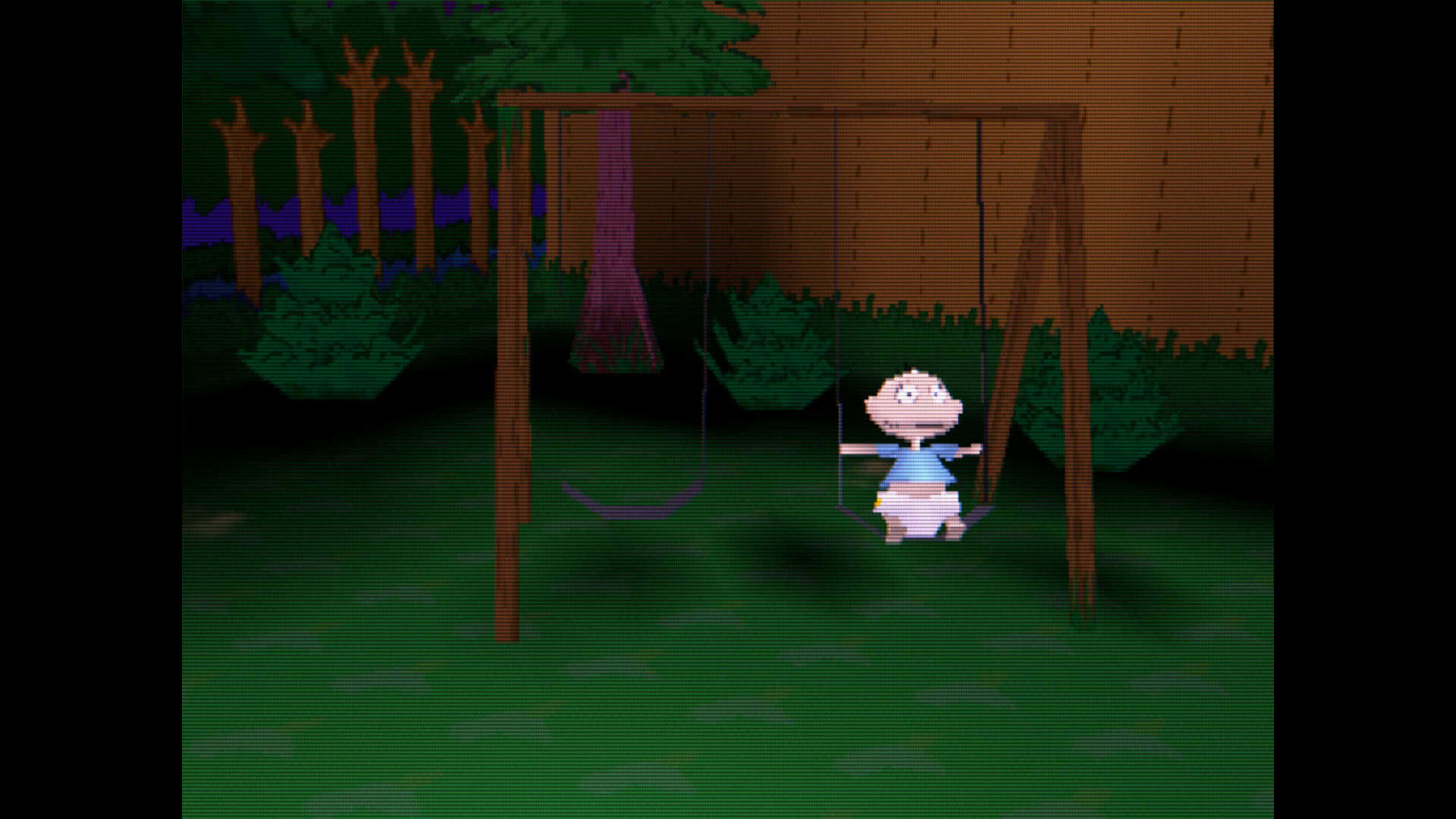
Finally, the main attraction: Rugrats: Search for Reptar. It has everything one could ever want from a licensed game. It lets you live out bits of the show with levels based on episodes, but also by playing around the Pickles house hub. It has a silly, iconic Rugrats-style soundtrack that people still use in their YouTube videos twenty years later to great comedic effect. It has the springy jump that lets you skip half the stairs on your way down.
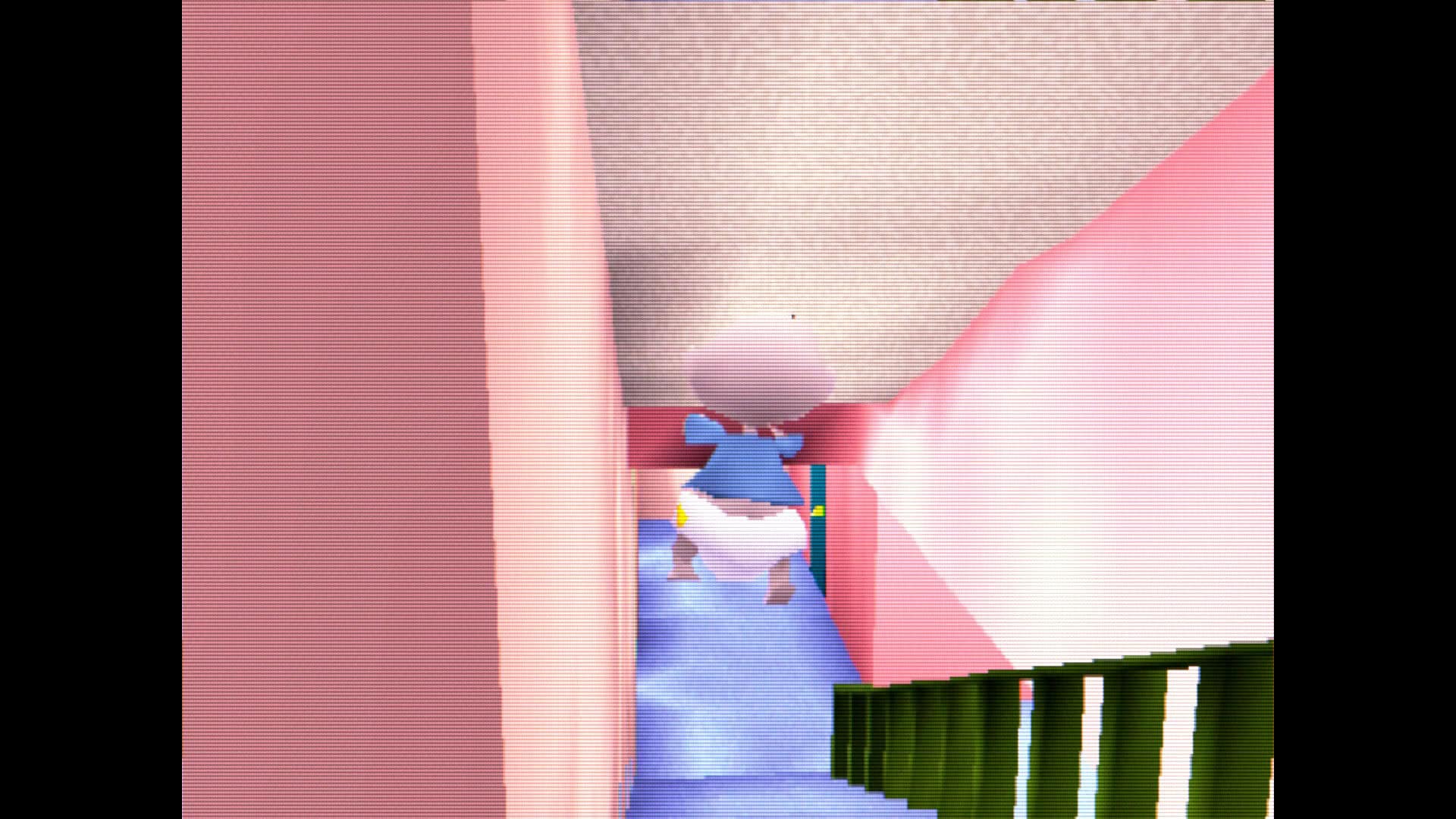
The value of a game like this, for me, is the many small ways in which it takes this ridiculous idea of platforming as a one-year-old and builds around it. Truthfully, the controls and the camera in Search for Reptar would be atrocious in any other game (and to many they still are here), but they work because it’s a very basic game. It’s a playful place not just for the player, but for the developer as well. This kind of friction is what prepared me to find gold throughout my life in places few would dare to dig.
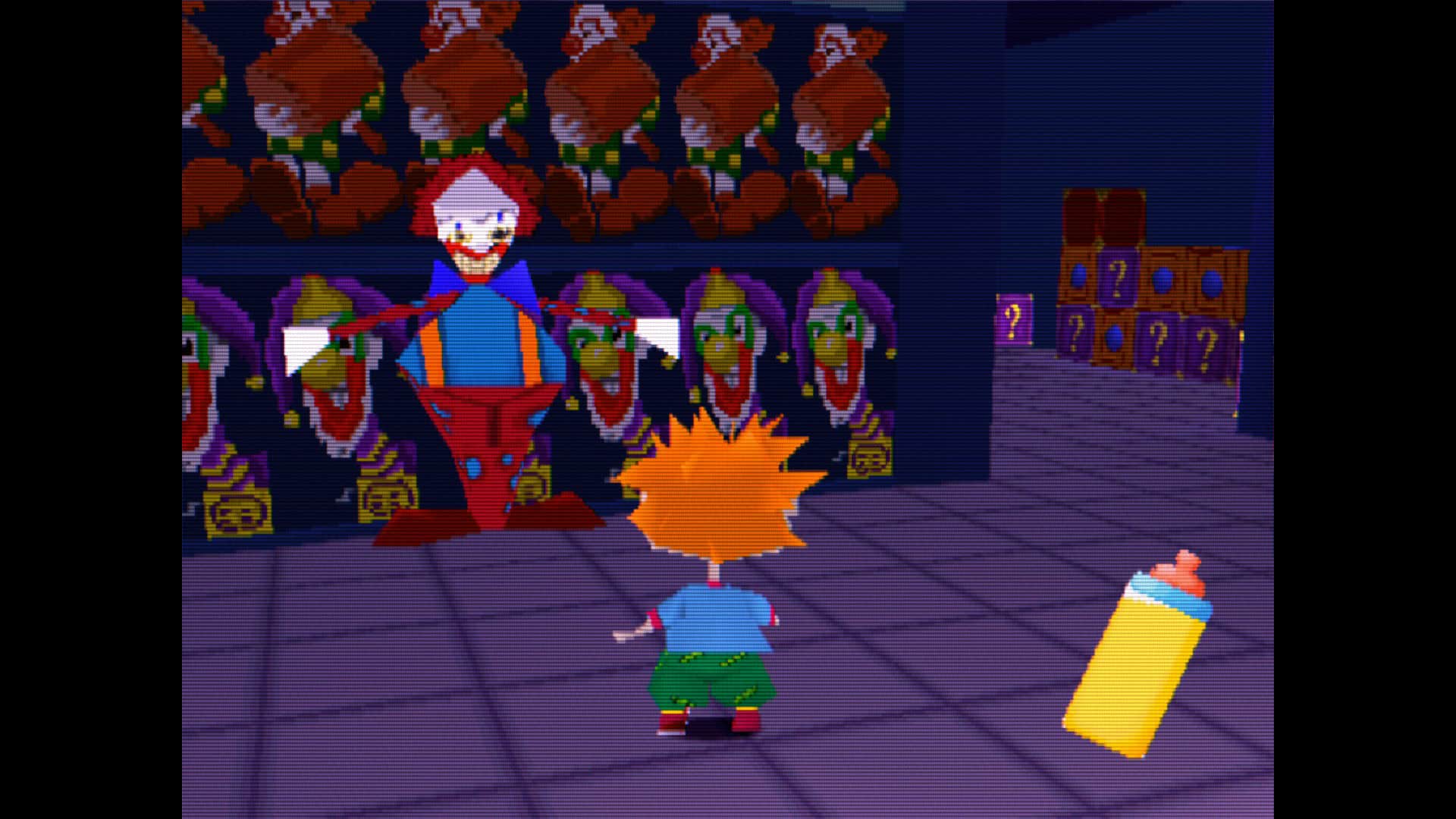
Intensity in Search for Reptar does not ramp up via harder jumps, but with larger play areas that use light horror elements. Timers, music, and sound: the shuffling of ghosts, floating alien robots, snips of escaped lobsters, or roars of giant toy robots—this is what constitutes a “Hard” level. The medium and easy ones are chock full of varied scenarios with all sorts of activities and win conditions, but what makes them work so well is that unique core of the baby movement. I love bonking into walls, and I love revisiting Search for Reptar, though I think once a decade will probably be enough for me.
Other than the games, there’s also the music player, which is a nice bonus, and the gallery, which is a bit disappointing. It contains only the game’s manuals and box art—no extra art, no words from the original developers, no scan of the joke book mentioned in the Search for Reptar. Everything that’s expected is there, I suppose, but with collections that have so much more nowadays, it’s a real shame that these niche collections that aren’t created by the likes of Digital Eclipse get so little in comparison.
Worth noting are the few bugs and omissions found in the games, at least the ones I could find thanks to my experience with the PlayStation games. First, the manuals have obviously been largely censored to exclude stuff like game-saving pages and images of the controller. Second, Studio Tour sees all of its silly, in-character tutorial videos missing in favor of a simple control overview. Their removal makes Studio Tour a strictly worse version of the game in my mind.
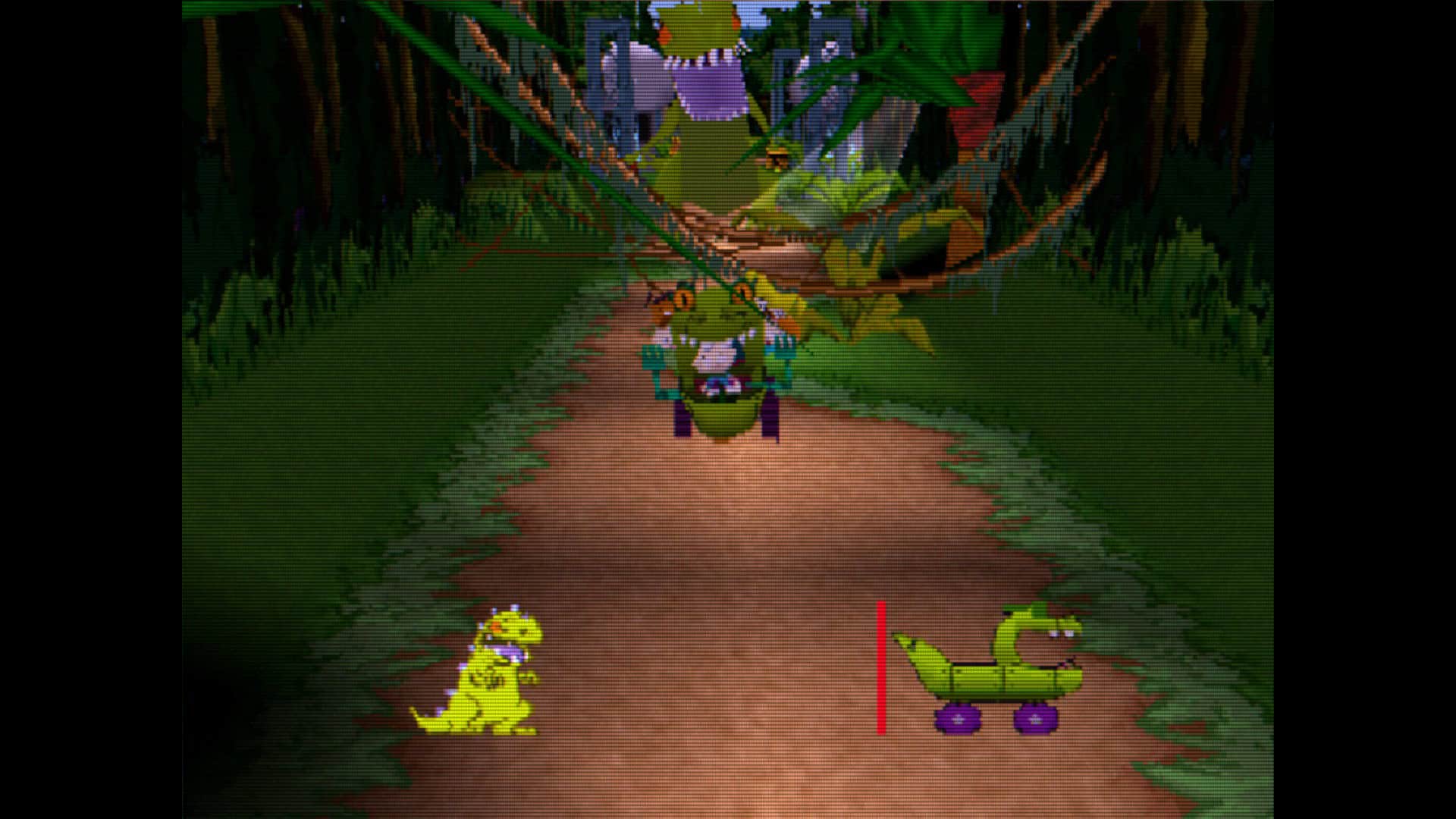
While I’ve had no issues with the Game Boy emulation (the collection uses the well-respected, open-source emulator mGBA), the PlayStation did not fare quite as well. Search for Reptar had one cutscene double its sound, while the entirety of the golf section had each cutscene sped up at the start. The worst bug came during Studio Tour, when during the “Zero Gees” section, pressing the top face button on my controller seemingly caused everything but the left stick to stop working entirely until I pressed the same button again. Also, since this version of the game has been altered, I wish it, at the very least, ran without dipping into single-digit frames.
Knowing how much work goes into bringing back licensed games for collections like this, I understand it’s a bit silly to complain when the games you want to see are not part of it but it is a bit depressing just how many lack one or two games that would make them complete. In this case, Rugrats: Retro Rewind Collection contains all but one game from the original PlayStation (fashion-based minigame collection Rugrats: Totally Angelica) and all but two Game Boy games (the party game Rugrats: I Gotta Go Party and the Wild Thornberries collab movie tie-in Rugrats Go Wild!).
Do I recommend Rugrats: Retro Rewind Collection? Absolutely. These are very unique games with qualities and baby-sized highs I’ve been chasing all my life. If you’re nostalgic for them, they are worth revisiting if you can, for even a little bit, abandon the modern pretense of one correct way of game design. Be a baby, throw toys around, live a little! If you’ve never played one, maybe grab a friend who did or a fan of the show, and I’m sure you’ll have a solid chuckle at some of their eccentricities. I’ll keep chasing that feeling—surely some game will one day appeal to the Rugrats games fans! All twenty of them!
Mateusz played Rugrats: Retro Rewind Collection on PC with a provided review code. This review is based on the version of the game available at the time of writing and our score will not be changed.
- Score
- 7/10 Solid - GameObserver Recommends
- Summary
-
Mateusz says: A collection of certified childhood classics that shaped the tastes of millions of young players, Rugrats: Retro Rewind Collection does what a baby gotta do by helping us re-examine our own beginnings.
- More
- GameObserver's Review Policy