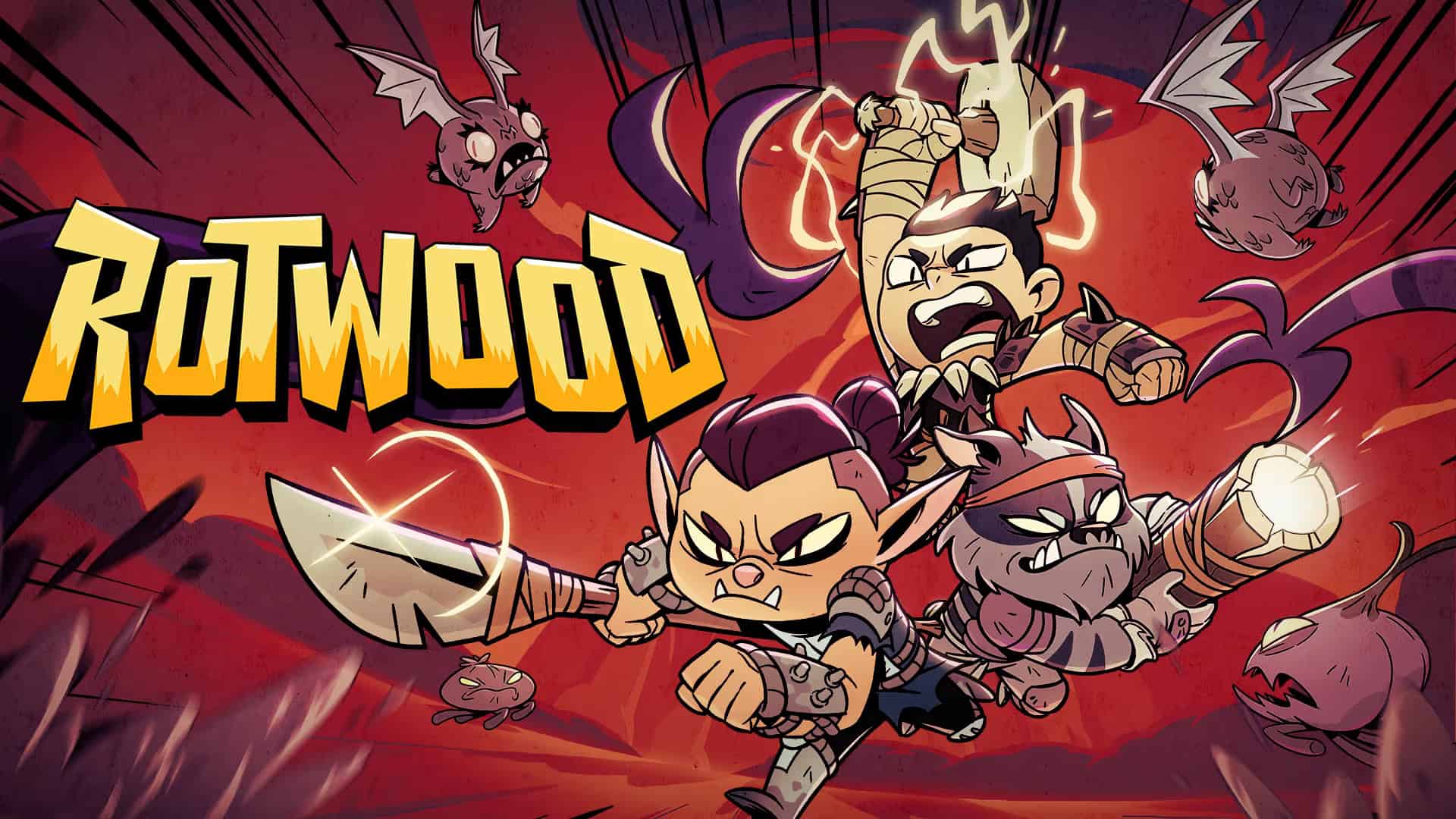
On its Early Access launch, Klei Entertainment’s Rotwood was a game that really soared past my biases. I’m not an action-roguelite sort of person whatsoever, not because I dislike either genre, but because the combination has become almost a default combination for both, a get-out-of-jail-free card for figuring out a structure to a combat-focused game. Incremental stat increases added meaning to the repetition of gameplay that has too much going on to be a true roguelike, but too little to be level-based. A dilemma that to me became too palpable to be excited by the genre. Until Rotwood came along.
There are a few things that made me immediately fall in love with Rotwood. For one, the artists at Klei Entertainment are truly in a league of their own when it comes to hand-drawn animation in video games. Just like with the aforementioned genre, a game being hand-drawn used to be an unbelievably exciting prospect for me, but with time and one too many clunky results, that enthusiasm died in me a little. Not here.
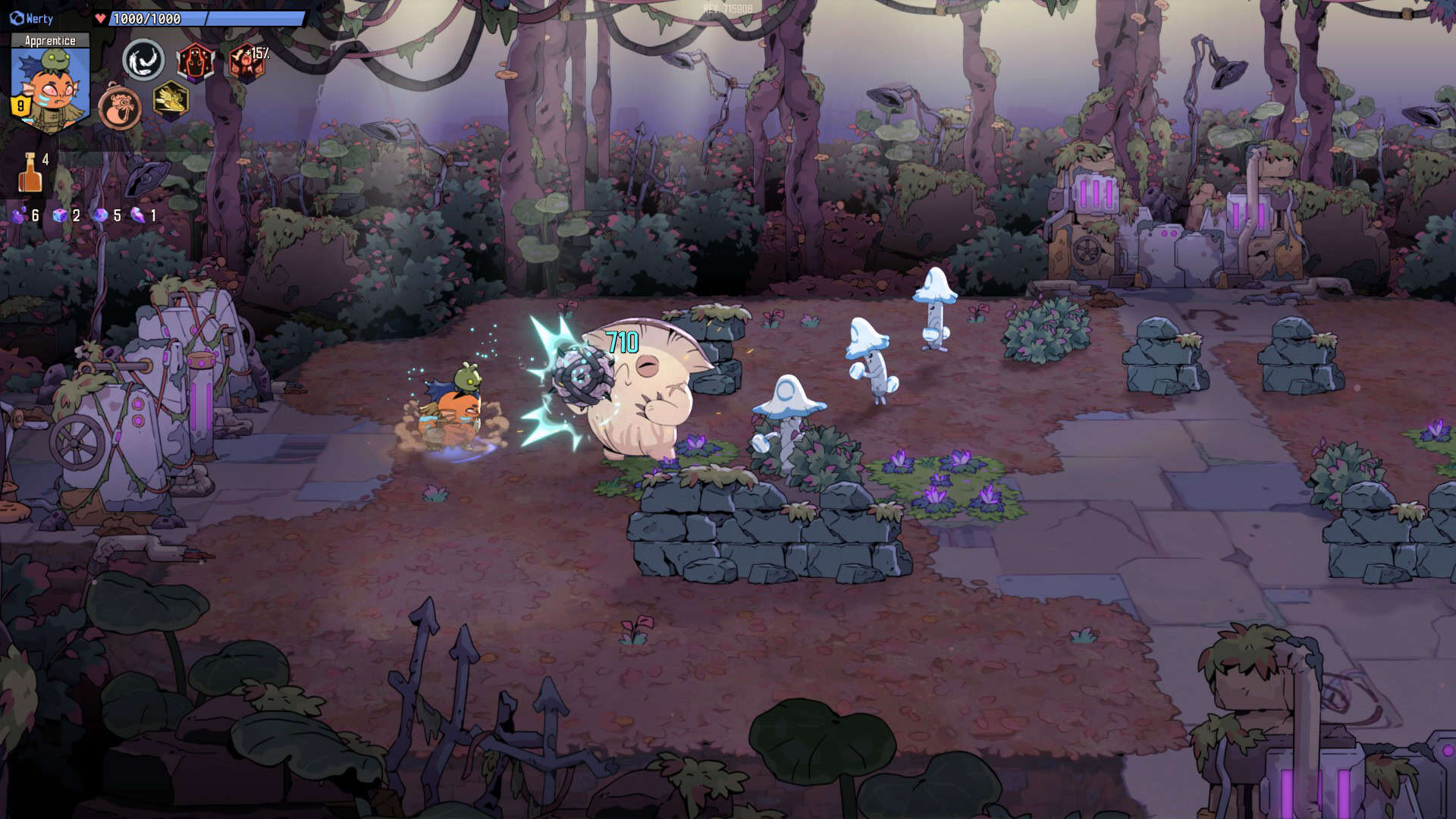
Rotwood is absurdly good when it comes to visuals and clarity. Everything pops, and the colors are truly vibrant. The areas may not have innovative themes, with a forest, a swamp, an ice land, etc., but it’s the enemy designs that give them personality. Each frame exhibits the masterful work, with expressive squashing and stretching, anticipation, and impact. Plus, the designs of these mutated animals and the main animalfolk characters are all adorable. It makes sense that, back at your base, you can make plushies of each.
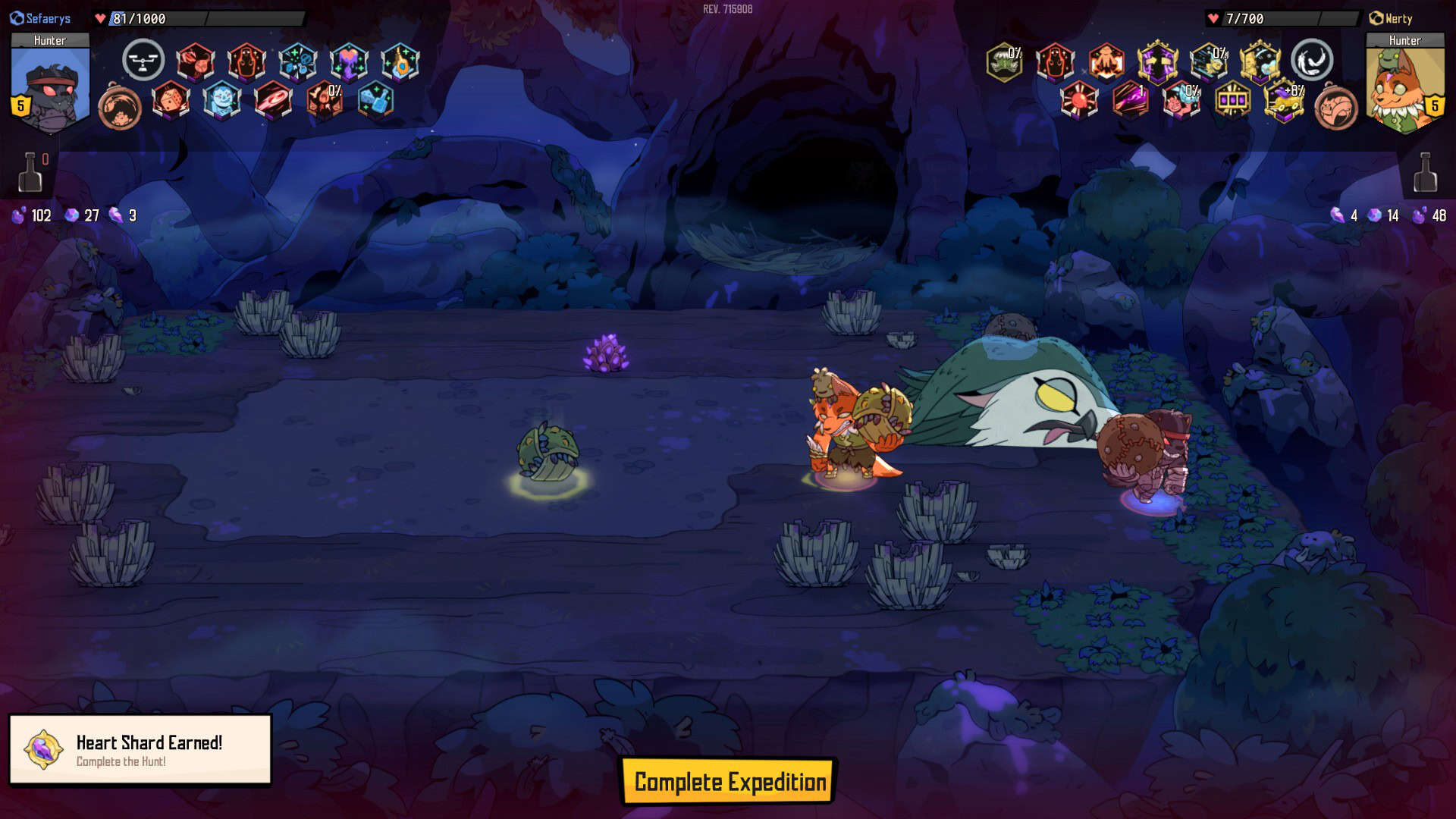
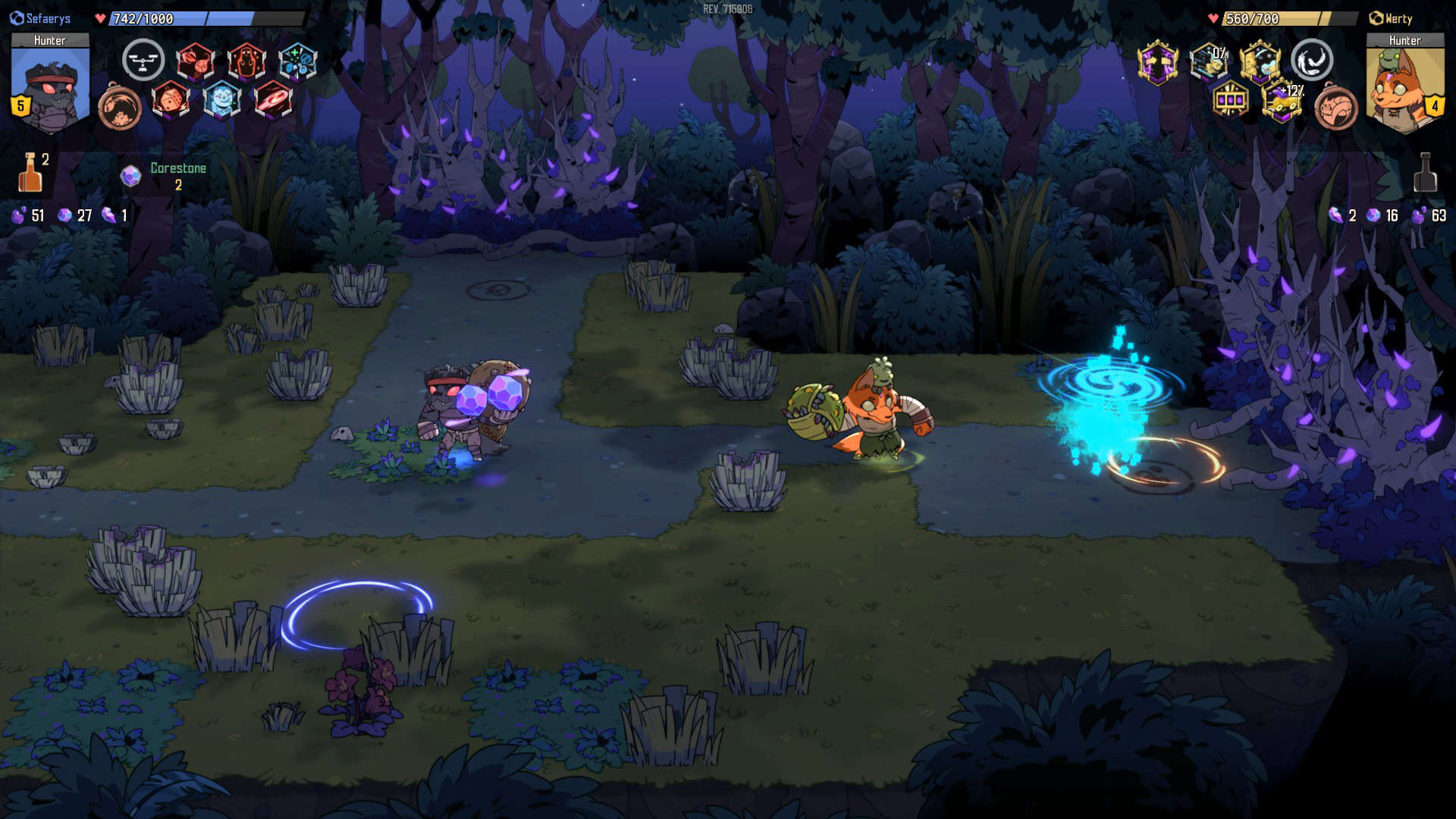
The kineticism is reflected in the gameplay. Let me introduce you to the main character of Rotwood. No, not the fox guy or the player character. It’s the Striker. One of the five available weapons. A set of two circular hunks of damage that may be used as volleyballs and bounced off enemies. Lovingly dubbed “balls.” These beauties may just be my favorite weapon in video games. There are so many ways to interact with them once you release them with a heavy attack, from slapping them with a light attack to having the enemies hit them back at themselves. They keep bouncing on their heads for massive damage if you know how to bait an enemy into certain moves.
Other weapons are no slouches either; in fact, they offer far more player-controlled opportunities. Rotwood feels very mouse-and-keyboard-oriented, with the cursor’s position serving as the key to its unique controls. You may attack with a light combo to stun an enemy, then use a dash cancel on the final hit to quickly get on the other side while keeping the cursor on them, and use a heavy attack unique to that position and that moment to smack them into a group of enemies so that you can continue your combo after another dash. Each weapon is plenty unique, especially the Cannon, which removes your dodge in favor of a reload, and though I do think the Striker is a must-try at the very least, I loved my time with the others as well.
The physicality of Rotwood’s interactions is fantastic, though, admittedly, without The Striker in play, the possibilities are not quite as rich. This is why, if you’re playing solo, you’re going to want to use that, and if you’re playing in co-op, you need at least one person with it equipped. Others may use their weapons to bounce them around the battlefield, but imagine now… eight Strikers. The chaos. Wonderful chaos. Beautiful sounds of bouncy violence.
Sound design cannot go without a highlight of its own. Each enemy has a unique palette of noises. Rolling onions from the first zone have a hollering battlecry before their big charge move. Icy winds pass you by as you try to stay in safe zones, facing the buzzing bugs and angry mini-mountain goats jumping to hit you with a series of tiny kicks. Like the visuals, the chaos is never overwhelming; instead, it’s just perfect to raise the tension with each smack and grab your attention with the enemy pulling back for an attack.
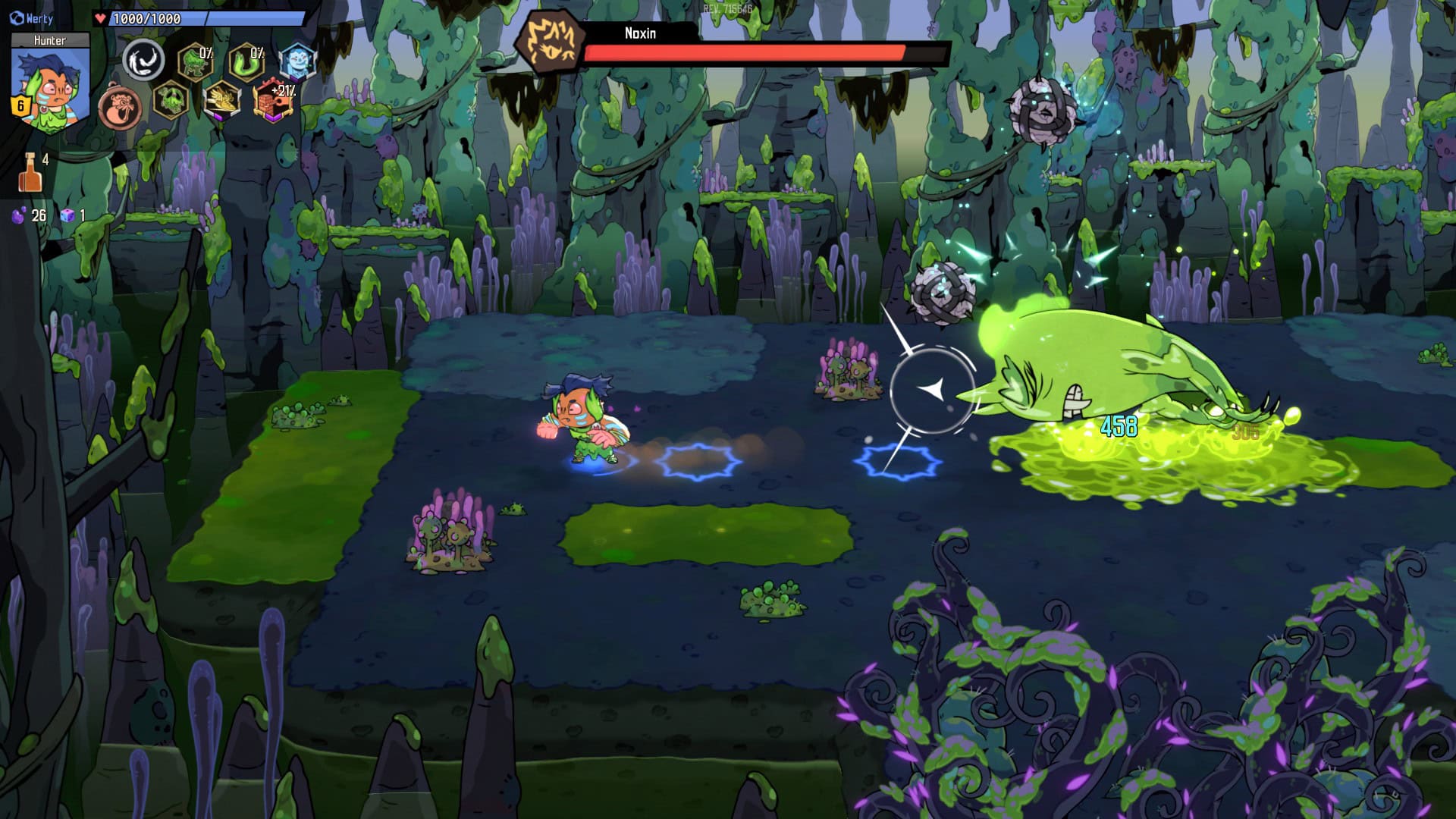
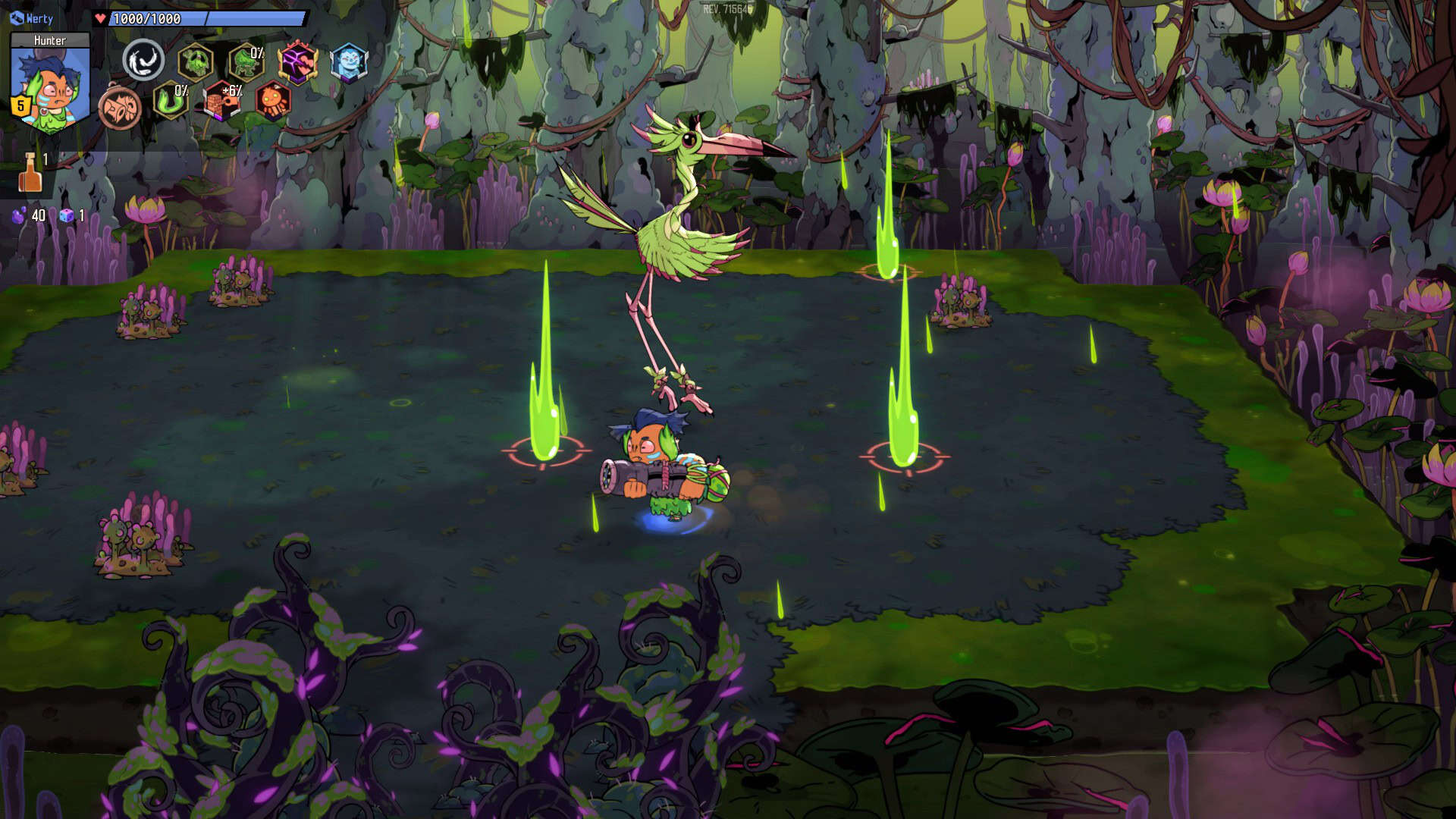
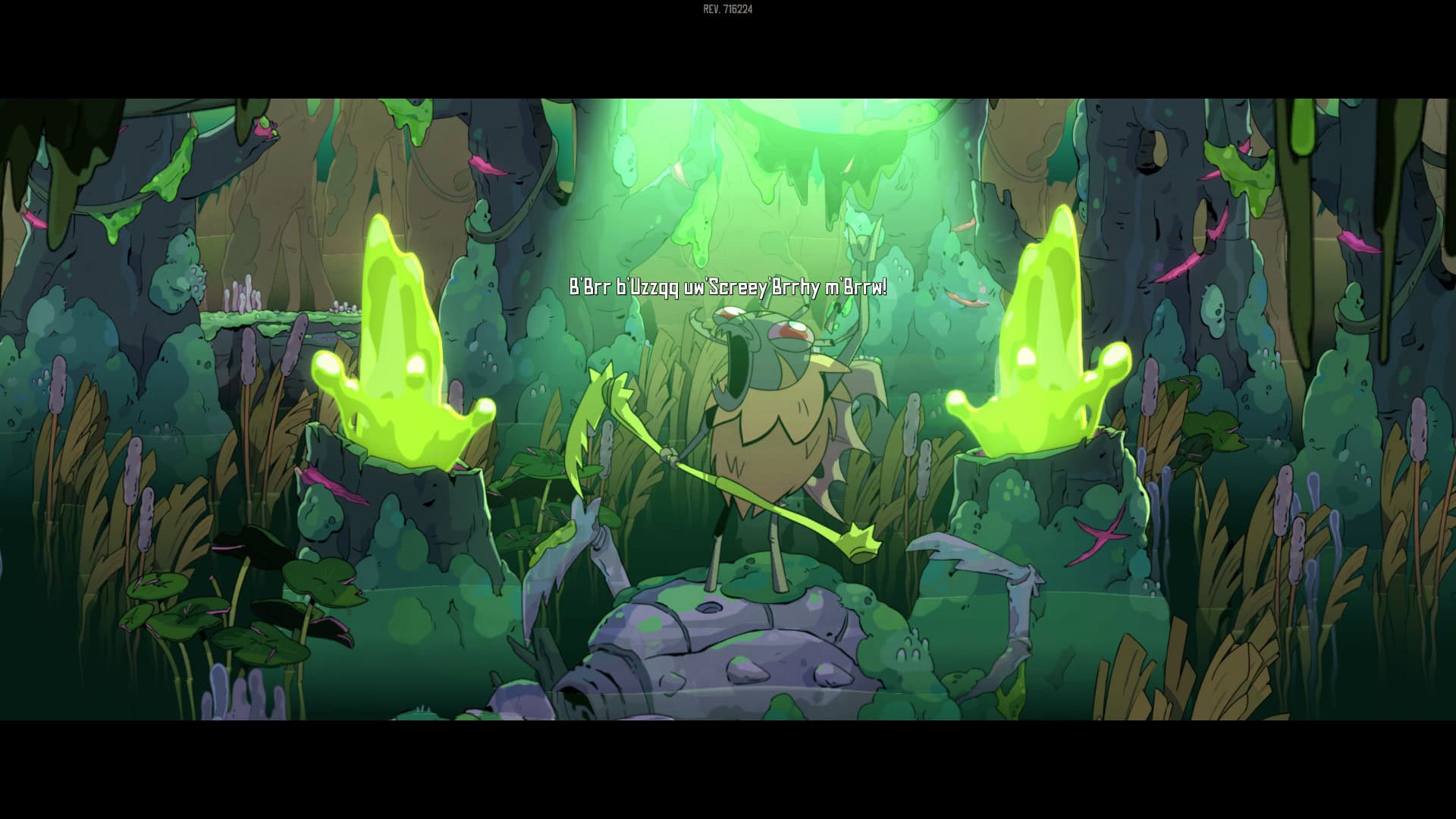
The boss encounters are a culmination of the artistry. Rotwood has perhaps one of the best boss collections out there in the genre, thanks to their unique personalities and attacks that take control of the entire play area, both increasingly inventive with each new encounter. Through gameplay, everything here could tell a story without words. A huge, humanoid locust rocking on their scythe and unleashing globs of acid, covering up areas so that it can execute moves that make use of the specific, limited space. An ancient golem, now a house for one crow, who activates its defense mode as it feels a threat to its abode, sending out crystals that have to be hunted down to deal any damage to the giant.
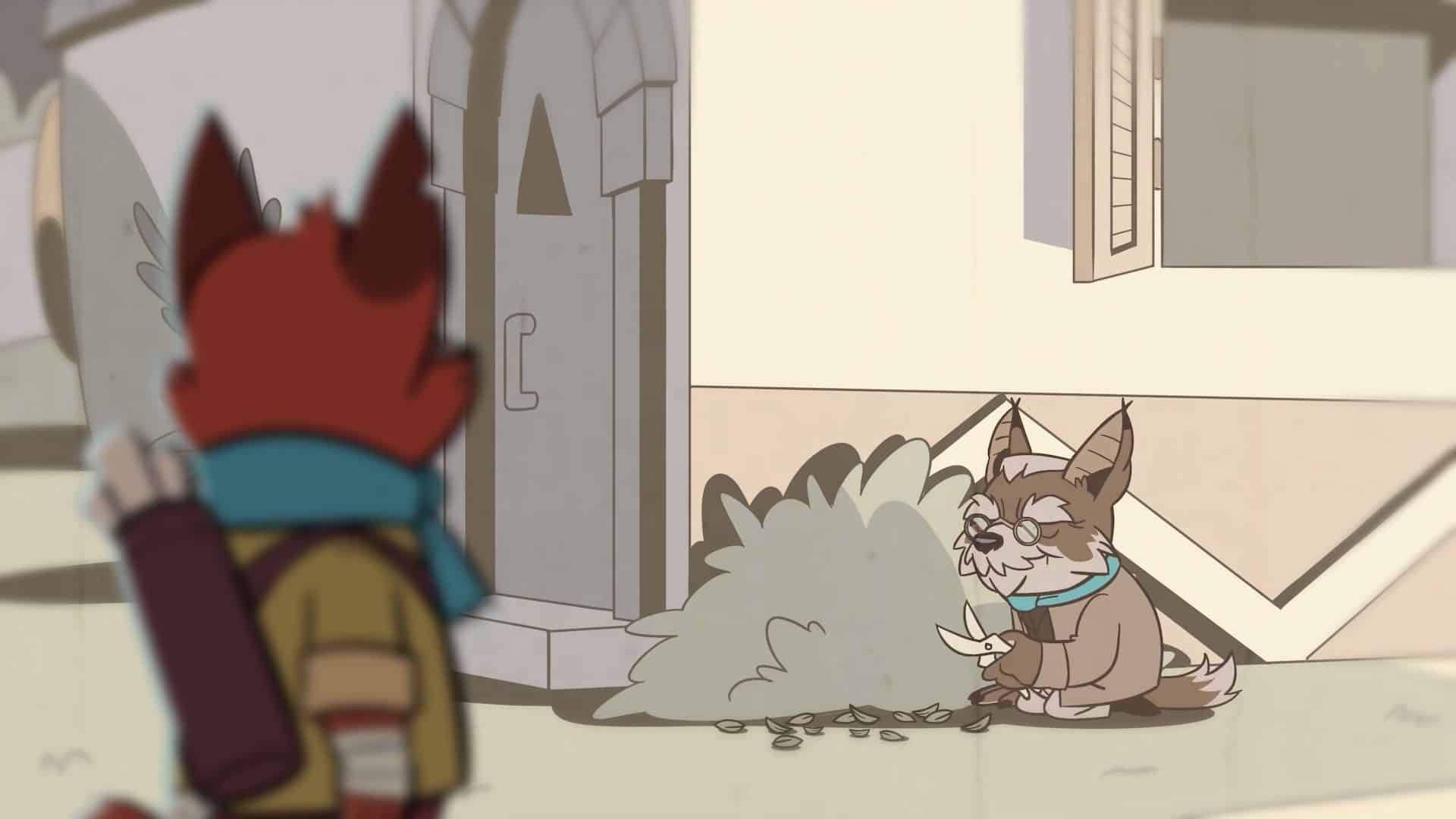
A good thing, too, because the actual story of Rotwood is rather forgettable. The quirks of each character you meet are cute on their own, but they amount to purely trite resolutions. Again, the designs here, the cutscenes, could tell a simple story in a manner so aesthetically pleasing that they never needed any words. Adding anything on top of that was going to be a very difficult task, but instead of trying to match that quality, the writing aims for a very low ceiling. It succeeds, I suppose, but I have very little to say about it as a result. The characters are neat. That’s about it.
All this makes the return to your base a bit of an afterthought. You may use crystals you obtained to upgrade your stats, which, like an increase to movement speed or the amount of healing from potions, do feel palpable (no +5% poison damage here), or upgrade your gear if you found enough materials. As far as the feeling of camaraderie, the best you’ll get is your co-op companions hitting an emote. The conversations may go into a character’s past, but the speed at which they progress is painfully slow for how predictable they end up being.
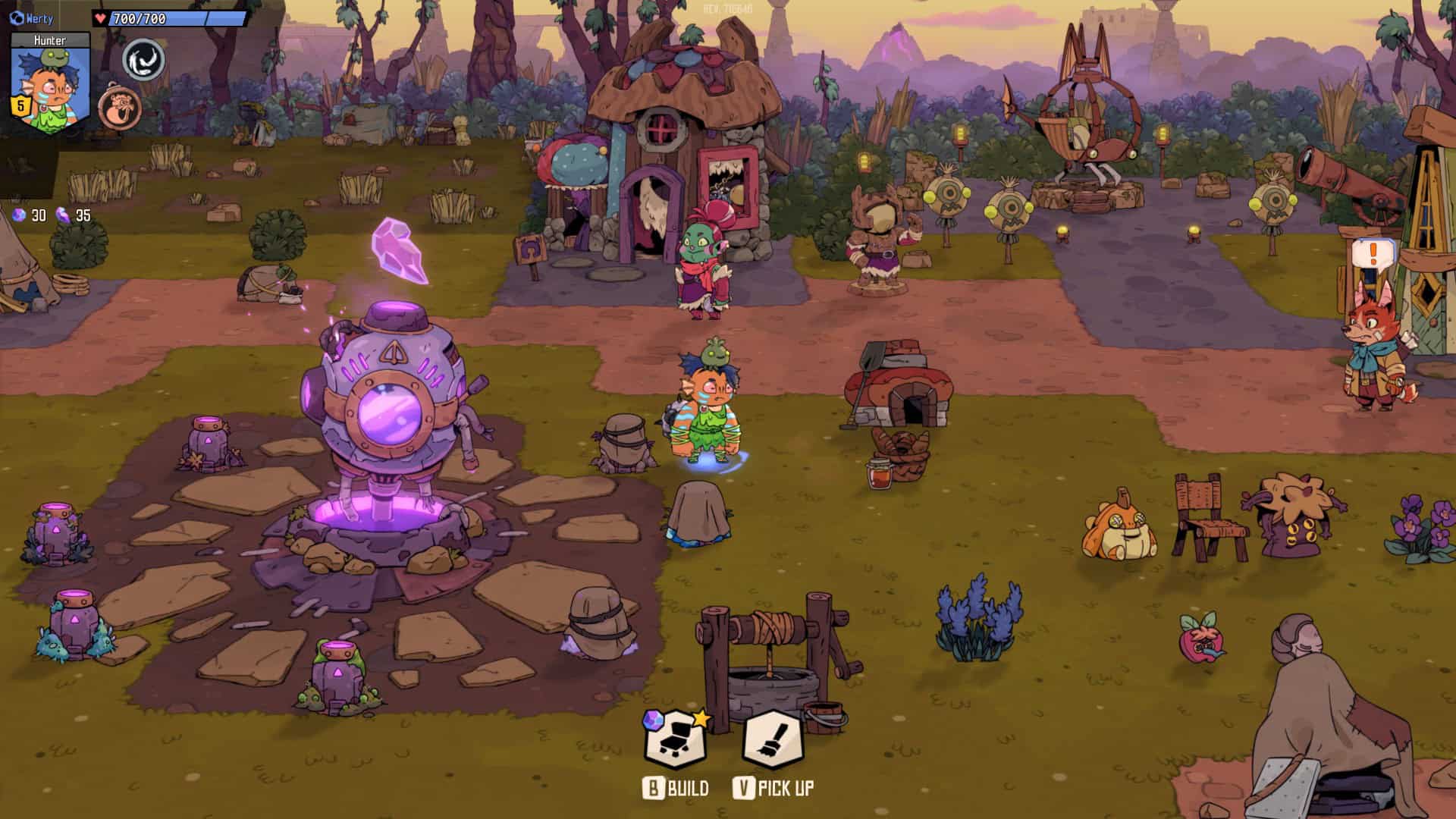
In general, it feels like the hub took up a bit too much mindspace when it comes to Rotwood’s structure. Back during the Early Access launch, runs were lengthy and always culminated with the unique boss for that zone. Now, to facilitate the level equipment system, you will often find yourself going into these shorter mini-boss expeditions to gather specific materials. These often end up being complete pushovers from start to finish, even with some nifty added challenges. A waste of time when all I want is to fight the next, excellent main boss, whose expedition has a mini-boss halfway through anyway!
What drags down Rotwood massively is its shift towards heavier roguelite elements during Early Access. There is no other structure that would fit here, but the balance ended up skewed in the wrong direction along the way. I enjoyed bashing my head against the harder expeditions, and I can still do that by playing them with underleveled equipment, but the game is clearly pushing me in the other direction. To play the clearly lesser parts of the game, where the value lies exclusively in seeing how fast you can destroy the zone, that feel like they exist purely to justify the systems it pivoted to.
Perhaps this could have worked if the communal aspect of Rotwood were more palpable. I had a chance to play a bit of co-op this time around, on a lower-level character, and it was plenty enjoyable. We’d basically juggle these mini-bosses and annihilate areas together. It made me realize that if these were transformed into some sort of score-based or purely co-op experiences with some form of matchmaking, something that would maybe force you out of a comfort zone into a new mode of play, I would be plenty happy to hop on every few days. Currently, Rotwood lacks something to both inspire you to engage with the clearly intended co-op experience and spice up the stale structure in the mid-game.
And once that mid-game is over and you grinded out the admittedly low max level ceiling of 10 and a few gifts for the characters back at the camp to unlock some key features… the game just kind of ends? A few more great fights, three required boss refights, a fantastic final boss, and you hit credits. Following that, you get… more boss refights. This time, even faster, with even more damage and small mechanics clearly aimed at co-op play. For example, a bomb that deals massive damage and spawns alongside other enemies. Juggling all of that alone is a real pain.
Something is missing here, clearly. A few more bosses would take a lot of time, given the quality on display here, but Rotwood seriously meanders in its third act. Progression is instead replaced by refights that don’t really inspire a desire to continue playing. For as good as the fundamentals here are, I really wanted more opportunities to test my ability to keep up a hit streak or dodge perfectly—anything that would let me take in more of its wonderful gamefeel without feeling stale.
Yet, once I was done engaging with the meta progression, I was just faced with returning to the same bosses to get even stronger. There is no goal to chase, and getting stronger feels almost counterintuitive. In a way, I wanted to be weaker! I wanted to struggle more against new threats and feel the satisfaction of a good fight. Here, ultimately, I realized that Rotwood’s attempts at structuring its gameplay are at odds with what I appreciate about it most.
Rotwood always worked because of the roguelike structure, yet it is also what ultimately prevented it from reaching the potential I saw in it when I first played it. I simply love the combat here, something I so rarely feel with new titles nowadays, and I never needed a reason beyond that to play more. I will be coming back to Rotwood many times in the future, to try and face these bosses with some dedicated players or a group of friends. The focus should have always remained on the killer fights, but while the road there is sometimes rough, it has the chops that help to disregard a middling session or two. Even if it didn’t fully live up to its potential.
Mateusz reviewed Rotwood on PC with his own bought copy. This review is based on the version of the game available at the time of writing and our score will not be changed.
- Score
- 7/10 Solid - Mateusz Recommends
- Summary
-
The shifts in structure and the middling mid-game drag Rotwood down from an all-timer status, but it is still an excellent action game that I will keep coming back to.
- More
- GameObserver's Review Policy

 ObserverCrew Picks
 bserver
 bserver