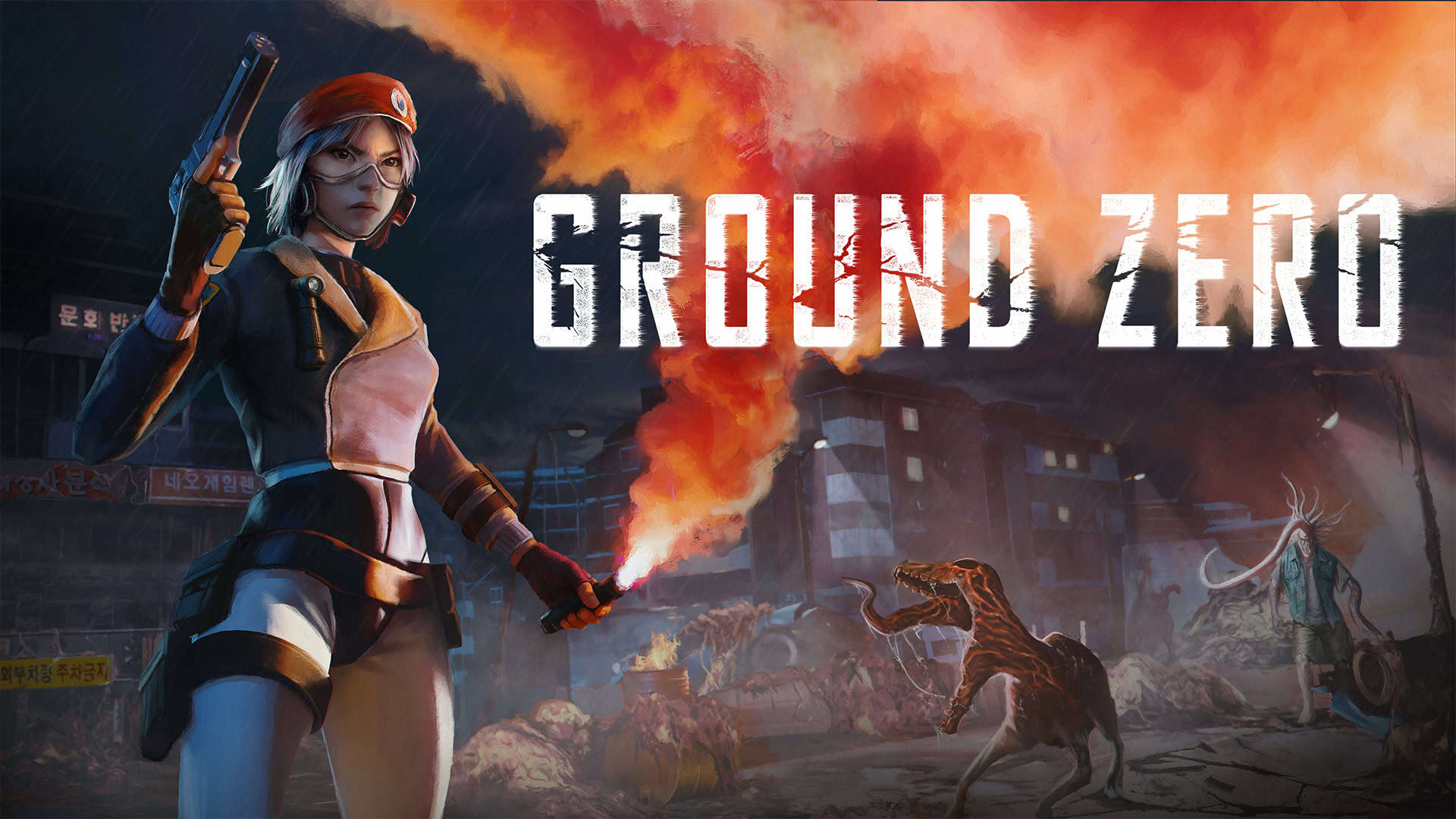
The subgenre of indie retro-style survival horror games has surged in popularity over the years, with notable titles such as Signalis and Crow Country breaking the boundaries of players’ expectations of the genre. While these games have struck a balance between nostalgia and making their own mark in the genre, there are others that have not been so successful – especially when working under an indie scope without the resources of industry giants such as Capcom or Konami.
Set in an apocalyptic South Korea, Malformation Games’ Ground Zero has grand ambitions, having players work their way across a huge, sprawling city rather than confined to a claustrophobic mansion or secret underground lab. A meteor has devastated Daejeon, causing an unfathomable loss of life across the country. Two months after the incident, the dust and lightning storms caused by the crash have subsided, and Captain Jang Seo-Yeon and her Canadian partner, Lieutenant Evan Fielding, are tasked to begin the next steps to recovery. Their mission is to travel to Busan and uncover a black box that has recordings of atmosphere data since the incident. From there, they’ll need to investigate the impact site in Daejeon and await further instruction on clearing the radiation and evacuating anyone who has miraculously survived.
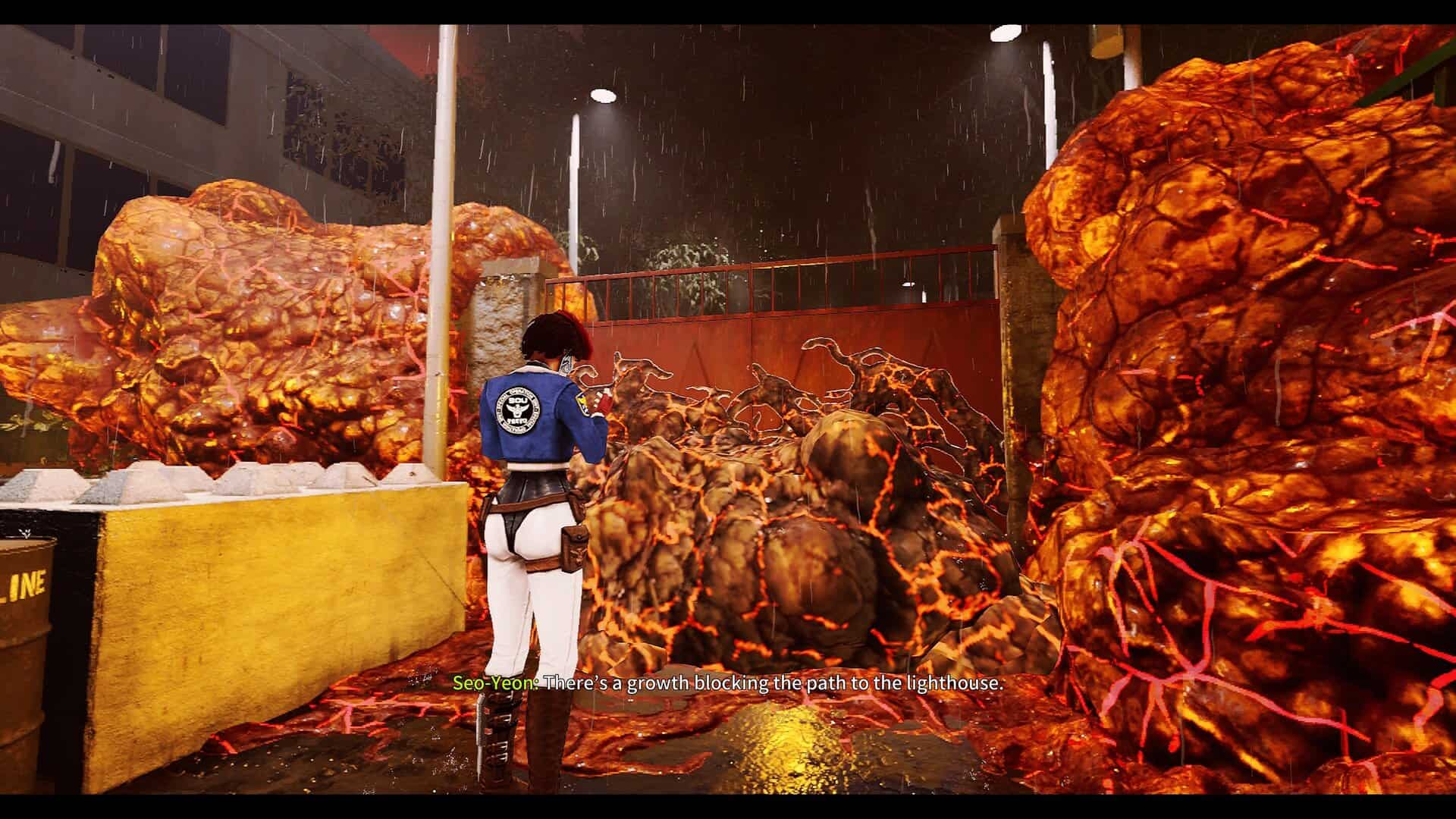
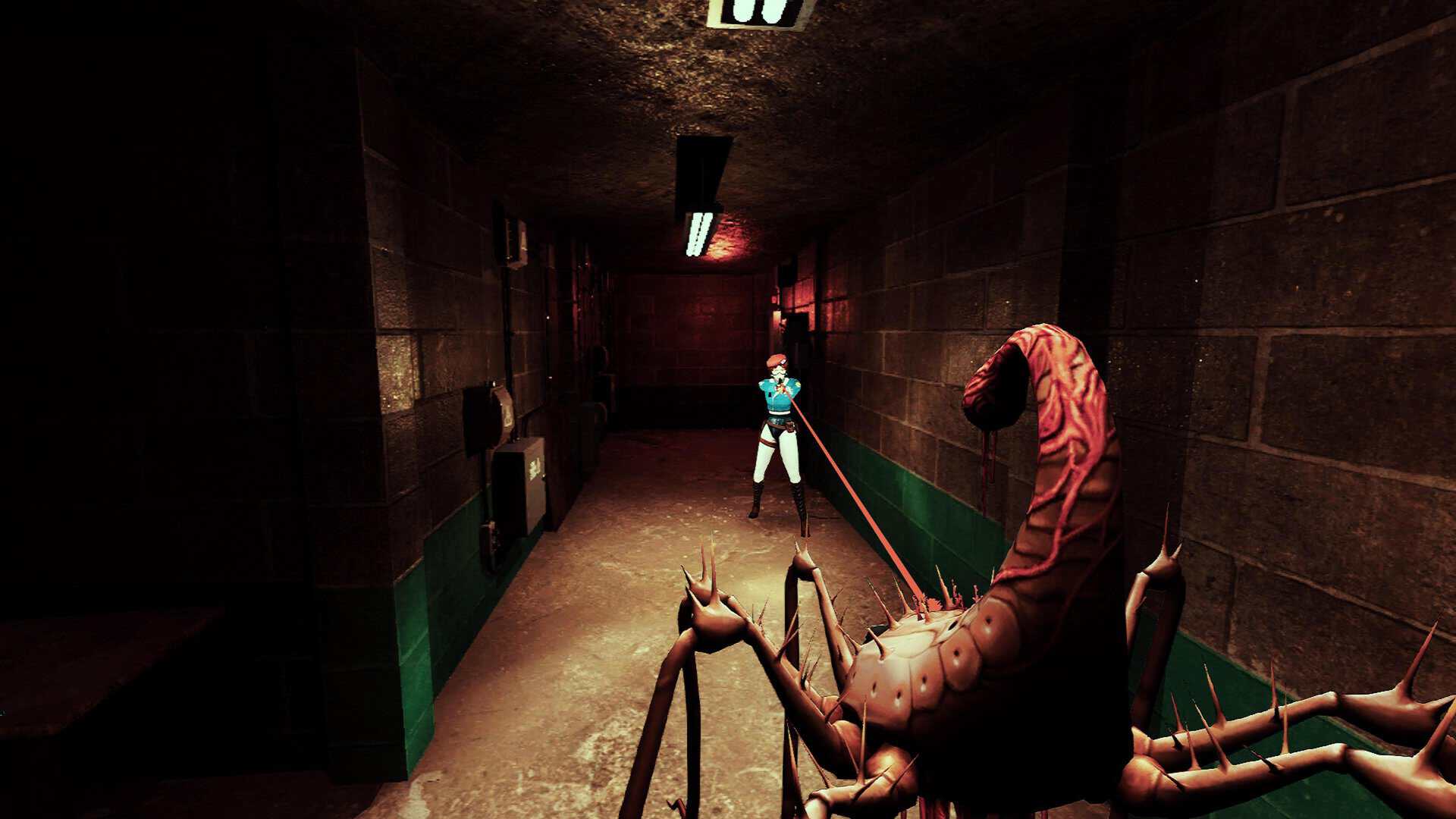
Ground Zero’s gameplay mechanics are fairly typical of a survival horror game. Seo-Yeon starts with a magnum, and as the game progresses, she’ll pick up better guns and equipment. All firearms have a laser sight — which is much appreciated with the fixed camera — and she can dodge and parry close-quarter attacks.
Rather than picking up a singular consumable to heal with, in Ground Zero, Seon-Yeon comes equipped with a medical syringe. There are three types of consumables that can be inserted into the syringe: vitality serum for healing, an antibody for curing and protecting against infection, and fitness boosters for stamina and defense. Each fills a third of the syringe, so you can double or even triple up on one type of consumable for a more powerful concoction, or you can put together a cocktail of different types if needed – much like Resident Evil’s herbs.
Part of Seon-Yeon’s mission is to collect genome data from the slain creatures that have mutated from the site’s inhabitants. This genome data makes up points which can be traded in for resources and weapons at specific terminals, giving combat an additional reward besides survival.
While saves themselves aren’t limited, where you can save is. You can save at Data Uplink Terminals, but their signal needs to be first strengthened with a single-use Signal Moderator to unlock it, which can be found around the map. Early on, these are mostly located directly next to each terminal you find, but as the game progresses, you will have to choose more wisely when to use one, as they will become increasingly scarce — making players think strategically about when and where to save progress. Similarly, safes need to be unlocked via solving a mathematical puzzle, but you can also pick up various devices to make this easier.
The game offers both tank and modern controls, and there are separate difficulty options for combat and puzzles. As someone who regularly plays survival horror games on normal difficulty for a first playthrough and has so far found Resident Evil 0 to be the most challenging that I have played, I absolutely recommend choosing the combat difficulty below the one you would usually pick. If you prefer less challenging survival horror games and want to focus more on story and exploration, I do not recommend Ground Zero at all. While it starts off fairly simple, there is a huge spike in difficulty just over half the way through the game — to the point where even I haven’t managed to get to the end yet after playing it for a week.
Enemies become faster, more aggressive, and will soak up more bullets before going down. In certain areas, they will also be numerous, often overwhelming the player in tight spaces. Through this, Ground Zero has mastered the dilemma of fight or flight by making flight extremely risky if you end up with a crowd of enemies on your tail. Meanwhile, a fight can easily spend your arsenal of bullets in one go, making upcoming confined areas incredibly difficult to maneuver around if there’s any living enemies in them.
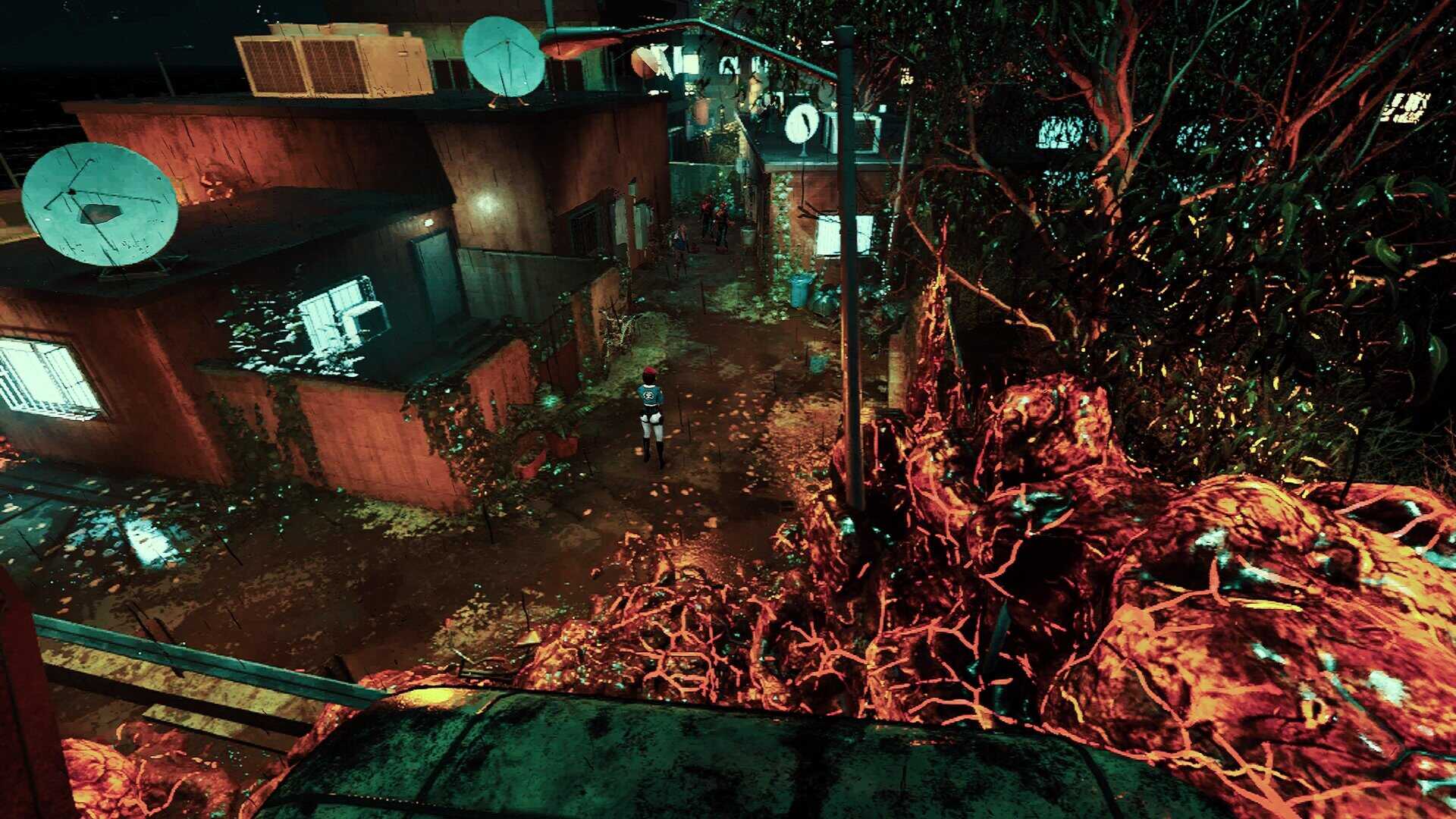
Besides getting completely crushed during combat, I have really enjoyed the time I have spent with Ground Zero so far. While the maps are utterly huge and there’s a lot of backtracking, we spend enough time in each location for it to become familiar and have the opportunity to fully explore the area before we move on. There’s an unsurprisingly extensive range of locations as a result, from survival horror staples such as an abandoned hospital and creepy hotel, to a fairground and a university.
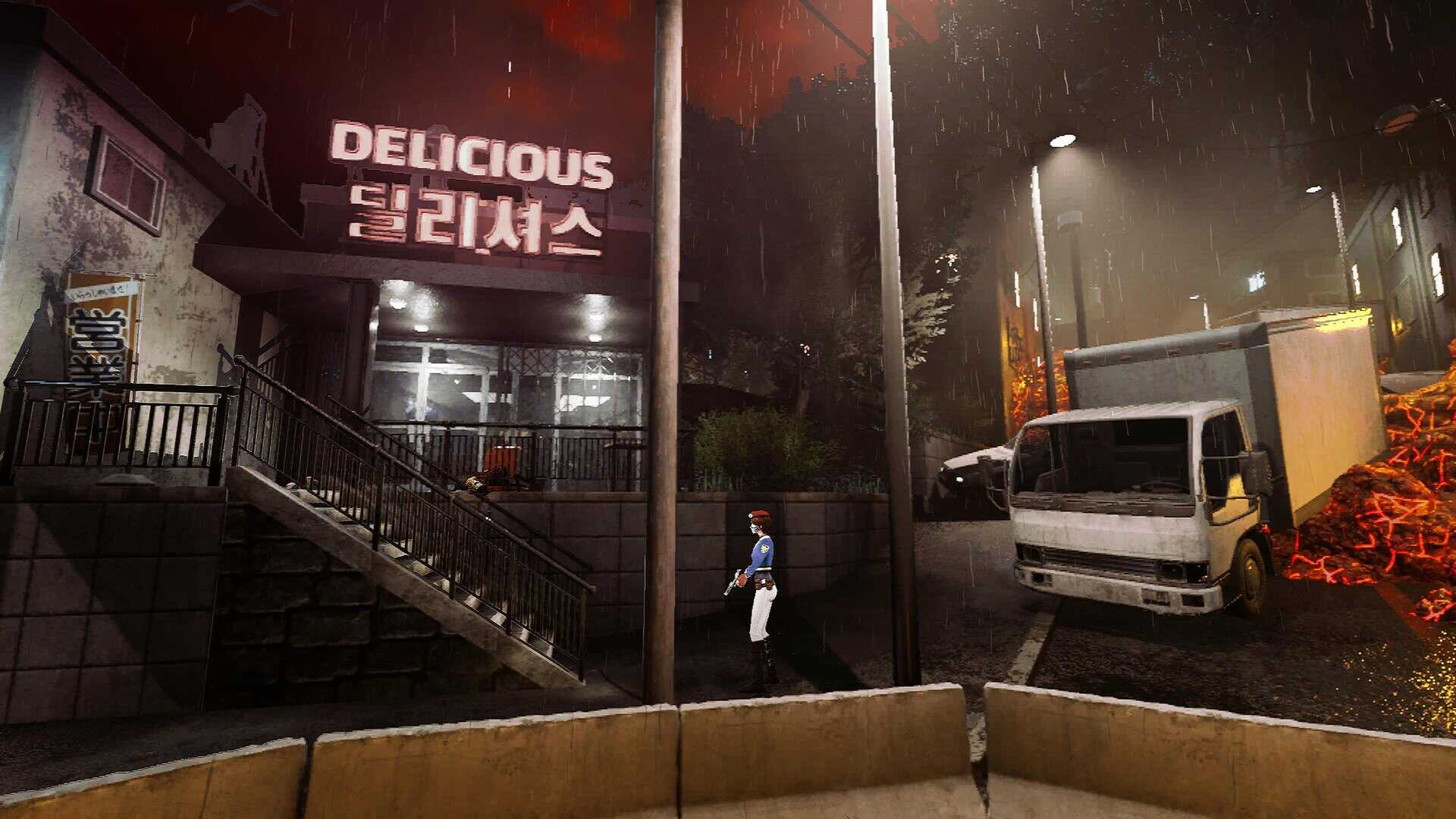
That being said, Ground Zero is in need of some polish as I encountered a few issues during my playthrough. The biggest of these was that sometimes the camera pulls out so much that I was straining to see properly when playing on a TV. I believe this game was designed with a PC monitor in mind, as I actually needed to get up and look at my TV up close to read the controls menu properly. The visibility issues extend to lighting, as the game has a very high contrast look to it, but this also meant that the darker areas were really dark, so much so that it could be difficult to see anything at all.
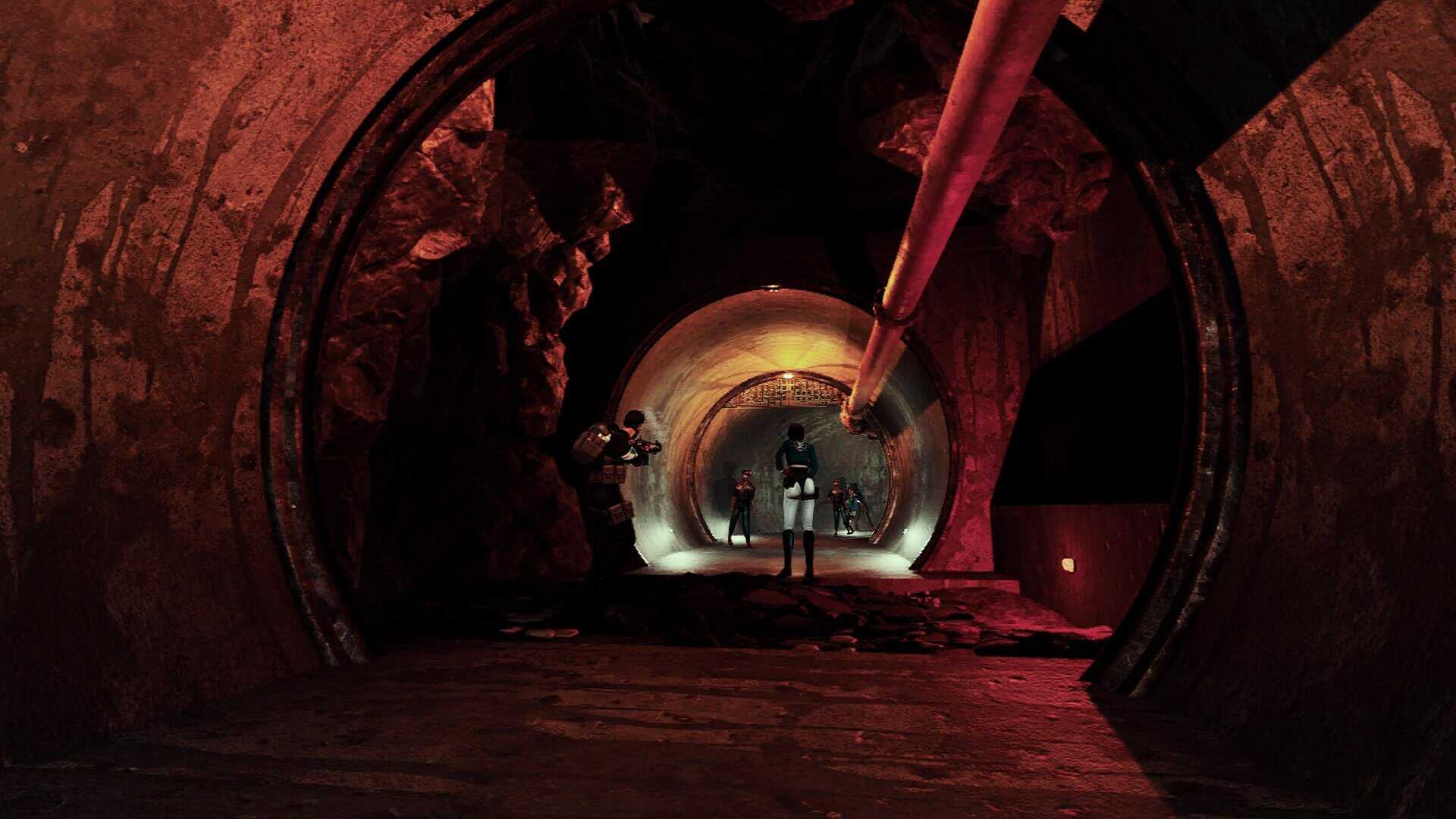
There’s also a few technical tweaks that Ground Zero could benefit from, the biggest of these being the map. Currently, we are only able to view the map of the area we are currently in, not counting building interiors. If you want to see the map for another area or inside a building, you have to physically travel to it. With the amount of backtracking that Ground Zero already requires in order to search for key items, not being able to see the maps of other areas was incredibly frustrating, as it meant I would have to go and visit each area if I was missing a specific key item and needed to check if I had missed any rooms or paths during my exploration. Another problem was with the inventory management, which I found fairly punishing, but even more so when, for some reason, certain non-key items cannot be destroyed, such as flashbangs, so I had to keep travelling back to a safe to put them away if I needed to make space.
Visually, Ground Zero is stunning despite the lighting issues. It’s bright, intensely vibrant colours help to accentuate the dirty, radioactive atmosphere of the city — walking through it feels wrong, with the anxiety of being infected with whatever has already mutated the previous inhabitants hanging over our heads, the more time we spend there.

The enemy designs are fantastic. Impressively varied and never growing boring, I was genuinely disgusted by many of the creatures that would appear from behind a corner and stumble towards me. The sound effects paired with these beings were even more disturbing and unique to each creature, so that they could be identifiable before being seen — which is extremely valuable with a fixed camera. There was one creature in the hospital section, however, which I think took the gruesome sound effects a step too far with an intense vomiting sound. As someone with Emetophobia, a phobia of vomit, I had to turn down the volume during these sections as the sound effects were too much for me.
The time I’ve had so far with Ground Zero has been fun despite hitting a roadblock due to the difficulty curve. That being said, after putting well over ten hours into this game so far, I do feel like it is starting to outstay its welcome, as there’s been a few times where I thought we were getting to an endpoint only to realise it was still moving forward.
Jess reviewed Ground Zero on PlayStation 5 with a provided review code. This review is based on the version of the game available at the time of writing.




 ObserverCrew Picks
 bserver
 bserver