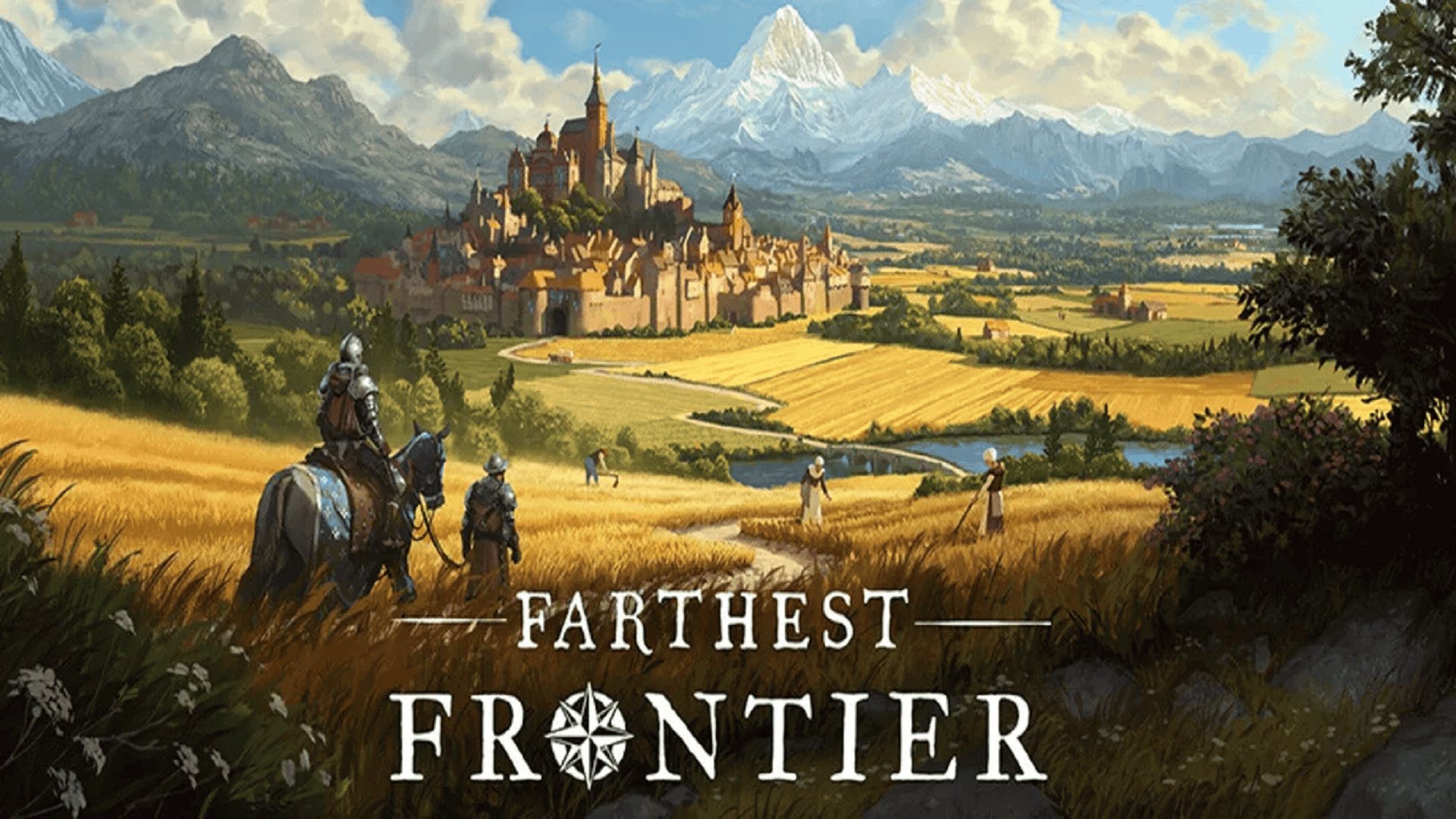
Years ago, purely on impulse, I picked up a little indie title off Steam titled Banished. The premise was simple enough: take a group of exiles into the howling wilderness and try to make a new life there. It’s such a simple premise that it feels like it’s been done half to death at this point. The latest stab at the genre is Farthest Frontier. It’s a perfect example of adding a lot of needless complexity to something which didn’t necessarily need it.
Farthest Frontier puts you in the ephemeral shoes of a leader of self-imposed exiles who’ve left an unnamed nation to strike out on their own and perhaps build a better life for themselves out in the wilderness. You’ll need to secure food sources, manage raw materials, lay out your town in such a way that makes people happy, and otherwise not cause the unlamented death of your friends and compatriots by disease or starvation. You’ll also need to prevent them from being eaten by predators or brutally murdered by bandits. So, hey, no pressure there.
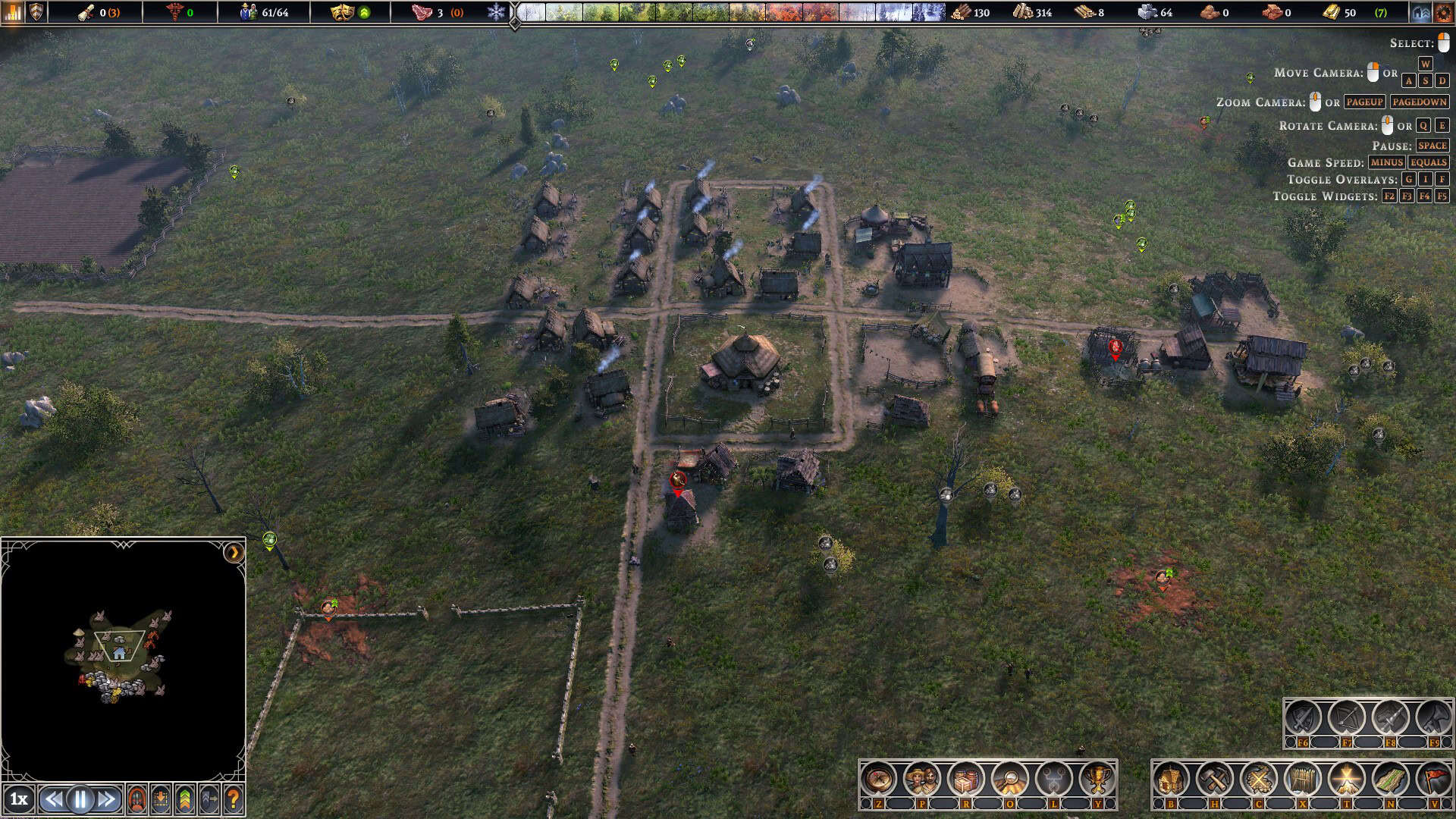
From a visual standpoint, Farthest Frontier certainly looks striking. Crate Entertainment has given us an engine which generates a good sized plot of land, fills it with resources in various spots, works in layers like water and fertility, and lets the player modify it as necessary. That really is kind of an important qualifier to point out, and I’ll get to the distinction a little later. Weather effects are pretty good, certainly making it clear when you’re having a “mild” winter compared to a hard one. The UI is fairly informative, letting you know when you’ve got the resources on hand and you’ve met the requirements for upgrading structures, giving you useful information on the status of wells and fields, that sort of thing. Placement of structures and improvements occurs on a grid, and you can easily see if the area is clear or if there’s something obstructing it. If you’re looking for any complaints about Farthest Frontier, the visuals aren’t going to be a source of contention for you.
As far as music and sound, Farthest Frontier suffers from a certain lack of variety. Environmental sounds such as wind, bells ringing, and wolves howling are nicely done, and clicking on various buildings often produces an appropriate sound (such as saws cutting through wood in the Saw Yard). That aspect is well done. It’s the music which seems to fall short. There’s a marked lack of distinctive themes outside of “everyday work” and “village under attack.” Granted, Banished wasn’t exactly overflowing with great music at every turn, but Farthest Frontier has no excuse.
The gameplay in Farthest Frontier is, arguably, very fiddly. You’re constantly having to create a sort of equilibrium with your settlement to keep your people fed, clothed, healthy, and happy. And often times, it feels like you’re being told you can only pick one. Trying to improve your village by installing essential services often ends up screwing you over in some fashion. Much like Manor Lords, you’re given options for policies which can boost productivity in one area, but only at onerous expense to another one. There’s a tech tree of sorts which allows you to unlock new building types and enhancements to various functions like field fertility and well refilling rates, but past a certain point, the influx of knowledge points becomes painfully slow.
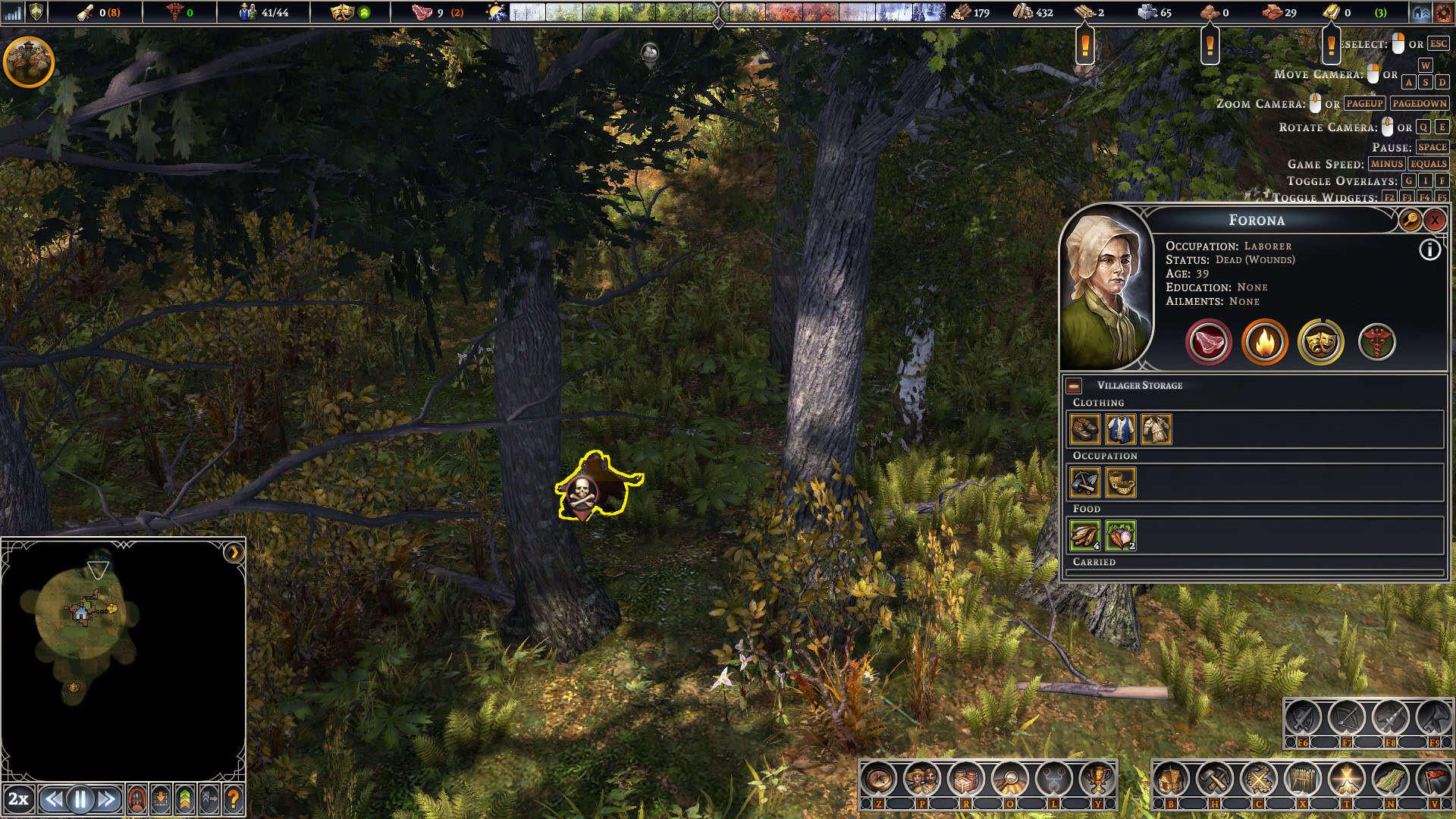
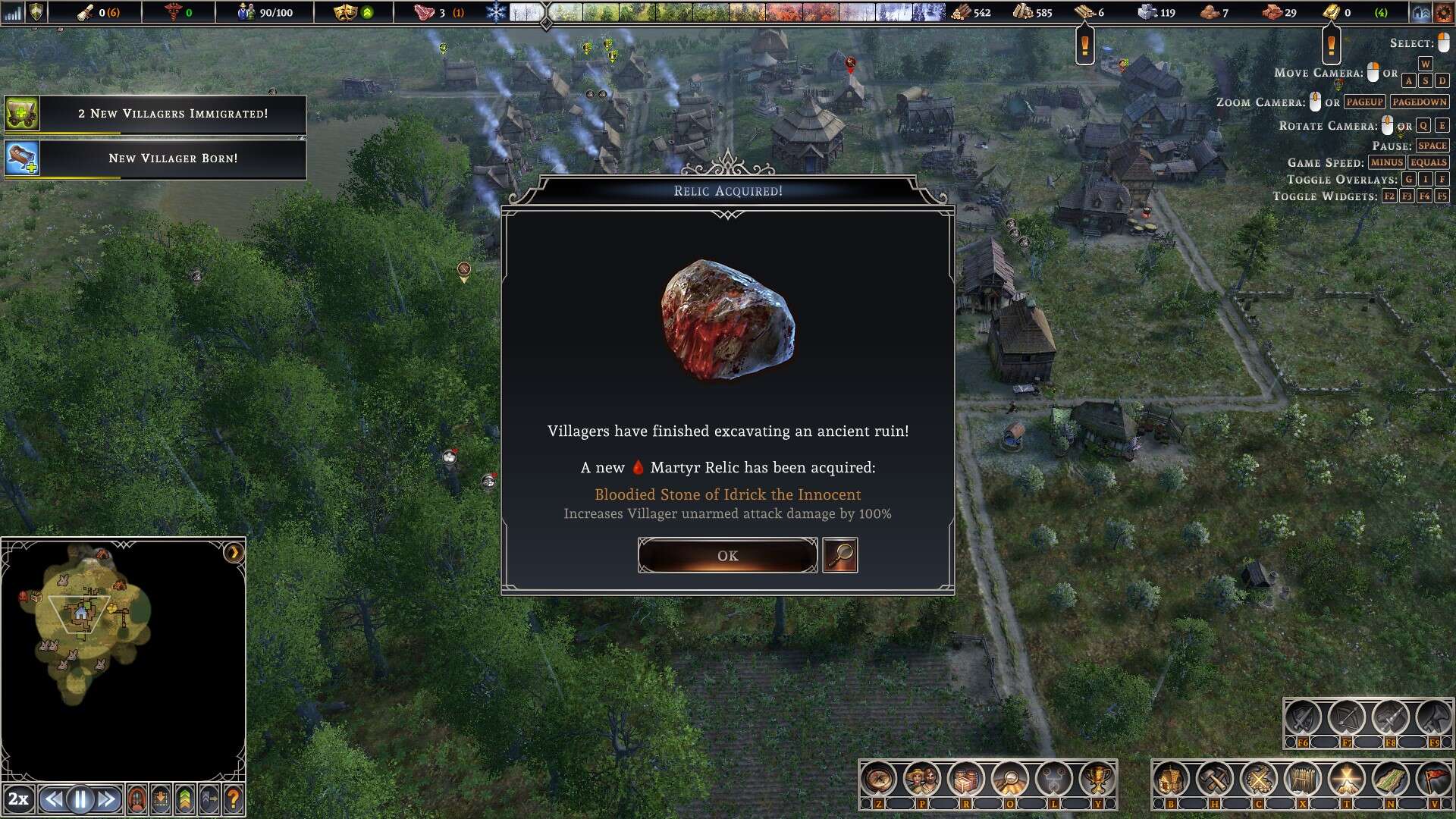
If you build a temple, you can excavate ruins to obtain artifacts which provide buffs to certain activities, but the amount of population needed means that any utility those artifacts provide is a lot more marginal than what is printed on the item description. Random events like droughts, disease outbreaks, and blizzards can screw up harvests, destroy food stocks, and lead to the decimation of your settlement. And that’s not counting things like wolves and bears munching on hunters or workers, or bandit raids slaughtering villagers and burning all your hard work. There’s a “pacifist” option which gets rid of the bandits and predators, but perversely, the balance actually seems to get out of whack more quickly.
Earlier, I mentioned that you could modify terrain. You can raise or lower terrain creating more accessible slopes up hills, clear cutting forests, etc. But in order to do so, you have to keep a supply of basic laborers around, and sometimes the demands of keeping the settlement going (particularly in the wake of catastrophe) means you sometimes are stuck without laborers to move things around. For all the elaborate data options to manage your citizens, the inability to essentially reserve basic laborers or allow specialist workers to tote their own barges and lift their own bales feels like an aggravating oversight. Adding to the aggravation, a rather arbitrary distinction regarding resource nodes which can grant a “perpetual” stream of materials and “regular” resource nodes can cause confusion, since you can’t mine the endless nodes until you research the right tech which is pretty deep into the tree. It adds to the feeling that there are no really “good” options in the tech tree, just a wide variety of ways to screw up.
As a final insult, if you’re not at a point where you can afford to equip and maintain standing troops, you’re basically stuck throwing mostly unarmed peasants against armed and armored bandits or hostile wildlife should it wander into your settlement. And sometimes, the only way to make your food supplies stretch is to throw the peasants against a bandit camp. You’ll lose a lot of villagers, but you’ll cut down on the food consumption in the most brutal way possible. You as a player aren’t explicitly encouraged to undertake this sort of strategy, but you kind of get the impression, “they’re gonna die anyway, may as well get some mileage out of it.” It not only kills population, it kills the fun right alongside it.
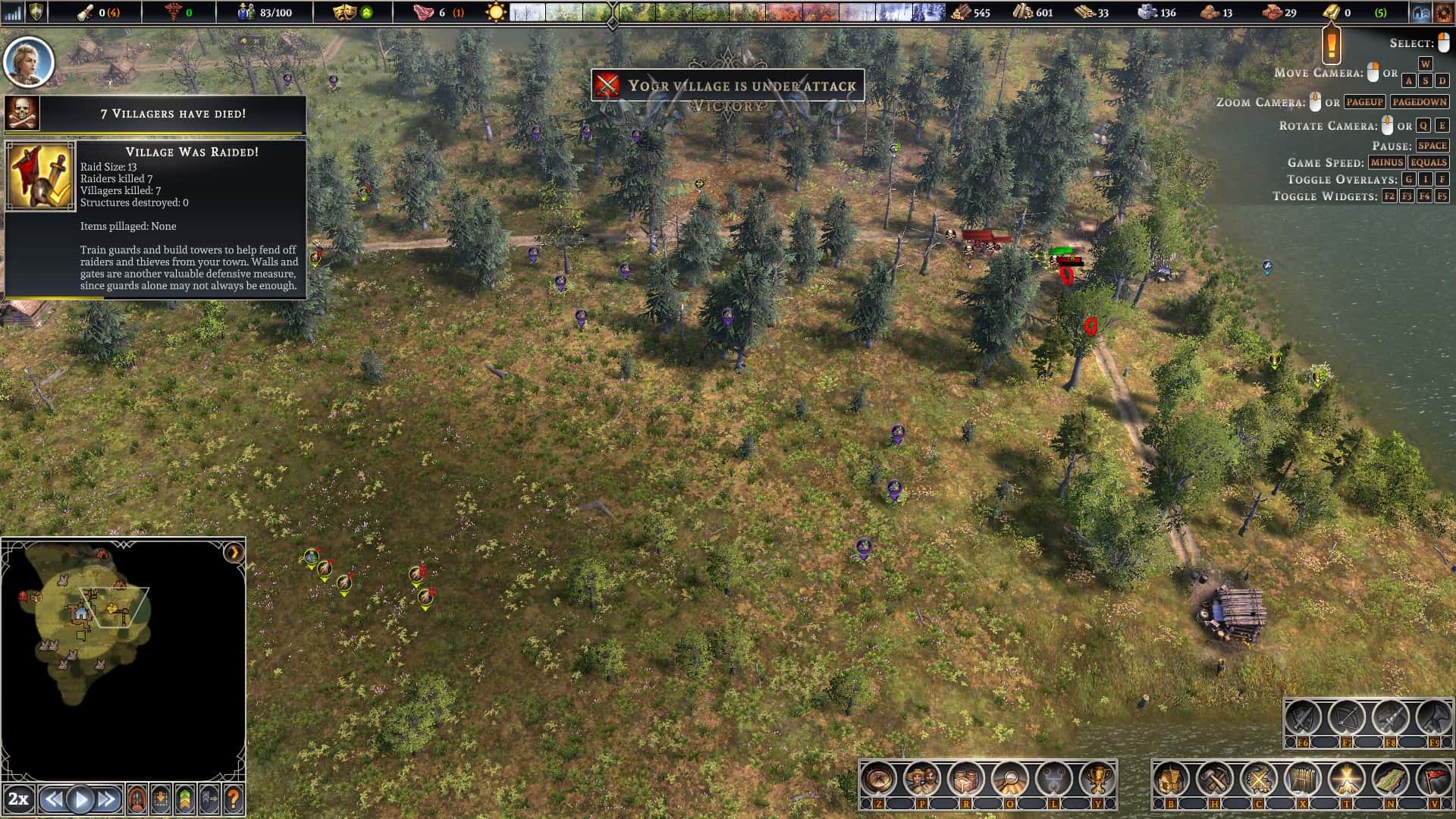
Farthest Frontier is a far cry from Banished. It adds a great deal of elements which do nothing but cause needless friction and aggravation. And for a title in a genre like this, that’s the last thing you as a player want to deal with. If you think you can hang, you might want to check it out, but don’t be surprised if you find yourself wanting to exile yourself from the whole affair.
Axel reviewed Farthest Frontier on PC with a provided review code. This review is based on the version of the game available at the time of writing and our score will not be changed.
- Score
- 4/10 Lacking - Axel Does Not Recommend
- Summary
-
Farthest Frontier marks another entry in the "medieval city builder" genre. Visually impressive, but mechanically aggravating, it mistakes "complicated" with "deep" and sabotages a lot of player goodwill in the process.
- More
- GameObserver's Review Policy

 ObserverCrew Picks
 bserver
 bserver