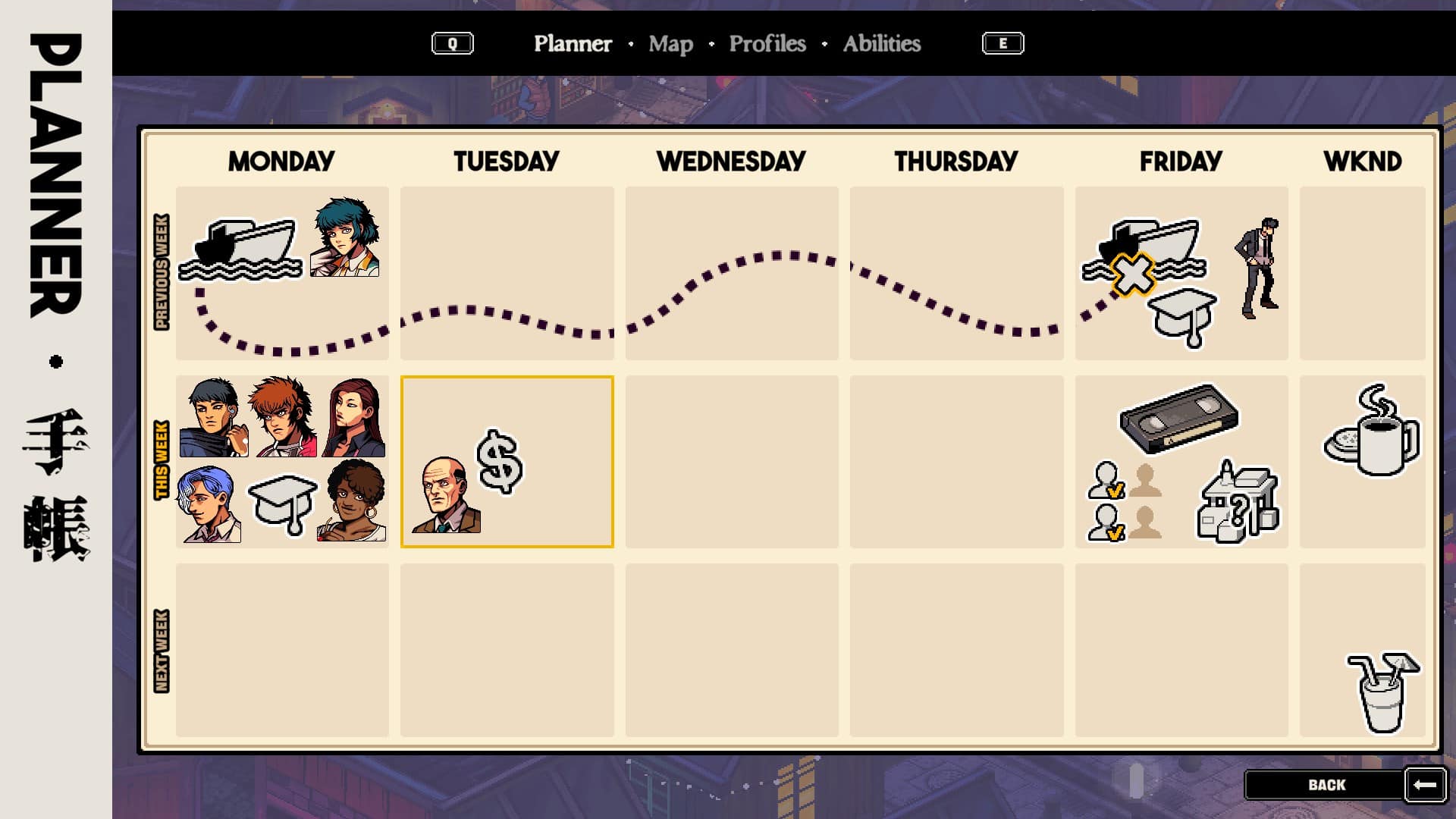
Video games are facing an increasingly difficult battle against their portrayal by the media. At a glance, Necrosoft Games’ Demonschool is a lock for fans of Persona, right? You can see a calendar, the free time activities, and the romances. See: an absolute mass of articles and posts about a new “Persona-like.” Now, we arrive at the full release. Demonschool is out, and it is an absolute behemoth of a 50-hour… puzzle game with light social elements.
Over 200 intricately crafted puzzles presented as combat encounters, all on a linear story path, featuring some side activities that largely result in more puzzles. Demonschool feels very little like Persona. People expecting it will be faced with superficial similarities, as a few hours in, they will see the end of several short character storylines they possibly hoped to see carry on throughout the entire experience. So, to really enjoy Demonschool, you may have to first accept that you have been thoroughly lied to by your own first impressions.
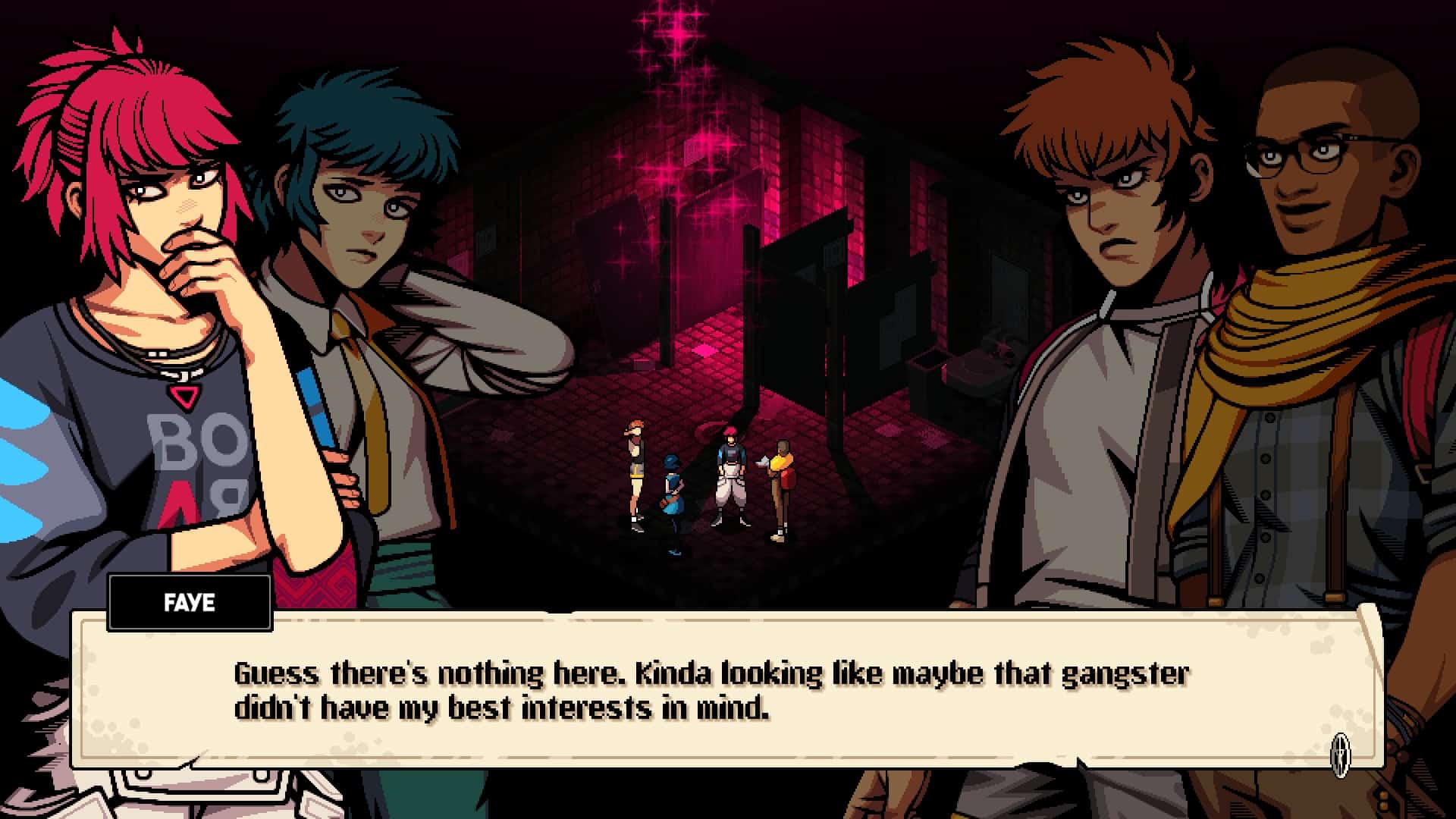
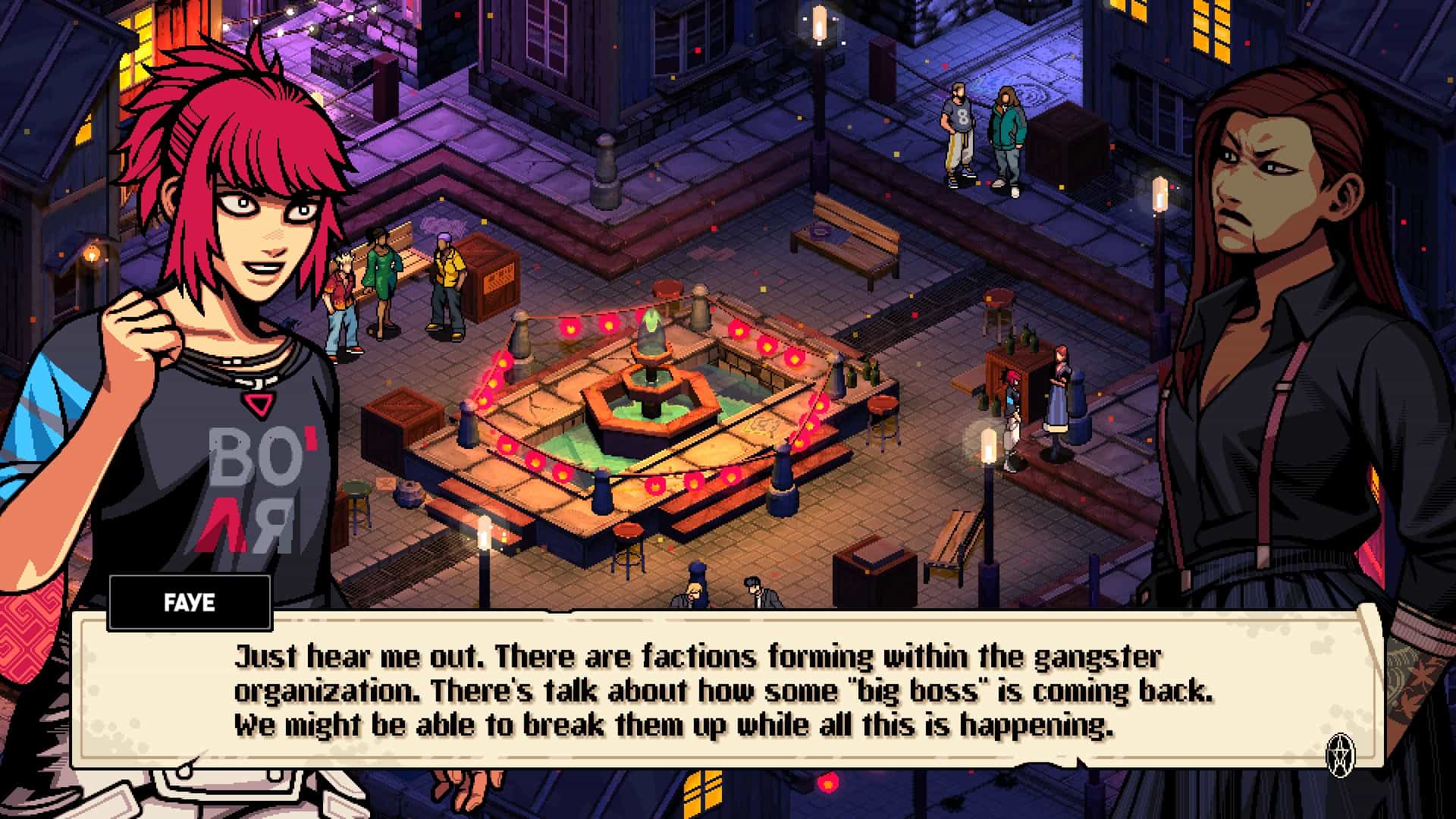
Jumping past that first hurdle, we arrive at Hemsk (an island revolving around the university of the same name), where Faye, Namako, Knut, and Destin form a club to fight demons and close portals as part of their curriculum. If they fail, they land in prison. Or die. Pretty bad outcomes. Faye comes from a family of demon hunters and is aware that, in 11 weeks, the apocalypse will begin.
Though it is split into days and weeks, time in Demonschool progresses alongside story events, meaning all other activities can be completed as they pop up. Indulging in karaoke or a bit of cooking for your friends (or kiss recipients if you end up going there) takes place during the classic video game space-time black hole, where you can do as much as you want as long as you do not do this one specific event that moves the plot forward. Nothing out of the ordinary, though it is the beginning of a pattern—Demonschool really lacks dedication to any one of its ideas.
Demonschool is ultimately unfocused, disjointed, and lacks friction. It mixes a staggering amount of casual puzzles via combat with a hefty story that too rarely strays from culminating in an encounter. The pace could be spiced up thanks to the character relationships and attached minigames, but these nearly always also end in combat against the same enemies. Side-quests? More combat. It very quickly gets to a point where scenes have enemies show up out of nowhere just so an event can have an encounter.
Character finds a love letter? A demon walks up wanting to snatch it. Characters planning something out in the street? Surprise demon attack. Characters return to talking about said plan? You won’t believe what happens next! This comes back to the decision to split every day into these three time periods, as these pre-fight scenarios become increasingly more ridiculous in an attempt to fulfill the requirements of that structure. It really does not feel natural, and situations end up more comical.
It takes a while for it to become clear, but Demonschool is aware of this. The tone may initially invoke horror, but it clearly aims for more of a campy/comedy vibe. Still, it feels like it never nails it. The truly sublime music—tracks split in a way where they flow effortlessly into these combat encounters and crescendo with flawless and powerful choir hits—evokes something more intense and atmospheric. The completely dry lore explanations (often taking characters completely out of their otherwise snappy and charismatic dialogues) suggest that the investment should be there, but they feel more like a necessity. I guess they really nailed that B-movie structure, huh?
Yet, there are no particularly unique or complicated mechanics behind the inner workings of this demon army. Most often, the gang discovers a conspiracy early in the week, followed by chasing threads and a lengthy information dump, with an often out-of-nowhere boss fight soon after. The next day, we unpack what happened with another dry summary and move on to another set of two dozen combat encounters.
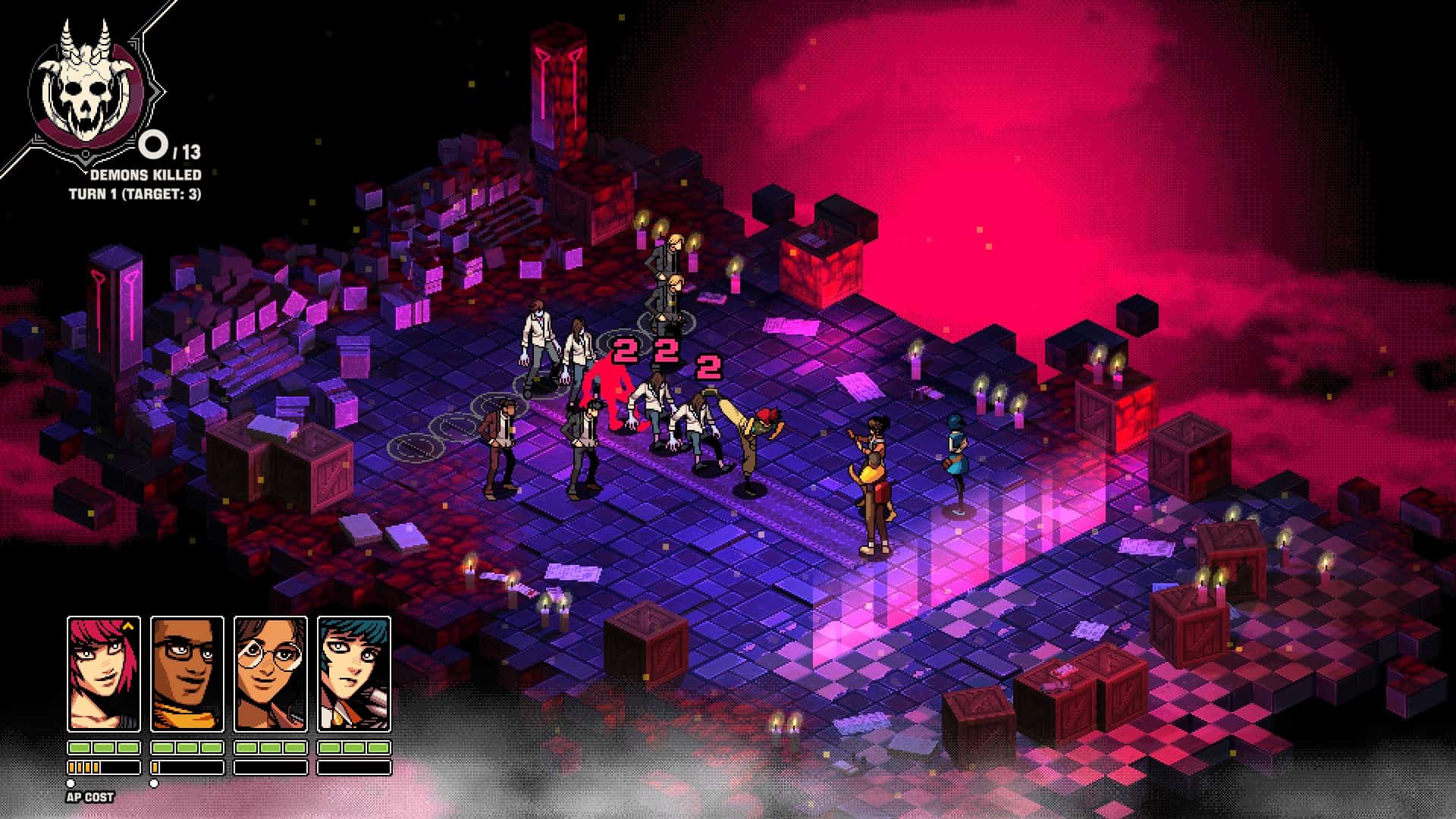
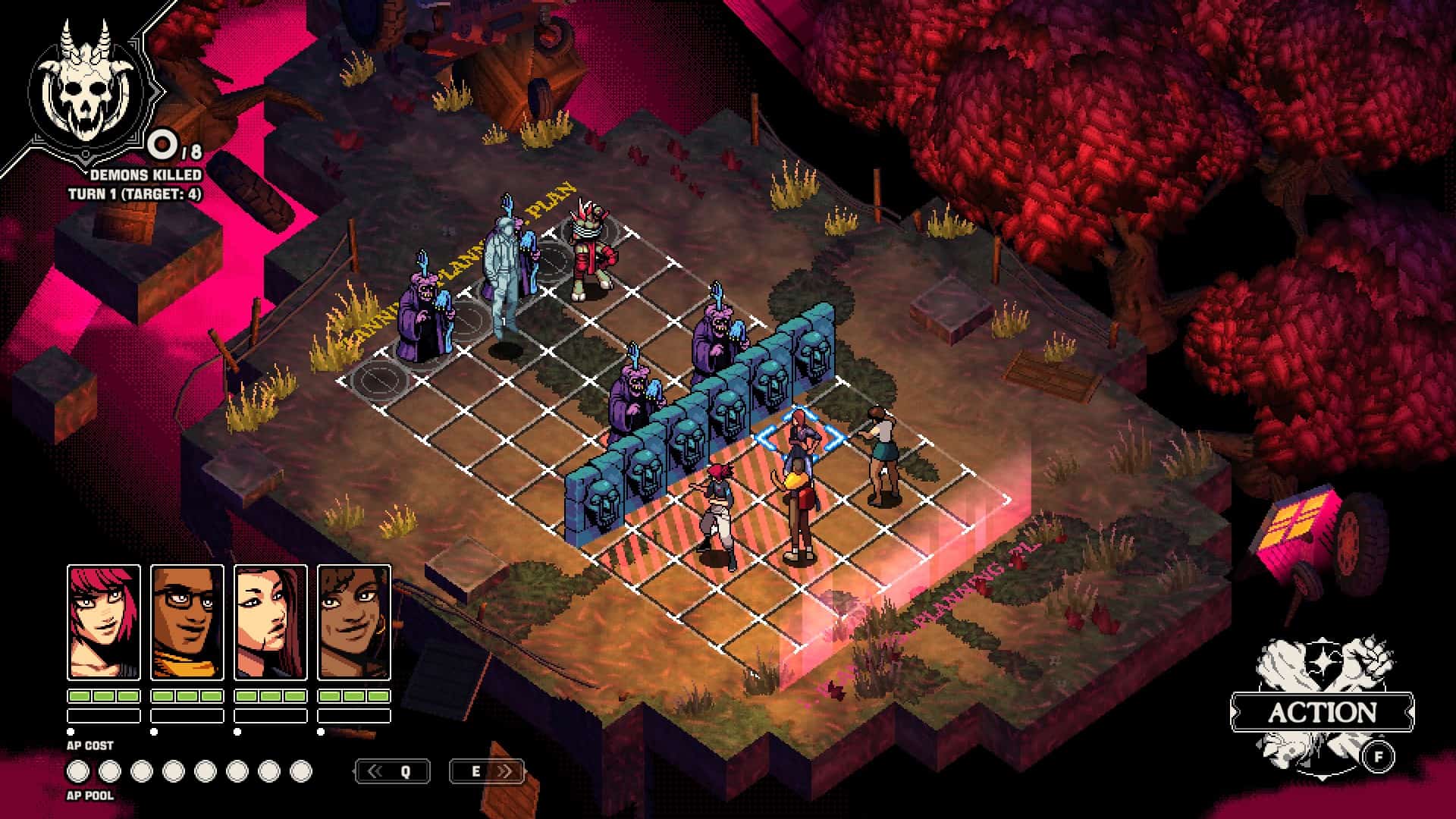
At the very core, the puzzle combat is really satisfying. The grid-based field is built for quick dopamine hits as you pull off those perfect line clears, dispatching three or four enemies with a single strike and running to the end goal with the last of your action points. Thing is, this one source of excitement dries up faster than you’d want, and only really changes during the genuinely amazing boss encounters, whereas the lack of variety in employed strategies once again goes against the structure of the 11-week story.
Lines of weaker enemies? Use the pushing character like Faye or Destin alongside Knute, who heals and buffs their damage, and Namako, who can weaken and stun others while traveling across the map. Singular, stronger enemies? Use one of the later characters that can hit for more damage on single targets alongside a buff character. That is about the extent of the strategy needed to clear everything.
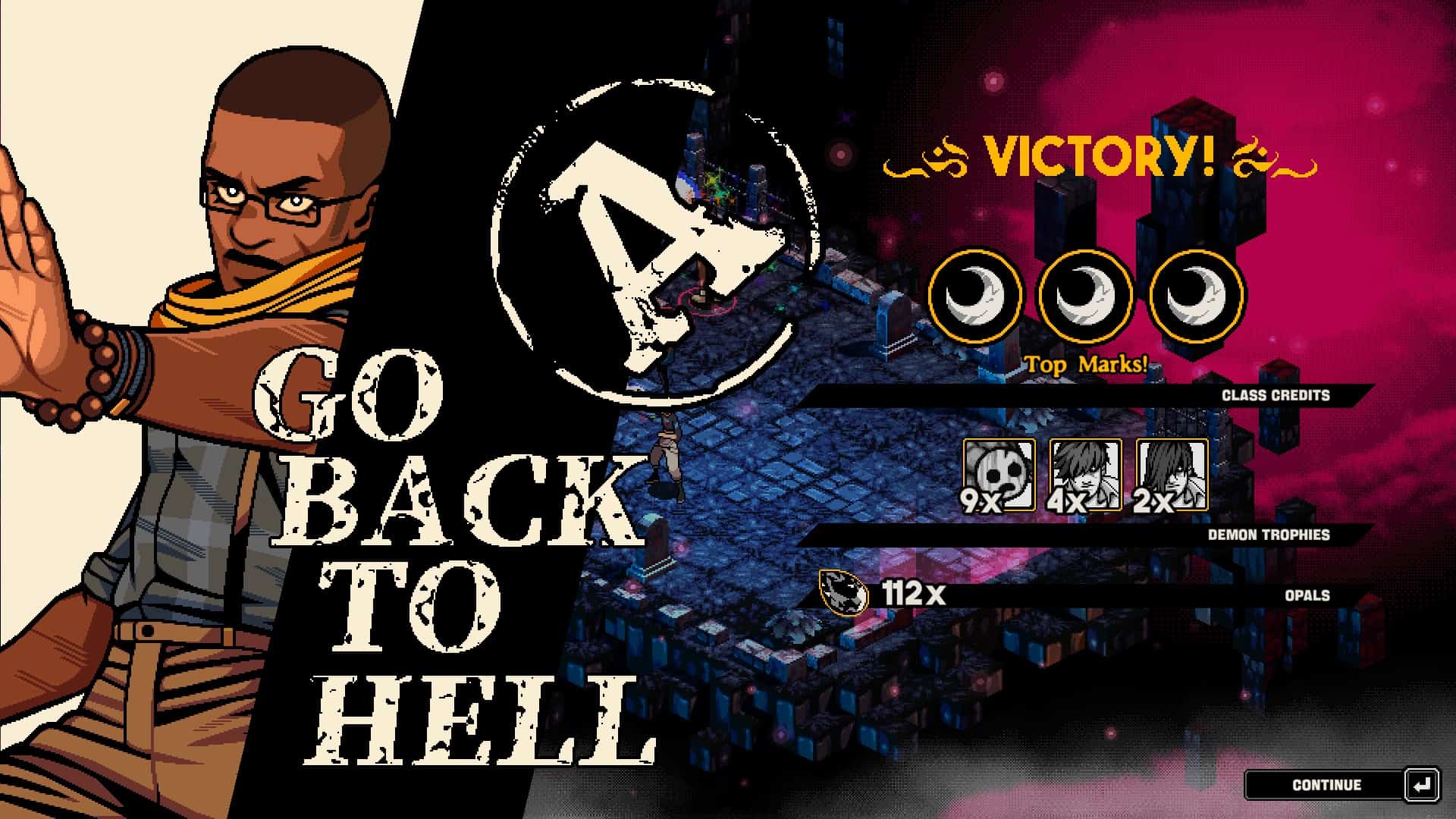
I have completed all but the earliest combat encounters with top marks, rewarding me with skill upgrade currency each time. By the end, I had about enough to get 20 more. You have to wait to obtain new ones too, as each one has to be researched, and characters need to rest for days before they can do it again. Big issue: it is immediately clear which ones are the best.
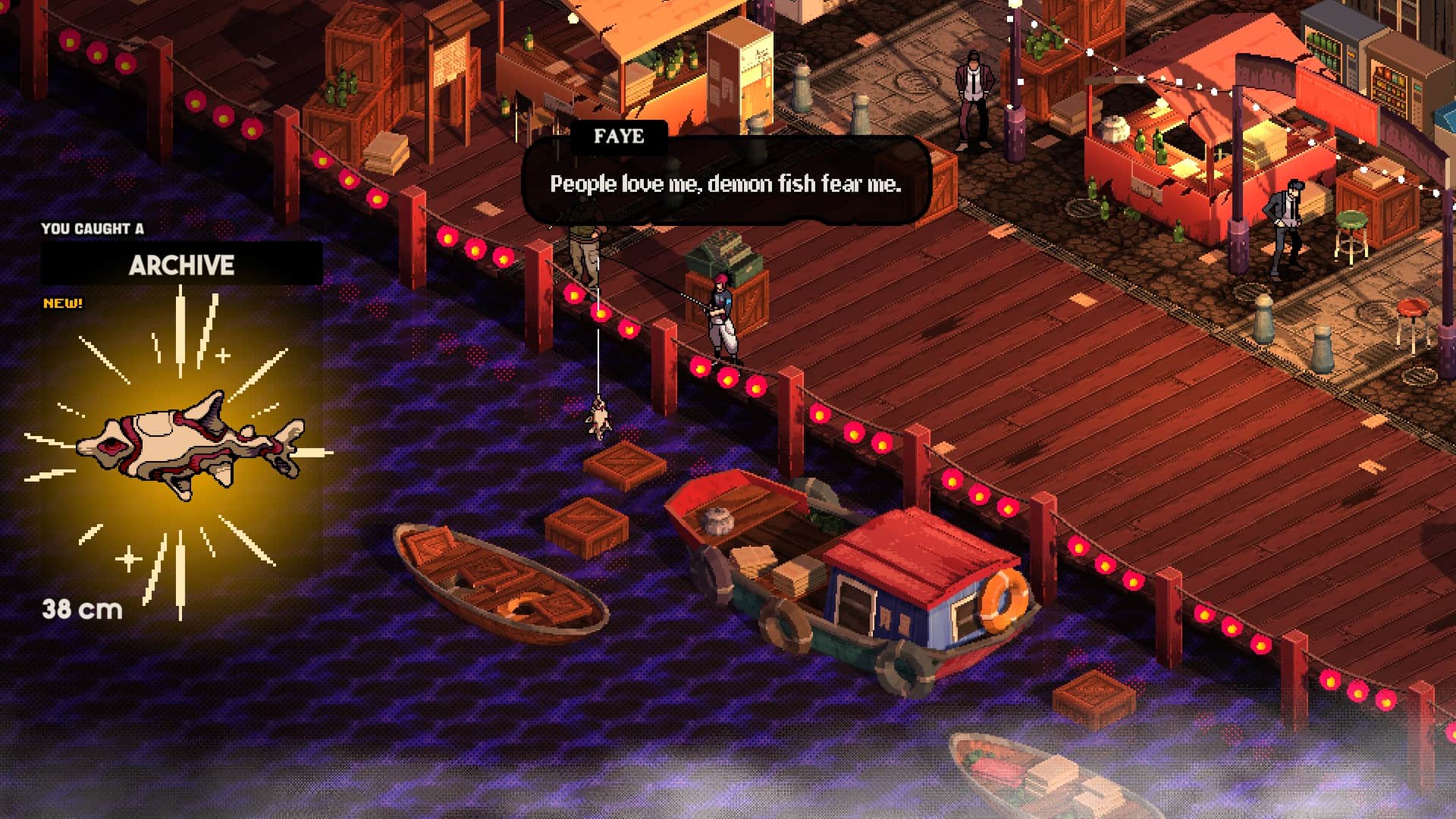
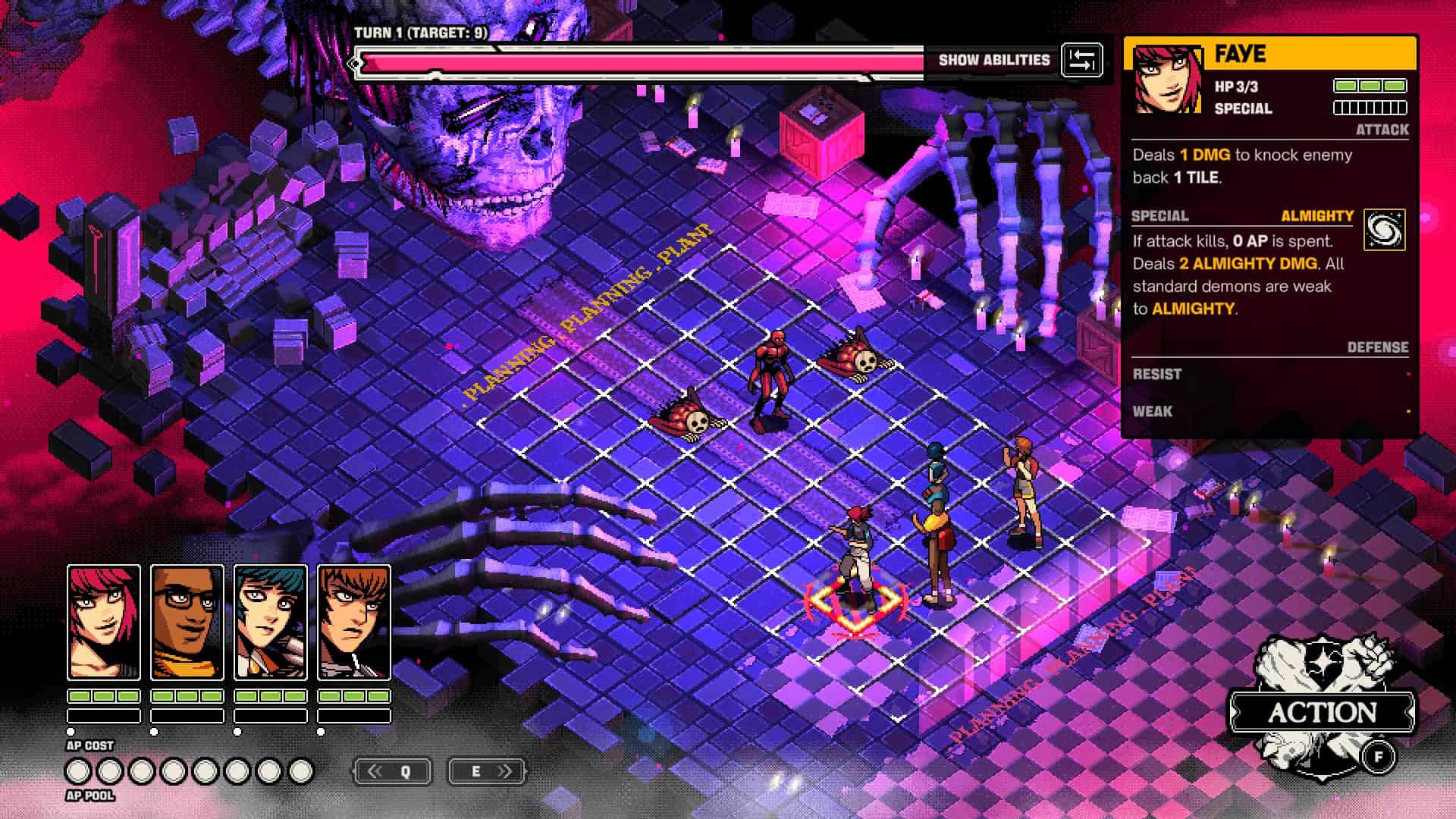
Faye’s ability to teleport through the edges of the playing field is mandatory and unlocked very early on, just like the ability that allows Knute to multi-buff with one move. Past that, the only change to my strategy came midway when I was able to add a special effect and a movement option to characters that can pass through essentially the whole field. There is way too little variety for a game that boasts so many puzzles and sticks to its structure so rigorously.
Sadly, it appears there is little that can be done to change this. The puzzles are all handcrafted, with a tiny bit of randomness to the pathing and, occasionally, spawn locations of some enemies, so there is no easy solution to upping the difficulty without disrupting a delicate balance. These calculated puzzles masquerade as combat encounters, but lack the friction and unpredictability of combat.
The instant retry button and the clear-set goal (the number of turns you have to clear a specific amount of enemies for that sweet bonus) keep them from feeling tense, leaning fully on that puzzle side instead. Even the few characters with theoretically eccentric strategies that appear later end up filling the same roles and employing the same tactics I’ve been employing since the very beginning, sometimes to better, yet often to worse results.
The first playthrough is hard to salvage as a result, and the length of the game may discourage some from a replay, but there is potential for some sort of hard/NG+/permadeath mode in the future. Armed with the knowledge of these puzzles and trapped with randomized upgrades and/or characters, there is room for ingenuity. I always tried to use different combinations of characters, and did manage to catch glimpses of that, but eventually the sheer length of the game, its lack of variety, and the amount of encounters wore me down as I returned to the trusted formula.
There is a reason why timeslots in games typically invite permanent choices between multiple options and characters, as that kind of dedication builds investment. Here, you can kiss everyone who wants to be kissed and do so well in a matter of hours after meeting them. Sometimes twice in the same timeslot! Puzzle combat can obviously be very enjoyable, but with the countless forgettable layouts and lack of any real threat, it feels like going through the motions.
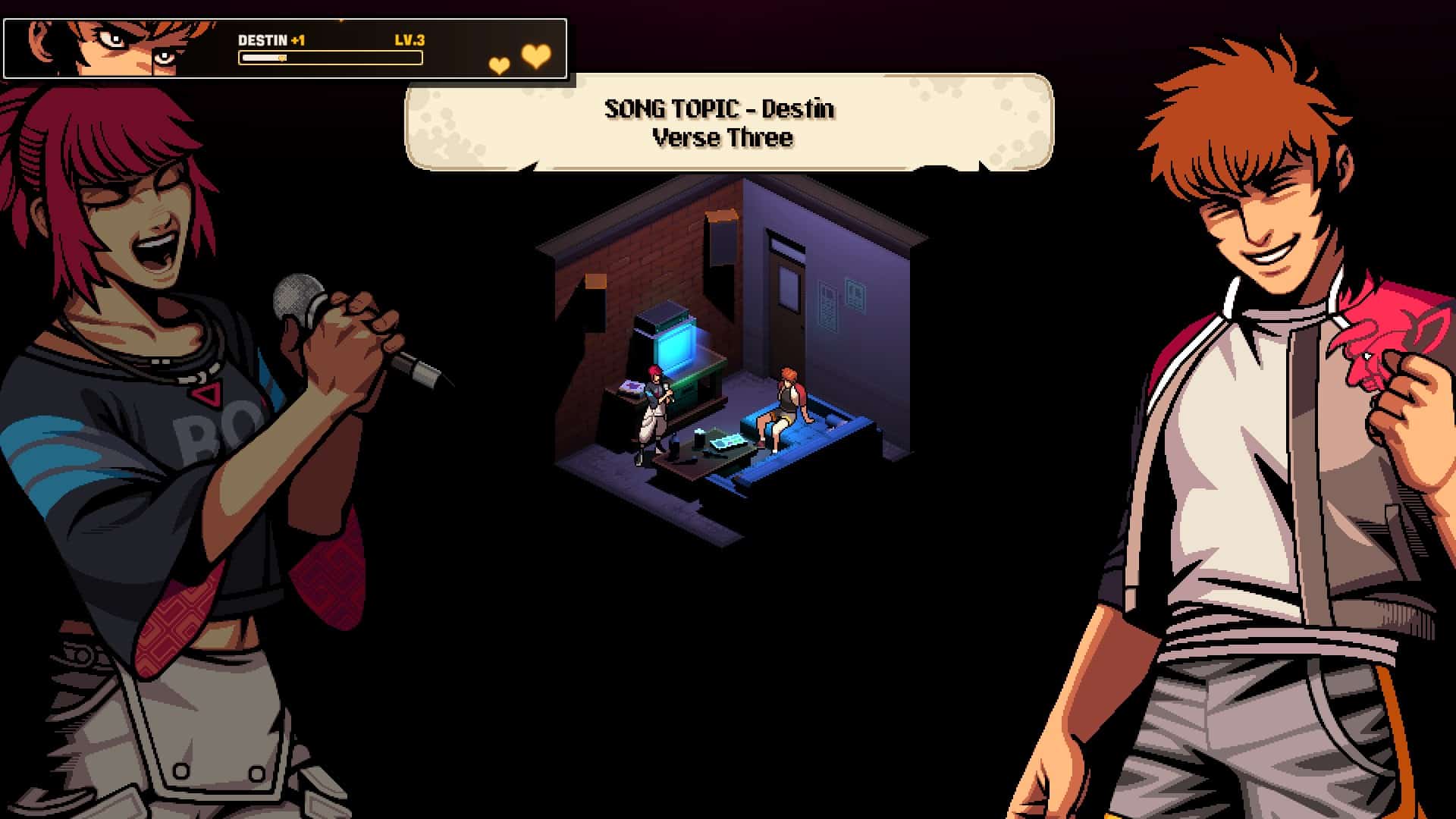
RPGs are often criticized for a lack of balance: lackluster combat encounters in favor of dialogue and/or exploration, or dungeon crawling without rhyme or reason in search of a thrill and some loot. To me, what matters is often that the game manages to give off a fantasy of one while maintaining the other as its core. Combat can be short if the hits are animated with a heft, the fantasy of hitting awesome enemies is there, and I can look forward to a relaxing downtime with my charismatic companions, get lost in the lore, or witness amazing locations. NPCs and worldbuilding can be a bit flat if you are merely going to town to sell off things in preparation for another epic quest out in the world. Demonschool half-commits to both, thus losing out on the impact of either without a suitably satisfying replacement.
Again, the exception here being the boss encounters, which feel like the only culmination of any of Demonschool’s ideas. These impressively unsettling 3D models with plenty of unique mechanics and randomization often caught me off guard in a way I can only wish the other 49 hours of the game did. There is always that ever-tempting instant retry button, but it is much easier to resist given their length.
Though I have difficulties with finding a clean recommendation angle or any one quick description for someone asking whether they’d like Demonschool, this right here is a genuine epic of an indie game that had to face plenty of difficulties. Releases like this should always be celebrated, and the few bugs I encountered that crashed the game or sent me back to the main menu after a few optional NPC interactions appear to be minor enough to be fixed soon; some already were in a day-one patch. Others reported these to be more common, so your mileage may vary.
Did it bite more than it could chew? Yes. But is that not what the indie spirit is all about? Any one glimpse can tell you just how thick the atmosphere here is, and I can guarantee you Demonschool often exceeds those expectations if that’s what you’re looking for. The unique blend of inspirations, as seen in the rental VHS titles of obscure horror from all over the place, elevates it further. Just know that you are signing up for more of a lengthy and silly horror-themed puzzler with some kissing involved, rather than the “Persona-like” it was made out to be by some. Wait for the next Persona remake for that. It’s already announced, be a bit patient for once, okay?
Mateusz reviewed Demonschool on PC with a provided review code. This review is based on the version of the game available at the time of writing and our score will not be changed.
- Score
- 6/10 Decent - Mateusz Cautiously Recommends
- Summary
-
Demonschool, given its hundreds of strategic, short-form battles, feels more like a puzzle game than an RPG, even with its social links and unlockable skills. The commitment to them is also its worst feature.
- More
- GameObserver's Review Policy

 ObserverCrew Picks
 bserver
 bserver