The roguelike genre nowadays is known for endless meta progression and hundreds of hours of gameplay. It’s both an enticing feature of these games and an intimidating aspect for newer players. We take our genre knowledge for granted, diving into a new roguelike title knowing the game is going to feel so much different in a few dozen hours. But for players unfamiliar with them, it’s hard to recommend a roguelike that’s quick to get into and enjoy for a short play session.
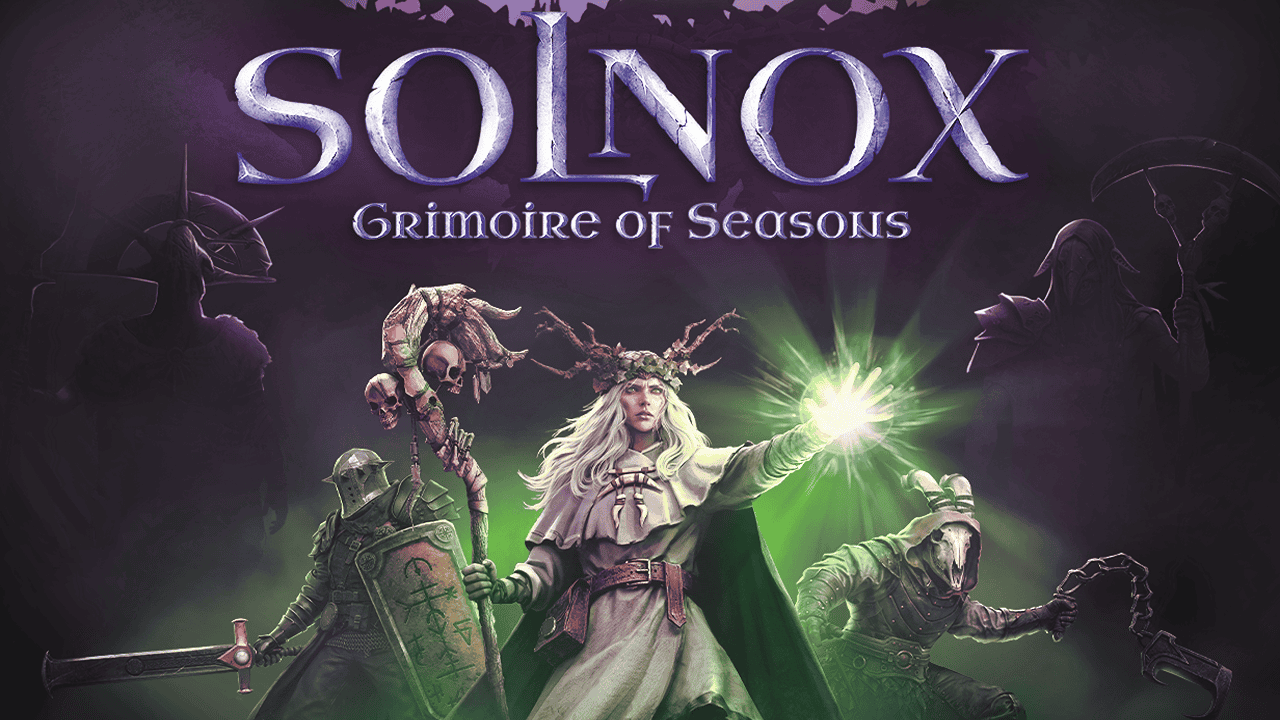
Solnox – Grimoire of Seasons, developed and published by ByteRockers’ Games, is a deck-building roguelike with tactical turn-based combat. The dark atmosphere, impressive visual design, and interesting mechanics offer an intriguing gameplay experience for a couple of hours, but the game has much less to offer in terms of depth and replayability compared to the more popular roguelike titles. But for the right player, this might be a feature rather than a flaw.
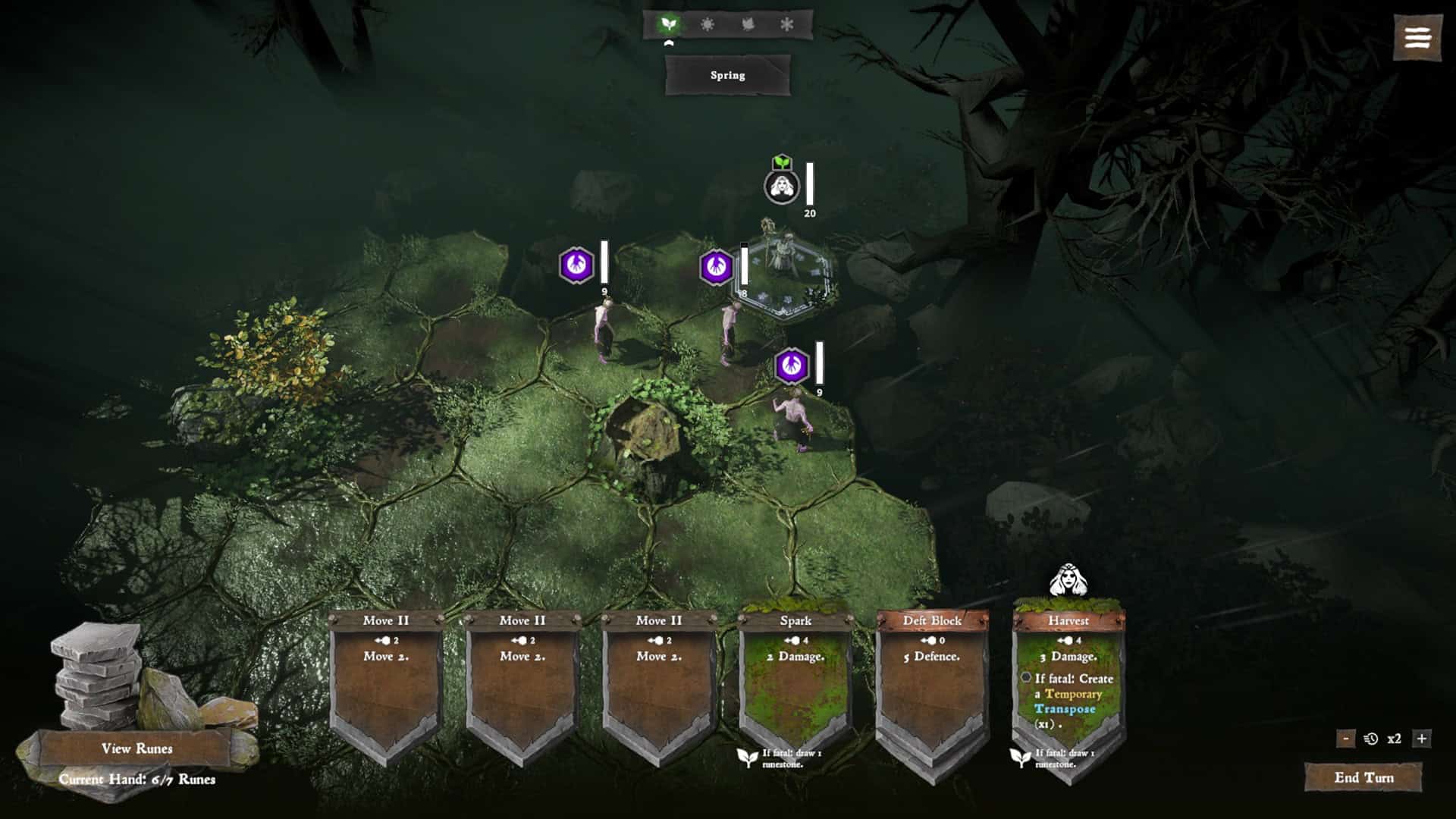
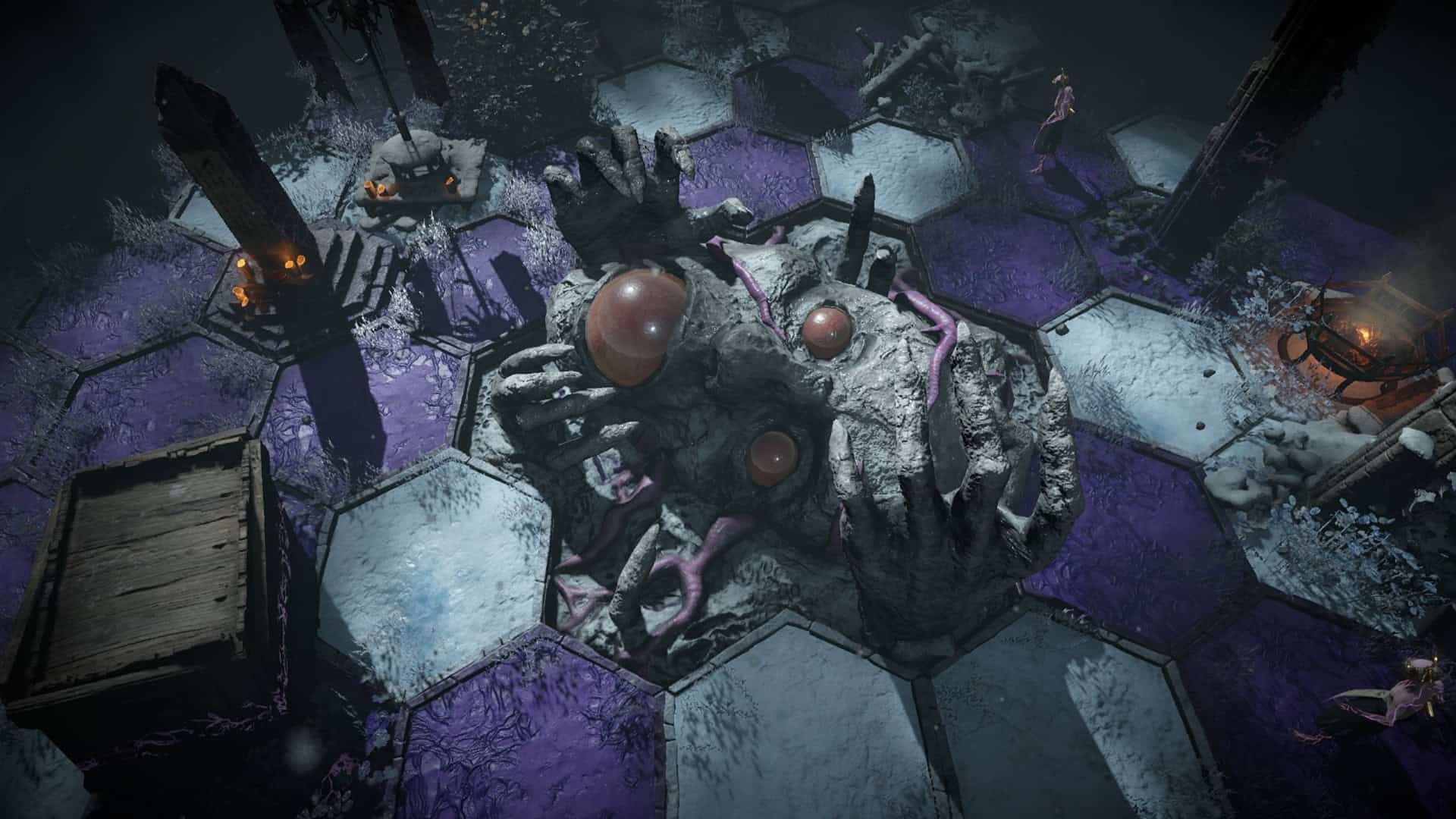
The first thing that catches the eye in Solnox is its visual design. The game has an isometric view of the battlefield, and you can rotate and zoom the camera freely to get a better look at the map and the enemy positions. The procedurally generated maps have a variety of layouts and obstacles. The changing seasons affect the overall aesthetics every round. The character models look impressively detailed, and moves and attacks have bold, high-quality animations.
The game’s user interface has a dark theme that fits the overall atmosphere of Solnox, but it can look a little bland and hard to distinguish at times. There’s also a visual glitch that can happen during battles when you play your cards too fast, screwing with the alignment of the cards in your hand. It doesn’t interfere with normal gameplay, but once you get familiar with the mechanics and the cards, you want to play faster naturally, and it becomes a constant problem. There’s also a small problem when trying to aim your attacks if your mouse hovers over other UI elements such as your health bar, forcing you to rotate the camera slightly to select the tile on the map you want to target. Other than these instances, the UI is fine while navigating menus and progressing between the levels.
Solnox does have an overall narrative, but it doesn’t really stand out. It’s the typical dark fantasy setting, where heroes battle corrupted monsters to save the natural world. This is understandable, as the story is more of a backdrop to support the gameplay, rather than the focus of the game. The cutscenes are interesting when you watch them for the first time, but you will skip them on your following runs.
There is one part of Solnox‘s writing that did stand out to me, and that was the narrative events that happen during the runs. It’s a usual part of these types of roguelikes, when instead of a level where you fight monsters, you encounter a narrative event and gain rewards based on your choices. Some games design these encounters with a direct focus on what you get, and even tell you the reward each choice offers. Solnox takes an indirect approach, where you don’t necessarily know what the consequences of your choices will be. But the narrative structure of the story and the choices make it more predictable, especially once you get familiar with the game and different cards. There’s also a decent variety of these events, and I was still encountering new ones after about 10 hours of playtime.
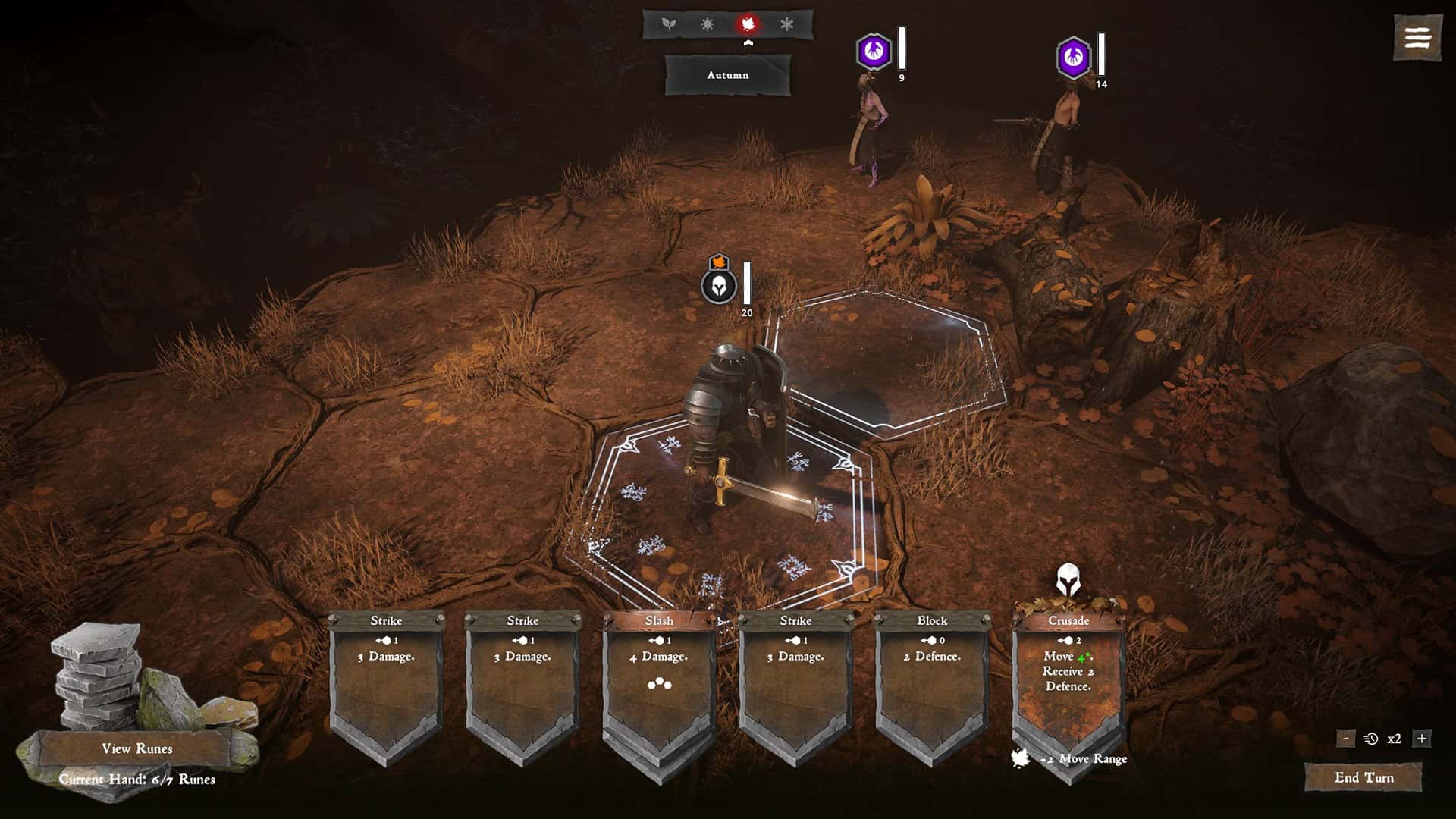
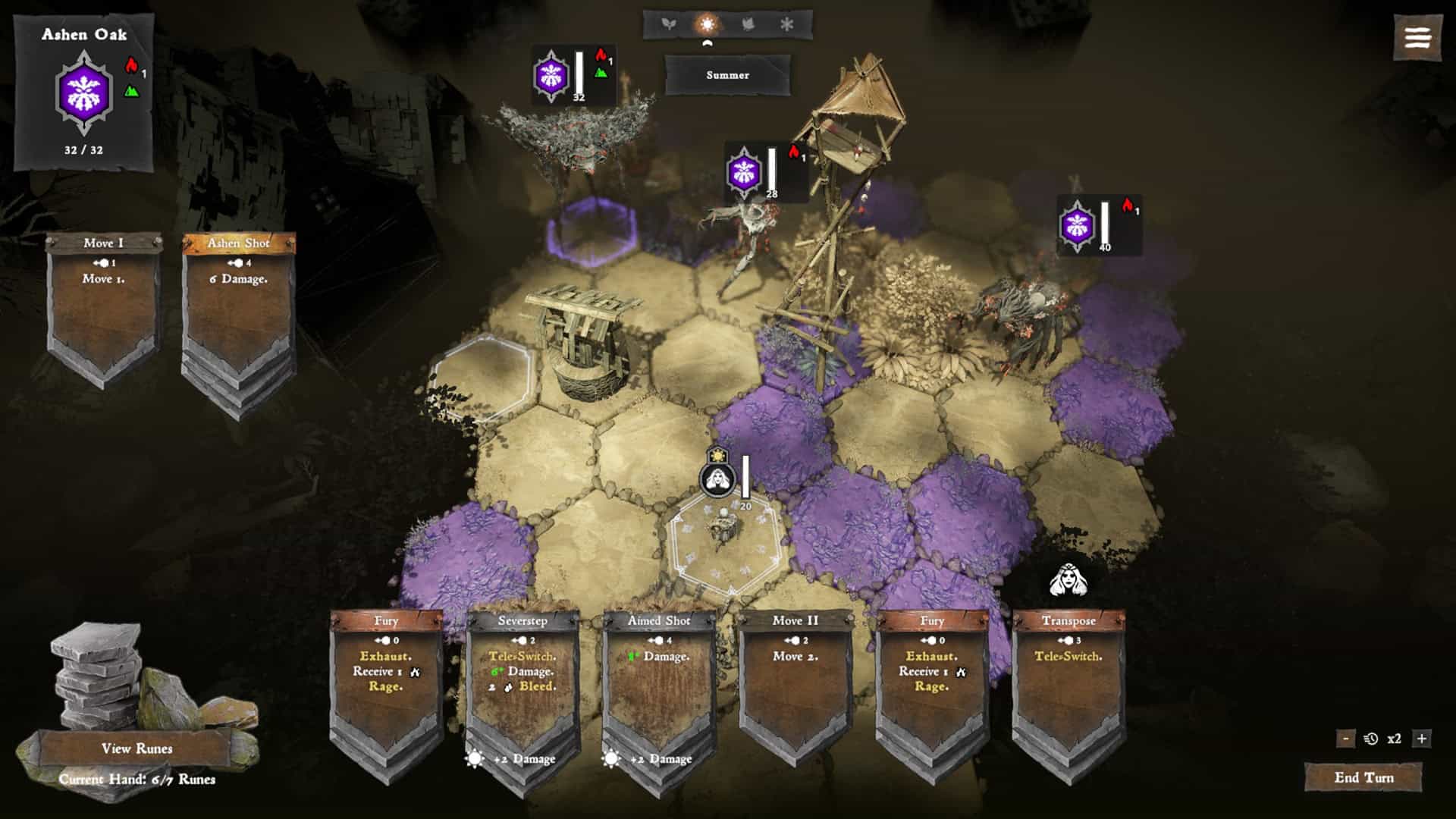
The gameplay is the main focus of Solnox. The overall gameplay seems familiar to deck-builders, with some unique features. The first thing that stands out is the seasons mechanics. Each season offers a unique buff to the player. In spring, killing an enemy draws a card; in summer, your attacks deal more damage; in fall you character moves further; and in winter, playing cards grants you more block. You can get cards that change the season of certain tiles, so you can create a small area of the season you need to take advantage of your cards. Certain enemies can also affect the battlefield and corrupt certain tiles. Corrupted tiles don’t offer any bonuses and prevent you from playing the two leftmost cards in your hand.
A key feature of Solnox is the lack of a limiting resource such as mana. You can play all the cards in your hand without limit, making card draw effects exceptionally powerful. You also don’t discard your hand if you don’t play all of them by the end of your turn, so you can more easily set up combos for your future turns or for a better season. You can view enemies, their movement, and actions, and you can position and prepare for the enemies’ turn and either have sufficient block or get out of their range if you have the cards for it. There’s a lot of potential for strategizing and planning each of your turns, making it a true tactical experience.
The part of gameplay in Solnox that seems lacking compared to other roguelikes is the meta progression. There are seven heroes that you can unlock just by playing the game for a couple of hours, and each hero also unlocks a couple of new cards for all heroes. Heroes have a handful of unique starting cards that can differentiate their playstyle, but once you play the game enough, these don’t seem to offer enough variety to keep you going. I defeated the final boss after about three hours and unlocked every hero after about six. As a veteran roguelike player, I kept playing the game a bit more, defeating the boss on greater difficulties, but I soon realized that this was it. I had finished Solnox and had seen everything the game had to offer.
This at first felt contradictory. I’m so used to roguelikes being endless games. I can still go back and play Balatro, Slay the Spire, or Hades II and have tons of new and unexpected content waiting for me after 100s of hours in each. This is a huge selling point of these games, but I realized I still consider them not finished. I never delete these games from my library; they just sit there, taking up space, so maybe I’ll go back to them one day. I sometimes do go and play these games for a couple of days, but I realized I do appreciate a roguelike that you finish.
I still feel like Solnox – Grimoire of Seasons was a bit too short. It had some interesting mechanics and potential for more depth, and the game looked stunning for its scale. Considering its price tag, especially with the launch discount bringing it down to $5, Solnox offers a few hours of fun roguelike gameplay, with unique mechanics and meaningful tactical experience. It also doesn’t have the intimidating aspect or the mental load of an endless roguelike game. So if you want a quick roguelike experience without the endless meta progression, it might be a good fit for you.
Nima reviewed Solnox – Grimoire of Seasons on PC with a provided review code. This review is based on the version of the game that was available at the time of writing, and our score will not be changed.
- Score
- 6/10 DECENT - GAMEOBSERVER CAUTIOSLY RECOMMENDS
- Summary
-
Nima says: Solnox - Grimoire of Seasons looks great, and is a fun roguelike to play for a few hours. There are unique mechanics with the changing seasons and the tactical battlefield that create satisfying strategy gameplay within the deck-building roguelike formula. But the minimal meta progressions might leave veteran roguelike players wanting more in the long run.
- More
- GameObserver's Review Policy


 ObserverCrew Picks
 bserver
 bserver