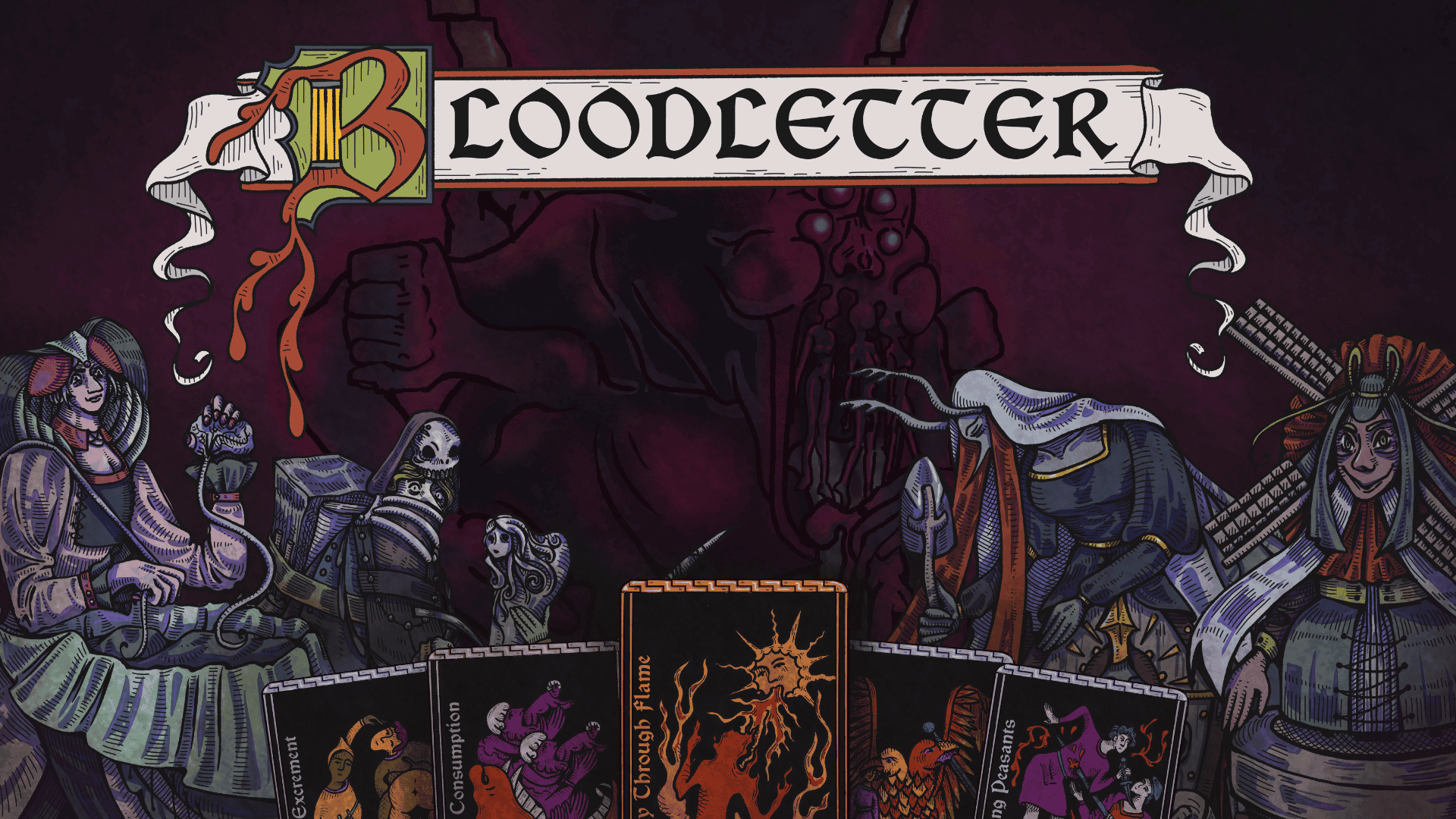
Bloodletter is a deckbuilder by Aldamami games where you play as a medieval barber-surgeon in a village whose inhabitants are being assailed by strange otherworldly entities, with your brutal medical techniques being the only thing staving off outright destruction. The art style is grotesquely gorgeous, inspired by the striking visual iconography of medieval art along with the rich symbolism of tarot, from the visceral design of the cards themselves to the uncanny transformations the villagers undergo as they slowly succumb to corruption.
The gameplay loop is broken into daily cycles that have three distinct phases: day, evening, and night. During the day, up to five villagers will visit your bathhouse in a random queue, and you play cards from your deck to treat them. Villagers start at varying levels of purity, health, trust, and sickness, and you’ll often have to choose which to treat at any given time since you only have three card slots per villager (down to two if they don’t trust you). They’ll die if either their health or purity reaches 0, which you generally want to avoid since you lose if any three perish. Purity is usually the larger focus since it gets drained each night, while health is only drained if a villager is sick. That said, sickness can stack, and letting it get out of hand can quickly overwhelm your ability to treat it, since the health loss compounds with each level.
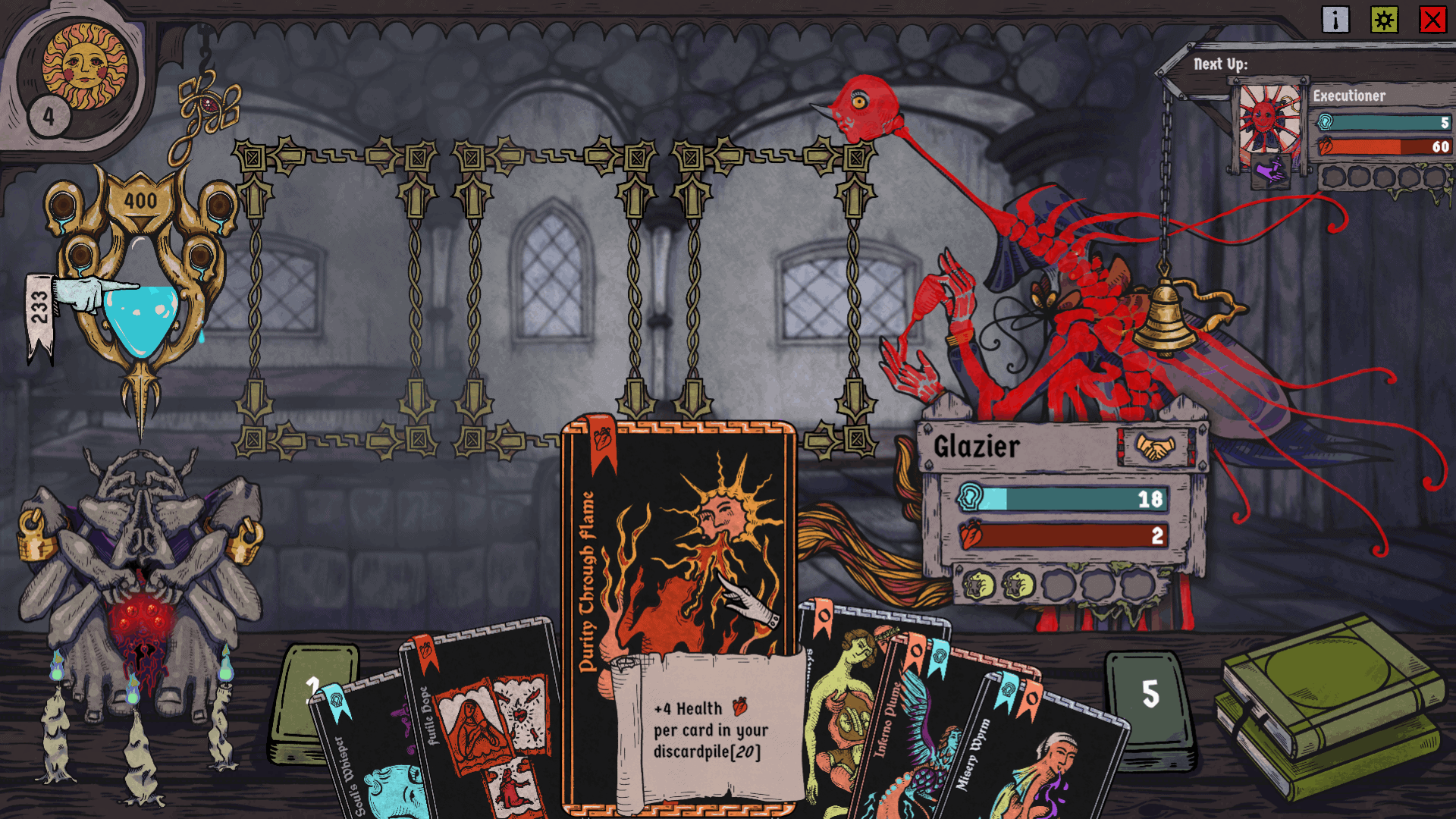
The most powerful cards often have tradeoffs, but there are ways to circumvent them that feel extremely rewarding once you figure it out. One card makes two villagers down the queue trust you while making the current one distrust you, for example, but playing it on a villager that already distrusts you has no ill effect (apart from when facing a certain later entity). Likewise, there are numerous cards that allow you to “exploit” them, meaning the negative effect is ignored if you discard it from your hand, while the positive effect still goes through. Learning to counteract these tradeoffs lets you get the most out of your cards, an advantage you’ll need as the entities ramp up in difficulty.
Evening is when you can visit villagers for various boons, such as swapping cards, choosing the next queue, or curing villagers of ailments like distrust and sickness. The caveat is that you can only visit villagers who trust you, aside from the transmuter salesman who sometimes visits (seemingly at random). Transmuters are powerful artifacts with contextual modifiers that change how you play in some way, and which you can only have one of at a time. There are over ten to find, with various effects like letting you put unlimited upgrades on cards, select two cards per card reward, or play additional cards after exhausting all three card slots. You’ll only have a choice of three transmuters each visit, however, and you’ll only know which ones after you lock in your visit for the evening. Whoever you do choose to visit, though, you’ll also choose a card reward at the end of the evening.
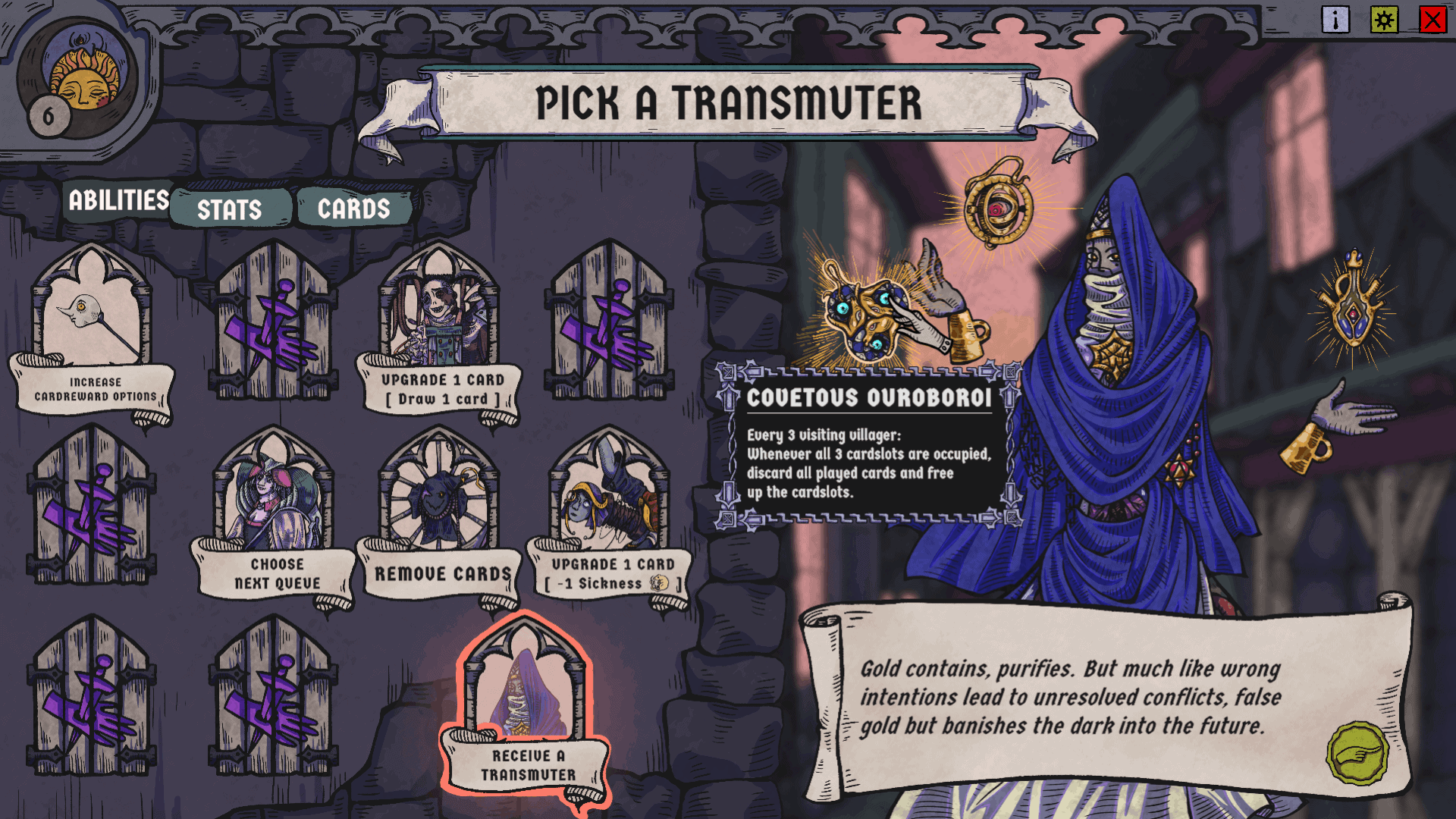
Keeping everyone alive is a delicate balance, and building your deck to counter the particular focus of the entity you’re facing is crucial. I found the most helpful boons to take during the evening were the ones that allowed me to trim my deck, upgrade cards, and increase my hand size, although swapping out some of the early, less useful cards you start with is beneficial too. Cutting out the fat makes it more likely that you’ll draw the cards you need, while upgrading cards increases the versatility of each. You’ll just keep acquiring cards the longer a run goes on, and managing the bloat is just as important as creating a versatile deck, otherwise you’ll be struggling to draw the cards you need. Personally, I was quite fond of cards that let you draw, discard, and re-draw from your discard pile, since it lets you run a lean deck while still being able to treat everyone effectively.
Nighttime is when the entity acts, draining purity from each villager while sowing sickness and distrust, the severity of which is determined by how many bloodstones have been extracted so far. That means it can be beneficial to hold off on triggering the next tier so you have more time to prepare your deck for the increased aggression. There are also cards you can play during the day to make a villager immune to certain effects for that night, letting you mitigate how many ailments you’ll need to treat the following day. Since a villager isn’t guaranteed to visit your bathhouse two days in a row, for instance, safeguarding them against distrust for the night can ensure you’ll be able to visit them the following evening. Thankfully, any villagers who would die during the next night are guaranteed to visit your bathhouse, giving you a chance to save them so long as you don’t have more than five in a near-death state at any given time.

There are four unique entities to face in Bloodletter, each of whom have different conditions for defeating them, but which is ultimately done by extracting all the bloodstones from their occult idols. For instance, Corrupting Apathy simply requires you to raise the village’s collective purity to a certain threshold for each bloodstone, while the Impaled One tasks you with collecting three different sword pieces (which come attached to cards) and playing them together in the right order. You’ll have to defeat each entity in the order they appear to unlock later ones, with each new victory giving you a single bloodstone to unlock a new entity or difficulty mode.
In my Early Access review, I expressed my frustration with the Impaled One’s mechanics specifically, which at the time were dependent upon several layers of brutal RNG. I’m happy to report that the process has since been streamlined, with the developer condensing the previous eight potential sword pieces into just three, as well as having sword pieces show up in the card reward pool rather than being tied to specific villagers. I was also unable to replicate the save state issue I had at the time, where I would lose sword pieces upon exiting the game mid-run, so overall the full release seems to have worked out the kinks that made that particular entity bothersome to face.
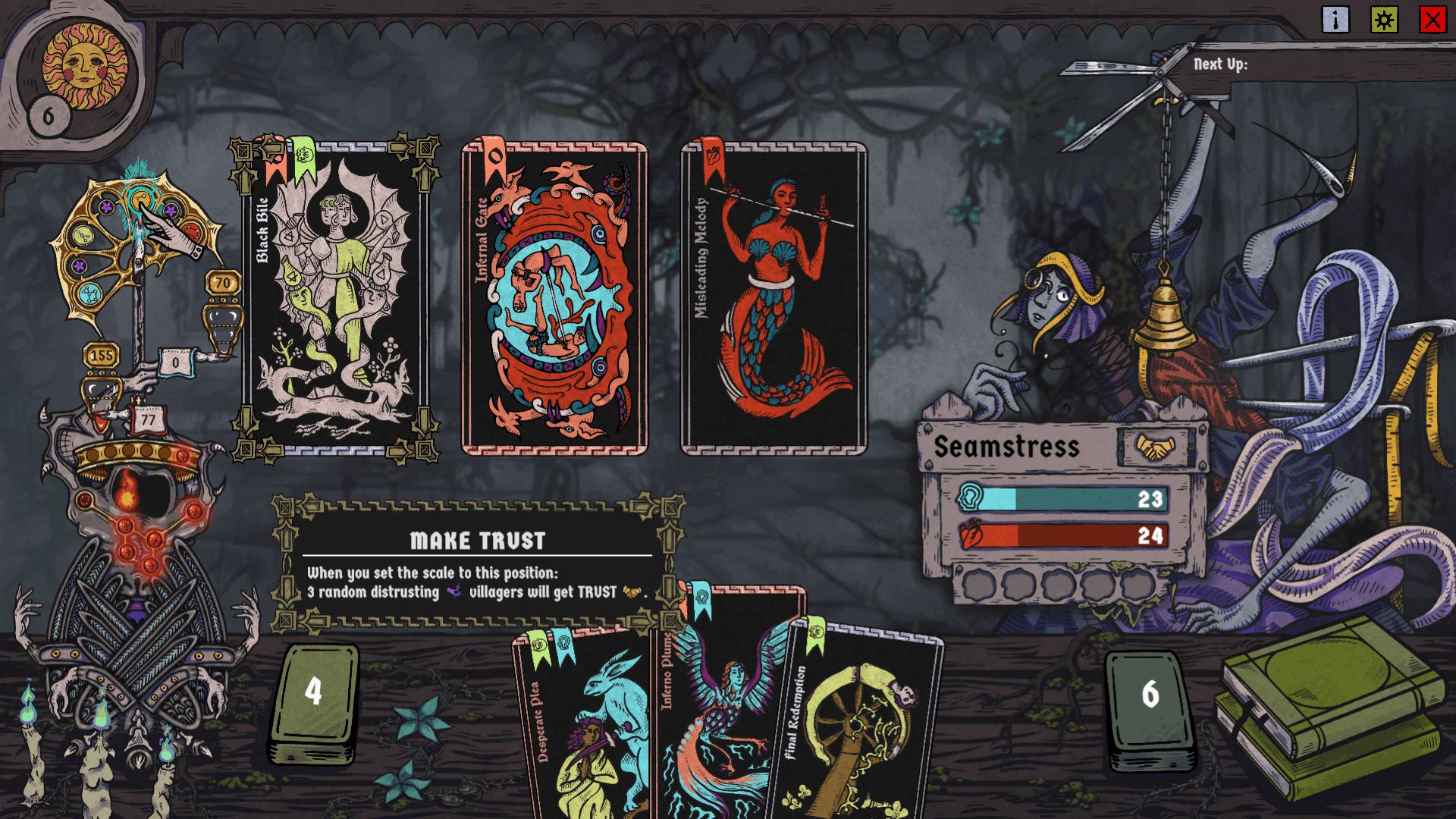
The sound design is worth a fair amount of praise, as well. Everything you do has some kind of tactile response. Drawing cards feels incredibly satisfying with the crisp flit of every draw, and even hovering over cards in your hand has a snappy rustle to it. Each card played has a deep, resounding echo, making you feel the true weight of your choices. The music is minimalist but haunting, readily setting the mood for each phase of the day.
Bloodletter is a brilliant take on the deckbuilder genre, from the haunting atmosphere and macabre art to the sheer mechanical complexity of facing the entities. There are so many ways to build and manage your deck, and while Bloodletter could be quite difficult at times, it never felt truly unfair. Instead, every loss felt like a valuable lesson in deck optimization, making eventual victory over an entity feel earned.
Austin reviewed Bloodletter on PC with a provided review code. This review is based on the version of the game available at the time of writing and our score will not be changed.
- Score
- 8/10 Excellent - GameObserver recommends
- Summary
-
Austin says: Bloodletter is a brilliantly gruesome deckbuilder that pairs a haunting medieval art style with deeply satisfying, complex deck management. Facing each entity demands a modicum of forethought and strategic optimization, encouraging thoughtful gameplay that makes every victory feel earned.
- More
- GameObserver's Review Policy



 ObserverCrew Picks
 bserver
 bserver