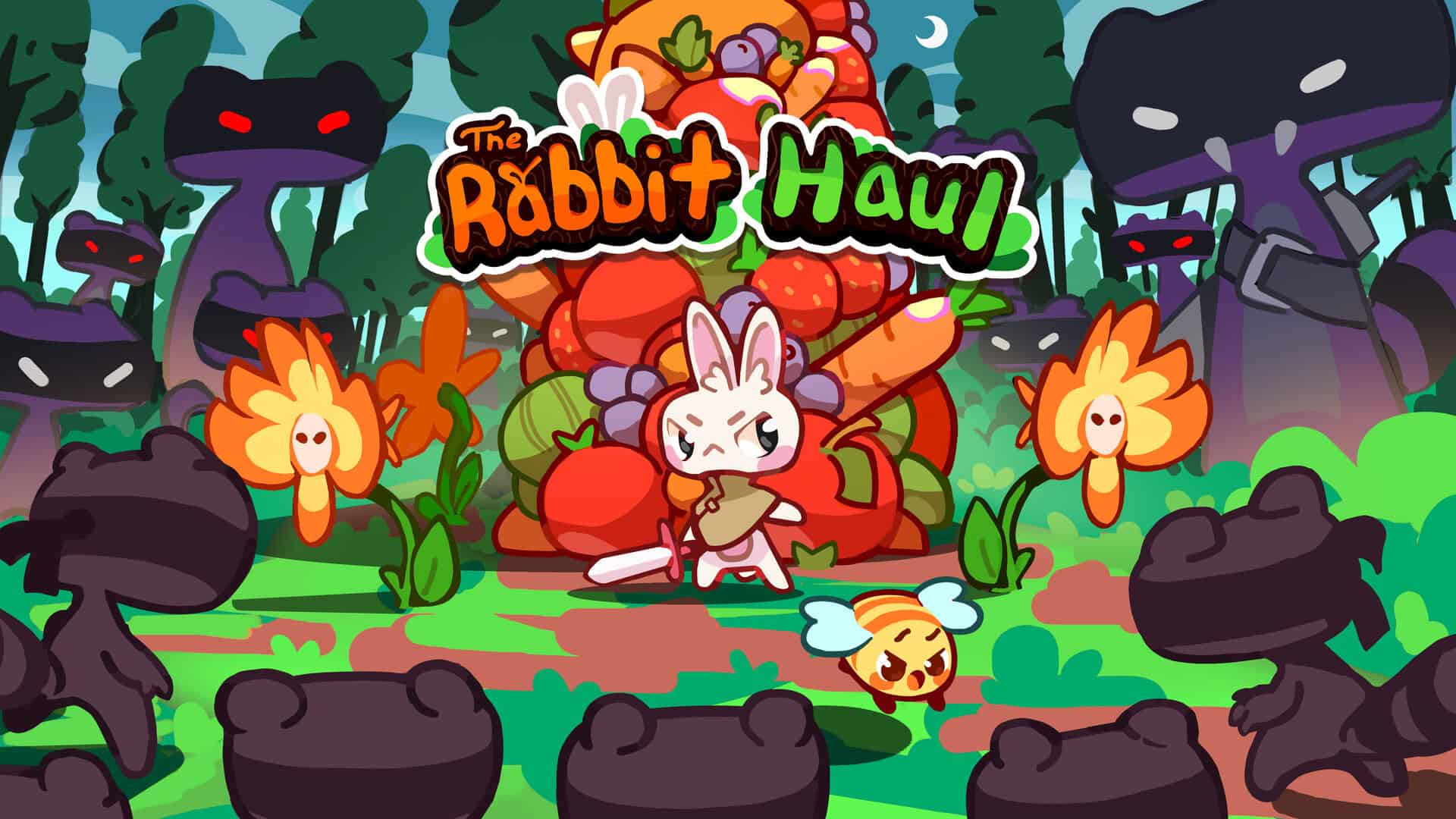
The Rabbit Haul is a new farming and tower-defense roguelite releasing on September 21, 2026. One might think that this is another cozy farming game at first glance, but there is much more beneath the farming aspect of this game. Players start playing as Sprout, a rabbit who needs to rebuild its town. Why, you may ask? The Trash Panda Posse destroyed it with their mischievous ways.
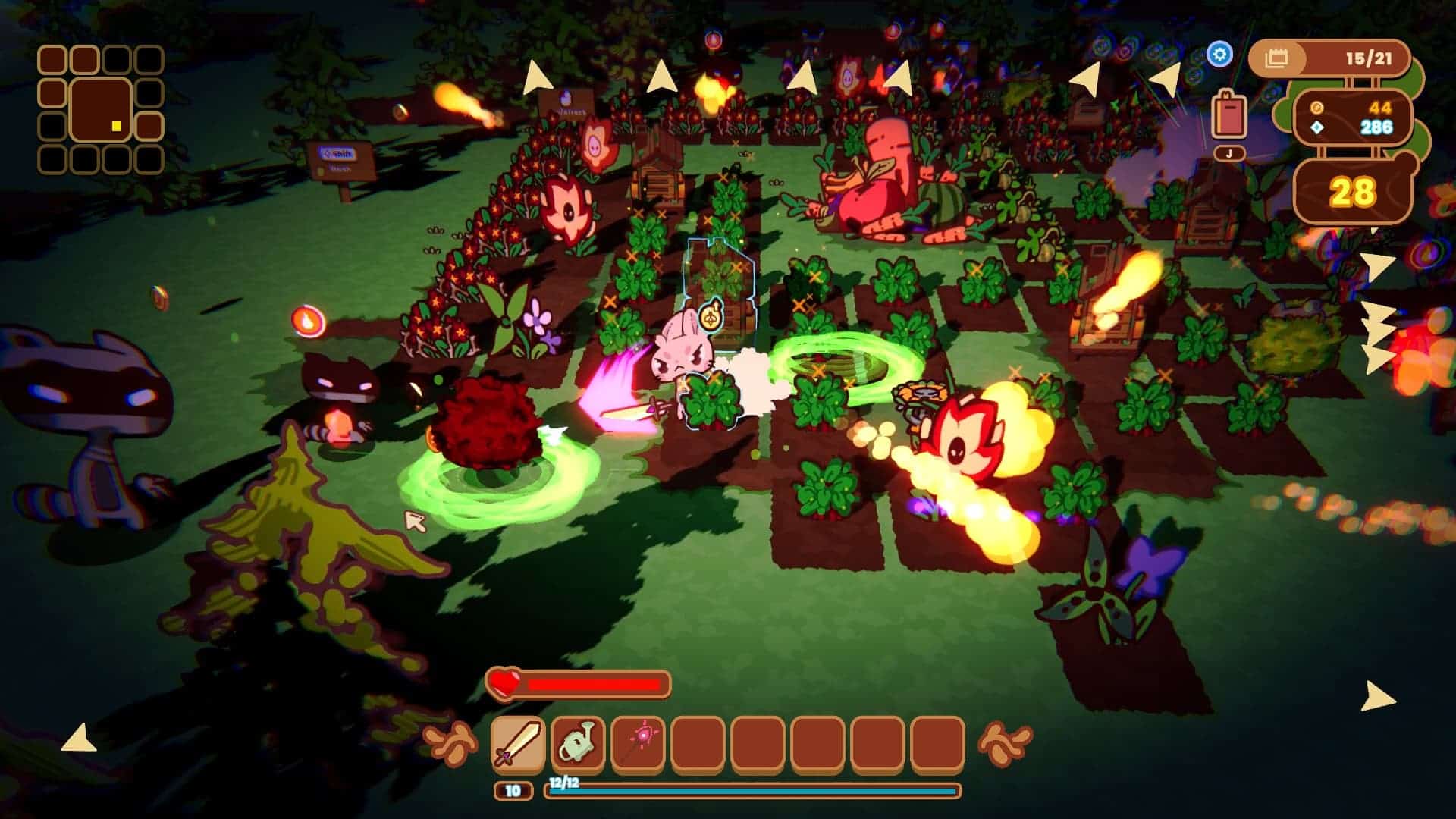
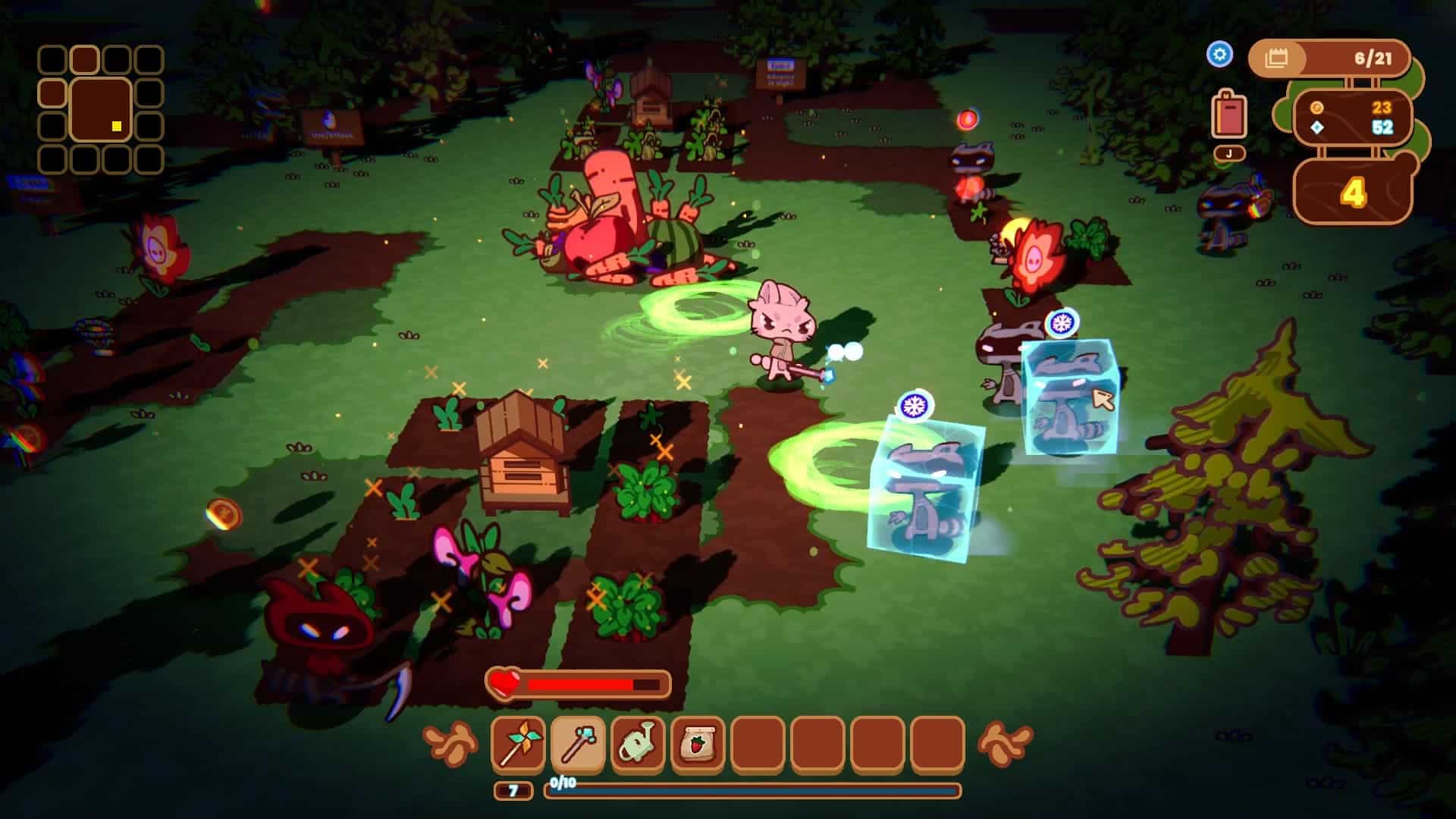
During the day, players play defensively: grow crops, build defenses with plant towers, and arrange their garden to protect against the Trash Panda Posse. At night, the raccoons come out and try to tear apart the farm and steal from Sprout as much as they can. This exciting game blends farming, tower defense, and roguelite action, flipping between offensive nights and defensive days.
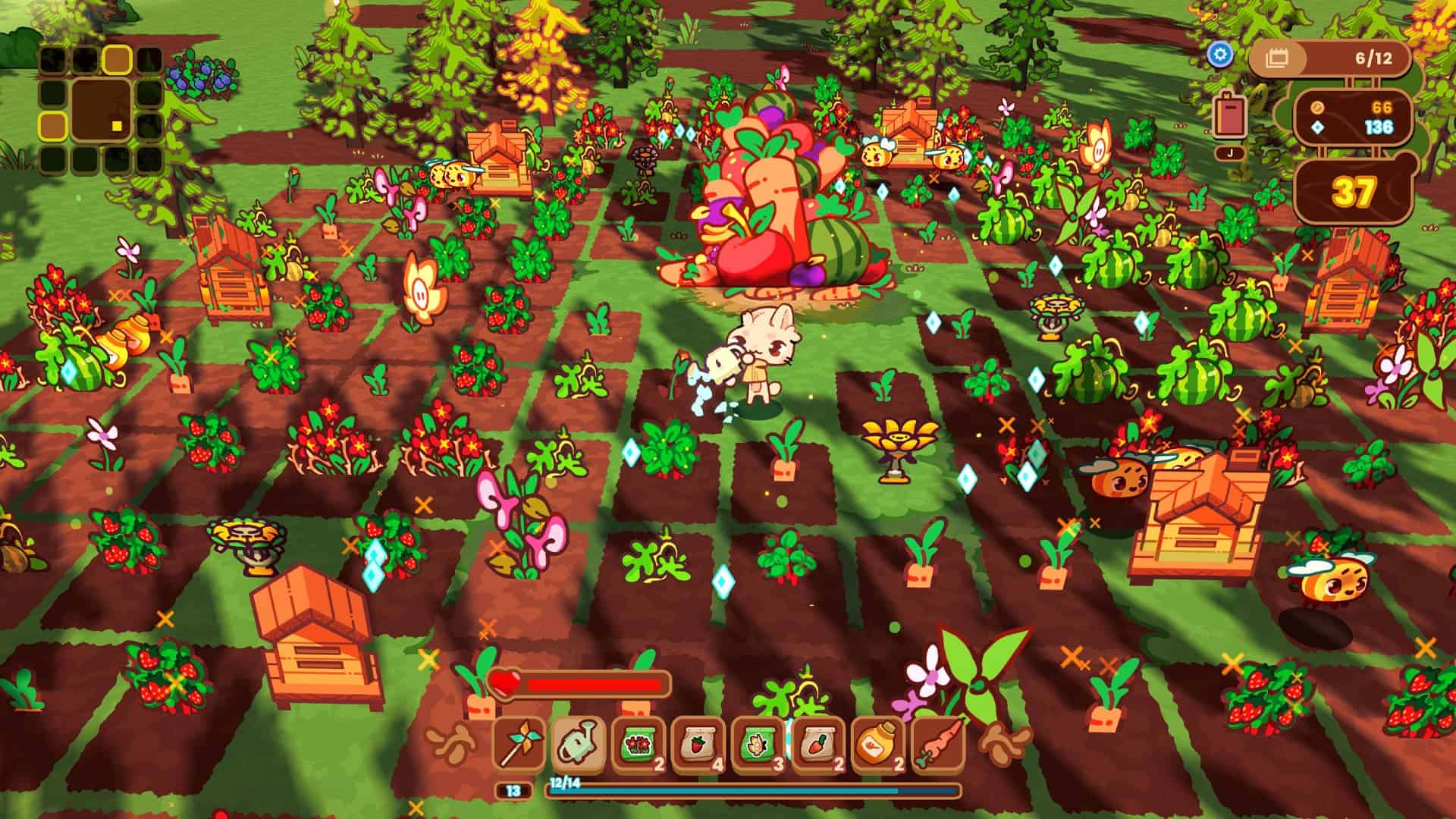
Planting crops is not as easy as it seems, though. Certain synergies exist between plants, and players need to balance defensive plants with offensive towers. One of the best features, to me, is that your previous runs affect your future runs. For example, players can use the crops rescued during a run to restore homes and stores, unlock new characters, and gain valuable upgrades. Players keep growing stronger each run, facing bigger challenges along the way.
I had a chance to interview members of the Caldera Interactive team about The Rabbit Haul, what it was like making the game, and how they hope it lands with the team upon release. Here is what CEO and Sound Designer Isael Huard and Technical Director Mickael Zerihoun had to say regarding the game.
GameObserver: The Rabbit Haul includes farming, tower defense, intense action, and roguelite mechanics, which makes for a pretty interesting mix. Where did you get the idea to combine all of these into one game?
Mickael Zerihoun: So at the time, we were brainstorming different types of games that we wanted to do. At the time, our designer Titus Low was playing a lot of tower defense games like Bloons, as well as quite a bit of Stardew Valley. And so, we were pondering what’s a good mix of the two ideas. At the time, the tower defense game Thronefall was coming out and offering a fun new take on tower defense games. So that also had a little bit to do with the inspiration. Those were some of the big inspirations that took us down this path. Then, from there, to try and add our own spin on it, we kind of catered to our strengths, which is to say, at least for our artist’s strength, creating these 2D assets. That just got us down the path of 2.5D and a very Cult of the Lamb-type of look in some ways. Paper Mario, Cult of the Lamb, and such. So, yeah, that’s sort of where we got a lot of these aspects from. That’s the farming, the tower defense, the action; and then roguelite is just a genre that we love.
Isael Huard: Yeah, the only thing I’ll add on top of that is, before The Rabbit Hole, we were working on another game which was not necessarily in a genre that we played a lot, which I don’t know why we came up with that. But I think we just wanted to make the kind of game we enjoy and actually play. So this was a mix of all of that together.
GameObserver: There are a lot of farming-based games out there on the market now. What did you and your team feel The Rabbit Haul needed to do differently to stand out in the very competitive and crowded genre?
Zerihoun: So because we knew that there are so many other genres that do the farming sim stuff so well and that have a lot of depth to them, given our team size, we knew that we couldn’t necessarily compete with, you know, just straight up a Stardew Valley with having as much depth as that game has. And so the fresh take that we wanted to do on it is something that’s a little bit more arcade-y, where, for example, myself, I find Stardew Valley stressful, which is kind of an odd thing to say about that game. But for me, having to make decisions for a farm that you then have to maintain for however long is stressful to me because I’m like, “What if I didn’t do this right? What if I miss this? What if…” etc. I didn’t want to have to read wikis to make sure I made the right decision. So, a game like The Rabbit Haul is a little more arcadey in that each run, you get to rebuild a different type of garden and see what it can give you or what combinations can benefit you in your run. So, it didn’t feel to us at the time, anyways, that there aren’t many mixes of farming sim plus tower defense that kind of give you this experience. So, that’s sort of the way that we wanted to take it, and we felt it was a fresh take.
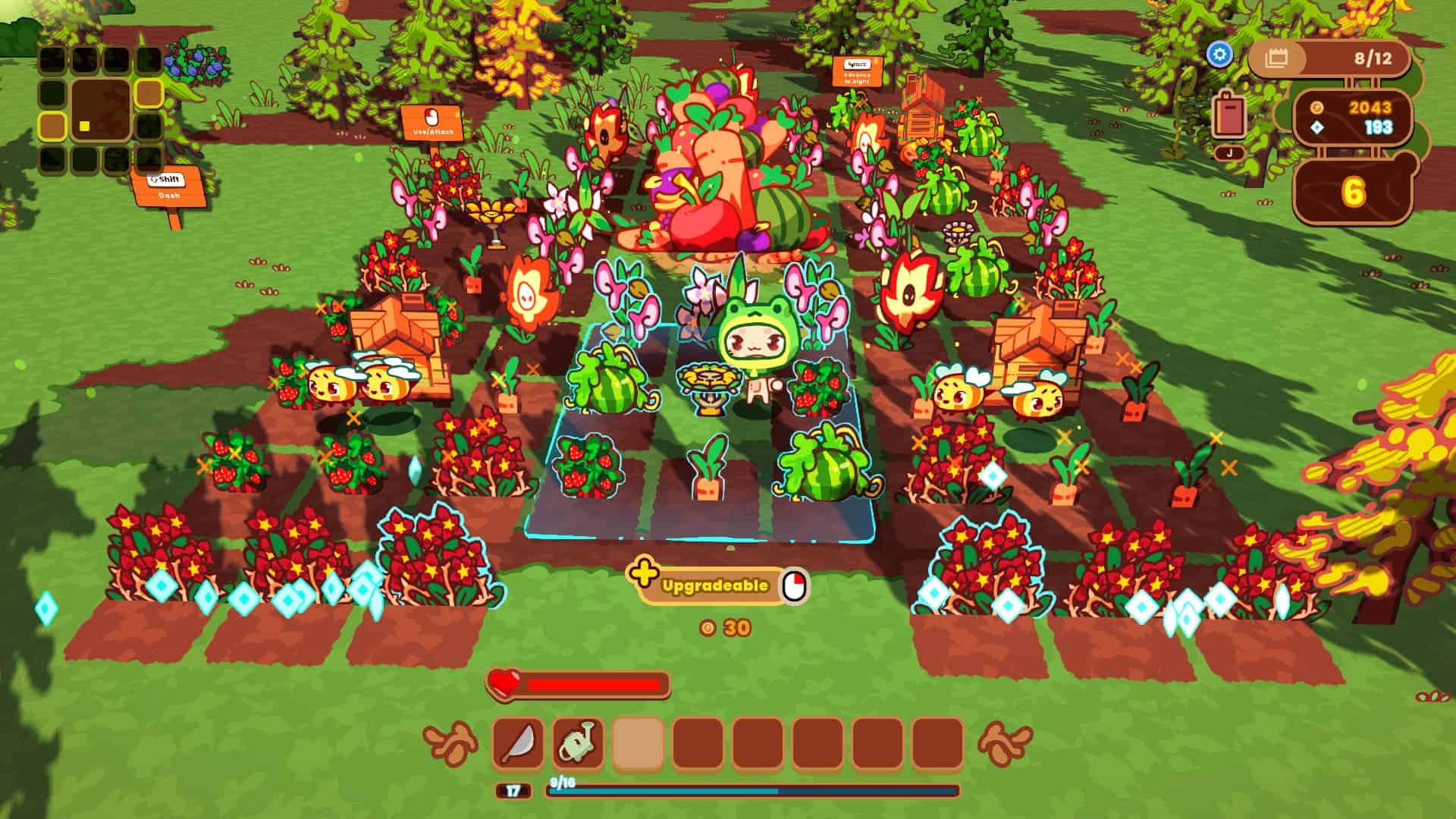
GameObserver: I find the alternation between peaceful building and farming and chaotic defending and protecting against enemies at night extremely interesting. How hard was it to balance the two different parts of the game so that one did not feel more important than the other?
Huard: I think you’re describing one of the hardest things to do for our game. Unfortunately, our designer is not here to really speak about this balancing. It was very intentional for us to target both kind of the casual players and also more of the mid-core people that want a little bit of that challenge. So, trying to tailor the game to both is not a solved thing. I mean, we are getting closer. I think we’ve added systems to make that easier, such as different difficulties. So, you can play on the easy mode, which kind of lets you coast a little bit, versus if you want that big challenge, you can choose to do so. Another design choice that we made for that is that the night phase only starts when the player chooses to, and so it removes kind of that time pressure. I think in that sense, it allows us to balance the cozy vibes and preparing for it. Only when you feel like you can face the night can you switch to that phase and defeat the Trash Bin Posse. So, yeah, we’ve definitely found some ways to kind of make that easier. We’ve playtested it a lot with our community; we’ve heard the feedback, and we are making easy mode easier.
Zerihoun: Yeah. The only thing I would add is that, because we’ve known for so long that this was going to be an issue, we started playtesting with our community very early on to try and make sure that there is something for a bit of everyone, as far as wanting the challenge or wanting to coast a little more. So yeah, we just had it top of mind for a long time.
GameObserver: The synergy among plants seems very important to the game’s strategy. How did you approach designing these combinations, and how important are they to the player’s success?
Zerihoun: Yeah, so from the very start, we wanted people to really think about what they’re planting. It’d be very easy to just plant the strongest tower and just not have to think about it. But we really like this aspect of symbiosis that comes from, you know, in real life, if you have a garden, depending on what you plant, things can help each other grow. Inversely, some things may just not jive with each other very well. So we wanted to represent that in the game. It’s also a good way to add depth where a player might choose not to engage with these systems, and they might get away with it at certain difficulties. But if you really want to go far in, say, endless mode or the harder difficulties and the bosses, you’re going to have to engage with creating the symbiosis in the garden. As far as how we went about designing these, we just wanted to make sure that they offered another layer of elements that the players can master. If they’re playing a certain level or certain difficulty that they’ve lost before and they realize that they need to be more prepared against a type of enemy, then that is a choice, almost like a build, that they can choose to do. That, coupled with some of our roguelite upgrades mid-run, can really help you create stronger and sometimes OP builds that we just, even if they’re OP, we just want to reward the player for really thinking about it and making conscious decisions when it comes to what they’re going to plant.
Huard: Another element to this is the idea of discovery, which I think is also part of the fun. Not really part of the player’s success, but I think it can be quite fun for players that want to engage with the system to just discover the different ways that the plants actually synergize together.
GameObserver: The Rabbit Haul has been play-tested for over two years now. Over that time, has there been any significant player feedback that has ultimately changed the game?
Huard: I mean, we’ve definitely been running playtests since… yeah, it’s been over two years now. So, very early, we’ve been playtesting and capturing feedback from the start. There are a lot of quality-of-life changes; there are a lot of balancing changes. In terms of like major features, I mean, I remember one feature that we wanted to implement was… what was that called? When you could end the run early. It was the…
Zerihoun: Oh, the delivery truck!
Huard: Yeah. So, we had this feature where players could, for in-game currency, leave the run early with the delivery truck. I remember that being just a pain point for players, and something that we ultimately decided to remove after trying to iterate on it and trying to make it fit. So, I wouldn’t say that changed drastically the design of the game, but it did… that was kind of a major part of our design at the time. Can you think of other ones, Mick?
Zerihoun: Oh, there’s quite a bit of stuff in the graveyard of features that didn’t make it in. I think design-wise, we always had the same direction of where we wanted to go. But a lot of what’s changed is just streamlining certain things, making things clearer. We thought we needed to add over-complicated things, and then at the end of the day, it just made it messier. So, obviously, plenty of abilities that kind of came and went, maybe two or three different skill trees that ended up getting repurposed in other places, but that were in there and got scrapped. Yeah, it’s just us trying to add more content and then, after playtesting, realizing that adding more content does not mean that the players enjoyed it more. It just created more confusion, and at the end of the day, it just wasn’t necessary. Especially when we go and compare to other games, it’s like they could have added all these systems, but at the end of the day, if the design is simple, easy to enjoy, hard to master, then I think we can figure out a lot of the content and what we want out of the game that way. So, it’s mostly been about simplifying things for which we had plans to make way more complicated.
Huard: And where it’s been so useful is a lot of the user experience. Playtesting has been amazing for that, of course. But getting that feedback early and trying to catch those so that people actually experience the game how we intend it has been really, really good.
GameObserver: In classic roguelite fashion, a losing run still contributes to the progression of the game. How did the team approach making a failed run feel rewarding instead of frustrating?
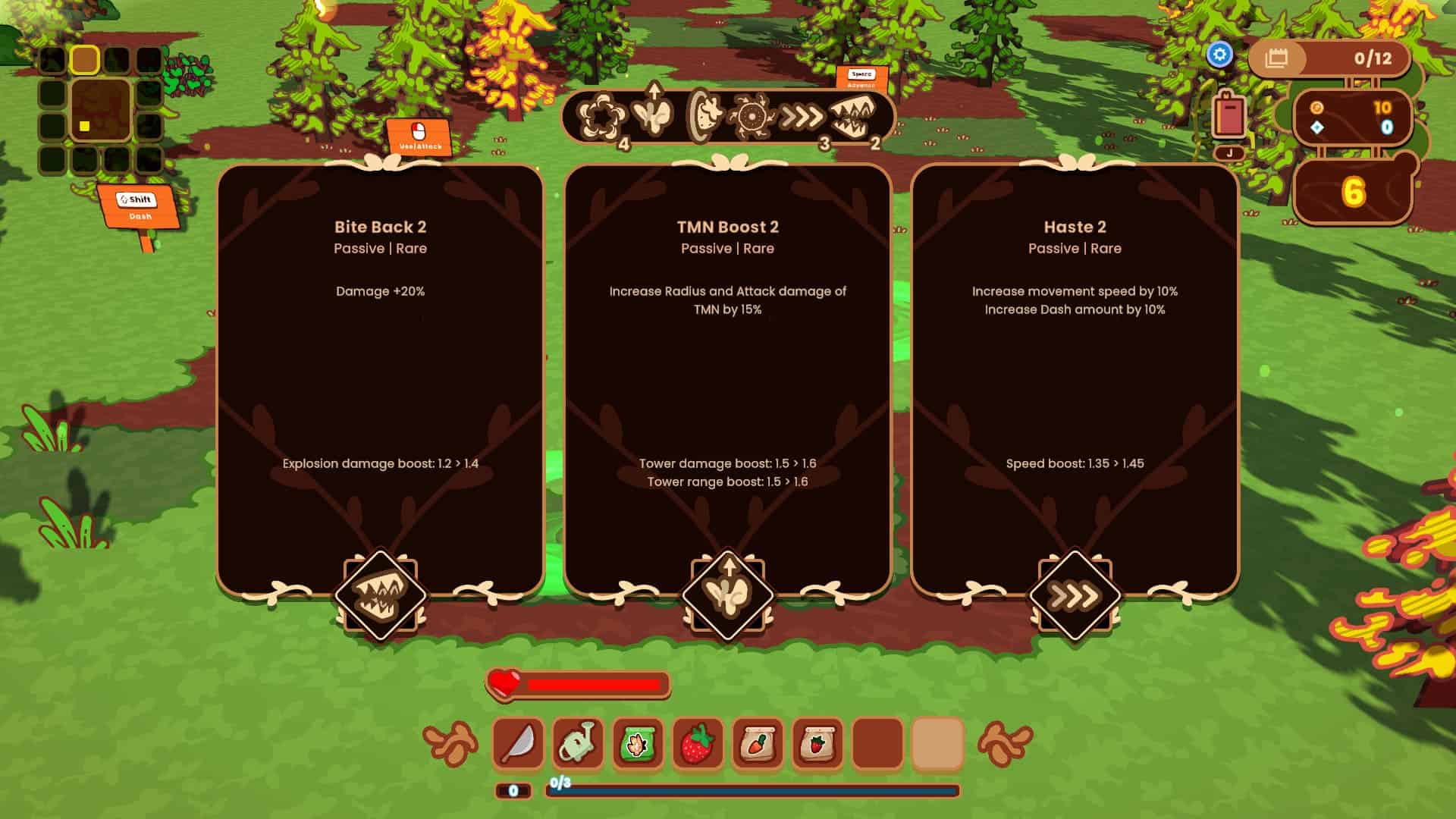
Zerihoun: I mean, so in our case, even if you lose, you do get some meta progression currency that you can spend in town. Part of making that satisfying, regardless of if you won or lost, is to make sure that we give you just enough that perhaps the amount that you gain is not enough to rebuild the town to advance the story, but at the very least it’s enough to go buy a cosmetic. Maybe buy a new plant upgrade that could help you in future runs, or you could even use it at the skill tree. So, we just make sure to give you [something], even if it’s not enough to progress the story, you have enough to go make yourself stronger in a way that could change your game plan if you wanted to. Because it could just be a new type of seed and that could be a big difference, but some of the abilities really can make you a lot stronger depending on where you’re at. So, it’s just about making sure the player, regardless of how much they get out of a run within reason, can always buy something in town that feels like it changes their next run, that they’re excited to go back in and try out this new ability.
Huard: Yeah, the idea of them leaving a losing state, but they learn something from it, and the discovery of it, I think, is something that we strive to provide every run. And so people want to keep trying again.
GameObserver: Sprout and the Trash Panda Posse give the game a very unique personality. What did the development process of the world, characters, and story look like for the team?
Zerihoun: I mean, even the name Sprout and Trash Bin Posse is something we came up with very, very early on. As far as the world and the characters, the universe, we just always kind of had the whole, “they’re trying to take your harvest, [and] that destroyed your town, so you have to rebuild it” [idea]. Then, sort of brainstorming random characters that could be around town that could give you a bit more color to the universe. Since we don’t have a writer, we definitely try to keep it simple enough, but funny enough. So, you’ll have a lot of comedy in some of the items that you can pick up. Just trying to make sure that the characters that you’re helping in town feel like real characters. Again, given our strengths, we didn’t want to have to go too deep into a full-on story, but just enough to get you as the player to care about these cute characters that you’re helping out.
Huard: I can’t really speak to the process of creating the visuals for it; our artist is not here. But I think that has a lot to do with, of course, the personality of the world that we’ve built. What I can speak to is the sound, and especially creating little voice blurbs for the characters, which has been really fun to do, and give them funny little voices and stuff. That’s just been really fun to kind of go off each other and create something cute and create something funny.
GameObserver: Regarding sound production, how did you use music and sound to illustrate the shift between day and night settings?
Huard: There are a few things. So, the music, of course, changes quite a lot. So, of course, more of the cozy vibes during the day. The music is sparser, kind of more chill. Then, when night hits, it goes into more percussion and more driven music. The composer, A Shell in the Pit, has been amazing to work with, really understood the assignment, and came up with some really good tunes. There’s also quite a bit of replayability, so we have to consider repetitiveness. So, like randomizing music, and it feels like the music, you know, you can of course hear that it’s repeating, but it has variety somehow, and so you don’t get tired of it. Or, I mean, that’s the intention of it. So, yeah, using different systems and tools to make sure the music feels like it evolves and kind of hooks into the progression of the game as well. So, the music during the day will change based on how many nights you’ve survived, and that gives it variety.
On the sound design side, there is less atmosphere during the night to leave more room for the sounds that might be important to gameplay. Such as, if you get your crop stolen, you need room in the mix to be able to hear those things. Or if there’s a little bit of enemies coming from the left and the right, you might be hearing enemies coming from the left, and that kind of helps with what’s happening on screen. While during the day, that’s less important, so having more atmosphere here, you know, like waves crashing or wind in trees, and so on. So, that’s been very important. And a lot of the UI sounds, too. You know, there’s a clear sound to the start of a run, of a night phase, for example, like a horn that kind of calls the enemies to your farm. And then the same way when you end the night, there’s also a congratulations sound. You know, you made it.
GameObserver: Caldera has described itself as a studio focused on being approachable and accessible for all players. How did these values influence the way The Rabbit Haul was designed?
Zerihoun: So for us on that front, it was always to make sure that, internally anyway, some of us have labeled it as that we wanted to make a cozy game that can be challenging if you want it to be. So, on that axis, we consider it accessible: someone who might play just because they find the characters cute can still have a reasonable amount of fun and challenge without feeling like the game is too easy. Then the people who are here because they’re hardcore into tower defense games can also still scratch an itch, basically. So, even when we’ve gone to conventions like Gamescom or just playtests in general, you really do see a spectrum of people that come up to play. It ranges from children of all ages to people who, as I said, are usually more into hardcore types of games. So that’s been very validating. Of course, tuning the difficulty to make sure that nobody gets frustrated out of playing this game. It could be almost a gateway into tower defense games if perhaps people were more into farming sims before. Or if someone’s just into tower defense games, they’ll feel right at home here.
Huard: And what I’ll add is even beyond the game itself, but the way we’ve made it, being approachable and accessible has been very important. So, like we’ve talked about the playtesting, but we’ve genuinely been listening and implementing a lot of the feedback that we’ve received from people. You know, we’ve gone to a lot of shows and talked with a lot of people who had feedback. So, yeah, I think those values go beyond even just the game, but also the way we created it and the way we just are, as the way we collaborate.
GameObserver: After years of working on The Rabbit Haul, you’re now in the final days before release. What are you most excited for players to finally experience when the full game launches?
Huard: I’m very, very excited for people to get into the new biomes. So, the demo so far and all the playtesting, people have really only played into our first biome, which is the forest biome. And so, they’ve seen that one, you know, they’ve heard the music for that one, you know, some for hours. So, I’m really excited for people to jump into the tundra biome, which is a winter biome, experience the new sounds, the new mechanics as well. The coastal has some really cool music and different challenges. So, yeah. I’d say biomes. I’m excited to see what people think.
Zerihoun: For me, it’s hard to pick one. I just hope people enjoy the game. Because I can’t pick any specific ability, I’m curious how people feel about the skill tree, the roguelite upgrades during a run, the different plants… There are just too many things. I just hope that people enjoy the mesh of all these things.
Huard: Another big one that I’m excited about is the endless mode. So, actually letting players continue after they’ve won a run, they can continue in endless mode. So I’m excited to see how far people can take it, honestly. I’m sure I’ll be surprised.
Zerihoun: During some of our [playtesting], and even for the demo, we’ve had our Twitch integration that’s been available to anybody who’s streaming. It’s been a lot of fun to just watch people play around with those and how much fun they get out of it, as people from their chat can appear in the game as raccoons or as helper rabbits. It’s just been so much fun to watch people get immersed in creating their own narratives with that. So, that’s been a lot of fun.
GameObserver: Finally, what’s a feature of The Rabbit Haul that you are personally really proud of?
Zerihoun: For me, there’s a few. Because a lot of these things are new ground that I hadn’t trod before. So, like the Twitch integration, I’m really happy with. The mid-run upgrades, I’m really happy with, though we did have a lot of help for that from other people.
Huard: There’s lots that I’m just excited for people to see. I guess I’m really excited about some of the sounds that I made. This is going to be very just me nerding out, but some of the UI sounds that I recorded, I just feel like they just work well. They’re so tactile. So, I’m really happy that going through the whole process of recording the sounds and then making it into something that feels like it belongs has been a lot of fun. I’m really proud of the music that A Shell in the Pit made for our game. I’m just proud that we made a game that inspired them to make this soundtrack. I think it is really, really good.
Zerihoun: I guess for me, at the end of the day, it sounds like it’s not just one feature, but sort of the marriage of all these different features and them working well together and being hopefully greater than the sum of their parts. We really try to make sure that every upgrade or symbiosis or ability in the skill tree can compound onto each other and really give players a bit of that power fantasy once they really experiment with things. So, I hope that’s conveyed.
Huard: I will say The Rabbit Hole is launching on Steam September 21st. So, of course, go wishlist on Steam, go buy it on Steam, and join our Discord if you want to partake into the community and if you want to share some feedback. I mean, we’re still here listening to people and how they play the game, and what they enjoy or what they don’t enjoy, maybe. Who knows?
Be sure to check out The Rabbit Haul on Steam and follow GameObserver for all your gaming news, interviews, and more.


 ObserverCrew Picks
 bserver
 bserver