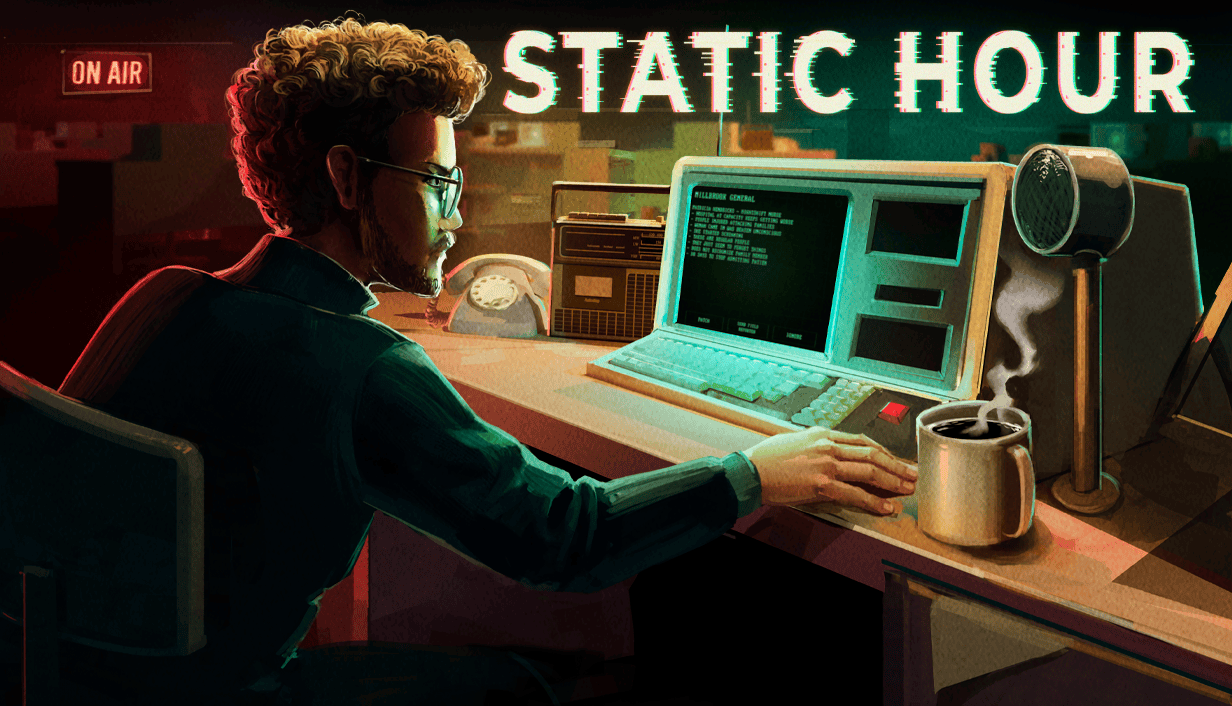
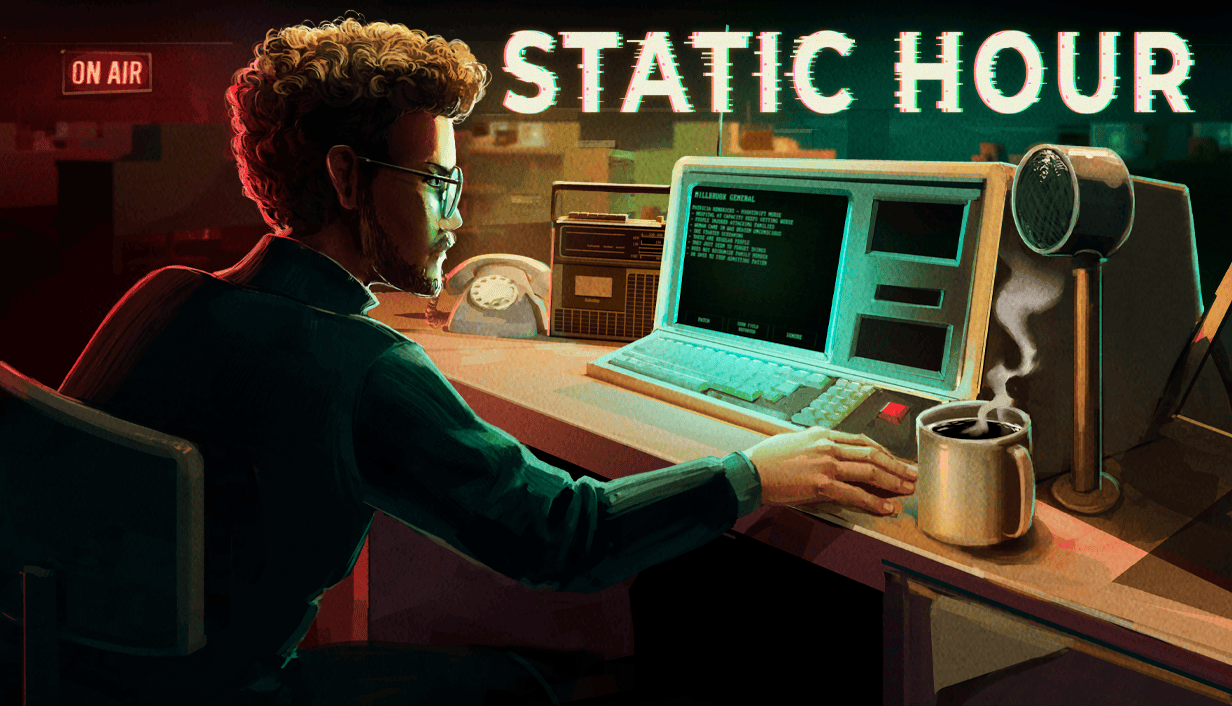
Static Hour is an upcoming game set in the 1980s, as you hold down the night shift as a news editor for a radio station in a small town. The night has broken into absolute chaos as families are turning violent against one another. Using your best judgment and following broadcasting guidelines, you decide what stories to run and what information to disclose to the public.
GameObserver had the opportunity to interview Barkbyte Founder and Creative Director Claire Sarmiento regarding Static Hour, Barkbyte Interactive, and more. Sarmiento is both a lawyer and a game developer, with Static Hour being the debut game for Barkbyte.
The Creation of Static Hour
GameObserver: What inspired you to create Static Hour?
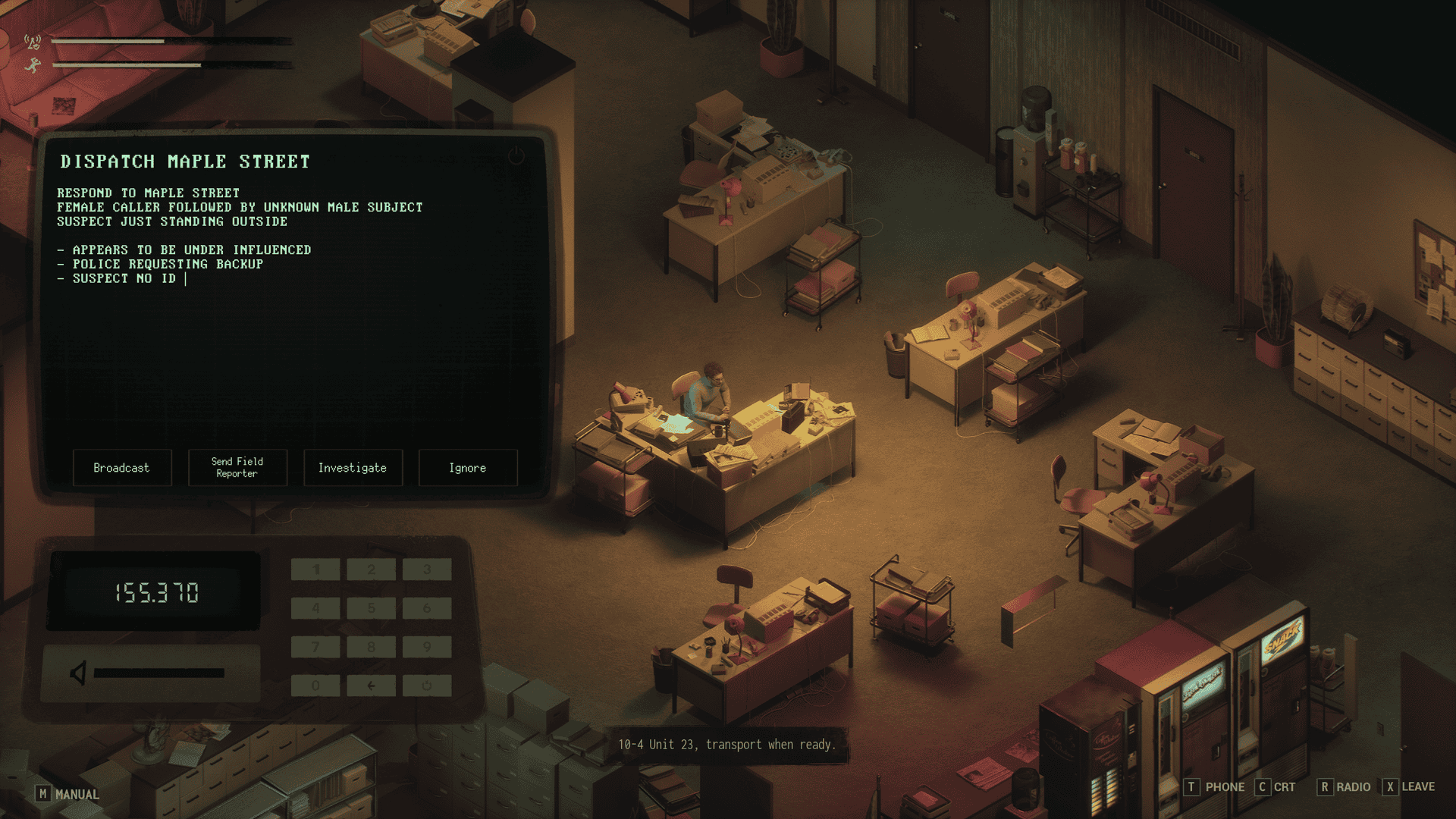
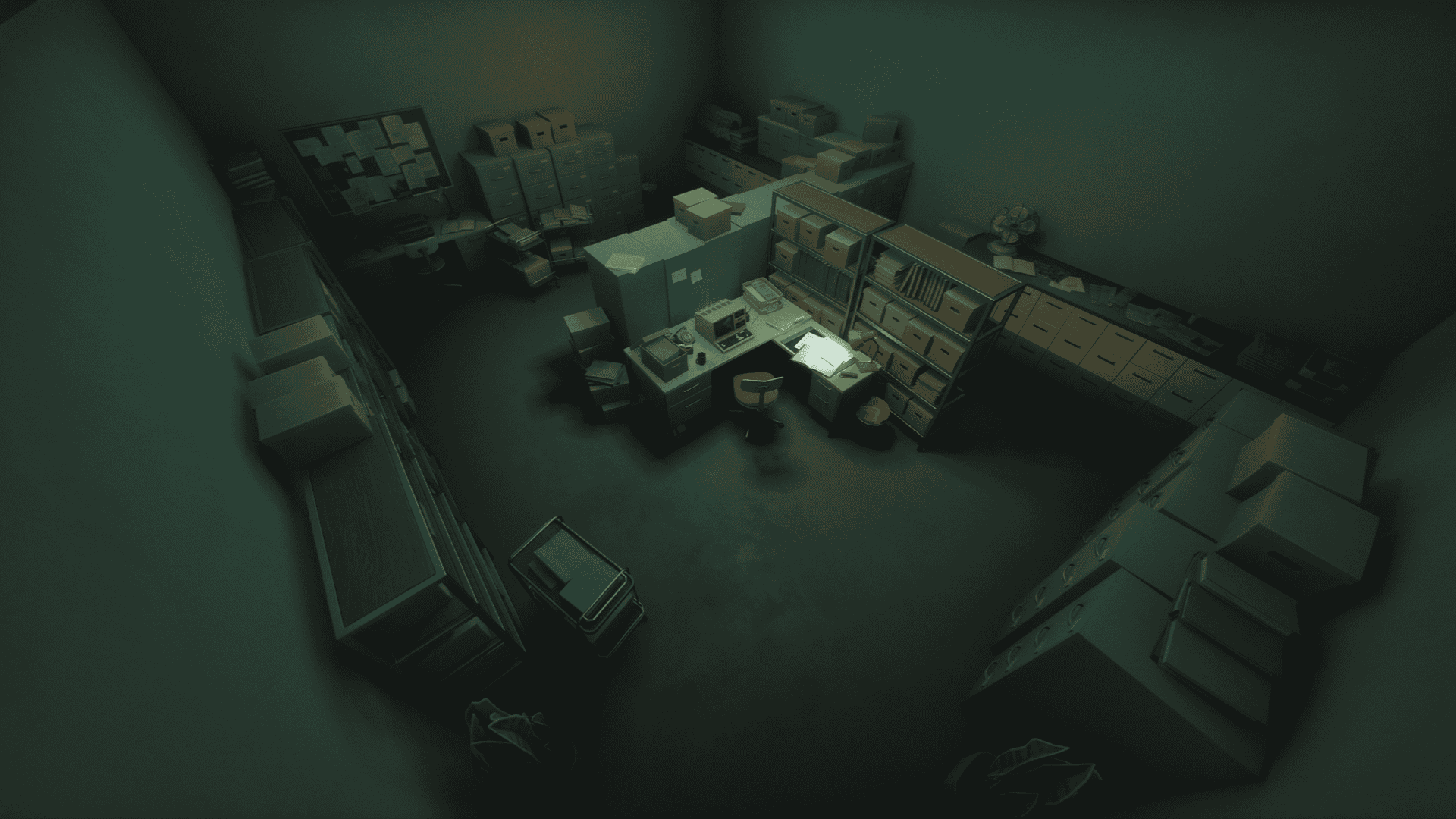
Claire Sarmiento: A lot of it comes from my love of thriller and suspense movies, plus playing narrative games that do a lot with a little. I wanted Static Hour to leave a lot to the player’s imagination. You’re stuck in a newsroom the entire game, so everything happening outside, all the consequences of your decisions, gets delivered to you through sound. I find that really interesting because it adds so much flavor and atmosphere without needing the huge production costs that come with animation and cutscenes and all that.
GameObserver: Why and how did you choose a newsroom as the setting for a psychological thriller game?
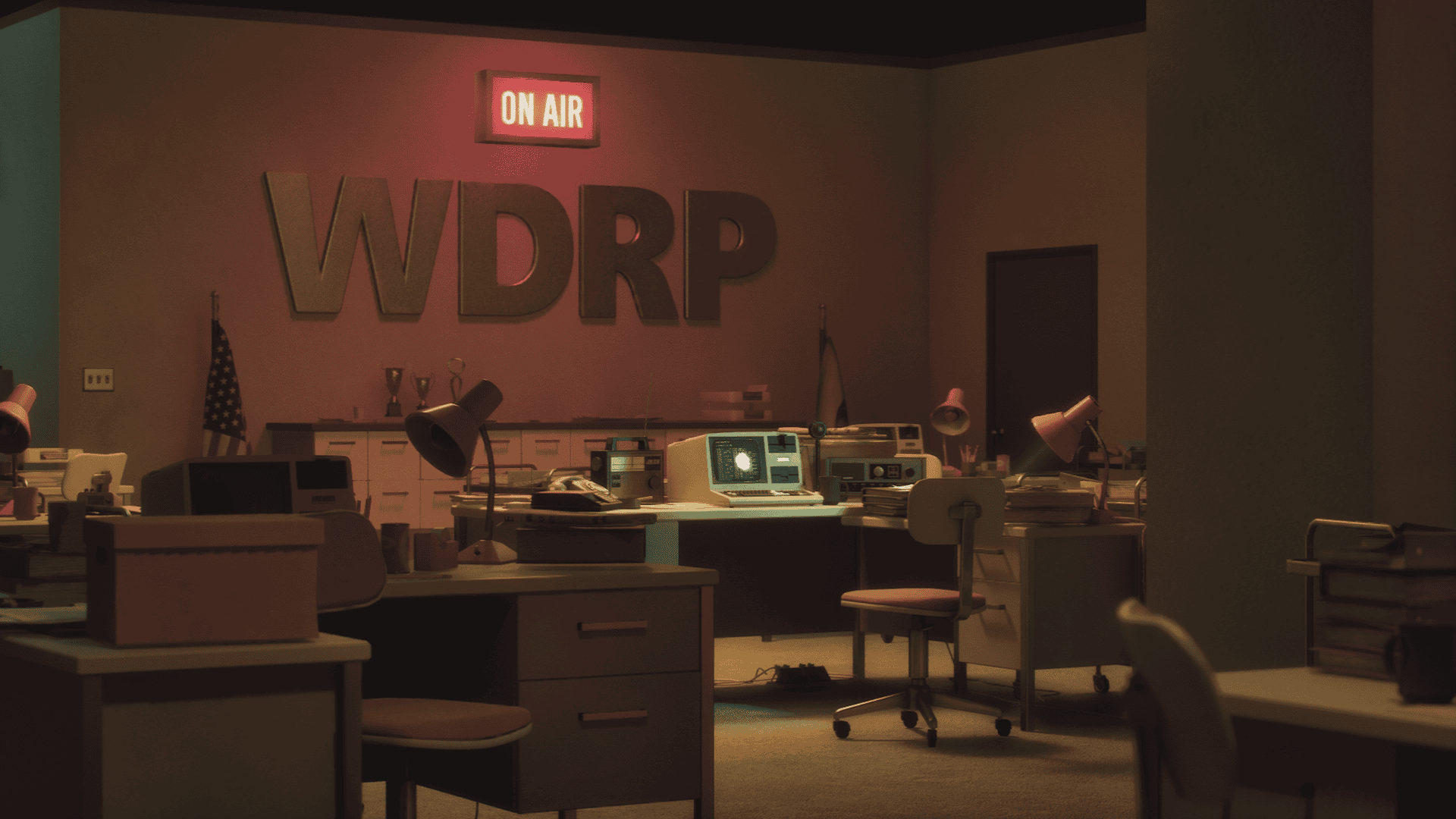
Sarmiento: I wanted something different and interesting, but I also had to think about cost. Since I’m self-funding this, I need to be careful about how many assets I build and how big the environment gets. At first I considered a classic office setting, but there are already a lot of games with that, so I wanted something that felt more unique, like a radio booth. Then I realized there are already a few games set in a radio booth too, and I wasn’t sure how to make that feel fresh. So I landed on the back office, the newsroom itself. That’s a setting we haven’t really seen much of in games yet.
GameObserver: I really like how the game explores the importance of fact-checked news and public trust. How much was the game’s story influenced by how news spreads today?
Sarmiento: Yeah, this one definitely wasn’t created in a vacuum. I think anyone paying attention to how news and information travels right now, how fast things spread and how hard it can be to know what’s actually true, can’t help but have that seep into their creative work a little. I didn’t want to make a game that points fingers or takes a side on anything though; I just wanted to explore what it feels like to be the person responsible for deciding what gets broadcast and what doesn’t, especially when you don’t have the full picture yourself. That’s really the core tension of the game; every broadcast decision you make can either push the town closer to the truth or deeper into panic. And a lot of the time you’re stuck with this real moral dilemma: do you broadcast something to calm people down or warn them, even when you don’t actually know if it’s true yet? So without spoiling too much, there’s a moment later in the game where the player has to make exactly that call, and it ripples through the rest of the story in a way I’m pretty proud of.
GameObserver: Obviously, the 1980s had analog technology that is nowhere as advanced as it is today. What inspired you to place the story in the 1980s?
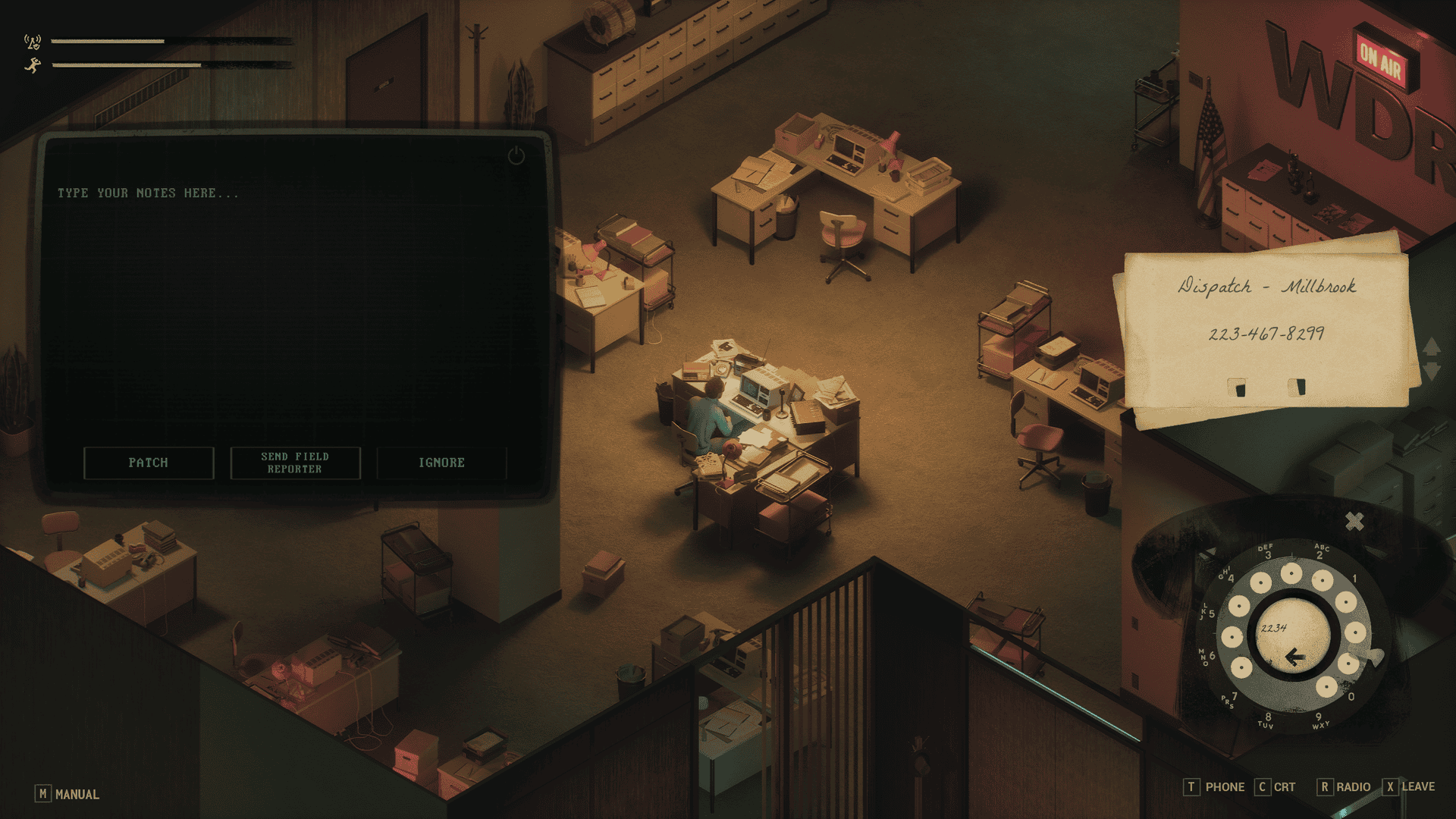
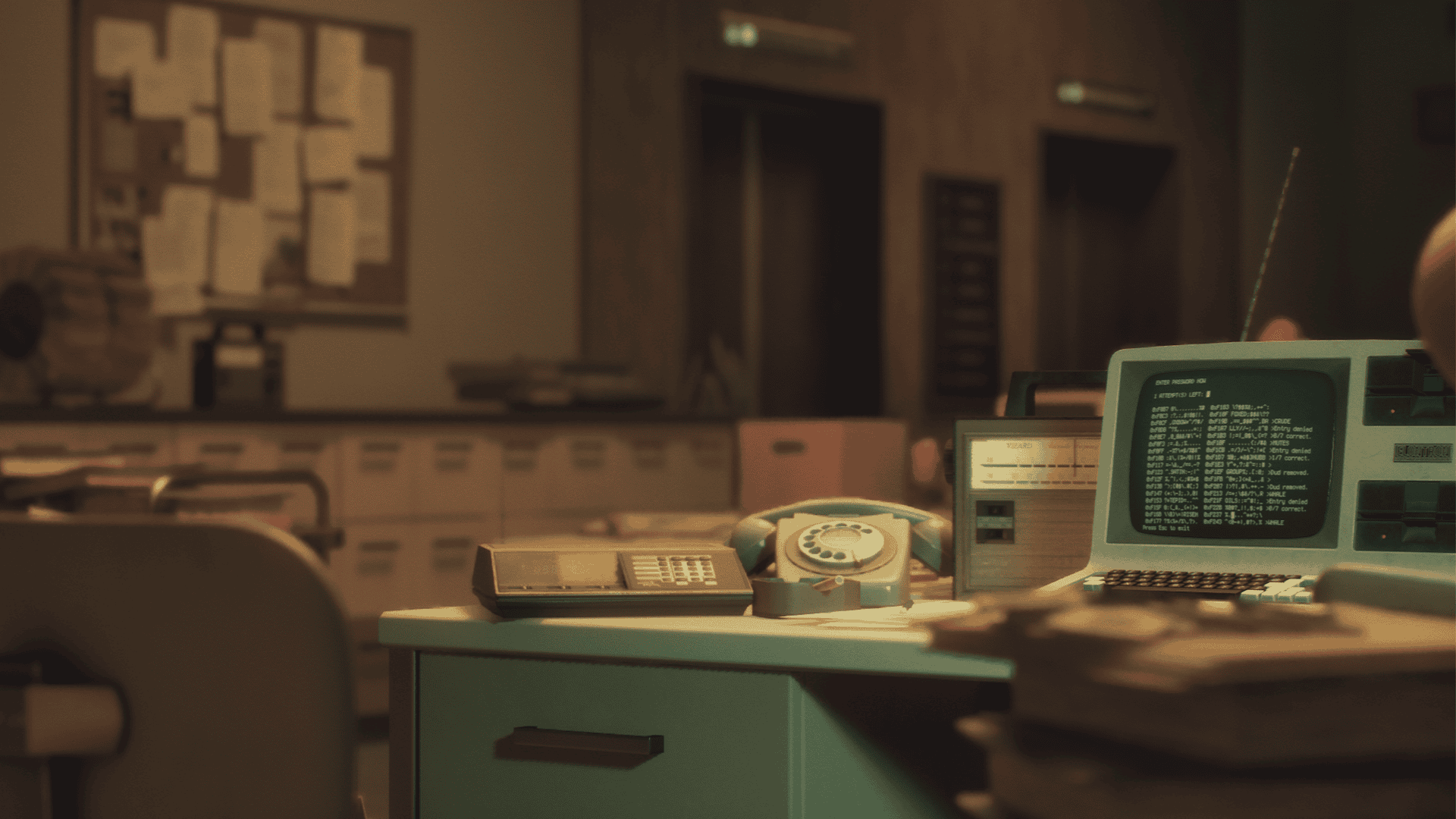
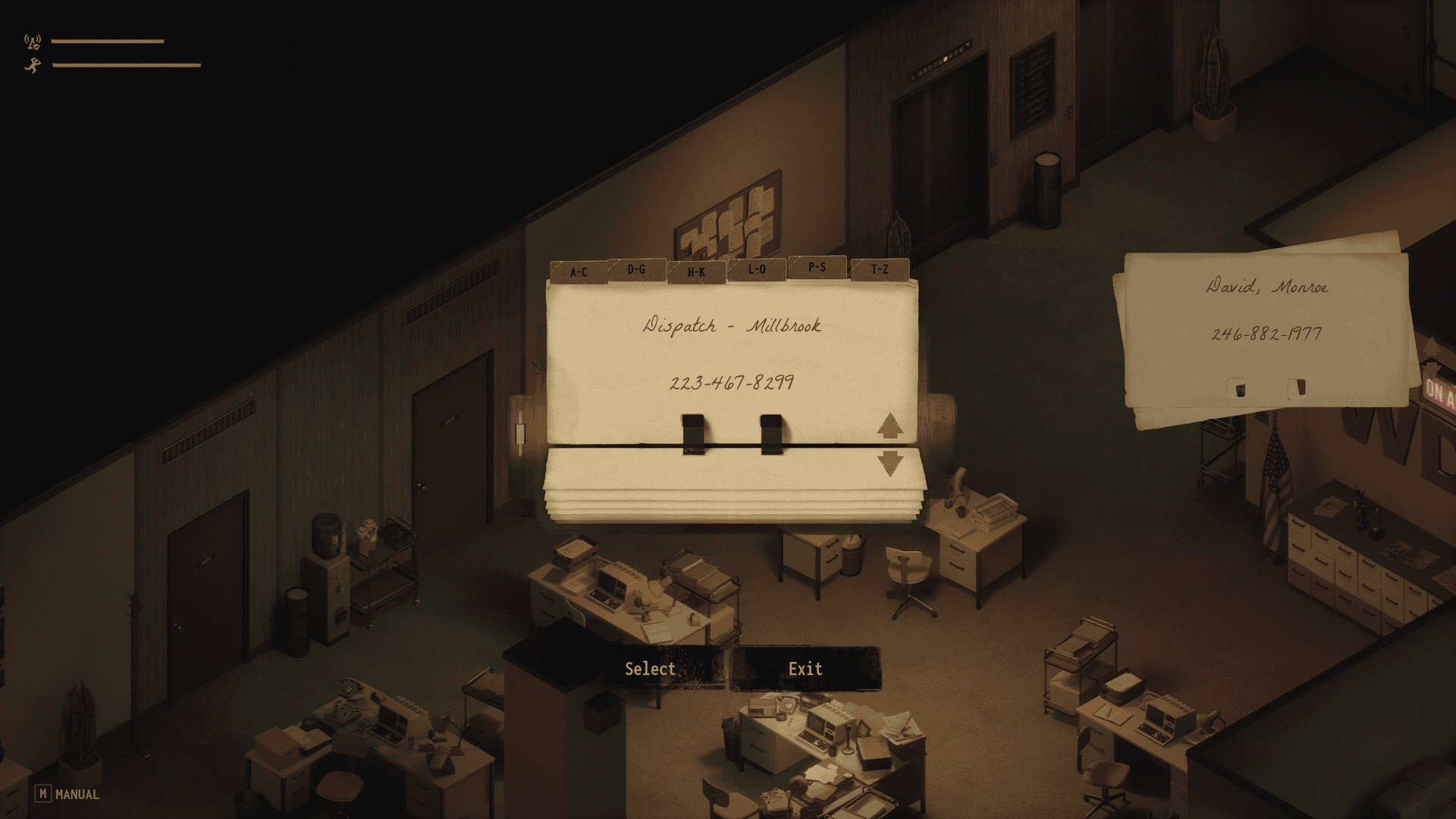
Sarmiento: Honestly, a lot of it comes from my own fascination with 1980s movies and games; there’s just something about that era’s style and mood that I love. But it also gave me an extra layer of challenge to work with. Nowadays, everyone’s reliant on technology that makes everything faster and easier: instant verification, instant communication, and that would completely undercut the tension I wanted in Static Hour. Setting it in the analog era meant the player couldn’t just look something up or get instant confirmation. You’re stuck with a phone line, a police scanner, and whatever your reporters can tell you in the moment, and that isolation is a huge part of what makes the uncertainty feel real.
Mixing Legal Experience and Game Development
GameObserver: How do you balance being both a lawyer and a game developer?
Sarmiento: Honestly, it’s tough. There’s no easy way to balance both, especially when you decide to develop a commercial game as opposed to doing it purely as a hobby while working full-time. I normally set aside one or two hours at night and sometimes as many as four, to work on Static Hour before going to bed. I try to finish all of my legal work during the week so that I can dedicate most of my weekends to game development. It often feels like working two jobs, and there are definitely sacrifices involved, but I really care about the game and that makes the long hours feel worthwhile.
GameObserver: How has your legal expertise affected your game development?
Sarmiento: As a lawyer, I am used to carefully evaluating information, considering how reliable a source is, and thinking through the possible consequences before making a decision. That mindset naturally found its way into Static Hour, where the player often has to decide what to broadcast without knowing everything.
My legal background has also helped with the business side of development. I am comfortable reviewing contracts, asking detailed questions, keeping records, and thinking carefully about risk before hiring someone or entering into an agreement. It does not make running a studio easy, but it has helped me stay cautious and organized while building the game.
GameObserver: With your legal background in mind, are there any situations where withholding a true story may be a better option than broadcasting it? If so, can you provide some examples?
Sarmiento: I wouldn’t frame it as withholding a true story so much as deciding whether it’s responsible to broadcast something immediately. A story may seem true based on what you know at the time, but there can still be questions about verification, timing, privacy, or whether releasing certain details could put someone at risk.
That’s part of what Static Hour explores. The player isn’t simply choosing between truth and lies. They’re often deciding whether they have enough information, whether the source can be trusted, and whether broadcasting something at that moment could do more harm than good.
GameObserver: What has game development, and specifically this game, taught you that your career in law has not?
Sarmiento: I’d say trusting my own gut more. In law, you have precedent, guidance, and other lawyers you can ask when you’re unsure. Granted, the law isn’t black and white, so you still have to do your own analysis, but there’s a structure there, a way of checking your reasoning against something established. In game dev, especially self-funding this with a limited budget and wearing every hat- game designer, developer, art director, writer- there’s no precedent to lean on. You just have to trust that you’re on the right path and that the decisions you’re making are the right ones, even when there’s no one to confirm it for you.
Looking to the Future
GameObserver: What do you hope players take away from Static Hour?
Sarmiento: I hope players walk away being a little more mindful of their own decisions, actually pausing to consider something before acting on it, because every choice has a consequence, even the ones that feel small in the moment. In Static Hour, you rarely get to undo a broadcast decision or take it back once it’s out there, and I wanted that to mirror something true about real life too. You don’t always get a clean do-over, so it’s worth sitting with a decision for a second longer before you make it.
GameObserver: Do you have any advice for anyone who may be in a busy career but looking to get into game development alongside their day job?
Sarmiento: Start much smaller than your ambition. Build consistently, protect a few dependable hours each week, and don’t assume you need to do everything yourself. A demanding career limits your time, but it can also give you discipline, financial stability, and skills that transfer in unexpected ways.
GameObserver: What can players expect next from you, Static Hour, and Barkbyte Interactive?
Sarmiento: Right now, my focus is entirely on getting Static Hour finished and into players’ hands, that’s the priority. That said, I’d love for it to be the start of something bigger for Barkbyte. If the game resonates with people, I’d love to explore expanding the world further, whether that’s additional content or eventually a sequel. But I’m also the kind of person who wants to earn that, so nothing is set in stone yet, it really depends on how players respond to this first story.
Keep an eye out for Static Hour on Steam here and check out GameObserver for all your gaming news.





 ObserverCrew Picks
 bserver
 bserver