Radiotext is a cyberpunk-esque adventure played on a terminal access point on a fictional radio network. You are thrown into the game, sitting at your terminal. There are no real instructions to get started, but the terminal has different key phrases that you can type out and respond to. Your workplace consists only of the people on your floor; the rest is now automated.
Terrorists are planning to destroy your workplace, and you are being recruited to join The Syndicate. The entire point of this network and The Syndicate is to use underground radio communication as an alternative to corporate surveillance. You start the game by talking to Sky, the leader of The Syndicate. She and Flynn recruit you to join their ranks, despite your lack of experience. You’re even advised to lie about how you got recruited, since you were never given the tests everyone else has to pass to join the group.
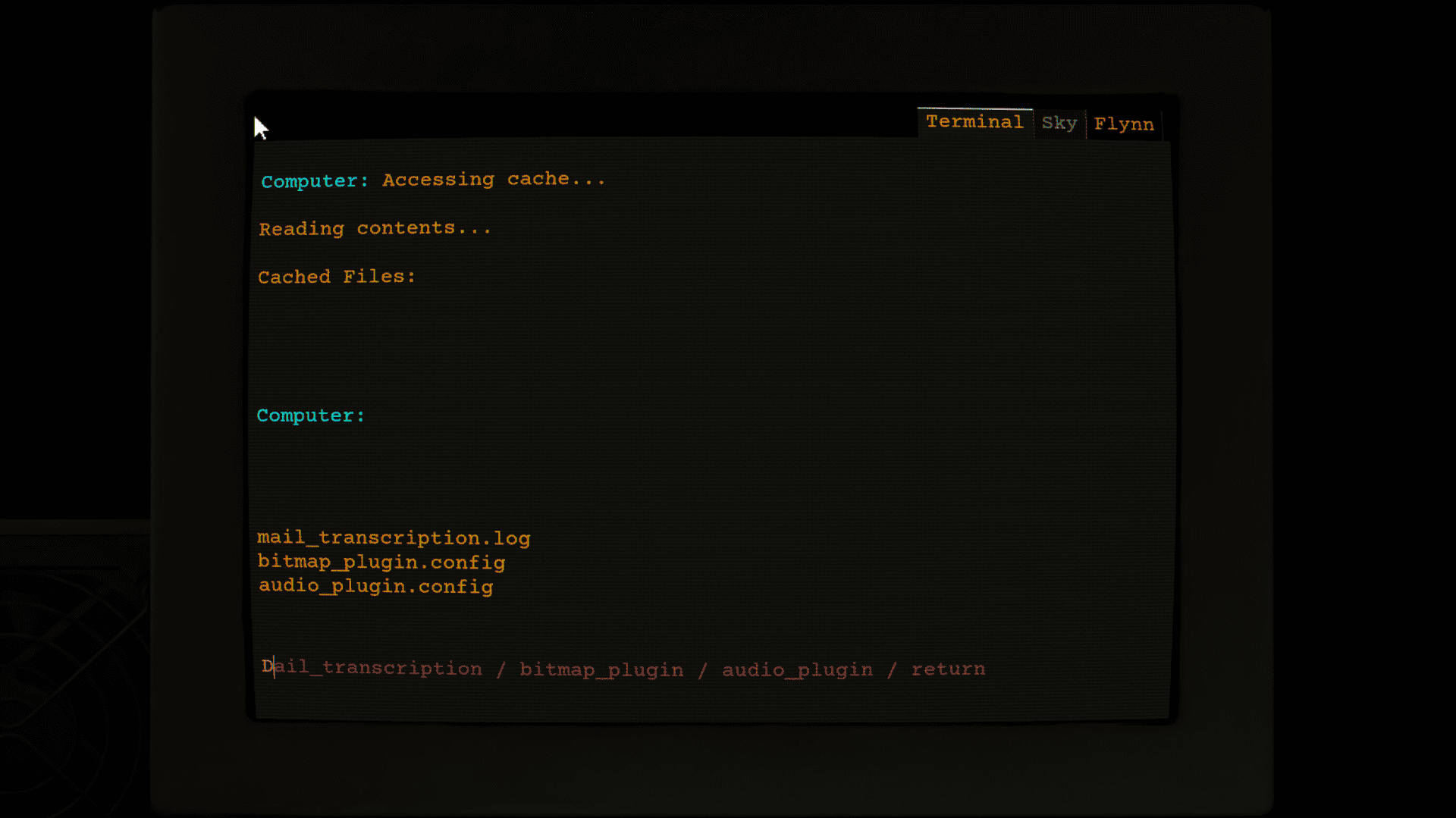
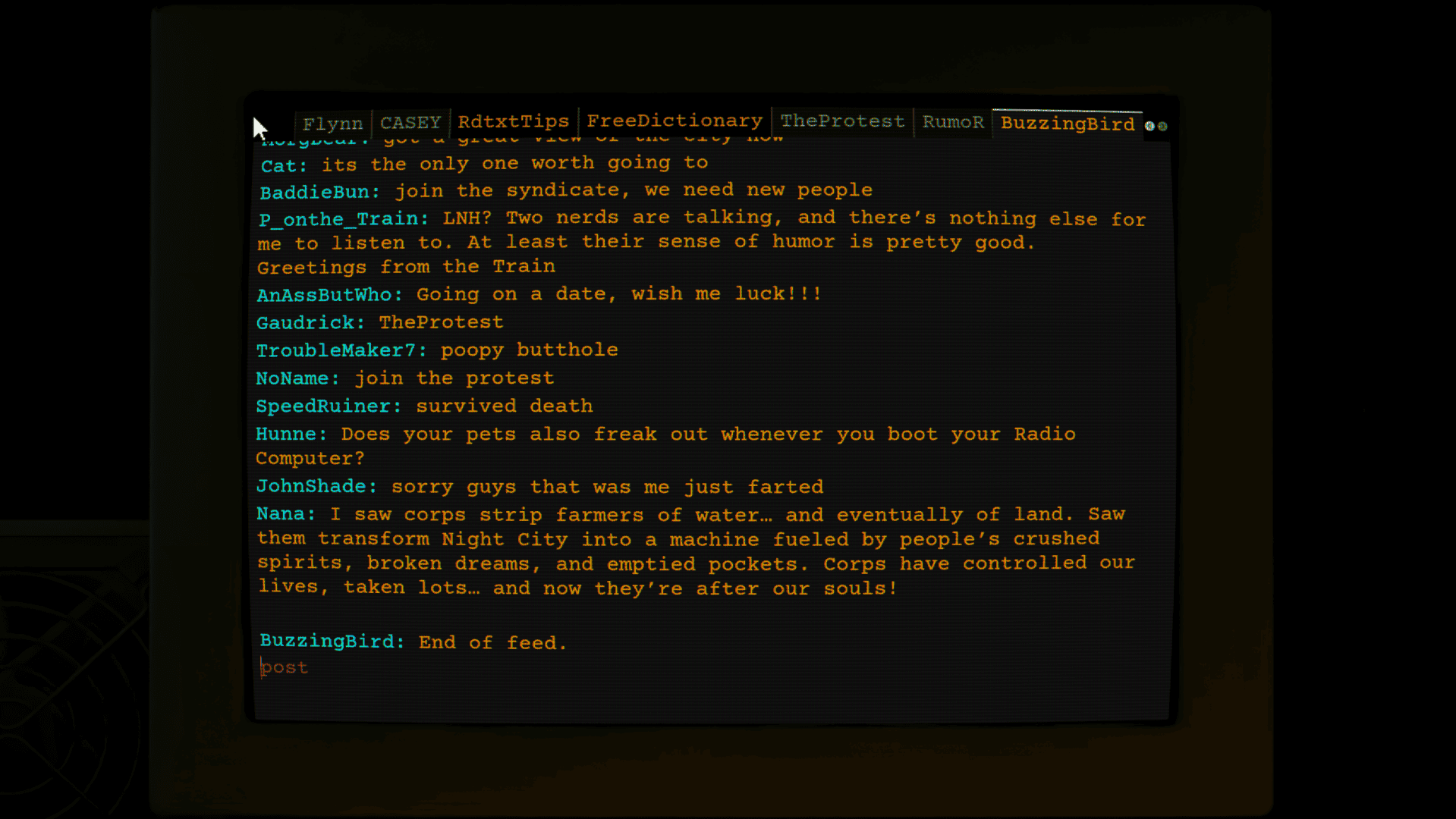
As you play more, you meet more people on the network. Typing “connect random” in your terminal will connect you with different people or applications on the network. For example, the dictionary is one of the channels that you can randomly connect to when you use the random connection prompt. Different people and applications lead you down a rabbit hole of hacks that you must solve, and you meet people both within and outside of The Syndicate.
One mission that Sky gives you is all about recruitment. When you meet random people on the network, she wants you to recruit them into The Syndicate and join the protest, which is the first to happen in over a decade. Sky, Flynn, and other characters like Chrome give you hints along the way on where to go and how to use certain applications, like the Spectre and the Triangulator.
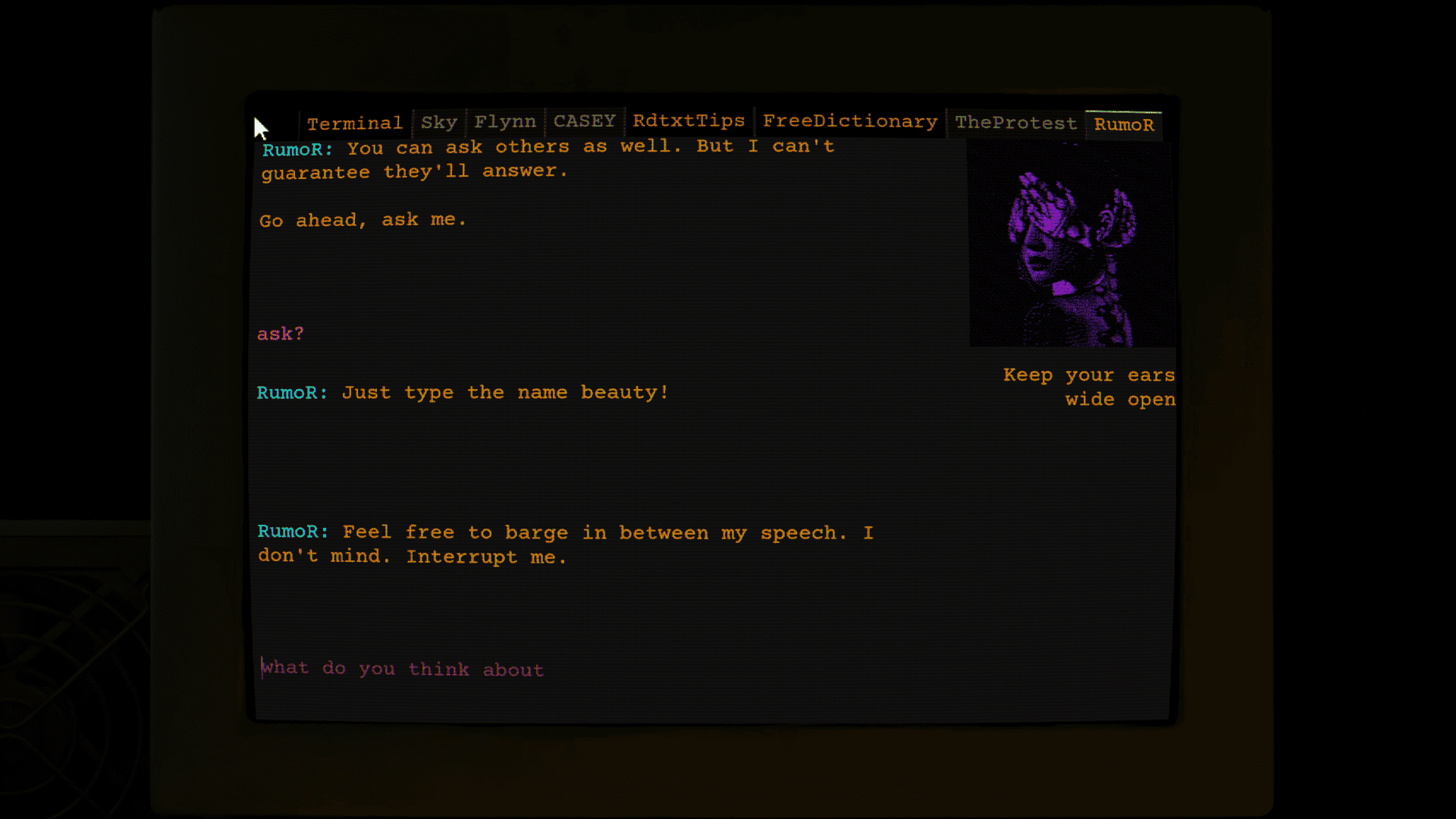
Some people that you meet on the network feel passionately about this mission, while others feel very negatively about The Syndicate and their mission, such as Casey. Casey tries to convince you that what the group does is over the top and not smart, and you can decide whether to be truthful with him about joining.
Visually, Radiotext is very cut-and-dried. You can press Alt to back out and see a little more of the dark room you’re in; however, the rest of the game revolves around the terminal computer you are on. Music and sound are used sparingly with the audio clips. Players type out dialogue responses and commands to move the story along. Different characters give the player various clues on how to progress the story, but honestly, it’s rather confusing.
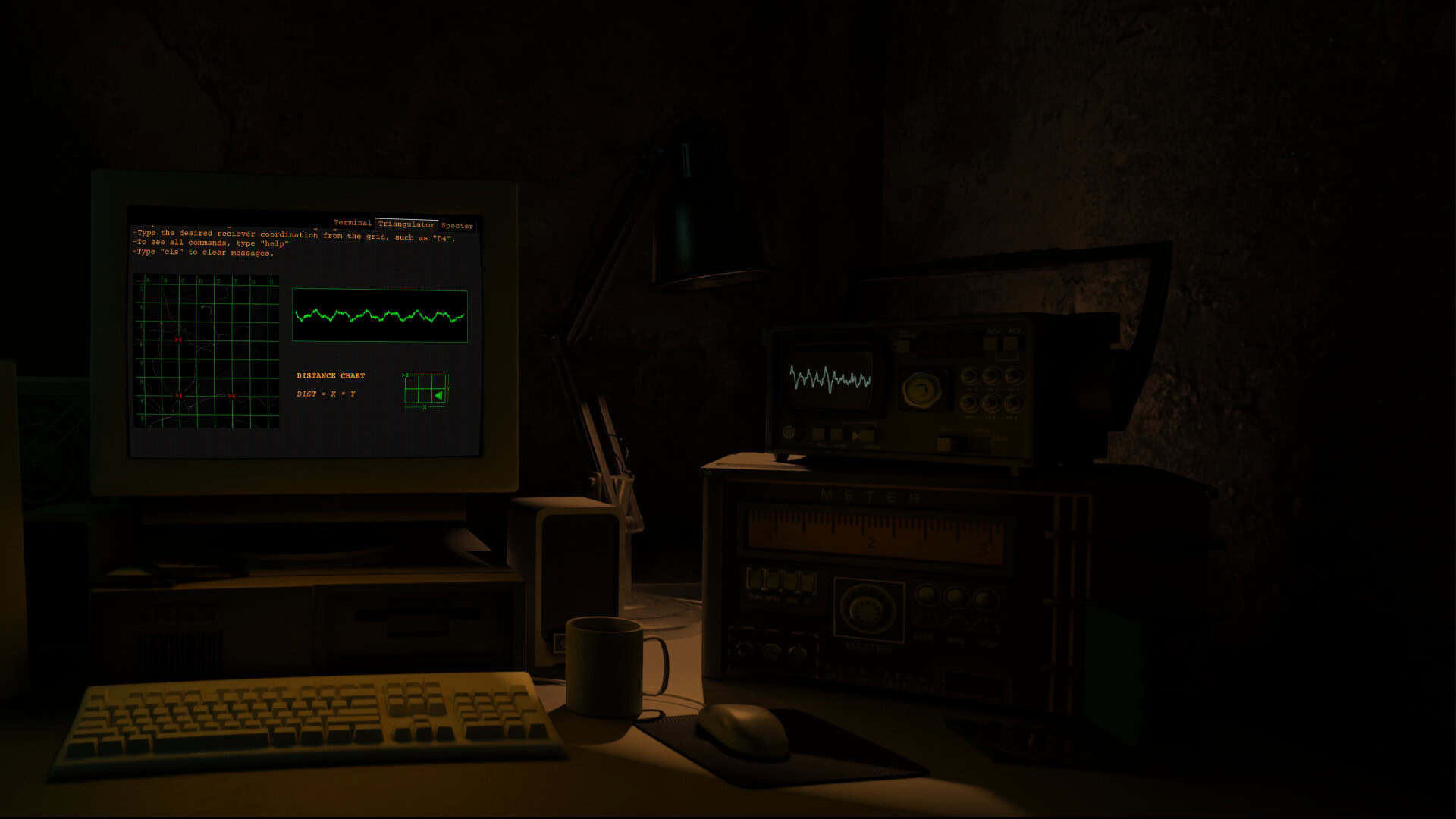
The gameplay is straightforward: you work inside a terminal, following its prompts. However, the hacking has a very steep learning curve that I think needs to be lowered for the average player to enjoy Radiotext. There are few to no instructions on how to navigate most of the hacks, which makes the game extremely difficult.
At times, I was confused about whether I should keep connecting to random people or if a character had already given me the next prompt. Your tab list keeps growing, and you can either disconnect from some of them or leave them all open. To me, each option has downsides: close them and you may forget someone or something important, or leave them all open and quickly become overwhelmed and unsure what to do next.
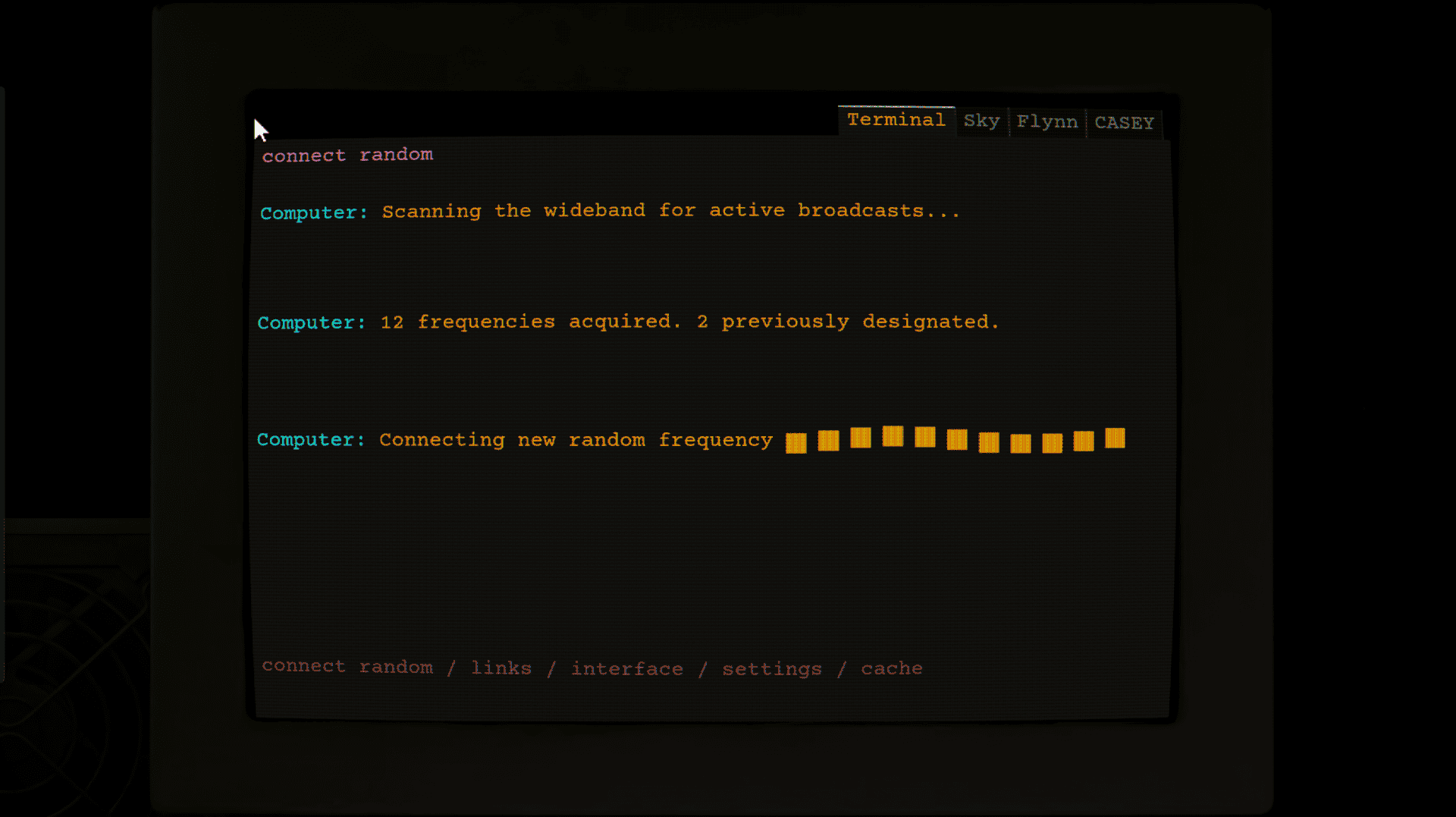
You’ll also solve a variety of puzzles, cyphers, and other hacks along the way. Some of the puzzles include alphabet shifts, ROT13, Morse code, binary, and letters arranged in a square. There is some appeal in figuring out these puzzles and feeling accomplished afterwards; however, some puzzles seem overly difficult or simply don’t make sense.
The Spectre shows radio waves, and the player adjusts one wave with the arrow keys to match the transmitted waves. Once you tune the wave successfully, you get an encoded transmission. An inverse wave cancels the signal, which is another quest that you have to figure out. The graphs feel clouded and messy, and toggling AM/FM helps, but it never explains what AM and FM are toggling. A failed transcription also doesn’t show you what you did wrong or give you guidance on what to do next.
The triangulator uses three receiving positions on a grid. You use the distances on each coordinate to get closer to the actual coordinate, triangulating it. The idea is interesting, but it feels rough in practice. It’s essentially a lot of guessing based on arbitrary numbers.
Overall, I think Radiotext‘s pacing is a bit slow, and the learning curve is steep. The story is strong, but the gameplay feels scattered and non-linear. The technical aspects were all good, as I had no glitches or issues throughout the game. But there were a few spelling errors, like “wan’t” instead of “want” or “won’t” that should hopefully be fixed in future updates. However, if you’re familiar with hacking-based games and can think outside the box, Radiotext could be right up your alley.
Angel reviewed Radiotext on PC with a provided review code. This review is based on the version of the game available at the time of writing, and our score will not be changed.
- Score
- 6/10 DECENT - GAMEOBSERVER CAUTIOUSLY RECOMMENDS
- Summary
-
Angel says: Radiotext is a text-based cyberpunk adventure with an online radiowave terminal based on hacking. However, there is a very hard learning curve for the game overall, that makes enjoying the story more difficult than I would like.
- More
- GameObserver's Review Policy




 ObserverCrew Picks
 bserver
 bserver