Going into The Sorting Bureau, I mapped out a “cozy organisation game sliding scale” (trademark pending). On one side sits the “mindless mobile games”, the ones you might have a crack at on the bus if your internet goes out. Putting items into baskets, with a micro-transaction thrown in. On the other side of the scale sits the “top class sorting games” like Unpacking. I played Witch Beam’s smash-hit game when it released back in 2021, and was amazed by the premise – unpacking different life stages of a character in a surprisingly poignant memoir. So, where does The Sorting Bureau land on this scale?
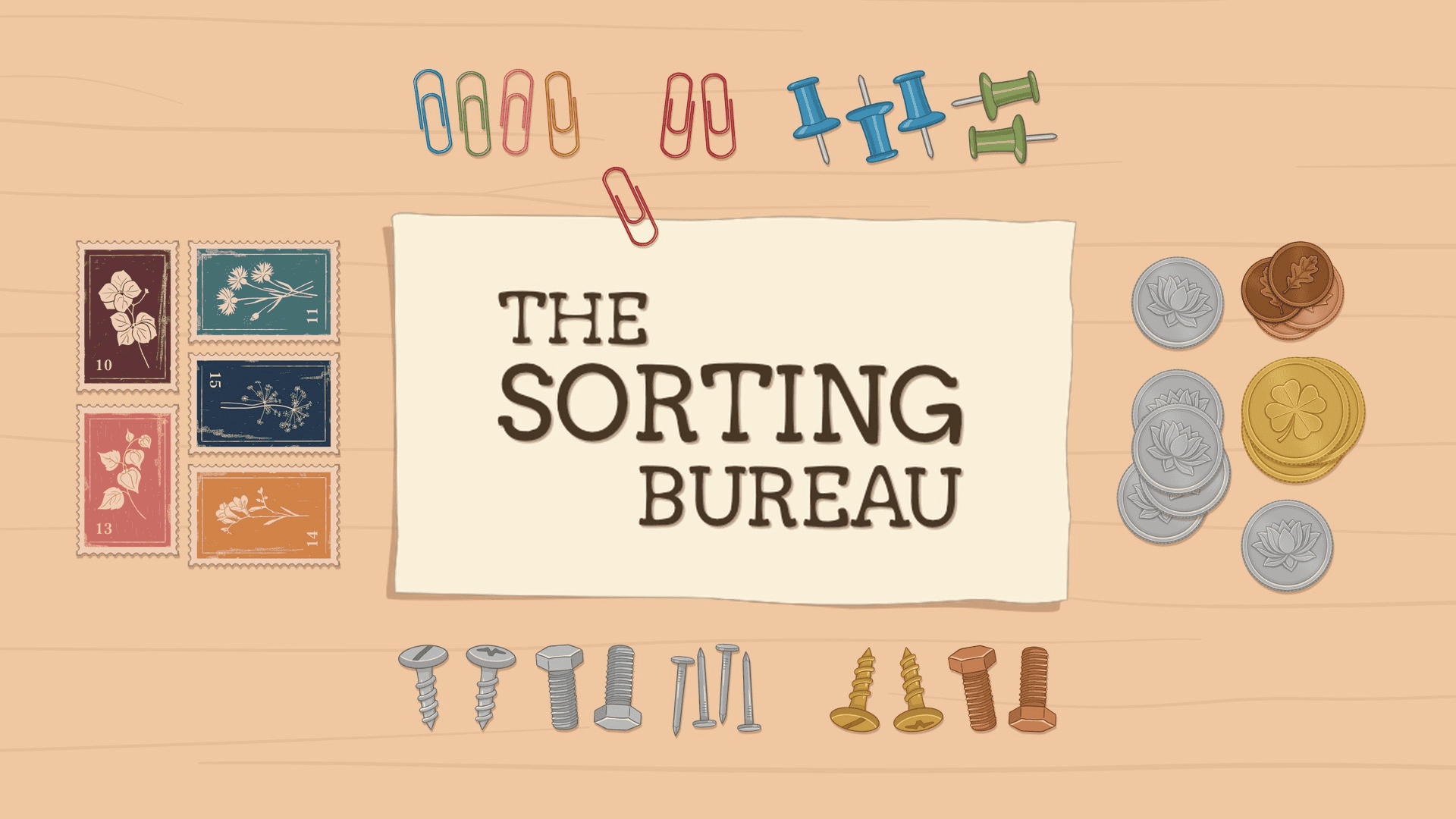
Developed by married couple, Maria and Dmitry, as part of their shared studio Apelsinka Games, The Sorting Bureau is based on the premise of “satisfaction fun”. Your character works in a quiet Tokyo workshop, receiving packages from various clients who send you items to organise. Why they can’t do it themselves, I don’t know, but I guess a paycheck is a paycheck. For example, Master Genji, a third-generation watchmaker, has a pile of mess to fix – and so you file small gears, springs, and screws into boxes with no time limit or scoring system. Just pure sorting.
Apelsinka Games states that they tell “their story not through cutscenes” nor through a narrative, but “through their [characters] things.” I am always supportive of the notion of show don’t tell, but unfortunately I did not find myself connecting to many of the customers in The Sorting Bureau. Perhaps this is because none of the items sent to sort were of any surprise. The watchmaker had cogs and springs, the manga artist Sato Aiko had pencils and erasers. I was secretly hoping to get a rogue item slipped in that hinted at a deeper backstory, but no. The only character I found myself super interested in was Madam Sayoko (the keeper of the Bureau) because she kept dolling out banger quotes. My favourite was “you cannot spoil anything here.” Therefore, I think it’s better to look at this game as a purely “satisfaction fun” experience, and less of a game you’ll find any story in. In comparison to Unpacking where pleasure is gleaned from organisation mechanics combined with subtle story-telling, The Sorting Bureau is purely interested in the mechanics of it all.
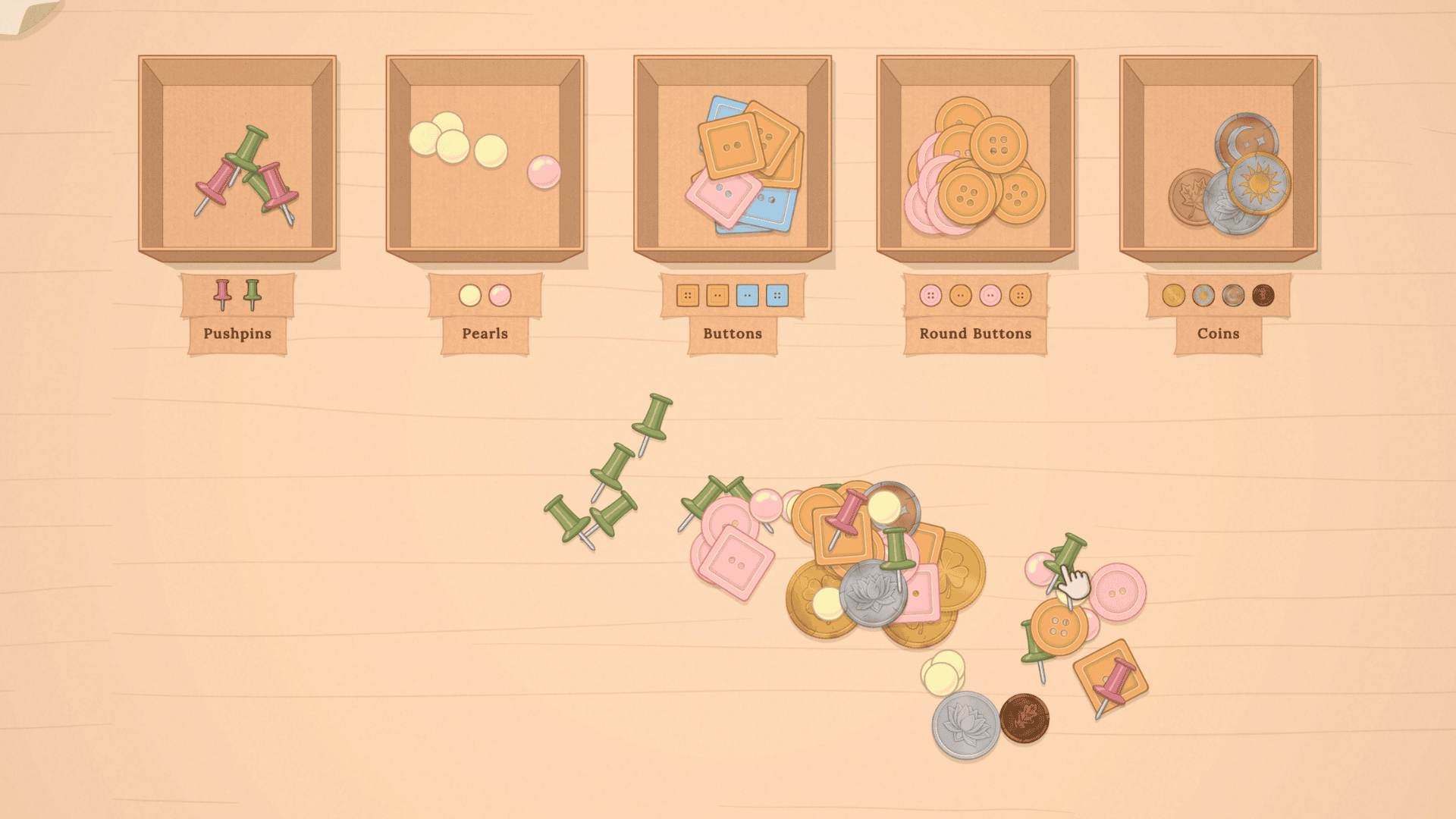
So, is the gameplay satisfying? I would say, if you’re the type of person to love the premise – yes. This game is not for those who crave story-progression, puzzles or challenges, and it doesn’t advertise itself as such. This game is for those who want something purely meditative to calm the mind. In its description, The Sorting Bureau says: “No timers. No wrong answers. Just the joy of tidying up.” I found half of this sentiment to be true. There were indeed no timers. Every box could be completed at my own pace, which meant I could get up to make some tea, come back, and there would be no punishment for enjoying my time.
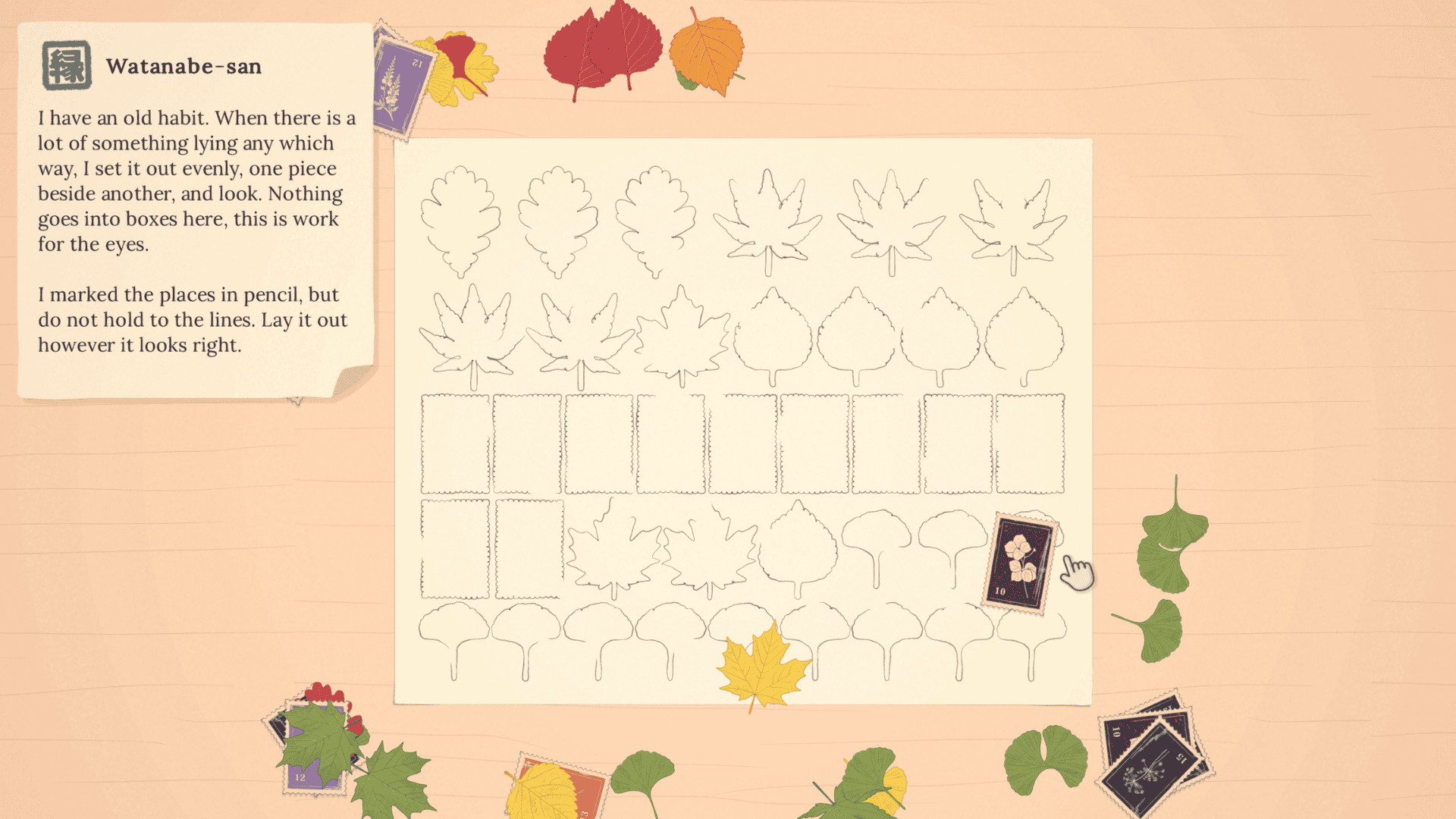
However, I disagree with the notion that there are “no wrong answers”. Going into it, I was hoping that I wouldn’t be babied through the gameplay. That if I accidentally put a wrong item in the wrong box, the game would wait until I’d noticed and corrected my error to announce the level had been completed. However, if I tried putting a Ginkgo leaf in a Maple leaf box, it would move the Ginkgo leaf back to the beginning pile. Only when dragging it to the correct box would it stay. I found myself, regardless of how relaxing the experience was, wanting a bit more of a challenge with paying heed to what went where. A game doesn’t have to shout at me if I get something wrong – but I do want it to care about me paying attention. In addition to this, there were limited levels where you could choose how you organised the items. The game stuck mostly to pre-labelled boxes where you had no malleability to decide how to sort.
Around the three hour mark, I noticed that the gameplay was now in a looping stage. The Sorting Bureau has a procedural curator that generates new sorting requests and puzzles once you’ve reached a certain point, so it felt like I could drop the game and come back to it at any time.
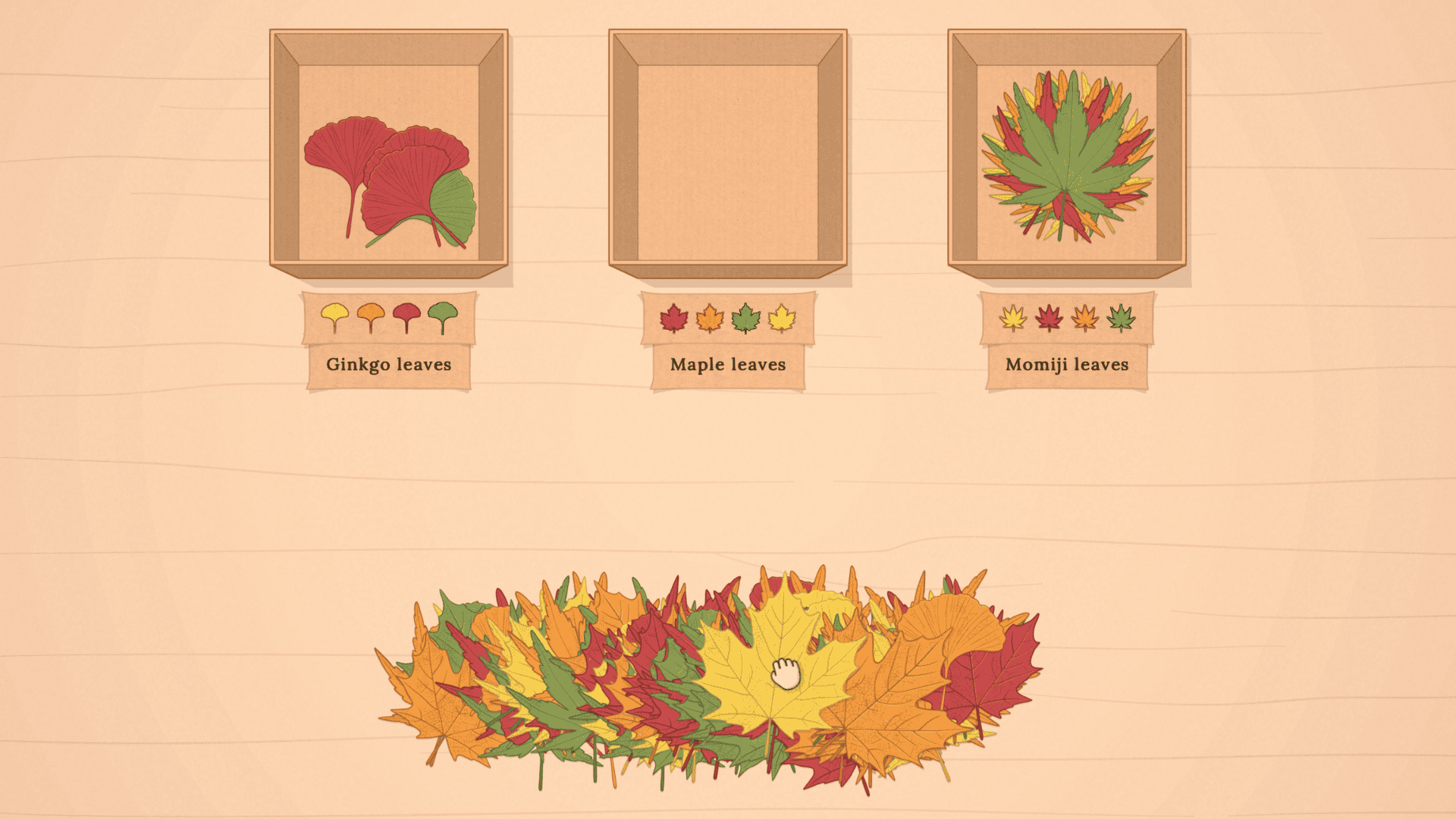
The sound design is where The Sorting Bureau shines. Between rounds you look out through a window at a “quiet Tokyo” – well, as quiet as a city can be. This ambience continues as you play the game. You hear life outside; rain, trains rolling by, footsteps. You can choose whether you have your window open, or shut, for a more muted soundscape. The whole thing really works. Sometimes I wished there was a radio on the desk so I could choose to listen to some Japanese music, but then I lambasted myself for having brain rot and not enjoying the meditative atmosphere.
I mostly enjoyed the ASMR clicks for each item, although I wished more foley sounds were used. For example, a bunch of paper clips dropping into the box didn’t sound especially… paper-clippy. For future updates, I would love very specific sounds for each item to immerse yourself in. How fun would it be to drop a cracker into a box and it sound deliciously crunchy! Maybe that’s just me.

The Sorting Bureau performed perfectly on my MacBook Air (macOS), although the dragging mechanic on my trackpad began to feel a bit taxing on my wrist after a while. I would recommend playing this on a touch screen, or with a mouse and pad if you can.
I had a zen time with The Sorting Bureau, but I’m not sure whether I would pick it up again. If I did, it would probably be for short bursts at a time when I want to completely zone out. But ultimately, I find complete relaxation when I’ve got a challenge to figure out. Sometimes there can be peace with a puzzle.
Ruby Barry reviewed The Sorting Bureau on macOS with a provided review code. This review is based on the version of the game available at the time of writing and our score will not be changed.
- Score
- 6/10 DECENT - GAMEOBSERVER CAUTIOUSLY RECOMMENDS
- Summary
-
Ruby says: Although the cute art-style and the ambient background noises were wonderful, the repetitive notion of sorting became tiring after a while. I needed a bit more to fully grasp me.
- More
- GameObserver's Review Policy




 ObserverCrew Picks
 bserver
 bserver