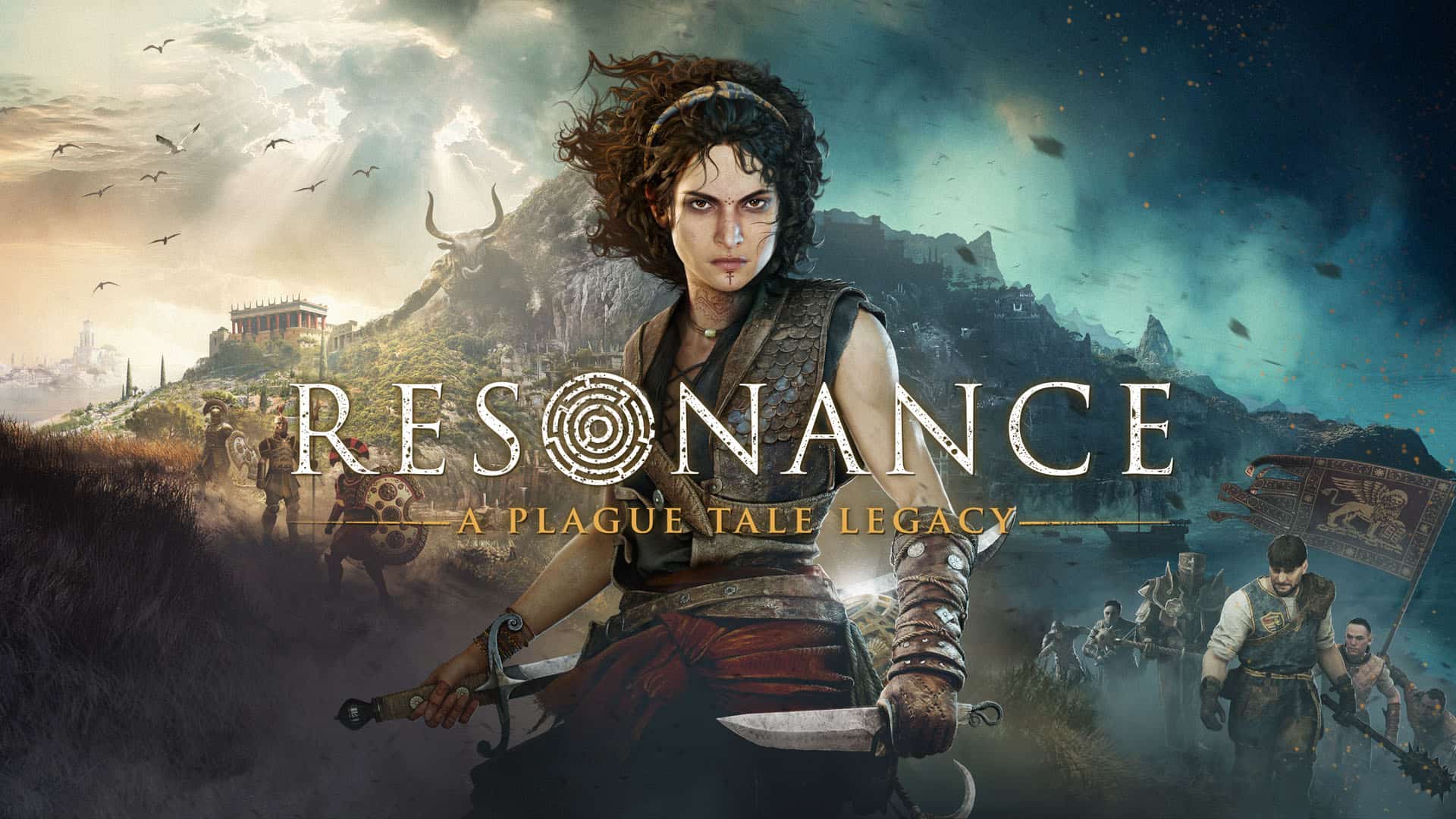
While there were major story issues with both A Plague Tale: Innocence and its sequel A Plague Tale: Requiem, and both had pretty bad pacing issues, I found them to overall be innovative and enjoyable games I’ve recommended many times. For Asobo Studio’s third entry in the series, a prequel set 15 years before those games, this is not the case. I am completely unable to sugarcoat this, and it needs no qualifiers; I’m saddened to report that Resonance: A Plague Tale Legacy is one of the worst AAA games I’ve ever played.
I am really, truly floored at how poorly made every aspect of Resonance is. Through 12 arduous hours, I genuinely felt a hatred developing in me, much like The Creature in the depths, for this title. Design-wise, every single trite, overdone, and boring “AAA” game mechanic is not only present but slapped in the player’s face over and over again. Fair warning, in order to explain how badly written the story is and how poor the world building is, I will need to spoil a few story beats, but I’ll keep it to the minimum I can.
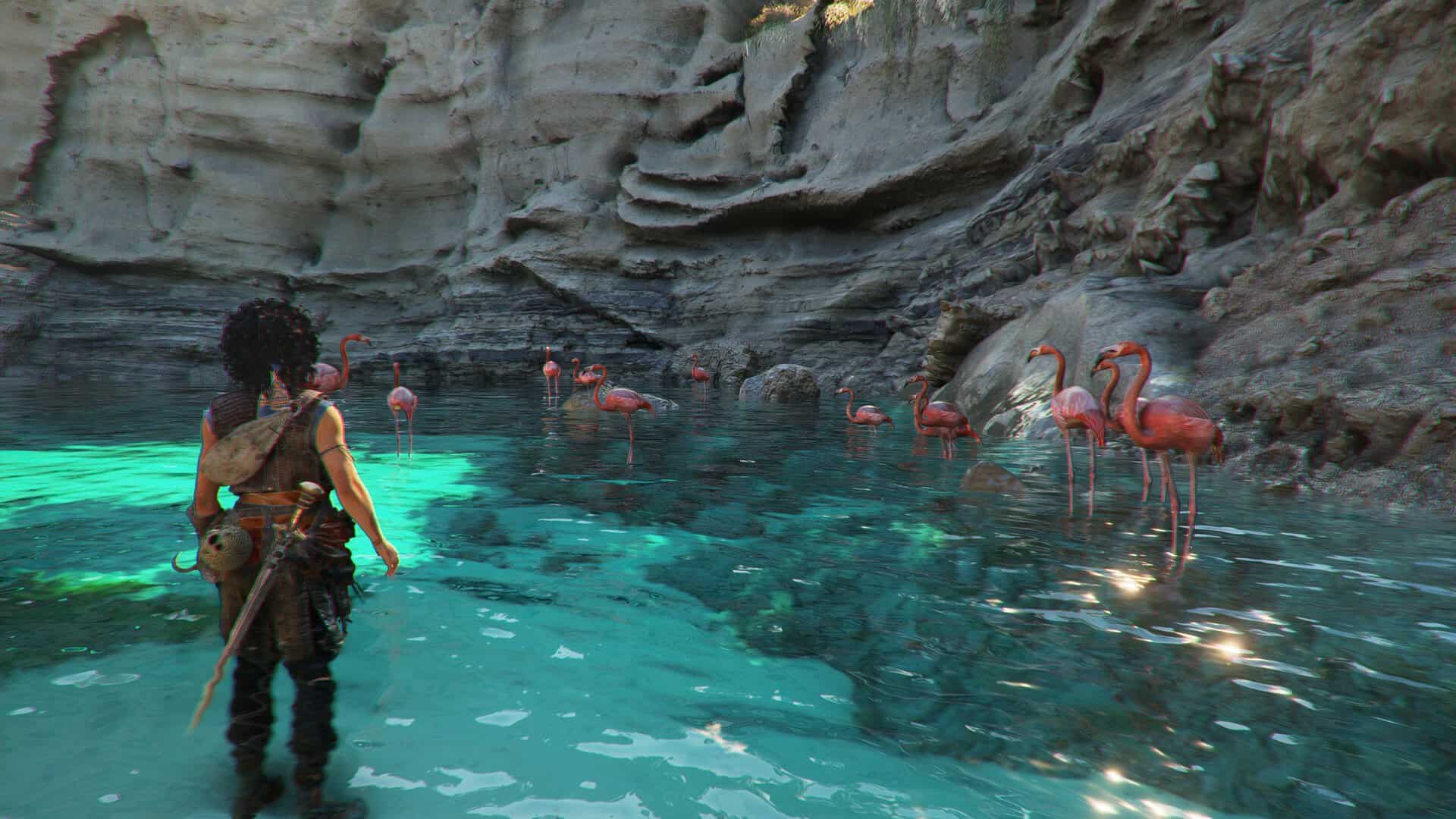
The story begins with our protagonist, Sofia being rescued from abusive nuns who have infused her blood with some mysterious substance to force prophetic visions out of her. How was she kidnapped? Who are these nuns? Doesn’t matter, we’re never told. Her father and his right hand man Faro come to rescue her, and do without issue. After bringing her home, Faro, Sofia’s father, and a few others set out to investigate a mysterious island. They return weeks late, and Sofia’s father has of course been killed. Sofia is a character you may remember from A Plague Tale: Requiem, though in that game I found her to be a very forgettable character and certainly would not have asked for an entire game about her origins.
Sofia is strong-headed, and… that’s it. She has no other personality traits. Sofia is (sort of?) raised by Faro for the next few months, and he grills her night after night about her visions, seemingly neglecting her basic needs and emotionally abusing her to the point that she begins lying about them going away. Unfortunately, despite being so one-note, she’s the most developed character in the story. The rest of the cast may as well be cardboard cutouts.
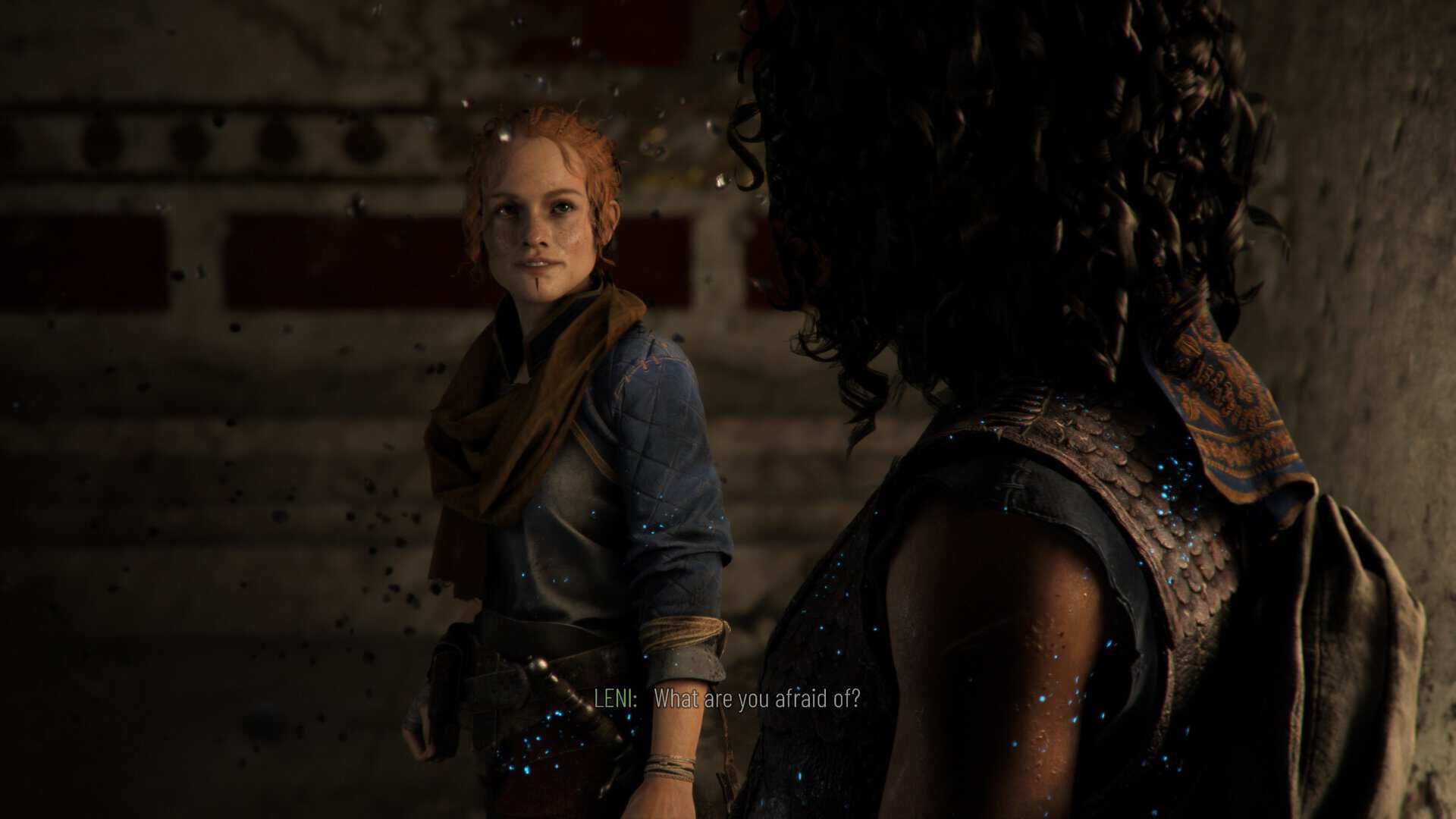
We fast forward to 20 years later, and as a young woman she’s training with a soldier named Irene to serve as a tutorial. Here comes the first major narrative issue: I don’t understand what anyone’s status is. The characters keep talking about Faro taking a search party to the island over and over and coming back with some people dead, but the entire village is collaborating on never telling only her what’s going on there. I can’t tell if this tribe of people living in this ramshackle town are supposed to be Romani, because they dress as such but they are of every possible nationality.
This village is ostensibly somewhere near Venice in the 14th Century, but it is composed of North Africans, Irish, Pacific Islanders, Greeks, and a dozen other ethnicities. Where is this place meant to be? Faro is apparently the “ruler” of this place, as everyone listens to him, but the first main mission takes Sofia and her best friend Leni to Venice under cover of a masquerade carnival. They comment that they need to hide their faces to cover up their tattoos, or people would realize who they are. But who are they?
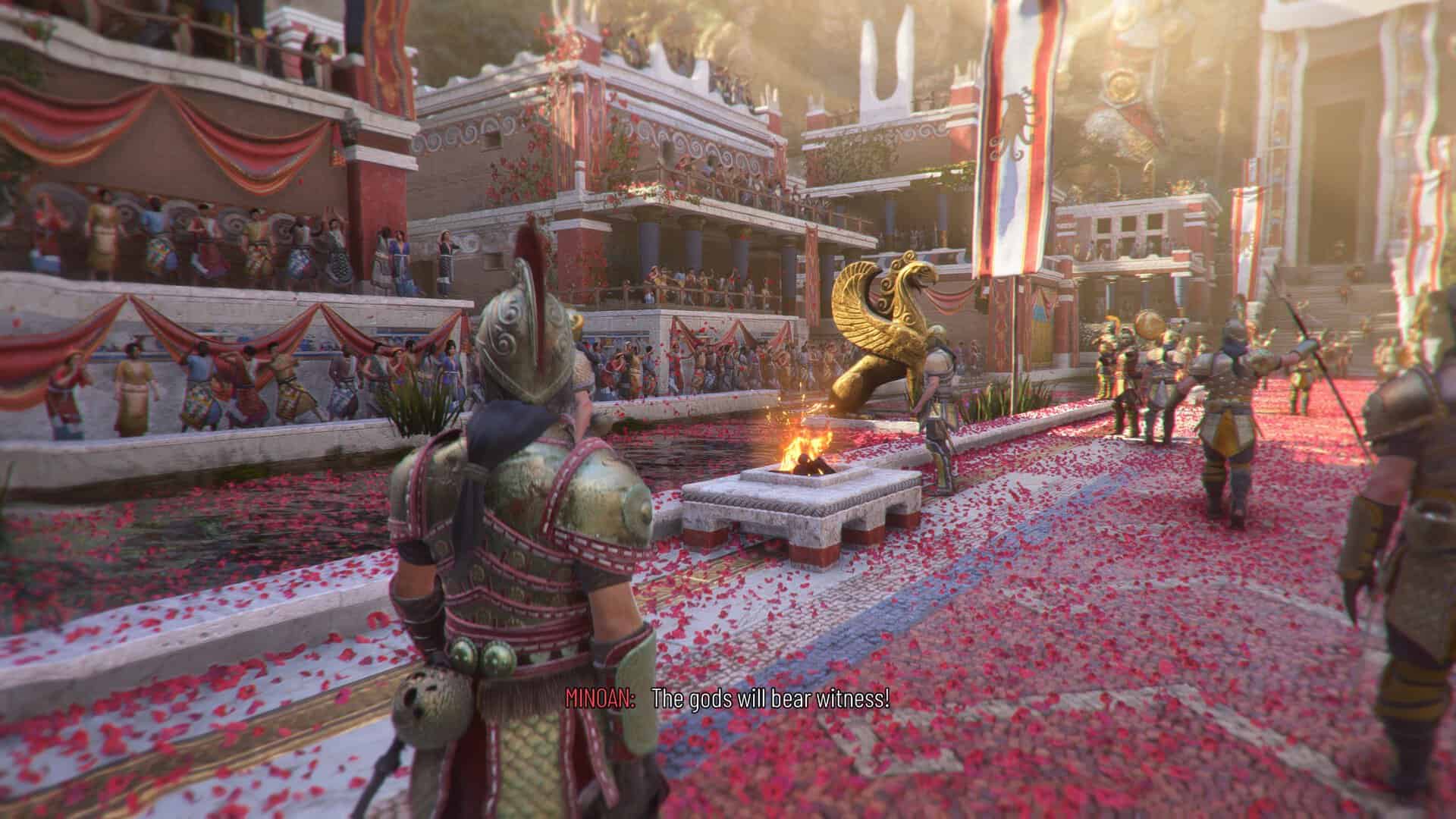
The members of the village execute a plan to destroy Venice’s armory, but we are never told why. There’s the desperate struggle people keep talking about for freedom, but they don’t seem to live anywhere near here. I have no concept of what stake anyone has here. Regardless, the villagers are sold out by a secret spy and are expected. After finishing the first level, Sofia must go back to her burning village (why are the Venetian troops burning it?) and steal Faro’s diary with all his island notes. He sees her taking it, declares her the traitor, and tries to kill her. He gives her no time to speak or explain, the woman who he ostensibly has raised her entire life. She and Leni steal a ship and run to the island, where the rest of our story takes place. We have not been told and will never be told why any of this has happened.
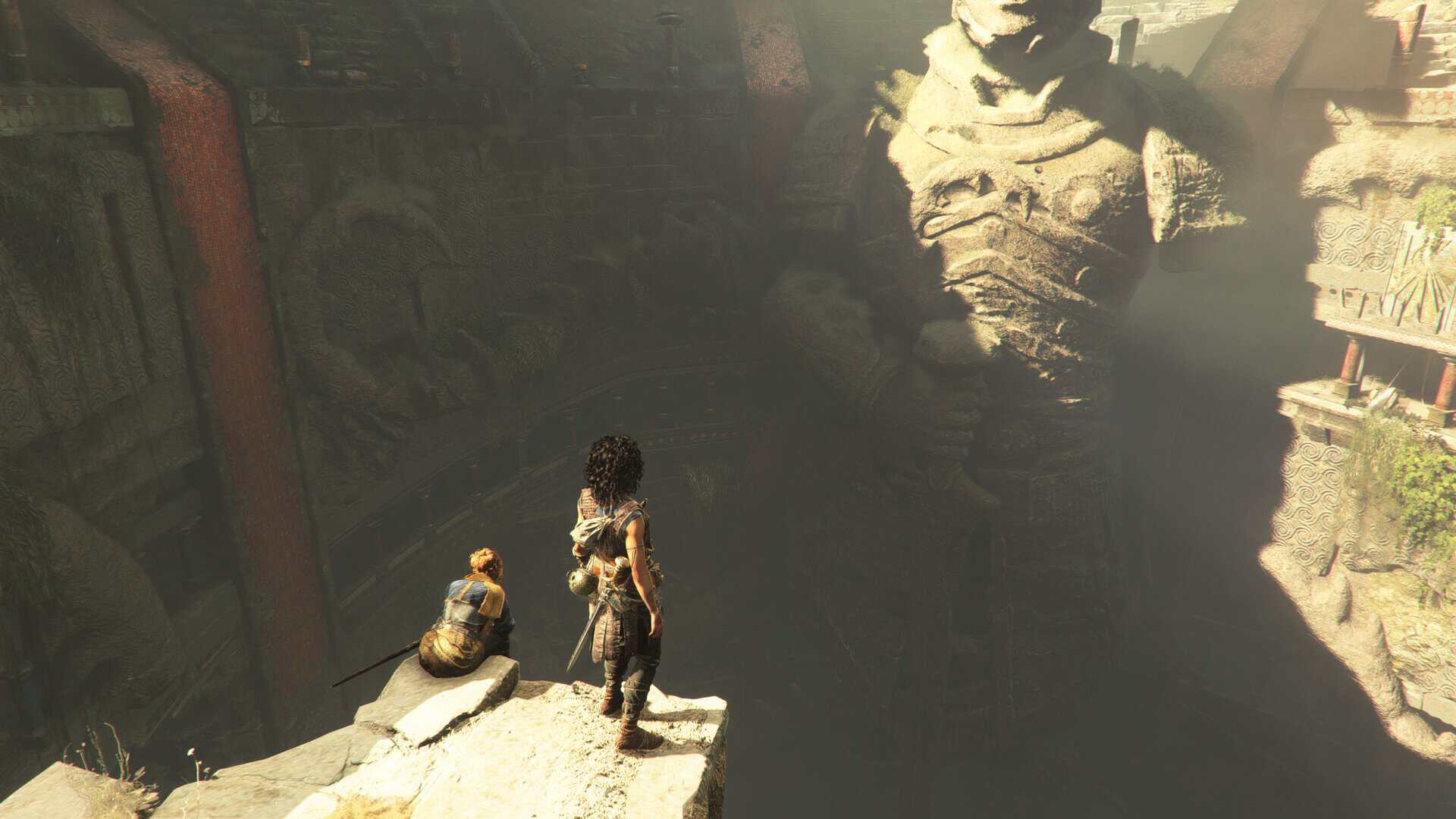
It’s once you get to the island and begin moving around a bit that it starts to sink in how poorly designed this game is. This is the most boiler-plate, derivative, unoriginal big budget game I’ve ever experienced. I felt like I was playing the “AAA Mario” viral video the whole time. First, you cannot walk through any bushes or vegetation, no matter how thin or dense. What look like open spaces to walk around are entirely tight corridors, and that persists for the whole game. There is no freedom of which direction to walk or how to play in Resonance. Every few minutes, for literally the whole game, you’ll find Sofia slowly squeezing through a crevice as the next area loads.
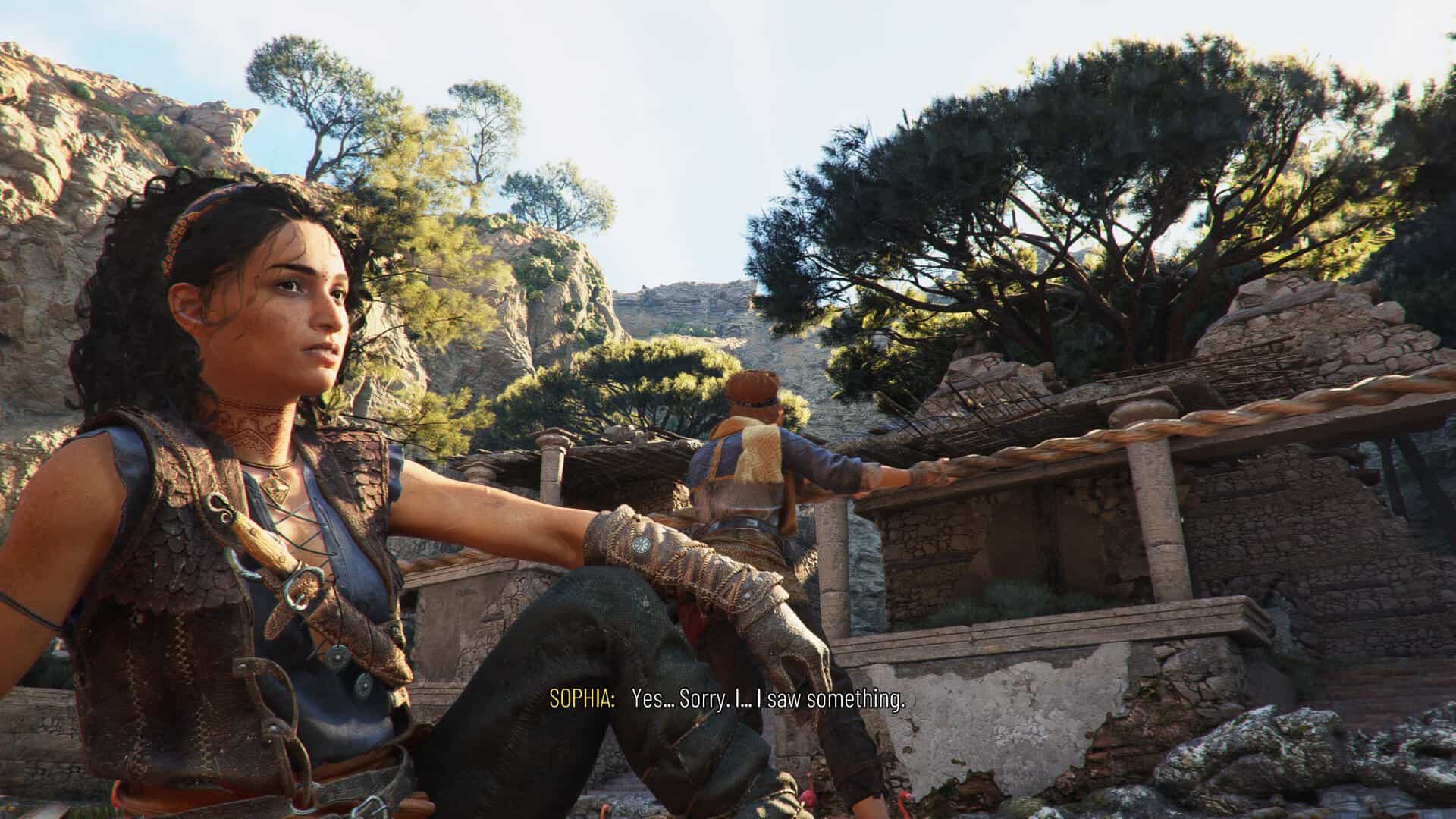
Every so often, Leni will lift Sofia up a tall rock and then Sofia will pull her up. Then you’ll scoot slowly across ledges with no danger of falling. Sofia and Leni have the most eye-rolling conversations constantly and never go more than a minute without talking to each other or commenting on what the player is already seeing. There’s no real reason to look anywhere but where the game is telling you to go, as there is nothing to find but Resonance points. Everything in the game feels like a mediocre PlayStation 4 launch game – Resonance would have been a joke compared to Uncharted: Drake’s Fortune.
Combat consists of a light attack, kick, charge attack, dodge, and parry. There are no more mechanics, which is why as you encounter the same soldiers over and over there is no change in how combat plays out. Button mash X, parry glowing yellow weapons, dodge glowing red weapons, repeat until credits. There are only five types of enemies and all of them are soldiers; the archers always whistle and giant red UI target appears before shooting, so I never once was hit with an arrow. Twenty enemies will gather around and take turns attacking you one at a time like ninjas in a 1980s movie. There is also no stealth for the first seven hours in this prequel to one of the most beloved stealth games of this generation. You must fight every combat encounter the exact same way with no creativity, the antithesis of the previous games’ design to provide player freedom and test out new combos of traps and potions. Not to mention there being not a single rat, but I can live with that. My only light at the end of the tunnel were the pictures and statues of the minotaur throughout the island, teasing a fight between Sofia and the famous Greek monster constantly.
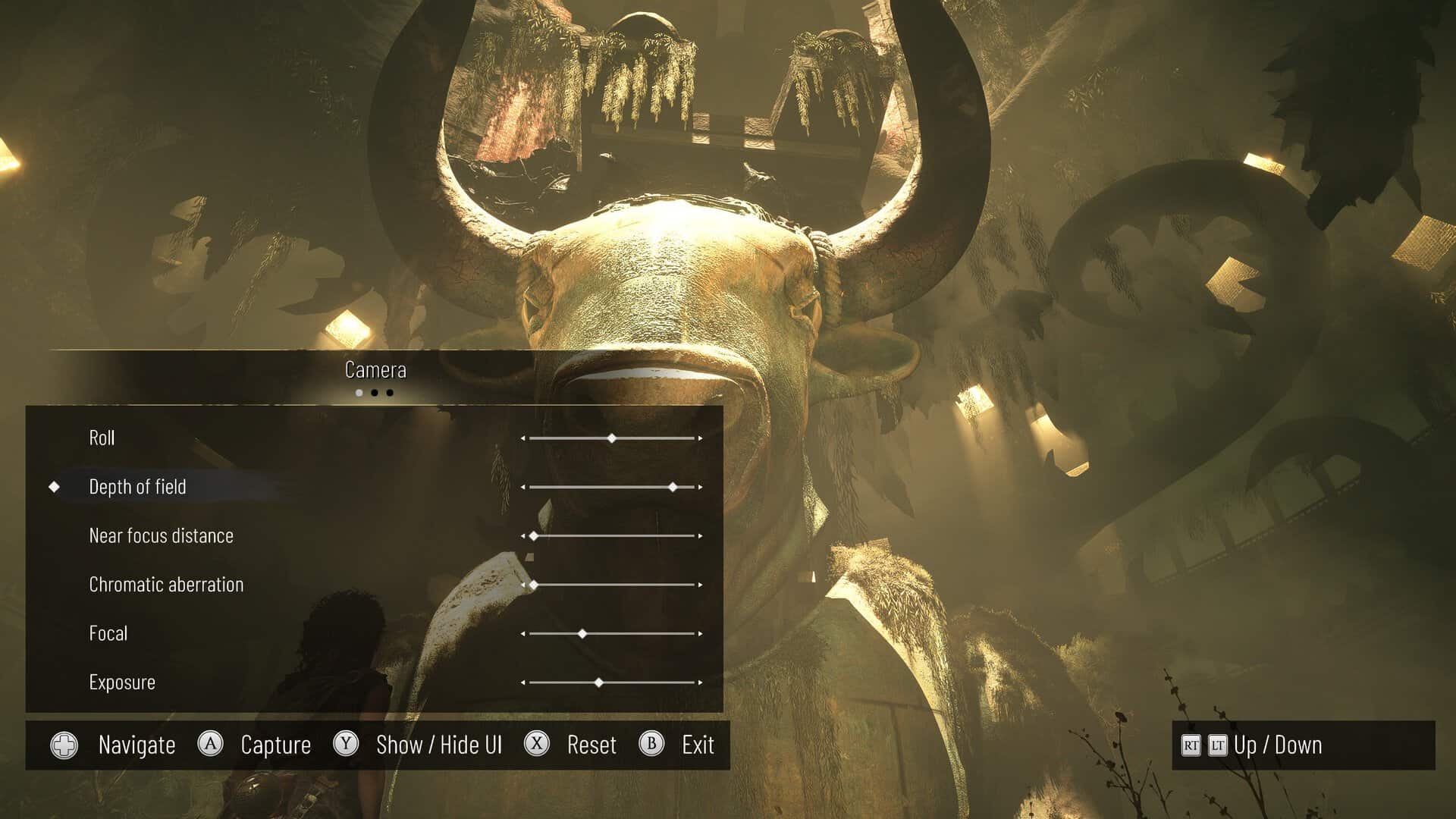
I cannot overstate how on-rails Resonance is. First, geographically: there is only a straight path to walk the entire game, and the few times there are areas you can move around it turns out you must follow the rails of the game or you can’t proceed. One minute you can climb a ledge, and then find another ledge the exact same height you can’t climb. You’ll find a tree you can walk under, then the same tree that you can’t. There has been zero care put into constructing these levels and routes. The first half of the game follows this pattern with zero deviations: go along the corridor, see a puzzle, Sofia and Leni talk about the puzzle, solve what is effectively a permutation of one of three types of puzzles in the game, fight a combat encounter of the same soldiers, then move on, cutscene, and repeat.
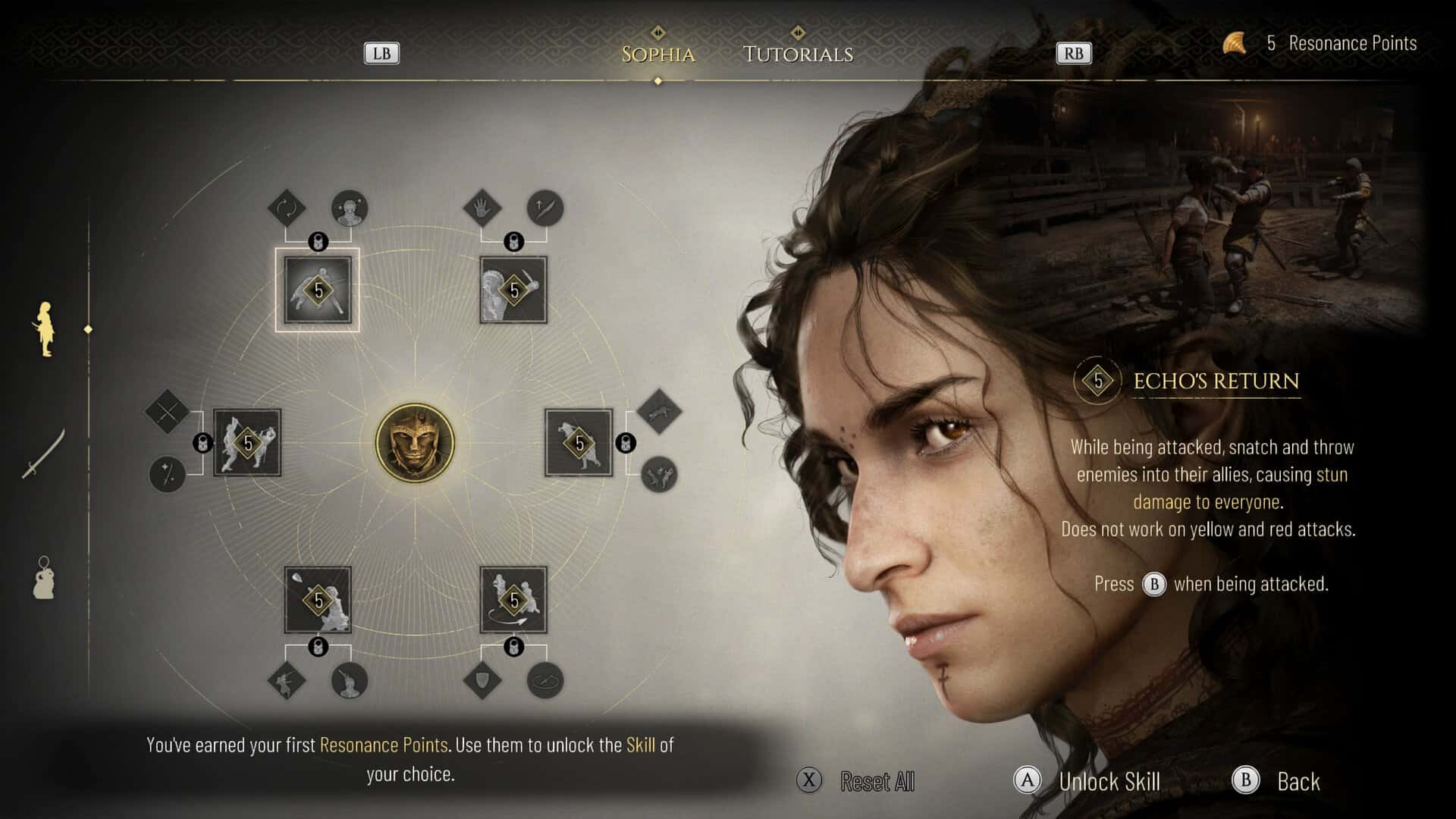
There is, for some reason only God can know, a skill tree in this game along with seven different swords that have slightly different abilities that have no impact on how you play. The skill tree is filled by collecting Resonance points, which are golden clam shells (?) that you find on the ground in random places. It takes a very long time to collect enough to level anything up, but there are also only 15 total skills on the tree and half of them I’d call flat out useless. There are also dozens of collectible passives with modifiers like “slightly increase sword damage” that all stack together.
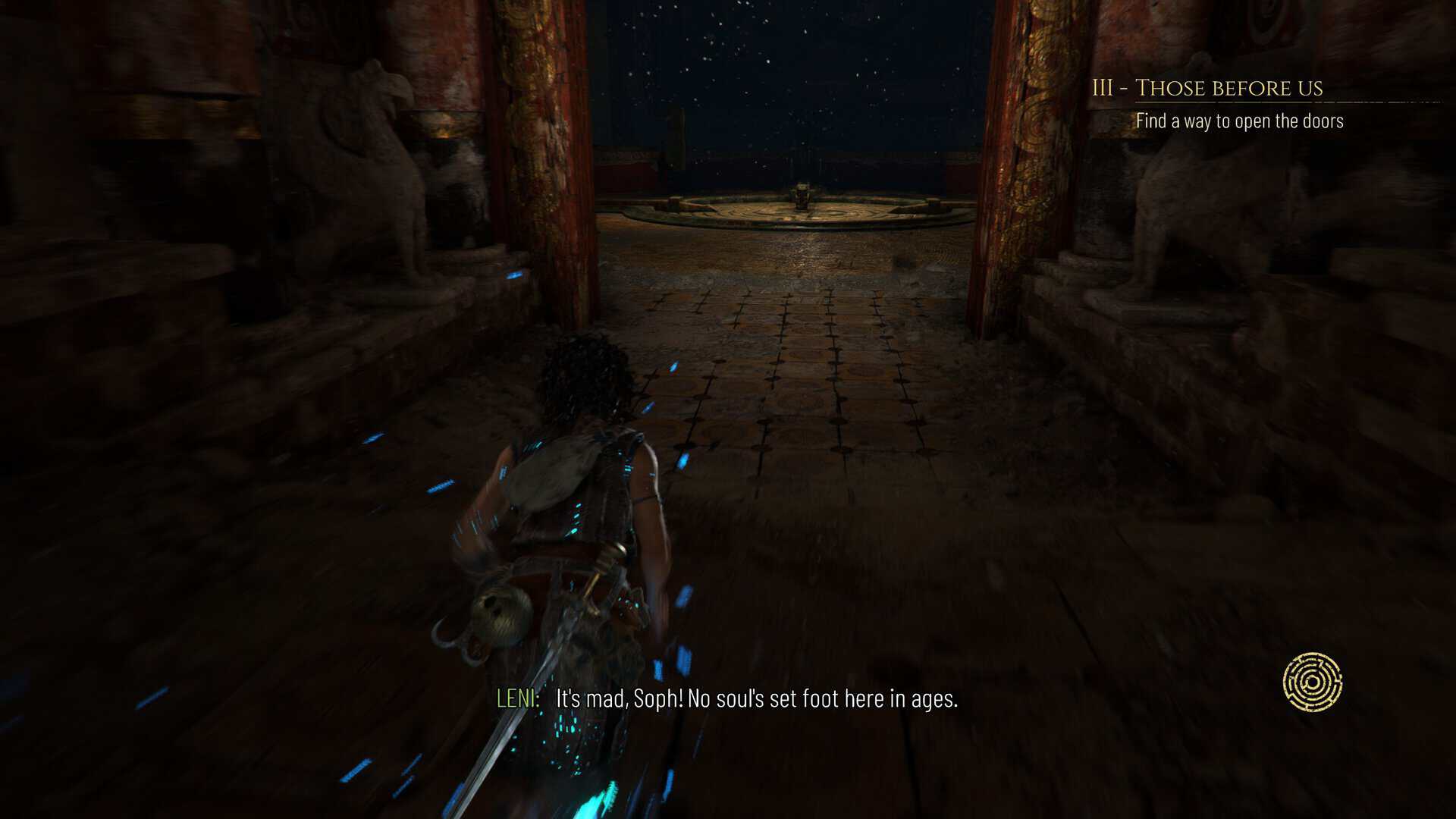
There’s a skill on the tree that I got about halfway through that allows you to parry red glowing attacks as well as yellow – this completely broke the game. Now that I was able to parry any attack, I got through 90% of combat encounters without getting hit once (I was playing on normal difficulty). Combat became even more of a slog because it had even less weight. It should be noted that when you die, no matter if from combat or falling, you start exactly where you were with no consequence. I want to say that the developers seem to have taken no notes on what gamers have outspokenly said they don’t like in games over the past six years, but that can’t be the case; Resonance so exactly hits every known-to-be widely hated game mechanic that the entire game feels like a bad prank.
There is also a narrative problem that drove me crazy throughout the whole duration of Resonance. As you keep using the magic sphere to unlock doors and solve puzzles that characters keep saying loudly can only be done with the sphere, every time you walk through one of these ancient doors into a new area there are a bunch of soldiers already looking for you. I am dumbfounded. I tried and tried to make any of it make sense, but soldiers seem to exclusively appear from places they couldn’t possibly be with no explanation.
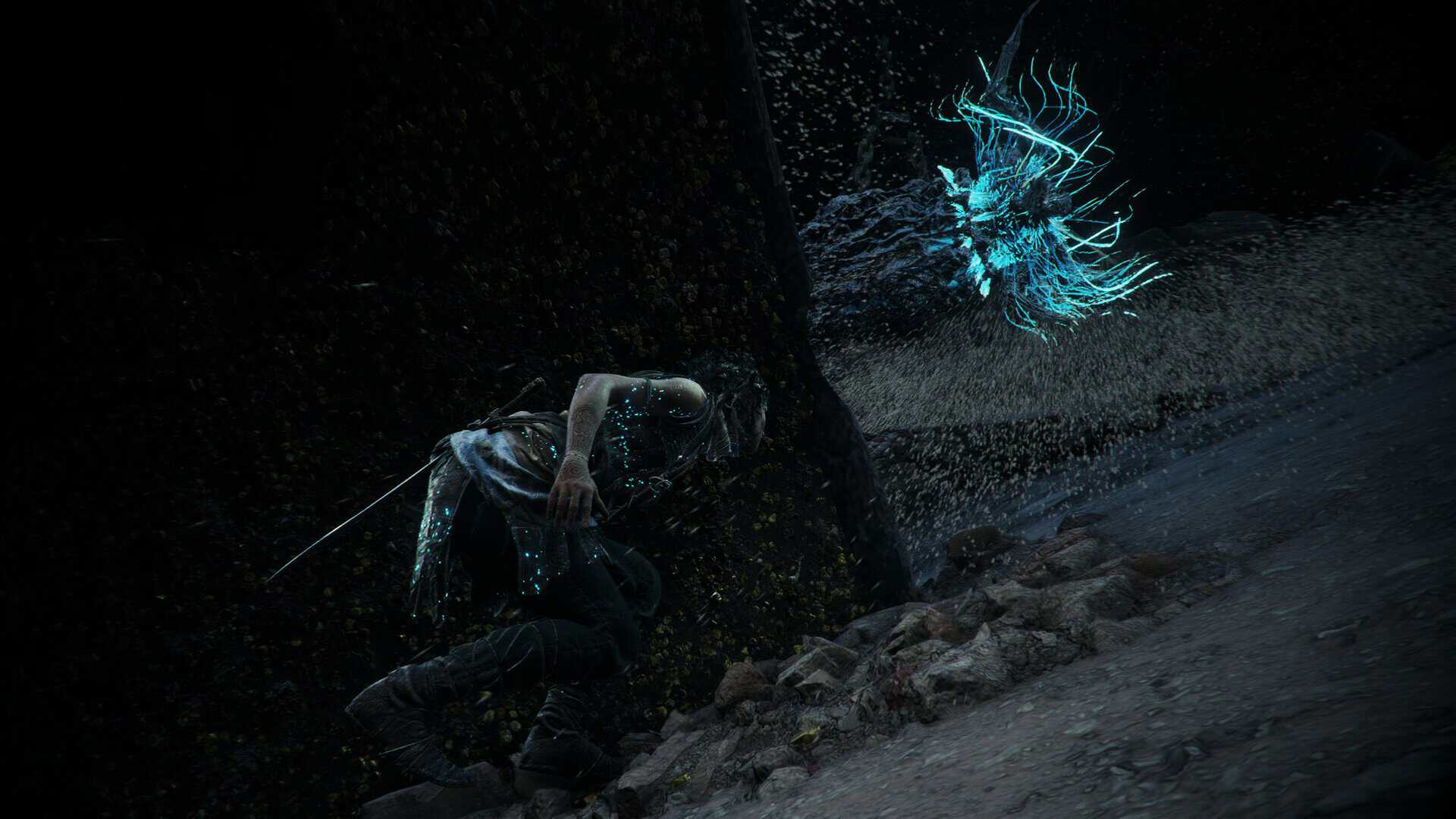
About seven hours into the game, there’s a big shake up and Sofia is tossed into the underworld of Hades. This first section in the underworld was the only part of the game I enjoyed, and it’s probably because it’s the only part of the game that plays even remotely like the previous Plague Tale games. Once down here, Sofia finds that if she runs she creates blue particle trails on the floor behind her, but they don’t appear if she sneaks. She is introduced to a monster that is original to this game and not based on any existing mythology everyone calls The Creature – it’s never given a name or explanation. The Creature is a worm-like monster made of rocks and crystals that appears out of pipes and holes in walls with a huge Demogorgon-like mouth that threatens to swallow Sofia whole. Every 20 seconds it breathes the particles in the air in, and cannot see, so it lunges towards any hint of blue trail it finds instantly.
This first 45 minutes or so in the underworld was thrilling. There was strategy, creativity, and actual scares. As the creature patrolled the vast caverns with many pathways and things to hide behind, I had to plan out routes and timings to avoid it breathing my scent and finding me. Around lights from lanterns I was safe, so there was a strategy to run to the next lantern if you could make it and let The Creature try and fail to eat you. There was also fun in purposefully leaving a blue trail in one place, waiting for it to track the scent and attack the location, and taking that time to make a big run to the next safe point. Another layer was that the creature can only track the trail, which is only on solid ground, so jumping or grappling across a gap confused it and bought you another second. There was also some light manipulation by giant mirrors to stun the Creature which I loved, although I would soon come to hate them.
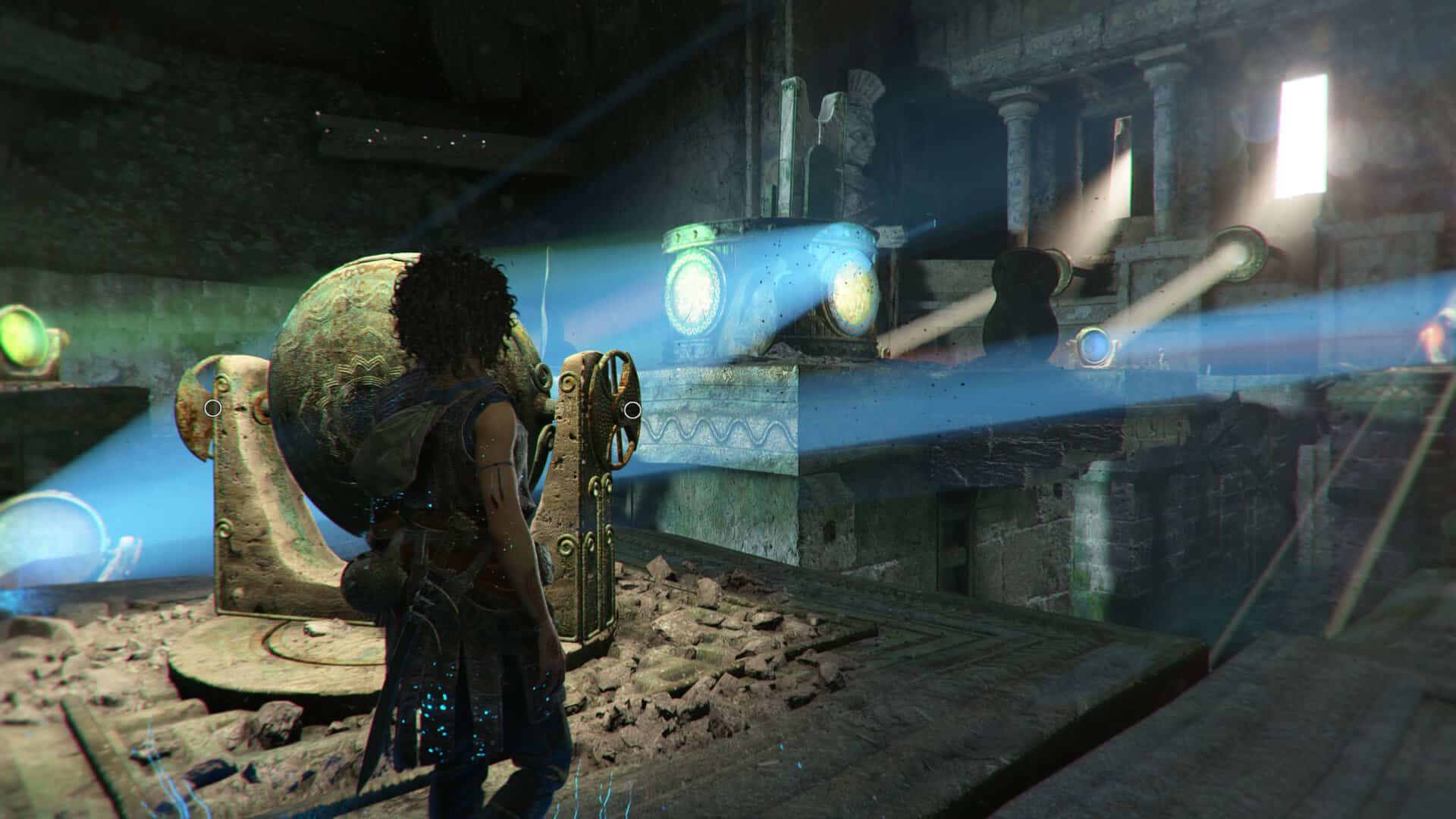
After escaping The Creature, I reached Daedalus’s workshop where I gazed upon the remains of the labyrinth. I was optimistic, thinking the game might end on a high note, but I was naive; there were still over four hours of game left. Unfortunately, the rest of the game would then flip between giant mirror puzzles, which were anywhere from agonizing to boring, and then being chased by the same Creature again, and then being chased by the Creature while solving the same mirror puzzles. I am not exaggerating, this is how the rest of the entire game went, all the way to the end. You won’t believe this, but every time I made it to a new secret chamber in the underworld there were another 20 soldiers here who had no explanation for how they got there. And they are the soldiers from above – Sofia has conversations with a few – but they talk like hundreds of them just walked in here no problem.
Spoilers incoming, so skip the next two paragraphs if you’d like. Later in the game, because of the villain and his insane vendetta, a major character is killed. 30 minutes later, Sofia has to team up with him after a boss fight during which I was not hit once. Then the next hour is the villain whining about how he’s not actually a bad guy and how he’s really nice actually, and yes, the game treats this redemption seriously, with the villain dying as a hero at the end, to which Sofia cries as if she’s lost a close family member. This, again, follows decades of his abuse and neglect for her.
Additionally, the traitor is revealed to be a character who has had two lines thus far and that I haven’t seen for 10 hours of gameplay. It’s still treated like some huge reveal. To finish airing my grievances, there is no minotaur at the end – only a sequence where you must use many mirrors to fight many Creatures. An entire game of buildup about fighting the minotaur, and it doesn’t exist. Sofia also has flashbacks to the story of Theseus and Ariadne, which the player plays through and are somehow worse than the main story, which was full of so many narrative holes it’d sink the ship of Theseus in seconds. Sofia kills hundreds of faceless grunts, then when it comes time to kill the person who made it all happen, she can’t do it because she’s too noble. Then fighting Irene at the end, she died saying she was proud of how she trained me. I was aghast at how stupid it all was. Resonance made me yearn for the narrative cohesion of the Star Wars Sequel Trilogy.
On one hand, Resonance ran perfectly on my PC, which has an RTX 3080 and Ryzen 7 3800x, on ultra settings in 1440p at a locked 60 FPS. I am shocked it actually ran that well, considering how graphically intensive it is, and I only experienced a few glitches with enemies walking or falling through terrain. No frame drops, and no bugs that prevented me from playing, though. Unfortunately, the fact that it ran that well highlighted the very boring visuals, music that sounds like it was ripped straight from Assassins’ Creed Odyssey, and uninspired repeats of the same few dozen objects and textures for over a dozen hours. Graphically, yes, it looks nice – but there is very little impressive artistry on display here. This is very sad coming from the makers of the previous Plague Tale games, as those titles excelled at music and visual design. Not one iota of that talent made it to Resonance.
I have no wish to keep beating Resonance: A Plague Tale Legacy over the head, as I truly hope to forget some of the most miserable hours of my gaming career. It is boring, poorly written, badly paced, full of cardboard characters with no personality, held down by generationally-bad combat and a useless RPG-lite system, and full of the same enemies and puzzles over again copy-pasted a hundred times. I do not recommend this game to anyone, ever, under any circumstances for any amount of money. Your precious hours on this planet are too valuable to spent in this sinkhole of despair. Like Sofia to Leni, I will end this by begging you to get out while you still can.
Nirav reviewed Resonance: A Plague Tale Legacy on PC with a provided review code. This review is based on the version of the game available at the time of writing and our score will not be changed.
- Score
- 2/10 Dire - GameObserver Does Not Recommend
- Summary
-
Nirav says: Resonance puts fully on display the rock bottom of what gaming can offer: from design to combat to characters to story, few games have ever done it worse.
- More
- GameObserver's Review Policy



 ObserverCrew Picks
 bserver
 bserver