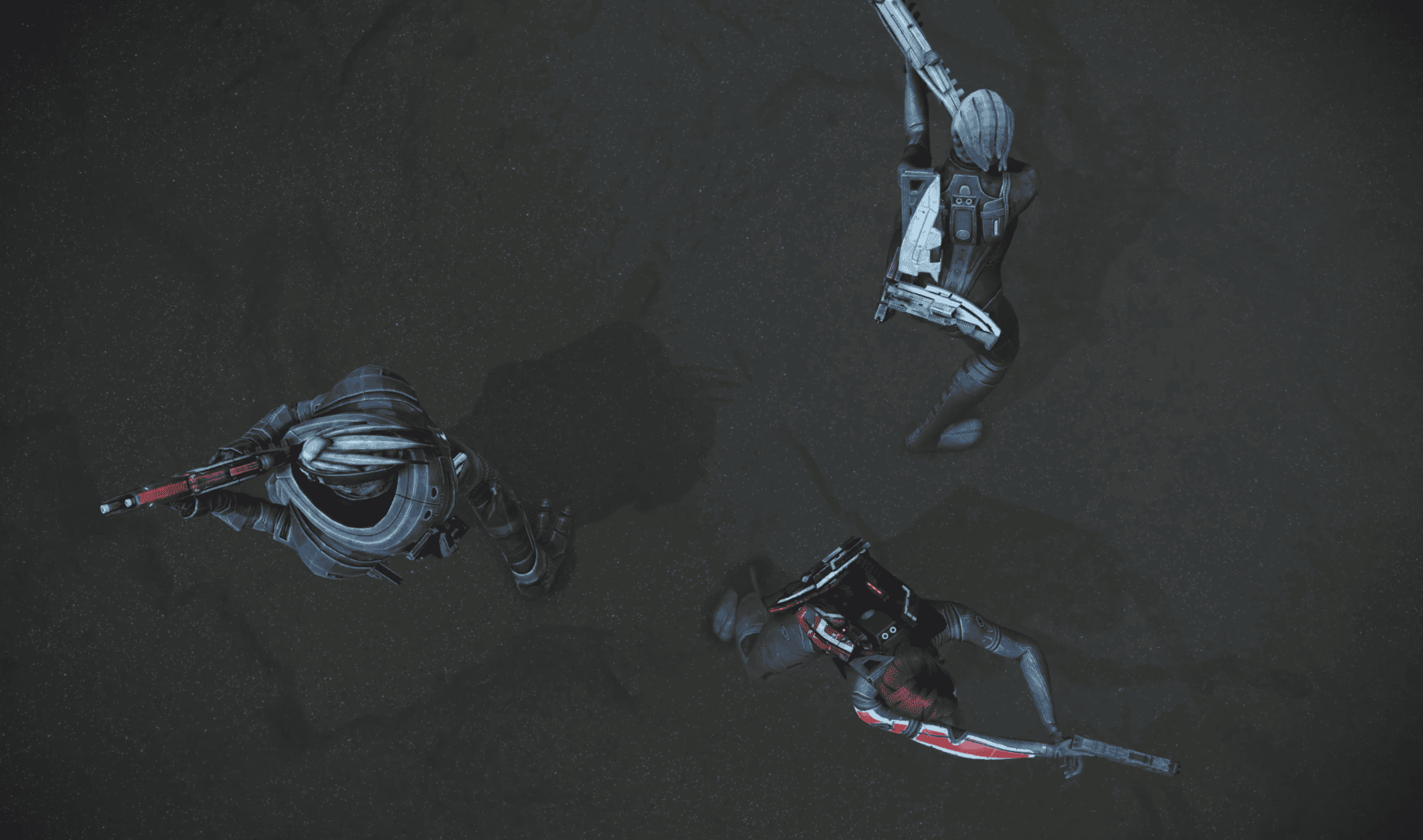
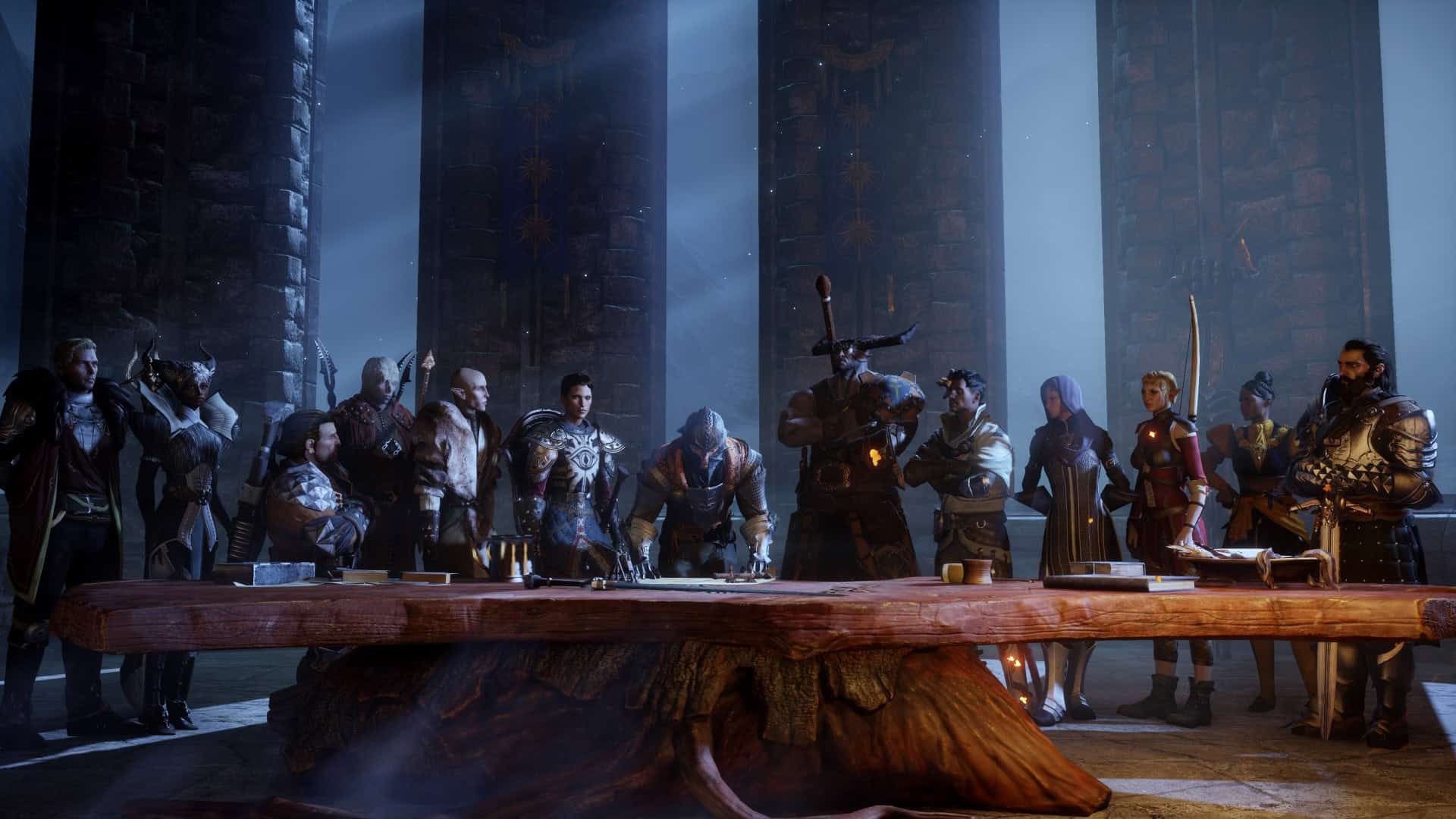
The moment I heard Shepard’s dry footsteps echoing through the stillness and the wind of the Peak 15 station on Noveria was when I knew Mass Effect was something special. It had taken me three attempts to get into the trilogy; I was new to gaming and was still learning how to navigate RPG maps, so I kept getting lost on the Citadel. Despite my frustration, I had previously played Dragon Age: Inquisition and loved it, so I decided to give it one more chance. The eerie atmosphere and suspense of the storyline were engaging, but it was an overhead shot in one of the cutscenes that sealed it. I hadn’t expected a video game to feel so cinematic, and the angle made me feel, along with Shepard and my companions, that we were being watched. Since then, I have become deeply invested in the Mass Effect community. I became active in the fandom on social media, started freelance game writing, where I reported on BioWare and the franchise, among other things, and eventually joined We Are Mass Effect, a fan initiative dedicated to the analysis and news regarding Mass Effect.
Which is why the announcement of BioWare’s closure and cancellation of the next Mass Effect game this past October 21st is still hard to come to terms with. I got into BioWare at the end of 2024, and since then, I have played every Dragon Age, Mass Effect, and Knights of the Old Republic game several times. The excitement and hope for all the possibilities the future of the franchise could bring had been suddenly ripped from us with a quiet and heartbreaking post on BioWare’s social media accounts. Many players have expressed their lack of surprise at the news, that this was a fate that had long loomed over BioWare as a result of the studio’s troubled decade of releases. For a moment after the multi-billion-dollar buyout, the studio seemed to have escaped it, but it has now succumbed. It’s the culmination of a long and painful relationship with its parent company, Electronic Arts.
Based on Jason Schreier’s report for Bloomberg last month, EA never quite understood BioWare. The studio’s acquisition was part of a corporate transaction involving the private equity firm Elevation Partners, which had acquired BioWare and Pandemic in 2005, bringing them both under the umbrella of VG Holding Corp. In 2007, Elevation’s co-founder John Riccitiello left to become Chief Executive Officer at Electronic Arts, which eventually acquired VG Holding, bringing BioWare under EA’s ownership. Despite their relationship beginning almost two decades ago, they never seemed to get along. It was a company driven by financial performance absorbing a studio built on RPGs, a genre that EA’s leadership never seemed to understand. In a 2025 GamesRadar article, EA’s stance towards RPG players was described by David Gaider through the dismissive notion that “the nerds in the cave would always show up for an RPG because it was an RPG.” This perspective is not only frustrating to many but also unfounded. In 2014, Dragon Age: Inquisition made history by winning game of the year at the first-ever The Game Awards and has overall sold over 12 million copies. It is an attitude that reflects the very clear disconnect between EA’s leadership, their developers, and the players.
Over the past decade, BioWare’s development history has been marked by difficult production cycles, constant budget constraints, layoffs, and leadership changes. Even the infamous expression “BioWare magic”—which refers to the studio’s ability to bring the games together during the final months of development—has become a shorthand for the unsustainable work conditions developers experienced behind those victories. These conditions should not be celebrated or glorified as evidence of extraordinary creative work. They should serve as a cautionary tale about the major structural problems that have defined the studio’s history.
By the time of the closure announcement, BioWare had reportedly around 50 developers, following the layoffs after Dragon Age: The Veilguard failed to meet EA’s sales expectations. For the first time in its history, it had become a one-game studio. All of their resources were focused on the next Mass Effect, which we now know, thanks to the leaked trailer on Reddit a day after the closure announcement, was Mass Effect: Universe. The leak sparked a great deal of speculation about the game’s development, and at the same time, it added even more to the #SaveMassEffect petition, which had been gaining rapid momentum. Created on October 21st, the Change.org petition gathered over 100,000 signatures in just three days since its creation and is now at over 330,000 signatures. It has become one of the largest and fastest gaming petitions in video history, having more signatures than the Don’t Kill The Disc petition created back in July.
My friend Ariel, founder of We Are Mass Effect, knew we had to take advantage of the momentum created by the leak, and along with creator Kala Elizabeth, we decided to bring the campaign into one of the most visible places on Earth, Times Square, New York. EA has a track record of shelving beloved and established IPs, a frustrating practice for many fans who would rather see them licensed instead of left to collect dust. A very recent example is the Dead Space franchise, which had a successful remake back in 2023. Despite this, there have been no further announcements about a next installment, and it has officially become part of EA’s infamous graveyard of IPs. We felt that taking #SaveMassEffect beyond online spaces and putting it somewhere instantly recognizable was one of the few ways we could cut through the noise and show that we weren’t willing to just accept BioWare’s fate.

The billboard brought a surge of attention; the petition started getting an outstanding number of signatures, being was covered by major gaming outlets such as IGN, Kotaku, and Eurogamer, and in We Are Mass Effect, we saw an extraordinary increase in all of our followers and engagement overnight. People wanted to follow the movement. They wanted to know what the next initiative would be so they could be part of it. Fans from all over the world organized around a shared desire to stand up for BioWare, its people, games, and legacy.
As layoffs and studio closures are becoming what seems like an inescapable reality for most developers, it is heartbreaking to see BioWare become collateral damage of corporate decisions and financial restructuring. As Jason Schreier reported for Bloomberg, the studio closure came to be after EA decided to prioritize the Star Wars game Battlefront 3, which hasn’t even started development. Their multi-billion-dollar buyout has left the company with over $18 billion dollars in debt, and as reported by The Wall Street Journal, bondholders are challenging EA over $1.4 billion in debt, adding even more pressure to EA’s leveraged buyout.
And behind these decisions made by a few, many suffer the consequences. Online spaces are often the beacon of fan-led initiatives, but the distance and anonymity the internet provides can also strip away the humanity of this news. Hundreds of people have been impacted by EA’s restructuring and have lost their jobs. In BioWare’s case, the developers also lost a project they had spent years pouring their passion and creativity into. It is easy for these situations to just become another headline or another round of discourse. But behind it, there are real people whose lives have been impacted and changed. Bringing #SaveMassEffect into physical spaces was also in part an attempt to break that cycle. We wanted to make the campaign visible and to use its shock value to build momentum, and also to remind people that real livelihoods have been affected.
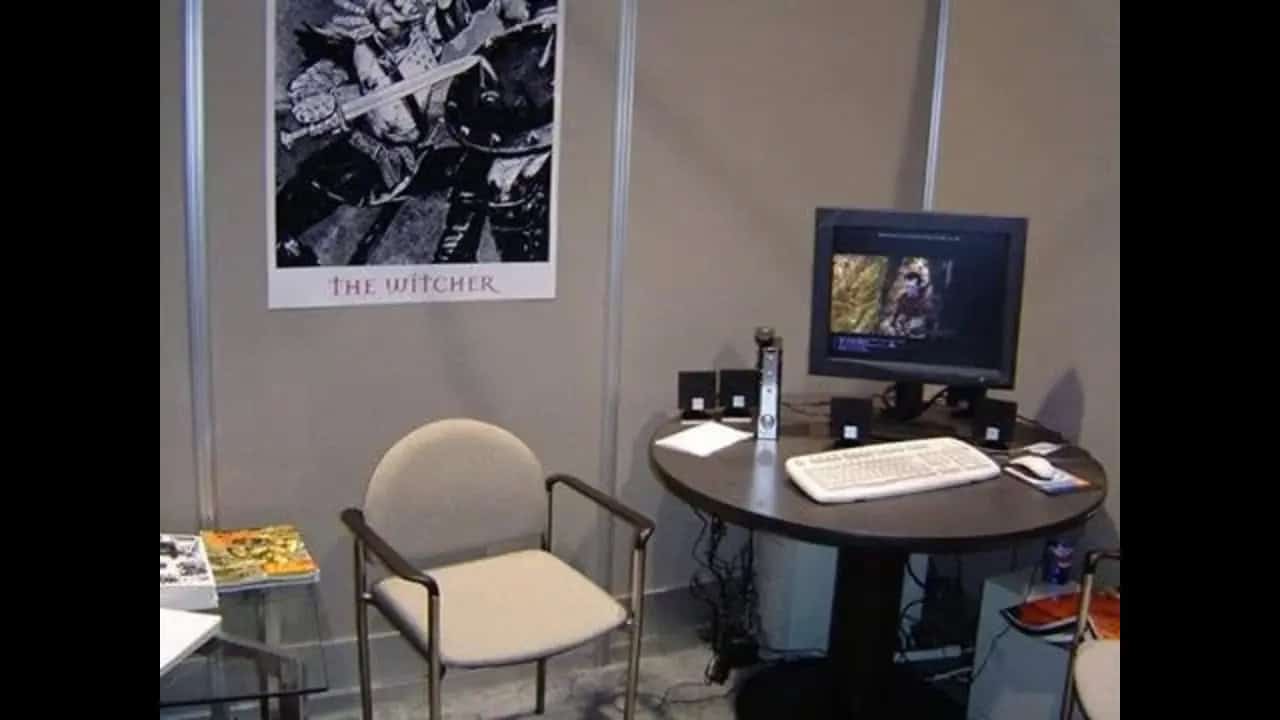
No one knows what the future holds for Mass Effect, nor do we know whether our efforts will actually matter in the long run. What I do know is that the response to the movement, from fans, actors, contributors, other developers, and even politicians, has shown the long-lasting impact that games and the studios behind them can have. BioWare helped shape the gaming industry, and its legacy extends far beyond its own franchises. In a recent tweet, Michal Nowakowski, co-CEO of CD PROJEKT RED, shared how BioWare lent them their engine for The Witcher 1, and even gave them a spot at their booth at E3. The Witcher would go on to become one of the most impactful franchises in gaming, also changing the industry forever. BioWare’s contributions have impacted the field in ways that cannot be measured through sales or quarterly earnings.
For me, BioWare was the reason I got into gaming in the first place, something that has changed my life for the better. Now, through We Are Mass Effect, I find myself fighting for this studio and the people who have given me so much. It is heartbreaking to know that the developers who have created these worlds and characters that we love so much have so little say in what happens to them. But if there is one thing that I hope comes out of #SaveMassEffect, it’s a reminder that games are more than just intellectual property and studios are more than just financial assets. We need an industry where workers have resources, stability, space, and freedom to keep creating without the constant threat of having all of it taken away by executives far removed from the creative process. BioWare’s closure is gut-wrenching. They deserve to be remembered as more than a casualty of corporate restructuring. Even if nothing comes out of #SaveMassEffect, I hope it at least pushes us towards an industry where creative legacies and the people behind them stop being treated as disposable.



 ObserverCrew Picks
 bserver
 bserver