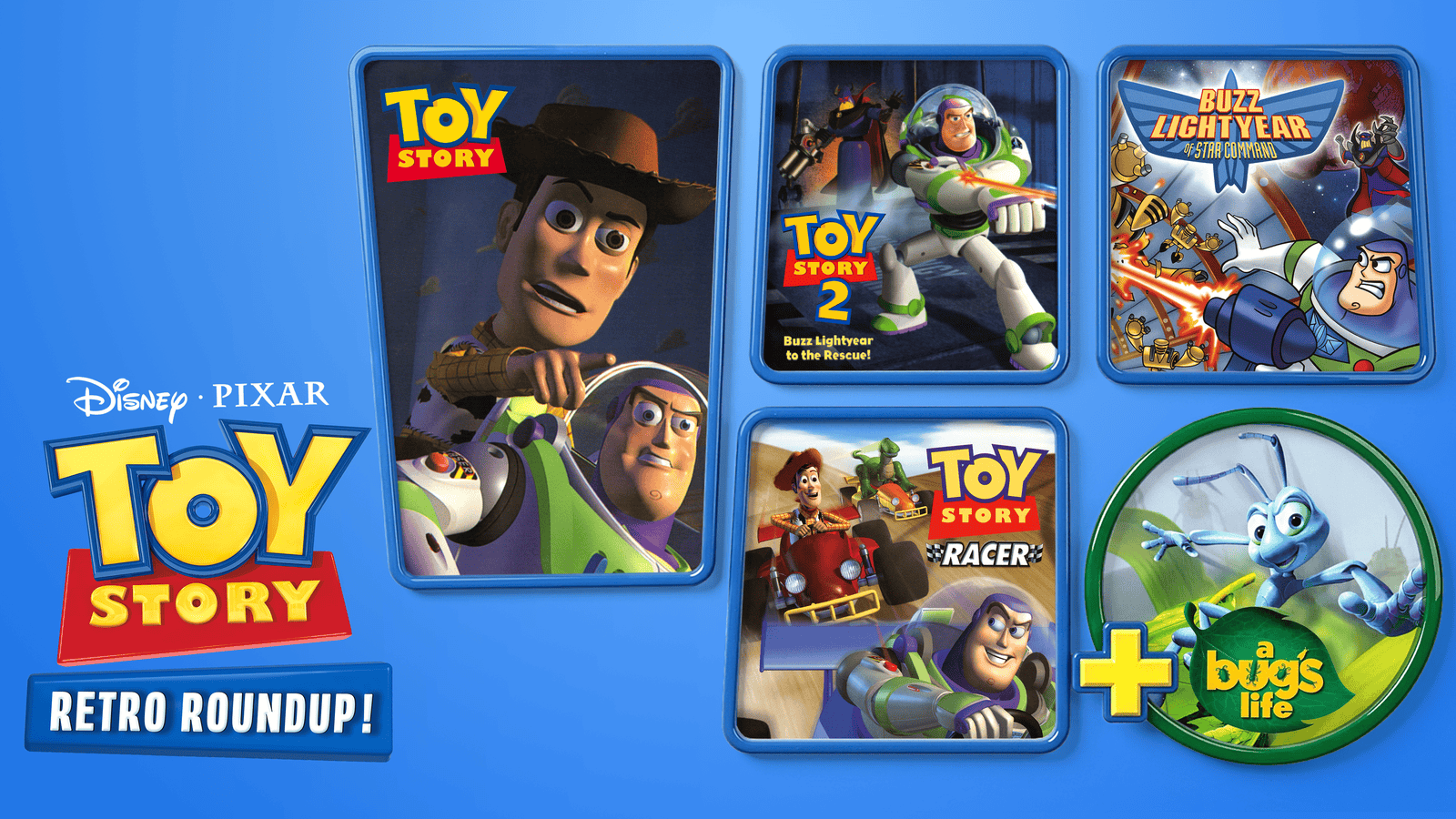
Hard work pays off. Dreams come true. New licensed games are getting panned, while old ones still rule. No matter how long I write, somehow everything always comes back to this. I got my start writing about games with a series of retrospective articles on movie tie-ins, and now, for the second time this year, I get to write about a collection containing licensed games from my childhood.
Though licensed games always were the medium’s laughingstock, you’ll usually find a few among all-time lists, especially when talking about childhood favorites. I’m grateful mine got re-released by one of my favorite developers: Digital Eclipse. Their works (such as Tetris Forever or Llamasoft: The Jeff Minter Story) go beyond game preservation—they’re all about game appreciation, providing all the tools necessary for players to best enjoy the upcoming experience. History, context, contemporary word of mouth. Then, you decide for yourself.
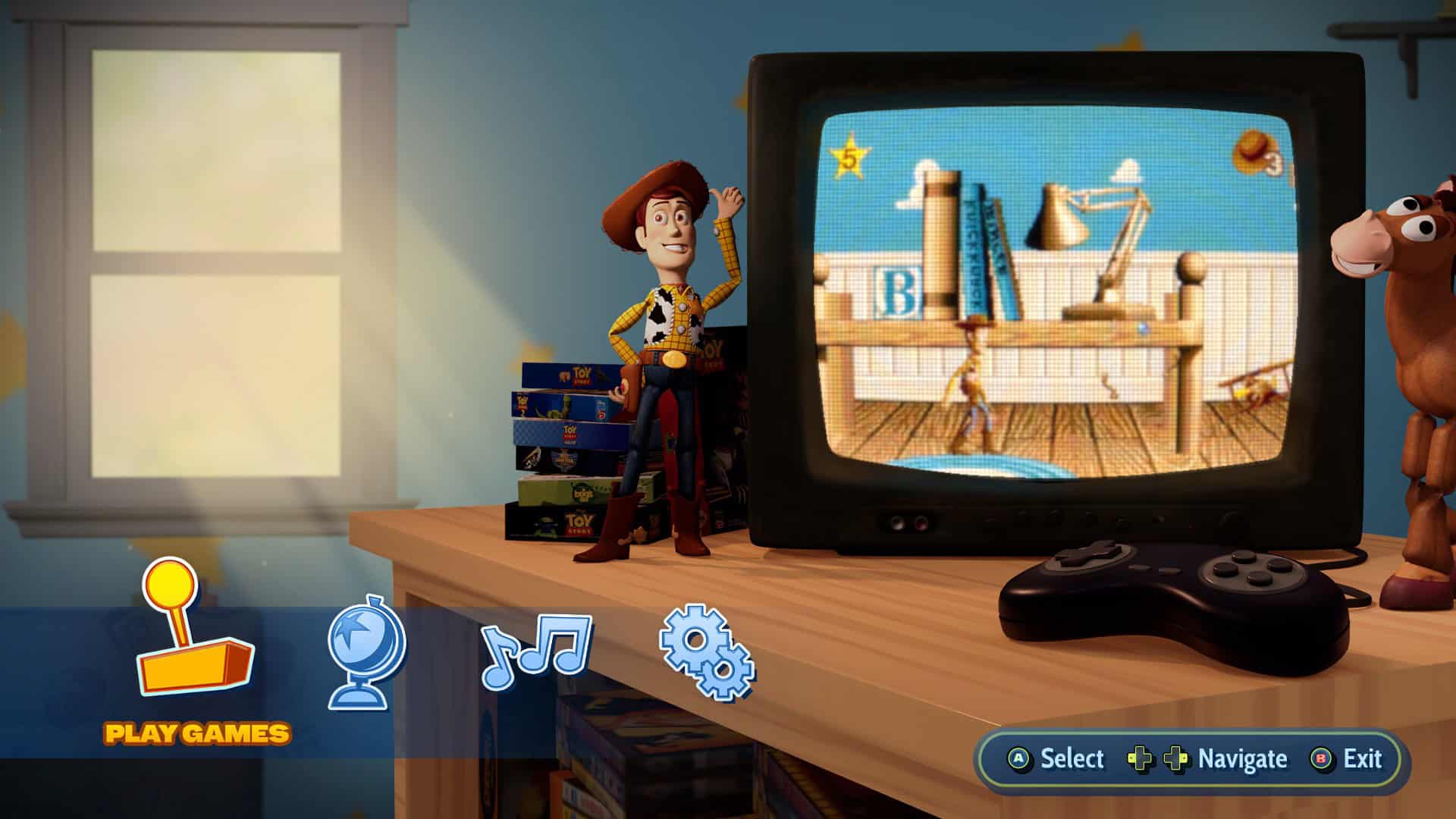
This was always going to be a challenge for games found on Toy Story: Retro Roundup!, and the results are more mixed than their previous collections. Inside the Toy History menu are a selection of design documents, 3D renditions of the original game boxes, and some promotional material for the games and movies. Inside the games you can also find their respective instruction manuals. All brilliant tools for bringing you into that aforementioned mindset, but the main course of knowledge, as always with Digital Eclipse’s work, would be the video featurettes.
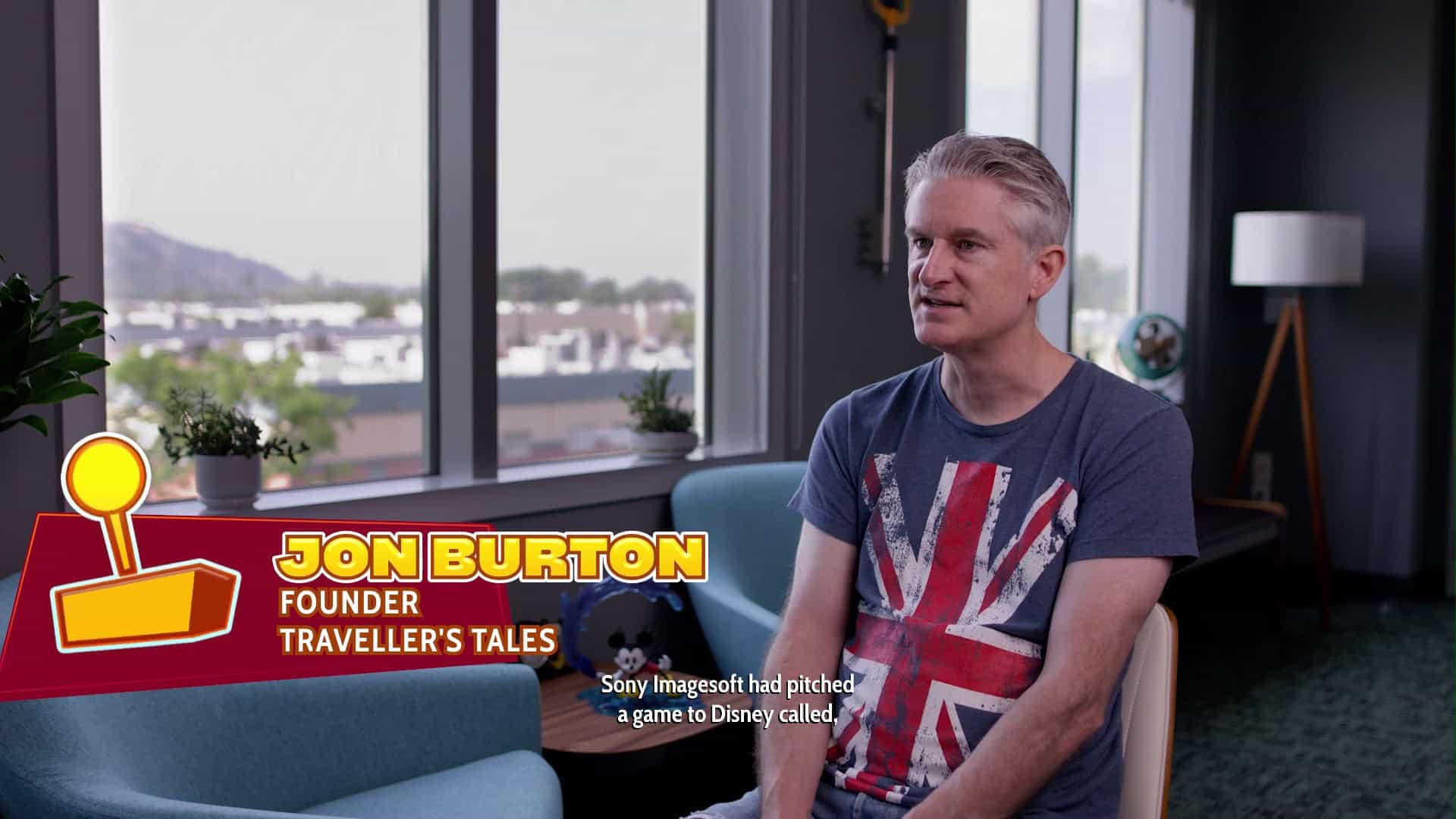
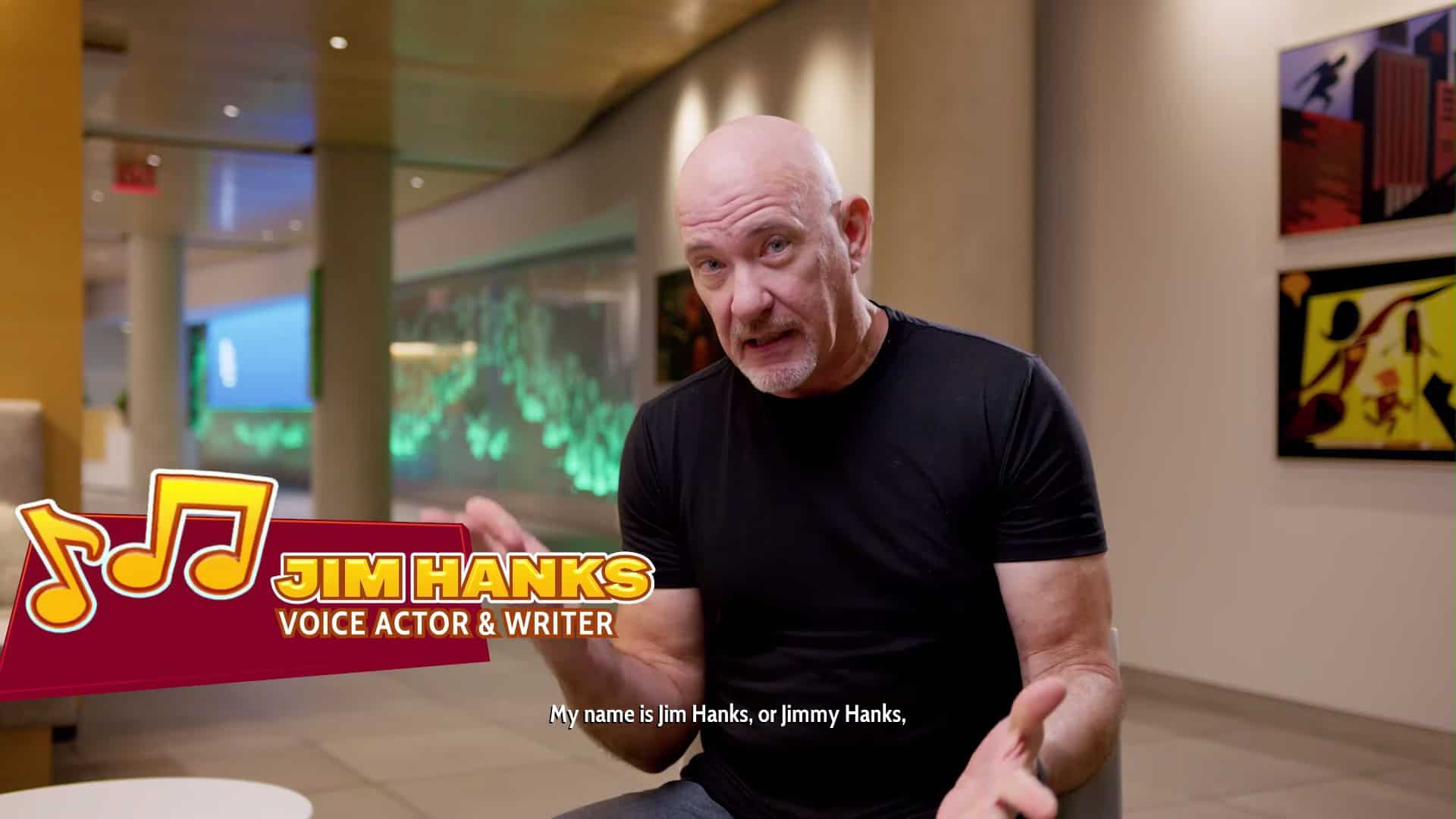
On one hand, the stories from Jon Burton, the founder of Traveller’s Tales (the developer behind the mainline console games on the collection, nowadays most known for their Lego games, some of which were developed through mandatory crunch periods and yelling from Burton himself as reported by Polygon), are easily the best parts of Retro Roundup! They involve a lot of twists and details of working with Disney, the inspirations that went into each game, or how A Bug’s Life influenced the later 3D games from the studio, justifying its inclusion in the collection. These are followed closely by a lovely interview with Jim Hanks, who voices Woody in all non-movie Toy Story media, and the insight from Digital Eclipse developers Mike Mika and Chris Kohler, who were working on different Disney games for the Game Boy around the same time.
On the other hand, the lack of any input from anyone from the now-closed Tiertex Design Studios who worked on the Game Boy titles which make up half the collection is very disappointing. The video package dedicated to these titles is the final one going from top to bottom, and it feels a bit like grasping at straws to say something interesting about them from people who know them tangentially. The Game Boy Color version of A Bug’s Life does not even get a mention in the videos! As a result, that part of the documentary did not capture my interest as the ones before it did, leading to my lack of enthusiasm for these releases.
The development process as presented in the documentary feels a bit saccharine. Burton is undoubtedly an important person to interview for this collection, but he shouldn’t be the only one. I appreciate the perspectives of the Digital Eclipse team and Luigi Priore (the VP and General Manager at Disney & Pixar Games), but from having read and listened to my fair share of stories about licensed games from that period, I know there’s little chance it was all sunshine and rainbows scored by a cheerful rendition of “You’ve Got a Friend in Me.” It’s why I think it’s important to focus on the shortcomings of this part of Retro Roundup.
I was also shocked to see arguably the most recognizable parts of the games nowadays—their amazing soundtracks—go completely unacknowledged! There is a music player, and while I am very grateful to have clean versions of them included for free, to me there’s no way to talk about these games without talking about how memorable the music is. Licensed games, especially Disney ones, tend to have unique and often equally impressive takes on the sound of a given world, with earworms that similarly last through the decades.
The work of Andy Blythe and Marten Joustra is especially noteworthy. The duo composed for three games found on the collection: Toy Story, A Bug’s Life, and Toy Story 2: Buzz Lightyear to the Rescue. You’d be surprised just how many of their works appear in the background of your favorite YouTube videos. They’re still actively making music together too, releasing two EPs just this year! If you miss their sound, check out their Mad About The Bass series of EPs. They’re absolutely magical—it’s like a whole new world of incredible grooves that captivated me for over twenty years.
Though I was left wanting more from the featurettes, I still felt I was primed to enjoy most of the games included in Retro Roundup. Each one has appropriate, good-looking screen filters, rewind and save state features (importantly, with three save states to pick from instead of just one like in some other collections), and, though I never used them for my playthroughs, I knew I could always fall back on the built-in Rex’s Cheat Codes menu, with a few thoughtful modifiers that can make future playthroughs a lot smoother. Worth noting as well, several regional versions of games are included if they were meaningfully different. The Super Nintendo Entertainment System version of Toy Story even has a newly made “Ultimate Version,” containing all the content found across the versions in one package.
The most impressive quality-of-life feature is undoubtedly the Practice Mode: a collection of videos for each level of all games (except the kart racers, with a very good reason for that exclusion; more on that later) that the player can jump into at any time. Most of the 2D games are platformer-adventure hybrids, forcing the player to find items and pathways with a strict timer. I often found myself save-stating and quitting to check what to do next. It’s also a great feature if you’d like to jump into any one level, or a part of one. One of the best features of level-based games made even better.
Before anything, it’s worth noting that I have 58 hours on the collection, and have 100%ed (nearly) every game. I’ve not encountered any emulation irregularities or bugs unique to the used emulators. The collection starts off strong, with the original Toy Story movie tie-in for the Sega Genesis, and its subsequent ports for the Super Nintendo and the Game Boy. This release gets the most time in the video packages, and I don’t think I’d have found half as much fun as I did without them. From a story about how the character animations were delivered to the team by Pixar merely two weeks before it was meant to ship, to Burton showcasing the editor used to create the levels, I found plenty to appreciate in what would otherwise likely be a frustrating few hours.
I could feel the ambition in all the various gameplay modes and early 2.5D visuals (previously used in the studio’s Mickey Mania, another blast from my childhood past). With the most levels and the best soundtrack, the original Sega Genesis version remains my favorite, though I do love the colors and sound effects on the Super Nintendo Entertainment System version. But you gotta play the Day-toy-na level unique to the Genesis, how can you not? And of course there’s the Game Boy version. It sure exists.
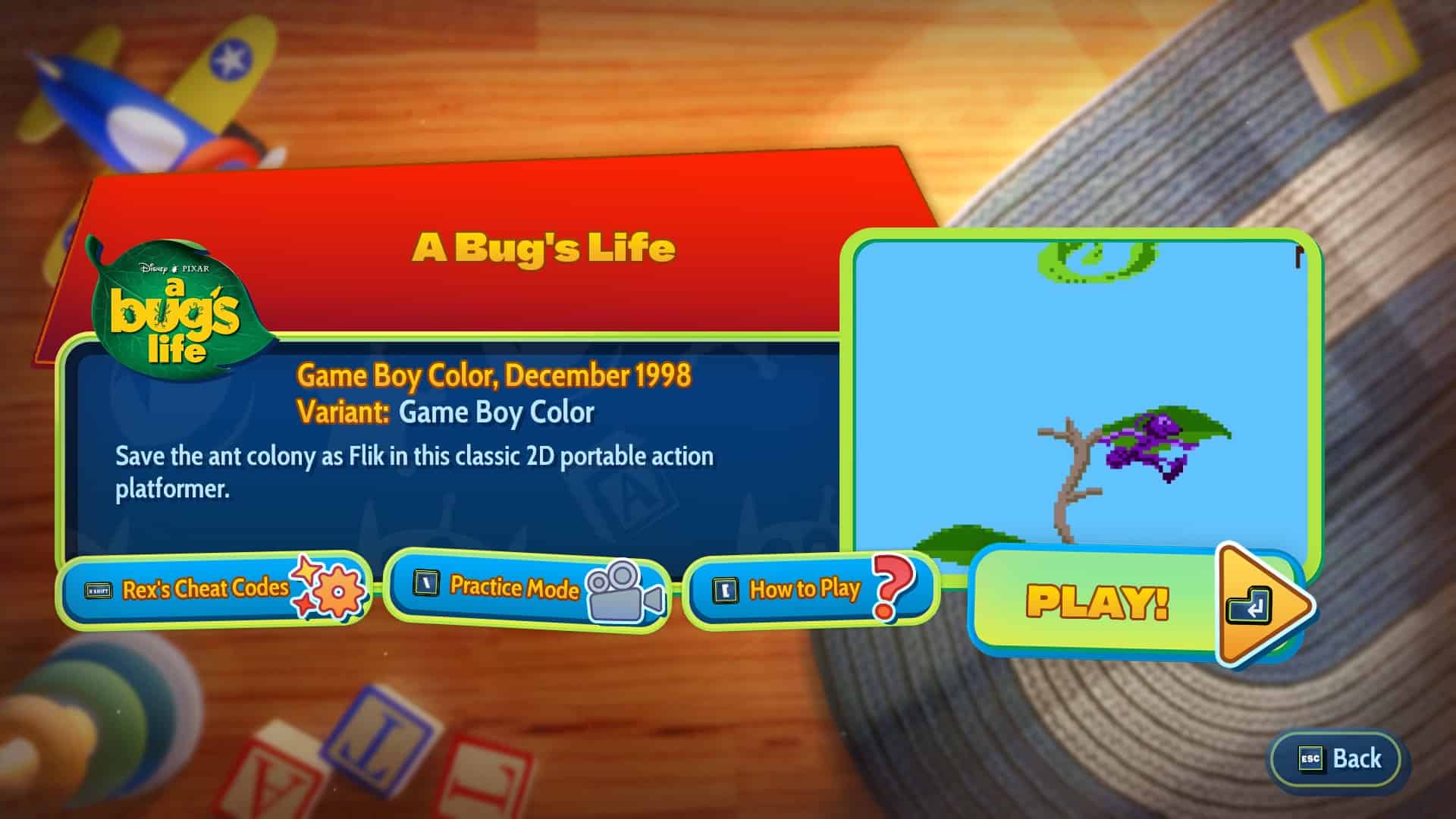
I then moved on to A Bug’s Life. Short note on the Game Boy Color version: enemies are too fast for the small screen, and your animations are too slow, even if you press an attack on the first frame of them appearing. It’s really not great, and my least favorite game on the collection. In contrast, the console version (the best-selling game on the collection) is easily my favorite! I always knew I liked the music and its unique systems, but I found a whole new appreciation for the game (and the movie) as a whole on this latest playthrough. It’s wonderfully confusing; you can turn any seed into any one plant you’ve collected tokens for, and more tokens allow for upgraded versions of a given type of plant, with each tier often having its own uses.
Say, the basic tokens. Every level restarts your progress, so you start off being able to plant a mushroom that acts as a spring; the next token allows it to turn into a propeller that has more verticality than the next tier, which is a dandelion you can use to glide, finally the last upgrade is a cannon that sends you flying two times higher than the propeller did. Each stage has a limited amount of tokens of each type, meaning you’ll only ever see the highest tiers for some of them on one or two levels, and the variety that comes from figuring out how to use them to reach collectibles was frankly a stroke of genius. I also love the general movement tools, from the abdomen stomp to the humble kick, which I realized exist after reading the instruction manual for the first time despite playing this game probably hundreds of times as a child.
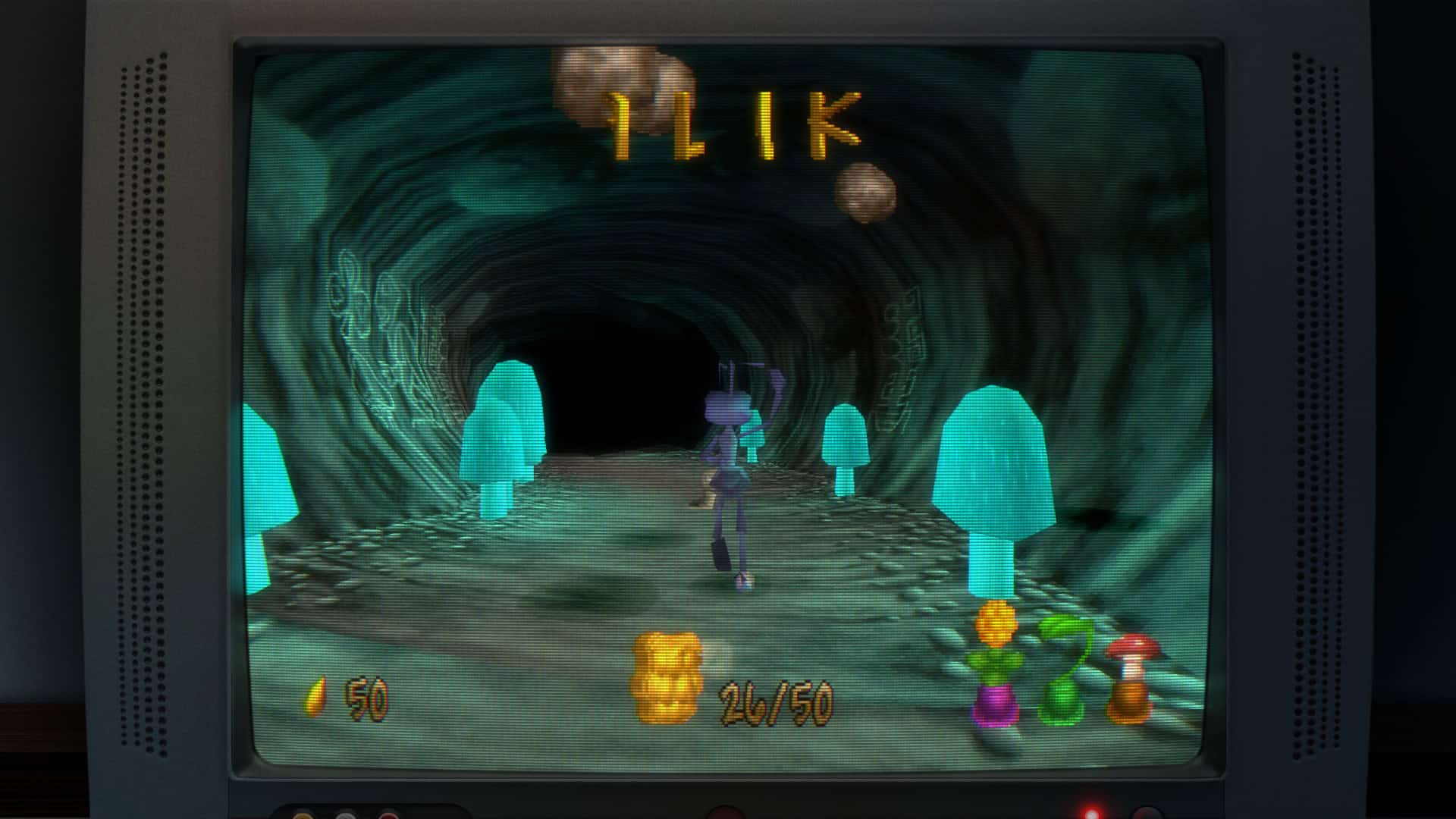
One thing Jon Burton talks about is how much he loved working with limitations, and I think already, two mainline games in, that’s very palpable. To enjoy a collection like this, you have to feel the want to play around within limitations and ideas that come from them. One of the three medals you can unlock in any one level of A Bug’s Life is the Enemy Medal. Once you unlock enough tokens, you can spawn in a golden berry (sometimes found floating around) which prevents enemies from respawning. The medal is obtained by clearing all enemies, making the relatively short runtime and small levels of the game feel way more purposeful. A great bit of recontextualization, and just one example of how limitations frame each console game on the collection.
In contrast, the concept of working within limitations feels alien to the first two Game Boy games, as if the real goal there is to just hit certain story beats, movie character inclusions, or just fit bits from the console games into a hyper-crunched version. I think this is seen best in the Game Boy version of Toy Story, where one tough platforming challenge is ported 1-1, but there is no extra life hiding at the end of it. In fact, there’s nothing. So that whole bit could just have been removed.
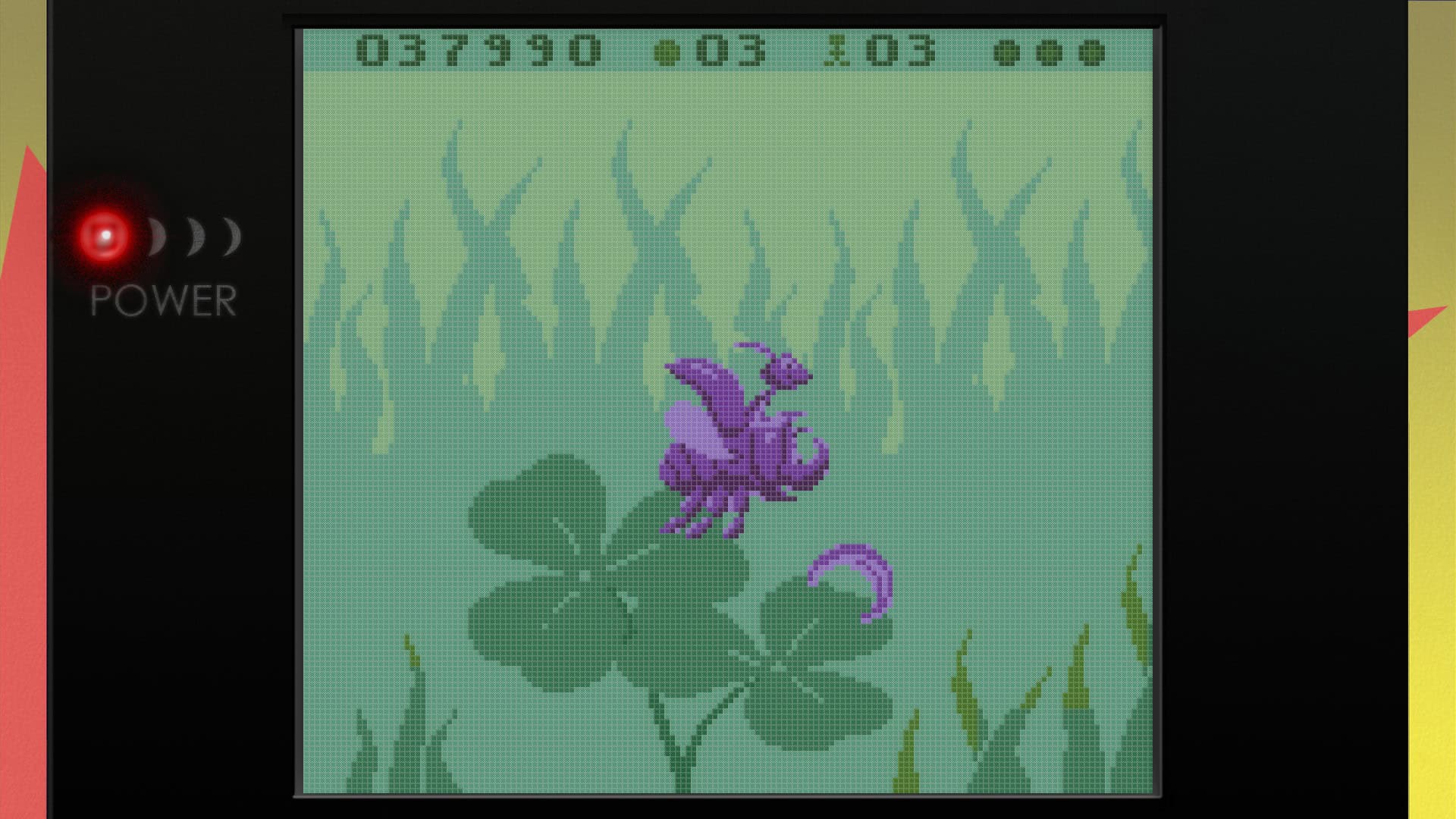
Thankfully things pick up with Toy Story 2 for the Game Boy Color, which feels like a full-fledged sequel to the mainline console version. There are some interesting bits here: you play as Buzz as opposed to Woody, the movement and level design feel more deliberate, and I do enjoy the few times you get to do crazy stunts and fly across the level. I personally still prefer the variety of the original, coupled with Woody’s funky string attack, but it’s a solid time, and a big step-up for the Game Boy titles.
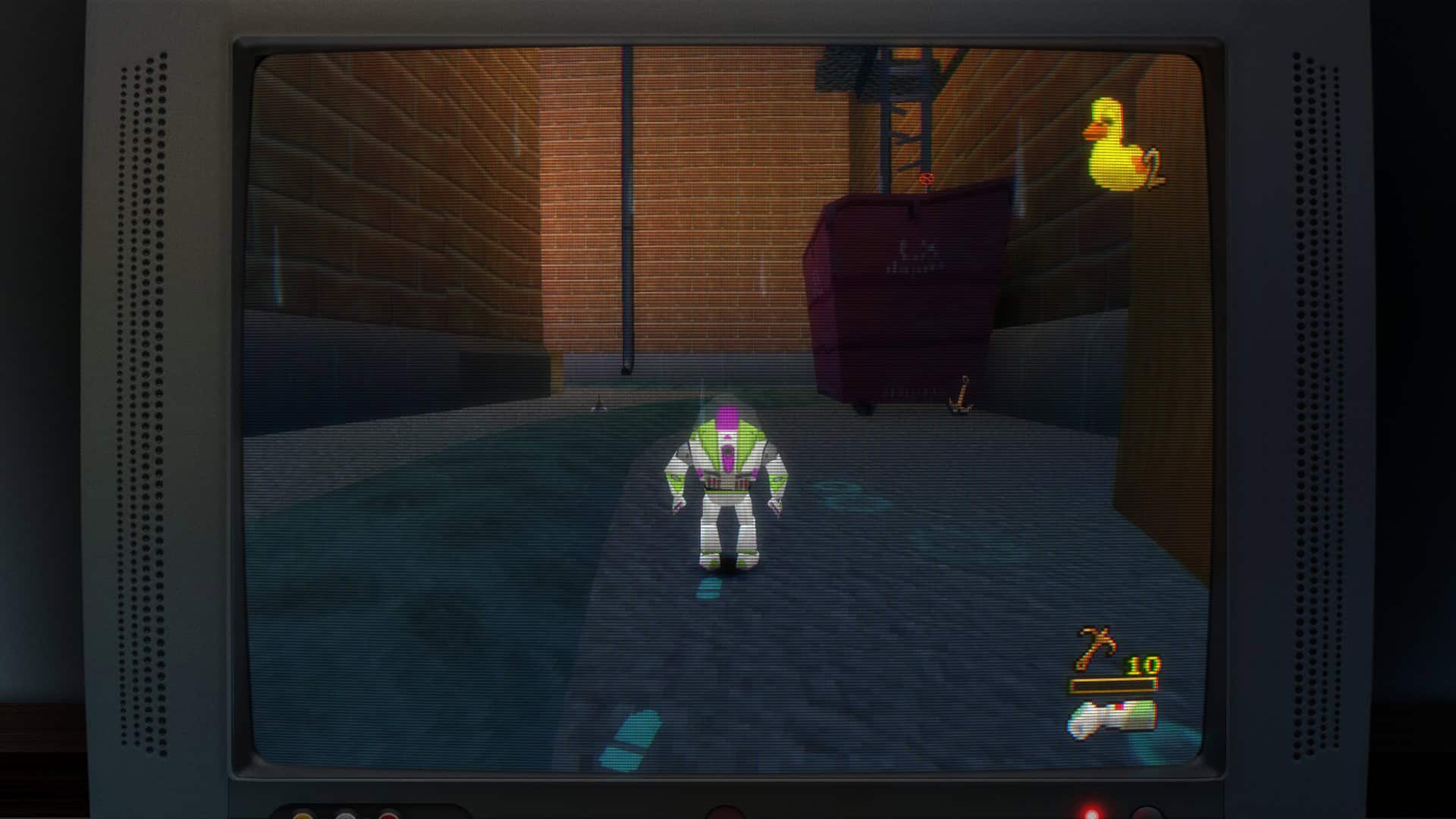
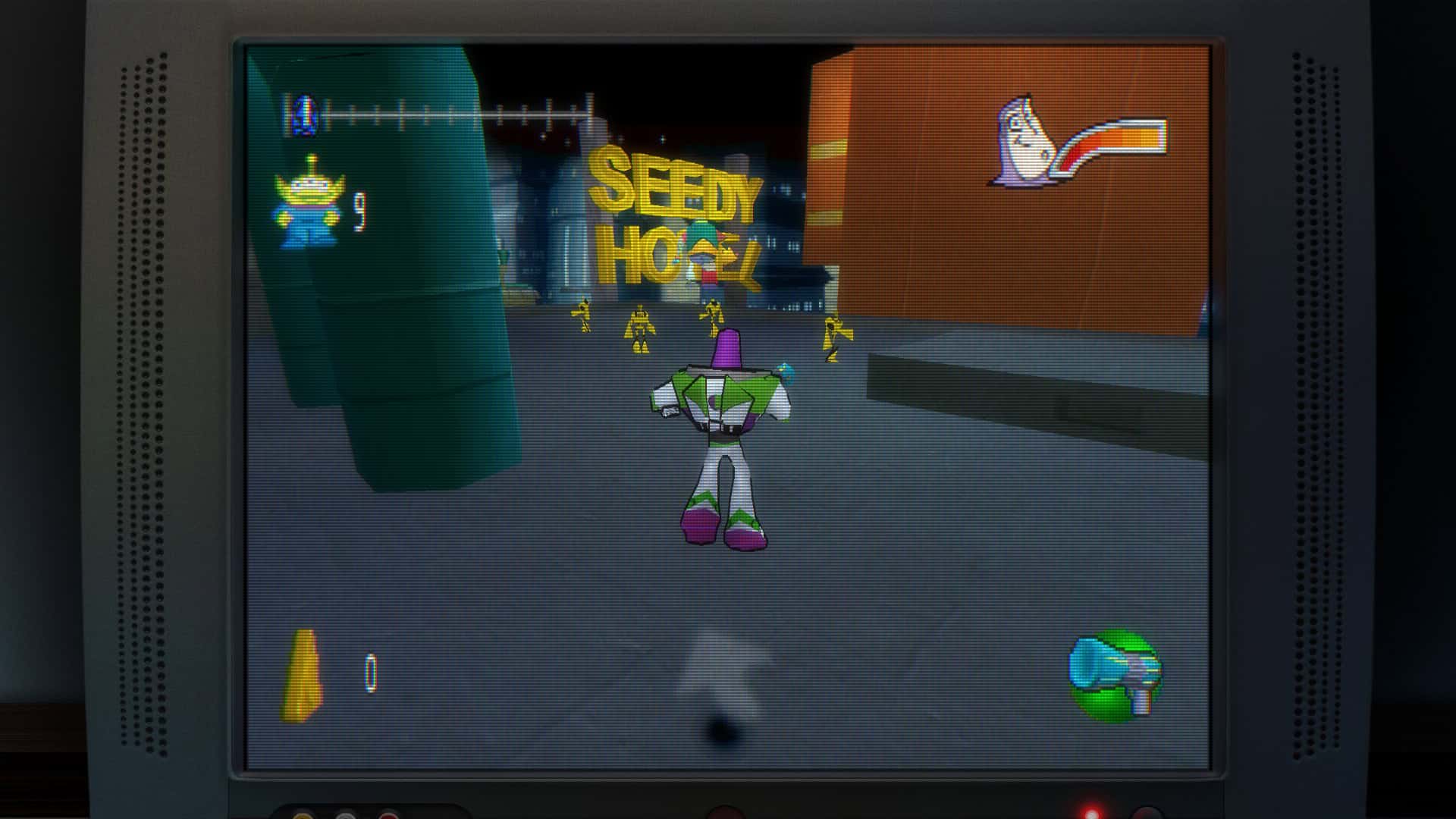
Another big name on the collection is Toy Story 2: Buzz Lightyear to the Rescue: a fondly remembered 3D platformer. Though not as innovative as A Bug’s Life, it easily matches the atmosphere with an even better soundtrack, tighter controls, and a better feel for action. Also, the camera is now mapped to the right stick instead of the shoulder buttons like in the original release. This goes to show that, aside from these being great ports, the developers thought about how to give these games a better chance for new players. This is one of those licensed games you’d often see talked about as an example of an exception, and as someone who plays a lot of them (and also played this one a ton as a kid), I think its relative simplicity wore off on me a little. Still, I have a lot of love for it. It’s one of the best games in the collection.
Next up is Buzz Lightyear of Star Command, based on the TV show of the same name. It was presented as the in-universe cartoon that popularized the character of Buzz Lightyear into a sensation in the Toy Story universe, and its 2D art is represented in the mainline console game via a sharper black outline and a colorful presentation. Fun fact: Buzz is voiced by Patrick Warburton in both the show and game. Very uncanny.
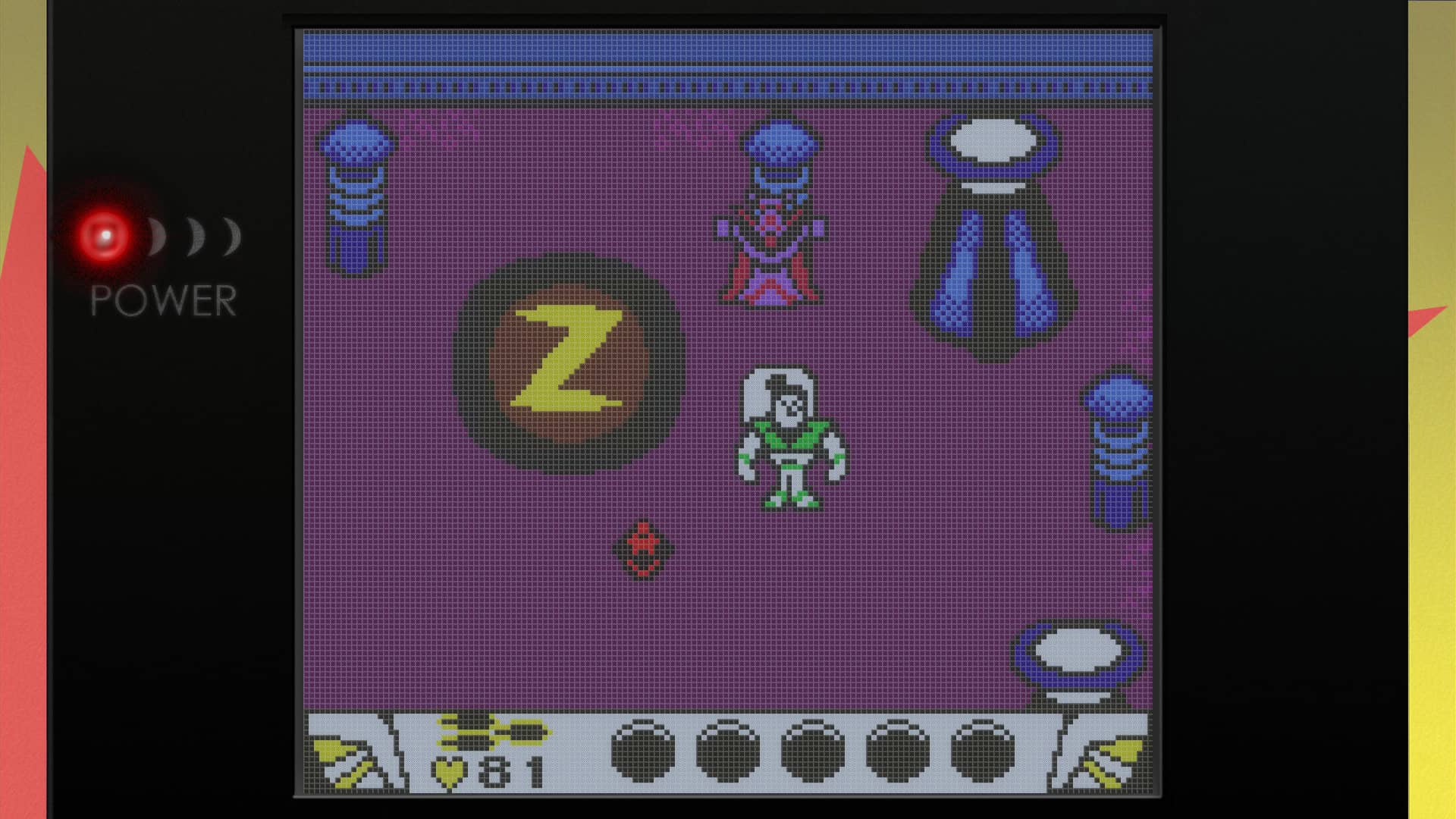
The console game has an interesting relationship with its Game Boy Color equivalent. See, the Game Boy Color version is a top-down run-and-gun, the kind you’d see a lot in the era of the original Nintendo Entertainment System, with the added twist of racing against a big bad to the end of the level where you get to dispatch them. You collect coins to purchase weapons and movement upgrades, pick up collectibles, and destroy enemies during the race. In a way, it feels like this kind of game was the inspiration for the design of the main console game, for once. It’s enjoyable, but also the only game I have not 100% completed.
That’s because of how tired I was from completing the PlayStation version. You do the same thing there, chasing the villain of the week level-by-level all the way until the final fight with Zurg. You do get cooler-looking weapons and the level design is way more varied, but, as a result, each stage takes a lot longer. The race aspect gets a bit lost, and the enemies, even on harder difficulties, barely do any damage. The console version ends up feeling a lot more mindless after a while as a result. You beat the stage picking up everything needed for a medal, then repeat for the second, timer variation of the stage, and repeat for the “collect all robot parts” for the third. The controls are unnecessarily slippery; the guns feel as unimpactful as the enemies. The only time I preferred the portable version.
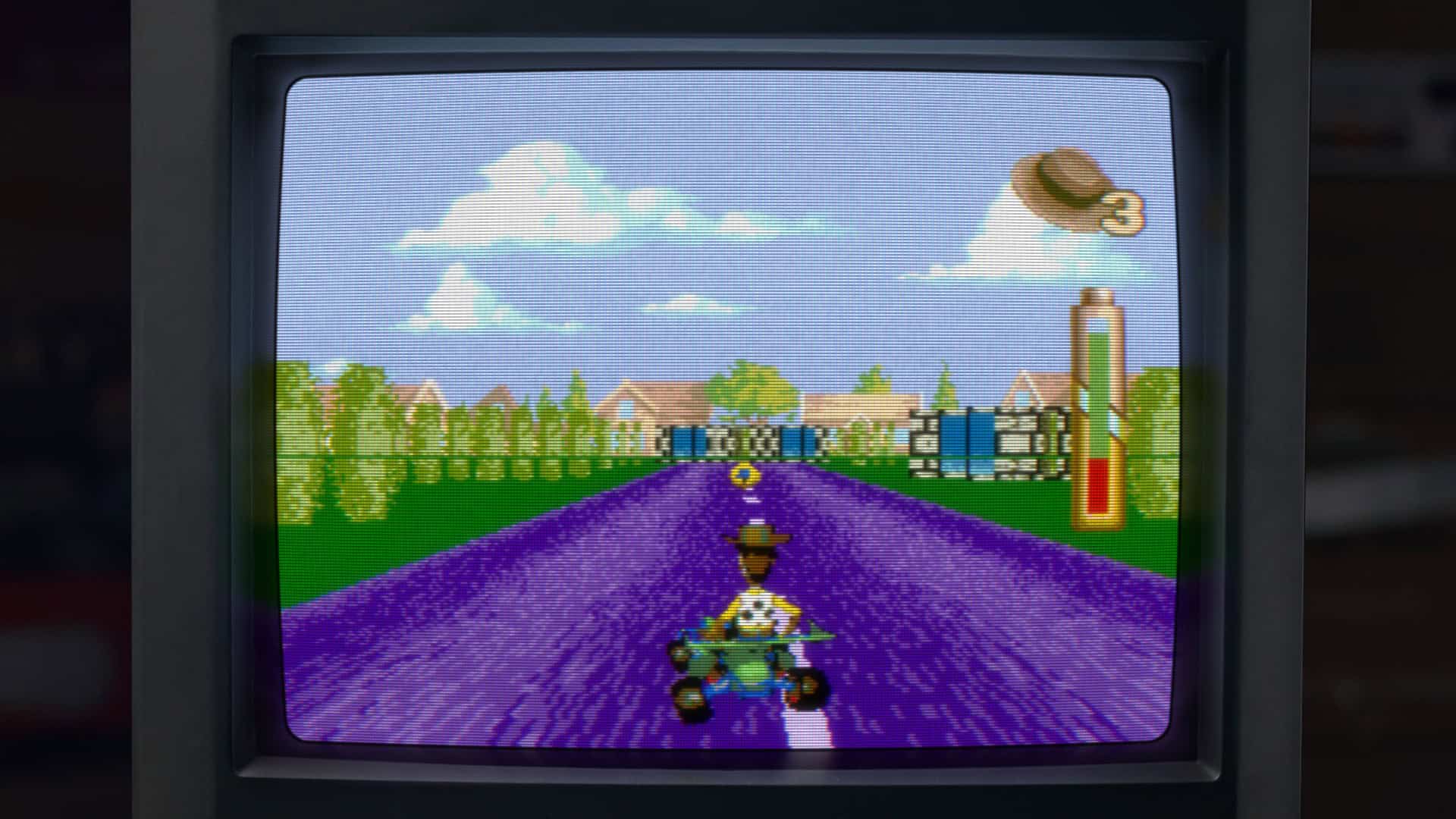
Finally, probably the craziest game of the collection. Toy Story Racer. To get it out of the way, the Game Boy Color version is a short and disappointing on-rails experience, with some impressive visuals for the console that are actually a sort of pre-recorded video of a track that slows down or speeds up depending on what you press. You’re controlling a sprite on top of the video, in a way. Unfortunately, it has very little to offer, other than a false impression of what Game Boy racing games could be.
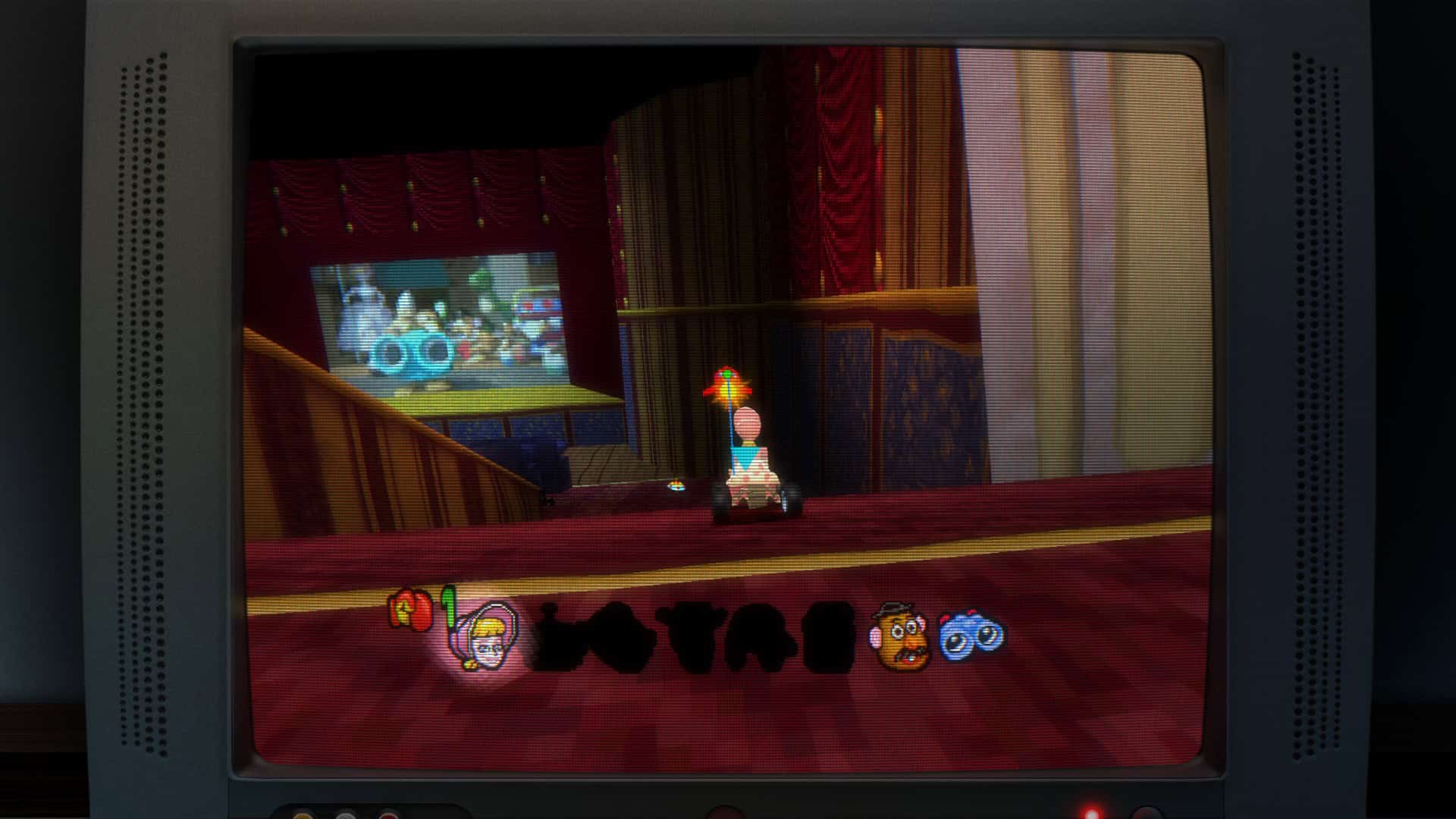
The mainline console version, however, is insane. I mean it. Toy Story Racer is structured unlike any other kart racer I’ve played. It has 200 challenges that get unlocked as you play, each with their unique name and objective, split between characters, with some also adding new characters from the first movie to the playable roster. To clear the game, you have to beat all 200 of them. These are admittedly nicely varied when it comes to objectives, and most are just single stages, but some consist of tournaments that may have up to 11 RACES IN A ROW. This means that, between its 11 race stages and seven battle stages, I probably replayed each at least a dozen times. And that’s with rewinding to avoid the extra losses from time to time.
You have the aforementioned battle stages to spice things up, but there are also reverse races that have you going through the same tracks backwards, knockout races that remove the racer in last place on each lap (which means sometimes you have to do up to 9 laps), collection challenges that require picking up items on a timer, and target challenges that have you finding and smashing targets, and more! Without any repeats, this has taken me over a dozen hours, which may not seem like that much, but it was two times as much as the second-longest game on the collection across way too few tracks. It drove me crazy! Pun intended!
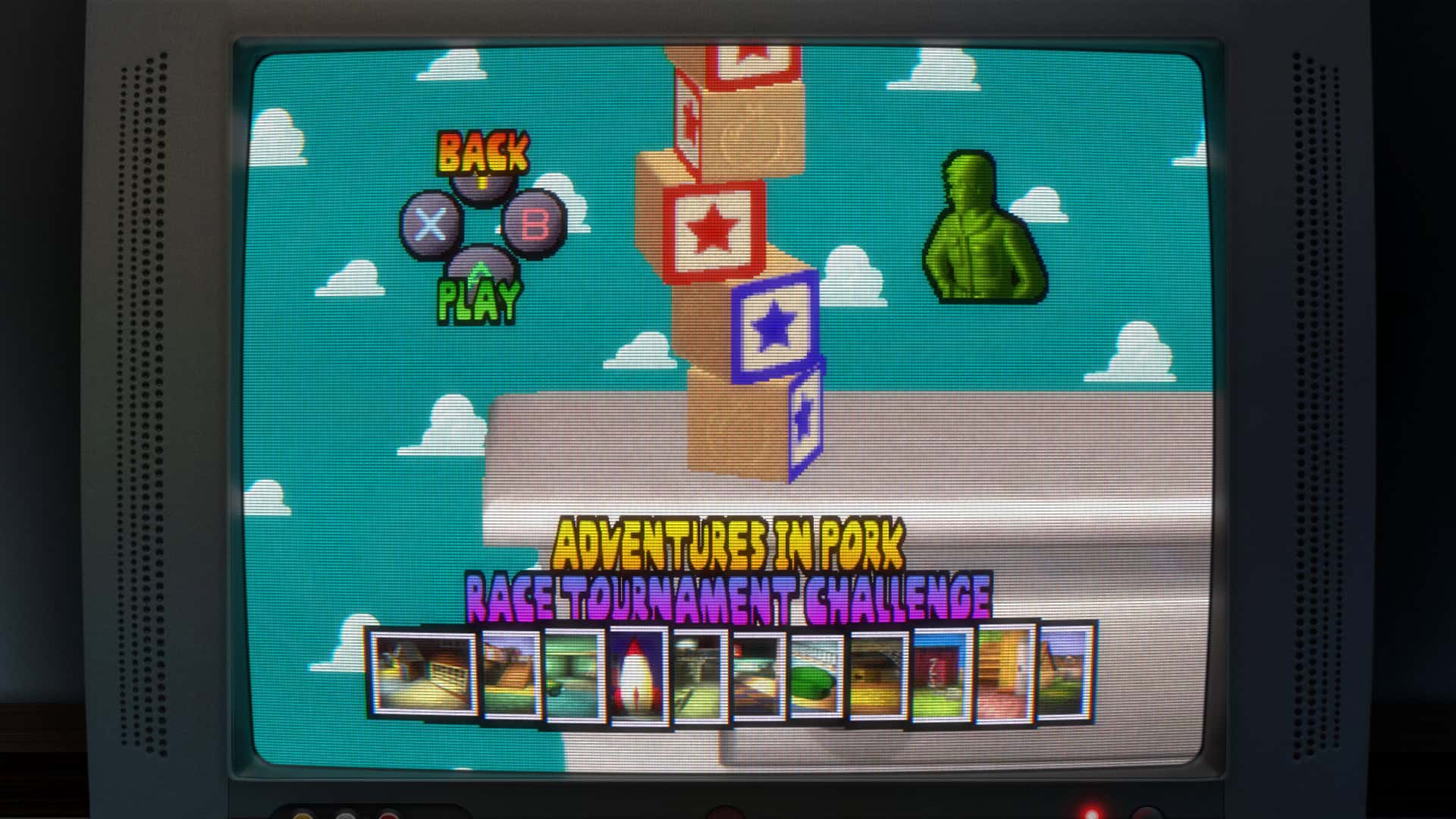
A dozen hours of driving in loops with only an occasional bit of bad luck, where the enemies would knock me out at the start of a round in a battle stage or pass me by at the very end of an otherwise clean race. At the end of my first day with Toy Story Racer, I saw the newly unlocked Ham start me off with an eleven-race gauntlet, and I turned the game off. And yet I came back.
Toy Story Racer has an addictive quality to it. It really takes advantage of the idea of all these characters being toys, not just in the locations you race through or even the items, but also in the physics of the karts themselves. You get flung around like crazy if you manage to get a jump off a ramp with a speed-up battery. Driving on rough terrain feels abysmally slow as the toys clank and hop across grass and snow, with entire levels covered in it. It made for some uniquely silly moments during the arduous task of completing it. And what’s the reward at the end of it all? Well, each character, once you complete all their challenges, lets you play a sliding puzzle with an image from the movie. Yup. A sliding puzzle reward. This sure is a licensed game, alright.
I think, in many ways, that’s exactly why I play licensed games. It’s the very unexpected ideas that seem to only come from working with the constraints of a shorter development time and a predetermined premise that really inspire in me the curiosity for video games as a whole. The developers at Digital Eclipse did a good bit to really explain that enthusiasm, even if it’s less than I’m used to from their collections. There’s so much here to really dig into, and jumping between games day to day was a delight—a well of inspiration for ways to approach, think about, and talk about games. It’s what I come to Digital Eclipse collections for, it’s what I come to licensed games for, and it’s why you should play Toy Story:Retro Roundup!
Mateusz played Disney/Pixar Toy Story: Retro Roundup! on PC with a provided review code. This review is based on the version of the game available at the time of writing and our score will not be changed.
- Score
- 7/10 Solid - GameObserver Recommends
- Summary
-
Mateusz says: Toy Story: Retro Roundup isn't as informative or thorough as some Digital Eclipse collections, but it still is mighty interesting if you have any licensed game curiosity in you.
- More
- GameObserver's Review Policy

 ObserverCrew Picks
 bserver
 bserver