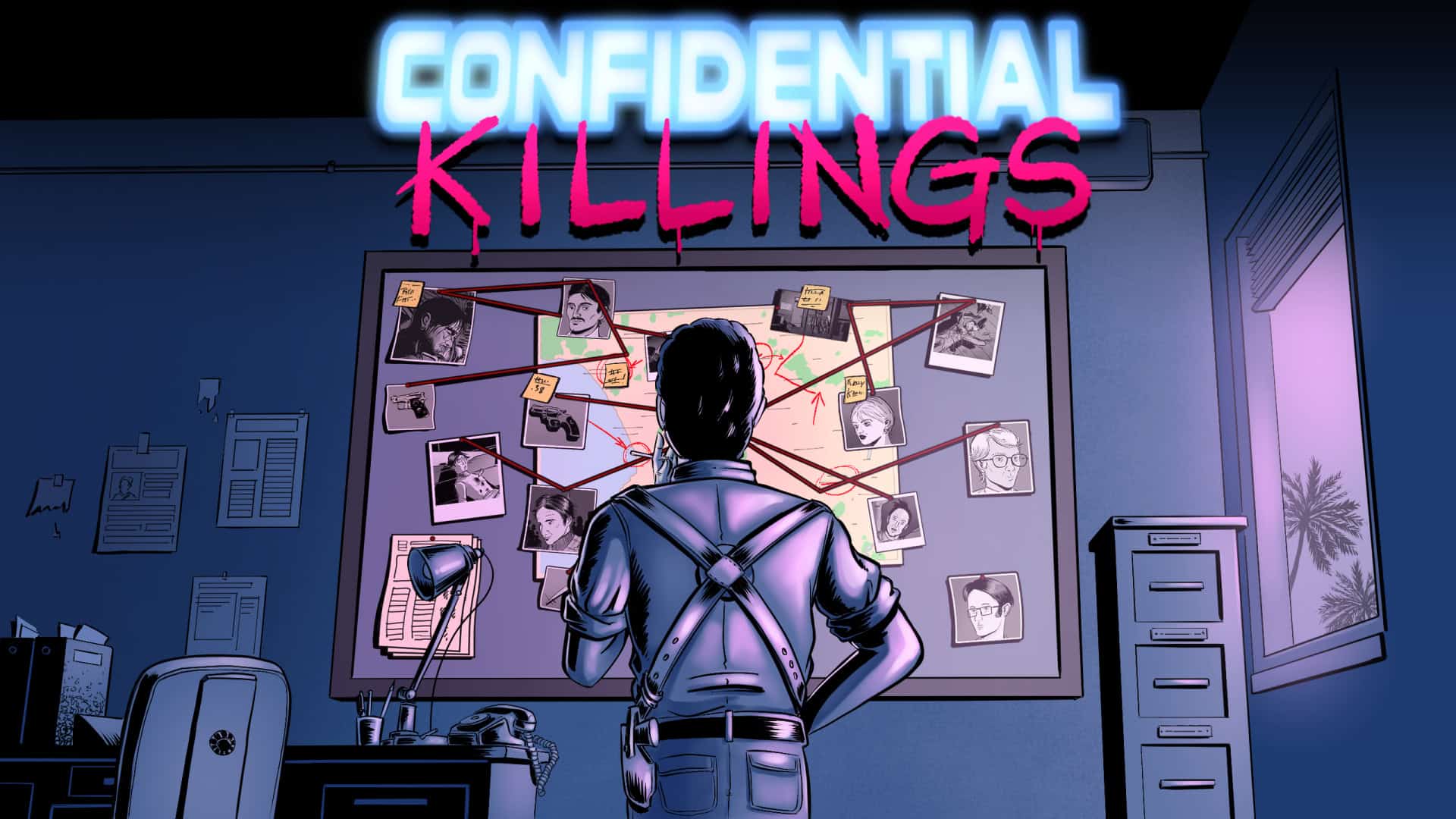
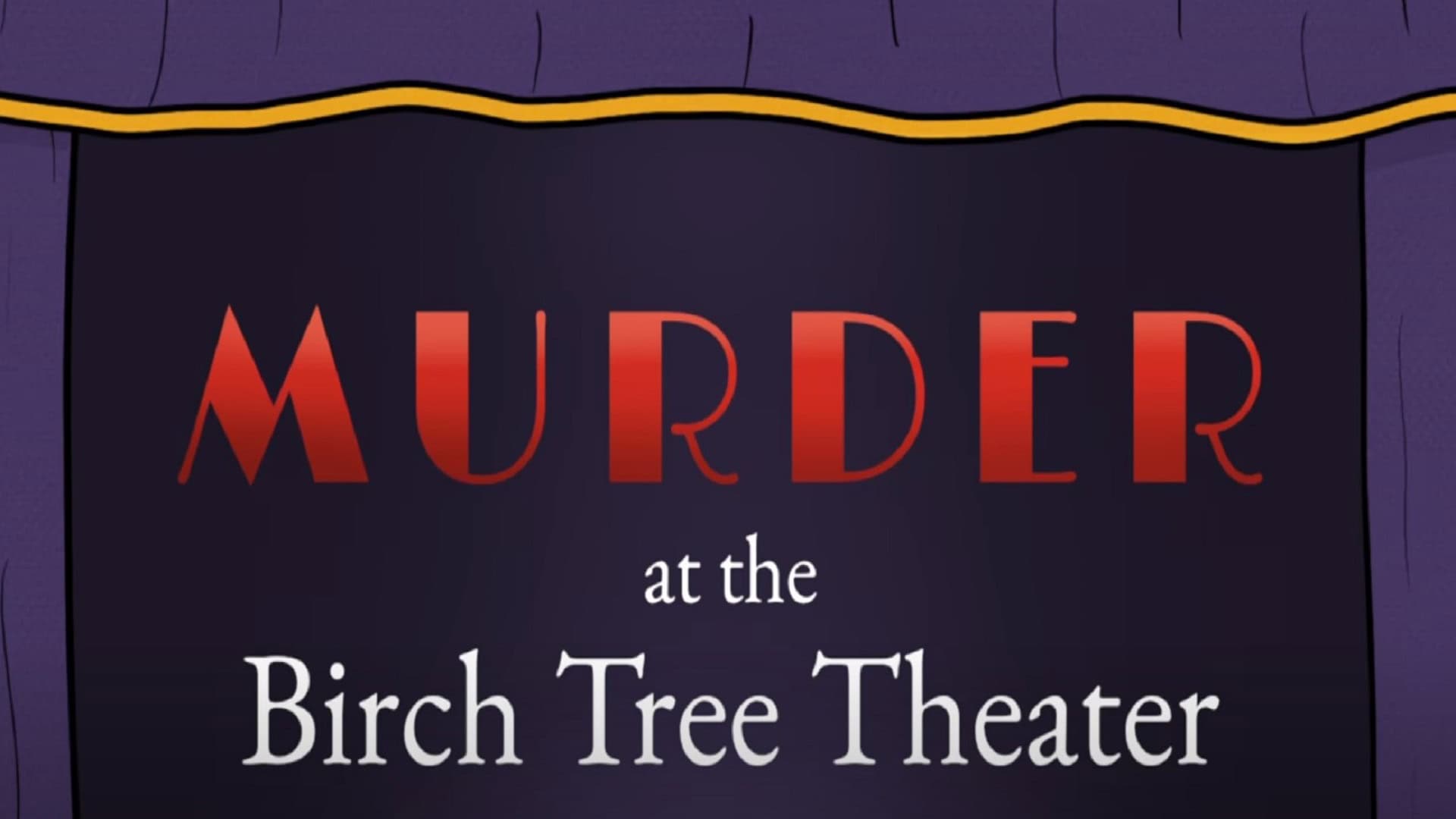
Since The Case of the Golden Idol caused a craze among puzzle heads in 2022, there’s been a surge of similar deduction-based detective games where the core gameplay loop revolves around collecting “evidence” (keywords) around a crime scene and then using those keywords to fill in the blanks of a statement. Some of the most recent examples of games that have adopted this method are Confidential Killings and Murder at the Birch Tree Theater. This deduction mechanic offers the perfect way to enable players to determine what evidence they believe is relevant to the case, while ensuring they fully understand what has happened in the scenario and that they’ve been able to piece together the full story from what they’ve found. However, the effectiveness of this format also means that the genre is quickly filling up with various detective games trying their luck with this same gameplay loop: gather keywords from a static scene, determine who is who, and then fill in the blanks of the summary.
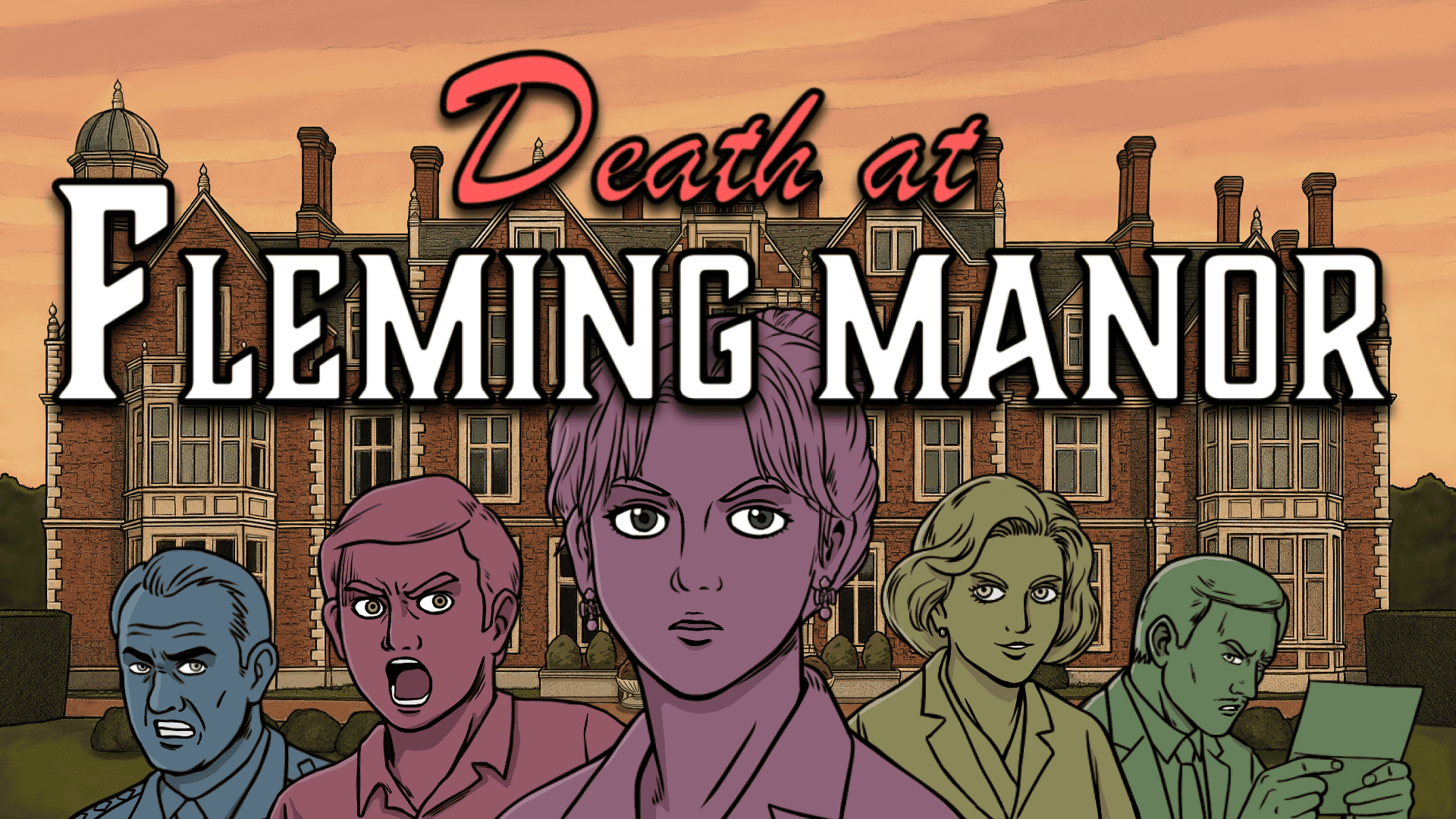
Death at Fleming Manor is the latest of which, but that doesn’t mean developer Superthumb doesn’t have anything new to bring to the table. While Death at Fleming Manor does include the above-listed staples of a The Case of the Golden Idol-inspired detective game, we’re actually not playing as a detective this time; we are the coroner.
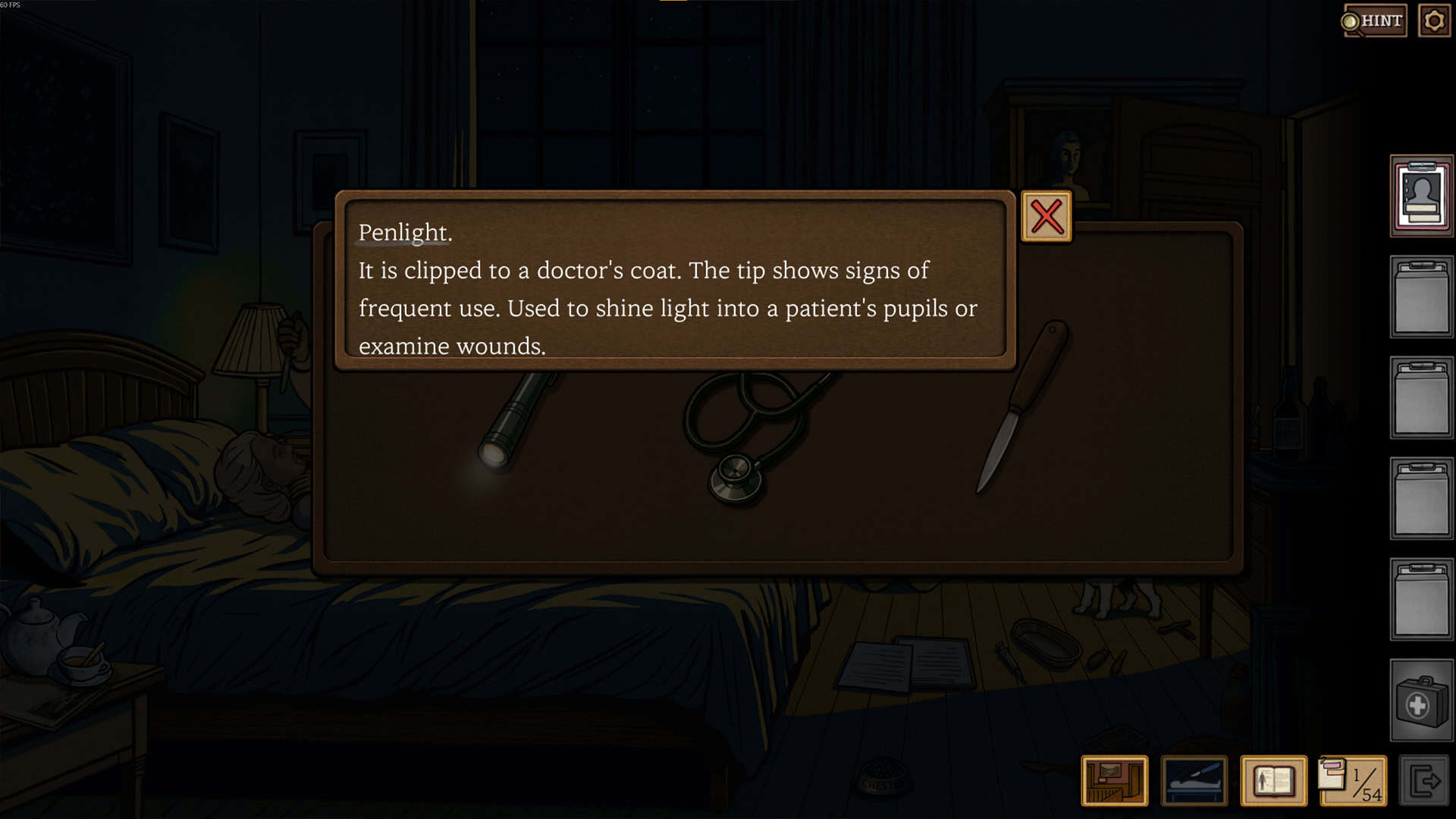
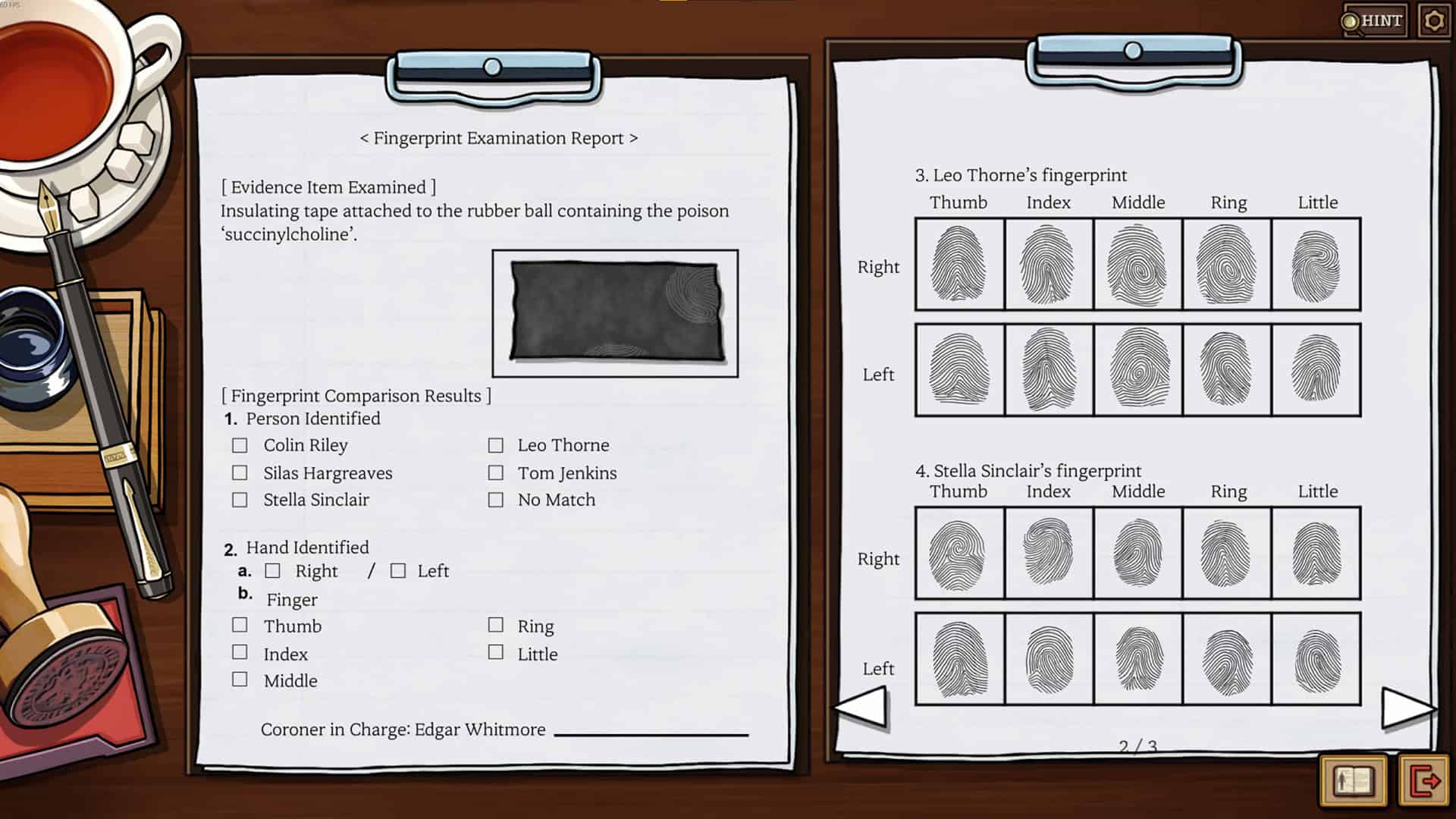
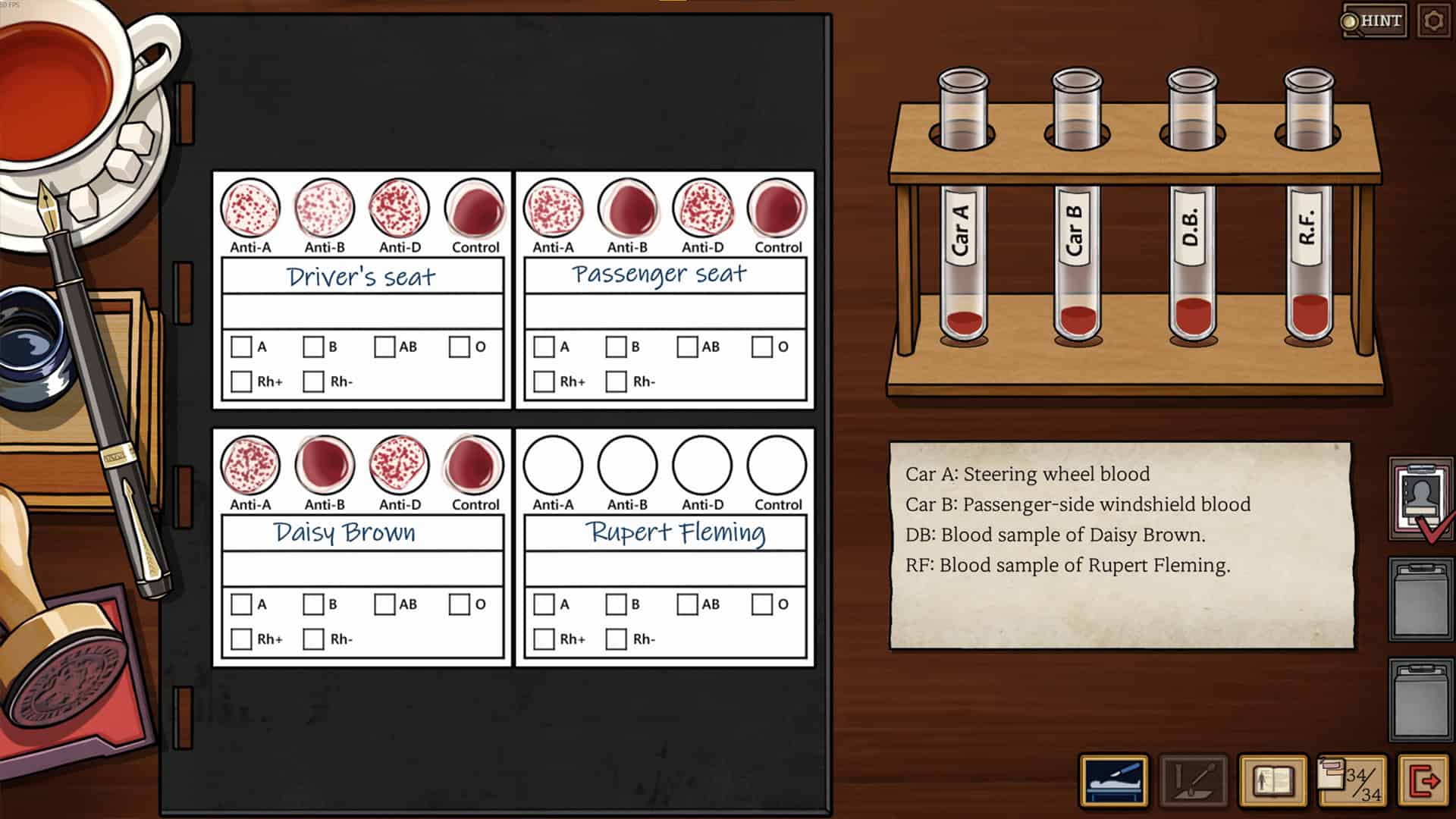
Coroners don’t typically solve the entire crime; their job is to investigate the manner or cause of death. But as Death at Fleming Manor is a mystery game, and these tend to do better when you are actually able to solve said mystery, our job description here is extended somewhat to actually just solving the whole case on top of our usual coroner duties. But rather than filling out a case summary, in Death at Fleming Manor our core task will usually be to complete the death certificate; determine who is who on the scene (of course), time of death, and cause of death. Like many The Case of the Golden Idol-inspired games, we are also completing other forms here and there, such as medical records, and also doing various tests to help our investigation, including analysing blood samples, fingerprints, and handwriting.
Through this, Death at Fleming Manor incorporates a lot of medical knowledge into its investigation gameplay, which is its strongest asset. With a medical textbook at our disposal, we’ll need to use it to cross-reference what we find at the scene of a death in order to complete the deceased’s death certificate. For example, if a post-mortem examination tells us that the victim died of asphyxia (a lack of oxygen), we must use the textbook to identify the type of asphyxia; bruising on the neck implies strangulation, but do the marks coincide with ligature strangulation (with a rope) or manual strangulation (with bare hands)? Determining which could help us find the culprit; maybe there’s a rope lying around somewhere that we could get fingerprints from?
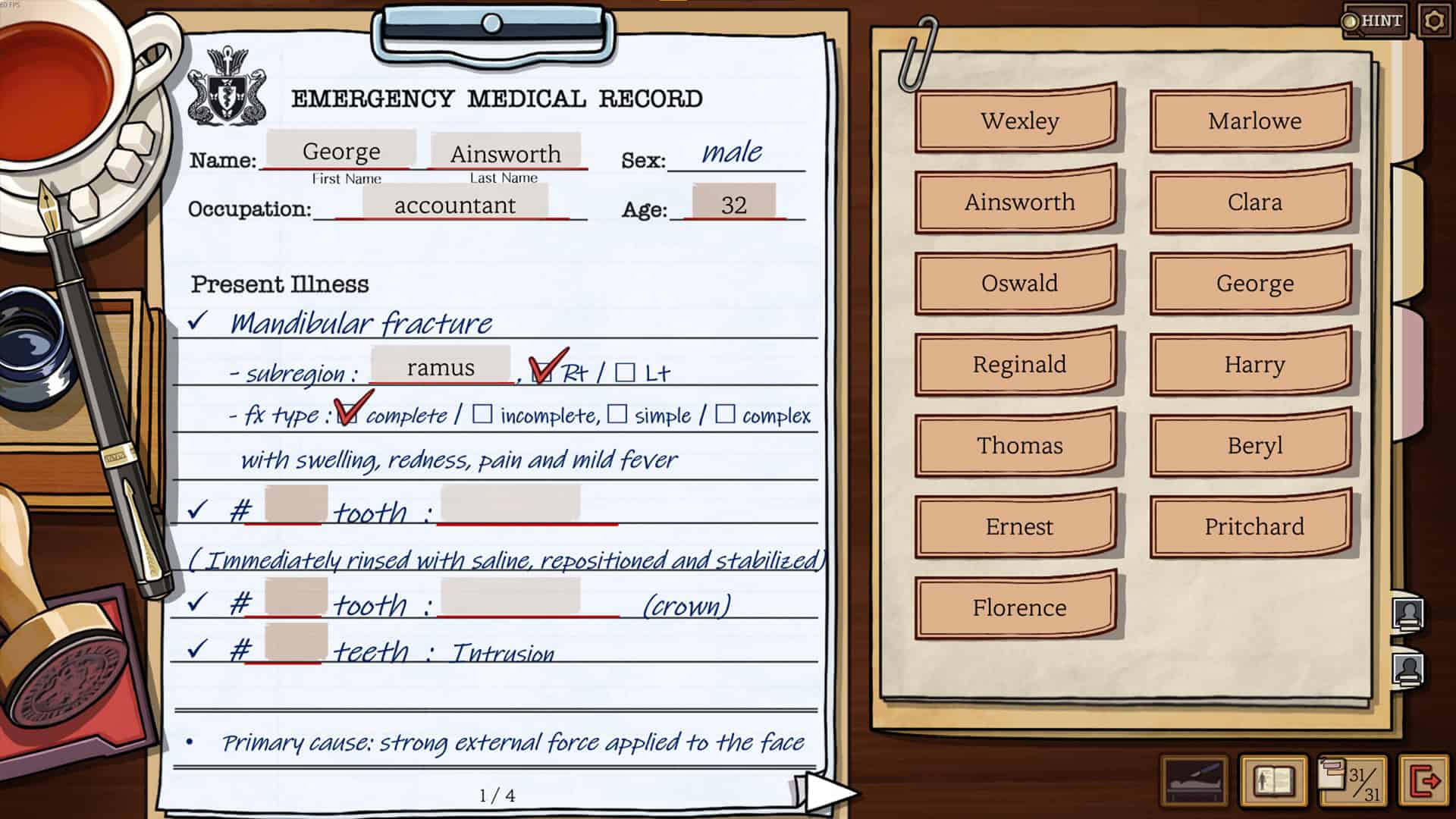
Death at Fleming Manor makes you feel like a genius once you’ve put all the pieces together, especially when I later didn’t need to refer to the textbook as much, having started to memorise all the correct medical terms for my findings. Not that I would actually need this information in real life, but I guess it doesn’t hurt to know that you can tamper with the time of death estimations by preventing a corpse from cooling down – you never know!
Of course, as is typical in this style of detective game, while each case seemingly has its own standalone plot to unfold, there’s a far more nefarious, larger one linking them all together. A lot of the cases also aren’t as they seem at first glance; in fact, some of them take a major turn from one single piece of evidence. On a few occasions, I thought I had already solved the cases and just needed to piece together the evidence for it, only for a last-minute toxicology report or fingerprint to derail my findings entirely. I especially loved any moment where my cross-referencing uncovered contradicting statements or evidence – someone is tampering with the investigation!
Unfortunately, the reveal of how these cases culminate together both made and killed Death at Fleming Manor for me. While it felt like an utterly ridiculous finale, a part of me was impressed with all the tiny threads that had been at play throughout the game – some of which came across as general “video game things” that I didn’t give a second thought to, but actually made much more sense when put into the context of that final story reveal. But I still couldn’t help but feel like the writing in the conclusion – at a time when all my investigating efforts should have paid off – felt majorly weak when compared to the writing for each case. It was never perfect; witness statements in particular always felt overly descriptive, almost like novel extracts, and completely unrealistic to how people actually recall events (unless they are an author entertaining a reader). And I also found it odd that we often need to figure out what the current day, time, and location are when filling out the death certificate, as if the character we’re playing wouldn’t know this upon arrival. However, the writing for Death at Fleming Manor’s actual crime scene investigation is exactly what you would want from any mystery game; full of twists, turns, and drama.
But the game also has quite a few technical flaws, too many to ignore. When you’ve completed your findings and submit your report for review, it will either be approved or rejected if it has mistakes in it. In the corner of the screen is a cup of tea with some sugar cubes; each time a report is rejected, it is sent back to you and a sugar cube is used up. Once you’ve run out of sugar cubes… nothing happens; you can just highlight where exactly your mistakes are now. This mechanic felt a little pointless; it gives off the impression that there’s going to be some kind of penalty for getting a report wrong too many times, but it instead rewards you. Sometimes, when I was truly stuck, I ended up repeatedly submitting the report just so I could use up the sugar cubes and highlight what information is incorrect to give me a little nudge in the right direction. I just do not understand what the point of this mechanic is.
And there are a few little bits here and there, which just prolonged the investigation for no apparent reason. For one, a lot of the keywords we need come from the medical textbook, so we usually need to flick through that to add them to our collection. This resets at the start of each case, even though most of the entries in this book are reused throughout the game. There’s no reason why these words couldn’t just be defaulted to our collection of usable words already available for each case.
Tabs also don’t stay open when you need to look at something else, so you have to keep clicking back and forth through various screens when comparing notes. If the Forensic Pathologist, a recurring character in each investigation, has told us some crucial information via dialogue, we have to keep returning to that dialogue and clicking through it to bring that information back up again each time we reopen the death certificate page. And each time we enter the post-mortem examination room, it initiates dialogue with the Forensic Pathologist, even if we’re just flicking through to look back on information. If he has nothing to say, then you’ll be halted anyway by the dialogue bubble, which just has an ellipsis in it. While other games in this genre have become more aware that players tend to need to keep flipping back and forth between information and have made that process easier by allowing multiple windows or a notepad pop-up, Death at Fleming Manor seemingly hasn’t caught on to this.

A lot of the UI also feels very unresponsive and unintuitive to use. It’s not always obvious what we need to click on or do to progress. During one investigation, I was stuck for quite some time because I had gathered all the evidence in each room but seemingly still had more than half the keywords for the scene to collect, and I was unable to progress with what I had gathered. I didn’t notice that, when in a specific room, a report symbol had appeared in the upper corner of the screen that I needed to click on and open to move to the next section of the investigation. There was no animation or sound effect for this symbol—it just appeared.
I will also say that, while I appreciate that Death at Fleming Manor has opted for a 1950s comic book-style visual design, the overall tone of the game feels off, and this contributes to it. The simplistic character drawings give the game an almost light-hearted feel despite its dark tones, especially when combined with the 8-bit-style dialogue blip as the text types out. The character drawings also have very limited expressions, often just switching between two, so it gives it a very cheap appearance, almost mobile game-like.
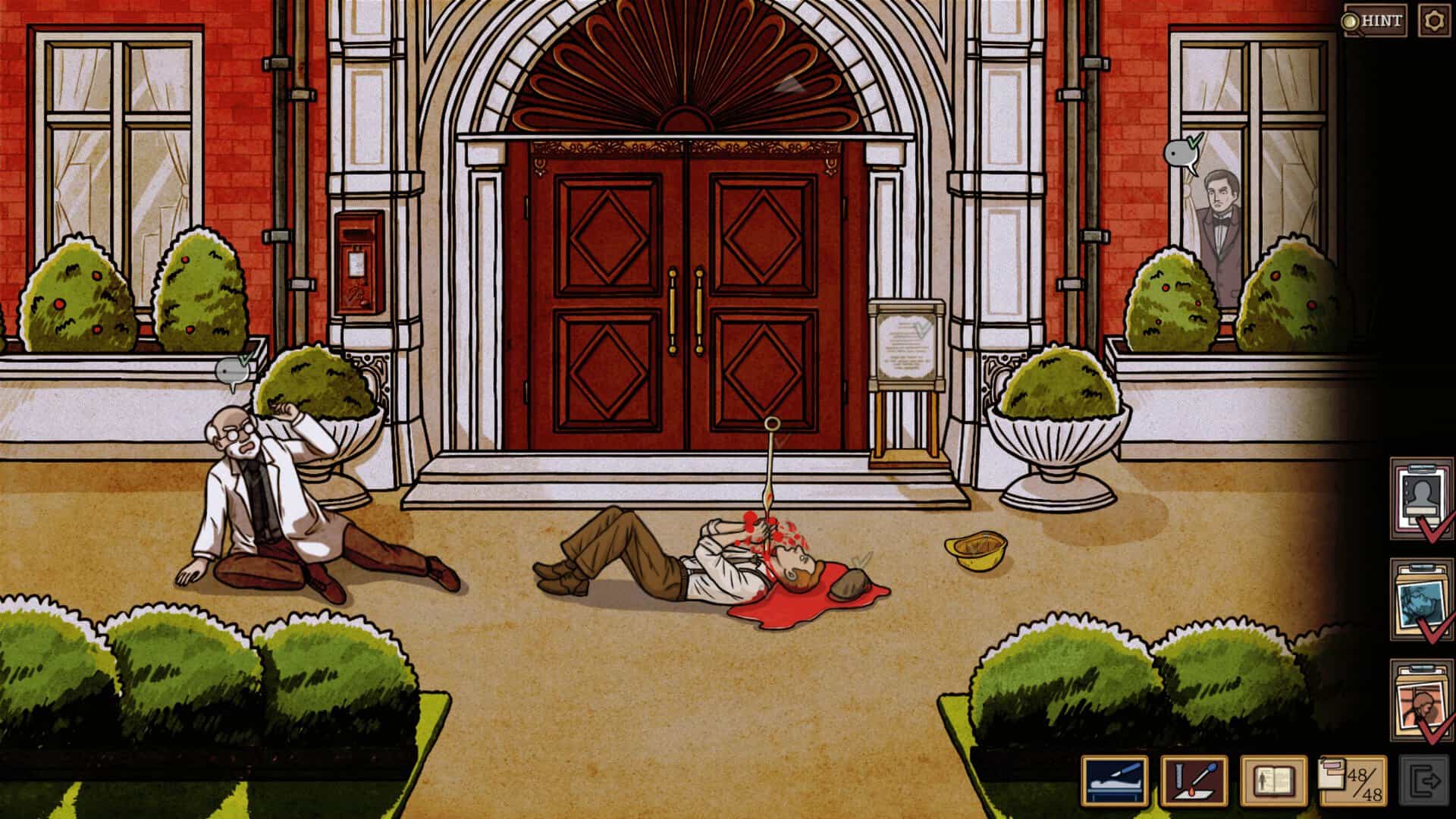
While tonally and technically, Death at Fleming Manor has its faults, its gameplay is serviceable for anyone looking for a The Case of the Golden Idol-style deduction mystery game which brings something new to the table. You do get assigned a bit more than the usual coroner duties, being that this is a detective game, but the medical aspect of our job role adds a lot to the gameplay that you wouldn’t find in other games within this genre.
Jess reviewed Death at Fleming Manor on PC with a provided review code. This review is based on the version of the game available at the time of writing and our score will not be changed.
- Score
- 7/10 SOLID - GAMEOBSERVER RECOMMENDS
- Summary
-
Jess says: "Death at Fleming Manor has its technical faults and the tone just doesn't feel right for its subject matter, but it's serviceable for anyone looking for a deduction mystery game. You do get assigned a bit more than the usual coroner duties, but the medical aspect of our job role adds a lot to the gameplay that you wouldn't find in other games within this genre."
- More
- GameObserver's Review Policy




 ObserverCrew Picks
 bserver
 bserver