I have been a Castlevania fan for a long time. Since the beginning, in fact. I’ve played nearly every game in the franchise, from the original Castlevania to the ill-received Nintendo 64 platformers. And while I fervently love all metroidvanias, I had been waiting over a decade for a new Castlevania series I could actually play (Konami, please put an offline version of Castlevania: Grimoire of Souls on Steam). When Castlevania: Belmont’s Curse was announced, I was even more excited to learn that the developers behind Dead Cells and its DLCs would be working on the game. So I grabbed the demo, and then when the full game came out, once I started to play it, I did not stop.
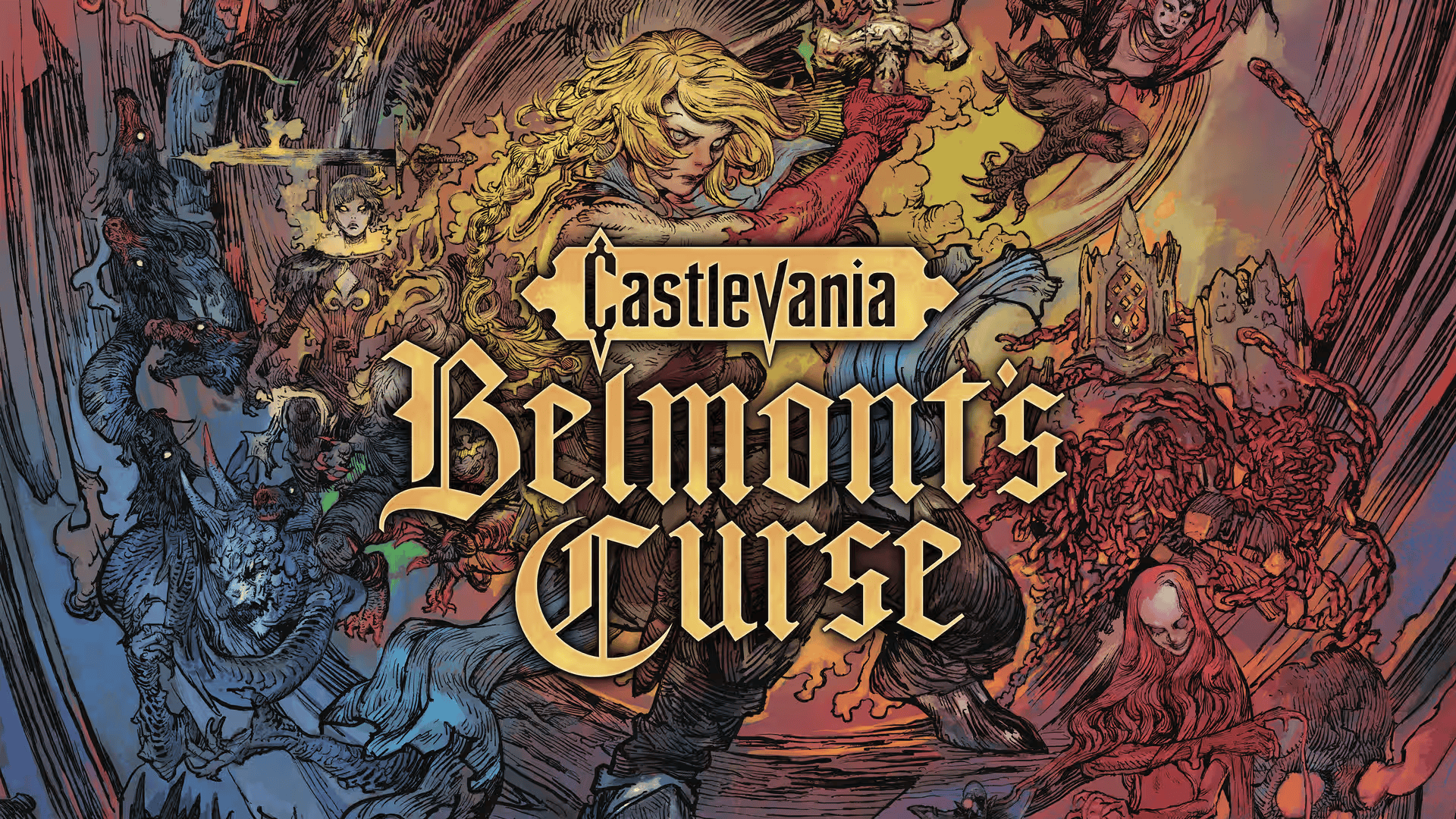
Let me set the stage for Belmont’s Curse. The year is 1499, 23 years after Dracula’s first proper defeat at the hands of Trevor Belmont. Paris has been beset by dark forces, and the Bishop has called Trevor to investigate the matter, promising him great riches as reward. Trevor, suspecting a trap, has not come alone. He brings along Rose, his and Sypha’s daughter, who has trained as a vampire hunter as well, but suffers from a terrible curse, the same curse that Dracula struck her parents with upon his first death. Trevor and Rose begin to investigate the terrors besieging Paris, and along the way they come across a scheme by Dracula’s loyal minions to resurrect him and begin his war against humanity anew, a scheme that is up to Rose to stop.
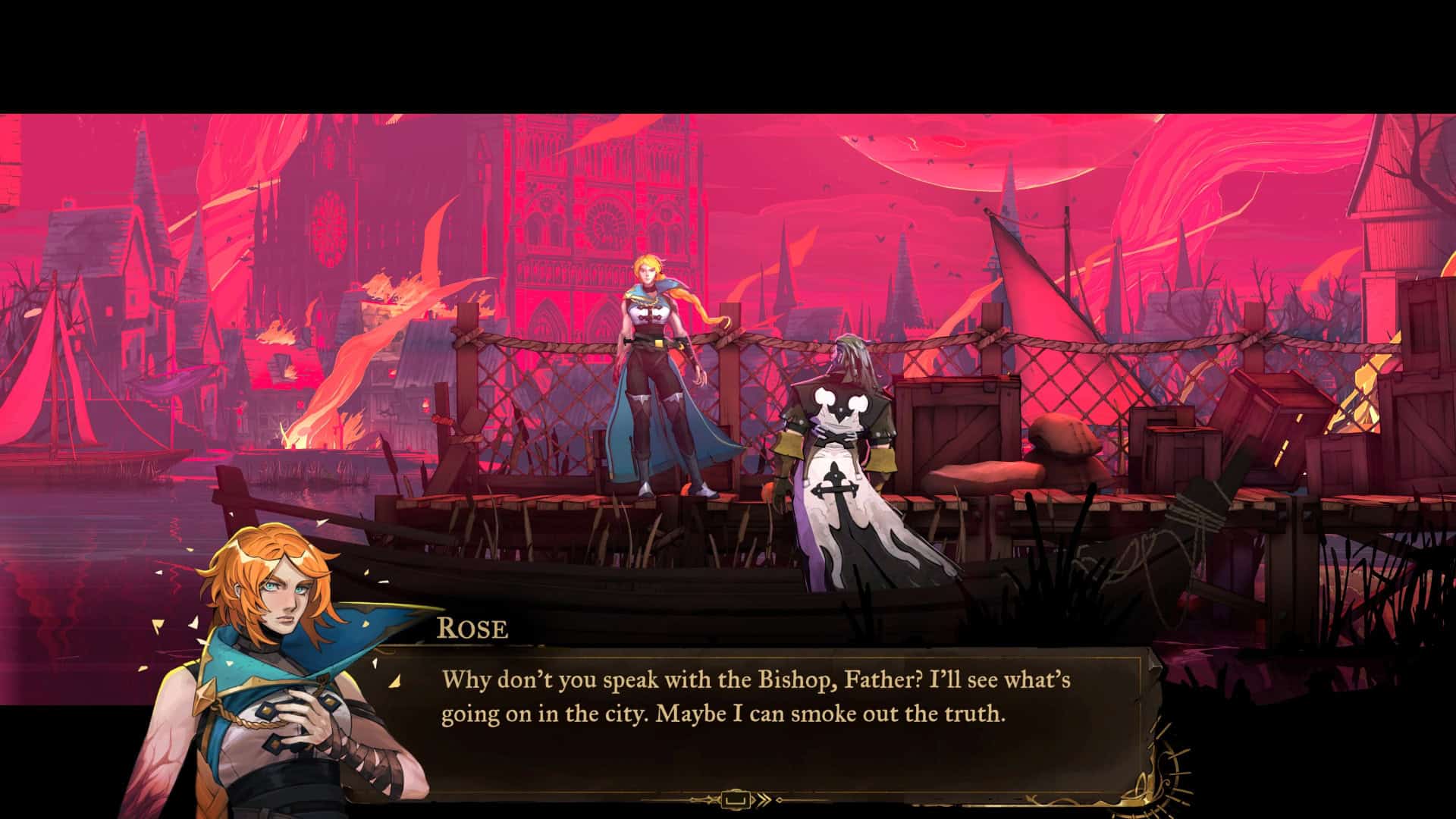
At the start of Belmont’s Curse, Rose can run, jump, dodge backwards, slide, wall jump, mantle ledges and up through thin platforms, attack with her sword, and cast a fireball spell thanks to the Tarot cards left to her by her mother Sypha. After defeating the Fallen, the first boss of the game, Rose absorbs his essence into a blank card, and gains a new spell and her first new movement ability, both of which are core mechanics of Belmont’s Curse.
There are tarot cards and thus spells for each boss Rose defeats, as well as one for several NPCs and for Rose herself. Each of these spells has special tasks to complete, like kill five enemies with one cast of the spell, find all the secret areas in a section of the game map, or have multiple of a weapon type, such as whips. Completing each of these tasks allows Rose to remove some of the curse from the card, unlocking a new power for that spell. Complete all the tasks and fully upgrade a card, and you are rewarded with a conversation with the entity depicted on the card, going deeper into their motives, providing extra backstory or expounding on a concept they embody in the story, such as forgiveness. The cards are thematically, if not mechanically, reminiscent of the DSS system from Castlevania: Circle of the Moon.
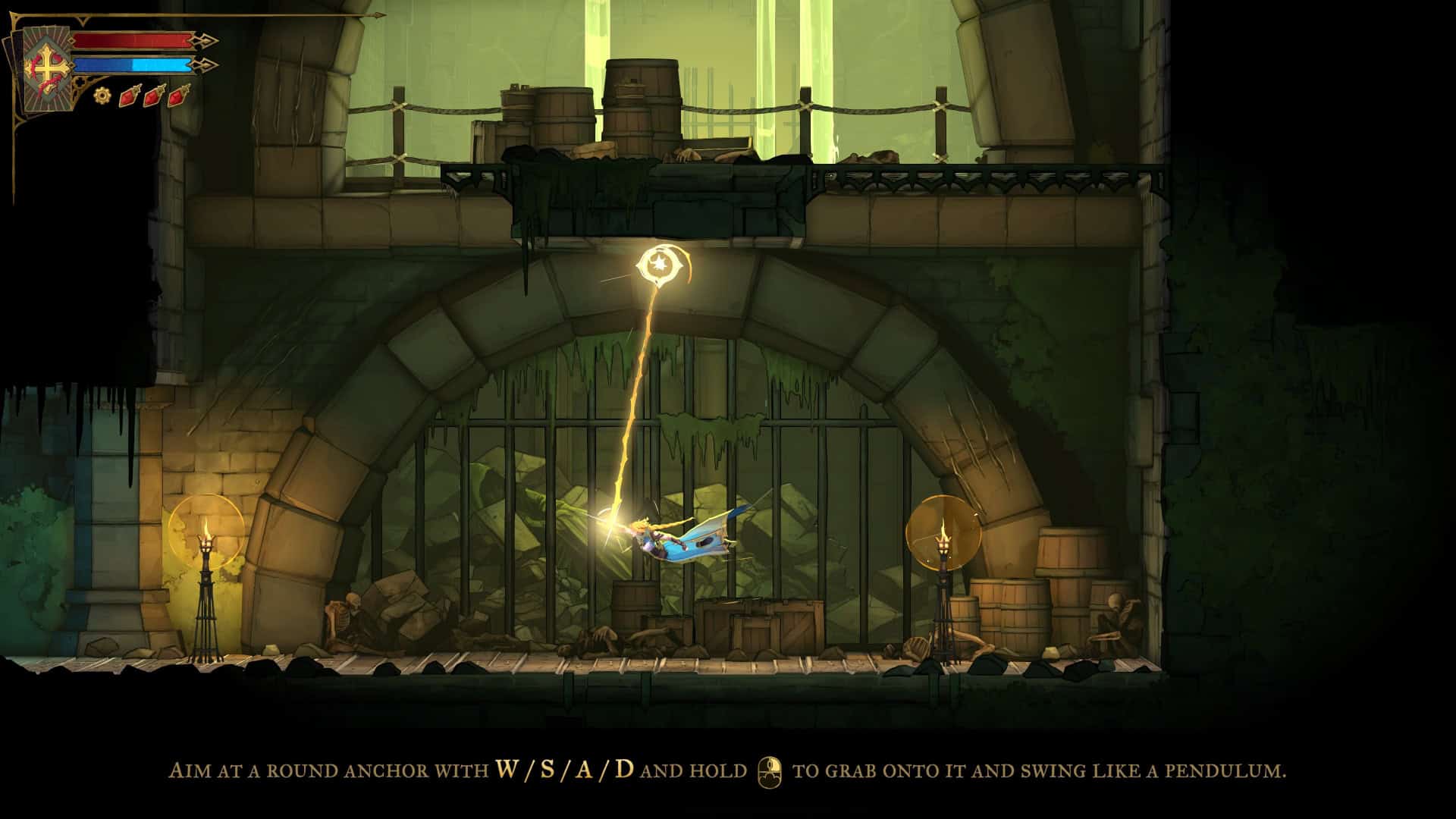
The ability Rose gets from the Fallen is the whip tether, which allows her to latch onto grapple points and enemies, in a move reminiscent of Super Castlevania IV. This ability stays relevant even after getting all the other movement upgrades because, unlike air dash and double jump for example it can be used endlessly. You will be using it even to the final boss for spacing, fast movement, and invincibility frames. Most, but not all, bosses that Rose faces will give her a new traversal option or a combat utility. Obviously these are reminiscent of the relics, souls, glyphs, etc. from the Igavania era.
In terms of weapons and combat, you start with a single short sword, but you can quickly gather a whole host of weapon types. Each weapon category has its own combat style and associated combat mechanic, and each category has four weapons of ascending power. Weapons are a mix of mythological weapons, nods to other Castlevania series entries, or returning weapons like the Valmanway or the Vampire Killer itself. You can only equip one weapons at a time, and each costs some of Rose’s MP to cast. You can equip three relics at a time too, which have numerous different functions of varying efficiency, such as one that makes Rose deal more damage attacking midair.
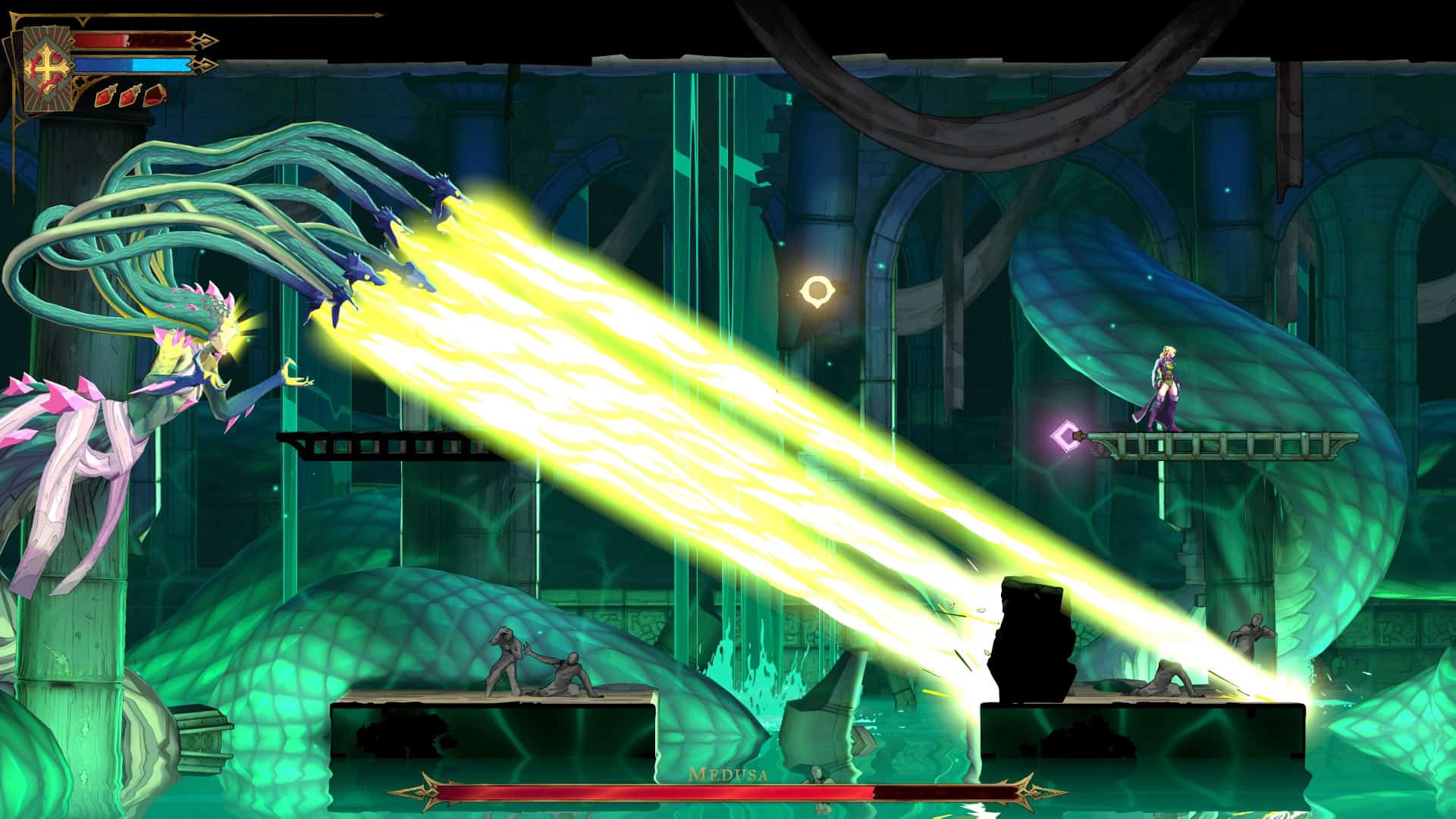
You refill MP by attacking and killing enemies, destroying objects, or by grabbing an item drop. Healing has a dedicated button and three potions that refill on each save, or from picking up a drop from an enemy. You can then have up to three extra potions, not including extras from relics and the like. Wall chicken also makes its return, both in walls and dropped from enemies, as an instant health restore.
Belmont’s Curse’s story is focused on Rose’s grappling with her curse, the negative emotions it’s associated with, how she manages and overcomes them, and how that relates to her fight with Dracula. Each member of her Tarot relates in some way to her curse, directly or indirectly, and offers her guidance – both good and bad – on how to overcome or succumb to it. It’s a story of self reflection, growth, and what is passed down through families like the Belmonts. I found it very straightfoward and easy to follow. Knowledge of the existing series is not required to understand it, but it won’t hurt as there are a few returning characters and nods to other characters in the series. Belmont’s Curse is trying to homage the games that came before it as much as it is trying to present itself as a new entry into the franchise.
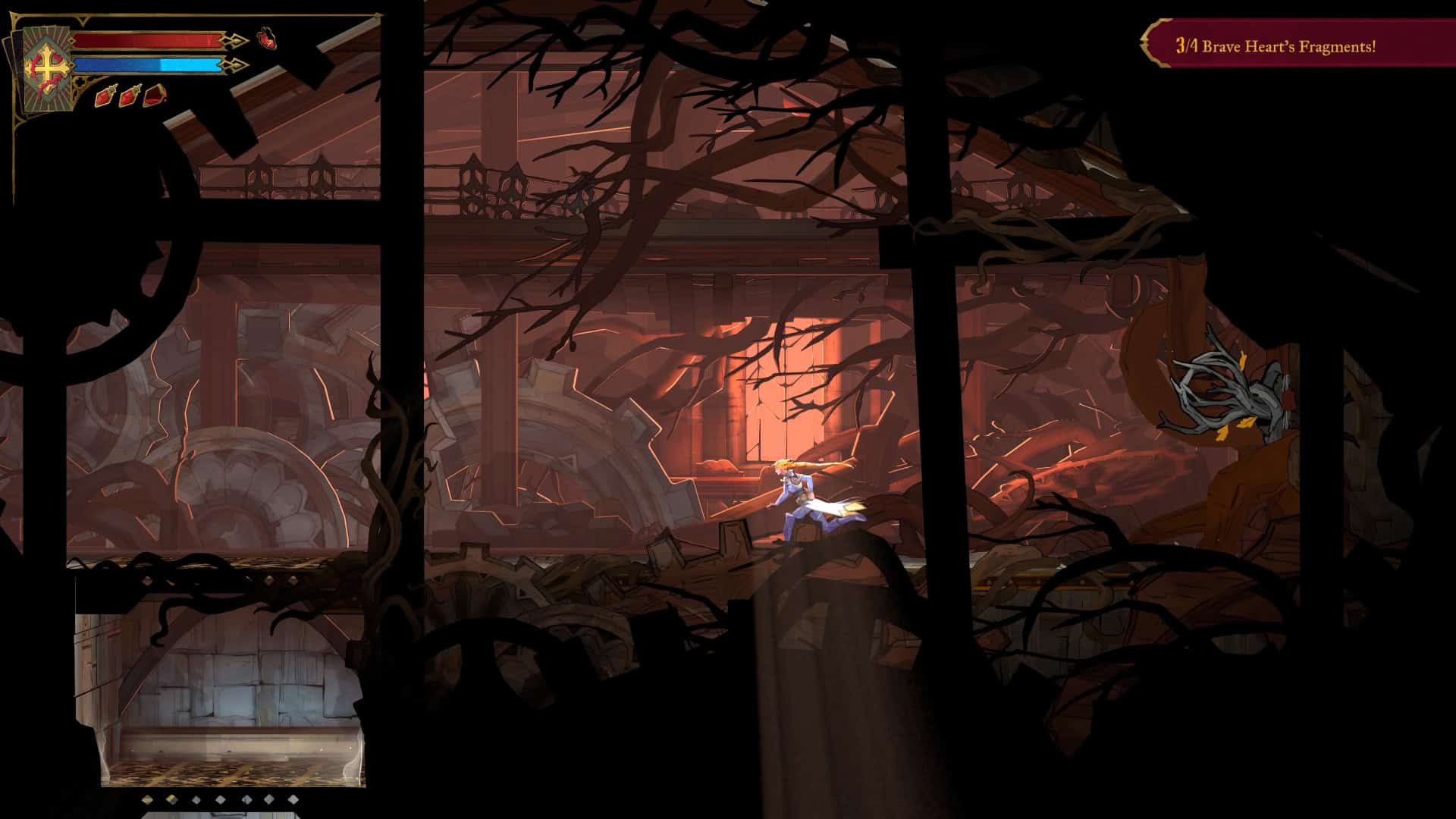
That goes for gameplay too. While the game is certainly trying to put a unique spin on traversal and combat, nothing it’s doing is wholly out of left field. Almost everything Belmont’s Curse tries, like the parry mechanic, using the whip to traverse the castle, the complicated platforming sections, and even the lack of contact damage, is something that’s appeared in the series before in some fashion, just not necessarily in a 2D game. It feels like the developers were trying to make a game that took something from every major era of Castlevania and mixed it together to try and make a cohesive whole.
There were a couple of minor pain points. I would have liked a quick swap option for weapons and spells instead of having to always go into the menu, and a fast movement skill like the Black Panther Soul would have been nice to have, but it’s hardly necessary for speedrunning the game, which the developers expect people to do. There’s tons of ways to sequence break for skilled players and an achievement for beating the game quickly.
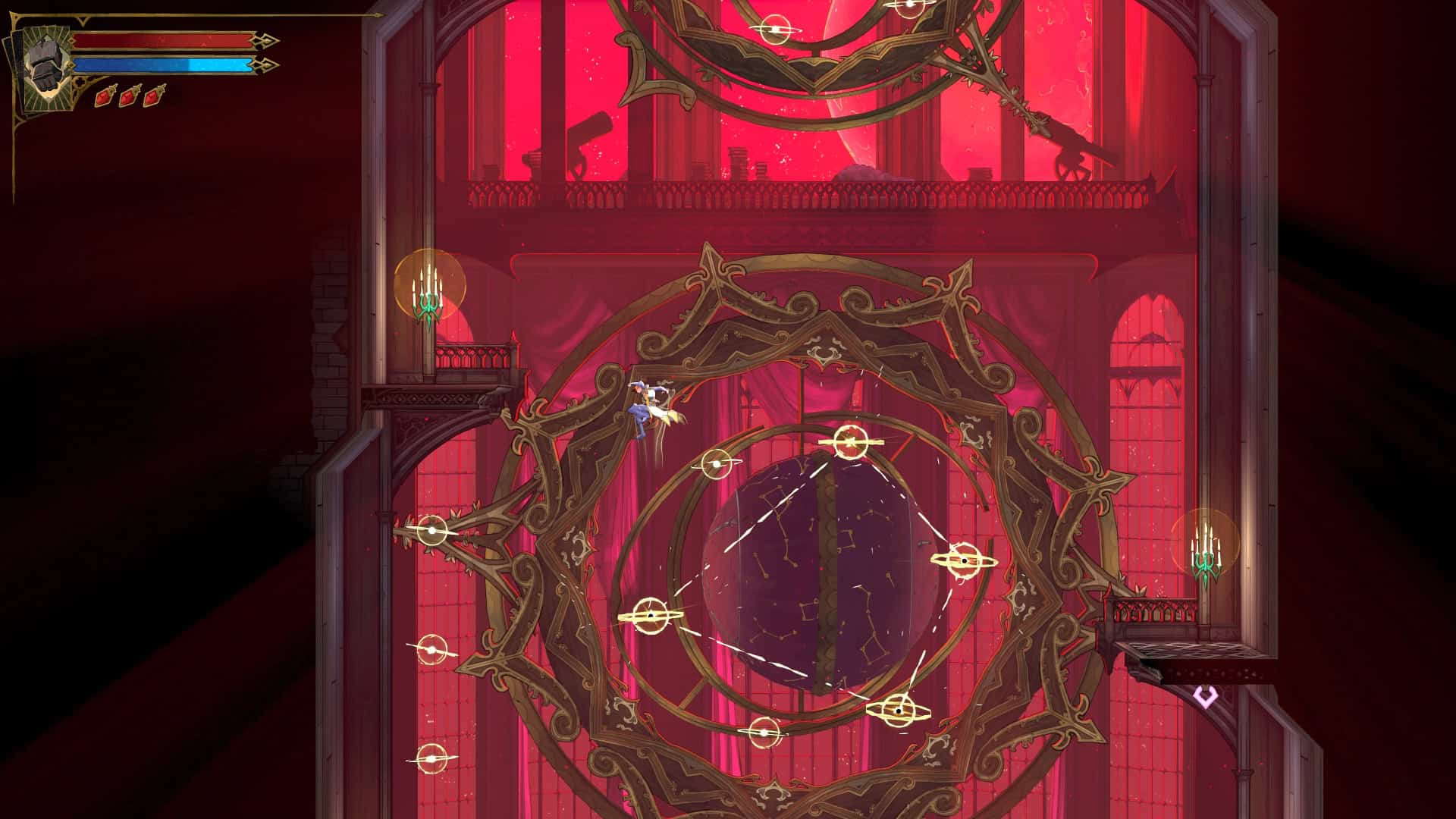
Belmont’s Curse has three endings. A bad, netural, and good ending. It’s possible to get all three on a single playthrough, and the game expects you to do so to 100% your file. I did 100% the game and I consistently had fun with the bosses, the traversal, completing Tarot card challenges, and unlocking that true ending. Don’t worry, it is possible to go back and get the bad and neutral endings for completion if you skip them the first time around. I think Belmont’s Curse succeeded in making a new Castlevania for a new era, and I hope there are many other ones beyond, and just as experimental as this is.
Tim reviewed Castlevania: Belmont’s Curse on PC with his own bought copy. This review is based on the version of the game available at the time of writing and our score will not be changed.
- Score
- 8/10 EXCELLENT - GAMEOBSERVER RECOMMENDS
- Summary
-
Tim says: "Belmont's Curse strikes an excellent balance between honoring what came before it and breaking new ground, both in terms of lore and mechanics, and should appeal to long time Castlevania fans and series newcomers alike."
- More
- GameObserver's Review Policy




 ObserverCrew Picks
 bserver
 bserver