While the subgenre of Metroidvania isn’t difficult to define — non-linear exploration, an interconnected world map, progression that’s blocked by the need for an ability or tool to bypass an obstacle — when you reflect on games not typically linked to the genre but that still possess these qualities, the lines start to blur somewhat. Wych Elm’s Silver Pines is described as a 2D survival horror Metroidvania, but the one game it reminded me the most of throughout my time with it was the first Resident Evil game.
We play as Red Walker, a private investigator hired to find Eddie Velvet, a musician whose last sighting was at the small mountain town of Silver Pines, where he had his last gig before going missing. We strangely start the game by waking up in a diner in the dreary, half-abandoned Silver Pines, and we discover that other strange occurrences have been happening in the town; Eddie wasn’t the only one to disappear, and monsters now prowl the streets, but only Walker seems to be aware of them.

Immediately off the bat, Silver Pines sets a melancholic tone with its gentle, sombre music. The town itself is almost greyscale, with the most standout colour usually being the red glow of building signs or television screens. When it rains, droplets will remain on the screen, which looks as though I had been crying onto it with my Steam Deck in my hands, blurring the visuals.
Similarly, Chase Brown’s portrayal of Walker is almost timid, unsure of his situation. His sober acting differs greatly from the usual, more rugged interpretations of private investigators or detectives. By comparison, Brown always sounds on the verge of breaking. As a result, this character really stands out.
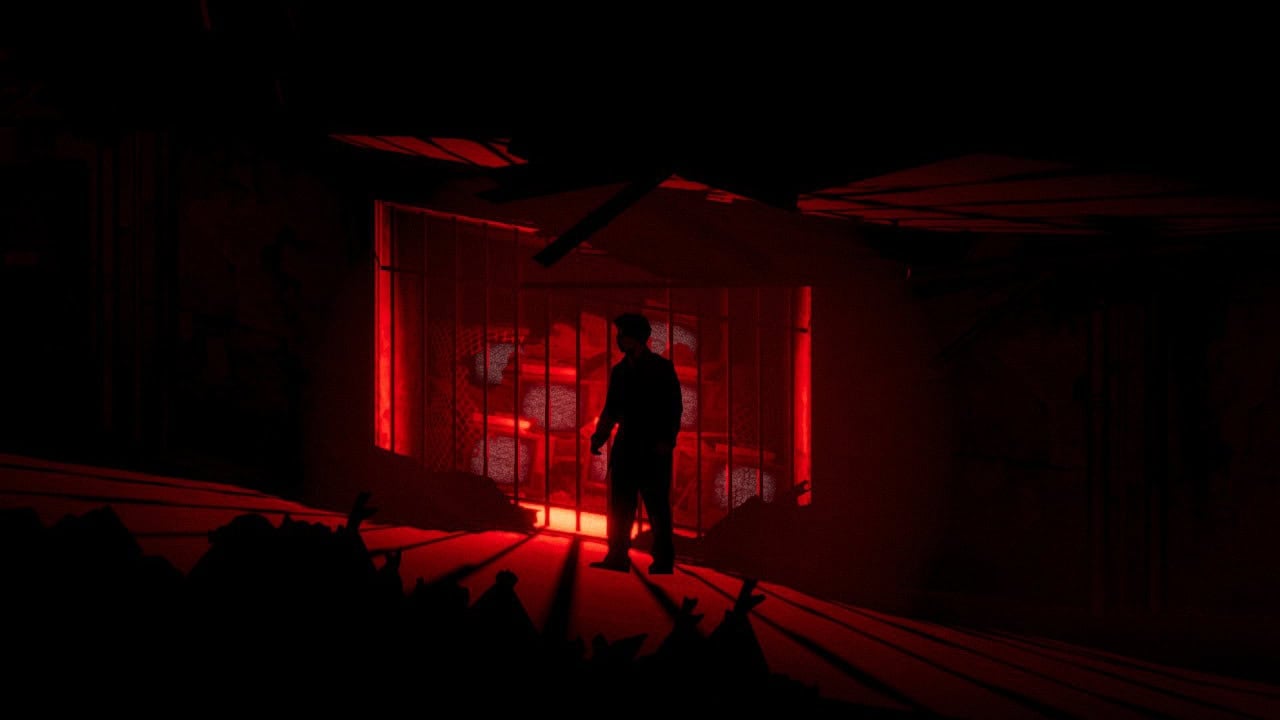
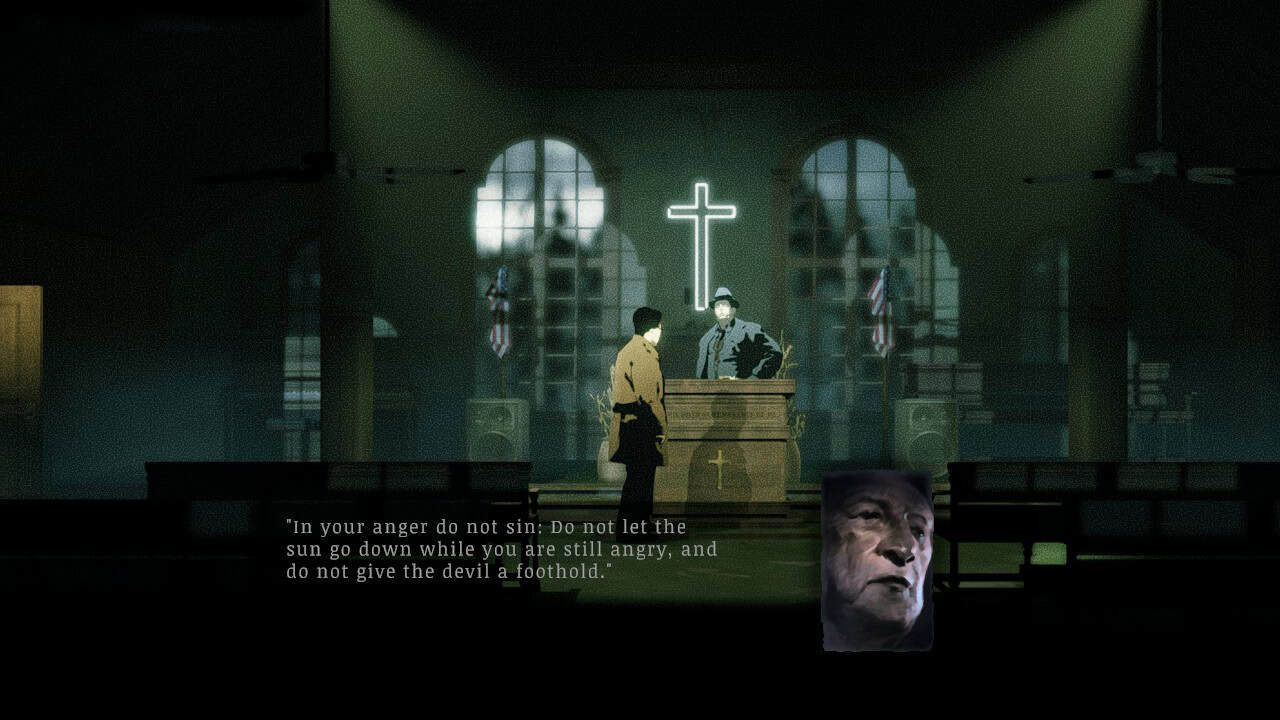
We also encounter various recurring characters throughout the town, each a little strange; a lot of them also seem sad and lost. In this sense, Silver Pines’ setting reminded me a lot of Twin Peaks, especially since it’s based in a sleepy mountain town. Its quirky cast of characters each has something vague, but strangely touching to say, while also seemingly preoccupied by their own deep thoughts.
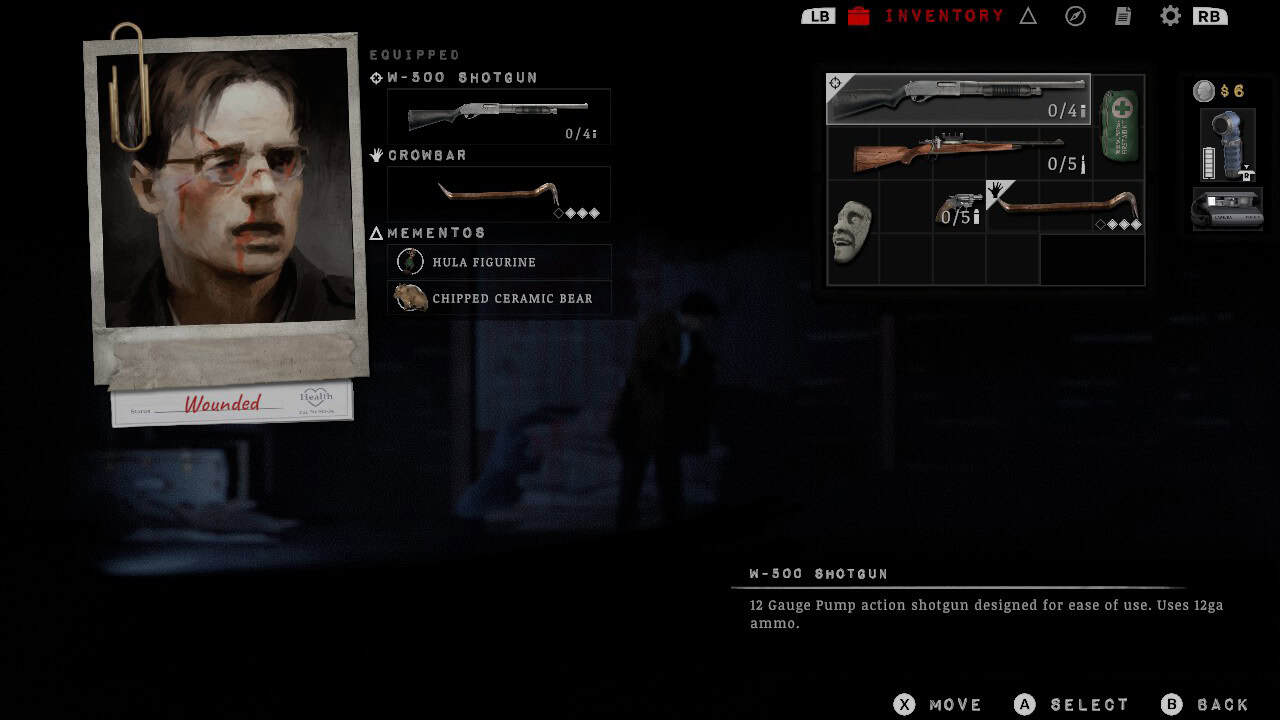
We’ll explore the town of Silver Pines, slowly finding the right tools to access previously locked areas. In traditional Metroidvanias, we would usually unlock new abilities, such as a double jump, to do this. In Silver Pines, progression comes in the form of finding a crowbar to break away several areas blocked by boards, or finding a memento (a collectible that can be equipped to provide a stat boost) that dramatically reduces the stamina cost of swimming so that we can swim to new locations without drowning.
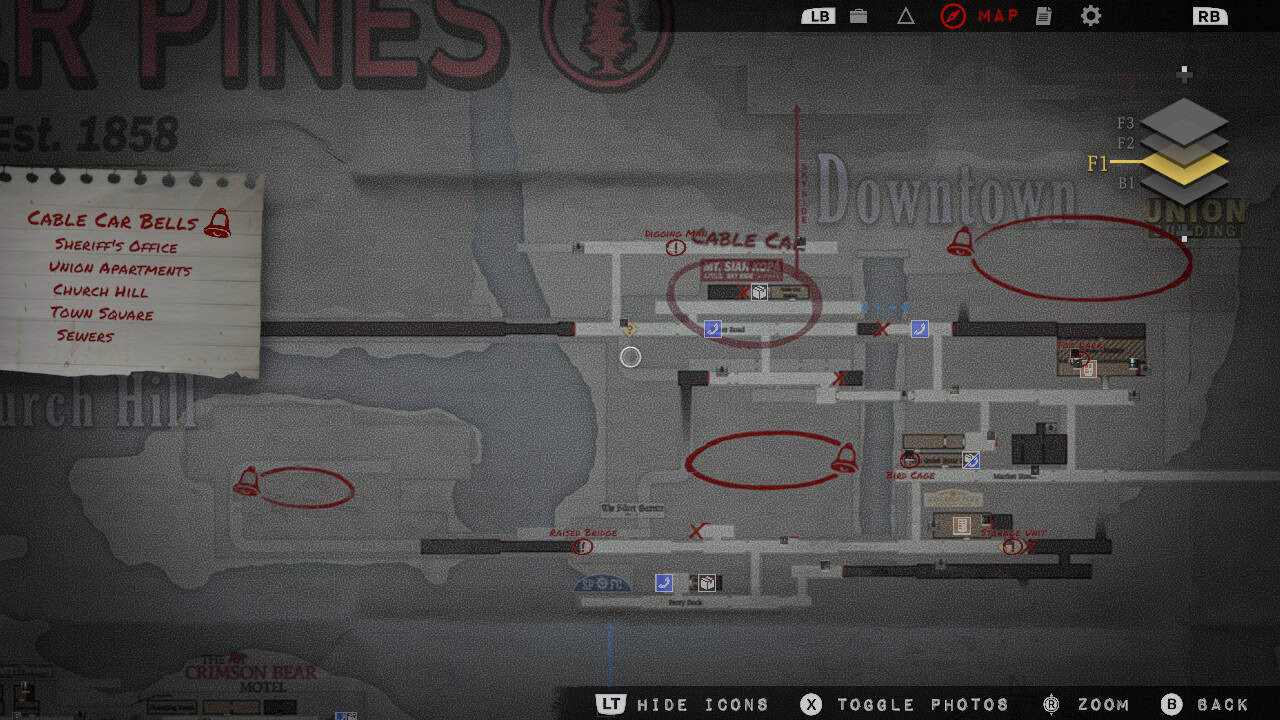
Another Metroidvania, Prince of Persia: The Lost Crown, had the excellent idea of allowing the player to take in-game screenshots that would be automatically pinned to your location on the map, assisting massively with keeping note of locked areas so you would know where to go back to once you had figured out how to bypass whatever obstacle is there. Silver Pines also implements this idea with an in-game camera, which fits in well with Walker being a private investigator. You can also use the camera to take pictures of clues on the walls or fixed environmental objects you’ve zoomed into. A lot of players already do this anyway when coming across puzzles in games, by screenshotting clues or taking pictures of the screen with their phone, so it’s a simple way of recognising this and actually immersing it into the game.
The only problem with this is that there’s a limit on how many photos you can take. There’s no indication of what the limit is or how many photos you have left – you will just eventually be told you can’t take any more until some have been deleted. I didn’t really see much point to this limitation besides being annoying, and all it meant was that I would just simply take the screenshot with my Steam Deck instead. And while you can take pictures of keypads, you can’t take pictures of locks, which was irritating when I was trying to mark down what I needed to open that door for future reference – five hours later, it would be helpful to know if it’s a key I needed or whether I can go back there now with whatever tool I’ve just acquired.
If you thought the 2D perspective would take away from the survival horror experience of Silver Pines, then think again. It’s intense, even without the 3D camera preventing you from seeing what’s coming around the corner. You can hear the enemies off-screen, and that’s usually enough to raise tension as you anticipate what’s to come – especially if it’s an enemy sound you haven’t heard before, as new types are introduced throughout the game. You can easily get swamped by enemies in combat if you let yourself get backed into a corner. They’re quick, hard-hitting, and the variety constantly keeps things unpredictable and interesting.
While you can’t block enemy attacks, you can dodge through or away from them. Dodging and attacking consumes stamina, and if you let your stamina run out, then your dodges will become more of a clumsy stumble, and your attacks will be tired and weak. Stamina can be permanently upgraded by finding coffee to brew throughout the map – now… that’s a damn fine cup of coffee.
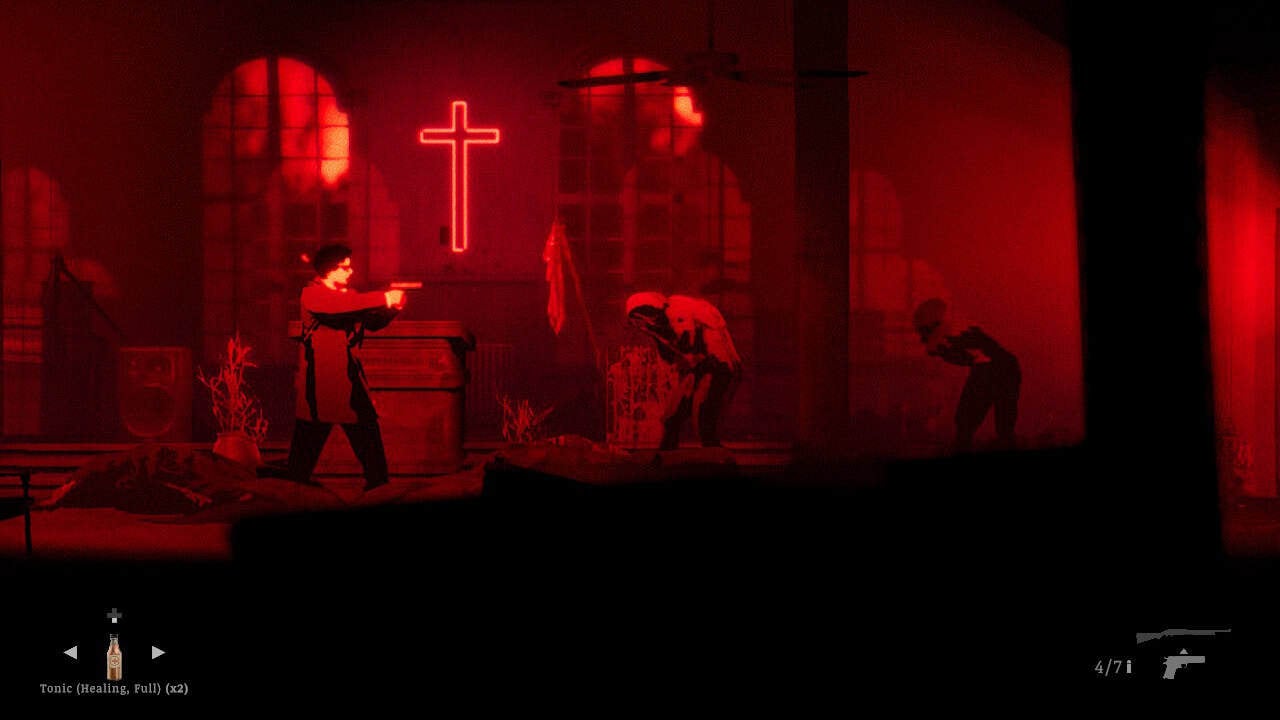
Movement in Silver Pines does not feel good. The fact that I played this on a Steam Deck may have contributed to this, but I found the controls to be particularly unresponsive during combat. And, as combat relies quite a bit on well-timed dodges, I also found that Walker often couldn’t dodge far enough away to avoid some longer-reaching attacks. Because of this, dodging through an enemy rather than away from them became preferable, but this wasn’t always possible. So some attacks genuinely felt unavoidable.
Shooting also isn’t simplified by the 2D style; Walker still has to aim his gun up and down, slowly, which can be troublesome in combat. With nothing to indicate where exactly the line of sight is, it’s very easy to misjudge whether we’re actually aiming at our target or not – never mind trying to do this while in the rush of combat. Reloading also happens via a quick time event – so also not a good idea to attempt it while an enemy is rushing at you. Because of this, I actually ended up much preferring melee combat, especially once I had acquired the sledgehammer and improved my stamina.
I felt a rush from tearing through enemies The Shining-style, especially when the environment would be destroyed around me – ornaments would smash, and enemy blood splatter would paint the walls. But combat just didn’t feel enjoyable, especially during the later stages of the game where by hour 15, I was wondering at what point this game would come to an end. The clunky, sluggish movement just wasn’t satisfying to work with during combat, even for the boss fights, which were otherwise gorgeously designed and nicely varied.
There’s so much to uncover in Silver Pines. It started to feel like there was hidden loot or a secret collectible in every nook and cranny, especially as I slowly grew accustomed to the map and began to spot things I hadn’t noticed before – is that a ledge I can climb over? And I’d check the map, and sure enough, it looks like there’s an unexplored area past there.
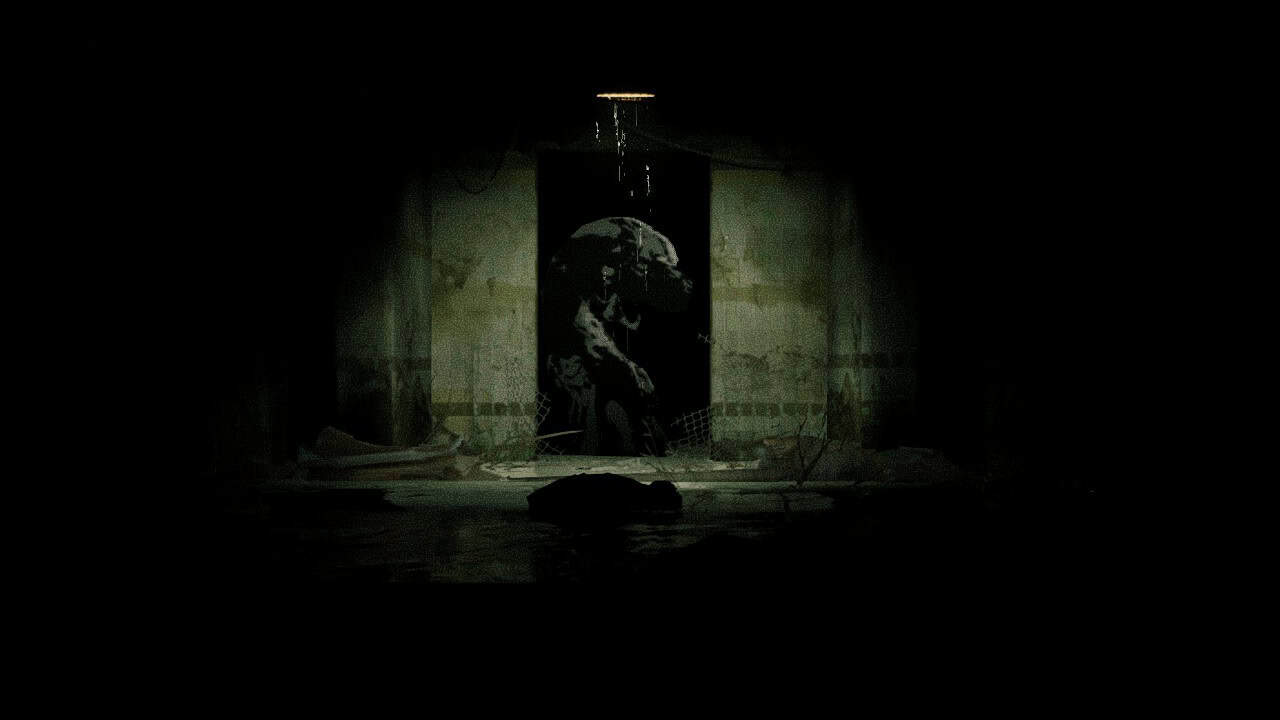
However, after completing the core area at around hour 15, I did feel like the game started to lose its pacing. Gone was the satisfaction of slowly peeling back the map, and when I kept thinking that the ending was just around the corner, it kept on going for another three hours. That being said, when I eventually did hit that ending, it was very much worth it, offering a touching finale to a slow burn story.
Going into Silver Pines, I questioned whether it could still deliver an intense survival horror experience with a 2D visual style. And it certainly delivered on this. Not only is combat high-risk and challenging, even on the lowest difficulty, but the enemy variety and eerie sound design kept things unpredictable and interesting. That being said, combat did not feel satisfying to play, and it’s such a significant part of the game that it’s hard to ignore. Despite this, Wych Elm has not only nailed the feeling of a 2D Resident Evil game on their first rodeo, right down to the tricky inventory management, satisfying map system, and the constant back-and-forth for key items, but also provides a visually gorgeous, moving experience — offering a standout title in two heavily populated genres.
Jess reviewed Silver Pines on PC with a provided review code. This review is based on the version of the game available at the time of writing, and our score will not be changed.
- Score
- 8/10 EXCELLENT - GAMEOBSERVER RECOMMENDS
- Summary
-
Jess says: Wych Elm has not only nailed the feeling of a 2D Resident Evil game on their first rodeo, but also provides a visually gorgeous, moving experience — offering a standout title in two heavily populated genres.
- More
- GameObserver's Review Policy





 ObserverCrew Picks
 bserver
 bserver