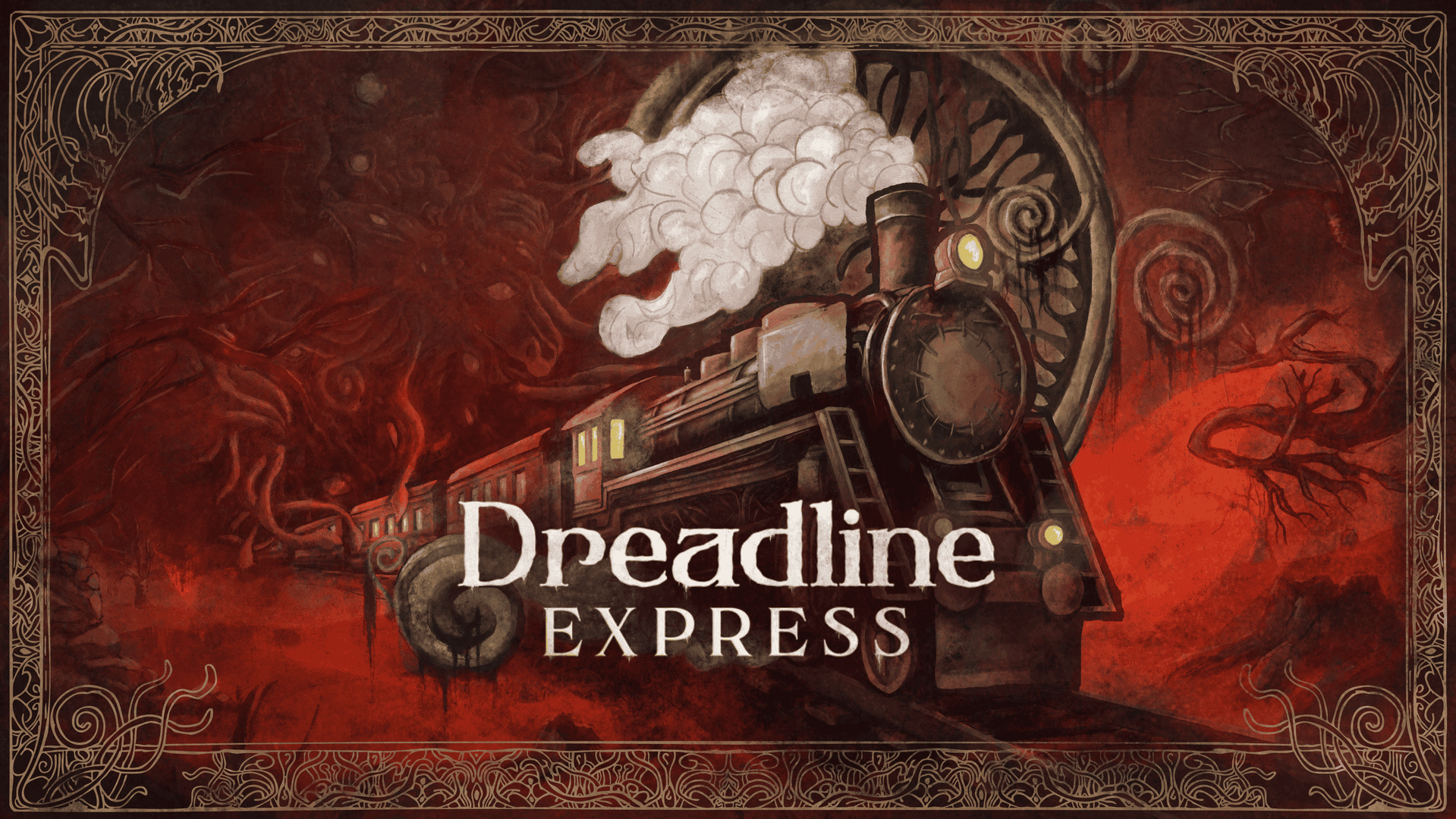
The last vestiges of humanity reside on an ever-moving train as the apocalypse destroys the world around them, under the constant threat of creatures trying to tear it apart. We wake up to an alarm blaring in our compartment, announcing the next lottery draw. The person selected will be sacrificed to keep the train moving and buy its passengers a little more time. Our name is the one drawn. However, when our sacrifice is interrupted, the Engineer sees this as a sign, and we are assigned the heavy burden of selecting the next sacrifice out of the five other remaining passengers.
Much like the narrow passageways of a train carriage, Dreadline Express is a very confined game, occupying a single train carriage. There are five other NPCs to interact with, not including the Conductor, who is unwilling to chat with us, and the mysterious Engineer who remains locked in the engine room.
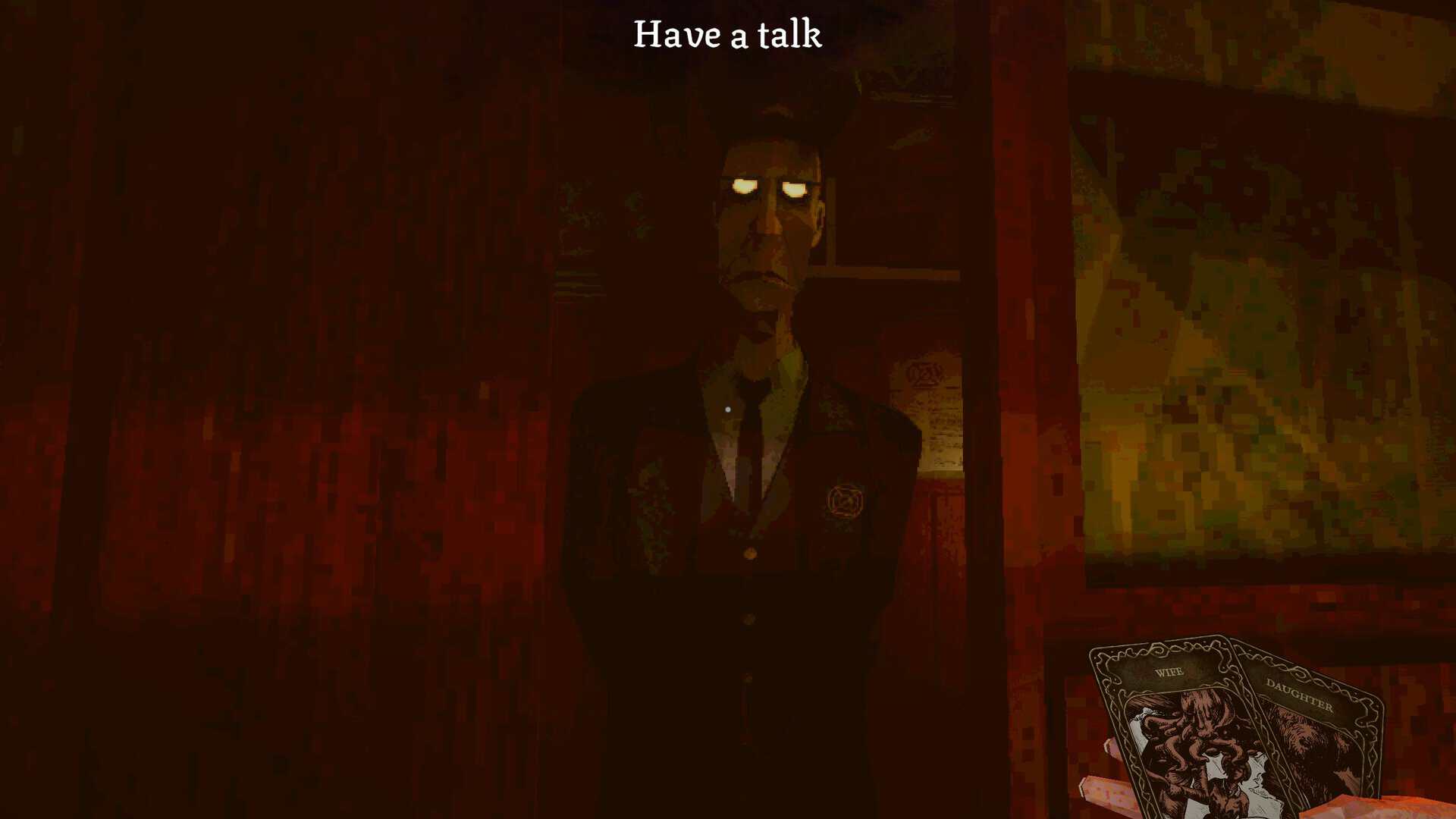
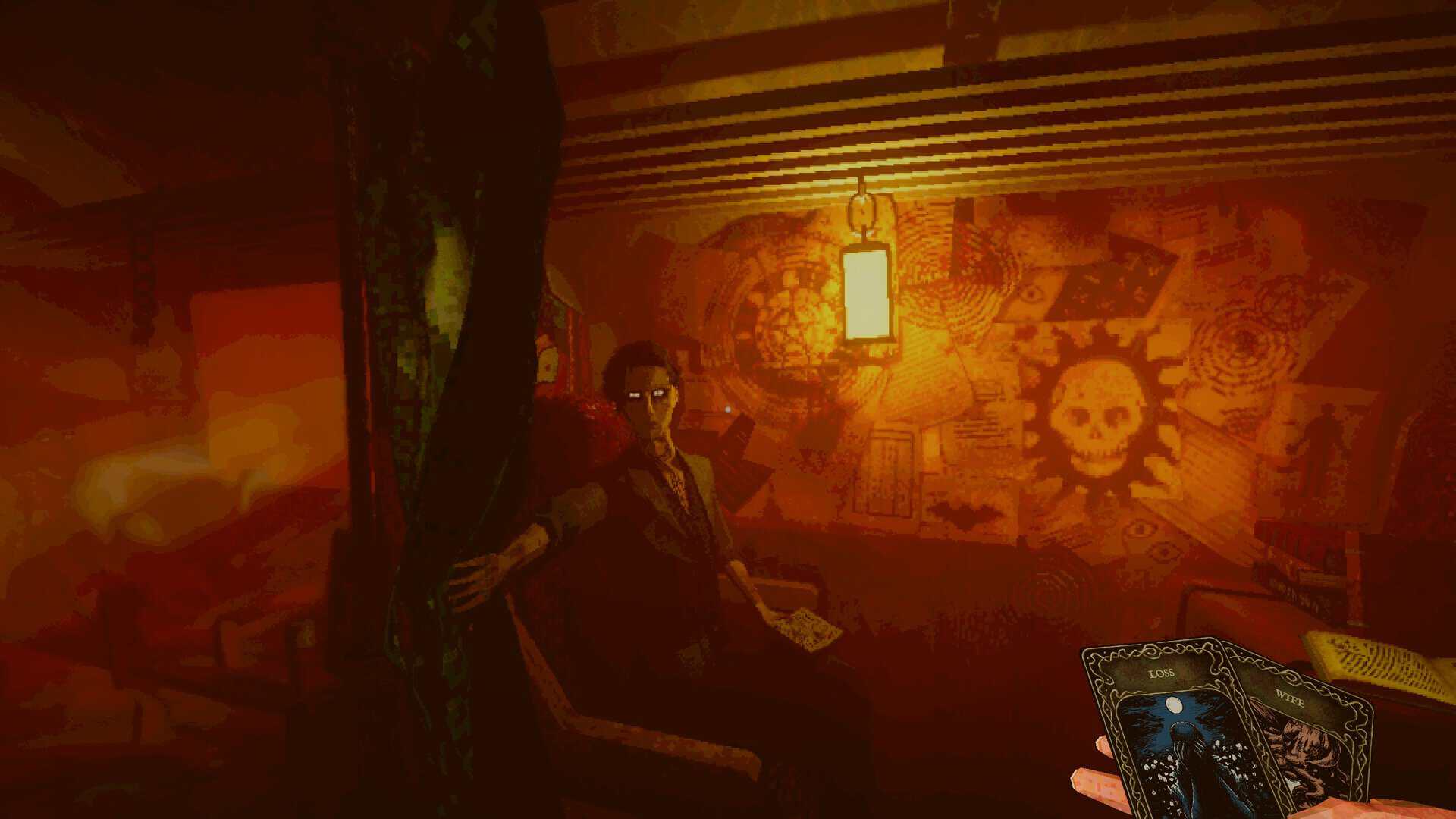
We communicate solely with cards, which we collect in an album by exploring and conversing with the other passengers. Different cards can be combined for more specific discussions. For example, using the ‘wife’ card would ask a passenger about family in general, whereas using the wife card with the ‘apothecary’ card (we are an apothecary) would discuss our own wife with the passenger.
Dreadline Express is set in a Lovecraftian world; the creatures outside are trying to tear the train apart with tentacles, and much of the storyline revolves around the occult and rituals. As well as getting to know each character on board the train in order to decide who to sacrifice, we’ll slowly uncover the train’s origins, its destination, and its terrible secret by piecing together what information we gather from each passenger. Progressing in the story involves finding the right cards to combine, which will propose big questions regarding the core storyline, or reveal conclusions based on the evidence we’ve gathered.
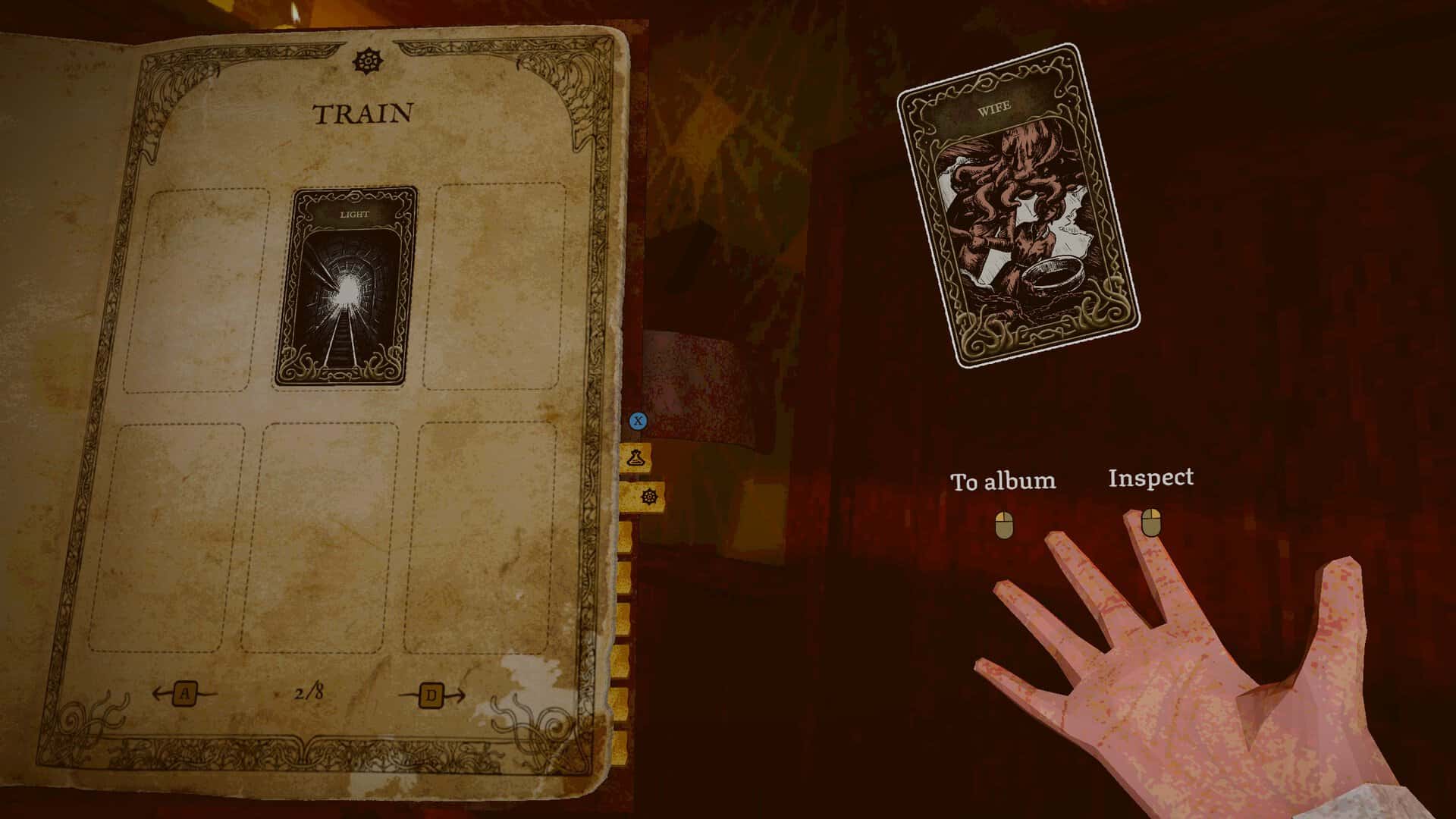
The tone is set immediately with the bleak setting. The train is dark, lit only by candlelight and the red glow of the apocalypse seeping in through the windows. If we observe the candles, we are told that the train’s supply of wax will soon run out. The low-poly graphics are perfect to complement the train’s dingy appearance, but what stood out to me the most were the wild, glowing eyes of Dreadline Express’ NPCs, giving them a look of madness. It instills a feeling of pure hopelessness as we get to know these people more and better understand our circumstances; they’ve lost so much and done such terrible things to stay alive that I contemplated whether our efforts would even be worth it.
One problem I could foresee going into Dreadline Express was how the topics of the cards could be interpreted differently between players, resulting in them knowing what needed to be asked or told, but not knowing what card combination to use to do so. I came into such a problem three hours in when I had exhausted all the potential card combinations that I could think of despite having worked out the answer that the game’s NPCs were hinting towards. I just couldn’t work out how to trigger that conversation because any cards associated with that conclusion weren’t working. It turned out that I simply needed to do something that I had been holding back on, believing it would trigger an early end game or have dire consequences. Some kind of prompt or assurance that it was time to make that decision would have saved me three more hours of tearing my hair out, wondering what I was missing.
This also could have been resolved with a better save system, as my biggest concern was losing all of my progress if I made that decision too early. I had already lost hours of progress after my game shut down unexpectedly (not due to crashing), and I realised the game very much lacks an efficient autosaving system, as the last autosave that I could load up took me back to shortly after completing the intro. There are also a few early-game decisions that I was intrigued by, but not so much that I wanted to start the game again and have to recollect all the early-game cards. Multiple save files would not only have resolved my fears of messing up my save file, but would also support Dreadline Express’ replayability, which it does have.
Dreadline Express is a fun, unique horror game where dialogue comes in the form of card combinations, making you think carefully about word choices and the different ways they could be interpreted. The story and atmosphere are top-notch, and if better indicators of when it’s time to move on and the option for multiple save files were to be implemented in future updates, this would save a lot of players’ time and also support its replayability.
Jess reviewed Dreadline Express on PC with a provided review code. This review is based on the version of the game available at the time of writing and our score will not be changed.
- Score
- 7/10 SOLID - GAMEOBSERVER RECOMMENDS
- Summary
-
Jess says: Dreadline Express is a fun, unique horror game where dialogue comes in the form of card combinations - making you think carefully about word choices and the different ways they could be interpreted.
- More
- GameObserver's Review Policy

 ObserverCrew Picks
 bserver
 bserver