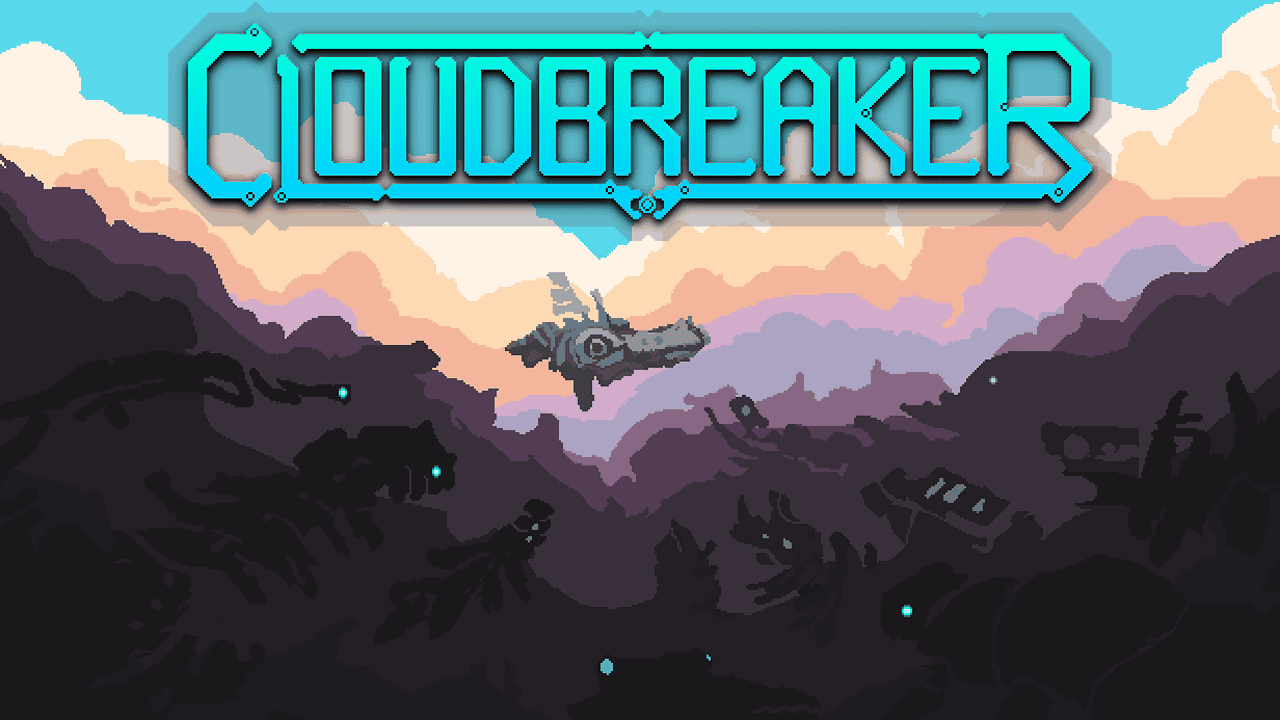
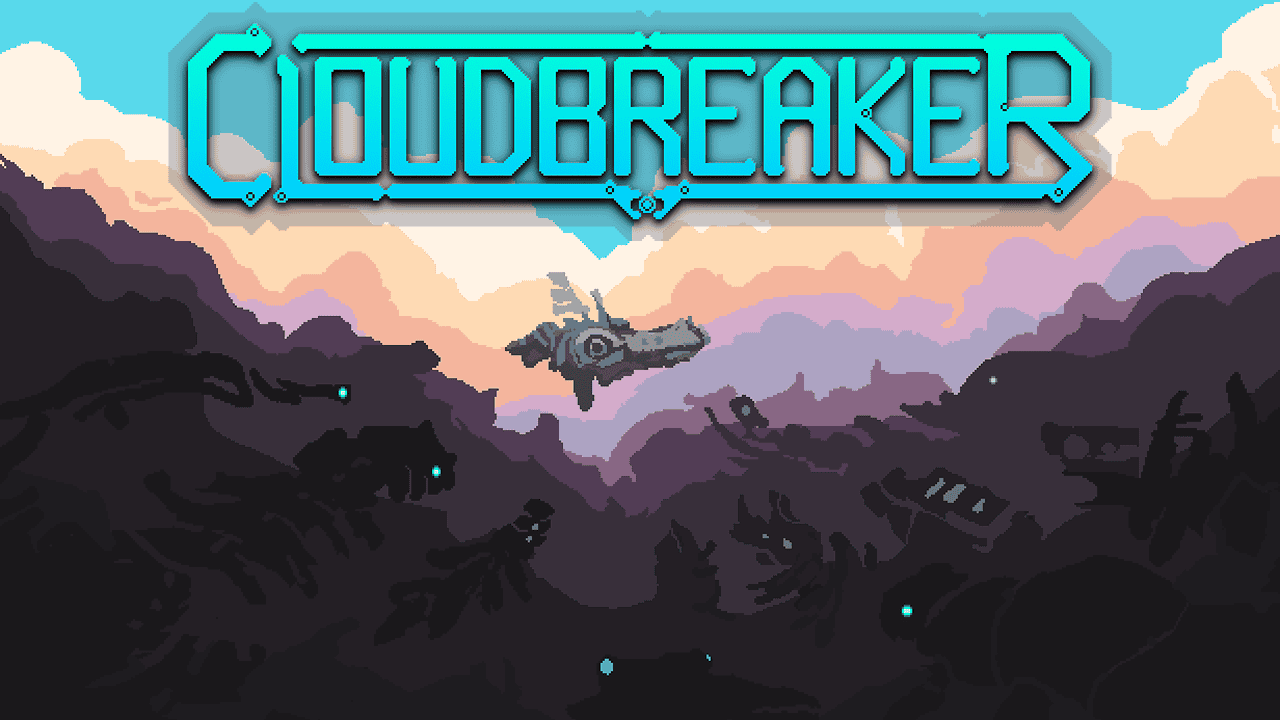
There I was, 20 hours deep into Cloudbreaker, debating between slotting in a new network of engine parts or selling them off to upgrade my energy sword, when it dawned on me—I had yet to experience a bullet heaven that allowed me to actively make so many decisions before. Whether I was choosing between engine parts or a direction to go, I learned to weigh each decision carefully. And after having the privilege of chatting with Ballast Games, the two-man team behind Cloudbreaker, I learned that this level of player agency was anything but accidental.
While the origins of the bullet heaven genre can be traced back over a decade, its rise to prominence started in 2022. In the years since, the popular formula has doubled down on a few key design philosophies: passive, auto-attacking weapons, randomized upgrades, and increasingly absurd power curves. But as the genre became more established, so did its level of stagnation. And for certain developers, like Anand Friesen and Brendan Tipney, that stagnation gave rise to an opportunity. In 2025, the two long-time friends created Ballast Games, a new studio which aimed to create satisfying systems that would reward strategic thinking.
When asked, Brendan linked the studio’s formation back to their friendship and complementary skillsets: “I knew between me and Anand we had the full skillset to build a game, and a shared love for similar aesthetics and worlds. So I came to him with a game I had been working on, and we quickly started drafting ideas for what would become Cloudbreaker.”
Both Anand and Brendan had previous experience in game development before Ballast Games. Brendan got his start building demos and VR/AR games for volumetric content. Anand, on the other hand, was an established painter who had practiced pixel art while exploring his own independent projects.

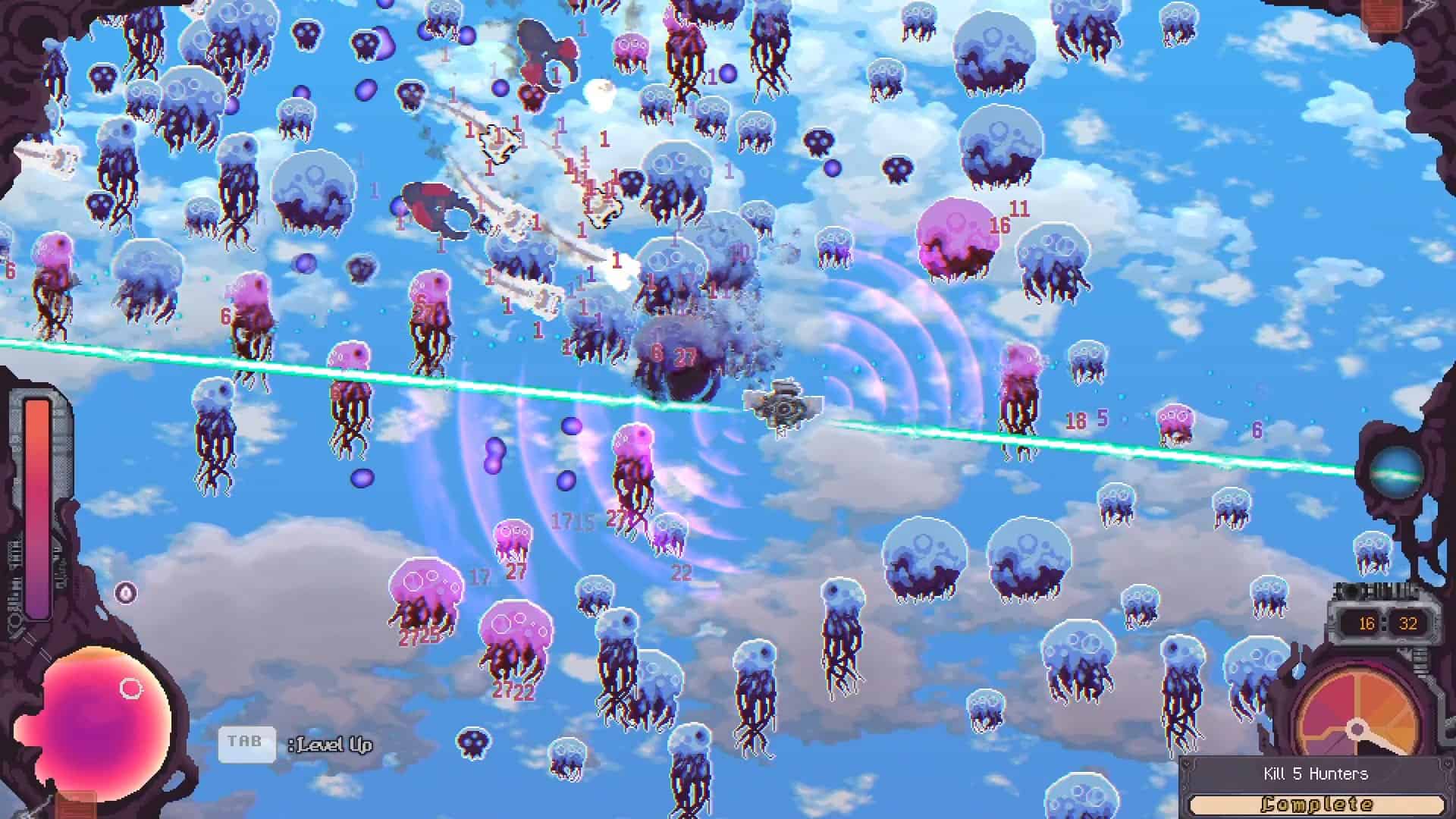
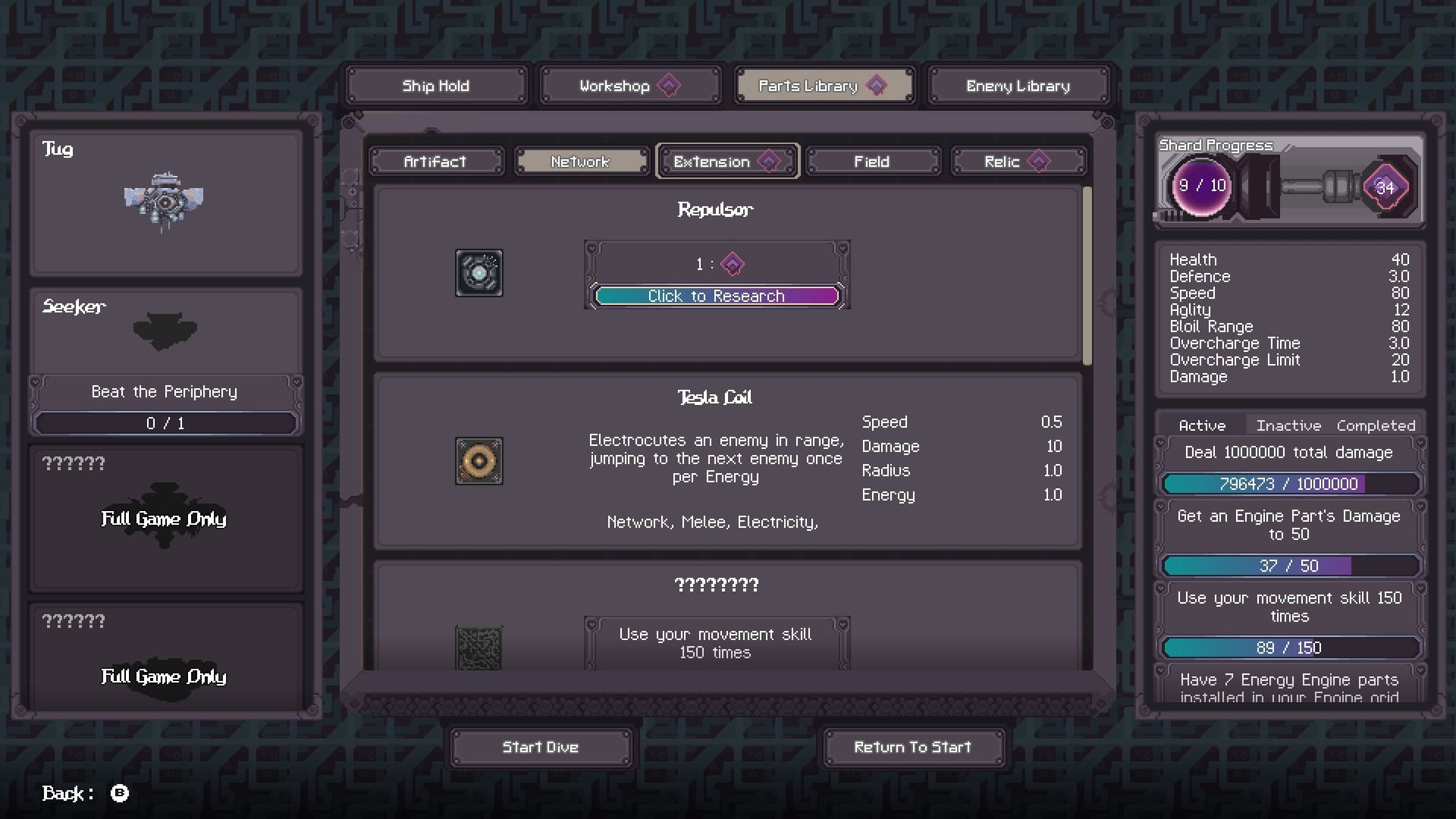
In true game development fashion, Cloudbreaker didn’t start as a proper bullet heaven, but instead as a roguelite with extraction elements. However, as time went on, their goals, scope, and ideas changed. Both Anand and Brendan shared an interest in active gameplay and puzzle-like systems that required full player engagement for mastery. This led to the idea of Cloudbreaker, a 2D bullet heaven roguelite with a unique inventory management grid that required players to make tactical decisions around their build.
Yet the idea of an inventory grid did not fully crystallize until later down the road. “We were trying to make a bullet heaven game, but we weren’t initially trying to make an inventory management game. The inventory management just kind of happened, and we realized, ‘Oh, this is effective as essentially an inventory management game as well,’” said Anand.
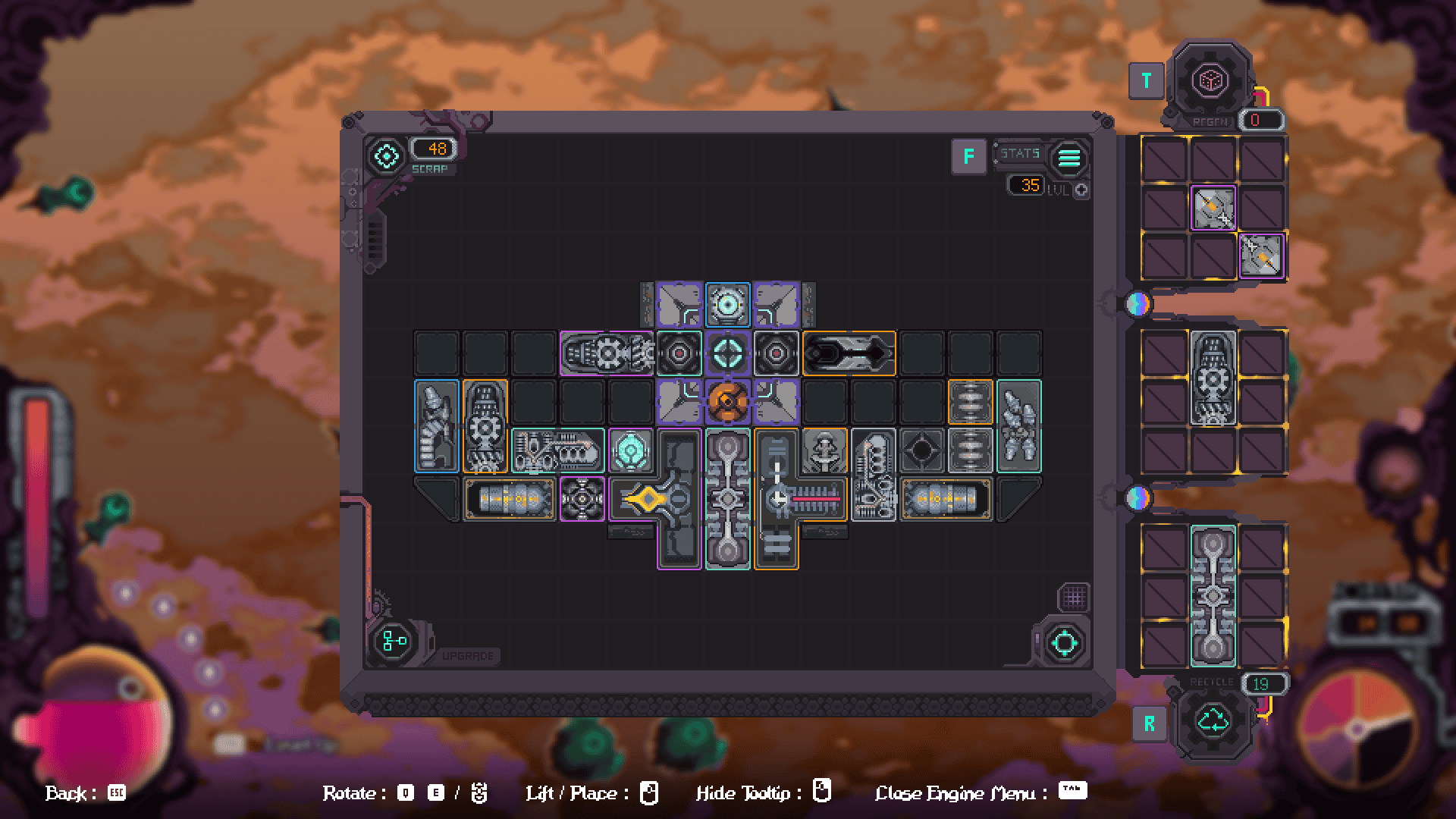
Through multiple iterations, the system ultimately aligned with their intentions to make a bullet heaven with strategic depth and replayability. A theme Anand expressed was important in distinguishing Cloudbreaker from other games in the genre. Anand explained, “So many of these games you just kind of figure out a build that you like and you enjoy, and the creativity of it kind of drops out. And so being able to actually rearrange parts just increased the amount of complexity in the number of builds you could have.”
Brendan related their systems, and the genre as a whole, to a puzzle. “To me, a bullet heaven is actually a puzzle game. What is the combination of things that allow me to scale exponentially rather than linearly?” That belief led Brendan to print 3D inventory grids to allow both team members to visually refine the puzzle-like system outside of their screens.
However, evolution and change can inherently come with some risk. Brendan implied that the decision to make a more active bullet heaven was not made lightly. “Moving to a more active part is definitely a strong decision that might alienate part of that audience.” He continued, “I think a lot of people in this genre really know what they like… there is a nice element about it being a little passive, something you can do that’s not fully engaging but still satisfying.” Brendan went on to say, “But we knew that there were some players that would appreciate these things like us and respond positively to that.”
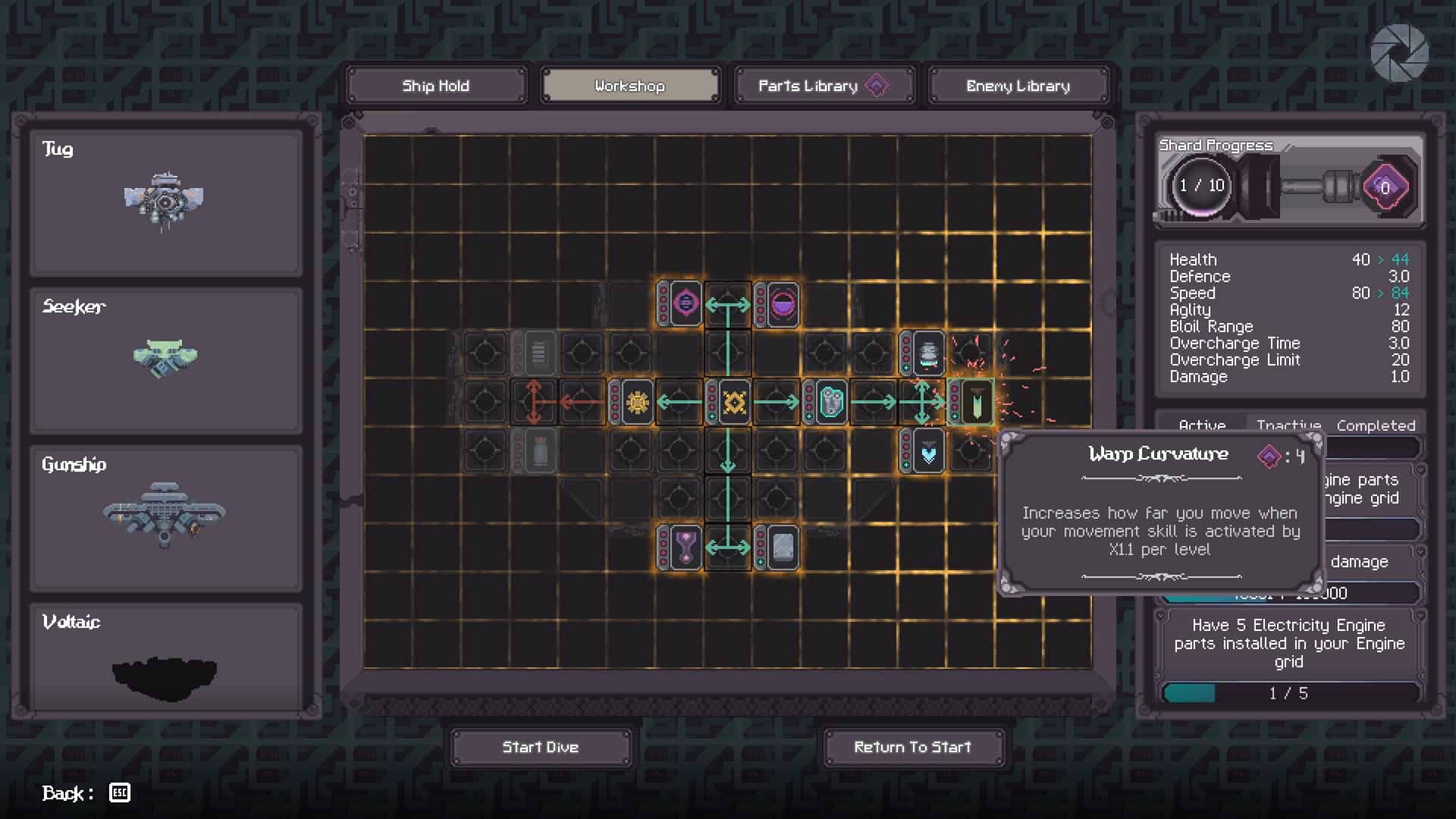
The team continued to strive to create dynamic gameplay through the addition of directional engine parts—a feature that needed a great deal of strategic thinking to use effectively, and ultimately allowed for additional depth and player choice. From early on in development, Brendan expressed the team’s desire to pursue this core feature to reinforce the game’s tactical building blocks.
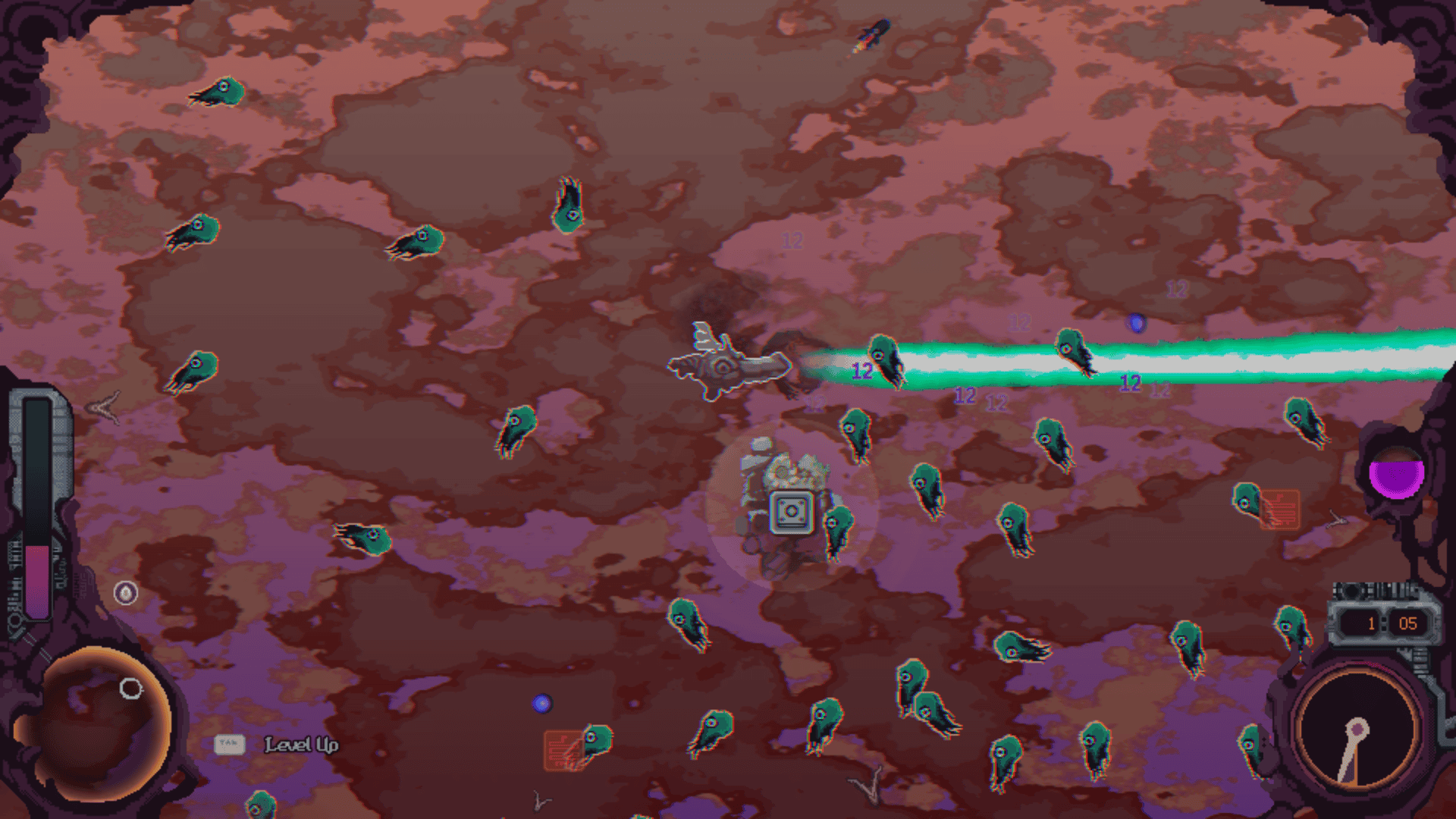
“Immediately we felt that the directionality was interesting. It also creates interesting trade-offs, you can have super powerful weapons but only on one side. That also creates advantages for faster ships, like the Seeker. It might be a bit weaker, but since you can always make sure the enemies are on the side that you put [your directional weapons] on, you can really create some interesting opportunities for player decisions and agency.”
Despite their emphasis on active gameplay, both developers expressed the desire to allow player choice and freedom. That includes the option to explore more idle gameplay. “There’s a lot of agency and choice in the builds and weapons you choose, in terms of how idle or passive a run is… I’m hoping that will come across to players and to people who have those preferences… and hopefully [those players] also get pushed out of their comfort zone. Both of us have some desire to push boundaries a little bit and get people to try different things and experiment,” said Anand.
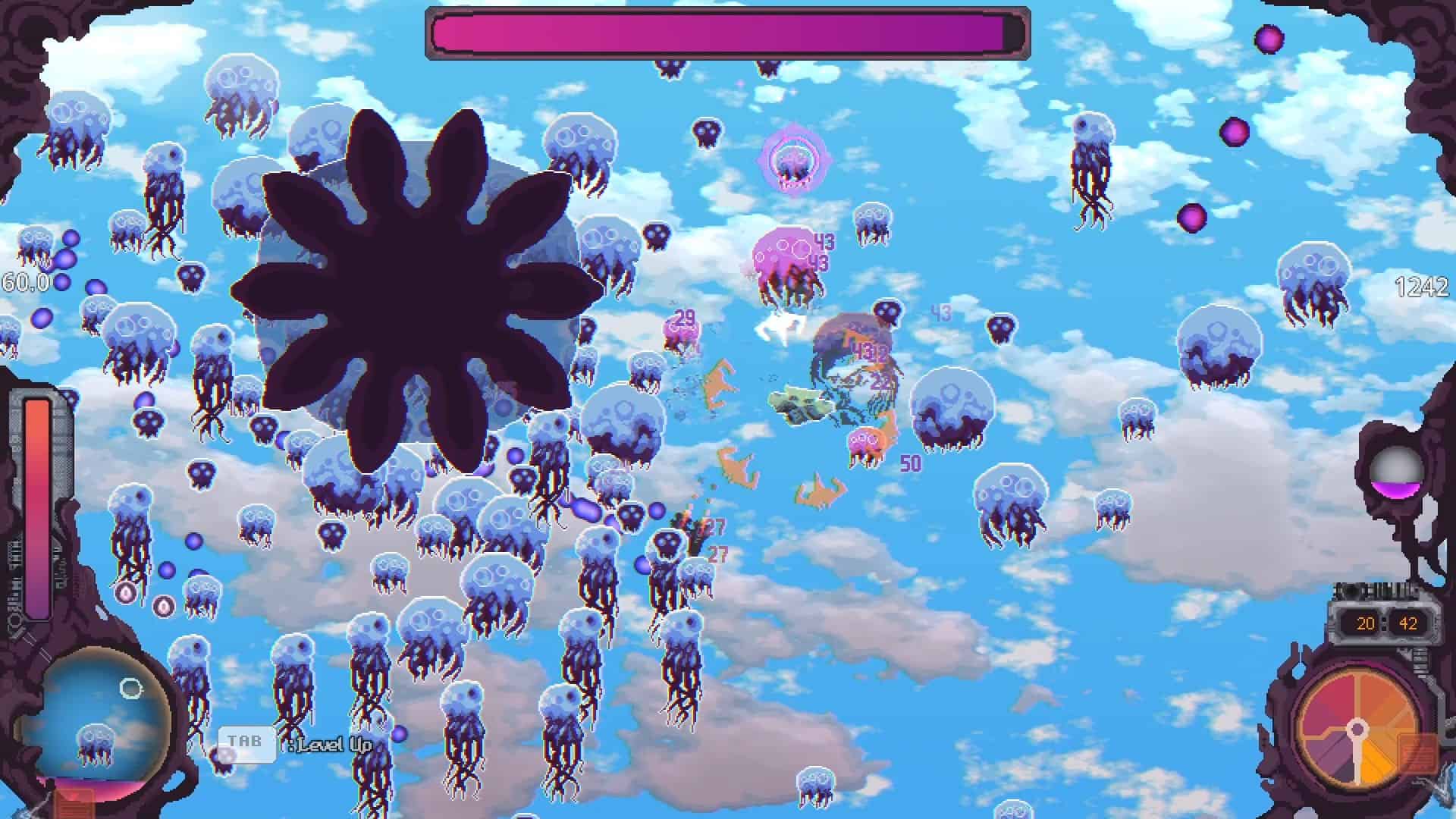
The studio went on to explain the importance the community had in making decisions like this. “We had a lot of great feedback from a number of people. We had at least five players who were really core in shaping this,” Brendan explained. “Without that kind of player feedback, we would not have been able to balance it. There’s just two of us, so we didn’t have the amount of time to put in every single combination of parts and every ship… to find those broken builds.”
But even player feedback has to be balanced with the team’s convictions and strong beliefs about their own creation. “At the end of the day, you can’t help but make things in the way that you like them. As much as you might want to stay on a certain track, you’ll ultimately bump into those edges and push things into the direction that you would prefer to play it,” said Anand.
Whether Cloudbreaker’s unique take on the genre lands positively with the community is still to be seen. Either way, the team has demonstrated that the formula doesn’t have to be confined to preexisting design philosophies, and both members expressed excitement at the possibility of continuing development for the game. “We put our hearts into this,” said Brendan. “We can’t wait to get it into people’s hands.”
Cloudbreaker launched on Steam on September 15, with a Nintendo Switch addition planned to launch in 2027.



 ObserverCrew Picks
 bserver
 bserver