I started playing Stardew Valley during the pandemic and didn’t actually make it that far into the game. I didn’t understand the fishing minigame and talking to pretty girls gives me anxiety, even when they’re made of pixels apparently. I kept meaning to go back to it, especially when my kids got old enough to play video games and discovered it for themselves. Well, I’m still not playing Stardew Valley, but by the end of this, I think you’ll understand why I suddenly find the Flower Dance less worrying.
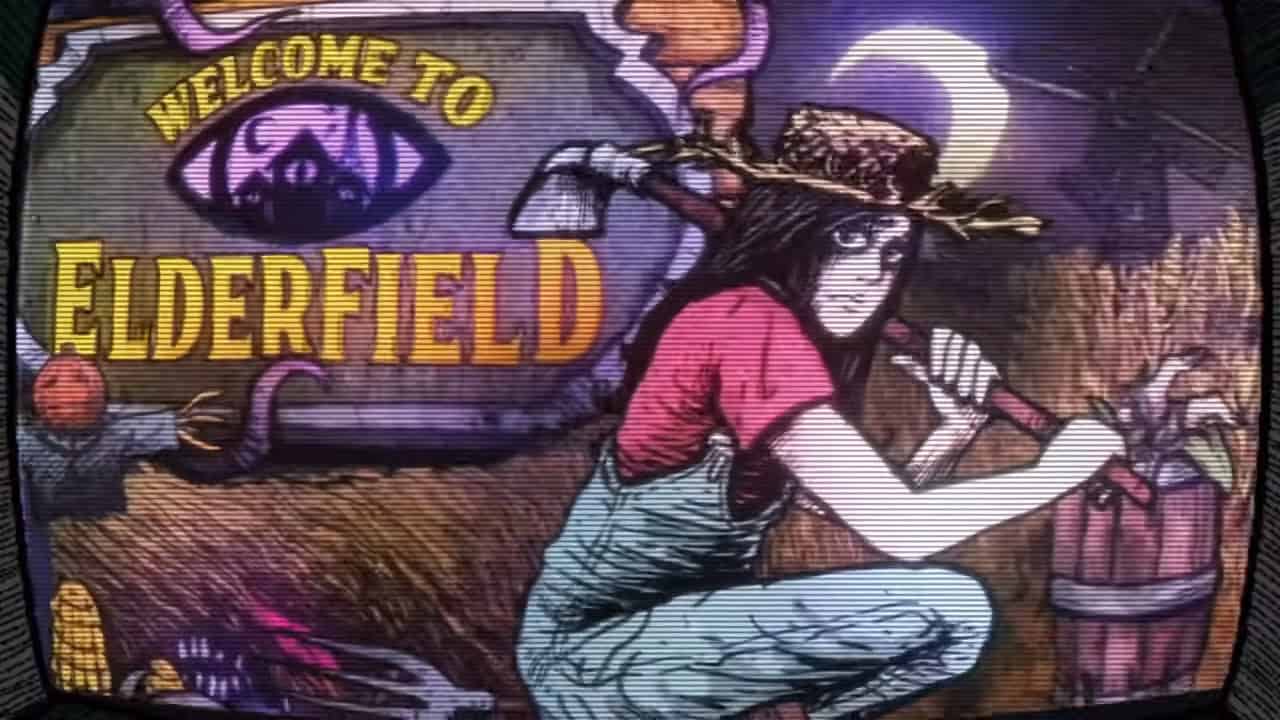
Welcome to Elderfield is a cozy horror RPG, and it doesn’t mind splitting itself evenly between the horror and the cozy. Starting with a “dream” of wandering through the forest and coming across cultists (that ends in a combat tutorial), the game presents Elderfield as a town where everyone goes about their daily lives taking for granted the fact that they don’t remember life before coming to the town and that no one truly has the ability leave.
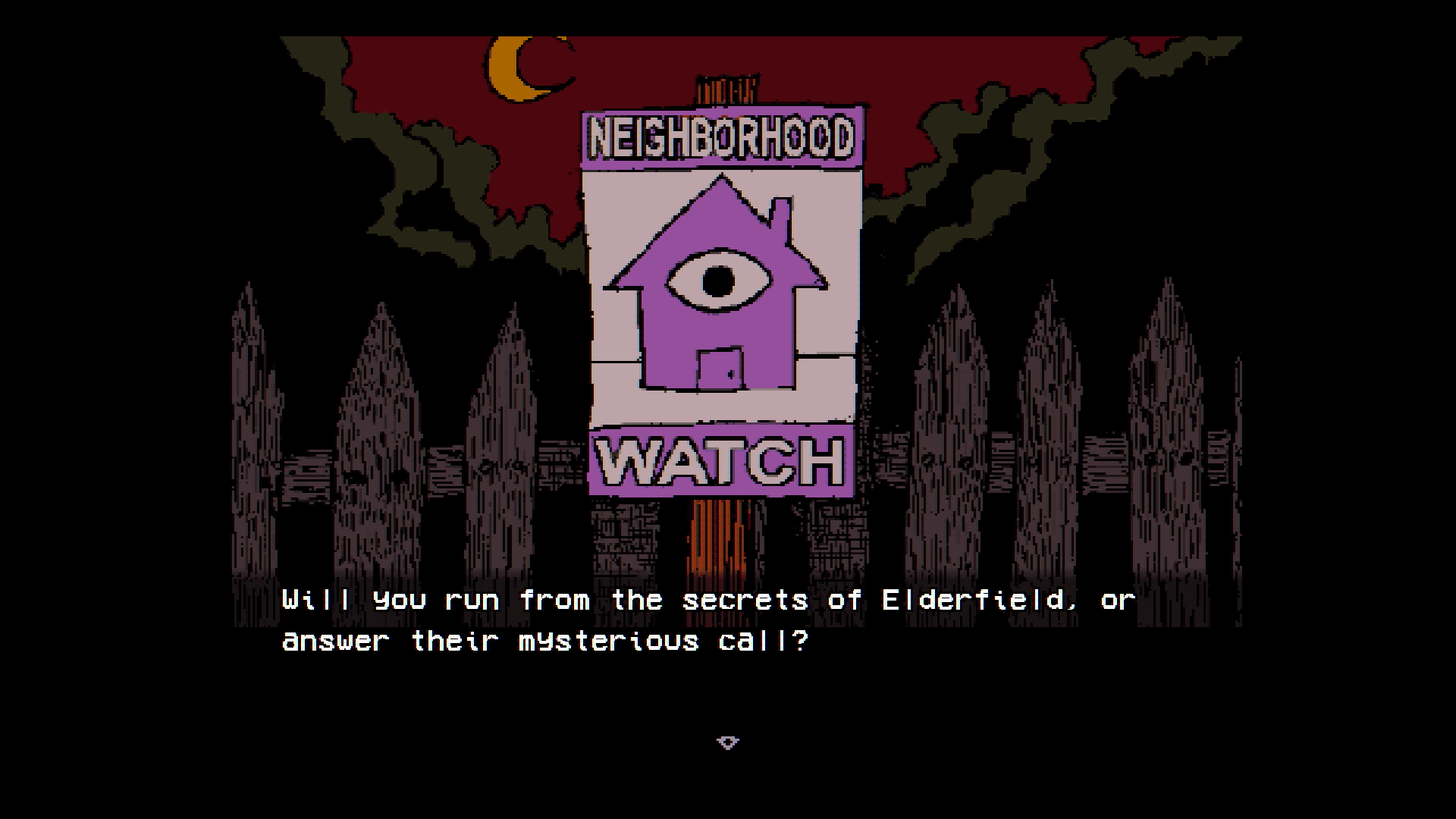
You, the player, are then challenged. What will you do, given control over your own fate? And the possibilities offered are seemingly endless. There are two primary mechanics that you won’t be able to avoid completely, although how much you engage in them is ultimately up to you: farming and fighting.
Farming works the way it does in most sims, with a couple of exceptions. First, while most of the tasks and notifications from the game will refer to it as “your farm”, you’re actually working for a resident of the town named Farmer Hans, who has gained the reputation of being a recluse when he actually is just unable to leave his home.
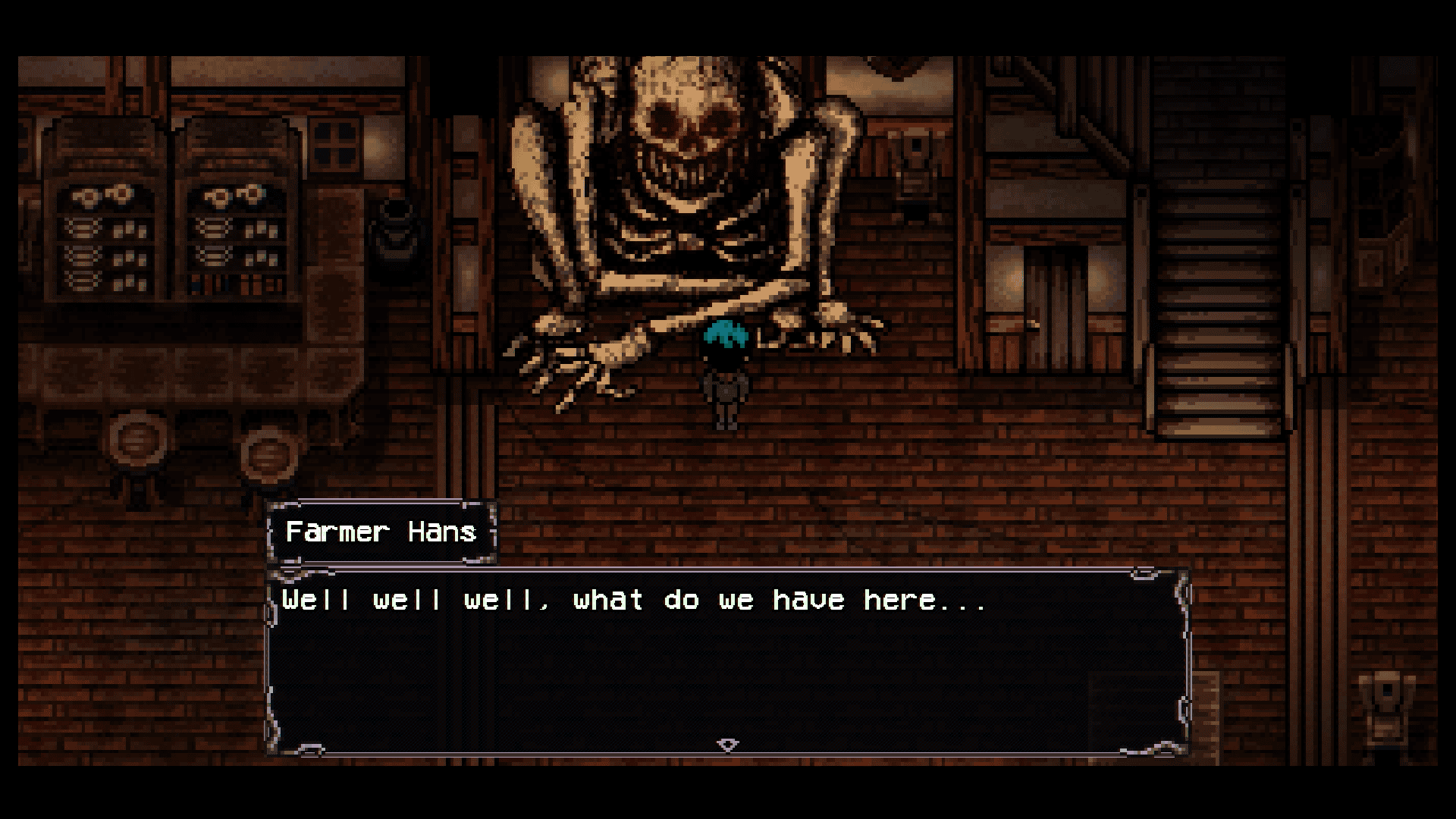
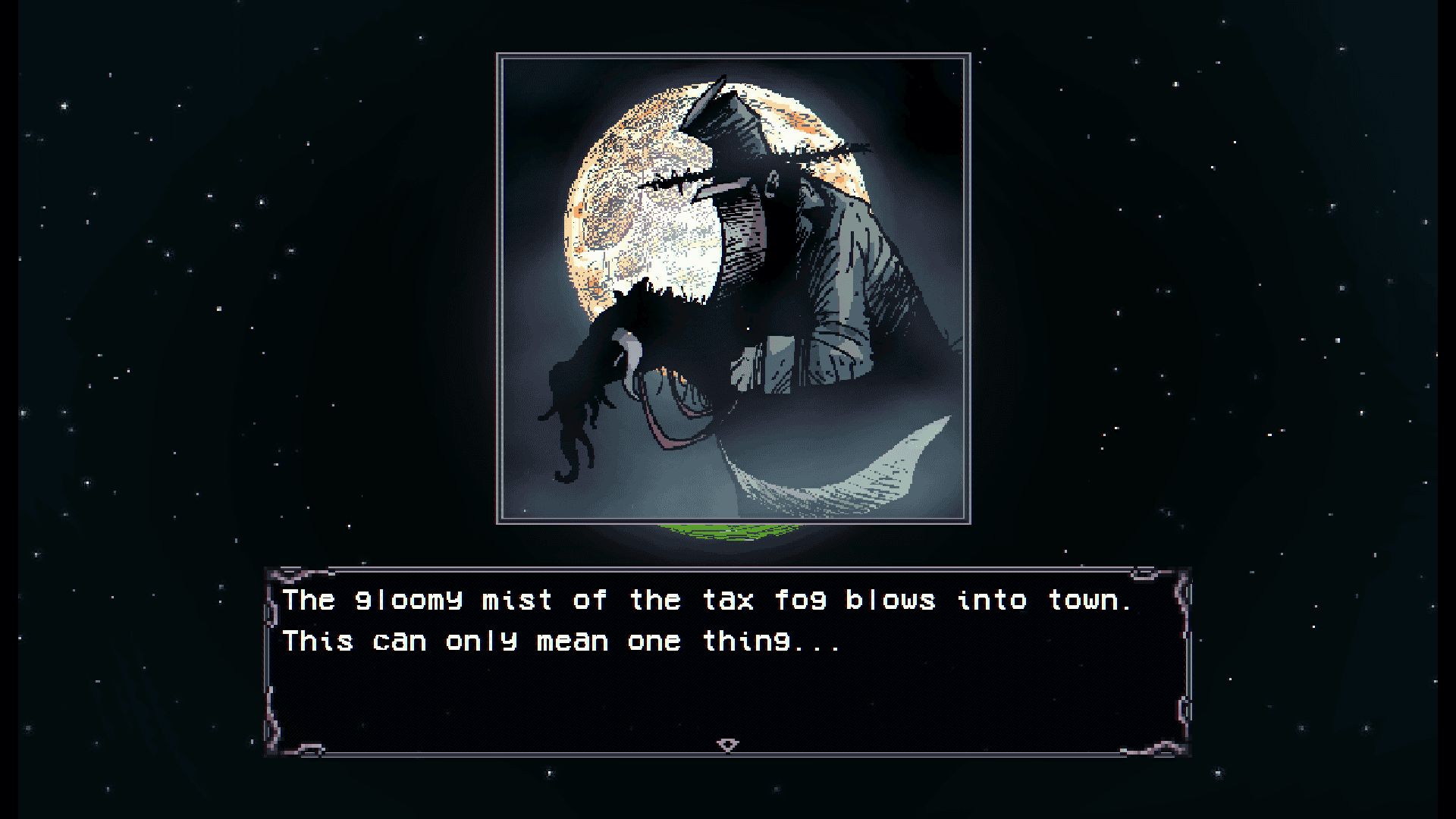
As you complete various tasks, new crops become available, and the harvested produce can be sold, used in recipes, and is sometimes needed to complete different tasks. The main reason you will not be able to avoid farming completely is The Tax Man. One of several recurring characters, the Tax Man appears on the road between the town and farm once every two weeks, demanding a specific “tax”, paid in produce. If you can pay, you receive a gift: a boost to your stats, higher crop yields. If you come up short or refuse, he will bestow a curse instead. As his gifts and punishments last until his next visit, you have to do at least a minimum of sowing, tending, and reaping.
Speaking of stats, you literally won’t be allowed to set foot in certain places unless you’ve forged a real weapon, and even if you don’t, you can attract attention to yourself just by chopping wood or pulling weeds, drawing monsters out of the nearby forest. Even walking through the library could trigger an encounter. While anything like a boss battle has to be sought out, you won’t be able to avoid combat completely.
The combat system is easy to learn as well, with your health and mana tracked at the bottom right of your screen and your enemies’ health tracked at the bottom left, and turn-based play that allows you to choose from a basic attack, a ritual, or a skill, or using an Item. While leveling up is standard, increasing HP, MP, and other stats, hitting other milestones, like completing specific tasks or defeating specific bosses, increases a more abstract “combat ability” (not a recorded stat) and grants you, for example, more actions per turn.
Status effects like stun and dizziness can still be inflicted from enemy attacks during combat, but more concerning are the Blessings and Curses which can occur from:
- The moon rising
- Finding a haunted ATM
- Praying to a shrine
- Declining to pray to a shrine
- Mining too loud
- Going to bed
- Not going to bed for several days
- Eating spoiled food
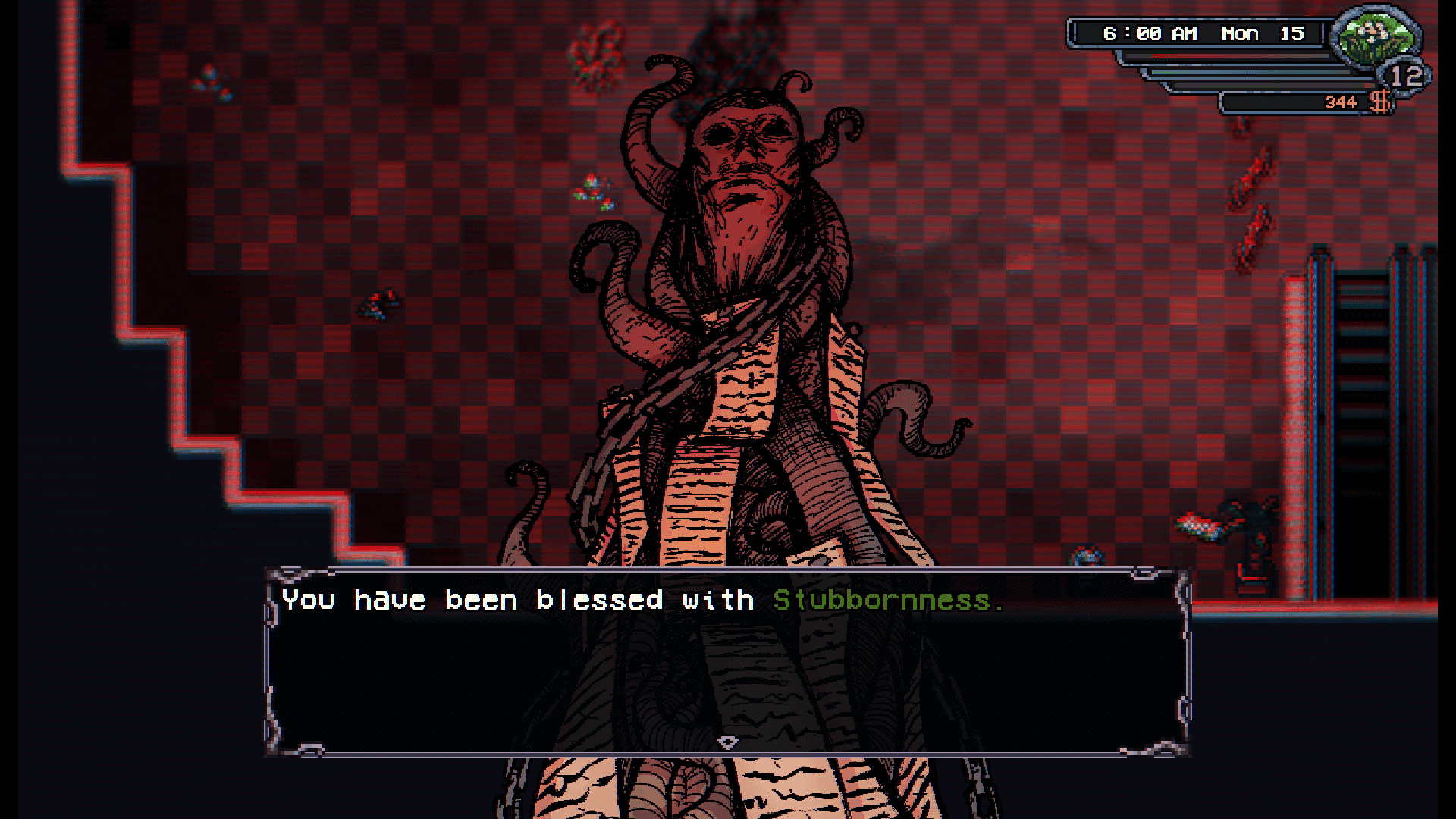
Like many things in the game, these are all determined by the roll of a die. Roll high, you get something good. Roll low, you don’t. If you’re just searching the garbage, rolling a one doesn’t hurt so much. But when you roll a one after choking down some canned beans you found in an abandoned mine shaft? You’d be lucky if all you got was a curse.
Blessings have a percentage increase effect on stats while curses have a percentage decrease effect, and depending on who gave it to you and how. Some of them can last until midnight, some of them can last multiple days, some of them are “incurable” and you have to stick it out until they fade away, and some can be cured by taking a bath.
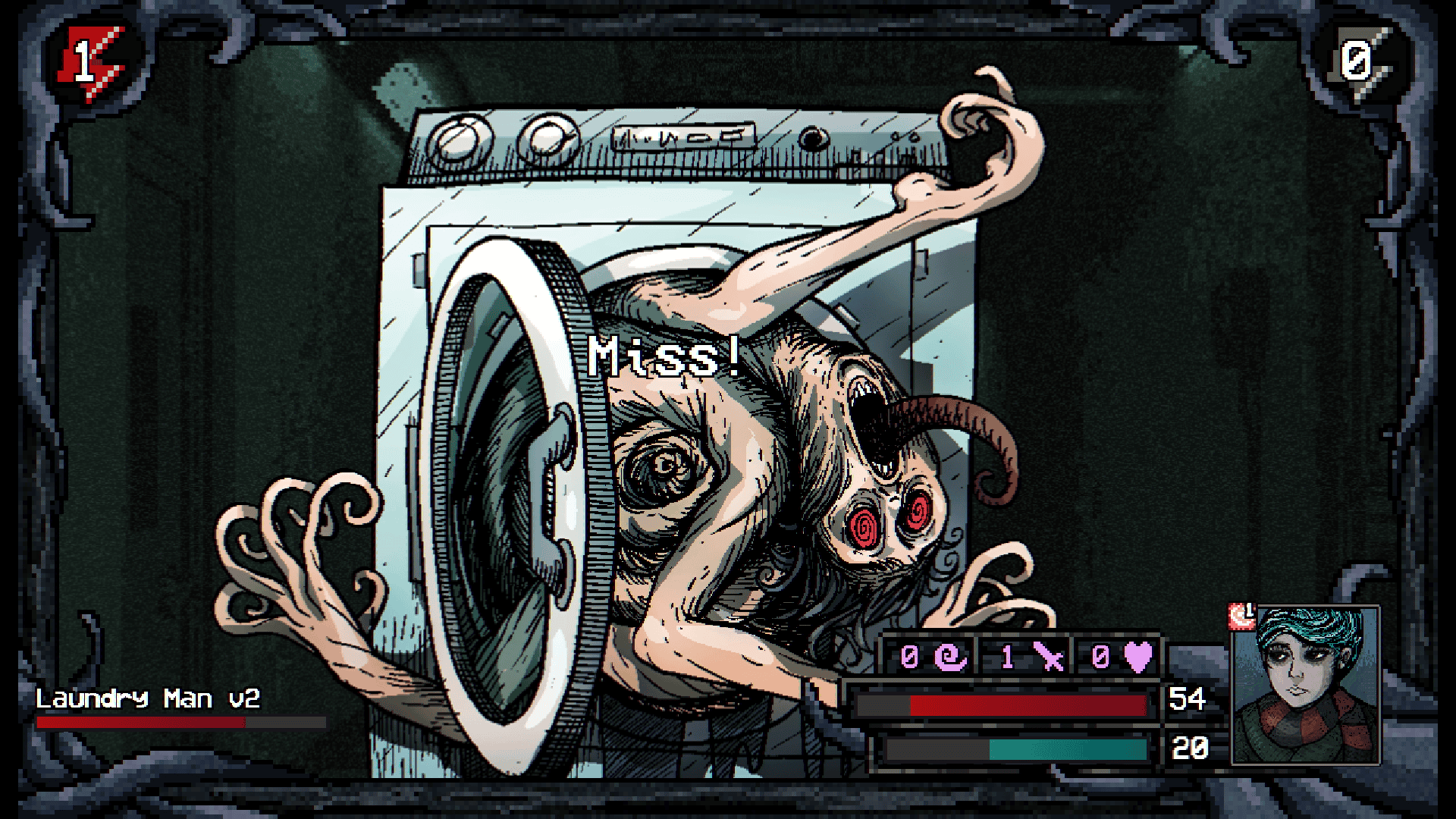
Yes, the way you regain HP, MP, and remove many status effects in this game is by showering. Just like in real life, you feel more human after a shower. However, monsters also regenerate every time you do this, so despite the fact that you cleared the mall of all its mutated zombie shoppers on Tuesday, you unfortunately showered on Wednesday and now they’re all back. This also happens if you die.
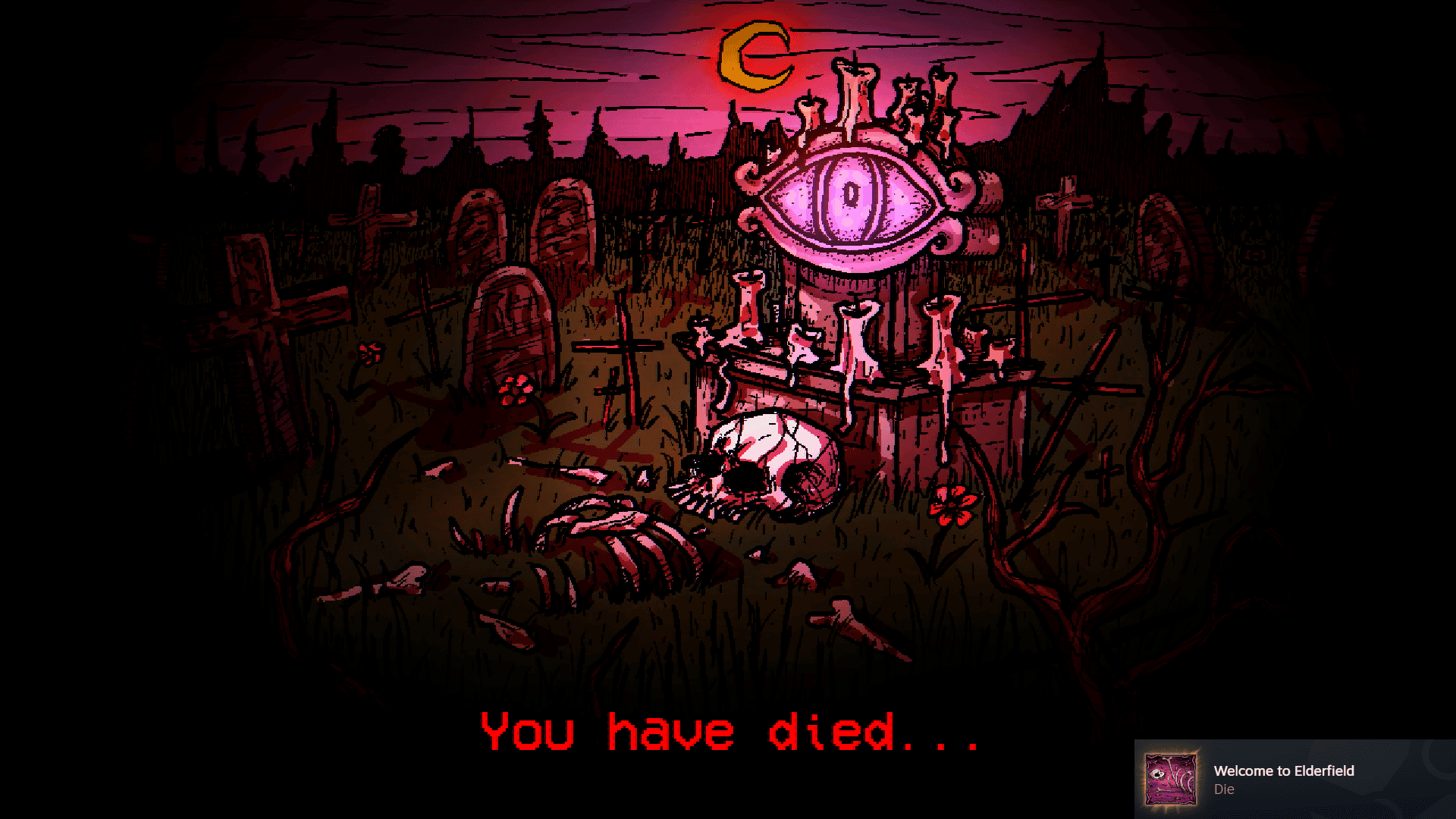
Dying can happen mid-combat because you ran out of healing items, it can happen in your sleep because you rolled low, and it can happen stupidly because you didn’t think you needed a healing item and then a piece of flying debris took your last two hit points. Dying sends you back to your house with another random roll to see what/how much loot you lose (usually gold), regenerating monsters and sometimes foraging resources.
The majority of combat happens in the Mall and the Old Woods and their respective mines. Talking to as many of your neighbors and fellow townspeople as possible will fill up your list of tasks, many involving trips into the woods or over to the mall. Some of the tasks are simple fetch quests while others ask you to explore a specific area and report back, locate a lost item, deliver something to another character, or gather materials to craft something new. Some of the tasks give a cash reward, but others give new crafting blueprints, recipes, or combat rituals, or circumnavigate the tedious collection of items to craft an item like a furnace by simply giving one to you.
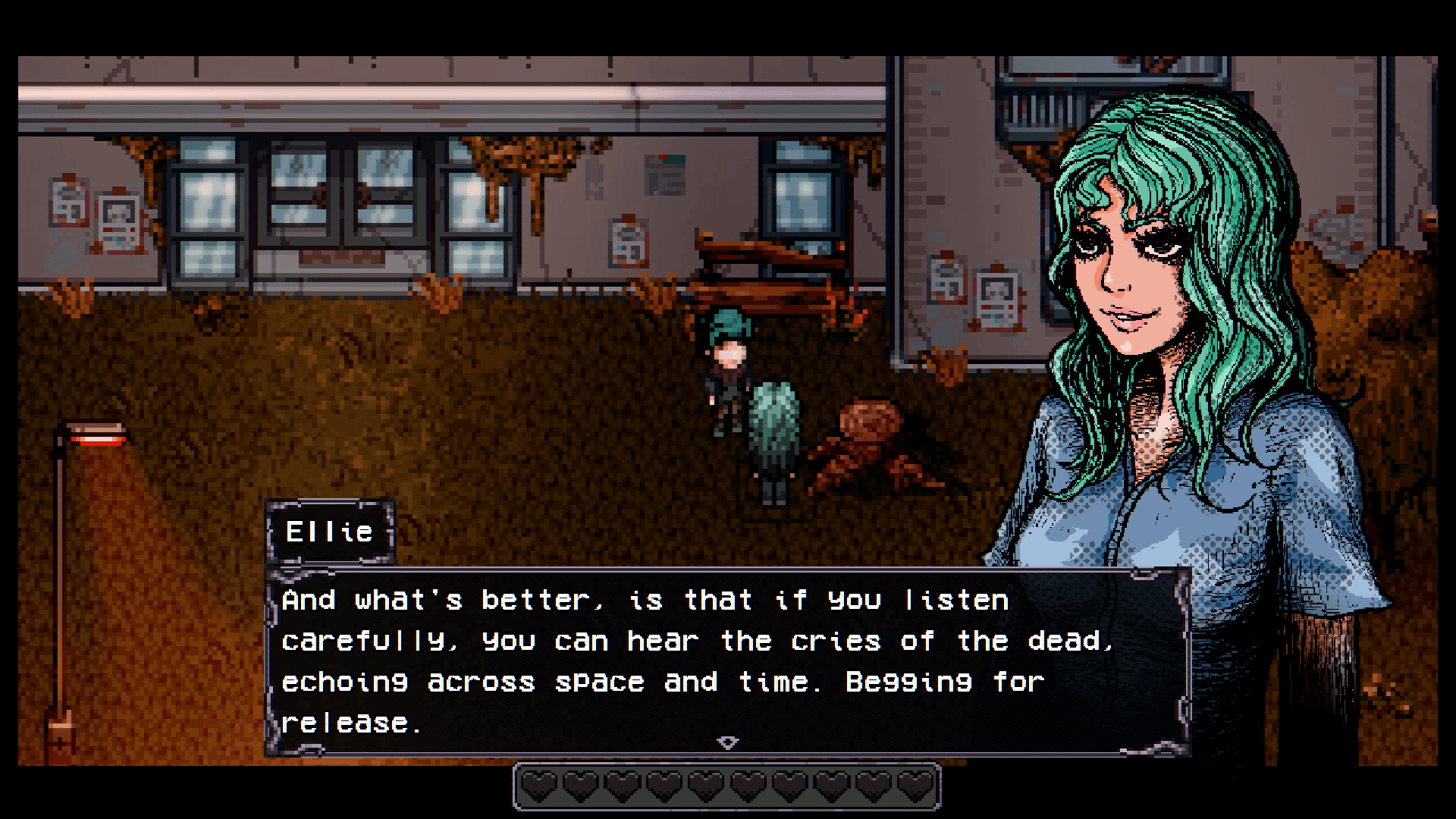
While many of the townspeople are named, they are not all created equal. Only a handful have the hand-drawn character art that pops up every time you interact, will ask you questions, increasing or decreasing your friendship level depending on your answer. You can work towards marriage with any of these characters, including Alice the Skeleton and Celeste, the ghost that runs the library. Chatting with them, ensuring you complete any tasks given by them, and giving them gifts that they like can increase the friendship to the point that they will even marry you. However, this is still a cozy horror game. They have their secrets as well, some more well hidden than others.
There’s so much to this game that I wish I could go through. Little things that a player might miss completely on one playthrough depending on which butterfly they decide to start chasing. Similar to the way Stardew Valley splits its year into four twenty-eight day seasons, Welcome to Elderfield experiences twenty-eight days of the Season of Rebirth, followed by the Season of the Harvest, the Season of the Witch, and the Season of Death. The fishing game can be changed not only by what bait you use but by where you use it, discovering unlikely hiding places for ponds and cisterns. But there are two things that really round out the personality of Elderfield: the anomalies and the humor.
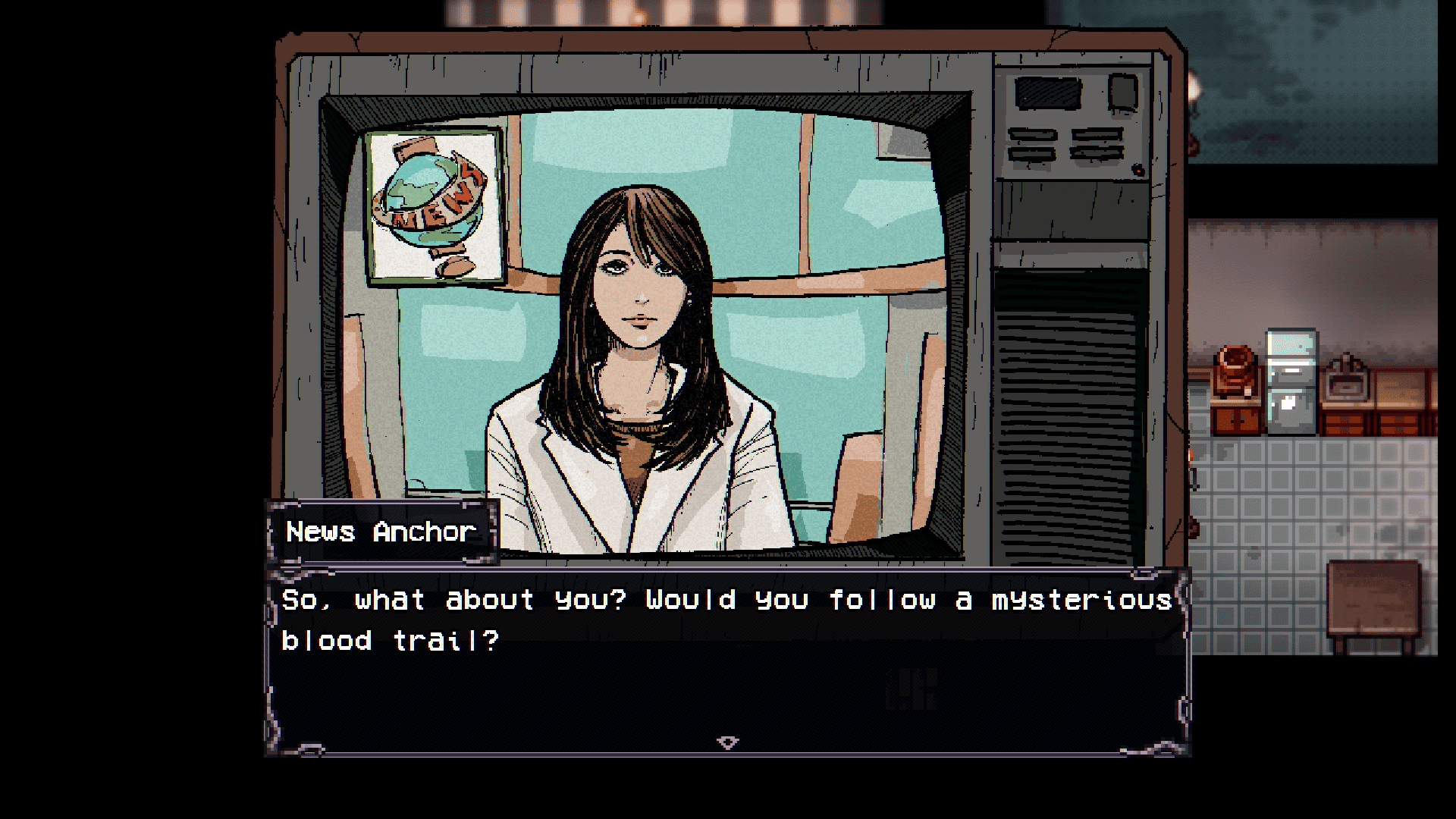
One of the things you could probably completely ignore, or at least go a long time without interacting with, in Elderfield is the series of anomalies, each announced on the daily news, and the hidden “mysteries”, some of which are hinted at by the Weather Channel radio broadcasts that are collected by talking to different townspeople. The anomaly announced on television is something that can only be found/interacted with on that day, although they do recur. For example, Maggot Man is a cryptid appearing in the sewers. If you bring him meat, he’ll give you maggots, a unique type of bait you cannot get anywhere else in the game. Other anomalies send you looking for ghosts, hidden telephones that will only work for one number, trails of blood leading mysteriously into the woods. Some of these also result in a mini-boss battle, depending on how you approach them, but all of them end in some kind of reward, just like the tasks.
The Weather Channel broadcasts are more vague, more aimed at building the abstract lore of the town. Fans of Welcome to Night Vale will immediately recognize the homage of the announcer’s cadence and the surreal content of each broadcast, as well as the eye-conography (I’m not sorry) in the Neighborhood Watch signs all around town. And if you weren’t a fan of Night Vale but you end up liking this game, boy do I have a podcast recommendation for you!
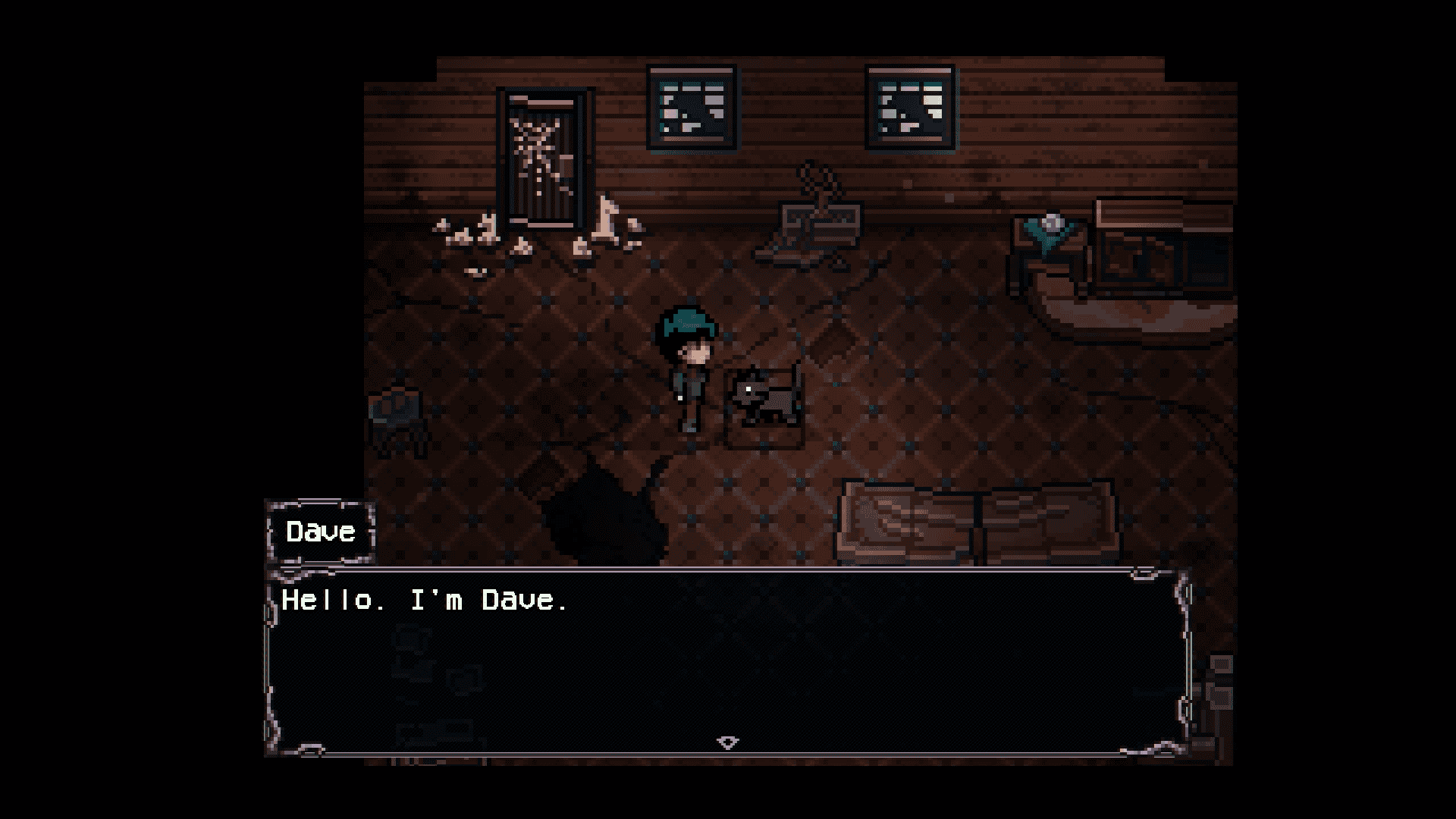
Additionally, the coziest aspect of Welcome to Elderfield is the friendly vibe throughout the game, something that tells you not to take it too seriously. From the designs of monsters like the Mimic and the “visitor” to the farm that goes from “A pair of legs” to “A tall man” when his goofy looking head finally appears in the frame. From Pete the Laundry Ghost in the basement of an apartment building to Dave. Your neighbor Dave, who happens to be a cat. While the game builds moments of genuine tension (like the first time I saw the Tax Man) as you try to figure out what will happen, there is this other aspect where it’s honest about not taking itself too seriously, and in that way encouraging you to loosen up and explore as well.
There were one or two bugs I noticed during gameplay (mostly regarding audio controls) that I believe were fixed by an update that went out on September 8, other than that everything ran smoothly. I especially loved that tools didn’t need to be equipped; as long as the axe is in your inventory, you can chop away.
I know I haven’t uncovered everything in Welcome to Elderfield yet, so I’ll continue to rack up hours hunting down anomalies, bothering ancient gods, and hitting on the hot goth blacksmith.
Alyssa played Welcome to Elderfield on PC with a provided review code. This review is based on the version of the game that was available at the time of writing, and our score will not be changed.
- Score
- 8/10 EXCELLENT - GAMEOBSERVER RECOMMENDS
- Summary
-
Alyssa says: Romance skeletons and ghosts; farm radishes and eyeballs! Slowly unravel the mysteries of Eldenfield... Or don't! With gorgeous hand-drawn art and witty dialogue, you'll mostly be upset that you, unlike your character, can't play for three days without taking heavy penalties.
- More
- GameObserver's Review Policy


 ObserverCrew Picks
 bserver
 bserver