Video games as a medium revolve around player choices, but some games lean heavily into this aspect, offering a dynamic world and story based on player choices. These types of games can span multiple genres, from simpler visual novels to action-packed RPGs. The “Choices Matter” tag has become somewhat of a controversial feature, at least for me personally, as it is a challenging design approach and it’s hard to get it right. But games that do get it right are always among my favorite titles.
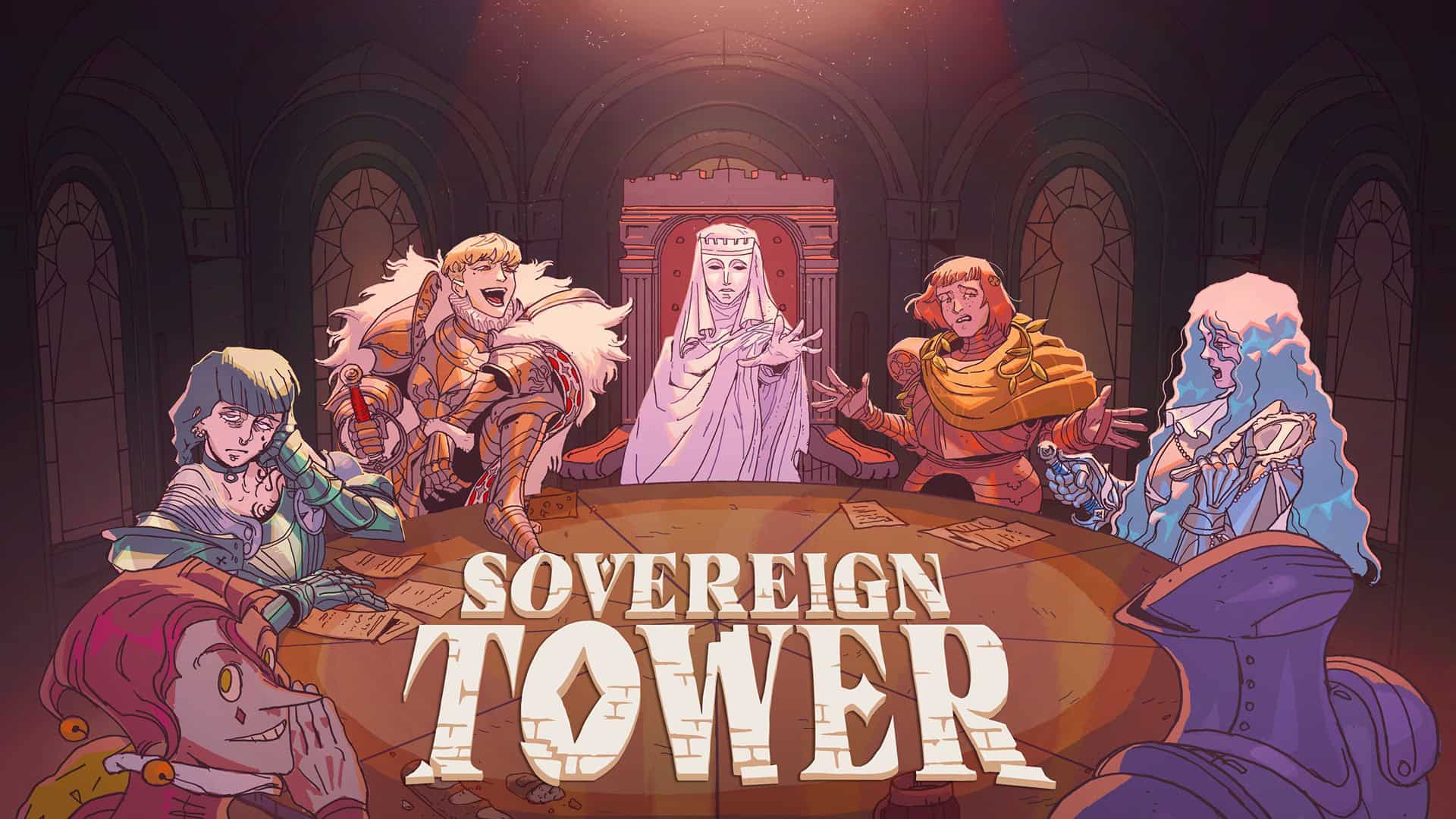
Sovereign Tower, developed by WILD WITS GAMES and published by Curve Games, is a virtual novel with RPG management mechanics. You play as the prophesied sovereign of an abandoned tower, the seat of power in a war-torn land, trying to unite the counties and face the empire that once destroyed the unity. The game focuses on varying paths and endings based on your decisions, even giving you the power to turn back time and make different decisions to see different outcomes. But it still manages to tell an involved and engaging story with meaningful consequences.
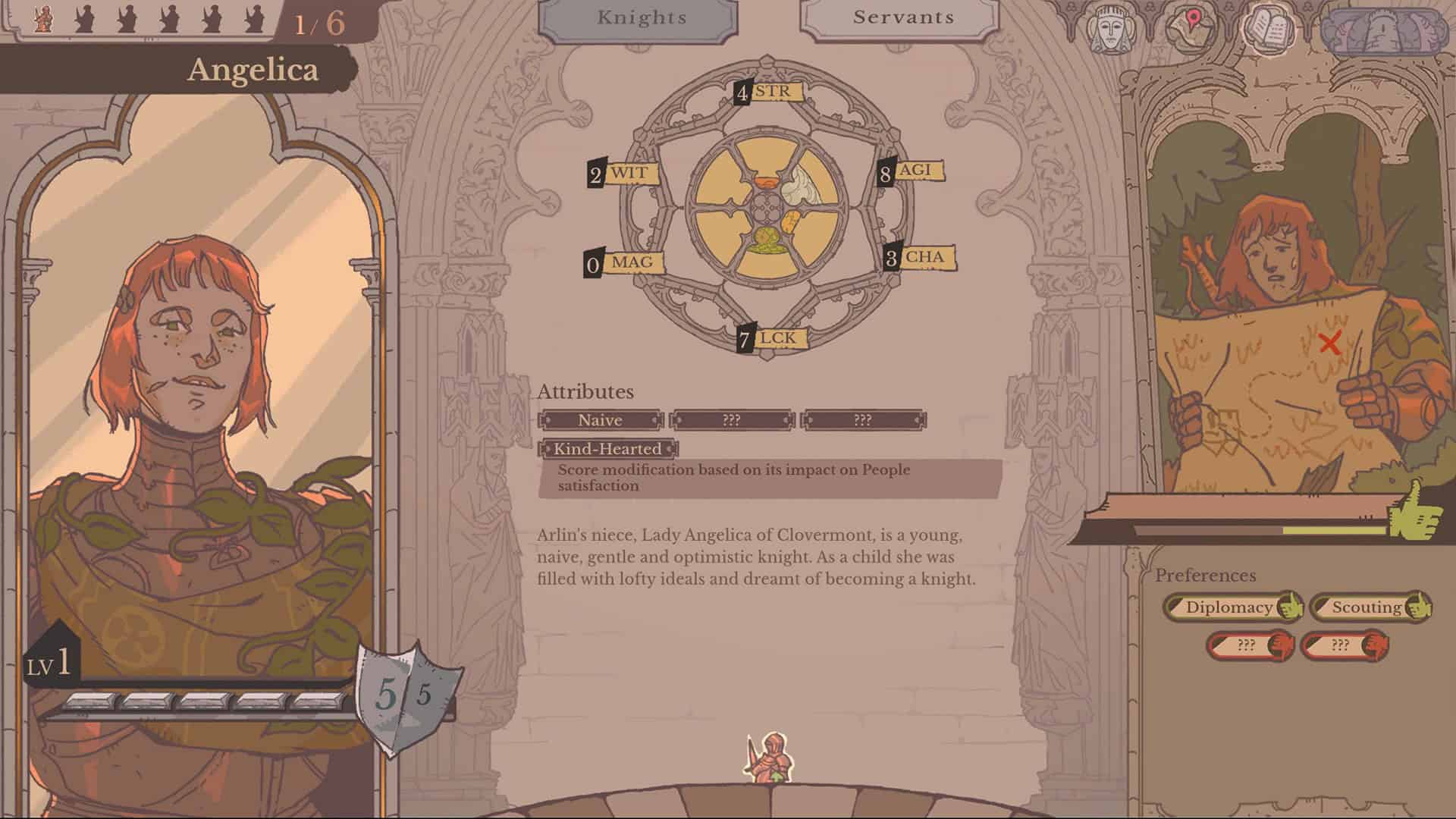
I liked the idea of Sovereign Tower even before I started playing it. You recruit knights with different and unique skills, send them on quests, and benefit from your success or suffer the consequences of your failures. This gameplay loop alone is really fun and challenging. Your knights each have unique passives and likes and dislikes that affect each quest; you can level them up, increase their power, manage their items and mounts, and manage which quest they are most suitable for to increase the odds of success. Sovereign Tower delivers very well on the RPG management system at its core, and if this were all the game had to offer, I would still recommend the game to RPG fans as an interesting twist on the management genre. But the story and characters of Sovereign Tower took it from a fun little game to spend a dozen hours in, to a masterfully written and impactful visual novel that I can’t get enough of.
The game begins as we, the protagonist, escape a burning village under attack by the empire forces. We find our way through the woods to an abandoned tower and enter. The tower, as the seat of power of the area, has been vacant and closed off to everyone, and it was prophesied that only a true sovereign can enter the tower. So, the nobles and locals who believed in the prophecy hailed us as the new sovereign, giving us the resources and forces to start our journey of reuniting the different counties against the empire.
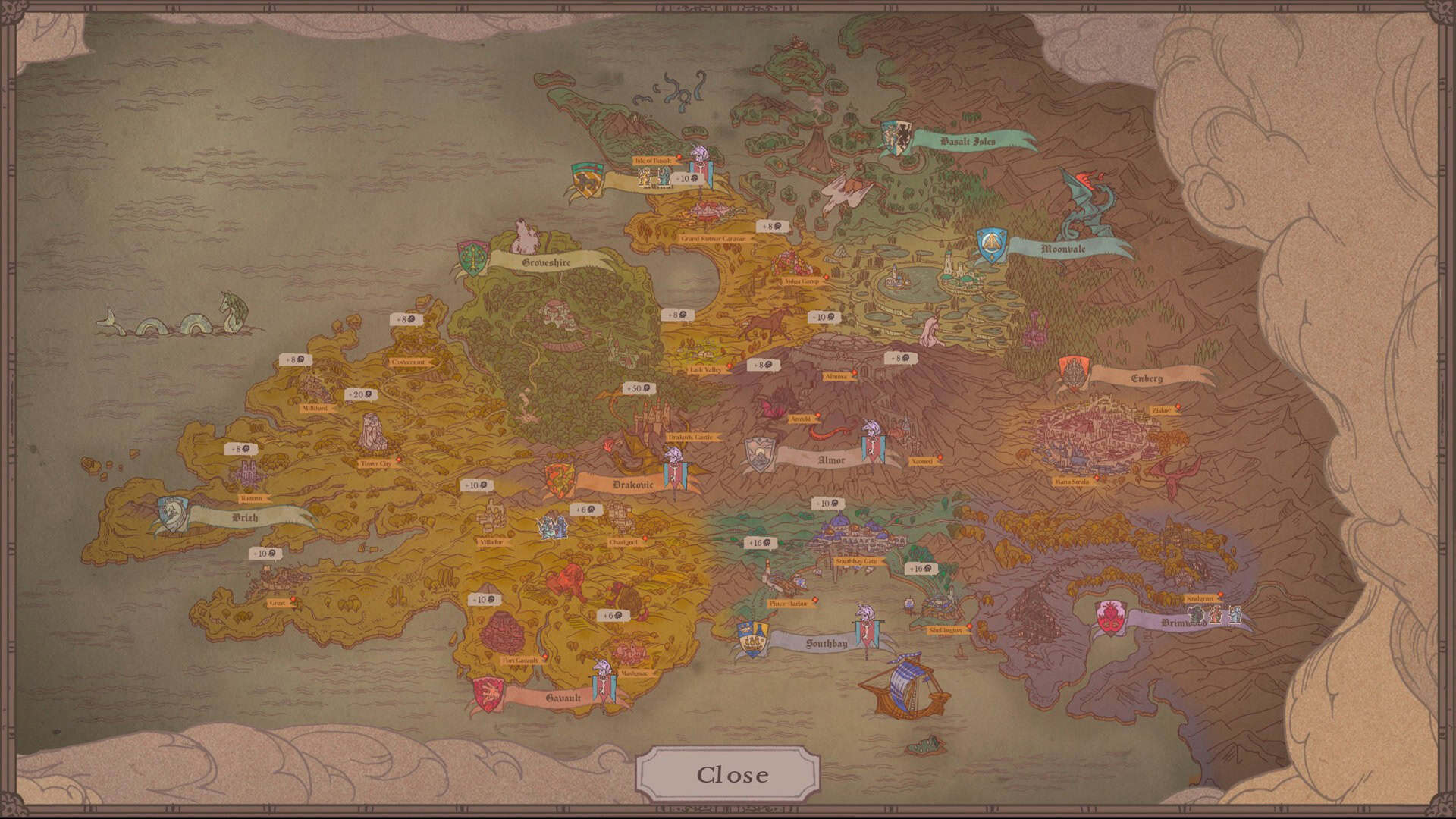
The protagonist is a leper, and once inside the tower, the magical protection placed upon it halts the progression of their disease. We have to stay within the tower’s limits, but a few knights join our roundtable to help us on the tasks we want to undertake. As we gain more reputation throughout the game and by doing certain quests, more knights offer to join the roundtable to expand our team and take on more challenging quests. There are also a few staff members in the tower. We have an adviser, a blacksmith, and a quartermaster to help us with various tasks, and we gain more staff members to support our knights on their quests.
Sovereign Tower‘s gameplay takes place day by day. Each morning, we visit the main hall to hold an audience with locals and nobles, hear their troubles, and decide if and how to help them. Each decision and quest affects our reputation with a different class of the population. The people, the nobles, the merchants, and the scholars each have a separate score, and how we approach decisions and the scores we have impact what kind of rulers we are, and the world reacts to it. If you neglect one of the groups for too long, they will protest and can have long-term impact on how you approach the main events of the game. You might go for a few days until you realise your decisions are having an overwhelmingly negative impact on certain areas. And this is where the demon of the tower comes in.
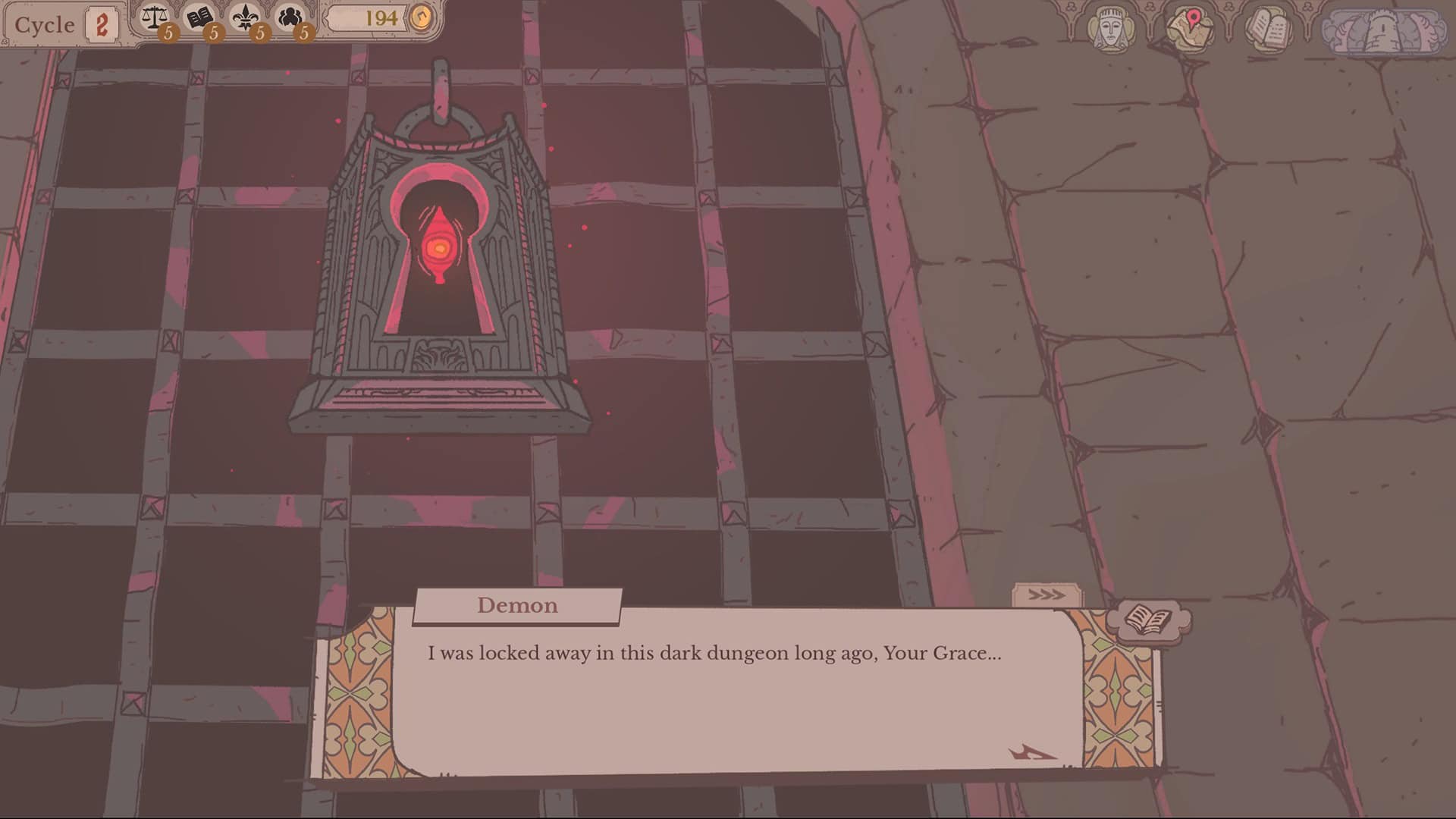
This is one of the main gameplay elements of Sovereign Tower. A demon locked away in the tower’s dungeon offers us the power to turn back time. To go back to a previous day and make different decisions, while knowing how our decisions had turned out before. If we use this power, we can choose dialogue options that would reveal we know more than we should. We can tell the visitors we already know what their trouble is and how to solve it. If we do this enough, we gain the reputation of someone with incredible powers of prediction. There is almost no limit to how often we can use the demon’s power. We can turn back time as much as we like, and the only limit is that once we finish an act of the game, we can’t go to the previous act.
With this power, it would seem impossible for the game to have meaningful consequences. However, some of our major decisions happen at the end of each act, and we might not see all the repercussions of our choices until we are a few days through the new act. I faced one of the most heartbreaking moments in my gaming experience once a choice I made caused one of my favorite knights, and the character that I was pursuing a romance with, to be almost killed and basically turned into a lifeless zombie. I could not turn back time; I either had to start from the beginning or live with my choices. I kept going, as the game still had a lot to offer, even though I was genuinely sad at the loss of this character.
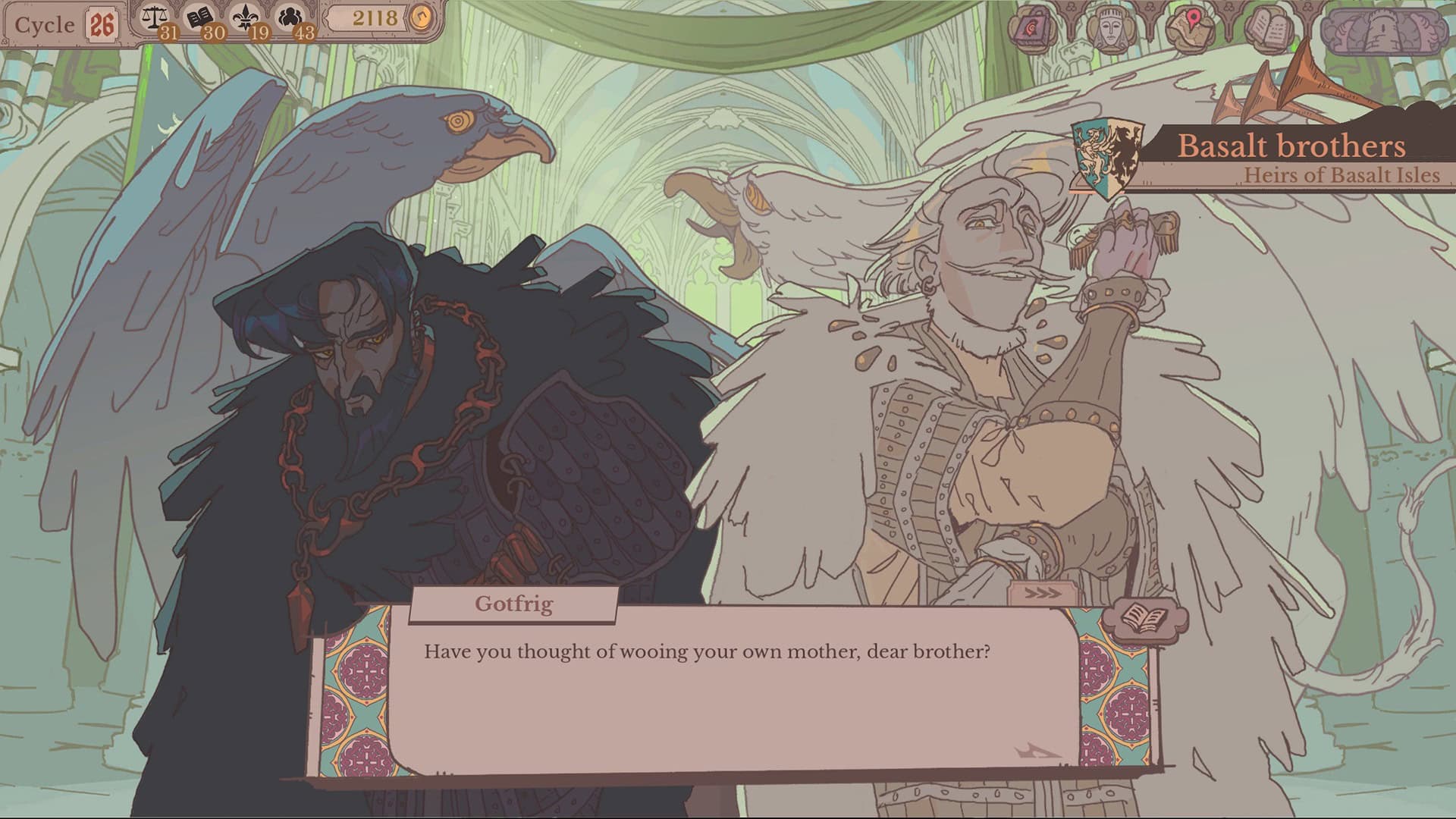
Characters of Sovereign Tower are one of the most memorable aspects of the game. Each knight, the tower staff, and the rulers of each county have a well-written character, with deep and emotional backstories and features and flaws that make them stand out. Major characters have engaging arcs and quests throughout the story, and even side characters still help bring the world to life. The knights aren’t just pawns at our disposal to send to their deaths, even though we can do that. If they die on a quest and we don’t turn back time, we lose a substantial portion of the game’s story. They also have their likes and dislikes; if they disagree with our decisions, or we keep sending them on quests that they hate, they might eventually leave the roundtable. If we pursue romances, some characters are monogamous and will feel betrayed and leave if we pursue a new romance. These are the types of decisions that can take a few days to take effect, and by that time it’s either impossible or really inconvenient to use the demon’s power to turn back a long duration of time, adding to the sense that our choices matter even when we do have an easy way to make different ones.
The story is lighthearted and fun most of the time, but still manages to tackle sensitive and important topics with the emotional depth and seriousness that they deserve. Sovereign Tower explores topics like class systems, trauma, disability, body dysmorphia and more through respectful and relatable dialogues, while keeping an overall relaxed and heartwarming atmosphere. The game doesn’t take itself too seriously. It doesn’t shy away from meta jokes and easter eggs, but still manages to weave in impactful and deeply emotional moments with various characters.
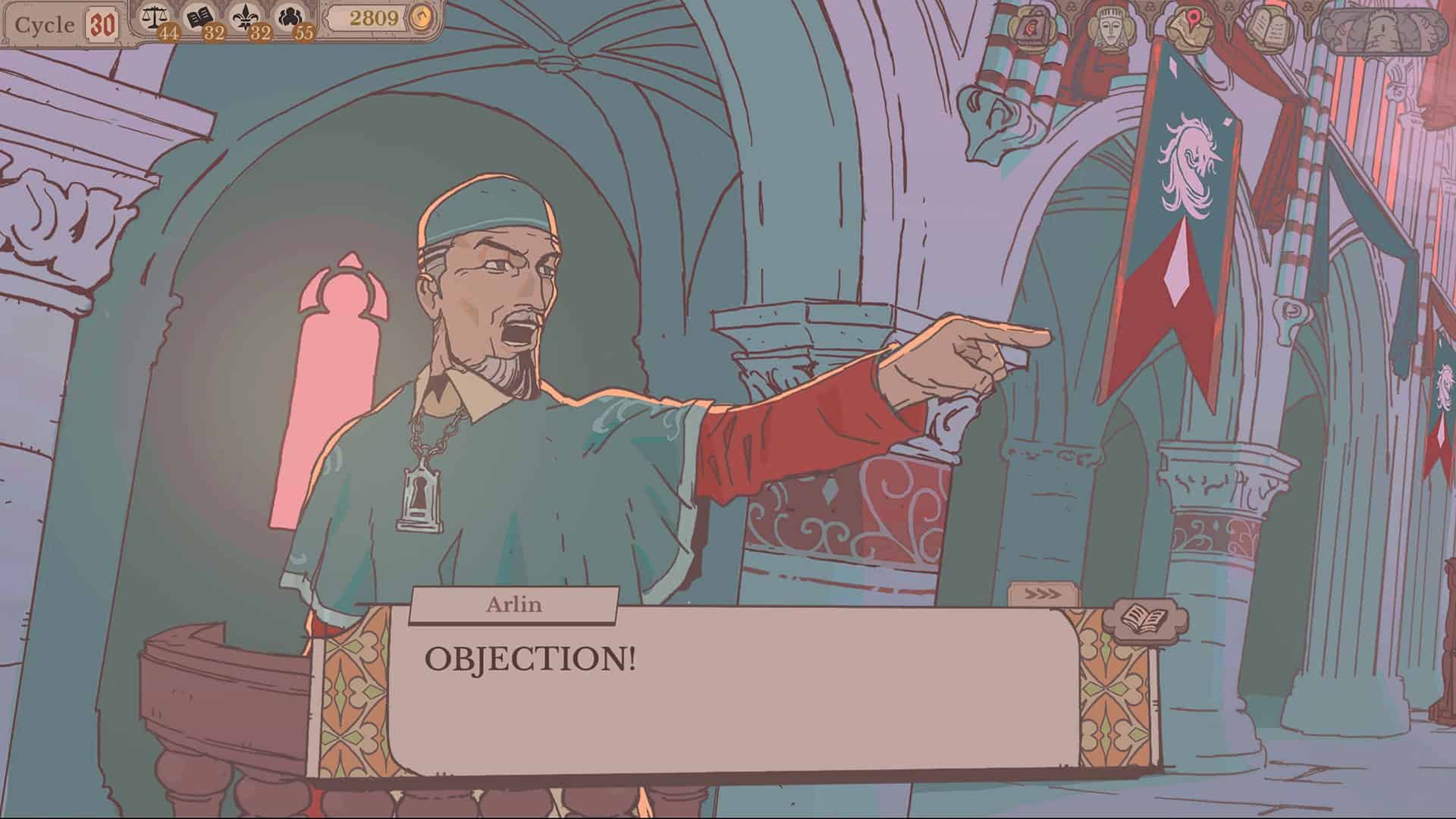
I don’t want to go into any more details about the story, as it will be a disservice to Sovereign Tower’s experience. After about a dozen hours, I finished the game, and the demon asked if I was satisfied with the outcome or if I wanted to try again. Of course I wanted to try again, so I turned back to the very beginning. Using the demon’s power to start a new playthrough makes the second run much more interesting. You already know a lot of the events that are about to come and can lean more heavily into the “prophet” reputation. You can make vastly different decisions to see new paths and endings. I was a relatively benevolent leader in my first playthrough, and I didn’t change it too much in the second run. My main goal was to save my favorite character that I lost halfway through the game last time. And even though I didn’t make major changes in how I approached the story, the second run still felt unique. With just some slight changes in the journey, I experienced a vastly different run, making me even more excited for the next time I replay Sovereign Tower and perhaps become more of a tyrant. I’m also curious to see what would happen if I refuse to use the demon’s power for the whole run, and how it would affect the story’s progression and ending.
I would recommend Sovereign Tower just based on the RPG Management portion of the game, and that is only a fraction of what I loved about it. It’s a dynamic world with dozens of unique and memorable characters. It offers meaningful choices that matter despite the power allowing us to revert time, and an overarching story with different endings based on how we approach the game.
Nima reviewed Sovereign Tower on PC with a provided review code. This review is based on the version of the game that was available at the time of writing, and our score will not be changed.
- Score
- 10/10 MASTERFULL - GAMEOBSERVER RECOMMENDS
- Summary
-
Nima says: It's easy to become emotionally invested in Sovereign Tower's story and its various characters. It offers intricate story arcs, engaging moments and dialogue choices, and decisions that impact the story. The art style looks stunning with tons of great character portraits. The RPG management system accompanying the story is very well designed, engaging, and challenging. It also offers a lot of replay value with the power to turn back time and experience different paths.
- More
- GameObserver's Review Policy


 ObserverCrew Picks
 bserver
 bserver